Travel Planning Hub
Start here to plan your trip, compare options, and explore every TLGA planning guide.
Packing & Gear Guide
What to pack, what to skip, and how to build a lighter travel setup that works.

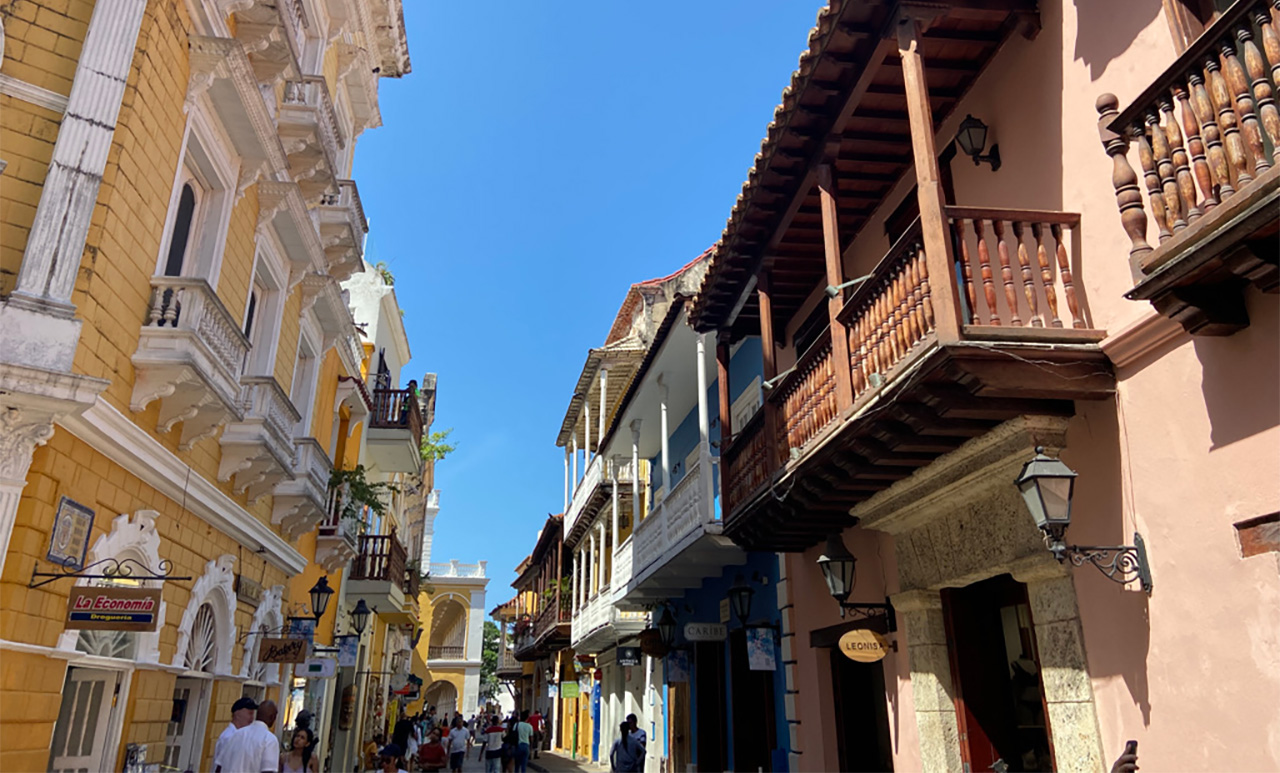
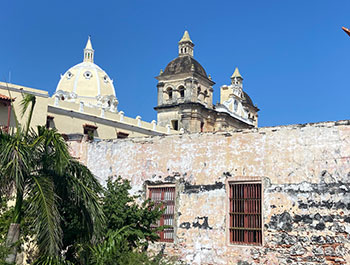
The historic streets of the Walled City are defined by preserved colonial architecture and flower-draped balconies.
Last updated: March 2026 by Corey Gasman
From the Editor:
Cartagena has a funny way of sneaking up on you. You land expecting colorful colonial streets, a Caribbean breeze, and a few great photos. But if you stay long enough, the city starts to feel less like a destination and more like a routine you actually want to keep.
Melissa and I spent a full month living in Bocagrande from mid-January to mid-February. We settled into a rhythm that most short-term visitors miss. This guide is written to help you skip the tourist traps and find the version of Cartagena that makes you want to stay.
This Cartagena travel guide covers where to stay, what to do, costs, safety, and how to experience the city like a local.
The Check-Mig Requirement:
You must fill out Colombia’s Check-Mig form online before entering and leaving the country. Do not skip this.
The official site can be buggy, so complete it on a desktop between 72 hours and 1 hour before your flight. Always screenshot the confirmation QR code, as airlines will ask for it before you board.
Start here: Colombia Travel Hub
TLGA Rule: The best sunset is not always at an expensive bar. Grab a cold beer from a street vendor and sit on the historic wall for the exact same view at a fraction of the price.
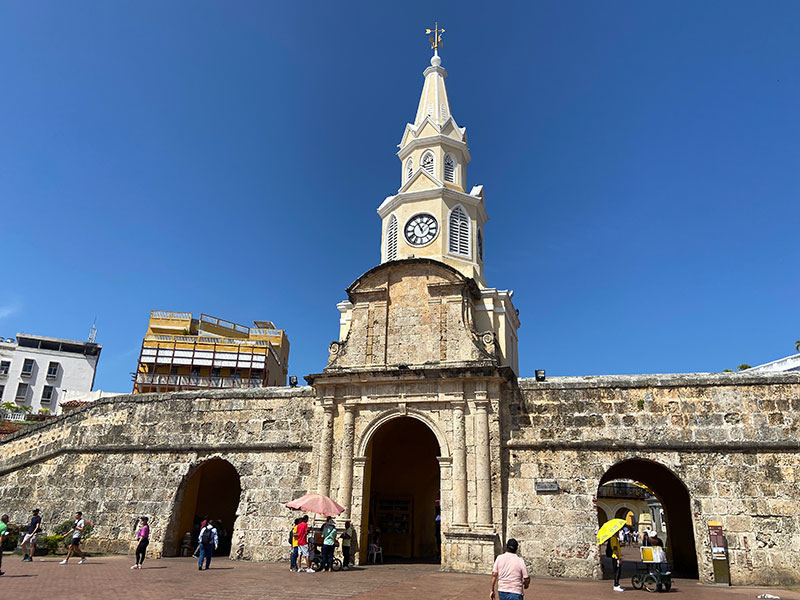
The Clock Tower (Torre del Reloj) is the gateway to the Walled City. Expect heat, history, and a constant flow of vendors.
Cartagena is easy to visit, but it takes a little strategy to actually live in it.
A typical 3-day itinerary looks very different from a one-month stay. When you are here for a month, you trade the expensive rooftop dinners for $5 lunches and daily grocery runs at Carulla. You start to realize that the heat dictates your schedule.
Regarding logistics, one of the biggest questions is the water. Can you drink the tap water? Technically, yes. Cartagena’s tap water is treated. However, most locals and long-term expats stick to filtered or bottled water just to be safe. If you are in an Airbnb for a month, buy the large five-liter jugs known as botellones at the grocery store.
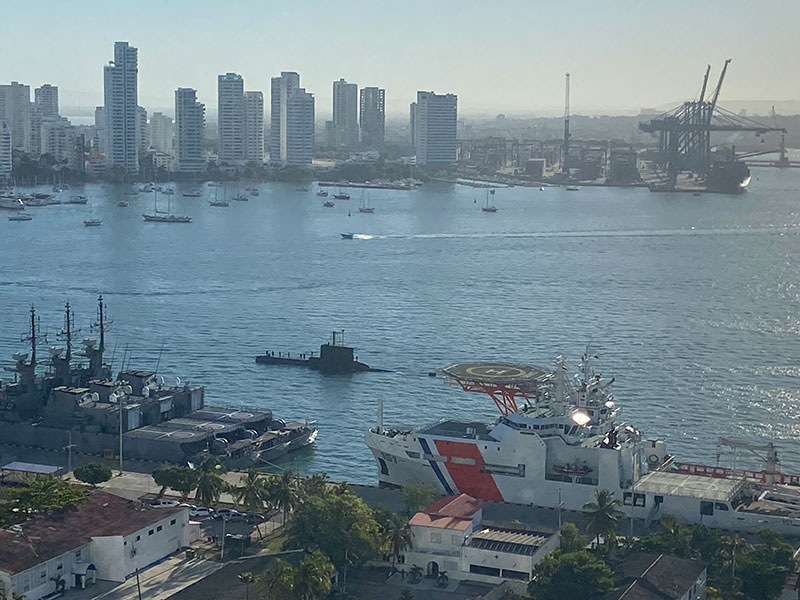
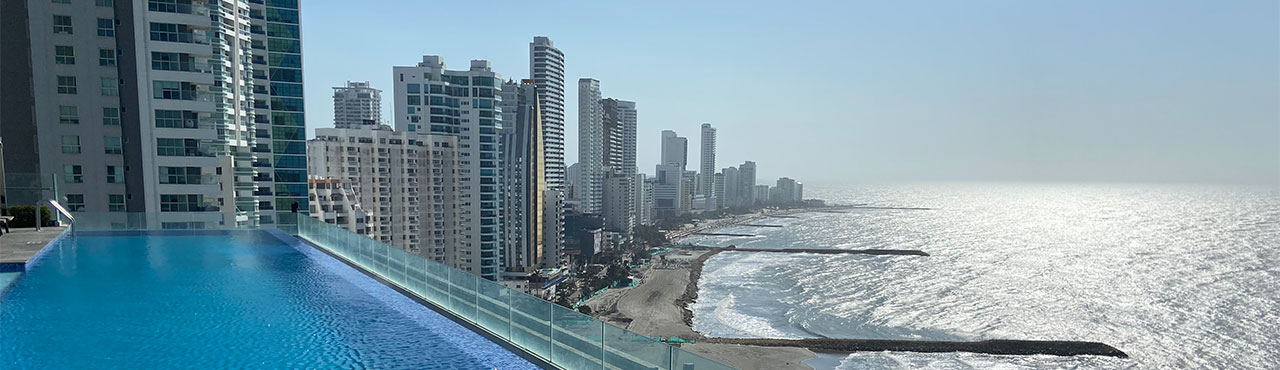
Views from our Airbnb in Bocagrande. While the Walled City has history, Bocagrande has the ocean views and modern conveniences.
Cartagena is defined by its neighborhoods. Your experience will change completely depending on where you sleep.
This is where we lived, and it is the best option for long stays or remote work. It looks a bit like Miami with its high-rise condos and beaches. It works perfectly as a home base because you have modern grocery stores, gyms, and reliable internet, all while being a 10-minute ride to the old city.
This is best for short trips, first-timers, and romance. It is packed with cobblestones, flower-draped balconies, boutique hotels, and high-end dining. The trade-off is that it is more expensive, louder, and the internet can be spotty due to the thick colonial walls.
Getsemani is the cool, gritty neighbor. It is best for nightlife, street art, and social vibes. Plaza de la Trinidad is the beating heart of the neighborhood. Manga is the quiet, residential alternative across the bridge. It is leafy, local, and offers much cheaper rent than Bocagrande.
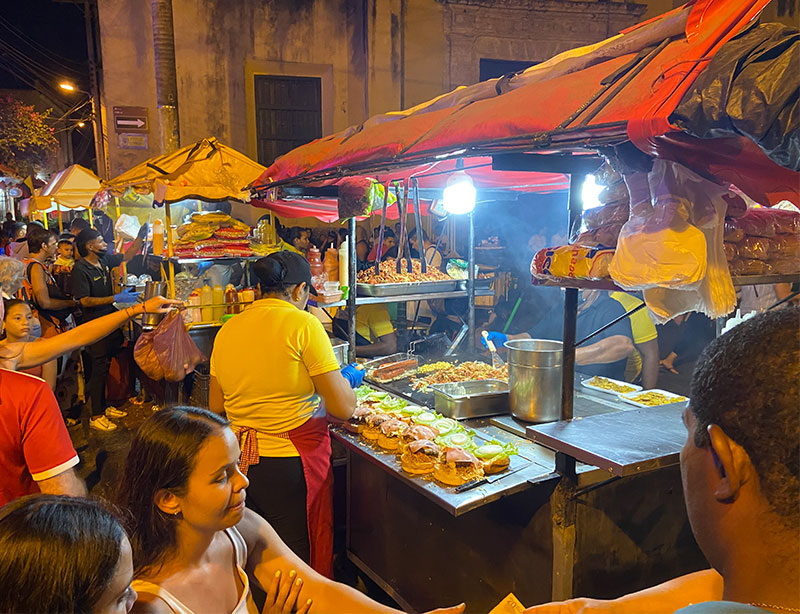
Start with dinner in the Walled City, but end your night in Plaza de la Trinidad in Getsemani for street beers and people watching.
Cartagena is hot year-round. The difference is not the temperature. It is the humidity and the rain.
The Dry Season runs from December to April and is the most popular time to visit. It is sunny, breezy, and sees virtually no rain. This is when we lived there, and the weather was perfect.
The Shoulder Season from May to August is hotter and more humid, with occasional showers. The Rainy Season hits hardest from September to November, bringing daily downpours and high humidity. October is often the wettest month.
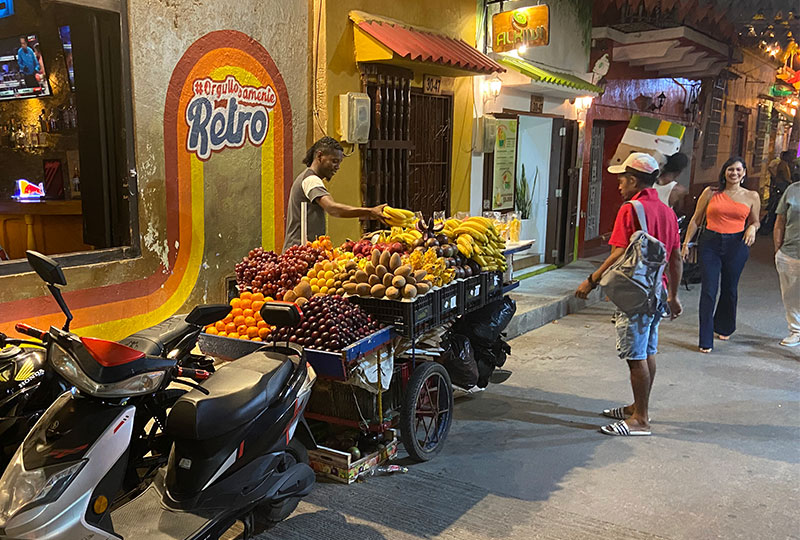
Street fruit is the best fast food. Mango biche (green mango with salt and lime) costs pennies and saves you from the intense midday heat.
Cartagena has two price tags. There is the Tourist Price inside the Walled City and the Local Price everywhere else. You can spend a hundred dollars on dinner or four dollars on lunch depending on which street you walk down.
While nice restaurants and grocery stores like Carulla take credit cards, you need cash in Colombian Pesos for street food, vendors, taxis, and smaller bars. Try to break your large bills whenever you are at a nice restaurant or a major grocery store. Street vendors and taxi drivers rarely have change for a 50,000 or 100,000 peso note.
Never use standalone ATMs on the street, especially at night. For the best exchange rates and overall safety, use the ATMs located inside grocery stores or shopping malls during the day. If you are staying in Bocagrande, the Plaza Bocagrande mall has a secure bank of ATMs on the upper levels.
| Category | The Local Way (Bocagrande) | The Tourist Way (Walled City) |
|---|---|---|
| Accommodation | $40 to $90 USD (Airbnb) | $120 to $300+ USD (Boutique Hotel) |
| Lunch | $4 to $7 USD (Menu Ejecutivo) | $15 to $30 USD (Restaurant) |
| Dinner for Two | $35 to $70 USD (Casual) | $80 to $150+ USD (Fine Dining) |
| Transport | $3 to $6 USD (Uber) | $3 to $6 USD (Uber) |
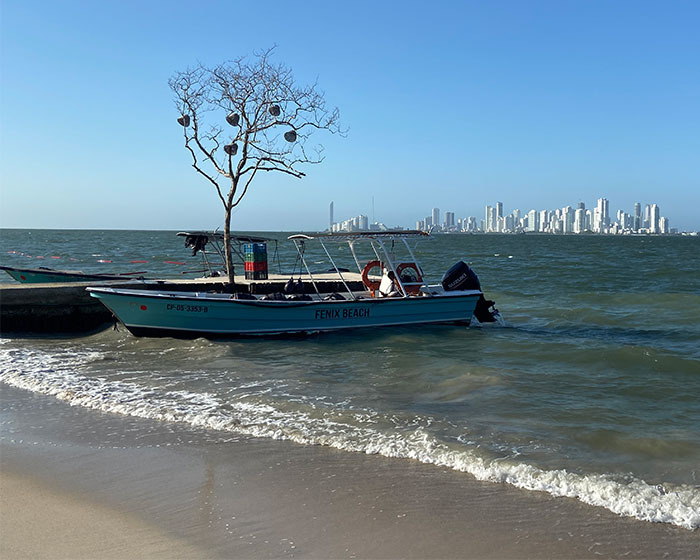
Tierra Bomba is only 15 minutes away by boat, making it the easiest day trip for a proper beach day.
Rideshare apps like Uber and InDrive are your best friend. They are safe, air-conditioned, and crucially, they have a fixed price. No haggling required. We used Uber for almost every trip between Bocagrande and the Walled City during the daytime.
Yellow taxis are everywhere, but they do not use meters. You must agree on the price before you open the door. A typical ride in town should be around three to six dollars.
Rafael Nunez International Airport is uniquely close to the city. It is only a 10 to 15 minute drive to the Walled City or Bocagrande.
When you walk out of arrivals, do not negotiate with the drivers yelling for your attention. Instead, walk straight to the automated yellow taxi kiosk on the sidewalk. You type in your neighborhood, and the machine prints a ticket with the official, fixed price. You hand that ticket to the driver, and you pay exactly that amount when you arrive. It completely eliminates the arrival tourist tax.
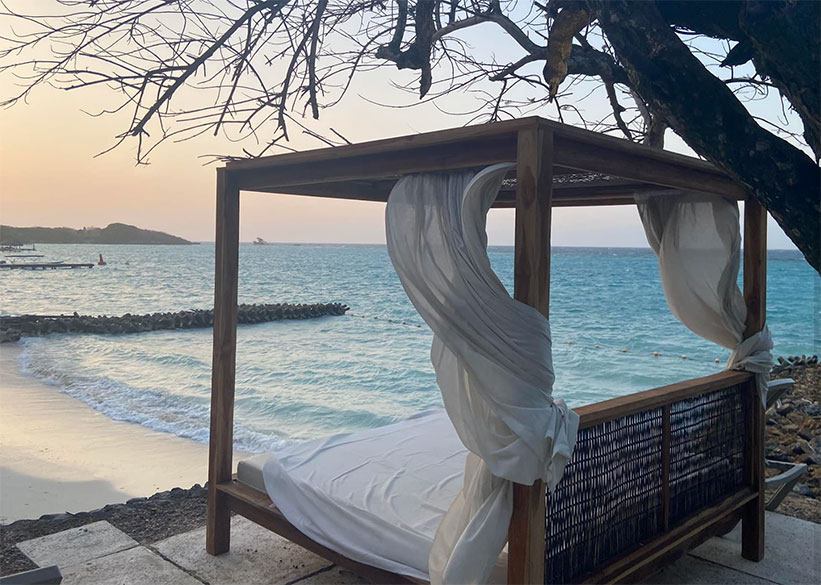
The Rosario Islands offer the spectacular Caribbean water that is missing from the city beaches.
You can see the historic walls in a single day, but these are the experiences that actually stick with you.
We actually booked this trip twice because we had two different groups of friends come down to visit us. Cruising the bay of Bocagrande at sunset with drinks in hand is a fantastic experience. It is a more relaxed, elevated way to see the city from the water compared to the crowded daytime party boats.
The beaches in Cartagena city are just okay. The beaches in the Rosario Islands are spectacular. Do a boat day, or better yet, stay overnight on Isla Grande once the day boats leave. If you want a quicker escape, Tierra Bomba is just a 15-minute boat ride away and is perfect for a lazy day at a beach club like Blue Apple.
This is the anti-tourist experience. It is loud, chaotic, and real. Go with a guide to eat Anthony Bourdain-style shark soup and see the working side of the city. Just be sure to watch your pockets.
If you are visiting Cartagena for the first time, this is a simple way to structure your trip without overplanning it.
Start inside the Walled City. Wander the streets, visit the Clock Tower, and get your bearings. Plan dinner in Centro Histórico, then grab a drink or a beer on the wall for sunset.
Take a boat to the Rosario Islands or keep it simple with a beach club on Tierra Bomba. This is your full Caribbean water day.
Explore Getsemani during the day for street art and cafes. At night, head to Plaza de la Trinidad for a more local vibe, then finish with rooftop drinks in the Walled City.
Use these days to slow the pace. Sleep in, enjoy long lunches, and revisit your favorite spots.
Book the Bonavita sunset catamaran cruise to cap off your trip. It is one of the best experiences in Cartagena and a perfect way to end your time in the city.
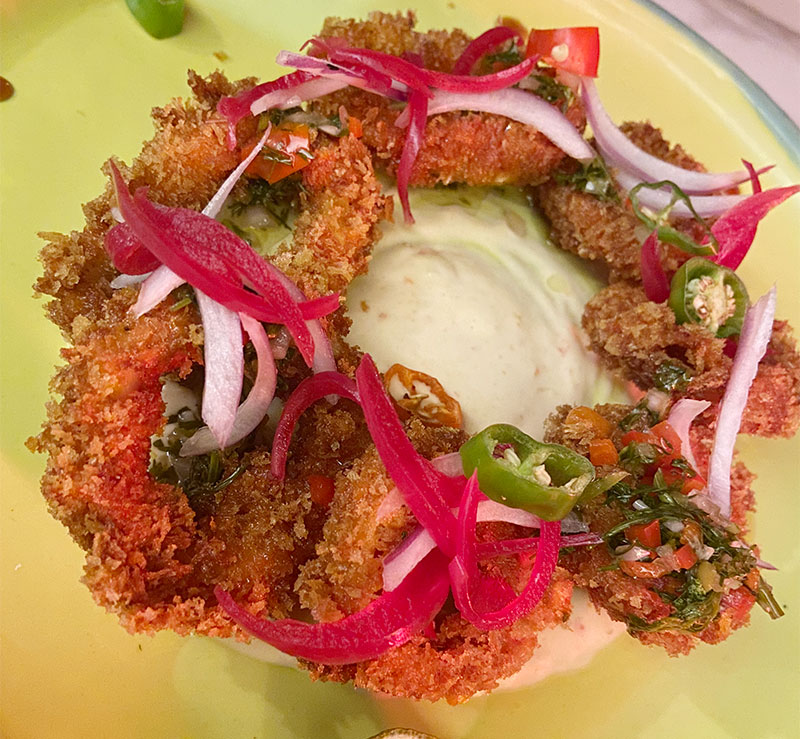
La Cevicheria is legendary for a reason. Order the ceviche prepared with coconut milk and fresh lime.
You can eat world-class food here, but you can also eat incredibly well for pennies. The secret is knowing when to splurge.
For lunch, look for the Menu Ejecutivo. It is a set meal featuring soup, a main like fried fish or beef, coconut rice, plantains, salad, and juice. It usually costs under seven dollars. Spots like Espíritu Santo in Centro or Coroncoro in Getsemani are perfect for this.
When you want to spend money on an unforgettable meal, look to places like Celele or Alma. Celele is consistently ranked in Latin America’s Top 50 and treats Caribbean ingredients like a high-end research project. You will need to book it weeks in advance.
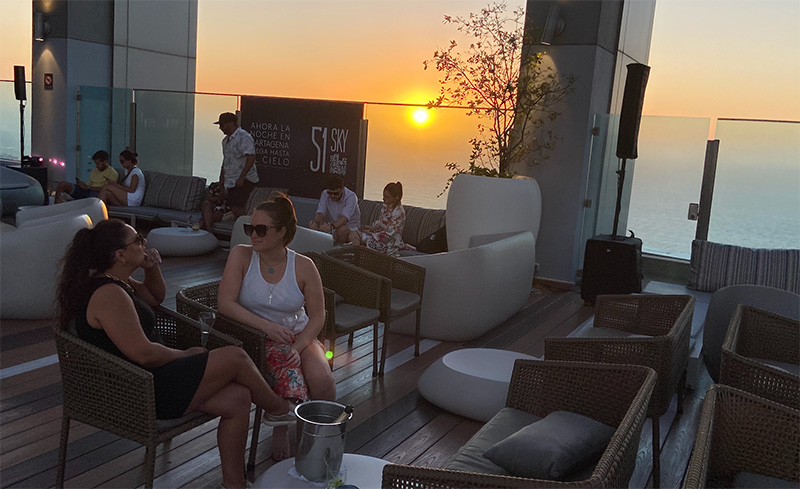
Enjoying the sunset at 51 Sky Bar with Melissa and RaeAnne. As the highest bar in Colombia, the panoramic views of the Bocagrande peninsula are unmatched.
Because Cartagena is so hot during the day, the city really comes alive after the sun sets. Both the Walled City and Bocagrande have incredible rooftop bars.
In Bocagrande, you get sweeping views of the entire peninsula. We highly recommend checking out 51 Sky Bar at the Hotel Estelar. It is the highest bar in Colombia and offers stunning 360-degree views of the ocean and the city lights.
Inside the Walled City, the vibe is more boutique and historic. The rooftop at the Movich Hotel offers the classic view looking over the colonial domes toward the modern skyline. If you want world-class cocktails, head to Alquimico. It frequently ranks among the World’s 50 Best Bars. It spans three floors, each with a different menu focused on Colombian ingredients, but go early if you actually want to taste the drinks.
Since we lived here and worked remotely, we can vouch for the internet. If you are a digital nomad, Cartagena is viable, but you have to be strategic about your location.
In Bocagrande, we had fiber internet with speeds over 100 Mbps. It was flawless for video calls. In the Walled City, the internet can struggle because the colonial walls are so thick they actively block Wi-Fi signals. Always ask a host for a speed test before booking a month-long Airbnb in the Old City.
If you need to work from a cafe, Libertario Coffee Roasters offers a quiet atmosphere and great coffee, while TuWork in Bocagrande is a proper coworking space if you need a dedicated desk.
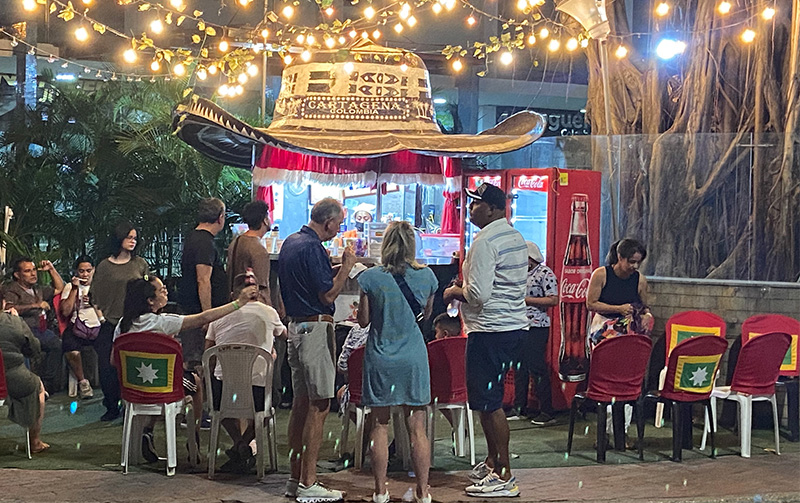
Late night ceviche and fresh oysters at Ostreria Del Mar Rojo. Look for the massive Sombrero Vueltiao roof. It is a staple of the Cartagena street food scene and a great place to break your larger peso bills.
Cartagena is generally safe, but with caveats. Violent crime against tourists is rare in the main zones like Centro, Bocagrande, and Getsemani.
During the intense midday heat, it is too far to walk comfortably between Bocagrande and the Walled City. However, once the temperature drops at night, the walk becomes much more enjoyable. We walked every single night from our Airbnb in Bocagrande into the Walled City for dinner, and walked back after going out. We never had a problem and always felt safe. There is a paved waterfront path, and there were always plenty of other people walking back and forth.
The number one complaint from visitors is the street vendor situation. You will be approached constantly to buy hats, cigars, massages, and tours. It can be exhausting.
The best strategy is a firm, polite “No, gracias” while keeping your walking pace. Do not stop to engage, or the pitch continues. If rappers approach your table to freestyle a song about you, wave them off early, or they will demand money when they finish.
Go deeper into Cartagena with neighborhood guides, food spots, beach days, and real on-the-ground experiences.
WHERE TO STAY
A practical breakdown of Cartagena’s easiest home base with walkability, high-rises, and reliable daily living.
Read More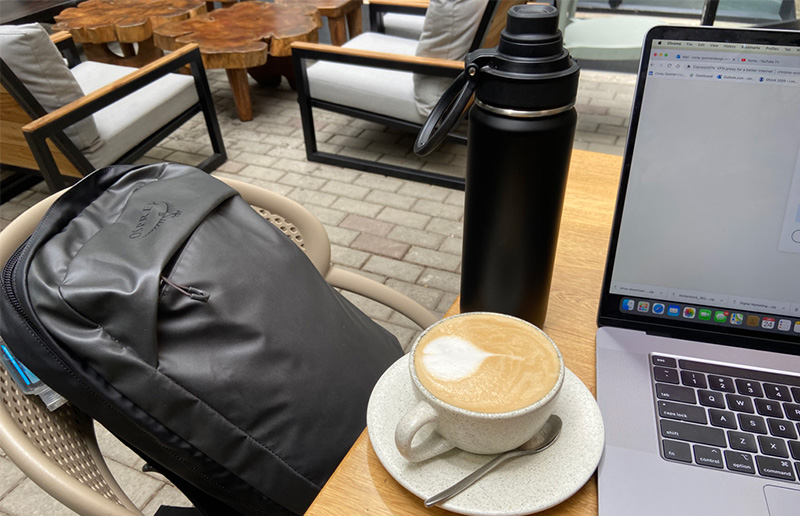
REMOTE LIFE
Where to live, work, and build a routine if you are staying longer or working remotely.
Read More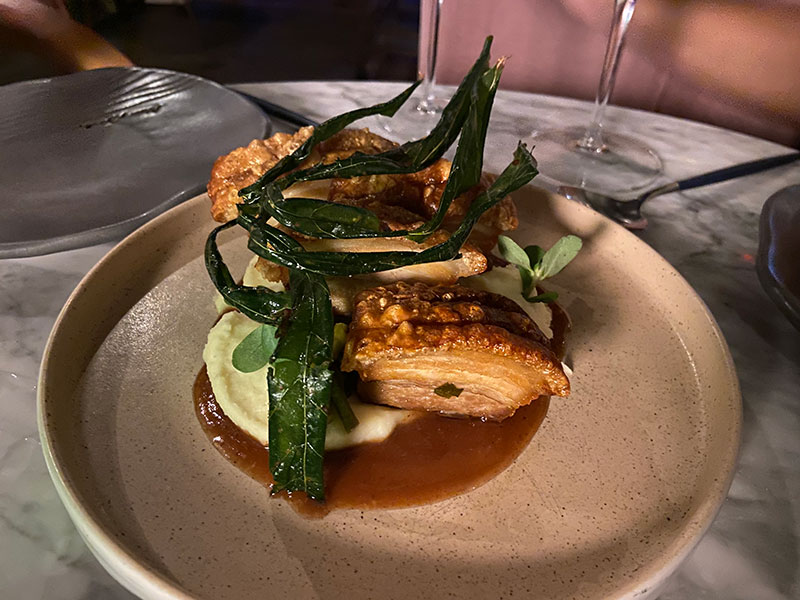
FOOD PICKS
The restaurants and dishes actually worth your time across the city.
Read More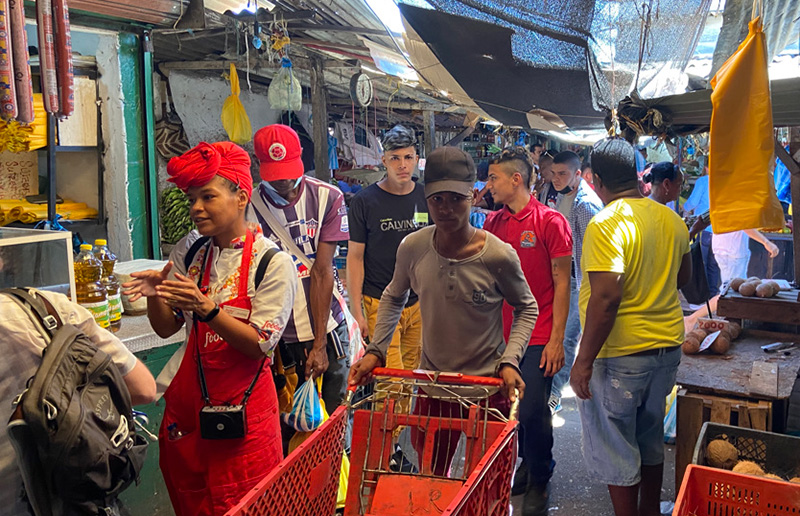
LOCAL MARKETS
A raw, local experience packed with seafood, street food, and nonstop energy.
Read More BEACH DAY
An easy escape from the city with beach clubs, quick boat rides, and a more relaxed pace.
Read More ISLAND ESCAPE
Slow things down with a stay on Isla Grande and a closer look at island life.
Read MoreA few practical guides to help you plan smarter, pack better, and avoid common travel mistakes.
START HERE
Build a smarter trip with a simple framework for timing, logistics, and decision-making.
Read More
MONEY & COSTS
Plan real costs, avoid budget mistakes, and make smarter money decisions before and during your trip.
Read More STAYING SAFE
Practical habits to stay alert, organized, and more confident when navigating unfamiliar places.
Read MoreIn the main areas like Bocagrande, Centro Histórico, and Getsemani, it is generally safe. Use common sense, stay aware of your surroundings, and use ride-shares at night. The most common annoyance is pushy street vendors, not danger.
You can see the main highlights in three to four days, but the city gets better the longer you stay. A week gives you breathing room for island day trips, and a month lets it feel like home.
It can be. Cartagena has a clear split between tourist pricing in the Walled City and more local pricing in areas like Bocagrande and Manga. You can spend big on boutique hotels and rooftop dinners, or keep things much more affordable with local lunches, grocery runs, and short Uber rides.
Yes, especially for longer stays. It is modern, convenient, and has better infrastructure for day-to-day living. It is only a quick, cheap Uber ride to the Walled City, giving you the best of both worlds.
It helps, but you can easily get by without it in tourist areas. However, if you are staying for a month or living in Bocagrande, learning basics like numbers and food ordering goes a long way.