Travel Planning Hub
Start here to plan your trip, compare options, and explore every TLGA planning guide.
Packing & Gear Guide
What to pack, what to skip, and how to build a lighter travel setup that works.
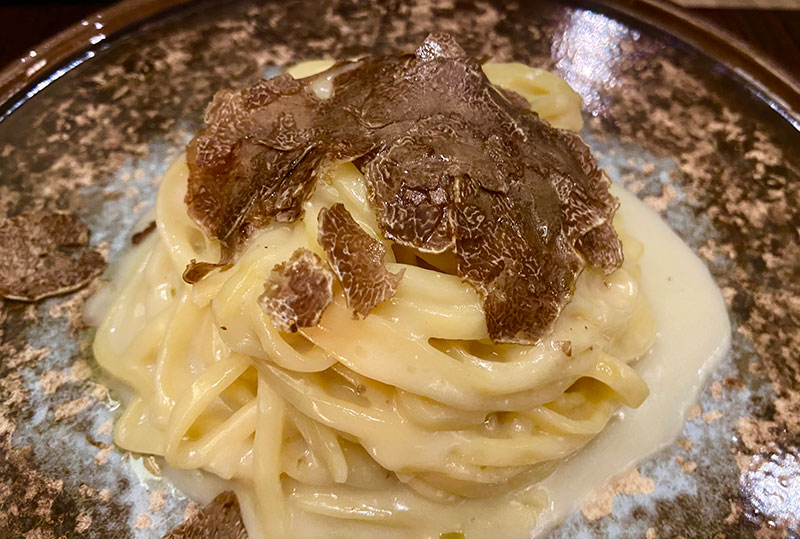
When in Rome during truffle season, the answer is often tartufo. These earthy shavings can turn a simple plate of pasta into something unforgettable. Pro tip: ask the price before you order so the bill does not surprise you.
Last updated: January 2026 by Corey Gasman
From the Editor:
There is no such thing as one unified “Italian food.” There is Roman food, Tuscan food, Venetian food, Sicilian food, and a long list of local traditions that people take very seriously. Ask a grandmother in Bologna about the proper way to make carbonara and you may get a full lecture on why she would never try.
I learned a lot of these rules the hard way. I have been denied a cappuccino in the middle of the afternoon, stared at a mysterious coperto charge on the bill, and once made the mistake of asking for parmesan on seafood pasta. The waiter refused.
This guide is your cheat sheet to the delicious, complicated, and rule-bound world of eating in Italy. From decoding the menu to understanding regional specialties, here is how to eat like you actually live there.
The fastest way to eat better in Italy is to stop looking for generic “Italian food” and start asking what that city or region does best. The country makes more sense once you understand that food is local, seasonal, and often tied to very specific traditions.
That also means etiquette matters. Coffee has rules. Meal times are later. Menus follow a structure. And yes, some requests that feel normal to tourists can sound very strange at the table.
Local Guide Tip: The peperoni pizza trap
If you order a “peperoni pizza” in Italy, you will get a pizza covered in bell peppers. If you want the spicy salami most Americans expect, order pizza alla diavola.
Planning your Italy trip? Food is just one part of the puzzle. Make sure your logistics are dialed in with these:
Dietary note: Traveling gluten-free? Italy is surprisingly strong for celiacs. Look for the AIC sticker on restaurant windows and the crossed-grain gluten-free symbol on packaged foods.
TLGA etiquette rule: Separate checks are not always automatic. The smoother move is often one person pays and everyone settles up later.
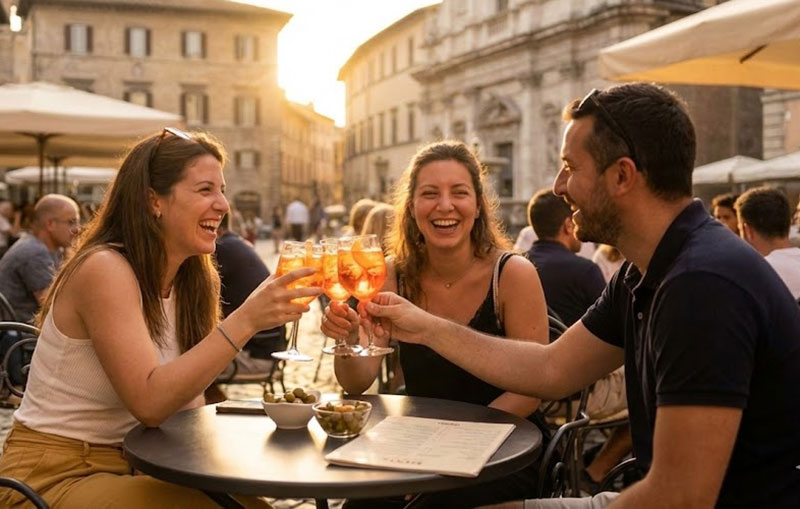
Timing is everything: aperitivo usually starts around 6:30 PM and helps bridge the gap until dinner, which often does not begin before 8:30 PM.
If you show up for dinner at 6:00 PM, you will probably be eating alone, or the restaurant may not even be open yet.
Local Guide Tip: The apericena hack
Traveling on a budget? Look for bars advertising apericena. You buy a drink and get access to a much bigger snack spread, sometimes enough to function as dinner.
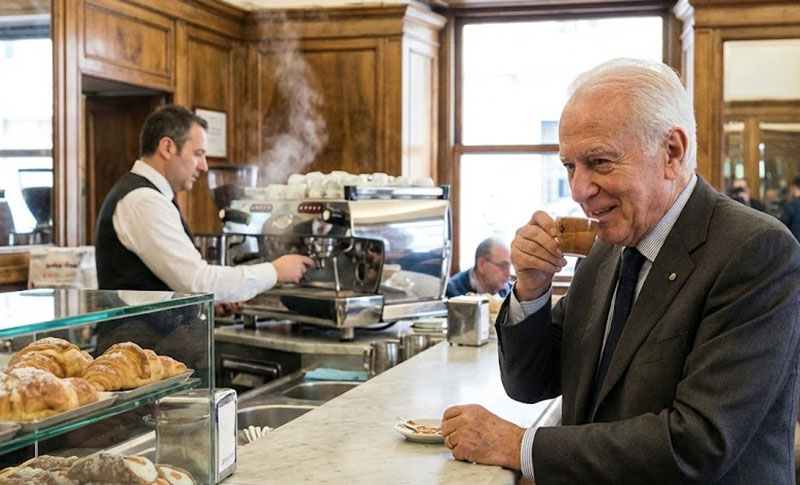
Bar etiquette matters: drinking espresso standing at the counter is usually cheaper. Sitting at a table often costs more because you are paying for service.
Coffee in Italy is fast, cheap, and full of social rules.
Many Italians see milk-heavy drinks as a breakfast thing. After lunch or dinner, the default is usually an espresso, or a macchiato if you want just a touch of milk.
If you drink at the bar, coffee is usually cheaper. If you sit at a table, the same order can cost more because service is built into the experience.
Local Guide Tip: Latte means milk
If you order a latte in Italy, you will probably get a glass of plain milk. If you want the coffee drink, order caffè latte.
| Italian name | What you get | When to order |
|---|---|---|
| Un caffè | A single espresso. | Anytime you need a quick boost. |
| Cappuccino | Espresso, steamed milk, and foam. | Usually breakfast, often before 11 AM. |
| Caffè macchiato | Espresso with a small spot of milk. | Midday or whenever you want something softer. |
| Caffè corretto | Espresso with a splash of liquor. | Usually after a meal. |
| Latte | Plain milk. | Order caffè latte for the coffee version. |
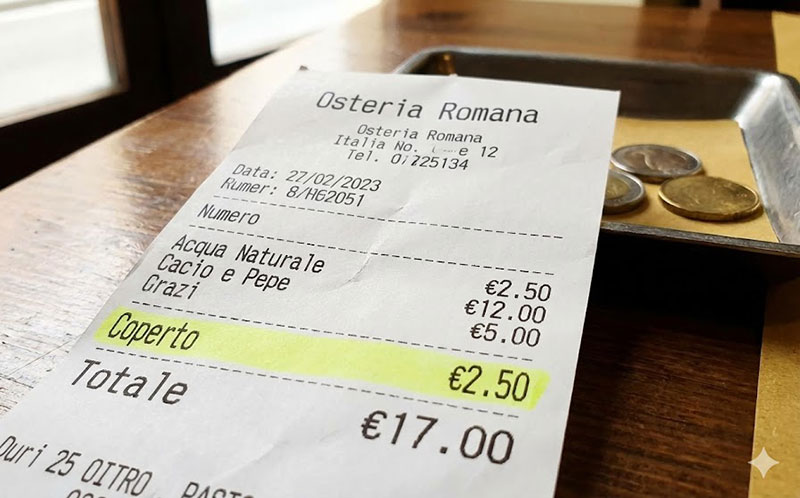
The bill explained: look for coperto, pane, or servizio near the bottom. These are normal charges, not something to argue over.
The bill works differently in Italy than it does in the US.
Local Guide Tip: Coperto is not a tip
Think of coperto more like a table-setting fee than a gratuity. If your server is excellent, a small extra gesture is separate.
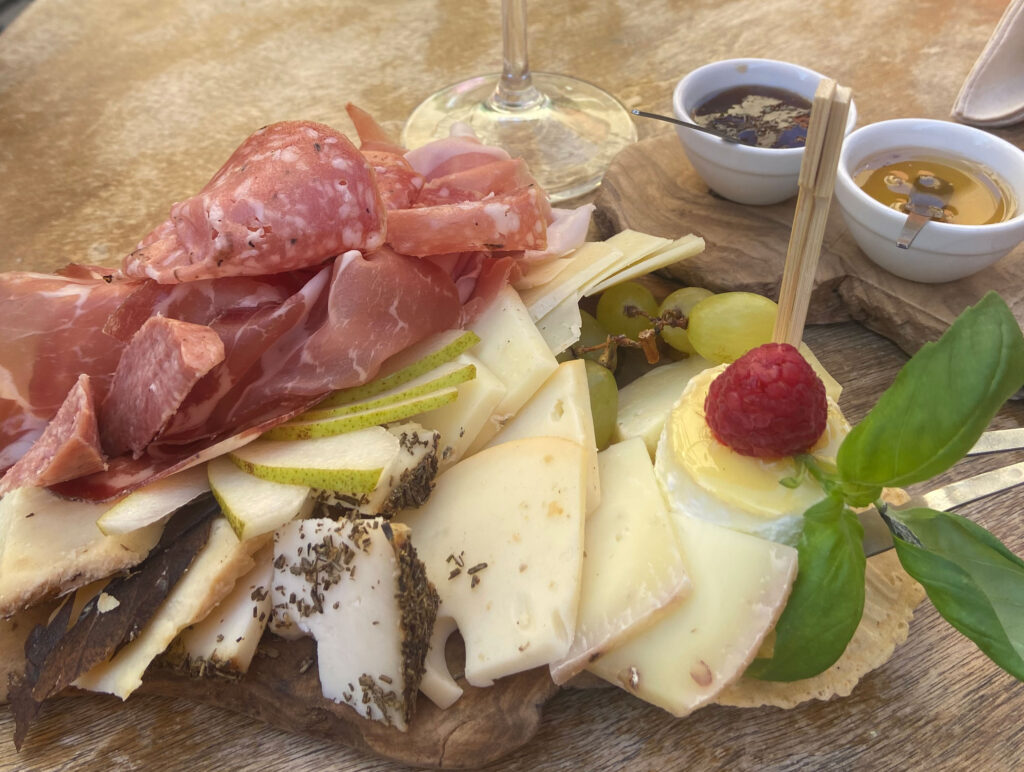
Ordering like a local: Italy is built for courses. You do not need to order them all, but it helps to understand the flow.
This is the easiest way to avoid accidentally ordering four full meals when you only wanted dinner.
Local Guide Tip: If you want vegetables, order them
Sides often do not come automatically. If you order fish or steak, add a contorno unless you want a plate with only the main item.
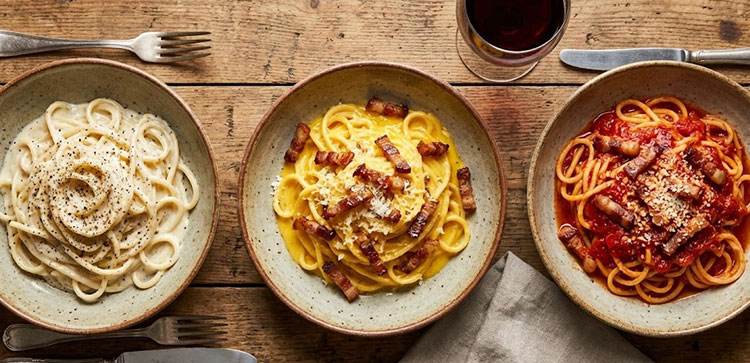
The holy trinity of Roman pasta: cacio e pepe, carbonara, and amatriciana. Simple ingredients, strict rules, and no shortcuts.
Roman food is bold, salty, comforting, and built around a small group of iconic dishes. You can go deep into old-school specialties, or stay in the pasta lane and still eat extremely well.
Fettuccine Alfredo is mostly an American export. If a restaurant in Rome is leaning hard on Alfredo, treat that as a yellow flag.
Local Guide Tip: Seafood pasta and parmesan
If the pasta is seafood-based, do not ask for parmesan unless the menu suggests it. If you want to blend in, enjoy the dish as served.
For a very Roman lunch, skip the sit-down place and go to a bakery or deli. The move is pizza bianca sliced open and stuffed with mortadella.
Local Guide Tip: Follow the lunch line
If a deli counter has locals lining up for pizza bianca sandwiches, that is usually the move.
When artichokes are in season, Rome gets very serious about them.
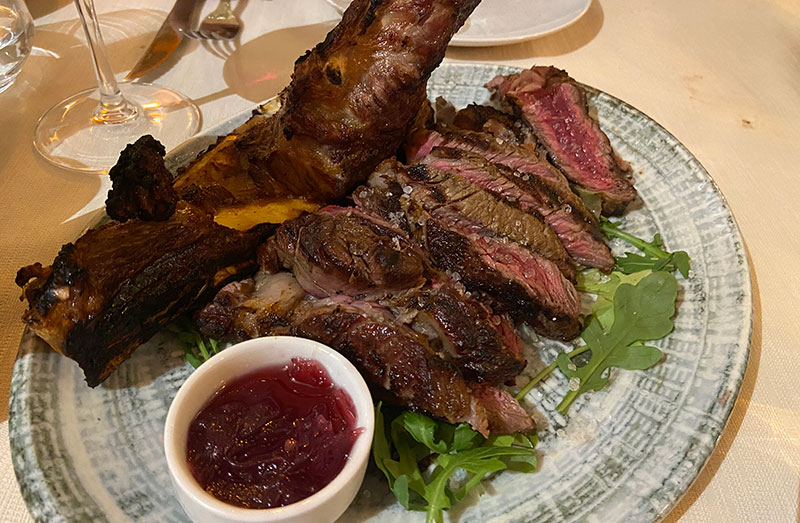
Bistecca alla Fiorentina is massive, grilled over fire, and served rare. Do not ask for it well-done.
Tuscan food is rooted in simplicity. It is about strong ingredients, not extra fuss.
Local Guide Tip: The wine windows
Look for buchette del vino in Florence. Many tiny wine windows have reopened and still feel like one of the most fun ways to grab a drink in the city.
Local Guide Tip: Tuscan steak is not an American steak
Tuscan beef often tastes leaner and cleaner than a heavily marbled American steak. It is just a different baseline, not a downgrade.
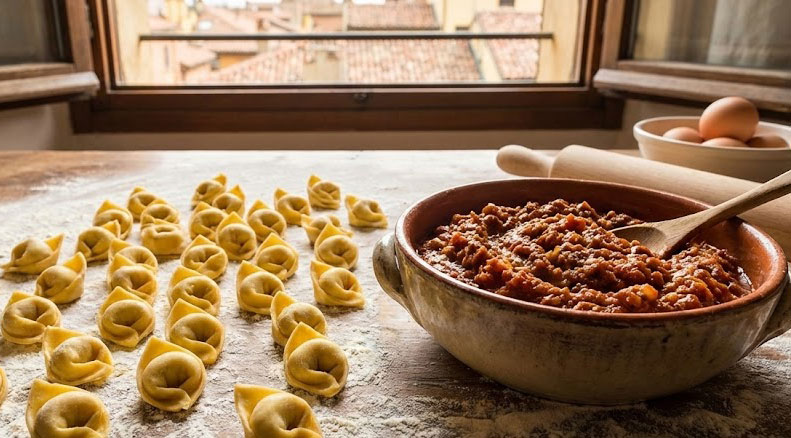
Bologna is La Grassa for a reason. This is the home of tortellini in brodo and the real version of tagliatelle al ragù.
Bologna is one of the strongest food cities in Italy. If you care about pasta, this is serious ground.
Local Guide Tip: The balsamic reality check
Traditional balsamic in Emilia-Romagna is treated like liquid gold. The everyday squeeze-bottle version is not the same thing as the special aged stuff.
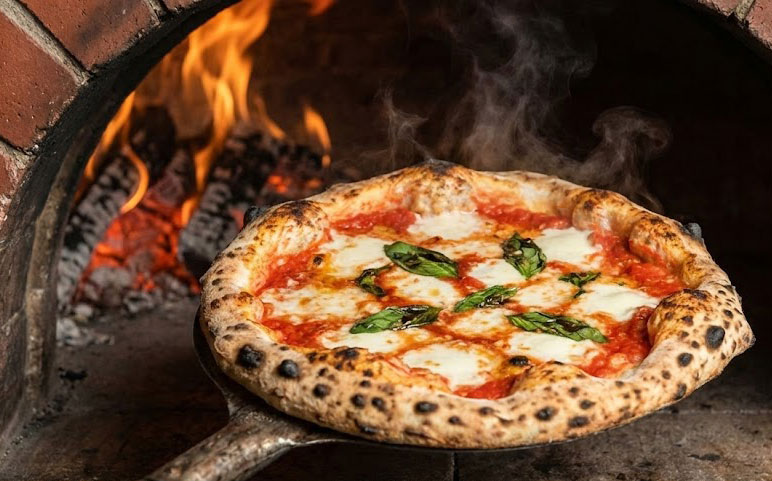
Neapolitan pizza is soft and foldable, not crisp. It cooks fast in a blazing-hot oven and is best eaten without overthinking it.
In Naples, food is fast, loud, satisfying, and often one of the best values in the country.
Neapolitan pizza has a soft crust and tender center. You eat it with a knife and fork, or fold it if you are taking it to go.
A paper cone of fried snacks, which might include seafood, croquettes, or other things coming hot from the oil.
Local Guide Tip: Pizza a portafoglio
If you see pizza folded like a wallet, that is pizza a portafoglio. It is cheap, fast, messy, and exactly the point.
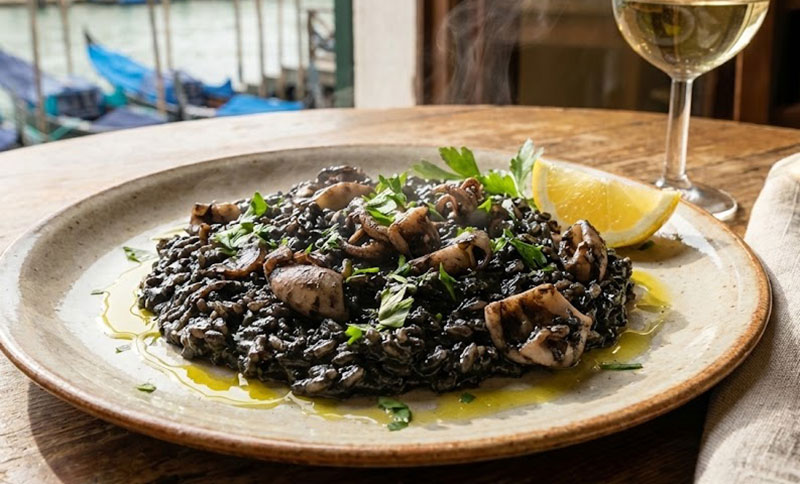
Risotto al nero di seppia looks dramatic and tastes like the sea. Check your teeth afterward.
Venice has its own food rhythm. Skip the obvious tourist menus and lean into the small-bite, wine-bar version of the city.
Local Guide Tip: Eat standing in Venice
The best cicchetti places are often built for standing, snacking, and moving on. A few bites and a drink at several spots can become your whole evening.
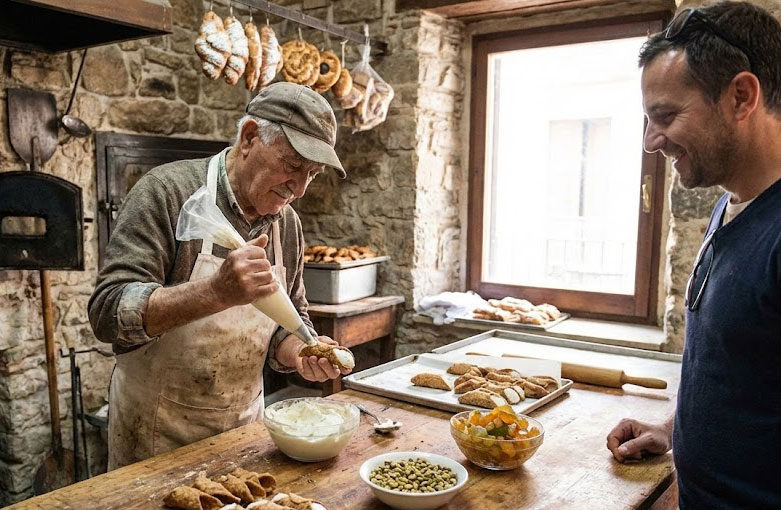
Cannoli rule: if the shells are pre-filled in the case, keep walking. The best cannoli are filled to order so the shell stays crisp.
Sicily feels different in the best way. The food is bold, sweet-savory, and shaped by centuries of outside influence.
Local Guide Tip: Cannoli should be filled to order
Pre-filled cannoli go soft quickly. Crisp shell is the whole point.
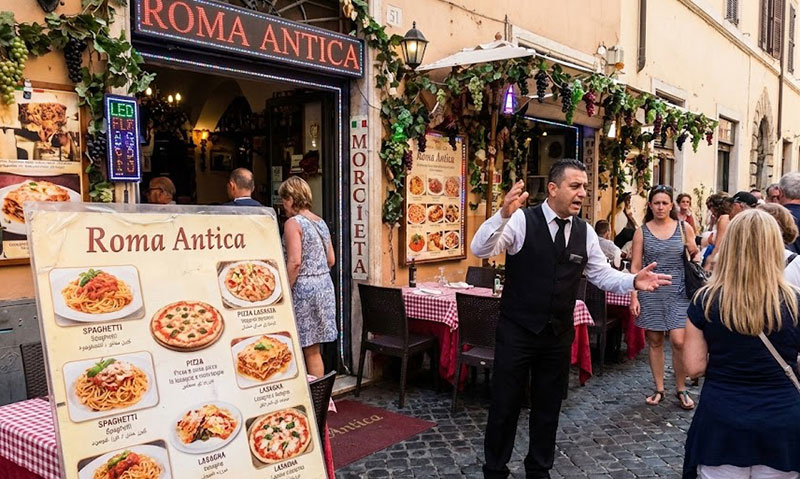
Red flags: a waiter trying to pull you in, or a menu with photos and five languages. Keep walking.
Bad food absolutely exists in Italy, especially near big monuments and headline piazzas.
Local Guide Tip: Green flags for a good meal
Short menu. Seasonal dishes. A place clearly focused on a handful of specialties. That is usually the direction you want.
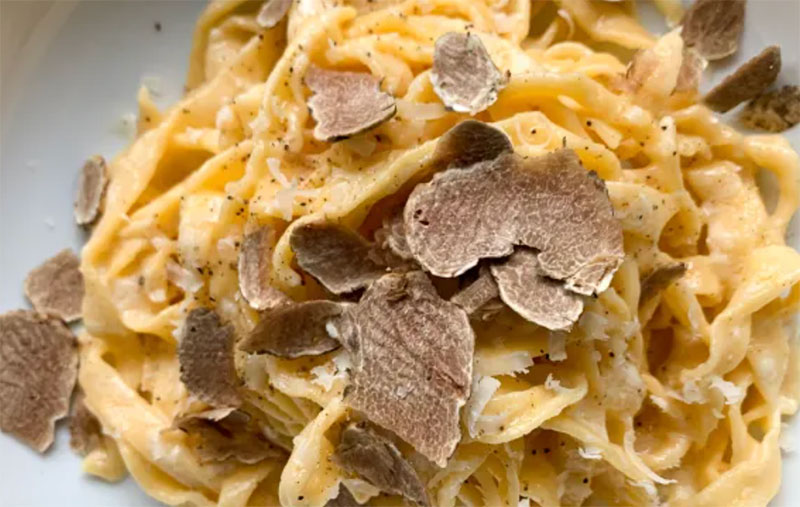
White truffles are used sparingly in Italy. A few shavings are usually the point, not drowning the whole dish.
Truffles are one of Italy’s most misunderstood luxury foods. Italians usually treat them as seasonal accents, not as overpowering flavors.
White truffles are the most prized and expensive. They are shaved raw over simple dishes because heat kills their aroma.
Local Guide Tip: If it is cheap, it is not fresh white truffle
If a menu offers “white truffle pasta” cheaply year-round, it is probably truffle oil or a truffle-flavored product, not fresh white truffle.
Black truffles are more common and more versatile. They are often the better entry point for first-time truffle eaters.
Local Guide Tip: Ask the question
If a menu lists truffle, ask whether it is fresh. A good restaurant will tell you exactly what it is and how they use it.
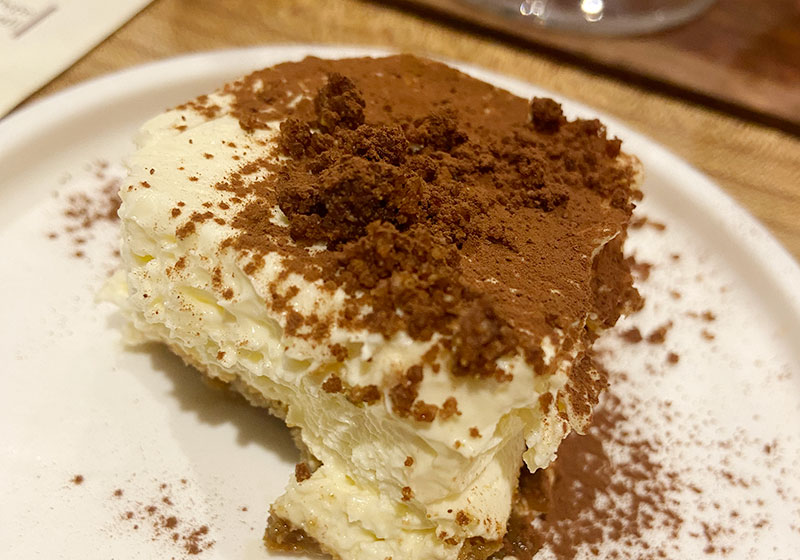
Tiramisù is one of the best final bites in Italy: mascarpone, espresso, cocoa, and almost no chance of regret.
Real gelato is dense, silky, and naturally colored. The tourist version is often fluffy, neon, and piled high.
Local Guide Tip: The two-flavor rule
Pick one creamy flavor and one fruit flavor. It is one of the fastest ways to test whether a gelateria is doing things well.
The best tiramisù is airy, coffee-forward, and built from espresso-soaked ladyfingers with mascarpone and cocoa, not heavy sugary pudding.
It is generally safe, but bottled water is the cultural default. If you want the standard local move, order naturale or frizzante.
Italy is generally careful about allergens, and many menus list them clearly. For gluten-free, say senza glutine and look for AIC-certified restaurants.
Many do, though very small trattorias can be tight on space. Italy is generally very kid-friendly at the table.
It is cultural and often climate-driven. In warmer months especially, people eat later and use aperitivo to bridge the gap.
In popular cities and on weekends, yes, especially for strong trattorias. If you have a must-eat place in mind, book it.
Sometimes, but do not assume it. Many places will not split more than one or two ways, so one person paying can be the smoother move.
It is less common than in the US. Some restaurants will do it if you ask, but it is not always offered automatically.
Final Thought: The art of il dolce far niente
Eating in Italy is not just about the food. It is about slowing down. Do not rush the check. Do not panic if the pace feels slower than home. Sit back, sip your wine, and let the meal be the experience.