Travel Planning Hub
Start here to plan your trip, compare options, and explore every TLGA planning guide.

Packing & Gear Guide
What to pack, what to skip, and how to build a lighter travel setup that works.


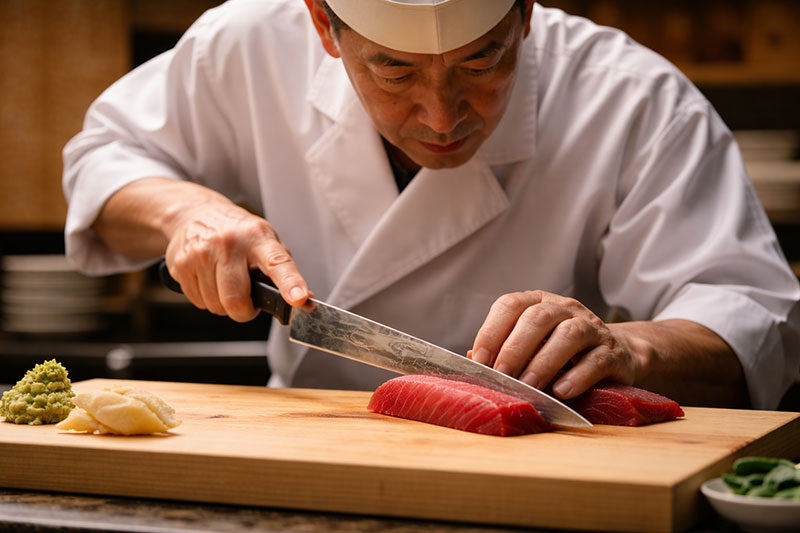
The Art of the Cut: A master *itamae* demonstrates the precision required to slice fish perfectly. The single, fluid motion of the knife preserves the delicate texture of the *maguro* (tuna).
By Corey Gasman
Growing up in Minnesota, “sushi” was nonexistent. We spent our summers catching fresh walleyes off the dock, which were delicious, but in my house, the cooking rule was strict: everything had to be well-done. Steaks were cooked through. Vegetables were boiled until mushy. The idea of eating raw fish wasn’t just foreign. It seemed insane.
Then, a quality sushi spot finally opened in Minneapolis, and I forced myself to try it. That single meal changed my life. I realized that fresh raw fish doesn’t taste “fishy” at all. It tastes like the clean, salty ocean. It went from a fear to a total obsession.
If you are on the fence, keep an open mind. Japan is the best place on earth to try it. But if you absolutely cannot do the raw thing? Don’t worry. I have included a specific list of cooked options in this post so you don’t feel left out. But trust me. Give it one shot.
Goal: You eat like a local, spend smart, and leave Japan thinking, “Oh no. I may never trust sushi back home again.”
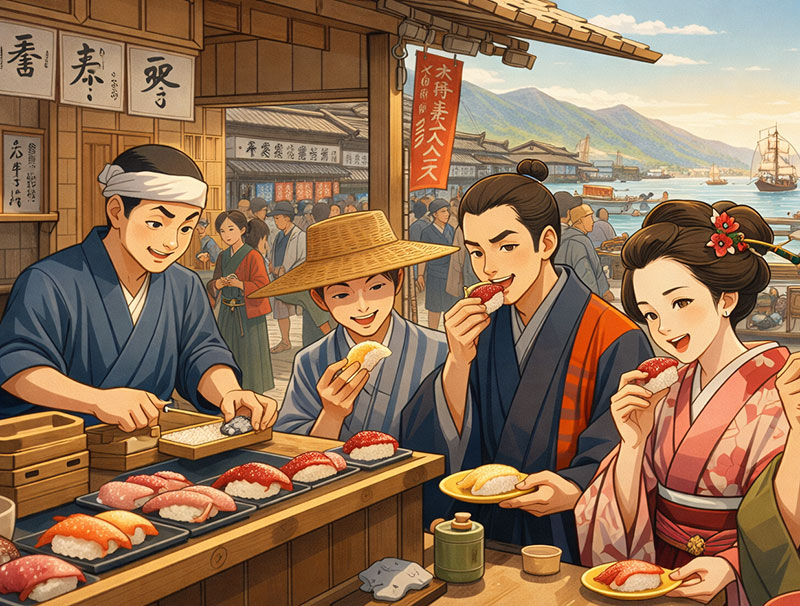
The Original Fast Food: A glimpse into the early 1800s in Edo (old Tokyo), where busy workers would grab edomae-zushi, quick, handheld bites of marinated or cured fish on vinegared rice, from streetside stalls.
Sushi did not begin as fresh raw fish. The earliest version was narezushi, a preservation method where fish was fermented in rice. People ate the fish and tossed the rice. It was intense, sour, and absolutely not your spicy tuna roll.
What most of us think of as “sushi” took off in Edo (old Tokyo) in the early 1800s. This style is called edomae-zushi. Fish from Tokyo Bay was marinated, simmered, or cured, then placed on vinegared rice for a quick handheld snack. Imagine busy workers grabbing sushi the way we grab street tacos or a slice of pizza.
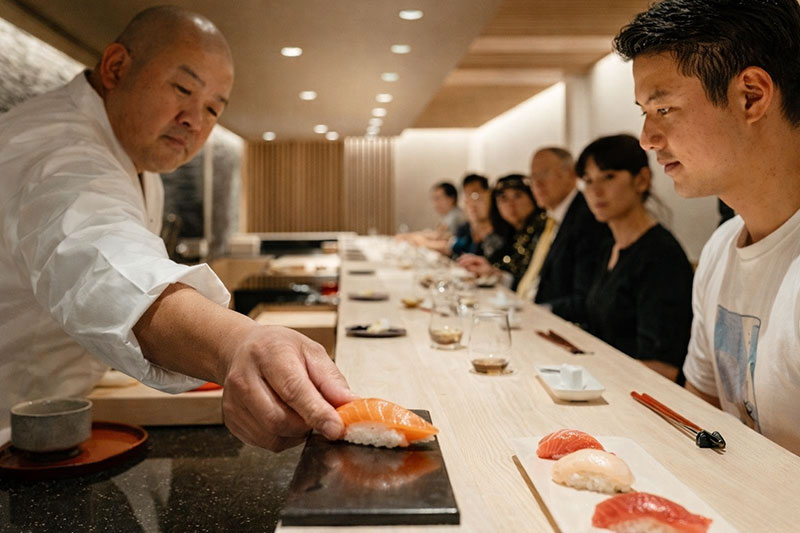
The art of omakase (“I leave it up to you”): Diners sit at the counter to watch the chef expertly prepare and serve a curated menu of the season’s best ingredients.
In Japan, sushi ranges from loud and playful to quiet and sacred. Here is the simple breakdown, plus what each experience is best for.
The most accessible option. Plates circulate on a belt, you grab what you want, and prices are based on plate color (or you order by tablet). It is family-friendly, fast, and budget-friendly.
You sit at a wooden counter facing the chef. You are served piece by piece in a specific order. Omakase means “I leave it up to you,” and it is usually the best way to taste a chef’s signature style.
A throwback to the original quick Edo vibe. No chairs, just a standing counter. You pop in, eat a few pieces, and leave happy. Often great value for quality.
Do not laugh. Supermarket sushi in Japan is legit, and it gets discounted later in the evening. It is a very normal dinner move when you want something quick and surprisingly solid.
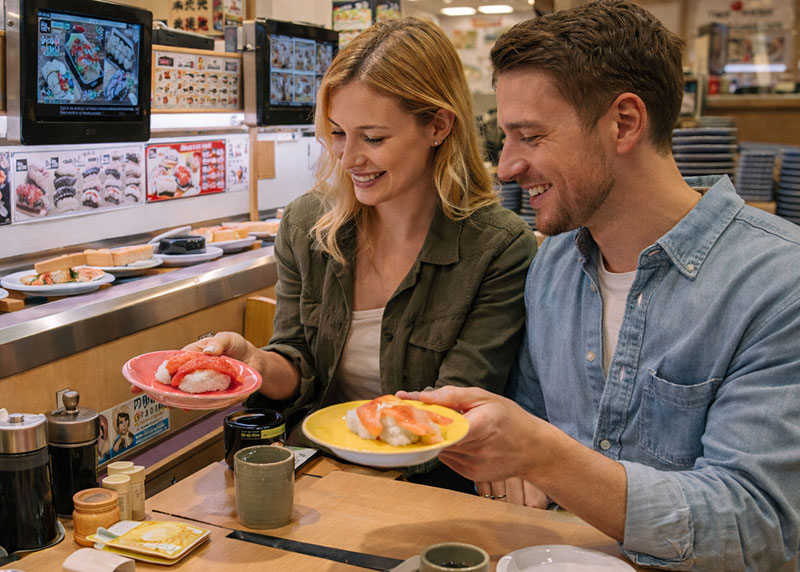
Casual & Fun: Kaitenzushi (conveyor belt sushi) is the perfect low-stress way to dive into sushi culture. Just grab what looks good off the belt or order fresh favorites right from the screen.
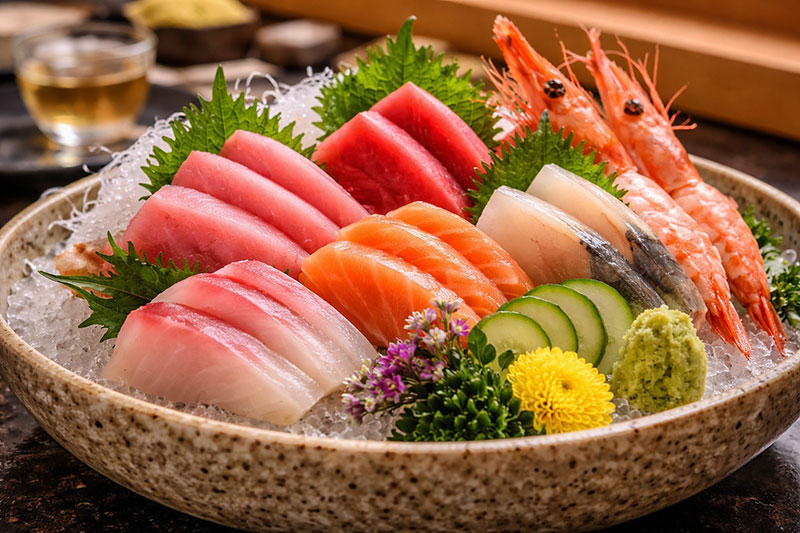
Pure Flavor: A classic sashimi assortment served on ice. Unlike sushi, sashimi is served without rice, allowing you to taste the delicate texture and natural sweetness of the fish, especially with the amaebi (sweet shrimp).
The hardest part for most travelers is not the raw fish. It is the “Am I doing this right?” feeling. Here is the easy playbook.
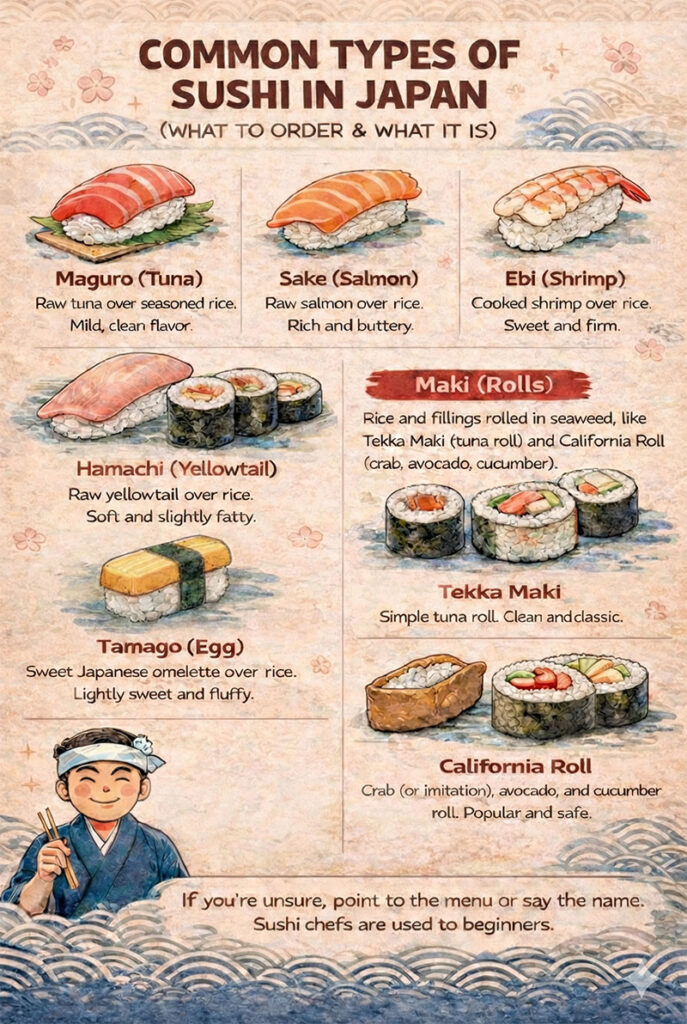
Walking into a sushi spot can be overwhelming if you do not know the names. These are the basics you will see almost everywhere.
| Japanese Name | English | Flavor Profile | Beginner Friendly? |
|---|---|---|---|
| Maguro | Lean Tuna | Clean, meaty, “classic sushi.” | Yes |
| Sake | Salmon | Rich, soft, fatty. | Yes |
| Ebi | Shrimp (Boiled) | Sweet, firm. | Yes |
| Tamago | Egg Omelet | Sweet, fluffy, comforting. | Yes |
| Hotate | Scallop | Mild, sweet, buttery-soft. | Yes |
| Anago | Saltwater Eel | Cooked, tender, sweet glaze. | Yes |
| Ikura | Salmon Roe | Briny pop, salty burst. | Texture warning |
| Uni | Sea Urchin | Creamy ocean-butter, intense. | Acquired taste |
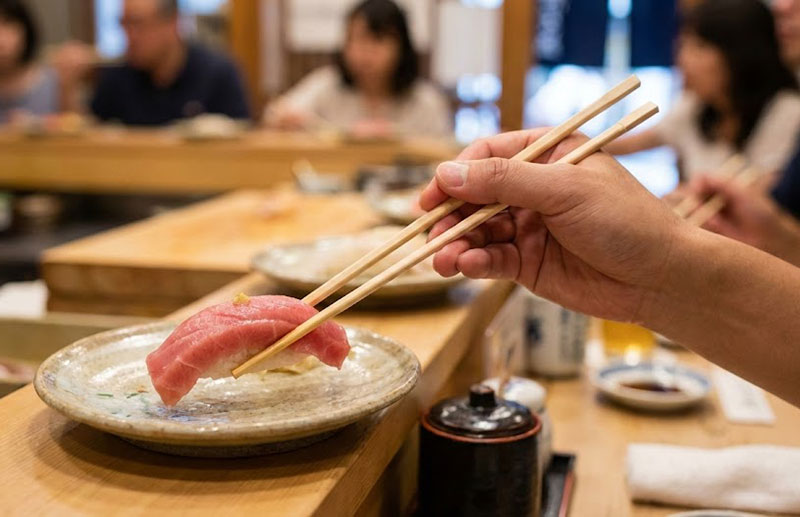
The perfect dip: the fish touches the soy sauce, not the rice. This keeps the rice from falling apart and prevents a salt bomb.
You do not need to be formal. You just need to avoid the few moves that scream “I learned sushi from a gas station fridge.”
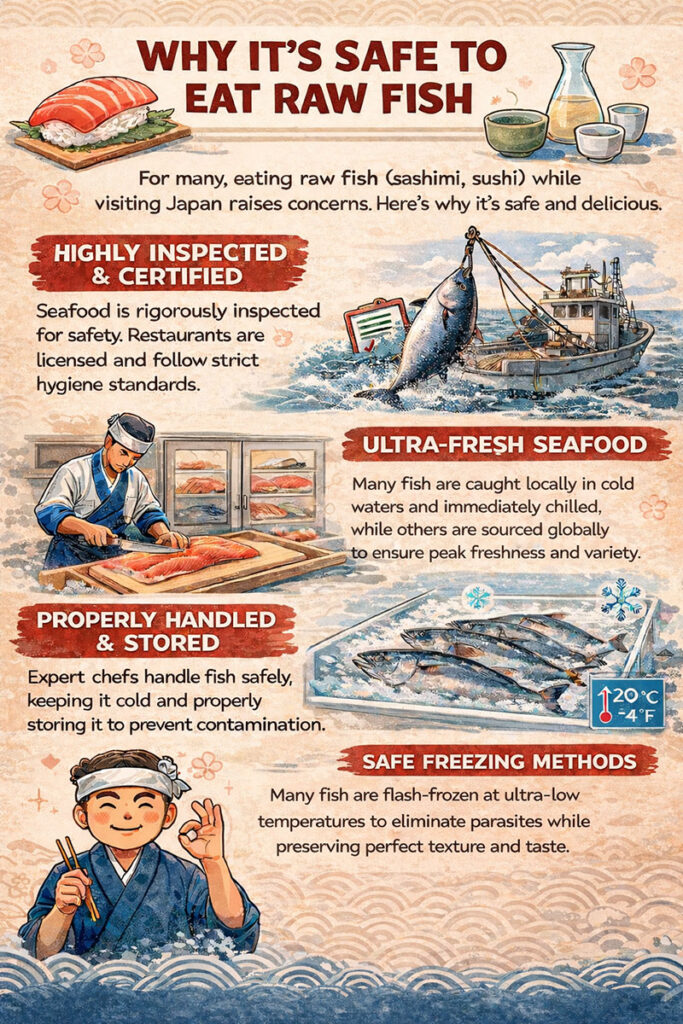
This infographic explains why eating raw fish in Japan is safe, from strict seafood inspections and expert handling to ultra-fresh sourcing and parasite-killing freezing methods used for sushi and sashimi. Download (PDF) the infographic above.
The mental hurdle is real. “Raw fish?” In Japan, sushi safety is not magic. It is systems, sourcing, and standards.
1) Parasite control: Many fish intended for raw consumption are frozen in ways that reduce parasite risk. This is common in modern seafood handling.
2) Supply chain discipline: Japan’s seafood distribution is extremely organized. Major markets and reputable vendors handle fish with speed and strict temperature control.
3) Rice seasoning matters: Vinegar in the rice and wasabi traditionally helped reduce bacterial growth. Today it is mostly flavor, but it still reflects how sushi evolved to be safe.
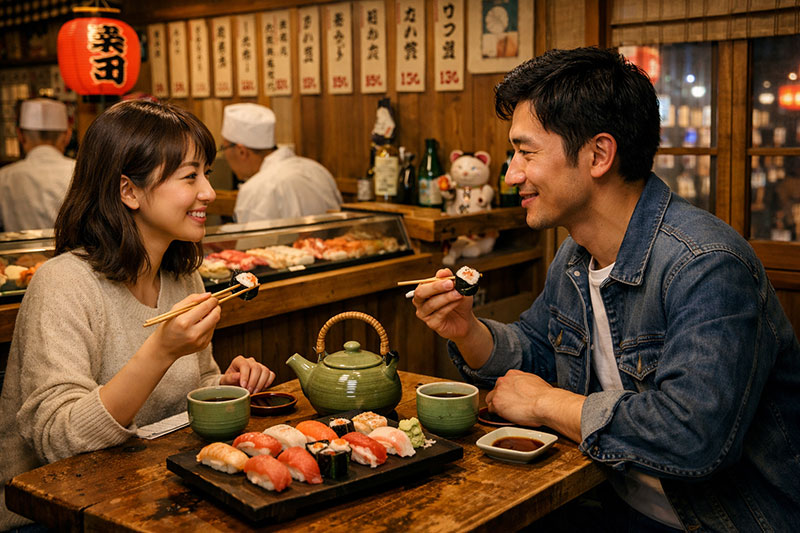
Green tea is the classic drink with sushi in Japan. It cleanses the palate, complements delicate fish flavors, and is commonly served with a ceramic teapot at traditional sushi restaurants.
You can drink whatever you want. This is your trip. But if you want the cleanest sushi experience, here are the classic pairings in Japan.
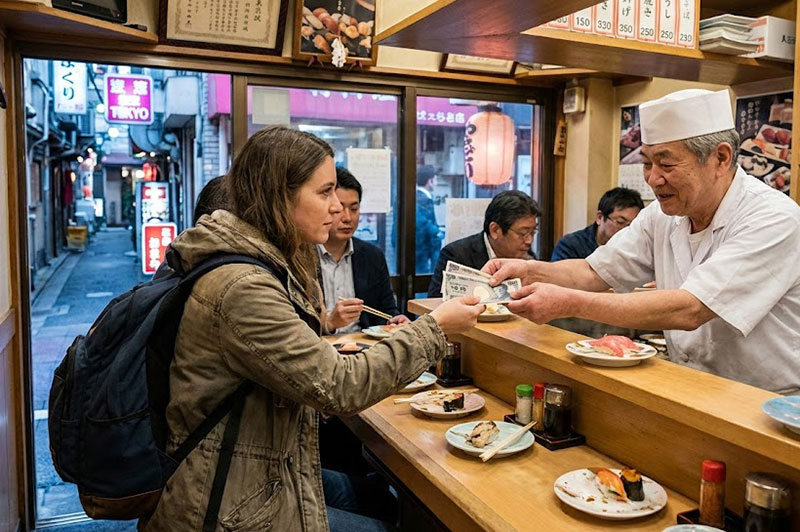
Cash is often king at the best local spots: A solo traveler settles her bill after a meal at a cozy, traditional sushi bar in Tokyo.
Sushi fits every budget. Here is a realistic per-person range, depending on where you go and how hungry you are.
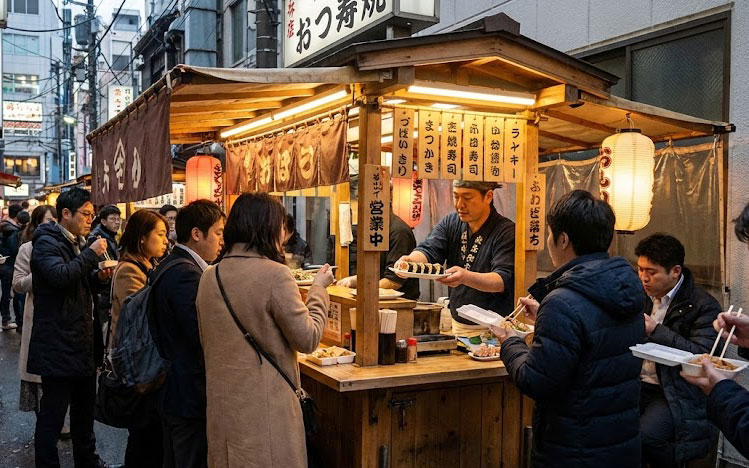
Hungry patrons gather around a bustling yatai (traditional street food stall) tucked away in a narrow Tokyo alleyway. The vendor is busy serving plates of hot food as customers enjoy their meals and the lively evening atmosphere. This scene captures the authentic and social experience of Japan’s vibrant street food culture.
Sushi went from Edo street snack to global obsession. Outside Japan, rolls became the gateway, especially in the late 20th century. It is fun, it is creative, and it helped sushi become mainstream.
But in Japan, the center of gravity is still the rice, the fish quality, and the balance. A great sushi chef is basically running a tiny flavor laboratory in real time. Temperature, salt, acid, cut, timing. That is why sushi in Japan tastes so “clean” and why even simple tuna can feel like a mic drop.
Want to understand the obsession with perfection? Watch Jiro Dreams of Sushi. It captures the mindset that makes sushi culture in Japan feel less like a meal and more like a lifelong craft.
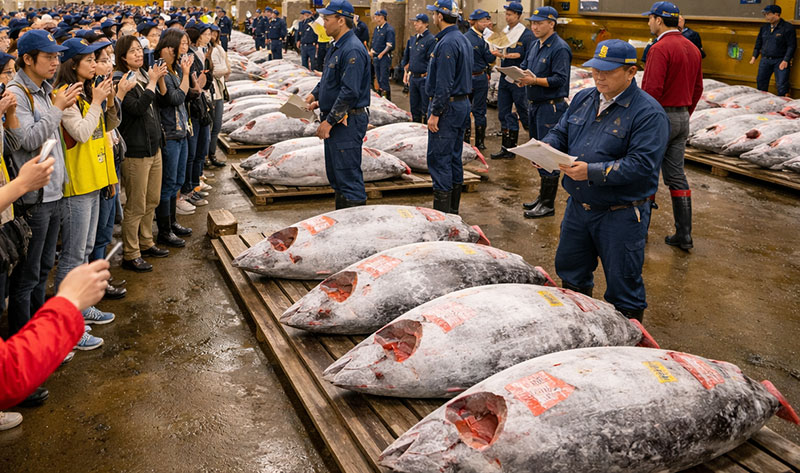
The Lottery Deck Experience: Winners of the official tour lottery get access to this lower observation area, allowing for a much closer look (and listen) at the high-speed auction chants than the public walkway above.
If you are looking for the “famous fish market,” you might be confused. That is because it is actually two different places now. In 2018, the famous inner wholesale market (where the auctions happened) moved to a modern facility in Toyosu. But the original location, Tsukiji, stayed open as an “Outer Market” for food and shopping.
Here is the rule of thumb:
The dawn tuna auction at Toyosu is legendary. The massive frozen bluefin tunas are lined up like torpedoes, and buyers use hand signals to bid in seconds. The prices are insane, especially at the first auction of the year, which is considered a status symbol.
In fact, the 2026 New Year’s auction just set a jaw-dropping record: a single 243kg bluefin tuna sold for ¥510.3 million (approx. $3.2 million USD). That is roughly $13,000 per kilogram! The buyer was, once again, the “Tuna King” Kiyoshi Kimura (owner of the Sushi Zanmai chain), who famously says he pays that much to “cheer up Japan.”
You cannot walk onto the auction floor anymore. At Toyosu, you have two ways to watch:
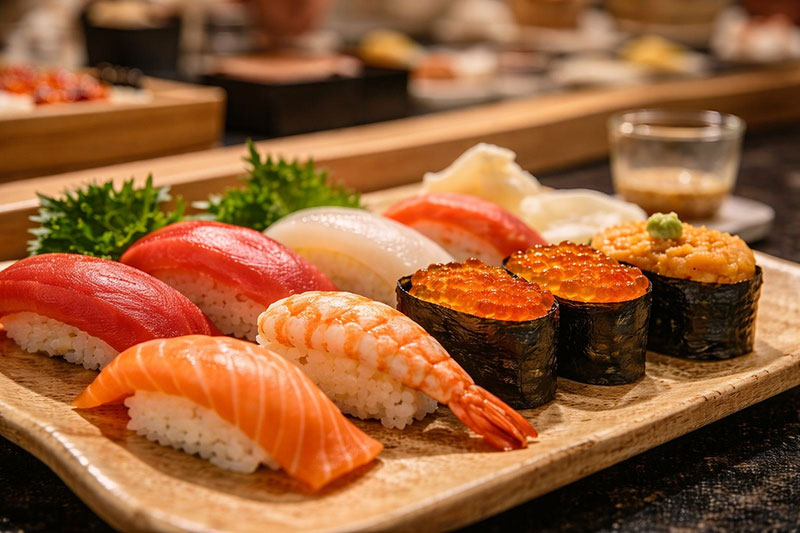
The Essentials: A visual guide to common types, from the familiar maguro (tuna) and sake (salmon) to the rich textures of ikura (roe) and uni (sea urchin).
If this is your first sushi experience in Tokyo, choosing where to eat can feel like trying to pick one song off an entire album of bangers. Tokyo has thousands of sushi spots, from conveyor belt fun to hushed Michelin counters where the chef hands you one perfect bite at a time.
These are a curated starting point based on the Michelin list you shared, plus one “easy button” option that locals love. You do not need to do all of them. Pick one that fits your budget and mood, and you are set.
Local Guide Tip: How to Book High-End Spots
Top-tier counters often require reservations months in advance and don’t take phone calls in English. I recommend using booking platforms catered to tourists like TableCheck, Omakase.in, or ByFood. If you are staying at a nice hotel, your concierge is also a powerful secret weapon for getting hard-to-get seats.
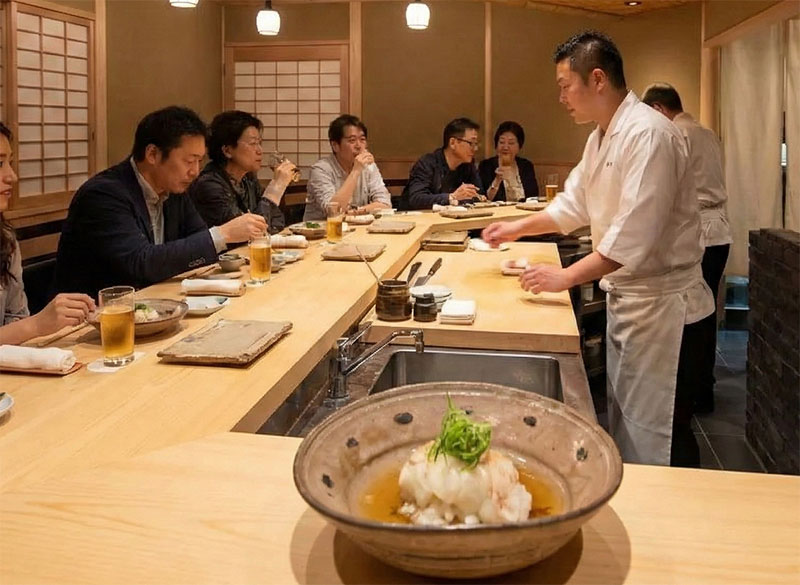
Soak in the atmosphere of a high-end Tokyo counter without the raw fish anxiety. This elegant cooked white fish dish (foreground) is just one example of the exquisite non-raw options available, allowing you to enjoy the full culinary experience alongside local patrons.
If you want excellent sushi without the pressure (or the price tag), do this first:
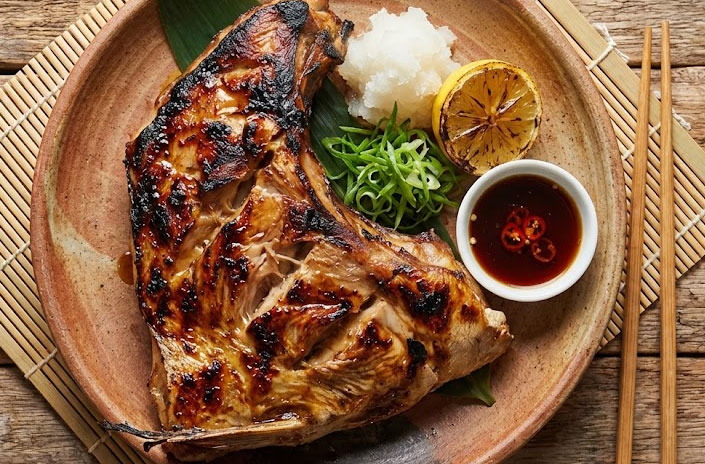
A feast for the eyes: An overhead look at Maguro Kama. The high fat content of the collar makes it incredibly succulent when grilled, easily separating from the bone with chopsticks.
If the idea of raw fish makes you nervous (or you just don’t eat it), you are not banned from sushi restaurants. In fact, some of the best bites in Tokyo are fully cooked or vegetarian. You just need to know what to look for so you aren’t stuck eating plain rice.
These are standard items found at almost every sushi counter, from high-end to conveyor belt.
Vegetarian options in Japan are often simple, thin rolls called hosomaki.
Local Guide Tip: My Go-To Non-Raw Orders
Two of my favorite non-raw orders are tuna collar (kama) and oshinko (pickled vegetables). Both are deeply satisfying, very traditional, and perfect if you want something comforting without ordering sashimi.
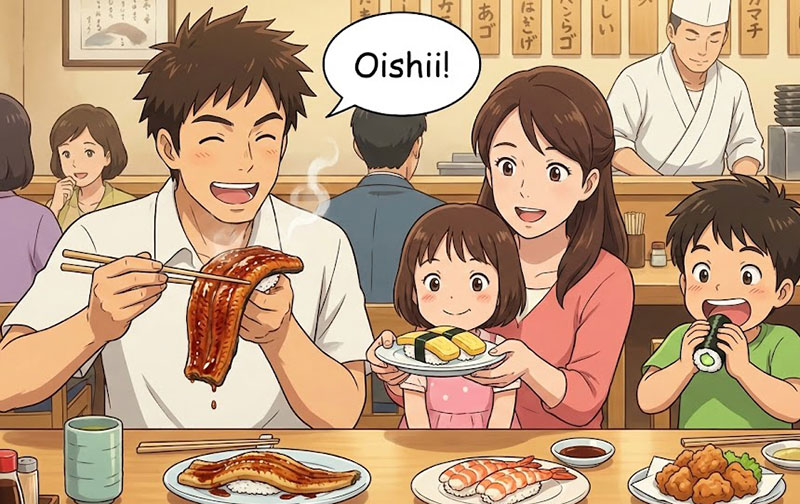
Proof that you can have an amazing sushi feast without touching raw fish! This anime family is diving into grilled Unagi (eel), Tamago (sweet egg), and even fried chicken. The dad’s verdict on that giant piece of eel? “Oishii!” (Delicious!).
If you go to a Kaitenzushi (conveyor belt) chain like Sushiro or Kura Sushi, the rules go out the window. You can order:
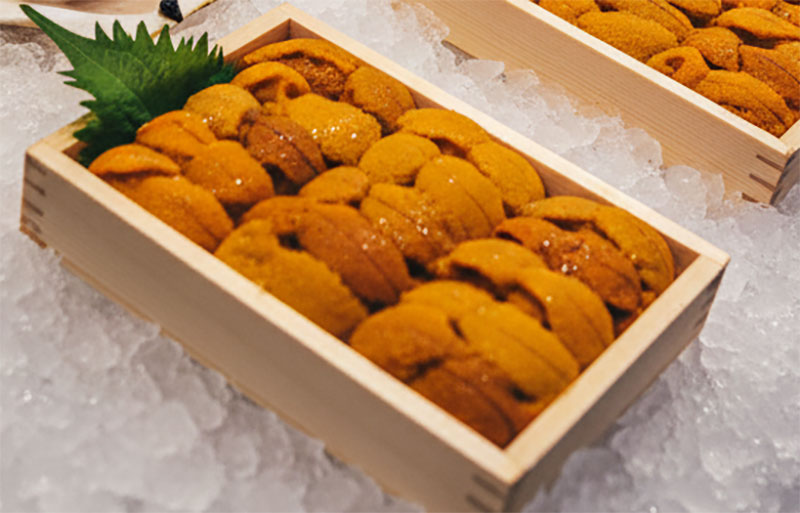
The “Gold of the Ocean.” Premium Uni is displayed in traditional wooden boxes to absorb excess moisture and maintain its signature creamy, custard-like texture.
Uni, or sea urchin, is a prized delicacy in Japanese cuisine. As seen in this beautiful display, the edible part is the bright orange-yellow gonads of the sea urchin, known for their rich, creamy texture and complex, ocean-sweet flavor.
In Japan, uni is traditionally harvested by free-diving fishermen who hand-pick the sea urchins from the ocean floor, a method that ensures sustainability and the highest quality. Once caught, the delicate gonads are carefully removed and cleaned.
The freshest uni, like the kind pictured here, is almost always enjoyed raw. It’s served in a variety of ways: as sashimi, atop a mound of sushi rice wrapped in nori (gunkan-maki), or over a bowl of rice (uni don). The Uni in the photo is presented in a traditional wooden box on ice, ready to be served raw and enjoyed for its pure, unadulterated flavor. It’s a true taste of the ocean and a must-try for any seafood lover visiting Japan.
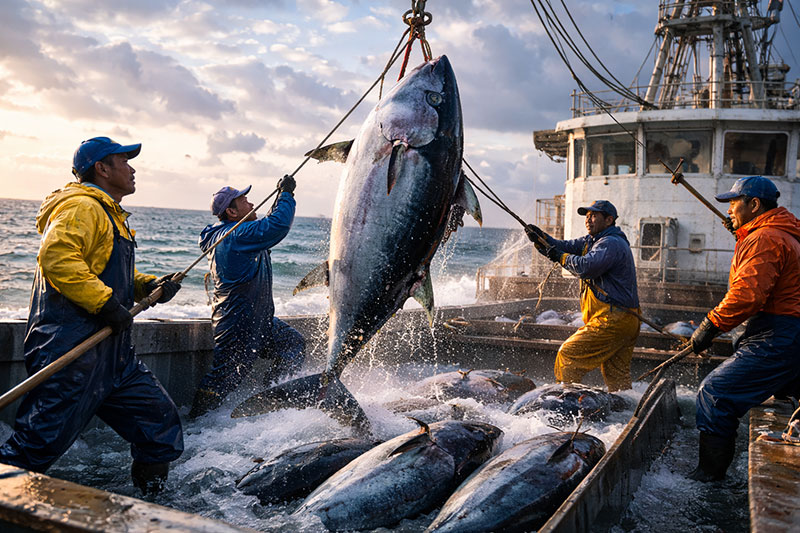
Giant bluefin tuna have long been prized in Japan’s sushi culture, but decades of high demand and industrial fishing have put heavy pressure on stocks, making sustainable fishing practices increasingly important.
Bluefin has a complicated sustainability story. Pacific bluefin was heavily overfished for years, but recent assessments show rebuilding. It is still a high-pressure fishery, and it is worth thinking about where your tuna comes from.
No. Tipping is not part of Japanese culture and can feel awkward. The best move is to be polite and say “Gochisousama deshita” when you leave (thank you for the meal).
Yes. Say “Wasabi nuki” (without wasabi). Many conveyor belt places serve sushi with little or no wasabi by default now, and you add it yourself.
That is gari (pickled ginger). It is a palate cleanser. Eat it between different fish so you can taste each one clearly.
Yes. Completely acceptable, especially for nigiri. It can even be easier for dipping fish-side-down without soaking the rice.
Not rude at casual places, but you do not want to drown the sushi. At high-end counters, many pieces are already seasoned or brushed with glaze, so adding soy sauce can overpower the balance.
Try not to. Sushi is designed as a fish-and-rice unit. If you are getting full, switch to fewer pieces or order sashimi instead.
Start with salmon (sake), tuna (maguro), shrimp (ebi), scallop (hotate), and tamago. Then work your way into tuna belly, ikura, and uni if you feel adventurous.