Travel Planning Hub
Start here to plan your trip, compare options, and explore every TLGA planning guide.
Packing & Gear Guide
What to pack, what to skip, and how to build a lighter travel setup that works.

Last updated: October 2026 by Corey Gasman
From the Editor:
San Sebastián does not reward trying to conquer every famous bar in one night. The best crawls are built on movement, pacing, and a few excellent bites, not a giant plate at the first stop.
Use this as a practical system: understand the rhythm, order with confidence, choose four to six stops, and save the rest for tomorrow.
San Sebastián, or Donostia in Basque, is one of Europe’s great eating cities. Its signature ritual is the txikiteo: moving from bar to bar for a drink and one or two pintxos, rather than settling into a long meal right away.
Pintxos are not simply “Basque tapas.” Some are ready-to-eat bites on the counter, while others are hot dishes ordered from the bartender or chalkboard menu. The goal is simple: try the thing each bar does best, then keep moving.
The classics in Parte Vieja are famous for good reason, and some are busy. Do not chase a mythical hidden bar. Choose the places that fit your appetite, skip any line that kills the mood, and let the crawl stay flexible.
Pacing Strategy: Start with a small beer, txakoli, or vermouth and one or two pintxos. Four to six well-chosen stops is a great night. Ten rich dishes is a mistake.
TLGA Rule: One drink, one or two pintxos, then move on. The best Donostia nights are built on pacing, not plates.
Get your system dialed: Getting Around Abroad (planning like a pro, even on foot)
San Sebastián runs later than many visitors expect, although it is a little earlier than Madrid. Exact bar hours vary, especially by season and day of the week, but this rhythm will keep you out of the dead zone between services.
| Time | The Meal | What to Expect |
|---|---|---|
| 08:00 – 10:00 | El Desayuno | Coffee and a tostada, pastry, or small sandwich. Keep it light. |
| 11:00 – 12:00 | Hamaiketako | The “11 o’clock” snack: coffee, a small sandwich, tortilla, or a first pintxo. |
| 12:30 – 14:00 | Hora del Vermut | A vermouth or txakoli with a salty, sharp aperitif such as a Gilda. |
| 13:00 – 15:30 | La Comida | The main lunch. Many restaurant kitchens open around 1:00 PM. |
| 19:30 – 21:00 | Early Pintxos | A smart time to start a crawl before the most popular bars hit peak pressure. |
| 20:30 – late | La Cena | Dinner energy. Kitchens often begin dinner service around 8:30 or 9:00 PM. |
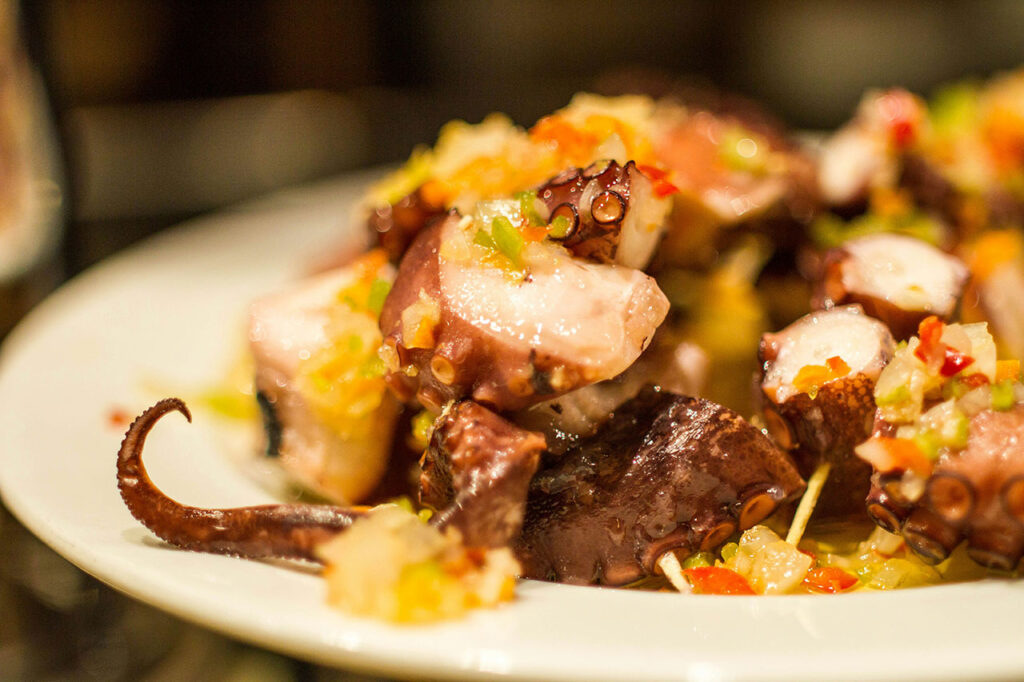
Pulpo is a great order when you want something hot and shared on a Parte Vieja crawl. Look for a busy bar, a short menu, and a kitchen that is clearly in motion.
These bars can feel like organized chaos, but the routine is simple. Be direct, be polite, and watch how the bar is working before you reach for anything.
At standing-room bars, there may be no formal line. Move into an opening, say “Hola,” and order clearly. At the most famous places, though, a queue or reservation list may be very real, so follow the house system rather than forcing your way in.
Many counter pintxos are ready to take and eat. Hot dishes usually come from the kitchen or the pizarra, the chalkboard menu. Some bars also use display samples, so when in doubt, point and ask rather than assuming.
Once you have ordered, give the counter some breathing room. Most bars will total your order at the end, but follow the bartender’s lead. A little cash is still useful at older, smaller spots.
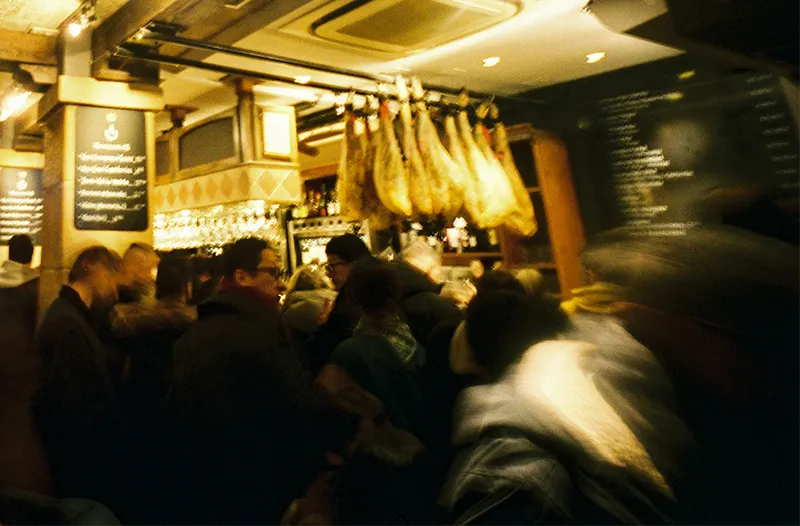
Around 8:00 PM in Parte Vieja, the streets fill, the bars warm up, and San Sebastián shifts into its best food-and-drink rhythm.
Think of this as a walkable core route through Parte Vieja, not a test to finish. Start at the seafood end of your appetite, work toward richer dishes, and leave room for cheesecake.
Bar Nestor is famous for tortilla, tomato salad, and Txuleta, but the tortilla is made in limited batches. Put your name down when you arrive early. If you miss it, the tomato salad and Gernika peppers are still a very good reason to stop.
| The Stop | Order This | Why It Belongs |
|---|---|---|
| 1. Bar Txepetxa | Jardinera anchovy pintxo | The anchovy specialist. It is a bright, briny start with marinated anchovy, vegetables, and serious character. |
| 2. Borda Berri | Puntalette with Idiazabal | Often called a risotto, but it is actually creamy small pasta with smoky Basque sheep’s cheese. |
| 3. La Cuchara de San Telmo | Slow-roasted cochinillo | A deeply satisfying hot stop. Beef cheek is another excellent backup when the pork is gone. |
| 4. Ganbara | Hongos a la plancha con yema | Grilled seasonal mushrooms with egg yolk, one of the defining dishes of the old town. |
| 5. Gandarias | Solomillo with green pepper | A classic beef fillet pintxo when you want something savory, simple, and properly Basque. |
| 6. La Viña | Original Basque cheesecake | The famous version: burnished on top, creamy in the center, and worth the line when you still have room. |
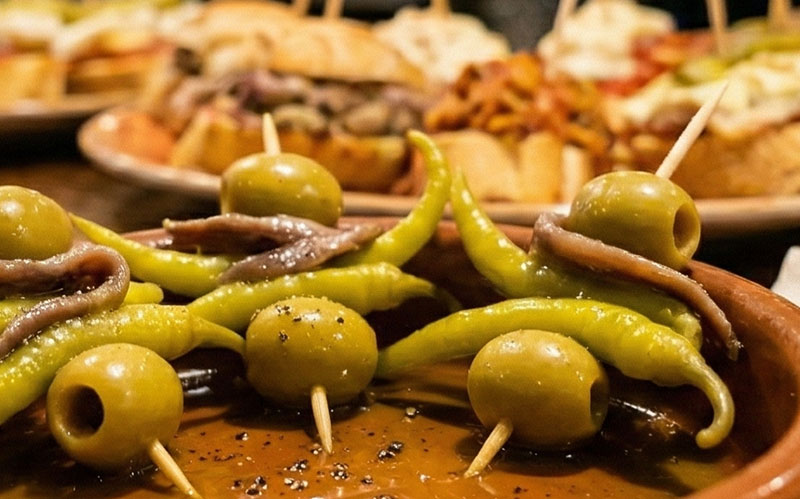
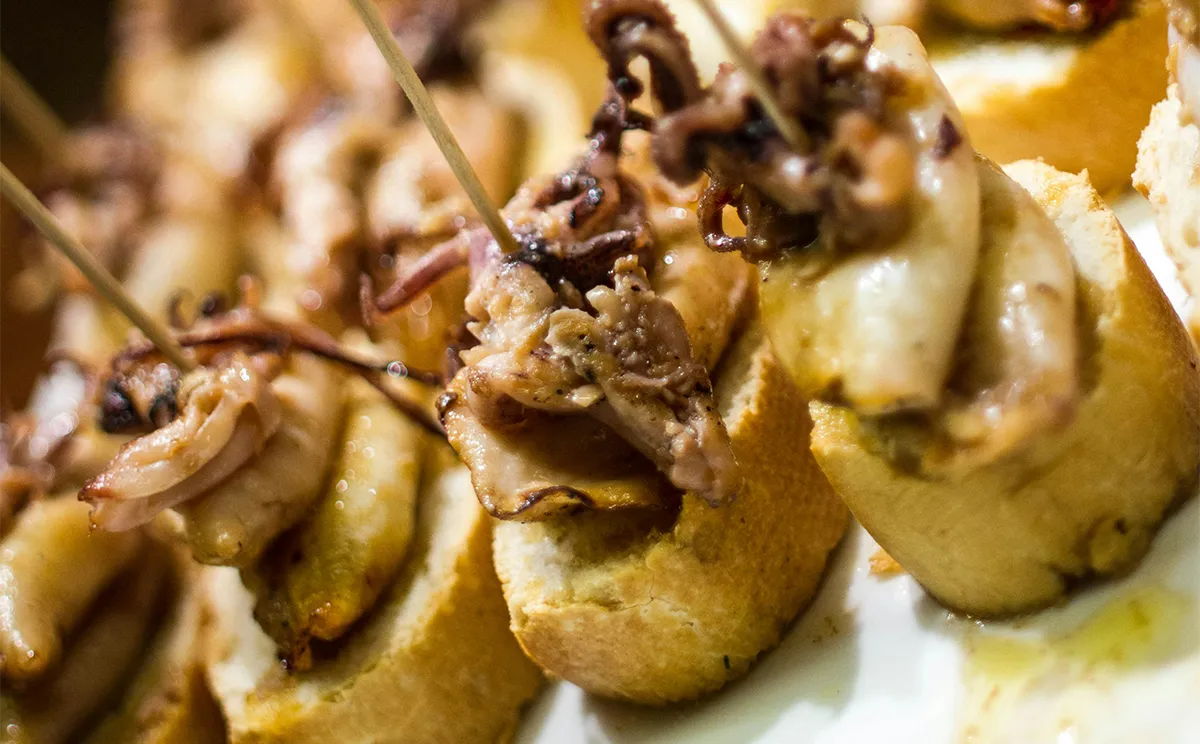
The legendary Gilda is salty, spicy, and sour in one bite. It is the ideal opener with a small beer, vermouth, or crisp glass of txakoli.
Do not try to make one route do everything. These are the bars to save for a second night, a daytime snack, or a short detour beyond the tight lanes of Parte Vieja.
| The Bar | Go For | Where It Fits |
|---|---|---|
| Bar Sport | A classic Gilda | An easy, traditional opener when you want the essential salty-spicy-sour bite. |
| Goiz Argi | Brocheta de gamba | A simple, old-school shrimp skewer and a great traditional counter stop. |
| Paco Bueno | Gambas gabardina | Hot, crisp battered shrimp at an unfussy old-school bar. Carry some cash. |
| Atari Gastroteka | Solomillo con foie | A livelier, more polished take on pintxos near the Basilica of Santa María. |
| Bodega Donostiarra, Gros | The Indurain | A bigger Gilda-like pintxo layered with bonito, anchovy, olive, guindilla, and onion. |
| Bar Antonio, Centro | Potato tortilla | A current favorite beyond the old town, with made-to-order pintxos and a seriously sought-after tortilla. |
| Casa Urola | Seasonal seafood or vegetables | A more polished seated bar or restaurant meal when you want a break from standing-room crowds. |
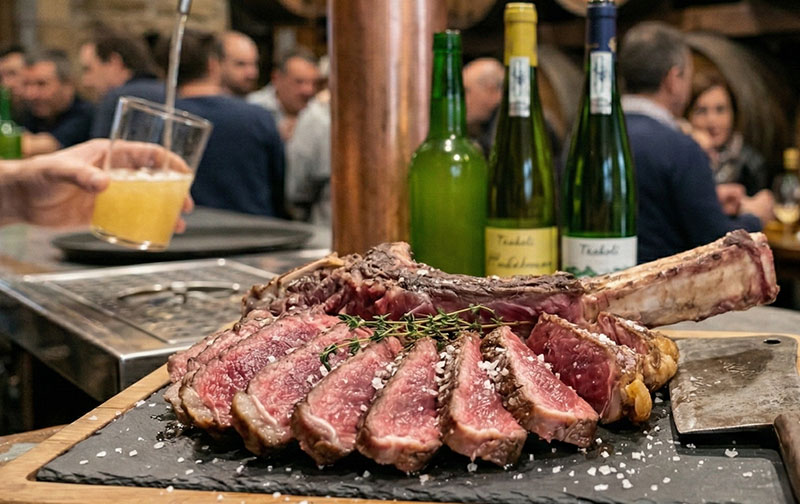
The main event at a Basque sidrería: a massive, bone-in Txuleta steak, charred outside and rare inside, with tart natural cider poured from the barrel.
San Sebastián can deliver both world-class tasting menus and one of the Basque Country’s most memorable communal meals. They are completely different nights, and both are worth considering.
Arzak and Akelarre are the city’s three-star icons, while Amelia is a two-star choice in town. For a special meal, book as early as you can and treat it as the centerpiece of an evening, not a side dish after a full crawl.
For a louder, more communal experience, book a sagardotegia in Astigarraga or nearby. Petritegi is a dependable first-time choice for the classic menu: cod omelet, cod with peppers, bone-in steak, cheese, walnuts, and cider. Cider houses operate year-round, but the traditional txotx season is roughly mid-January through late April.
Explore Spain through culinary deep dives, regional itineraries, and smart travel planning resources.
It is pricier than much of Spain, especially at famous food stops. Pintxos are individually priced rather than included with a drink, so the easiest way to control costs is to choose four to six strong stops instead of ordering heavily at every bar.
Pintxos are brilliant for picky eaters since you can order a variety of small, approachable bites. However, standing-room bars in Parte Vieja get very crowded and chaotic after 8:00 PM. If traveling with small children or strollers, start your crawl earlier in the evening, or choose bars with sit-down restaurants in the back (like Gandarias) or larger spaces in Gros.
Cards and contactless payment are common, but bring some cash. A few smaller, older bars still prefer it, and it keeps a fast crawl moving.
Many popular bars handle English, but a little Spanish goes a long way. “Hola,” “por favor,” and “gracias” are enough to get started. For Basque, “Eskerrik asko” means thank you.
For an evening crawl, start around 7:30 or 8:00 PM and confirm that your first kitchen is open. Dinner service often starts around 8:30 or 9:00 PM, while some pintxo bars begin earlier.
Usually not for a standing pintxo crawl, but Bar Nestor’s tortilla requires planning and the city’s best-known bars can have queues. Reserve formal restaurants and cider houses well ahead when your dates are fixed.
Do not drive after a cider-house meal. Book a taxi, private driver, organized experience, or any transport arranged by the cider house. Rideshare coverage can be inconsistent outside the center.