
Travel Planning Hub
Start here to plan your trip, compare options, and explore every TLGA planning guide.

Packing & Gear Guide
What to pack, what to skip, and how to build a lighter travel setup that works.



Last updated: October 2026 by Corey Gasman
From the Editor:
Finding a good flight deal in 2026 is not about tricks, hacks, or gaming browser cookies. It is about understanding the tradeoffs that actually affect your trip: route competition, timing, flexibility, baggage rules, and connection risk.
The cheapest fare on the screen is not always the best value once you add bags, seat fees, a bad arrival time, or a risky self-transfer. This guide will help you search smarter, compare the full cost, and book a flight you will still feel good about on travel day.
If you are not ready to book flights yet, start here: The TLGA Travel Planning Playbook

Stop wasting time clearing cookies. Focus on what actually moves flight prices: route competition, seasonality, and flexibility. Traveling in the shoulder season is one of the easiest ways to score trips like Ireland in October.
Let us clear the junk advice first. Most flight hacks you see online are outdated, misunderstood, or designed to get clicks rather than improve the trip you actually book.
Private browsing can be useful when you want a clean search session, but it does not unlock secret airline fares. Prices move because of global demand, remaining fare inventory, competition, and how quickly a particular flight is selling.
There is no universal day or hour when every airfare becomes cheap. Flying on a Tuesday can often cost less than flying on a Friday, but buying a ticket at midnight on Tuesday is not a strategy. Focus on flexible travel dates, then book when the itinerary and total cost make sense for you.
On many long-haul itineraries, a round trip can still price better than two separate one-way tickets. On domestic routes, regional European flights, and multi-city trips, mixing airlines or using one-way fares can work just as well. Run both searches before booking, especially when your return city differs from your arrival city.
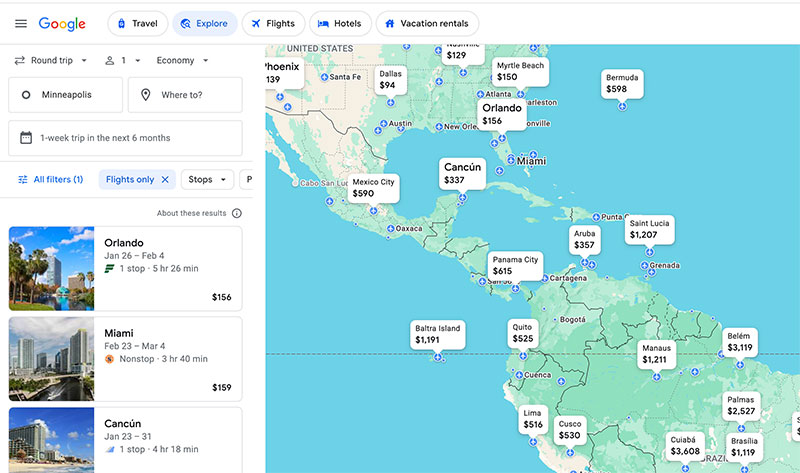
Using an open-ended map search allows you to spot unusually cheap direct routes that can become the anchor for a larger trip.
Most people use flight search engines backwards. They lock in exact dates and a specific city, then get frustrated by the price. The real power comes from maintaining flexibility and letting the map, date grid, and filters show you the better options.
Google Flights Explore is one of the fastest ways to find a strong anchor flight. Enter your home airport, leave the destination open or start with a broad region, then switch the dates to flexible. The map can reveal direct routes and destinations that are much cheaper than the one you originally had in mind.
Flexibility is the ultimate travel advantage. Shifting a departure just a few days away from the weekend can reveal a much better fare. A lower-priced MSP to Dublin flight on a Tuesday, for example, may make an Ireland trip more appealing than an expensive Friday departure to another destination. Once you have a solid international anchor fare, the rest of the itinerary becomes easier to build.

Booking separate tickets can save money, but it requires serious buffers between flights to protect yourself against delays.
This can be a useful system for international travel, especially if your home airport does not offer the best price or routing to a smaller destination abroad.
Instead of searching for a single ticket from your hometown to a smaller destination, compare that total with a two-part itinerary. Airlines compete hardest on major hub routes, while regional carriers can offer good value from those hubs to a final destination.
If you want to visit the Canary Islands, for example, compare a through-ticket with a separate flight into a major European hub such as London, then a regional flight onward to Tenerife. It can work well, but only if the combined fare, baggage costs, transfer time, and extra risk still make the savings worthwhile.
When you book separate tickets, the airlines have no obligation to help if you miss the connection. A delay on the first flight can leave you buying a brand-new ticket out of pocket. You may also need to collect and recheck bags, clear immigration, change terminals, or even transfer airports.
Basic economy tickets can look cheap until you add carry-on bags, checked luggage, seat selection, and the restrictions that come with the fare.
Airlines have unbundled their fares. The price on the first search screen is not always the price you will actually pay once you add the bags, seats, and flexibility you need.
A budget fare can still be a good choice, but compare the full checkout price. A $300 ticket that adds a carry-on fee each way, a checked-bag fee, and seat selection can quickly cost more than standard economy on another airline. Check the exact fare rules before paying, because baggage and cabin-bag allowances vary by carrier, route, and fare type.
Basic economy restrictions vary widely. Some fares board last, limit seat selection, restrict changes, or treat a carry-on differently from standard economy. If there is any chance your plans could change, paying for a more flexible fare may be worth it before you add anything else.
The easiest way to make a lower fare work in your favor is to pack lighter. Learn the system here: Mastering One-Bag Travel

Booking directly with the airline usually gives you a clearer path for changes, cancellations, and customer service when plans go sideways.
Once you find the right flight, a few smart checkout habits can protect your money and make travel day smoother.
If you are booking for a couple or family, search for everyone in your party first. If the price seems high, briefly compare it with a one-passenger search to see whether only a few lower-priced seats remain. In most cases, it is still best to keep everyone on one confirmation number rather than splitting reservations and making changes more complicated. Only book separately when the savings are meaningful and you understand the tradeoff.
Online travel agencies can be useful for research, but if a flight gets canceled or changed, dealing directly with the airline is usually much easier. Use search tools to find the best itinerary, then book on the airline’s website when the price is comparable.
If you are booking a domestic flight in another country on a foreign airline website, choose the local currency instead of letting the site convert the price to U.S. dollars. Dynamic currency conversion often uses a worse exchange rate. This works best with a card that does not charge foreign transaction fees.

The best flight strategy is booking a solid fare, confirming the details, and shifting your energy to planning the actual adventure.
Most people book their tickets and never look at them again. A few quick follow-up steps can make the trip far less stressful.
Use Google Flights price tracking for the route or exact flight you booked. If the fare drops, check the airline’s rules before making any move. A lower price does not automatically mean you will receive a credit, but some flexible fares can be changed or rebooked for a travel credit when the difference is worth the effort.
Select seats if that matters to you, add your frequent-flyer number, and download the airline app. Double-check your passport name, connection airports, baggage allowance, and arrival time. For international trips, confirm entry requirements again shortly before departure rather than relying on what was true when you first booked.
The best flight deals go to travelers who start watching prices early, maintain flexibility with their departure days, and book when the itinerary fits their budget and comfort level. Waiting for the perfect deal is how many people end up overpaying at the last minute.
If the flight works for your schedule and the total cost fits your budget, book it, close the browser, and start planning the fun parts of the trip.
There is no perfect booking window for every route. As a general starting point, domestic trips often price well one to three months out, while international trips may need two to eight months of monitoring. Start earlier for holiday periods, school breaks, major events, limited nonstop routes, and award flights.
Hidden-city ticketing means booking a flight from A to C with a layover in B, then leaving the airport at B because it was cheaper than booking a direct flight to B. It violates many airline fare rules, checked bags will continue to the final ticketed destination, and the airline will usually cancel any remaining segments, including a return flight. It is not a strategy I recommend building a trip around.
Compare the cash price and the number of points required before booking. Paying cash can make more sense for a cheap domestic fare, while points may be valuable for expensive last-minute travel, premium cabins, or routes with unusually high cash prices. Avoid transferring flexible bank points until you have confirmed award availability and the value you are getting.
European passenger-rights rules generally cover flights departing an EU airport, regardless of airline, plus flights arriving in the EU when operated by an EU carrier. Compensation is not automatic. It depends on the type of disruption, the final arrival delay, and whether extraordinary circumstances were involved. Start with the airline’s claim form, then review the official Your Europe passenger-rights guidance if you need to escalate.
For flights covered by U.S. Department of Transportation rules, airlines must generally allow a 24-hour hold or penalty-free cancellation when the booking is made at least seven days before departure. The airline chooses which option it offers. Review the U.S. Department of Transportation ticket-buying guidance and the airline’s own fare rules before booking.
Once the flights are locked in, use these practical guides to pack smarter and manage your logistics.

THE SYSTEM
Build a smarter trip from the start with a practical framework for timing, logistics, and decision-making.
Read More
AIRPORT FLOW
Use PreCheck, CLEAR, and simple timing strategies to reduce friction before you fly.
Read More PACKING & GEAR
Pack lighter, bring what actually matters, and avoid the baggage fees that ruin cheap flights.
Read More