Travel Planning Hub
Start here to plan your trip, compare options, and explore every TLGA planning guide.
Packing & Gear Guide
What to pack, what to skip, and how to build a lighter travel setup that works.
Last updated: January 2026 by Corey Gasman
From the Editor:
Colombia is the country that ruins you for everywhere else. The fruit is fresher, the music is louder, and the landscapes shift from Caribbean beaches to high-altitude Andean peaks in a one-hour flight. It is chaotic, yes. But it is filled with a specific kind of magic (“magia salvaje”) that you can’t fake.
The planning win here is understanding that Colombia is vertical. The weather depends on your altitude, not the month. You can freeze in Bogotá and sweat in Cartagena on the same day.
Colombia rewards travelers who respect its geography and its rules. It is not a place to “wing it” completely. You need to know your safe zones in big cities, book your internal flights (buses take forever here), and understand the “Check-MIG” system.
The “It’s Not Spain” Reality:
Unlike Europe, you don’t walk between cities here. The Andes mountain range splits the country into three distinct spines. A “100-mile drive” can take 6 hours.
The takeaway: Fly between regions (Bogotá to Medellín to Cartagena). Use Uber or Cabify within cities. Do not take night buses through the mountains unless you have to.
TLGA Rule: Spell it ColOmbia, not Columbia. Locals notice, and it matters.
Start here: Getting Around Abroad (logistics planning)
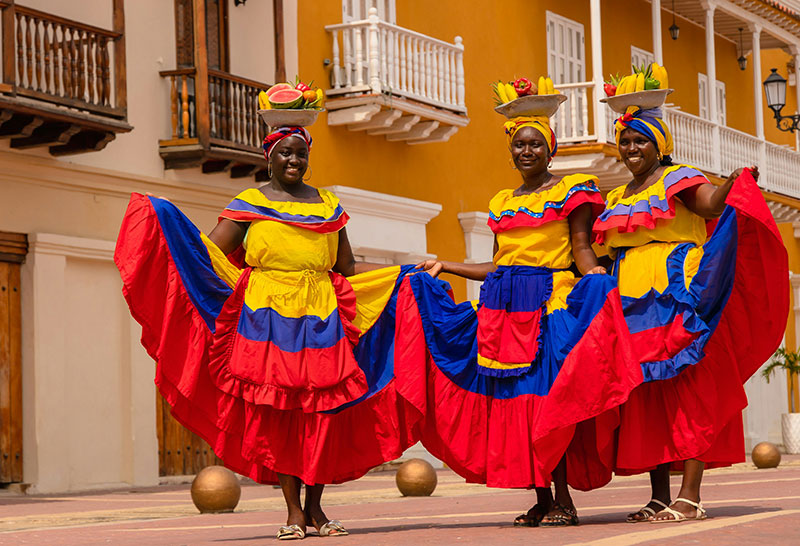
From the walled city of Cartagena to the wax palms of Salento, Colombia is visually overwhelming in the best way possible.Meet the Palenqueras, the iconic fruit sellers of Cartagena, bringing color and flavor to Colombia.
Colombia is open and booming, but bureaucracy and geography are the friction points. The 2026 travel landscape is digital-first but infrastructure-heavy.
You cannot enter or leave Colombia without filling out the Check-MIG form online. It opens 72 hours before your flight.
Bogotá is at 2,640 meters (8,660 ft). If you fly in from sea level, you will feel it. Shortness of breath and headaches are normal for the first 24 hours.
Medellín (El Poblado and Laureles) has become one of the world’s biggest nomad hubs. This means higher prices in those specific neighborhoods and a very “expat” vibe. If you want “real” Colombia, you may need to step one neighborhood over.
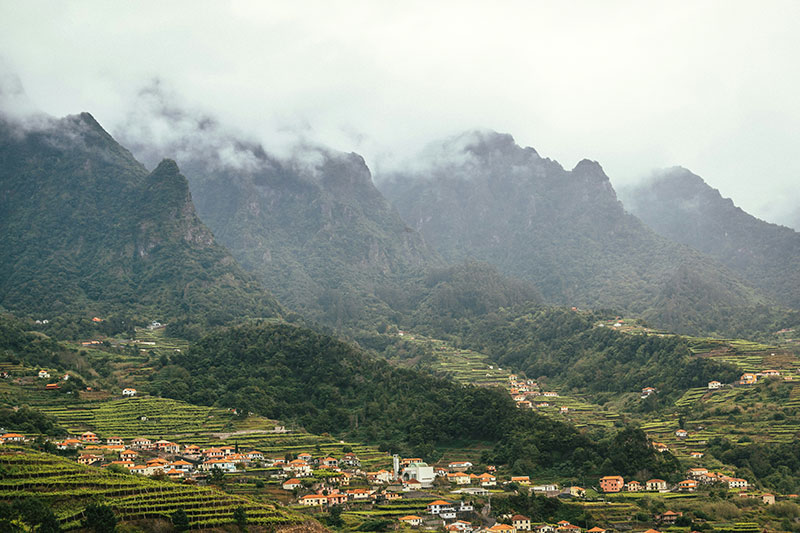
Colombia doesn’t have summer and winter. It has “Wet” and “Dry” seasons, and they vary by region. The breathtaking, mist-covered mountains of the Colombian Andes offer stunning views.
Because Colombia is near the equator, temperatures don’t change much. Rainfall is the deciding factor.
December to March and July to August. These are the golden windows for hiking (Cocora Valley), beach days (Tayrona/Cartagena), and walking cities without afternoon downpours.
April to June and September to November. You will see rain, but usually in short, intense bursts. The landscape is greener, and crowds drop significantly.
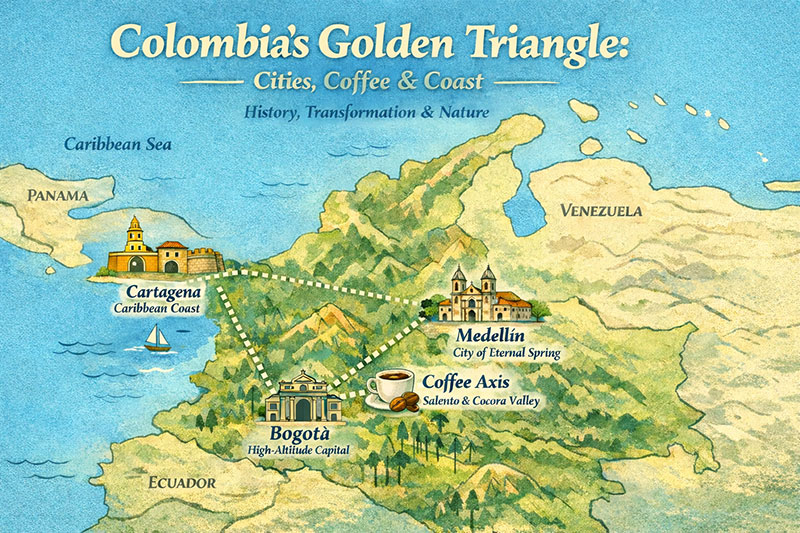
Colombia is huge. Pick your region based on the vibe you want.
Decide if you want Caribbean heat, Andean cool, or Coffee Region relaxation.
For first-timers who want to see the hits. This route covers history, city transformation, and nature.
Skip the big cities and head for the mountains and jungles.
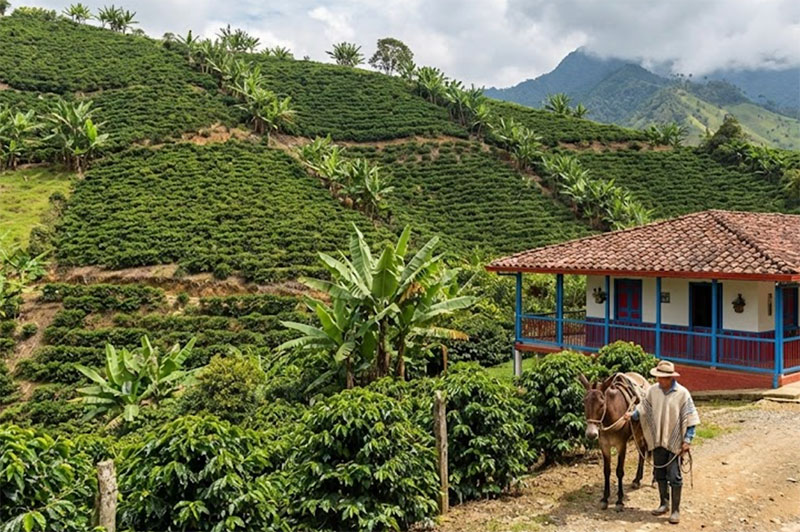
The geography defines the culture. The “Costeños” (coast) are different from the “Rolos” (Bogotá) and the “Paisas” (Medellín). The heart of the Eje Cafetero (Coffee Axis). Here, traditional fincas dot the landscape among rolling coffee plantations and the towering Wax Palms—Colombia’s national tree and a signature of the Cocora Valley.
Don’t try to drive between these regions. Fly.
Hot, humid, loud, and vibrant. Afro-Caribbean culture rules here.
Bogotá is cosmopolitan, cold, and massive. It has the best museums (Gold Museum) and food scene.
Medellín is the “City of Eternal Spring.” Famous for its transformation, cable cars, and nightlife.
The green heart of the country. Rolling hills, wax palms, and coffee farms.
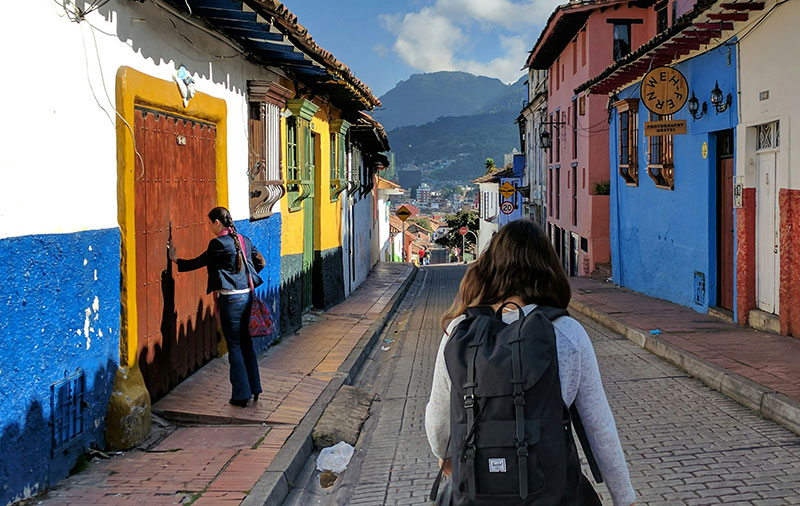
In Colombia, neighborhood selection is a safety decision. Stick to the “safe zones” to enjoy your trip stress-free. Wandering through the historic La Candelaria neighborhood in Bogota, Colombia’s vibrant heart.
Stay where the infrastructure is good and the streets are well-lit.
| Zone | Vibe |
|---|---|
| El Poblado | Tourist hub, nightlife, upscale hotels. Safest but expensive. |
| Laureles | Leafy, walkable, more “local” feel but still very safe. |
| Zone | Vibe |
|---|---|
| Chapinero | Cool, hipster, best restaurants. Great base. |
| Zona T / Rosa | High-end shopping and nightlife. Very safe. |
| La Candelaria | Historic center. Great for day visits, sketchier at night. |
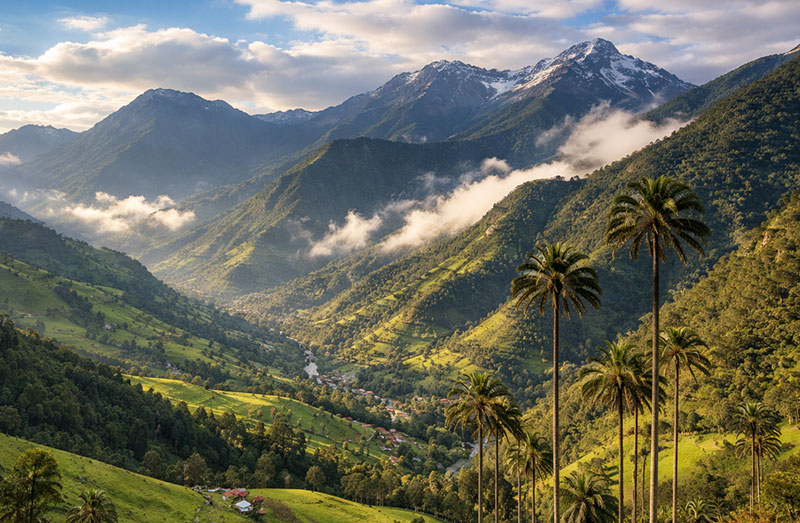
The mountains are beautiful, but they make roads slow. Flights are your best friend here. The Colombian Andes at golden hour, with wax palms rising over a misty green valley and jagged peaks in the distance.
Fly long distances. Use Uber in cities. That is the short version.
Flights are often cheap ($30-$80) and save you 10+ hours of bus travel. The route from Bogotá to Medellín is a 45-minute flight or a 9-hour winding drive.
Uber and similar apps technically operate in a legal gray area but are widely used and much safer than hailing street taxis.
Colombia is beautiful, but it requires “street smarts.”
You will hear this phrase constantly: “No dar papaya.” Literally: “Don’t give papaya.”
Meaning: Don’t make yourself an easy target. Don’t have your phone out on the street corner. Don’t wear expensive jewelry. If you “give papaya,” someone will take it.
The 3 Safety Commandments:
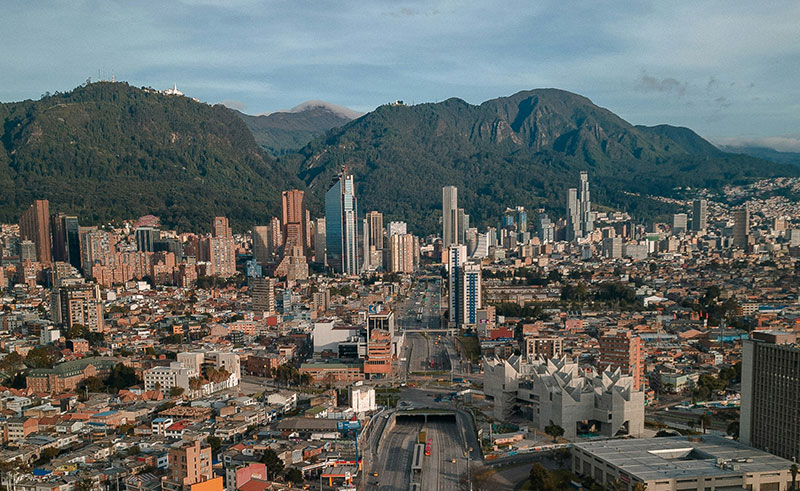
Where you stay in Colombia matters. The right neighborhood makes the trip easier, safer, and much more enjoyable.
In Colombia, choosing where to stay is not just about price or hotel style. It is a logistics and safety decision. The best base is usually the neighborhood with reliable transportation, walkable restaurants, good lighting at night, and easy access to the things you actually want to do.
For a first trip, stay in the most established traveler-friendly areas first, then branch out once you understand the city. Colombia rewards curiosity, but your accommodation should make the trip feel smoother, not more complicated.
| Destination | Best Area to Stay | Best For |
|---|---|---|
| Cartagena | Walled City, Getsemaní, Bocagrande | First-timers, nightlife, restaurants, Caribbean atmosphere |
| Medellín | El Poblado or Laureles | Walkability, cafes, nightlife, digital nomads, longer stays |
| Bogotá | Chapinero, Zona T, Parque 93 | Restaurants, museums, business hotels, safer city base |
| Coffee Region | Salento or Filandia | Cocora Valley, coffee farms, slow travel, mountain scenery |
| Santa Marta / Tayrona | Santa Marta, Minca, or near Tayrona | Beaches, jungle, hiking, nature-focused trips |
For first-timers, the Walled City and Getsemaní are the most atmospheric choices. You can walk to restaurants, plazas, rooftop bars, and colorful streets without needing a ride every time you leave your hotel.
Bocagrande is less charming, but it can be very practical, especially if you want apartment-style stays, ocean views, grocery stores, easier rideshare pickup, and a more modern base.
El Poblado is the easiest and most tourist-friendly base. It has the biggest hotel selection, lots of restaurants, nightlife, coffee shops, and a strong expat scene. It is convenient, but it can feel more international than local.
Laureles is better if you want a calmer, more residential feel while still staying in a safe, useful part of the city. It is a great fit for longer stays, remote work, and travelers who want daily life without being completely outside the comfort zone.
La Candelaria is worth visiting during the day, but most travelers are better off sleeping farther north in Chapinero, Zona T, Zona G, or Parque 93. These areas put you closer to better restaurants, nightlife, hotels, and safer evening movement.
Bogotá is huge and traffic can be brutal, so do not pick a hotel just because it looks close on a map. Choose the area based on what you plan to do most.
Salento is the classic base for the Cocora Valley and coffee farm visits. It is more popular and touristic, but also easier for first-timers.
Filandia is quieter, prettier in some ways, and a little less overrun. It works well if you want the Coffee Region feel without staying in the busiest town.
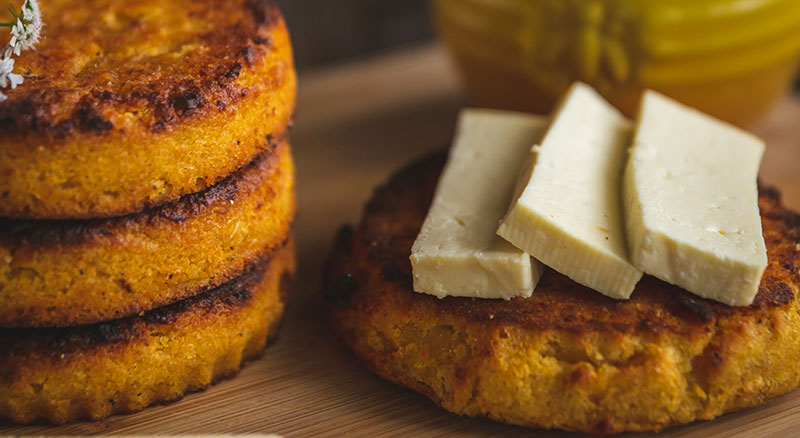
Colombian food is hearty, comforting, and fruit-heavy. Pictured: Sweet, griddled, and topped with salty fresh cheese, Arepas de Choclo are the ultimate Colombian comfort food.
Colombian food is not spicy (surprising to many). It is savory, rich, and soups are huge.
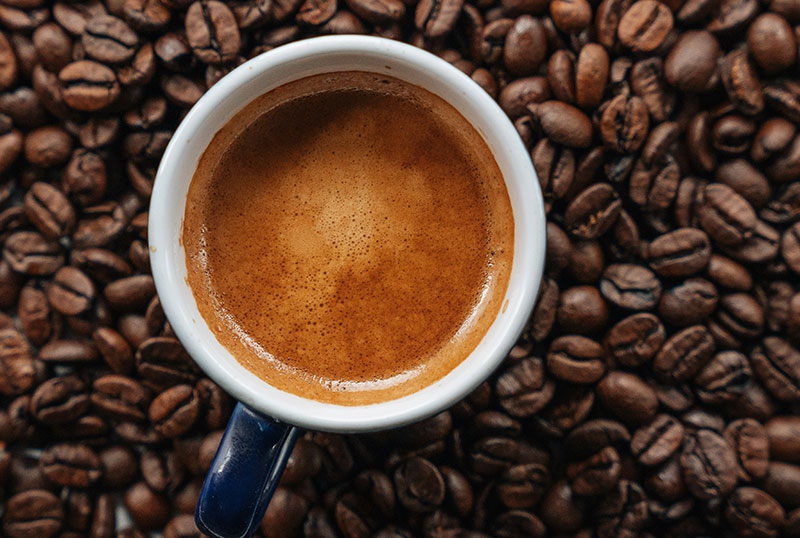
Colombia can be an excellent value, but the cost spikes come from last-minute flights and peak-season coast lodging.
Colombia is controllable. Spend on neighborhoods and flights. Save on food.
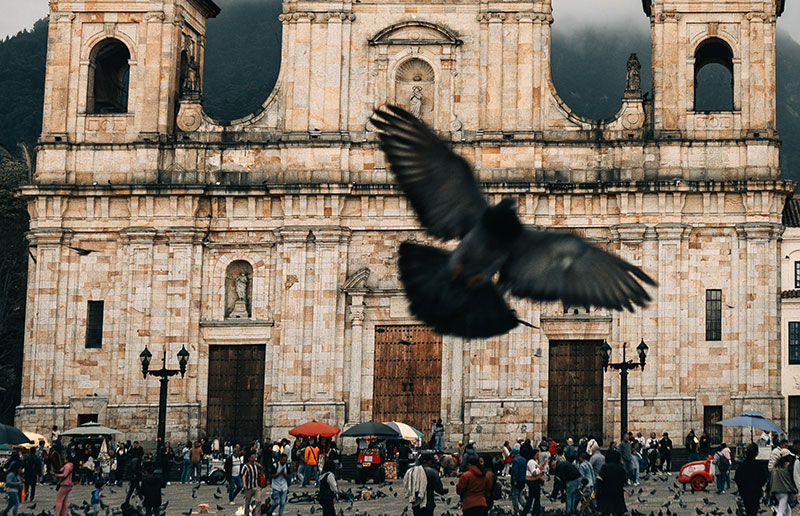
Colombia is warm and social. Learning a few rules makes you a “guest,” not a tourist.
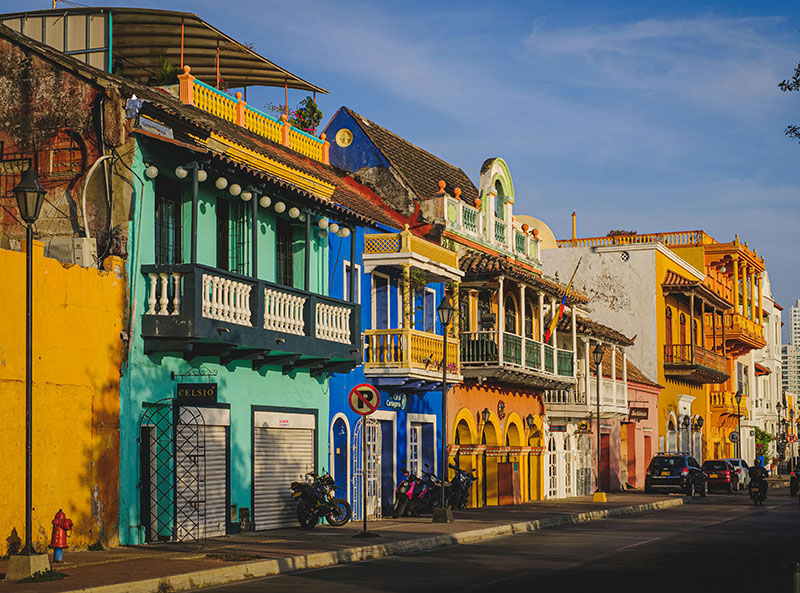
Exploring the vibrant streets of Getsemani, Cartagena, a highlight of any Colombia travel guide.
These are the apps that actually matter once you’re on the ground in Colombia.

The Super App. Order food, groceries, pharmacy meds, and even cash (RappiCash) delivered to your door.

This is how Colombia communicates. Tours, drivers, restaurants, and hosts will all use WhatsApp.

Yes, Uber works in Colombia. InDrive is also popular and lets you set your own price for rides.

A more traditional ride app that operates more formally than Uber in some cities.
Explore Colombia through city guides, Cartagena deep dives, food experiences, and island escapes.
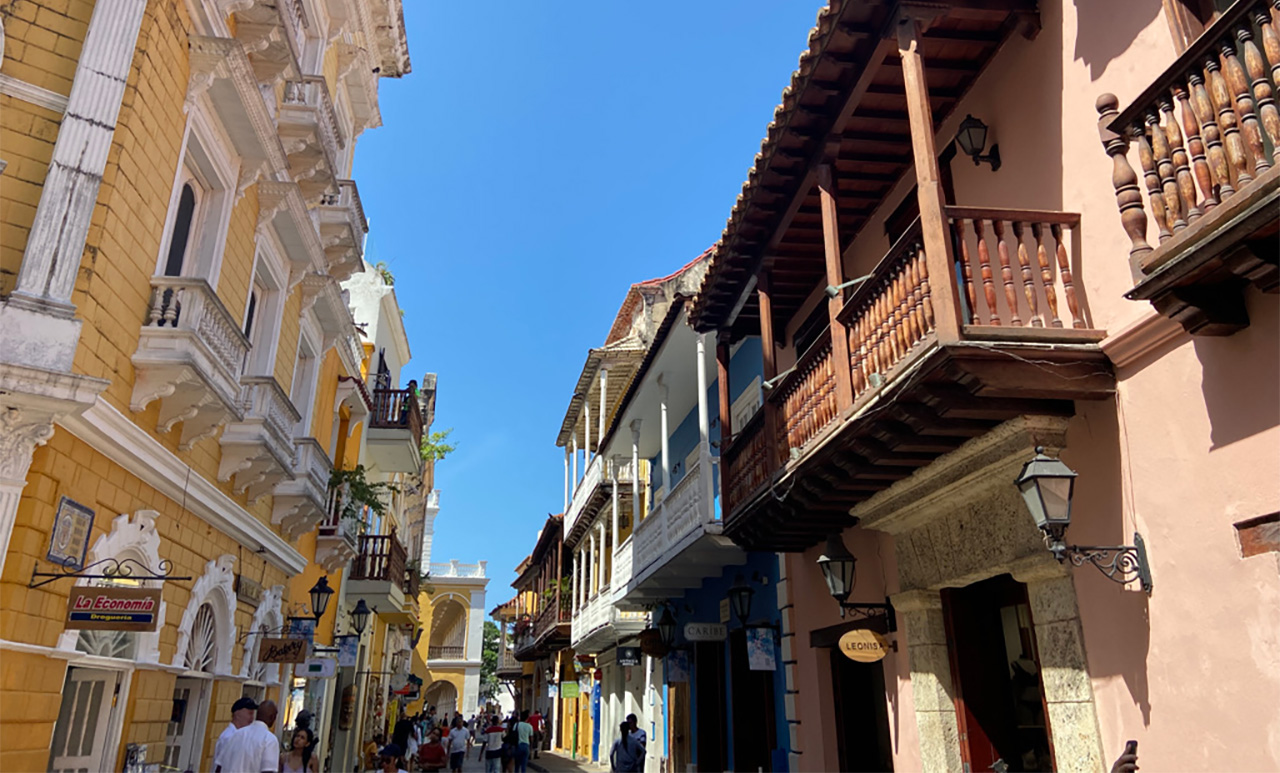
CARIBBEAN COAST
A complete guide to where to stay, what to do, and how to experience Cartagena beyond the basics.
Read More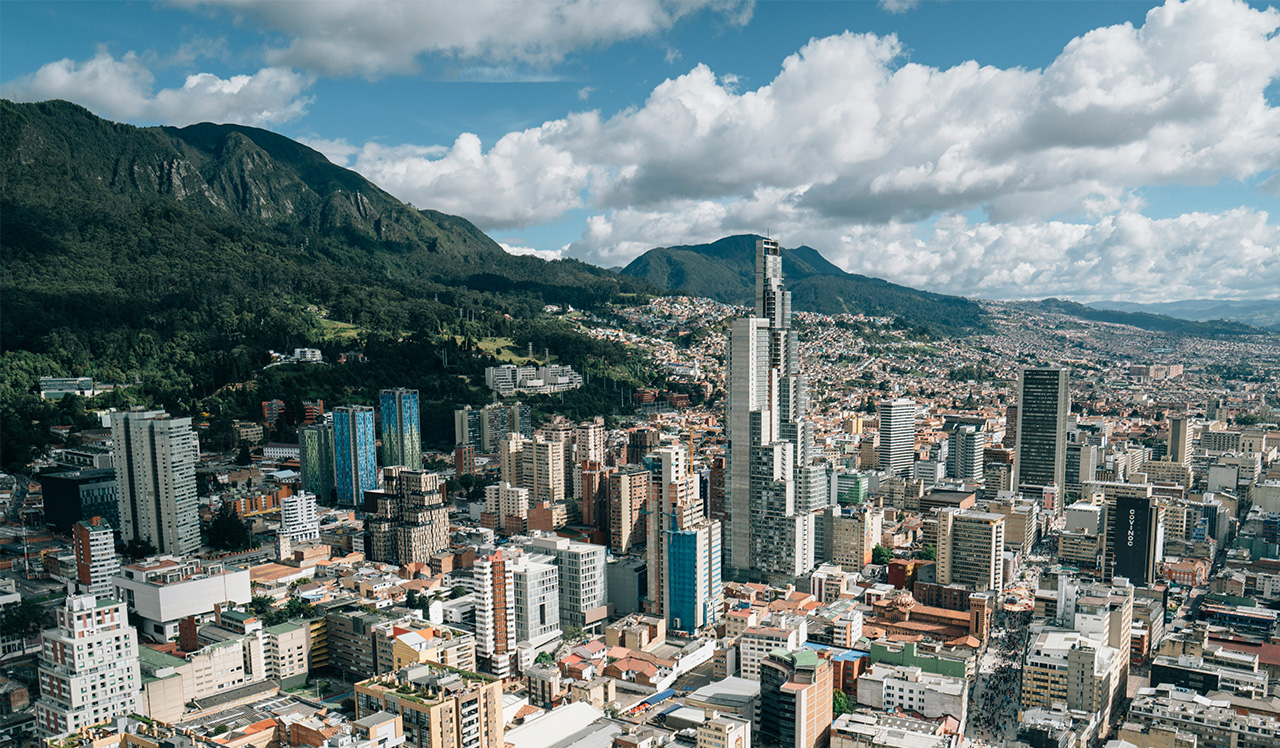
BIG CITY BASE
Get a practical feel for Colombia’s capital with tips on where to stay, what to do, and where to eat.
Read More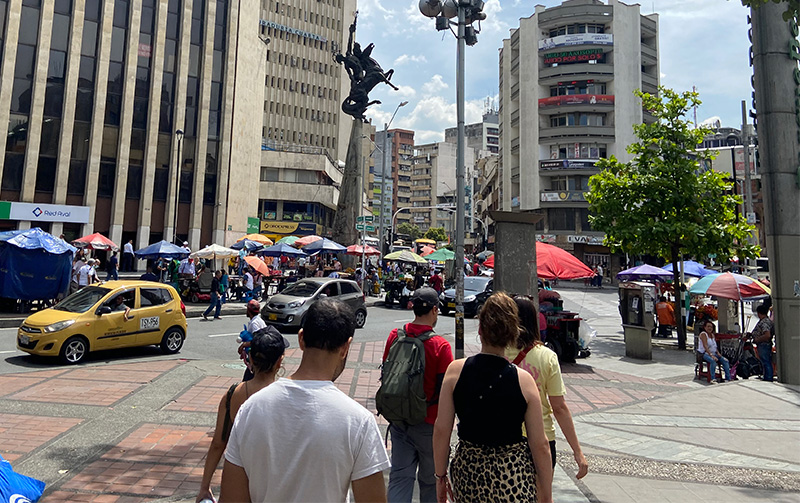
LOCAL EXPERIENCES
Plan your Medellín stay with neighborhood advice, local experiences, and a better sense of daily life.
Read More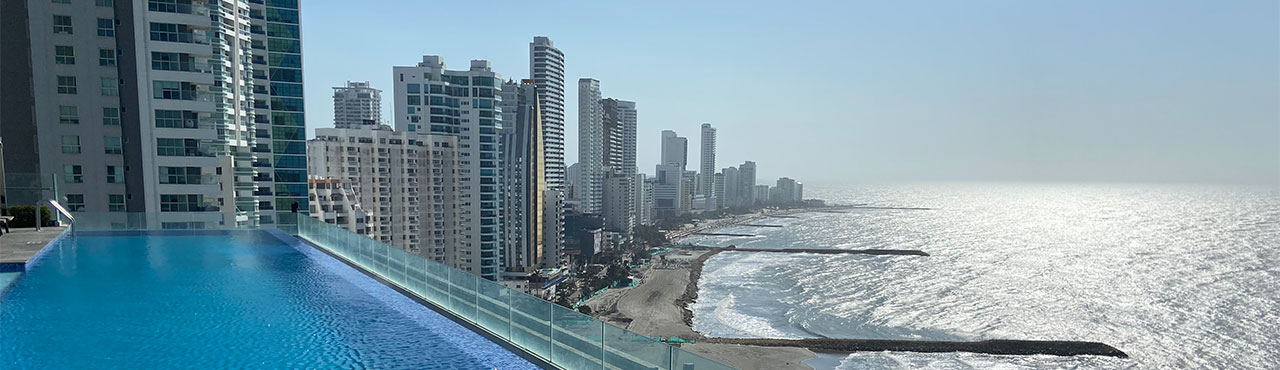
WHERE TO STAY
A breakdown of Cartagena’s easiest home base with walkability, high-rises, and reliable daily living.
Read More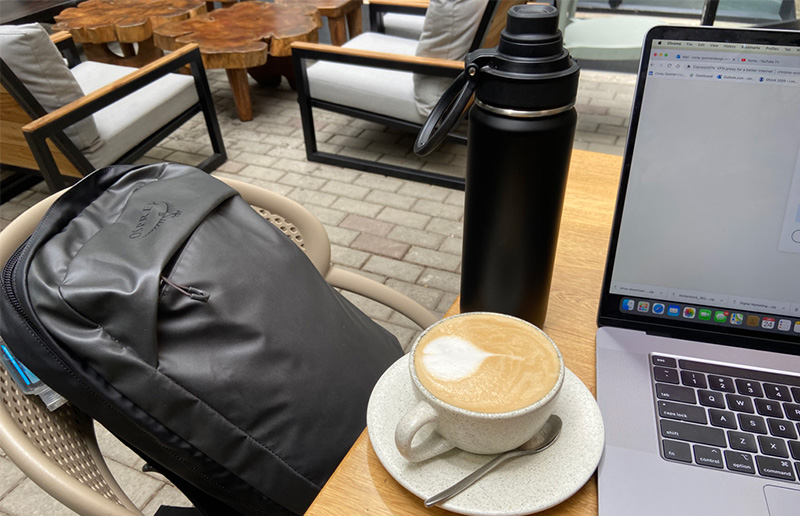
REMOTE LIFE
Where to live, work, and build a routine if you are staying longer or working remotely.
Read More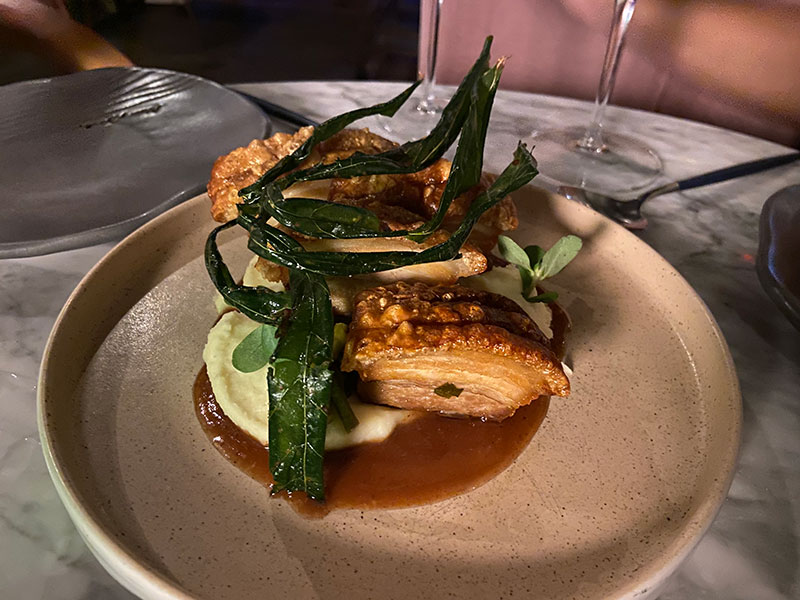
FOOD PICKS
The restaurants and dishes actually worth your time across the city.
Read More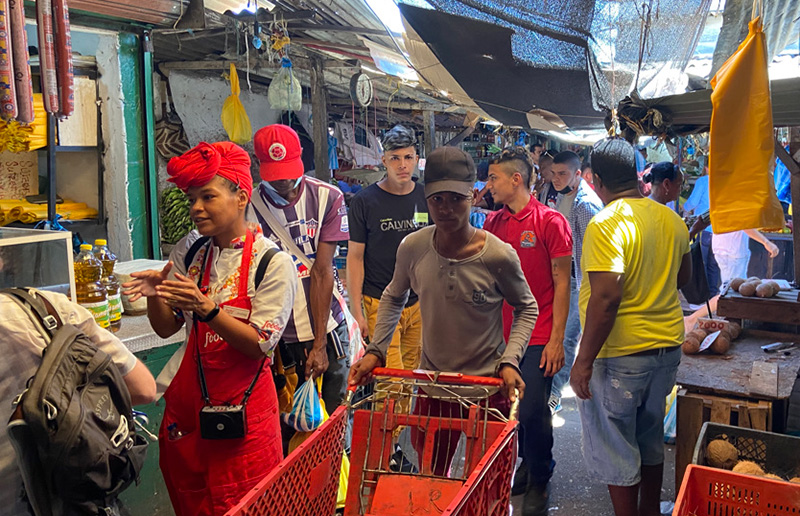
LOCAL MARKETS
A raw, local experience packed with seafood, street food, and nonstop energy.
Read More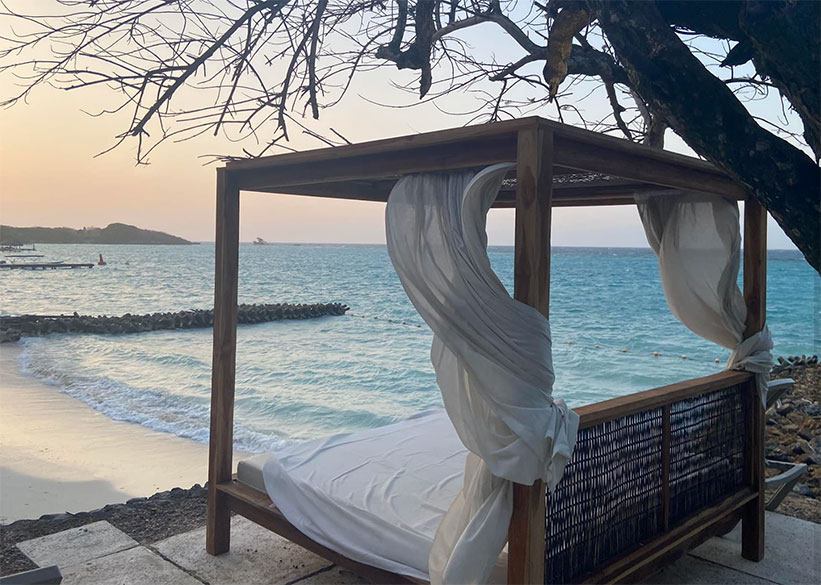
ISLAND ESCAPE
Slow things down with a stay on Isla Grande and a look at real island life.
Read More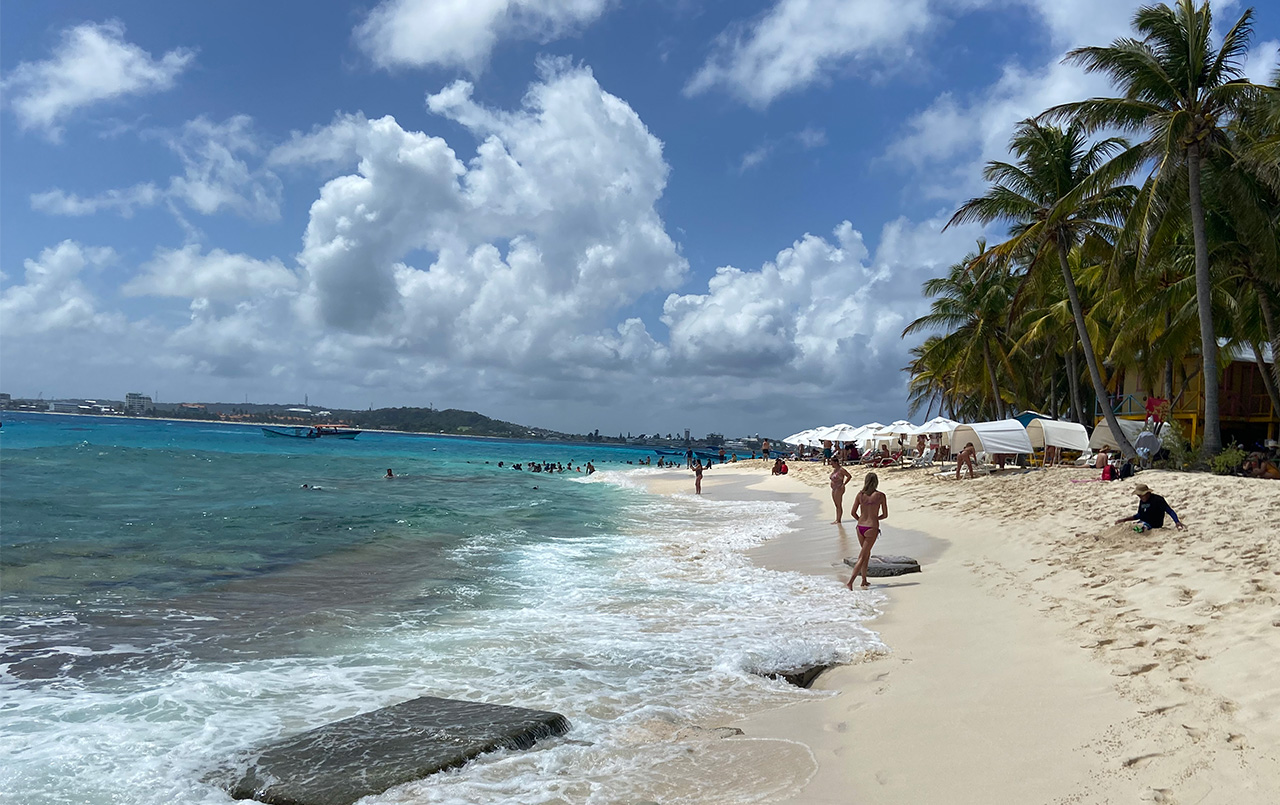
CARIBBEAN COLORS
A 3-day island plan built around the Sea of Seven Colors and an easy side trip from Cartagena.
Read MoreYes, but it is not Disney World. Violence against tourists is rare if you stay in the right zones and follow common sense (No Dar Papaya). Petty theft (phones) is the main risk.
Bogotá and Medellín: Yes, the tap water is excellent and safe to drink.
Cartagena and Santa Marta (Coast): No. Drink bottled or filtered water only.
Most travelers (US, Canada, EU) get 90 days on arrival. You just need to fill out the Check-MIG form 24 hours before your flight.
It is not mandatory, but many restaurants will ask if you want to include “el servicio” (usually 10%). It is polite to say yes. For street food or taxis, rounding up is appreciated.