Travel Planning Hub
Start here to plan your trip, compare options, and explore every TLGA planning guide.
Packing & Gear Guide
What to pack, what to skip, and how to build a lighter travel setup that works.


Last updated: January 2026 by Corey Gasman
From the Editor:
The Canary Islands are what I book when I want Spain’s food and friendliness, but with island rhythm and volcanic scenery that makes everything feel cinematic. It’s not “just beaches.” It’s black sand coves, cliff towns, pine forests above the clouds, and dinners that somehow taste better after a day outside.
The big planning win is simple: pick fewer islands, choose one great base per island, and build your days around micro-adventures instead of long transfers.
The Canaries reward travelers who plan around wind, microclimates, and logistics. Two beaches can feel like two different seasons on the same day. Your best trip comes from choosing the right island for your style, then staying long enough to settle into a loop.
⭐️ The Golden Rule: Do not chase “all the islands.” Pick the island that matches your trip, then stay long enough to feel the rhythm.
Start here: Getting Around Abroad (how to plan transportation like a system)
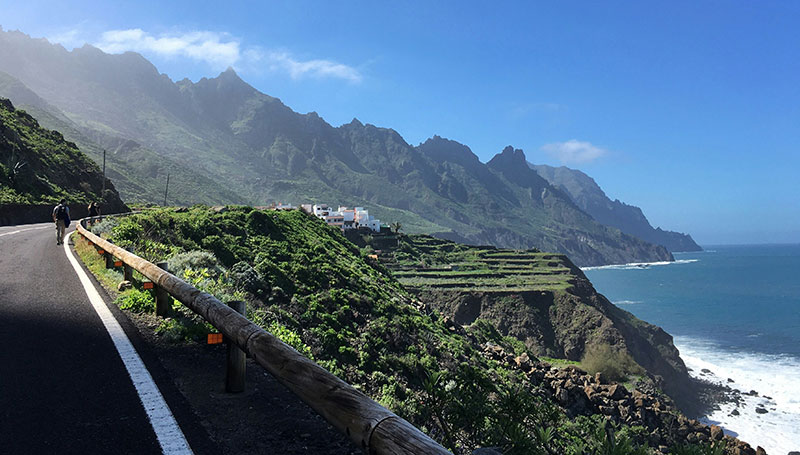
The Canary Islands are Spain’s “eternal spring” playground: volcano views, cliff drives, surf beaches, and slow meals that stretch into the night.
The Canaries are easy, but 2026 travel is more structured. The friction points are predictable: border systems, national park reservations, and a few high-demand hikes that now require booking.
If you are arriving from visa-exempt countries (US, Canada, UK, Australia), Schengen entry has added layers. The practical takeaway stays the same: treat arrival day like a logistics day and build buffer time.
If Teide is on your list, plan it like a “booked” experience, not a casual drive. Some trails now require authorizations and time slots, and access rules can change by season.
Most planning mistakes come from assuming one forecast equals one island. Tenerife and Gran Canaria can be sunny in the south and cloudy in the north on the same day. Pack light layers and plan “north days” and “south days.”
Tenerife in October (weather, food, beaches, and why it works)
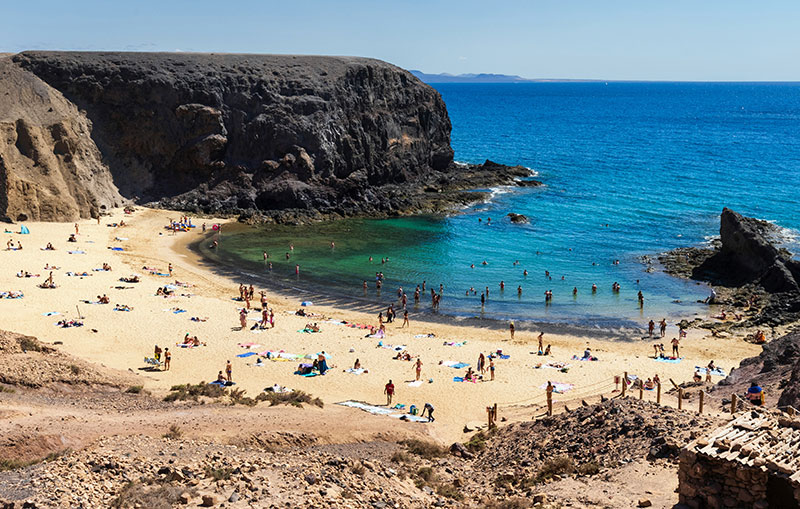
The Canaries are one of the most month-friendly destinations in Europe. The big difference is wind, water temps, and where you base.
The Canaries work year-round. Your “best month” depends on your goal: beach lounging, hiking, surf, diving, or winter sun while Europe is cold.
April, May, September, October are the comfort winners for most travelers: warm days, fewer peak crowds, and great conditions for both beaches and volcano drives.
December through March is why the Canaries exist in so many European winter flight searches. You will not get tropical heat every day, but you will get outdoor weather, patio dinners, and a reset.
June through August is great for long days and beach time. Expect more families, higher rates, and stronger wind on certain coasts (which is either annoying or perfect if you kiteboard).

Canary Islands planning gets dramatically easier when you match the island to your travel style instead of trying to do everything. Witness the majestic El Teide, Spain’s highest peak, towering above the clouds – a truly breathtaking sight.
Pick your “best day” first, then choose the island that makes that day easy. The Canaries are not one trip, they are multiple trips.
Tenerife, La Gomera, La Palma. If you want big viewpoints, laurel forests, and terrain that feels wild, these are your islands. La Gomera is the easiest “day trip that turns into an obsession” in the chain.
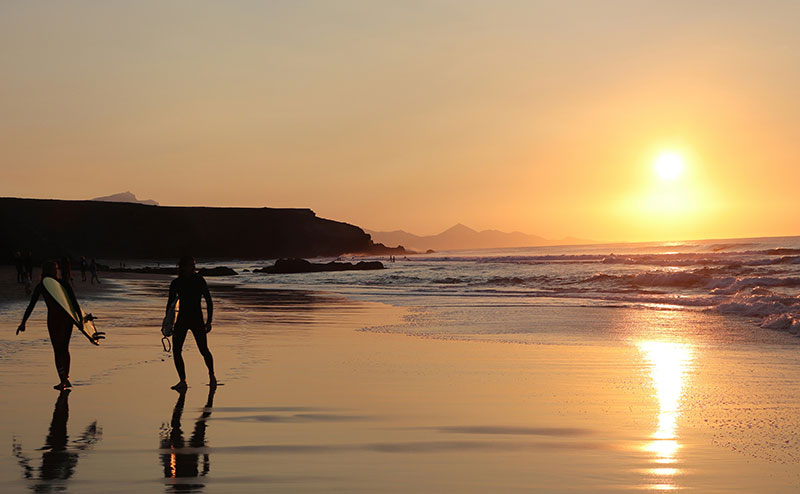
Fuerteventura, Gran Canaria (South). Fuerteventura is beach-first and wide open. It is raw, windy, and perfect for long drives and long sand days.
Lanzarote. Thanks to César Manrique’s influence, the island feels cohesive: white buildings, black lava, and a landscape that looks like another planet.
Do not try to see all 7 (or 8). Pick one major island as a hub, then add a second only if it adds a truly different experience.
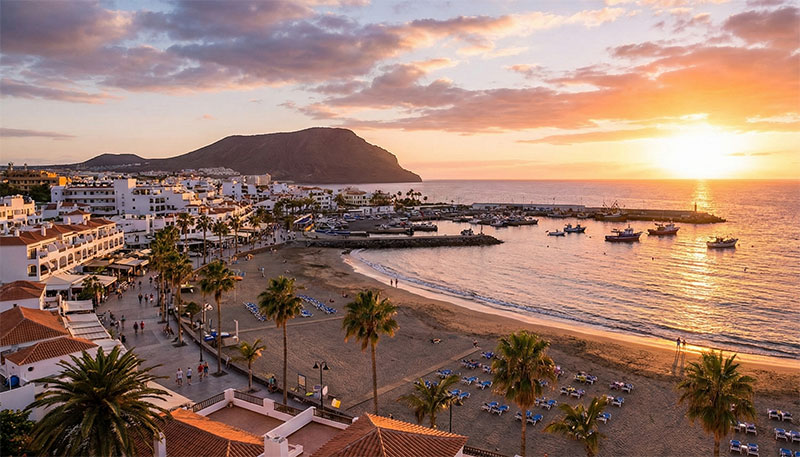
Golden hour casts a warm glow over Los Cristianos. This former fishing village in Tenerife’s south is now a bustling hub, famous for its accessible beaches, long promenade, and ferry connections to La Gomera.
Hotels are easy, but aparthotels and apartments unlock the real Canary Islands rhythm: slower mornings, local groceries, and terrace dinners that feel like a win.
If you book a place with a kitchen, you are not just saving money. You are upgrading your trip.
Local supermarkets like Mercadona and HiperDino are genuinely good. Grab fresh seafood, fruit, bread, and a local bottle of wine, then make one “home dinner” on your trip. It becomes one of those nights you remember.
Unless you are staying strictly in a resort zone and do not care about day trips, a rental car is the best upgrade. The magic of the Canaries is up the side roads: viewpoints, cliff towns, and beaches that are not on the main loop.
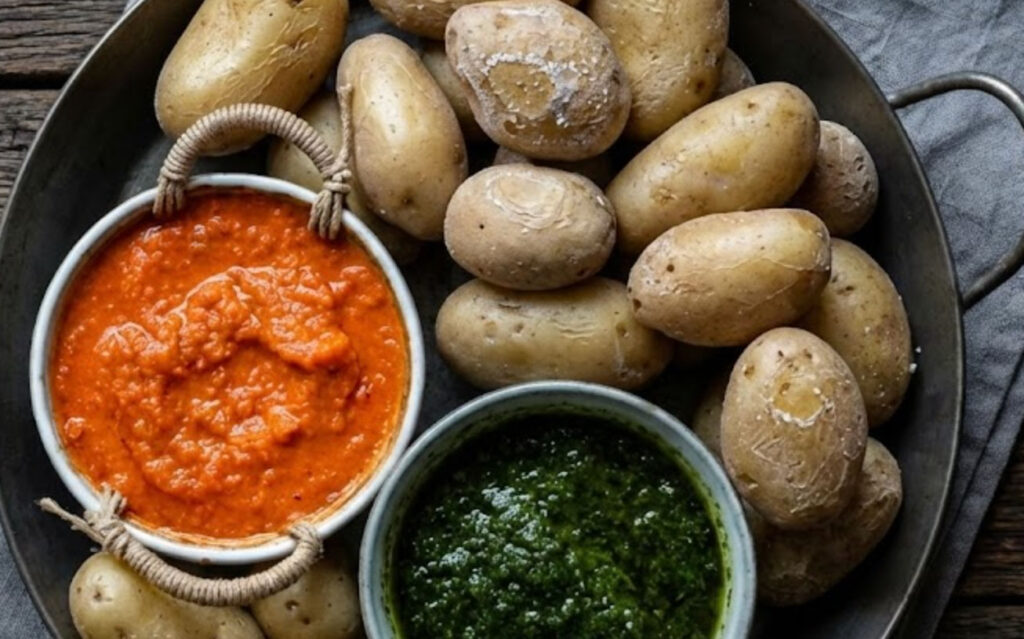
The undeniable staple of Canarian cuisine: Papas Arrugadas. These small potatoes are boiled in sea salt until the skin wrinkles, then dipped in spicy red or coriander-green mojo sauces.
Canarian food is simple ingredients, executed well. It overlaps with mainland Spain, but the islands have their own identity and a handful of must-order classics.
The Canaries remain one of the best value destinations in Western Europe, especially if you build your trip around one strong base and a rental car.
The vibe is relaxed, but respectful. Think “island pace,” not “island chaos.”
Download these before you fly. They make island logistics dramatically easier.

The default for hosts, tours, and reservations.

Download offline maps. Signal drops in ravines and mountains.

Check wind before beach days, especially on Fuerteventura.

The EU emergency number (good to know, even if you never use it).
It is generally safe, but it is often desalinated and can taste off. Many locals and travelers buy bottled water (agua sin gas) or use a filter for taste.
It is not the US. Rounding up is common, and 5 to 10% for great service is plenty.
In tourist areas, yes. In mountain villages and guachinches, a little Spanish goes a long way. Download Spanish offline in Google Translate.
If you want viewpoints, beach-hopping, and the “real” island drives, yes, a car is the best upgrade. If you are staying in one resort zone and plan mostly beach time, you can get by without it.