Travel Planning Hub
Start here to plan your trip, compare options, and explore every TLGA planning guide.
Packing & Gear Guide
What to pack, what to skip, and how to build a lighter travel setup that works.

By Corey Gasman
France has the blockbuster hits for a reason. Paris. Provence. The Riviera. Champagne. I love all of it, and I’ve photographed most of it.
But the trips that stick with me the longest usually come from the places that are not trying to impress anyone. The villages where the bakery still feels like the center of the universe. The hikes where you can hear your own footsteps. The small towns where dinner is not a reservation sport, it is just dinner.
This side story is my short list of quiet corners of France I would happily return to tomorrow. Not because they are “undiscovered,” but because they still feel lived-in.
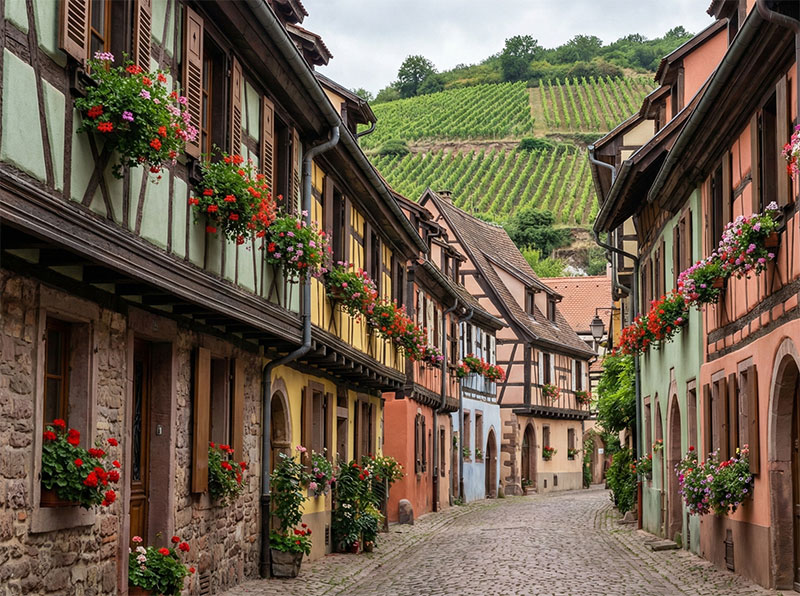
Kaysersberg offers that classic Alsatian charm, but with enough breathing room to actually enjoy it.
Yes, Colmar is beautiful. It is also busy. The trick in Alsace is to use the famous towns as a reference point, then spend your real time one or two turns off the main loop. That is where the region feels quiet, human, and delicious.
Instead of fighting for a photo spot in Petite Venise, head to Eguisheim or Kaysersberg. Think slow village mornings, vineyards that look like they were combed into the hills, and little wine cellars where someone will pour you a glass of Riesling like you are a neighbor.
Where to Base Yourself: Kaysersberg. It has the charm of Colmar but breathes much better at night.
The Signature Dish: Choucroute Garnie. It sounds heavy (sauerkraut with sausages and meats), but when done right in Alsace with a crisp Riesling, it is surprisingly delicate.
Worth the Detour: Le Chambard (Kaysersberg). This is the heavy hitter. Chef Olivier Nasti holds 2 Michelin stars here. It is high-end, but deeply rooted in the forest and vine. If the main restaurant is too much, his “Winstub” next door offers the rustic version.
Pro Tip: Base in a smaller village instead of Colmar. You can still do a quick Colmar stroll early morning, then retreat back to calm by lunch.
Local Guide Tip: Start your days early and end them early. Alsace is magical before 10 a.m., especially in shoulder season when the streets feel like a film set that has not opened yet.
If you want that “storybook France” look without the crowds, Alsace backroads are one of the safest bets in the country.
Kaysersberg offers that classic Alsatian charm, but with enough breathing room to actually enjoy it.
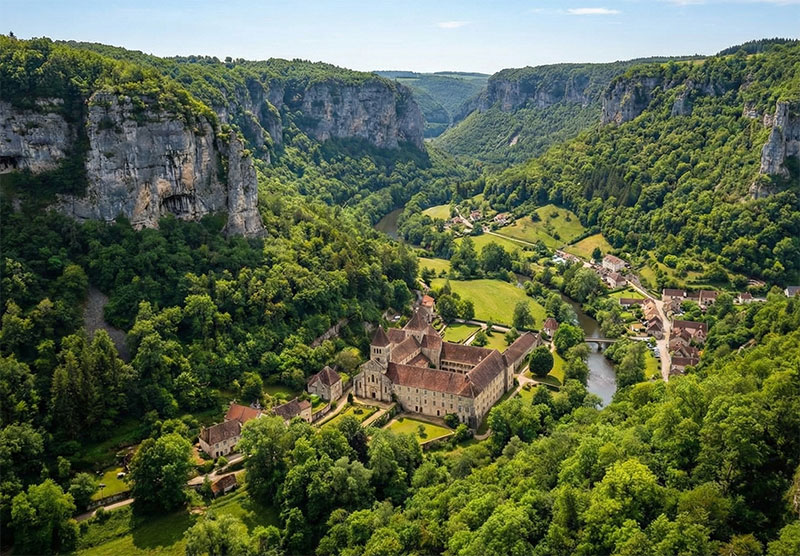
The Jura is the quiet cousin of the Alps. Fewer flashbulb moments, more deep exhale moments. Pine forests, cool air, small lakes that look painted, and little towns like Baume-les-Messieurs where you can actually hear the church bell echo.
It is also a region for people who like their food a little more rustic and their wine a little more curious. If “yellow wine” (vin jaune) and Comté cheese sound like a fun afternoon project, you are in the right place.
Where to Base Yourself: Arbois. It is the wine capital of the Jura and has incredible food options for such a small footprint.
The Signature Dish: Poulet au Vin Jaune. Chicken slow-cooked in the region’s unique oxidized wine with morels. It is creamy, nutty, and unforgettable.
Worth the Detour: Maison Jeunet (Arbois). This is a culinary institution in the Jura. It perfectly balances Michelin-level precision (2 stars) with the earthy, woodsy flavors of the mountains.
Pro Tip: Bring a light jacket even in summer. Jura evenings can get surprisingly cool, which is exactly why sleeping here feels so good.
Local Guide Tip: If you see “Fruitière” on a sign, stop. It is often a cooperative cheesemaker or shop, and it is one of the best low-key food souvenirs you can bring home.
If you want mountain scenery without the ski-resort energy, the Jura is a quiet flex.
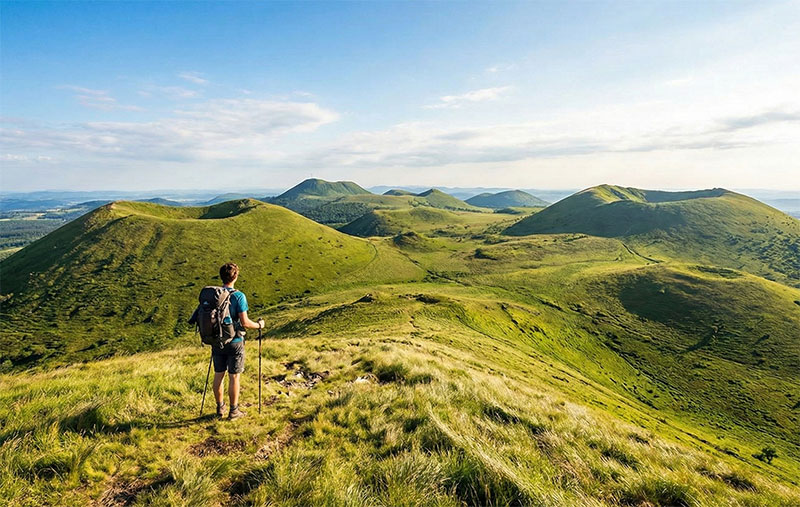
Hiking the dormant volcanoes of Auvergne puts the sheer scale of France’s open spaces into perspective.
Auvergne is the place I point to when someone says, “I love France, but I want nature.” It is volcanic, green, and implies a prehistoric drama that feels entirely uncrowded.
You can hike up rounded volcano cones like the Puy de Dôme, eat hearty countryside meals, and drive for long stretches where you forget you are in one of the most visited countries on earth.
Where to Base Yourself: Mont-Dore. A classic thermal spa town that feels nestled right into the mountains.
The Signature Dish: Truffade. Think of it as a thick, pan-fried potato and cheese pancake. It is heavy fuel for hikers and absolutely delicious.
Worth the Detour: Régis et Jacques Marcon (Saint-Bonnet-le-Froid). A 3-star Michelin temple dedicated to mushrooms and the forest. It is isolated, expensive, and widely considered one of the best “worth the drive” restaurants on the planet.
Pro Tip: If you are doing volcano hikes, plan one early-morning summit and one sunset viewpoint. The light makes the landscapes look unreal, and the temperature is better too.
Local Guide Tip: Auvergne is built for road trips. Pick a base town for 2 nights, then move. The magic is in the variety of valleys and viewpoints, not in staying put.
Auvergne feels like France turned the volume down. If you are burned out, this is a reset button.
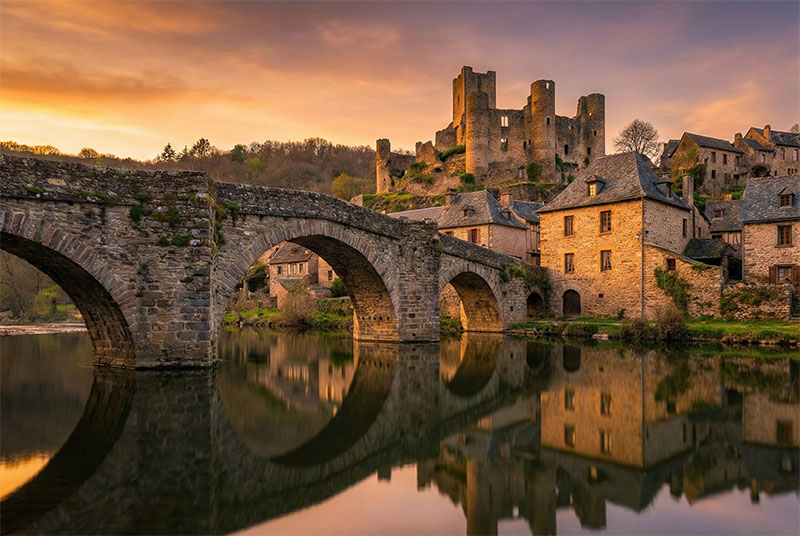
Aveyron is a study in stone and water. Places like Belcastel feel less like towns and more like movie sets that people actually live in.
Aveyron is all rugged beauty and medieval mood. Stone villages clinging to hillsides, like the stunning Conques or Belcastel. River bends that make you pull over just to stare. Markets that feel like they are for locals first, travelers second.
This is the type of region where you can have a day that looks expensive, but costs almost nothing: a scenic drive, a picnic, a river walk, and dinner in a village square.
Where to Base Yourself: Najac or Villefranche-de-Rouergue. Both offer that heavy stone architecture and easy river access.
The Signature Dish: Aligot. Mashed potatoes blended with fresh Tomme cheese and garlic until it becomes a stretchy, ribbon-like fondue. It is legendary here.
Worth the Detour: Suquet à Laguiole (Bras). The Bras family invented the molten chocolate cake (coulant) and the famous gargouillou vegetable dish here. It sits on a lonely hilltop and is pure poetry on a plate.
Pro Tip: Keep your schedule loose. Aveyron is the land of “we’ll just stop for five minutes,” and those stops turn into the whole day.
Local Guide Tip: If you can, shop a morning market and build your own lunch. Bread, local cheese, fruit, maybe a little pâté. Eat it somewhere with a view and you will remember it more than a fancy meal.
If your ideal France is stone, river air, and calm, Aveyron delivers.
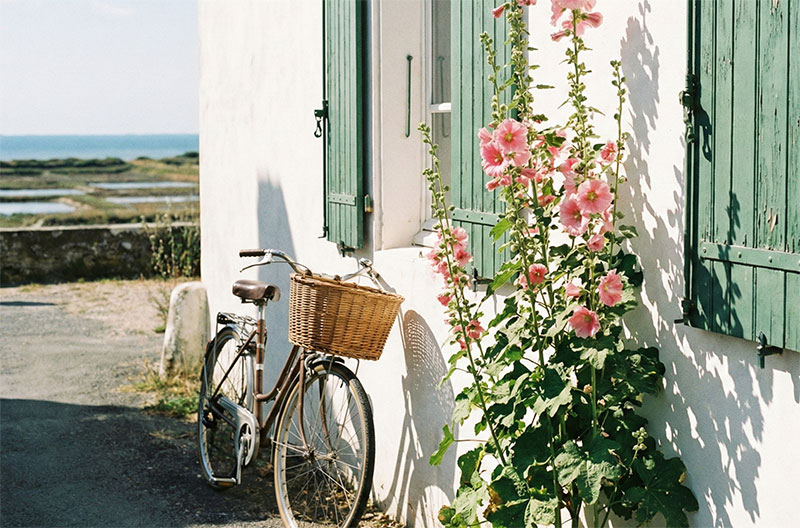
In the shoulder season, the bike paths of Île de Ré belong to you, the locals, and the ocean breeze.
Île de Ré can get busy in peak summer. Outside of that window, it is a different planet. The bike paths feel like your own private coastal track. The villages feel crisp and relaxed. The ocean air does that thing where your brain finally unclenches.
This is the kind of place where doing less is the whole point: ride to a bakery in La Flotte, cruise past salt marshes, stop when something looks pretty, repeat.
Where to Base Yourself: Saint-Martin-de-Ré. It’s the hub, but in the shoulder season, it remains peaceful while keeping restaurants open.
The Signature Dish: Huîtres (Oysters). You are surrounded by the Atlantic. The oysters here are salty, sharp, and cheap.
Worth the Detour: A Salt Marsh Cabin. Forget the Michelin stars for a moment. The best food experience here is biking to a “Cabane” (like La Cabane du Feneau) in the middle of the marshes for a plate of oysters and white wine at a picnic table.
Pro Tip: Shoulder season is the sweet spot. You get open restaurants and pleasant weather without the “traffic jam of rental bikes” vibe.
Local Guide Tip: Rent bikes for at least 2 days. One day you will rush. Two days you will settle in and start taking the island personally.
If you want a coastal France that feels gentle, aim for Île de Ré when the crowds are not there.
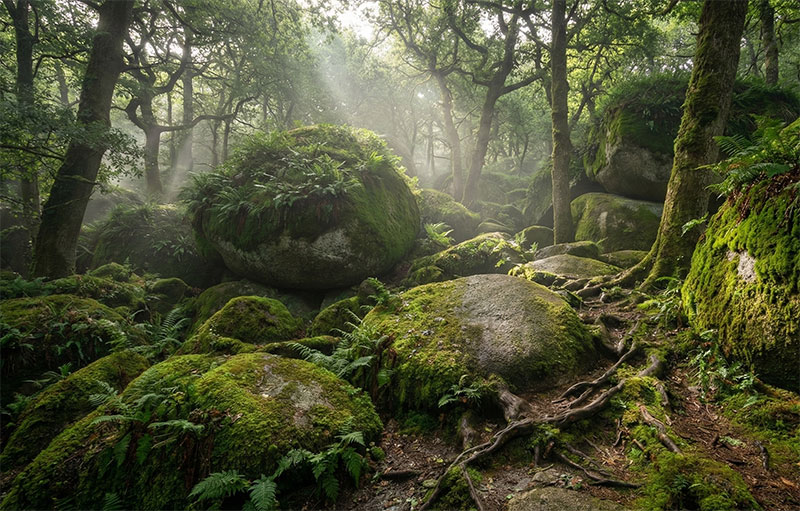
Inland Brittany trades the coastline for legends. The forests here feel ancient, quiet, and slightly magical.
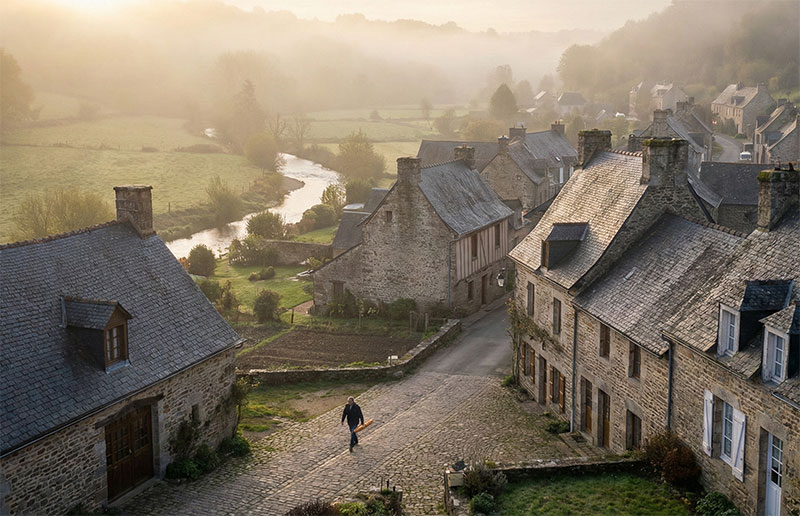
Everyone talks about Brittany’s coastline, and it is great. But inland Brittany is where the mood gets interesting. Forest trails near Huelgoat, granite villages like Josselin, quiet canals, and that Celtic-leaning atmosphere that feels slightly mysterious in the best way.
It is also a region where you can take your time. You are not “doing sights.” You are walking, eating, and letting the place soak in.
Where to Base Yourself: Josselin. The castle view from the river is world-class, but the town remains humble.
The Signature Dish: Galettes Complètes. These are savory buckwheat crêpes usually filled with ham, egg, and cheese. They are the fuel of Brittany.
Worth the Detour: Auberge des Glazicks (Plomodiern). Chef Olivier Bellin (2 stars) cooks with the ocean and the earth (his “surf and turf” is legendary). It is located in a quiet village and is a pilgrimage site for French food lovers.
Pro Tip: Build one rainy-day plan. Brittany weather is part of the charm, but you will enjoy it more if you already know your backup move (museum, long lunch, cozy café).
Local Guide Tip: If you see a small crêperie that looks full of locals, that is your dinner. Brittany takes crêpes seriously, and the best spots are often the least flashy.
If France ever feels too polished, inland Brittany is a great antidote.
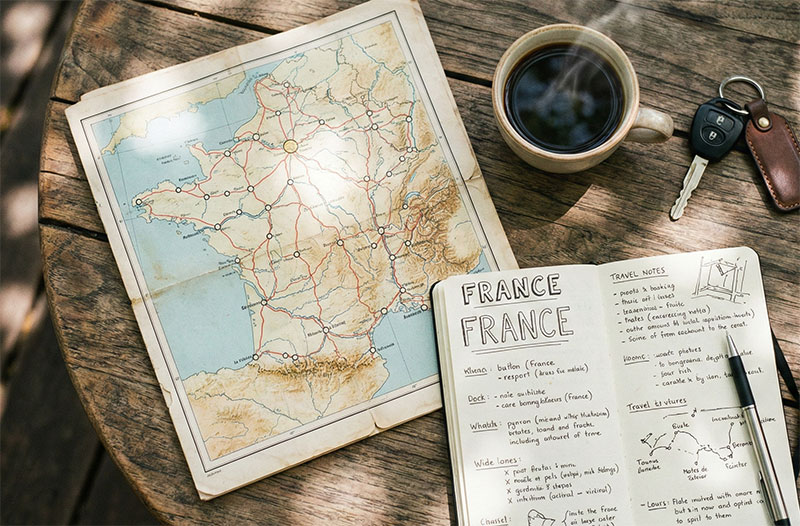
The best plan for these regions? Pick a base, rent a car, and let the small roads decide where you go next.
The whole point of these places is that they feel calm. So plan the skeleton, not the minute-by-minute schedule.
My simple framework:
Pro Tip: If you can travel Sunday through Thursday, do it. These regions get noticeably quieter when you avoid the classic weekend surge.
Local Guide Tip: Learn two phrases and use them every time: “Bonjour” when you enter, and “Merci, au revoir” when you leave. In smaller towns, that tiny effort changes the whole vibe.
France beyond the obvious is not a checklist trip. It is a “feel like you belong here for a week” trip, even if you only have a few days.
Mostly less talked about. They are not secret, they are just not the default itinerary. That is why they still feel calm and local.
For most of these regions, yes, a car makes it dramatically easier. You can do parts of Alsace by train and local transport, but the real “quiet” moments tend to live outside the most connected routes.
Shoulder season is your best friend. Think spring (May-June) and fall (September-October), when the weather is still pleasant and the crowds drop. Winter can be magical too in the right areas, especially if you love cozy meals and empty streets.
At least 3 days in one region. If you have 5 to 7 days, you can do one region properly or pair two nearby regions with a slow pace.
Sleep in the smaller village (like Kaysersberg instead of Colmar) and day-trip into the famous one early morning. Also, aim for weekdays, and avoid building your entire plan around one Instagram-famous spot.