Travel Planning Hub
Start here to plan your trip, compare options, and explore every TLGA planning guide.
Packing & Gear Guide
What to pack, what to skip, and how to build a lighter travel setup that works.
By Corey Gasman
If you are using Paris as your base for a week or more, there comes a moment when the city’s energy stops feeling electric and starts feeling loud. This is when most travelers search for a “Champagne day trip from Paris.” Champagne is the answer, but only if you resist the urge to rush it.
I love wine country. Whether I am in Napa, Sonoma, or Oregon’s Willamette Valley, my ritual is always the same: stop at a local deli, load up on cheese, salami, and fruit, then find a picnic table at a vineyard and do absolutely nothing. Wine country is not about distance covered. It is about time well spent.
A few years ago, I brought that same philosophy to Champagne. We spent four nights in a 17th-century chateau near Épernay, taking the time to explore everything from massive historic cellars to quiet boutique houses like Billecart-Salmon. We did not rush. We lingered over dinners, wandered chalk caves, and let the region unfold instead of trying to conquer it.
Read the Trip Report: Want to see exactly how we did it? Check out my full story: Two Weeks in France: The Chateau, The Wine & The Real Itinerary
Most visitors experience Champagne at a sprint. They pile onto buses, shuffle through crowded cellars, sip quickly, and race back to Paris feeling oddly drained. It is not that Champagne disappoints. It is that it punishes impatience.
The Local Guide Reality: Champagne is not just a drink; it is a way of moving through a place. It is standing in the vineyard where the grapes were grown. It is the contrast between mud on a grower’s boots and crystal in your hand. It is luxury measured in time, not labels.
This guide shows you how to skip the bus, take the train, and trade a rushed day trip for the quiet richness of Épernay.
Read More: For the bigger strategy on basing yourself in Paris, start with my main France Travel Guide.
| The Vibe | The Lifestyle Move | The Tourist Trap |
|---|---|---|
| The Pace | Slow sipping, 1-2 visits max | 4 stops, running for the bus |
| The Drink | Grower vintages (Farm to Glass) | Mass-market labels |
| The Experience | Personal, luxurious, quiet | Crowded, loud, rushed |
Planning note: Champagne is a pacing game.
If you do too many tastings, your palate collapses. The goal is not to drink the most, but to drink the best.
The Strategy: Do one cellar visit, one grower tasting, and one long lunch. That is the sweet spot.
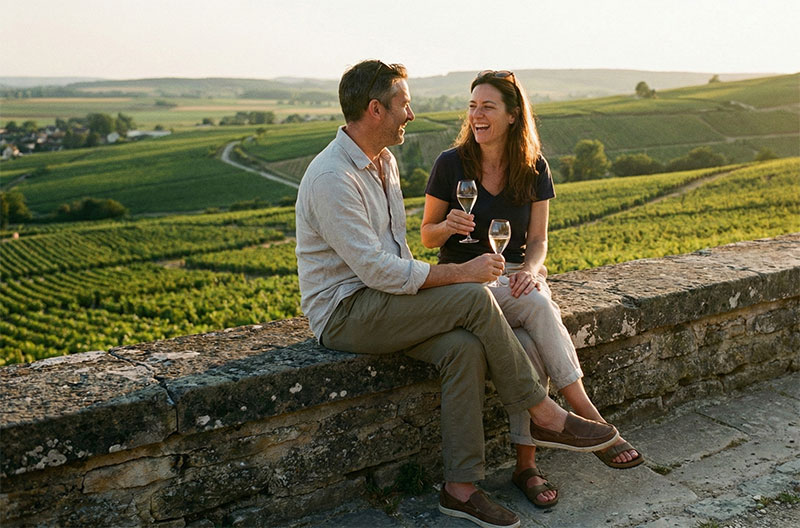
Sipping Life: True luxury in Champagne is having the time to enjoy the view, not just the wine.
You do not need a tour guide with a flag to “do Champagne.” You need a train ticket, a loose plan, and the patience to let the region set the tempo.
The “Paris Side Trip” Move:
Take the train from Gare de l’Est to Épernay (about 1 hour 15 minutes). It is simple and civilized. One moment you are underground in Paris, the next you are stepping into vineyards and fresh air.
Stay vs. Day Trip:
Yes, Champagne can be done in a single day. But the smarter move is to stay one night. When the tour buses leave and Avenue de Champagne goes quiet, the region finally shows itself. That calm, unhurried hour before dinner is the entire point.
Local Guide Tip: The last train back to Paris is usually around 8 PM. If you day-trip, you will always be checking the time. If you stay, you stop checking anything at all.
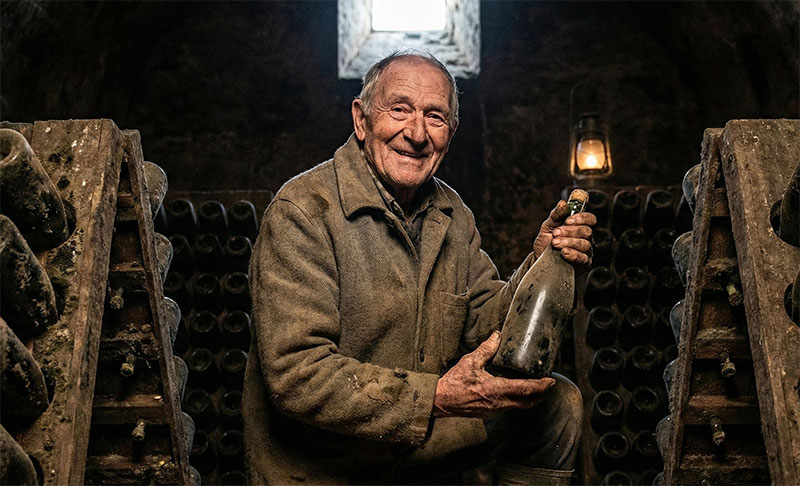
The Estate Life: Growers live on the land. When you drink their wine, you are tasting their farm.
There are two ways to experience Champagne. To understand the region, you should try to touch both.
The “James Bond” Experience (Big Houses):
These are the famous names – Moët, Pol Roger, Mercier. They have miles of underground caves and grand estates. It is impressive, cinematic, and consistent. It feels like a movie set.
The “Farm to Glass” Experience (Growers):
This is the heart of the region. “Grower Champagne” (Récoltant-Manipulant) is made by farmers who grow their own grapes. It is small-batch, artisanal, and has personality. It feels like a handshake.
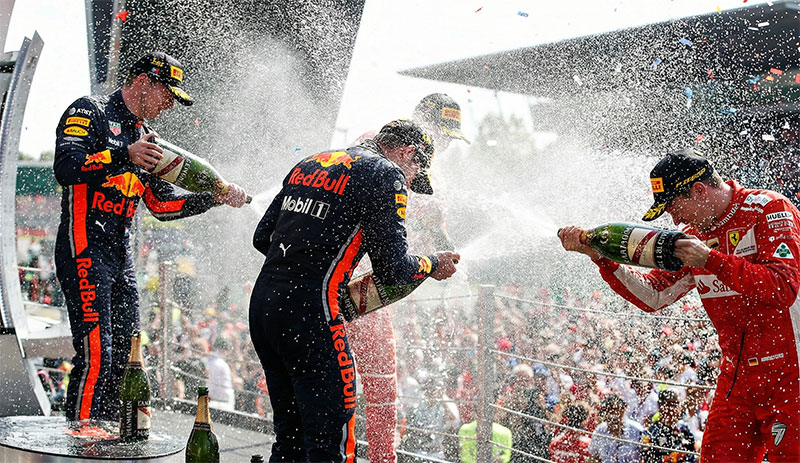
The Victory Lap: The tradition of spraying the crowd started in 1967 when winner Dan Gurney shook up his bottle of Moët & Chandon. It remains the sport’s most iconic (and messy) ritual.
If you want to lean into the “High Life” history of the region, know who drank what. It adds a layer of fun to the tasting:
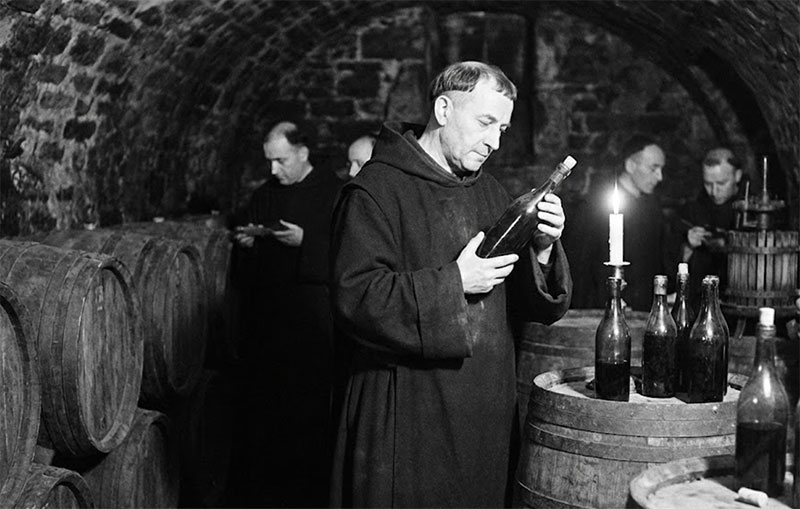
The Legend Reimagined: Since cameras didn’t exist in the 17th century, this is a fictional recreation of what it might have looked like for Dom Pérignon to work in the dim cellars of Hautvillers, perfecting the blends that would eventually become Champagne.
Before you sip, you should know that Champagne was arguably the world’s greatest “happy accident.” Having these three stories in your back pocket will make every glass taste a little richer.
The Legend: You have probably heard that the blind monk Dom Pérignon invented Champagne and shouted, “Come quickly, I am drinking the stars!”
The Reality: It is actually better. In the 1600s, bubbles were considered a flaw. The cold winters in Champagne would stop fermentation early, and when spring arrived, the yeast would wake up and re-ferment in the bottle, causing them to explode. Dom Pérignon spent his life trying to stop the bubbles to save the wine! While he didn’t invent the sparkle, he did invent the art of blending grapes from different vineyards to create a perfect flavor, which is still the heart of Champagne making today.
The Innovation: For centuries, Champagne was cloudy and full of dead yeast. The “downgrade” you might be thinking of is actually dégorgement (disgorging).
The Hero: In 1805, Barbe-Nicole Clicquot (the “Veuve” or Widow Clicquot) took over her husband’s winery at age 27. She invented the “riddling rack”, a way to store bottles upside down and turn them slightly each day so the yeast settled in the neck. She then froze the neck and popped the yeast plug out. She is the reason your Champagne is crystal clear today.
The Scandal: There is a persistent legend that the classic wide-brimmed “Coupe” glass (popular in the 1920s) was originally modeled on the shape of Marie Antoinette’s left breast. While historians debate the truth, it remains one of the most decadent myths in French history.
Local Guide Tip: Don’t drink from a coupe today; the bubbles escape too fast. Stick to a flute or a white wine glass to let the wine breathe. Also, check your temperature. A standard fridge is 4C (39F), which “numbs” the flavors. The caves in Champagne are kept at 10C (50F) – and that is exactly the temperature you should drink it to taste the brioche notes.
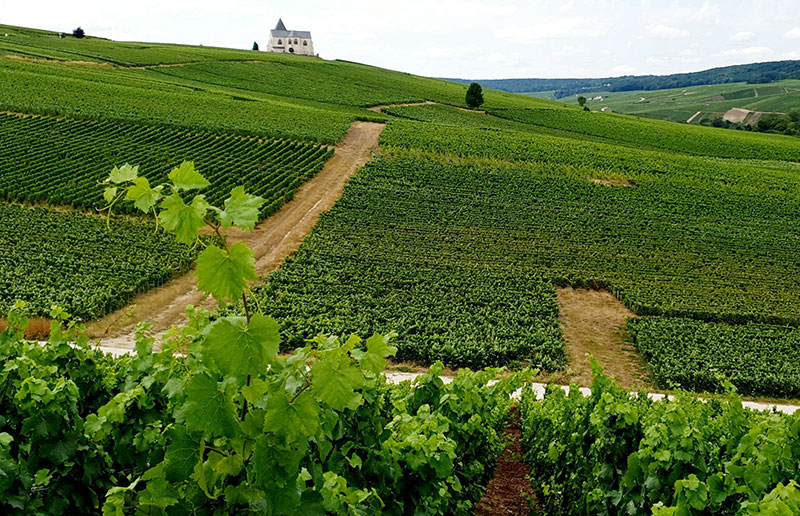
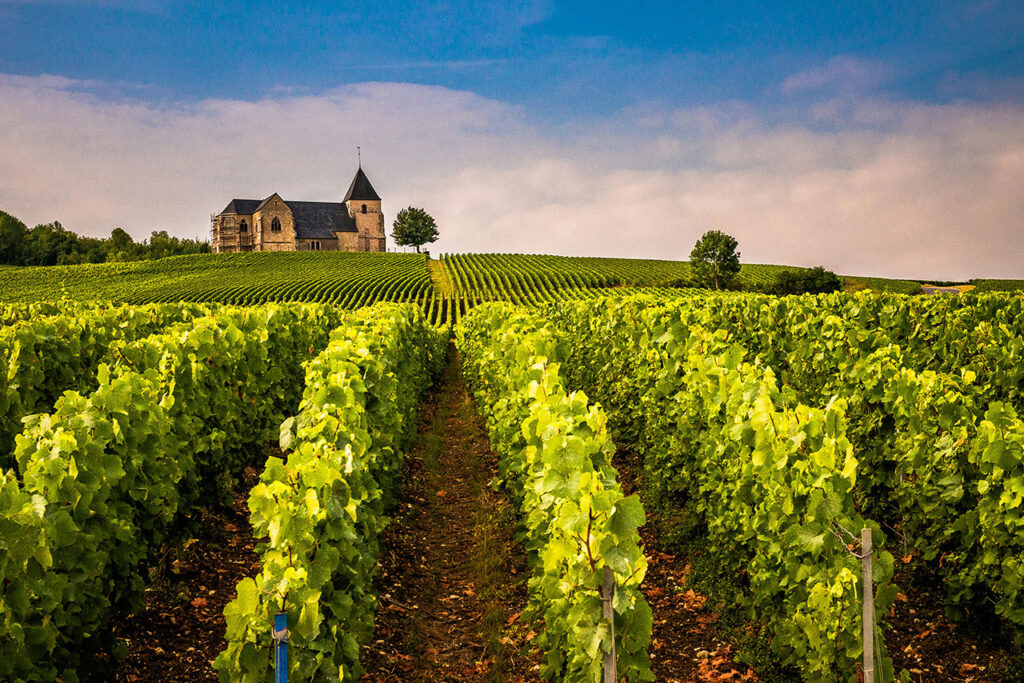
Vineyards in Chavot-Courcourt, France. Sparkling wine can only legally be called “Champagne” if it is produced from grapes grown in this specific region.
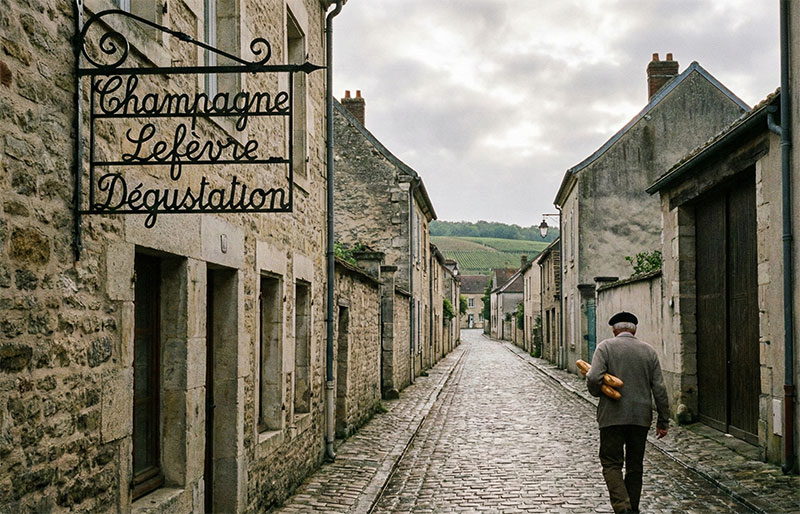
Hidden Gems: Take a short taxi to a village like Hautvillers to find tasting rooms with zero crowds.
The best growers don’t have billboards. Finding them makes you feel like an insider.
Foodie Ritual: The Biscuit Rose
You will see pink, rectangular biscuits everywhere. These are Biscuits Roses de Reims. The local move is not to eat them dry, but to dip them into your Champagne. They are designed not to crumble when wet. It sounds wrong, but it tastes right.
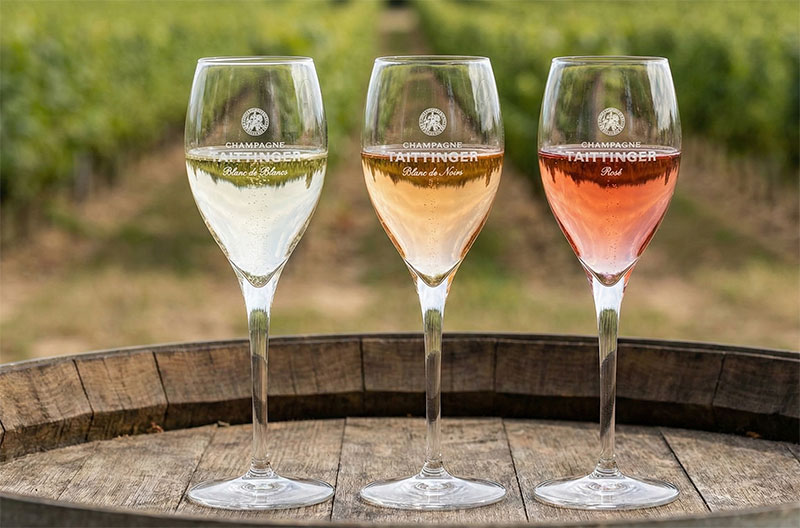
The Ideal Day: One meaningful cellar, one personal tasting, one long meal.
This is the pacing that keeps Champagne fun instead of foggy.
Local Guide Tip: Drink water like it is your job. One carafe per tasting, minimum.
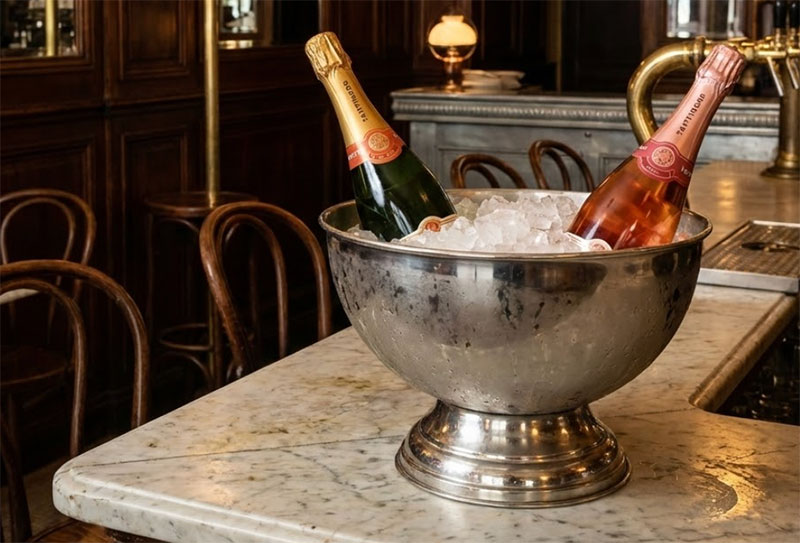
Parisian Comfort: If the train to Épernay isn’t in the cards, a classic bistro dinner is the next best thing. Look for the “RM” code on the bottle to find a grower champagne that rivals the big houses.
Okay, so the train to Épernay didn’t fit the schedule. You are “stuck” in Paris eating escargots (poor you). You can still drink like a local if you know how to read the wine list.
Every bottle of Champagne has a tiny two-letter code on the label. This is your cheat sheet to quality.
In a good Paris bistro, the “Champagne Maison” (House Champagne) is usually excellent. Do not be afraid to order the house pour. It is rarely the cheap stuff; it is usually a carefully selected grower wine the owner loves.
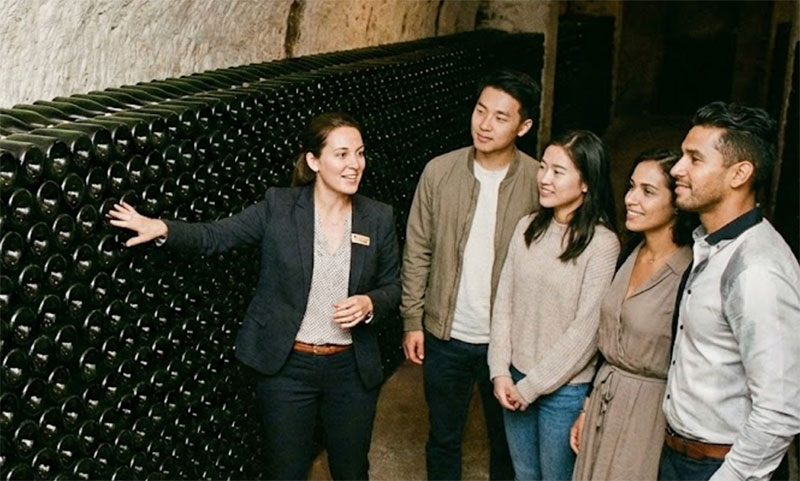
The Magic Underground: Deep inside the chalk crayères (caves), bottles rest for years. A guide explains how this long slumber creates the signature bubbles and brioche flavor of great Champagne.
Do you have “Fear Of Missing Out” because you didn’t tour a cave? Don’t worry. Here is exactly what happens on the tour, broken down by the science and the magic, so you can nod along when your friends talk about it.
If you had gone, you would have walked down 100 steps into a damp, cold tunnel. These are the Crayères (chalk caves). Many were dug by Romans to build the city of Reims. The chalk keeps the humidity high and the temperature at a constant 10-12°C (50-54°F). That chill is what keeps the bubbles tiny and elegant.
Champagne is almost always a mix of three grapes. The “Chef de Cave” (Cellar Master) blends them like a painter mixing colors:
This is what you really missed. In the spring, the winemaker tastes hundreds of “still wines” (wines with no bubbles yet) from different villages and different years. They mix them to recreate the specific flavor of their House. A “Non-Vintage” (NV) bottle is a mix of the current harvest plus “Reserve Wines” from older years. It is an engineering feat of consistency.
Once the blend is bottled, they add a tiny shot of sugar and yeast (Liqueur de Tirage) and cap it with a beer cap. The yeast eats the sugar and creates CO2 gas. Because the bottle is sealed, the gas has nowhere to go, so it dissolves into the wine. Boom. Bubbles. The pressure inside is now 90 PSI—three times the pressure of a car tire.
The bottles sit for years. The yeast dies and falls to the bottom (this creates the “toasty” brioche flavor). But how do you get the dead yeast out without losing the bubbles? You tilt the bottle upside down and turn it slightly every day for weeks (Remuage). Eventually, all the sludge slides into the neck.
In the final step, they freeze the neck of the bottle in an icy brine. They pop the cap off, and the pressure shoots the frozen plug of ice (and yeast) out. They quickly top up the bottle with a little wine and sugar (Dosage) to determine if it will be Brut (dry) or Demi-Sec (sweet), cork it, and wire it down.
There. You just took the tour. Now order another glass.
Want to see how we explored these caves in real life? We rented a sprinter van, stayed in a 17th-century chateau, and visited houses like Billecart-Salmon and Taittinger. If you are planning a trip, this is the honest breakdown of what worked (and what didn’t).
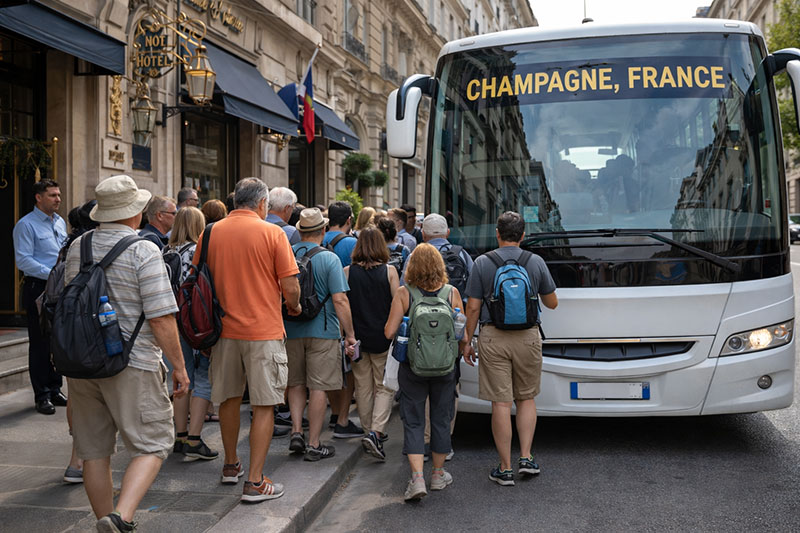
Champagne day trip from Paris: Travelers gather outside a Paris hotel to board a tour bus heading to Champagne for a full day of cellar visits and tastings.
If you only have one open day and Champagne is high on your list, a day trip from Paris is absolutely possible. Just go in with the right expectations. A day trip is about getting a real taste of the region, not trying to “complete” it.
If the logistics feel annoying, or you want someone else to handle transportation and timing, a tour can be the right call. Just choose wisely. Look for tours that include one major cellar and one small producer, and avoid anything that tries to cram in four tastings like it is a theme park.
Local Guide Tip: The best day trips do fewer stops and give you more breathing room. If the itinerary looks aggressive on paper, it will feel even more rushed in real life.
The upgrade that changes everything: If you can stretch this into one night in Épernay, do it. The day-trippers disappear, the pace softens, and Champagne starts tasting like the high life instead of a schedule.
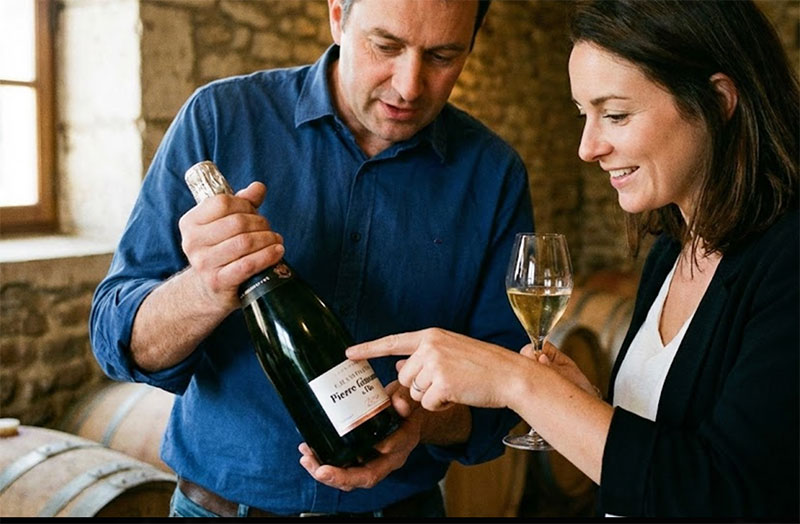
The Questions: Asking the right thing unlocks the story behind the bottle.
You do not need to be a sommelier. You just need a few simple terms to navigate the menu.
Local Guide Tip: If you like crisp, lean Champagne, ask for a Blanc de Blancs. If you like richer, rounder styles, ask for a Blanc de Noirs.
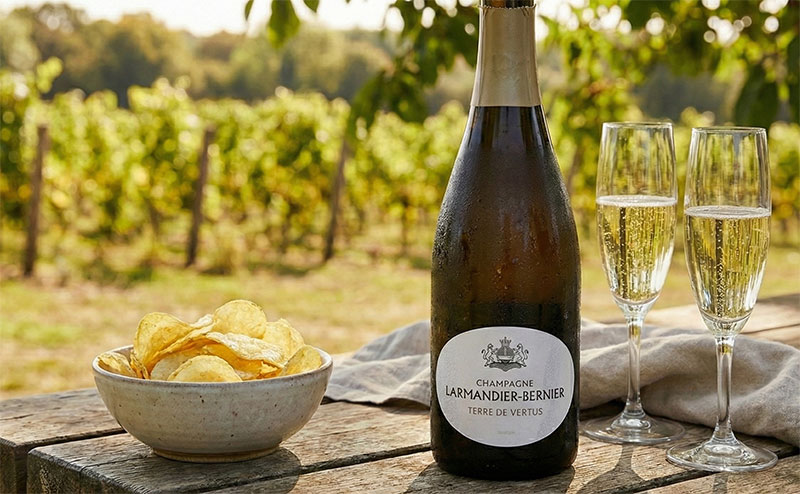
High-Low Mix: The best pairing for a €50 bottle is often a €2 bag of salty chips.
In the US, Champagne is for weddings and toasts. In France, it is a wine meant to be eaten with food. But be careful, most people pair it wrong.
Champagne has high acidity and bubbles, which makes it the ultimate palate cleanser for fat and salt. Forget strawberries; think grease.
The Mistake: Ordering Brut Champagne with wedding cake or dessert. The sugar in the cake makes the dry Champagne taste bitter and metallic.
The Local Move: Order Champagne first. In Paris, it is the ultimate Apéritif (Apéro). It wakes up your palate before the meal starts. If you must drink it with dessert, order a Demi-Sec (sweet), but honestly? Just drink it first.
The Picnic Move: Whether you are in a park in Épernay or picnicking in Provence, the ultimate lunch is a cold rotisserie chicken (poulet rôti), a bag of chips, and a chilled bottle of grower Champagne. It feels like a king’s feast for €20.
Yes. Épernay is smaller, walkable, and feels more like a wine town. Reims is a city. For the “slow lifestyle” vibe, Épernay wins.
Two is the sweet spot. One big house plus one small producer gives you variety without crushing your palate.
For big houses, yes, absolutely. For small producers, often yes, but a quick email a few days before usually works.