Travel Planning Hub
Start here to plan your trip, compare options, and explore every TLGA planning guide.
Packing & Gear Guide
What to pack, what to skip, and how to build a lighter travel setup that works.

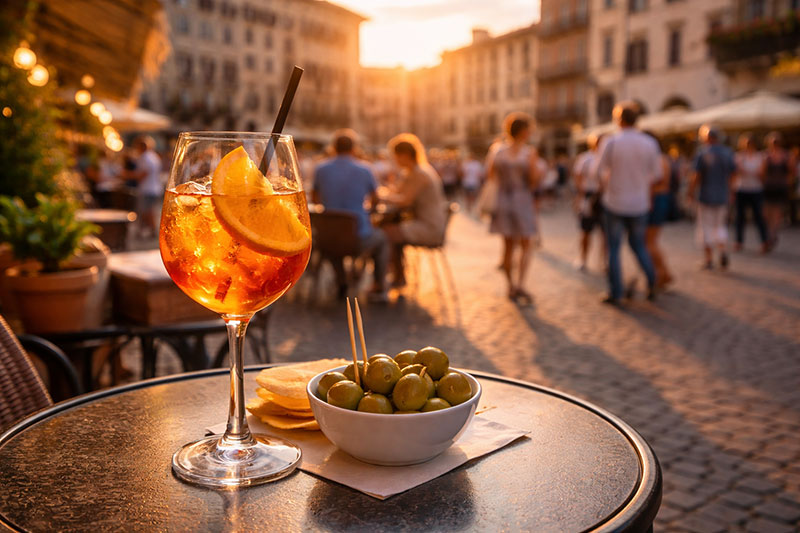
The standard configuration: An Aperol Spritz glowing in the late afternoon sun. Note the presence of the complimentary olives which are essential to the ecosystem.
By Corey Gasman
Italian drinking culture operates on a specific set of protocols. It is less about “going out drinking” and more about specific rituals tied to the time of day.
For me, the transition into the Italian aperitivo lifestyle was seamless. We had already been drinking Aperol Spritzes back home for years. They became a big thing in the U.S. for a reason. They are light, refreshing, and perfect for summer nights in Minnesota, especially if you are on the lakes or want something easier than a heavy beer.
Once you land in Italy, that familiarity clicks immediately. Aperitivo does not feel foreign or intimidating. It feels familiar. If you have never tried it at home, Italy is the perfect place to start. Order a Spritz, grab a small plate of food, and ease into the night the same way locals do.
If you treat an Italian bar like an American bar, expecting table service at all hours, ordering cappuccinos after dinner, or looking for “happy hour” discounts, you will encounter system errors.
The goal here is clarity and utility. I am stripping away the romance to explain the mechanics of how to get a drink, what you get for your money, and how to avoid the “tourist tax” on your coffee.
Here is the user manual for Italian drinking culture.
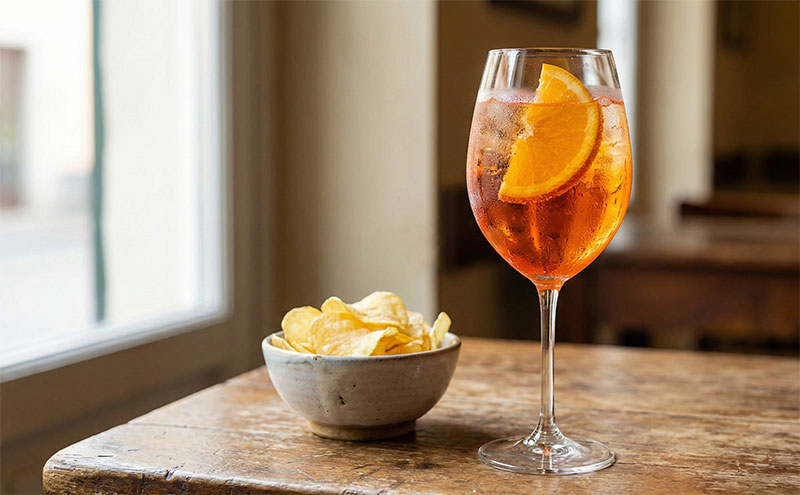
It looks like a casual drink, but it is actually a precise cultural ritual. To drink like a local in Italy, you have to understand the mechanics of the “Aperitivo” system.
Think of Aperitivo not as “Happy Hour,” but as a pre-dinner system designed to stimulate your appetite. It is the bridge between the workday and dinner (which happens late, around 9:00 PM).
How it Works:
Food and drink are just one part of the puzzle. For a complete breakdown of how to plan your days in Rome, Florence, and beyond, check out the main hub: The Ultimate Italy Travel Guide (2026)
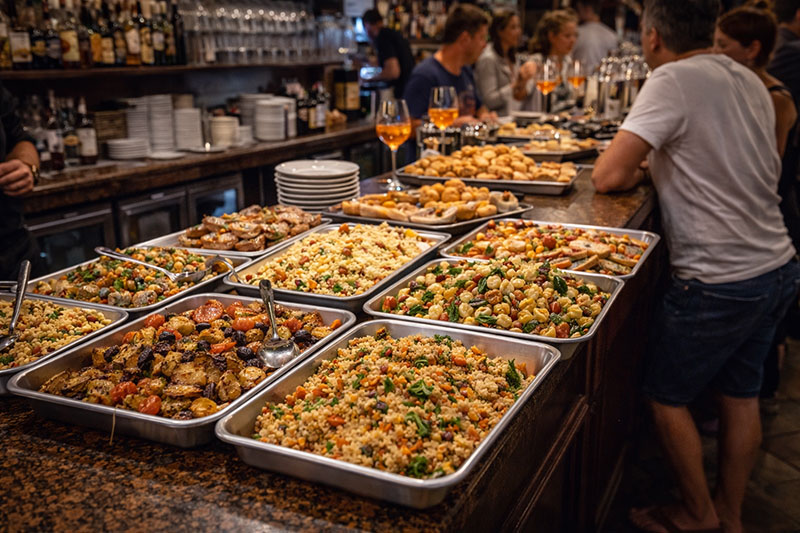
The “Apericena” setup. When you see a buffet spread like this, the price of your drink covers a plate of food. It is the most cost-effective meal in Italy.
When engaging in Aperitivo, the food component varies by venue. You will encounter two distinct operating systems. It is crucial to identify which one you are in before ordering.
This is the default setting at most bars.
A portmanteau of Aperitivo plus Cena (dinner). This system is designed to replace a full meal.
Local Guide Tip: The Dinner Delay
Remember, Italian restaurants often do not open for dinner until 7:30 PM or 8:00 PM, and locals do not eat until 9:00 PM. The Aperitivo is a necessary caloric bridge to get you through that gap.
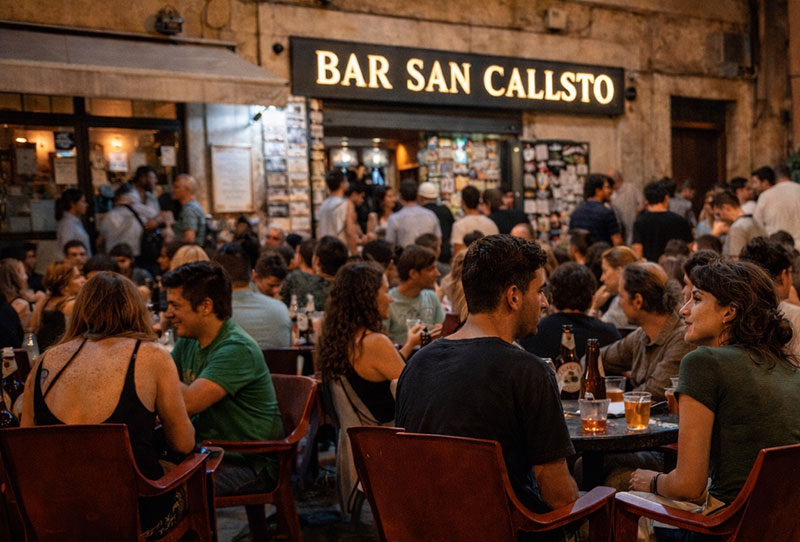
Bar San Calisto in Trastevere is one of Rome’s best late-night drinking institutions. Cheap beers, no pretension, and packed tables well past midnight.
Aperitivo gets all the attention, but Italy also has a parallel drinking culture that kicks in later. This is where you end up after dinner, when you are no longer interested in curated cocktails or food pairings. You just want a beer, a place to sit, and zero performance.
Local Guide Tip: Bar San Calisto (Trastevere’s Late-Night Cheap Beer Spot)
This was our go-to spot because we stayed in Trastevere for a full week. After dinner, we would pivot here for a couple late-night beers or drinks and grab a seat out on the patio. The mix of people is what makes it great, business folks, blue-collar locals, and tourists all blended together without it feeling like a “tourist bar.”
It sits in a little piazza, which is part of the magic. You can post up, people-watch, and genuinely feel like you found the neighborhood’s default hangout. If you want cheap beers and a good time in Trastevere, this is the spot.
It also works perfectly as a post-stop after a night tour or evening wander through Rome. Grab one more drink here, exhale, and call it a night.
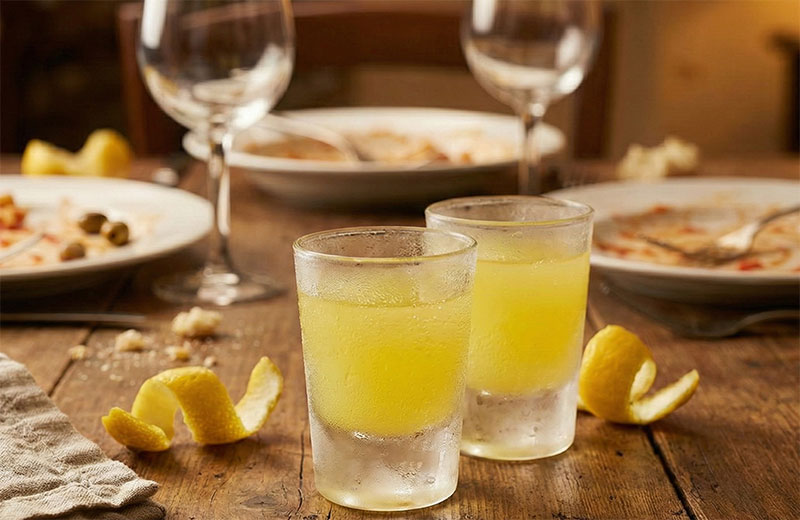
Limoncello is served ice cold in chilled glasses. It is not a shot to be pounded; it is a digestive aid to be sipped slowly after a heavy meal.
After a heavy meal, you do not just pay the check. You order a “digestive” to help process the food. This is viewed as medicinal, not just recreational.
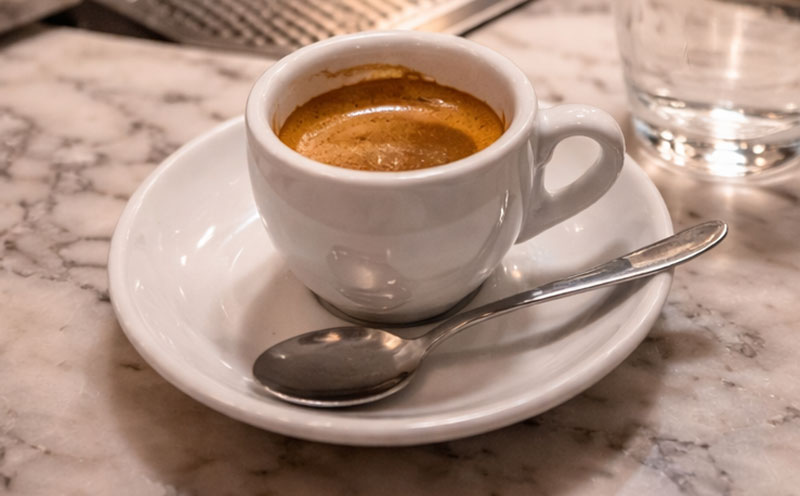
The “Banco” (counter) ritual. Drink your espresso standing up here for 1.20 euros. Sit at that table in the background, and it will cost you 3.50 euros. Same coffee, different real estate.
Italian coffee culture has strict time-based restrictions. Violating these rules marks you instantly as a tourist.
If you are interested in how wine fits into the daily life of Tuscany (and those famous Super Tuscans), check out my deep dive into the region.
No. Tipping is not expected in Italy as it is in the US. If you are standing at the bar for a coffee, you might leave the small change (10 or 20 cents) on the counter. For table service drinks, you can round up a euro or two, but it is not mandatory.
You can ask for “acqua di rubinetto,” but it is rare. In restaurants and bars, the standard is bottled water (still or sparkling/frizzante). It is cheap and expected.
Generally, yes. It is common to see people enjoying a beer or wine in piazzas during the evening. However, some cities (like Rome and Florence) have specific ordinances banning glass bottles in certain areas at night to prevent litter and noise. Check local signs.
If you sit at a table, you will often see a “Coperto” charge on the bill (usually 2 to 3 euros per person). This is the cover charge for the table, bread, and silverware. It is standard and legal; it is not a scam.