Travel Planning Hub
Start here to plan your trip, compare options, and explore every TLGA planning guide.
Packing & Gear Guide
What to pack, what to skip, and how to build a lighter travel setup that works.

Last updated: March 2026 by Corey Gasman
From the Editor:
Rome is one of the easiest cities in Europe to ruin by overplanning. You can absolutely spend a week here running between the Colosseum, Vatican, Trevi Fountain, Pantheon, and every listicle restaurant on the internet. You can also spend that same week eating better, walking more, and actually feeling the city.
That difference usually comes down to rhythm. Rome works best when you pick one big sight, then let the rest of the day happen within the same zone. Have a long lunch. Sit in a piazza. Walk back by a different street. Stop acting like the city is trying to disappear on you.
This guide is built to help you do Rome that way. It is the big-picture city guide for first-timers and return visitors, while my Trastevere week-in-Rome post stays the more personal spoke with the slower, lived-in version of the trip.
2026 Rome Planning Notes:
Rome still rewards early booking for headline sights. The Colosseum, Vatican Museums, and Borghese Gallery are all better when you lock in official timed entry early and build the rest of the day around that slot.
For transit, Rome’s basic BIT ticket remains €1.50 for 100 minutes, while the 24h, 48h, 72h, and weekly passes are better value once you know your pace. If you only ride a few times a day, walking plus occasional transit is usually the better Rome strategy anyway.
TLGA Rule: One major sight per day, then stay in that same area. Rome gets worse the moment you crisscross it all afternoon.
Real trip report: Rome in October: Based in Trastevere
Neighborhood add-on: Best Bars & Piazzas in Trastevere
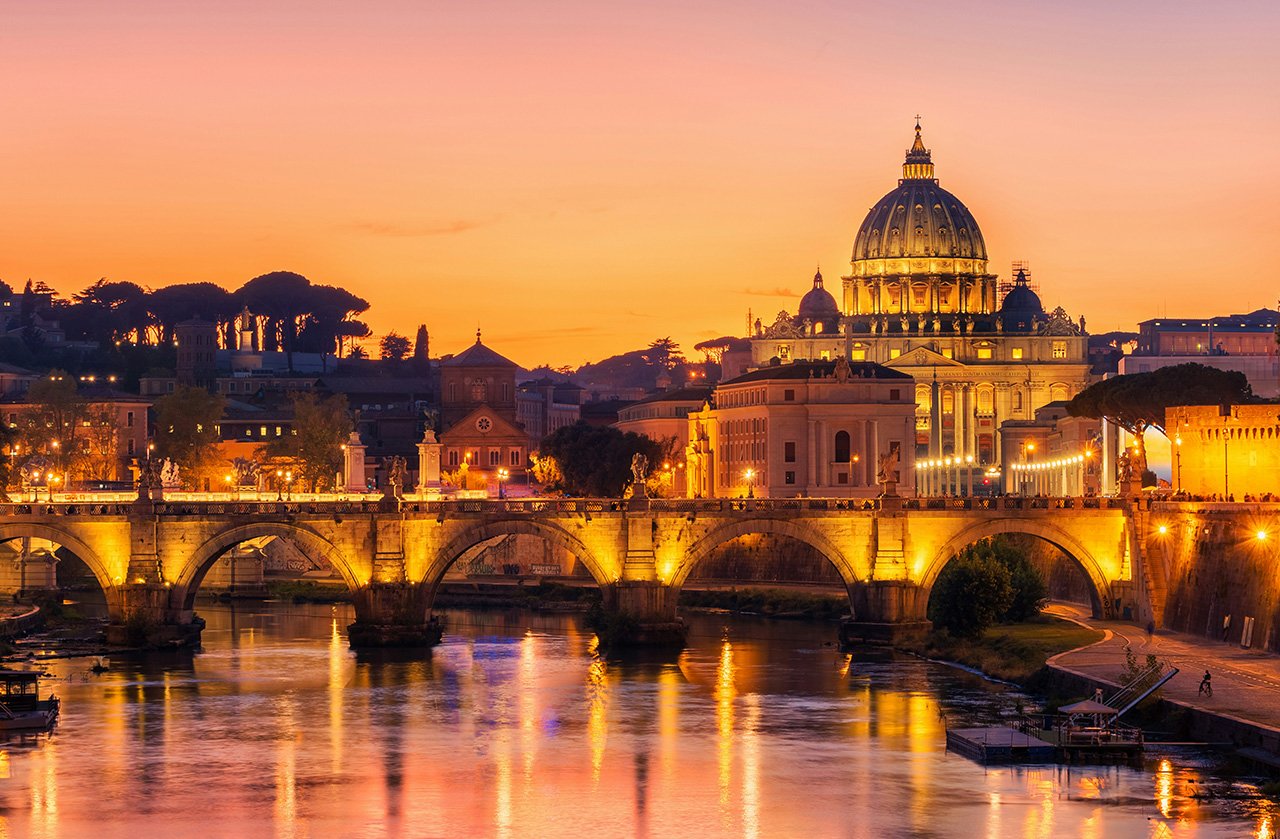
From the dome of St. Peter’s to a backstreet trattoria lunch, Rome works best when the city unfolds in layers instead of in a rush.
Short answer: Go to Rome if you want the most emotional, food-driven, history-heavy city in Europe. Skip it if you want the easiest, cleanest, or most efficient trip.
Rome is one of the most rewarding first-time cities in Europe, but it is not a city that responds well to checklist travel. The monuments are world-class, the streets are cinematic, and the food can be incredible, but the city also demands patience. Distances look short on a map and then suddenly take much longer because of hills, traffic, detours, crowds, and the fact that you keep stopping to stare at churches or ruins you did not plan for.
The mistake most people make: trying to see Rome instead of moving through it.
The right Rome trip is not about doing everything. It is about knowing what kind of Rome you want. Ancient Rome? Vatican-heavy Rome? Slow Trastevere evenings? Long lunches and neighborhood wandering? This guide is meant to give you that framework first, then help you fill in the details with better choices.
If this is your first trip, the core Rome experience usually comes down to five buckets: Ancient Rome, Centro Storico, Vatican City, Roman food, and one neighborhood you actually get to know. If you can get those right, you do not need to see every single famous thing to feel like you really did Rome.
Pro Tip: Build each day around a zone, not a monument. The monument is just the reason you started there.
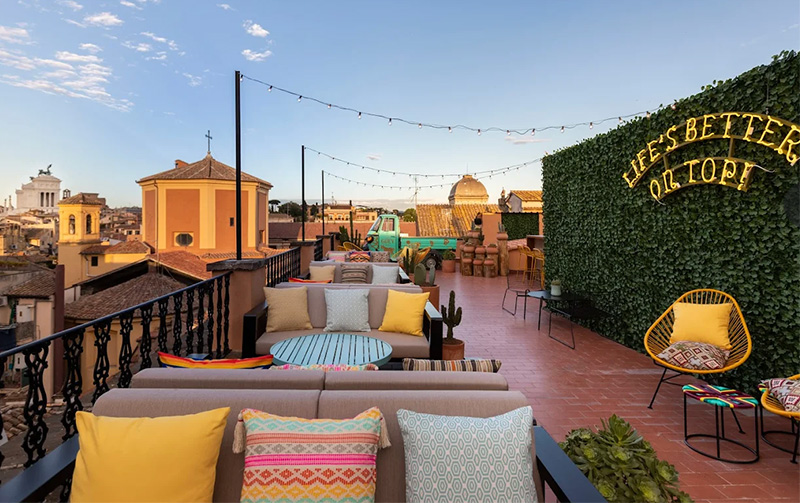
The rooftop terrace at Hotel Chapter Roma offers a sharp, modern escape with some of the best sunset views over the Regola district.
These are not the only good hotels in Rome. They are a more useful mix of luxury, boutique, and smart mid-range picks that map cleanly to different travel styles and neighborhoods.
Quick takeaway: In Rome, location matters more than room size or hotel luxury.
| Travel Style | Hotel | Why It Works |
|---|---|---|
| Classic Rome splurge | Hassler Roma | An old-school icon at the top of the Spanish Steps, great for travelers who want heritage luxury and one of Rome’s grandest addresses. |
| High-end first trip | Hotel de Russie | A polished luxury base near Piazza del Popolo with a location that works especially well for first-time Rome days. |
| Style-forward luxury | Hotel de la Ville | Strong rooftop energy, excellent design, and easy access to the Spanish Steps area without feeling stuffy. |
| Boutique sophistication | J.K. Place Roma | Intimate, elegant, and design-led, ideal if you want a quieter luxury stay in a very central zone. |
| Trastevere character stay | Donna Camilla Savelli | A calm, atmospheric base in Trastevere that gives you neighborhood texture without throwing you directly into the loudest nightlife streets. |
| Jewish Quarter / cool boutique | Chapter Roma | Stylish and well-placed for travelers who want a more design-forward stay in one of Rome’s best walking and dining areas. |
| Best practical mid-range | citizenM Rome Isola Tiberina | A smart modern option for travelers who care more about location, comfort, and value than old-world luxury. |
| Quiet value base | The Hoxton, Rome | A good fit if you prefer a calmer, more residential feel and do not mind being slightly outside the most postcard-heavy core. |
If you want the simplest answer: choose Centro Storico for a classic first trip, Trastevere for atmosphere and evenings, Monti for balance, and Prati if calm streets matter more than being in the thick of it.
Pro Tip: In Rome, the right neighborhood almost always matters more than getting a slightly bigger room.
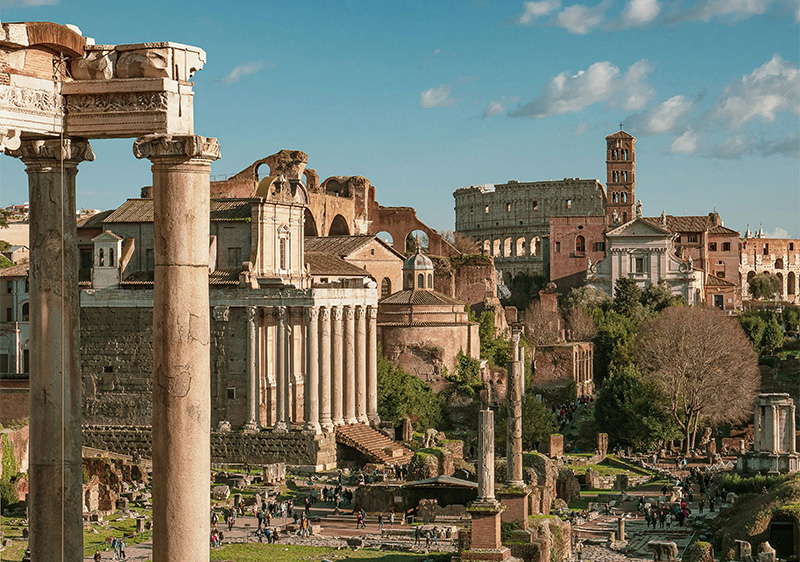
Starting your walking loop at the Roman Forum allows you to experience the city’s ancient core before the midday crowds arrive.
This is the single best structural change you can make to a Rome trip. Instead of scheduling three big attractions in opposite directions, choose one anchor and let the rest of the day unfold around it.
Book or choose one major sight for the morning. Then take lunch nearby, walk through the surrounding district, and let the afternoon lead naturally into a piazza, church, café, rooftop, or dinner reservation. Rome is full of “free wins” once you stop forcing movement.
Rome is one of those cities where transit is rarely the main event. The city is the event. That means the walk between places often becomes one of the best parts of the day, but only if you leave enough room for it.
A loop also protects your energy. Ancient Rome, Vatican City, and even Centro Storico sightseeing can all get surprisingly draining. If you plan one high-focus activity and then give yourself a neighborhood around it, you end up seeing more while feeling less exhausted.
The goal is not efficiency. The goal is momentum.
Local Guide Tip: Always try to walk toward dinner rather than away from it. Rome improves when your final hour feels like a glide instead of a commute.
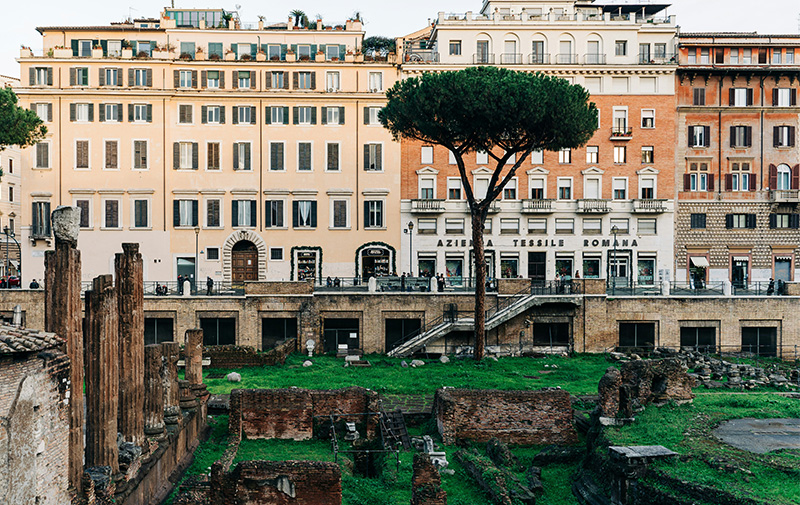
Largo di Torre Argentina is more than just a sanctuary for Rome’s famous street cats; it is a sunken archaeological treasure where history sits right at eye level with modern city life.
Rome is a walking city first, transit city second, taxi city third. That order matters.
Walking is still the best way to experience Rome, especially in Centro Storico, Trastevere, Monti, the Jewish Quarter, and the Vatican/Prati side. But be realistic: cobblestones, heat, traffic, and constant visual distraction make distances feel longer than they look on the map.
The metro is limited but useful for repositioning. Buses fill in the gaps, though they are less intuitive when you are tired or in a hurry. Rome usually works best when you mostly walk and then use transit strategically rather than building the whole day around it.
The standard BIT ticket is €1.50 and stays valid for 100 minutes. Official tourist tickets include ROMA24H (€8.50), ROMA48H (€15.00), and ROMA72H (€22.00), plus the weekly CIS option. If you only ride a few times a day, individual BIT tickets are often enough.
ATAC also supports Tap & Go and app-based ticketing, so you do not always need to hunt for a machine. If you tap only once, you are charged the BIT fare. If your day ends up exceeding four BIT-equivalent rides, ATAC’s best-fare logic can roll you into the cheaper 24-hour ticket automatically.
Use taxis strategically, not constantly. They are best when your feet are done, the weather turns, or you need to cross the city without killing the flow of the day. Rome’s official tourism site points travelers to the Chiama Taxi app and the city’s 060609 taxi line rather than improvising in the street.
Local Guide Tip: If you are taking multiple taxis every day, your base is probably the real problem.
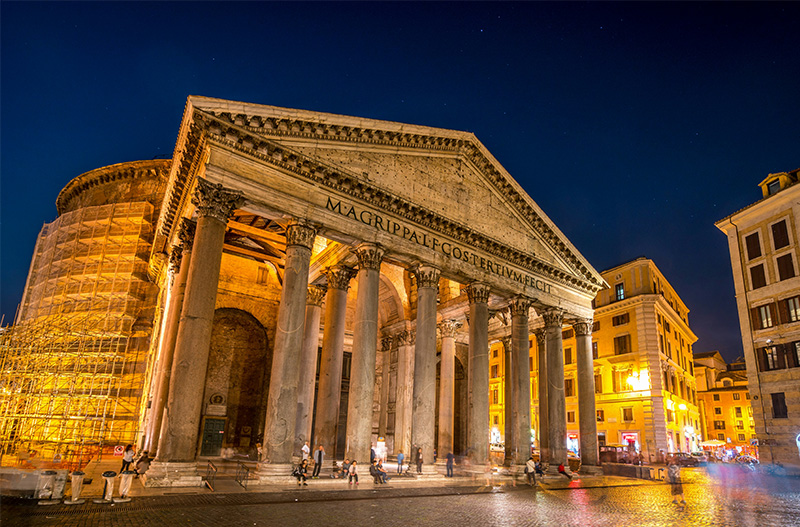
Visiting the Pantheon at night or during the blue hour offers a dramatic perspective on the world’s largest unreinforced concrete dome without the peak daytime crowds.
If this is your first trip, these are the experiences most worth building around. Not all of them require a ticket, but all of them benefit from timing and structure.
| Experience | Why It Matters | Best Strategy |
|---|---|---|
| Colosseum + Roman Forum + Palatine Hill | The essential ancient-Rome core and still the city’s most obvious first-timer priority | Go early and pair it with Monti or Capitoline Hill later |
| St. Peter’s Basilica + Dome | One of the best views in Rome and a much stronger payoff than many people expect | Do it early and keep the rest of the day on the Vatican/Prati side |
| Vatican Museums + Sistine Chapel | Massive art payoff, but only worth it with a proper timed entry plan | Book the official timed entry and avoid stacking another major museum the same day |
| Pantheon | One of the most satisfying monuments in Rome because it is still so intact and central | Use it as part of a longer Centro Storico walk rather than an isolated stop |
| Galleria Borghese | One of the city’s best art experiences if you want a more controlled, timed, and beautiful museum visit | Reserve early, then walk Villa Borghese or move toward the Spanish Steps/Pincio area |
| Capitoline Museums | Excellent mix of Roman history, sculpture, and city context without the scale fatigue of the Vatican | Pair with Forum views and a slower afternoon nearby |
| Appian Way | A totally different Rome experience, greener and older-feeling than most first-timers expect | Best on a slower or repeat-visitor day, ideally by foot or bike |
| Trevi / Piazza Navona / Spanish Steps at off-hours | These are famous for a reason, but timing is everything | Go early morning or later at night, not midday |
If you only do five major Rome experiences on a first trip, I would usually make them these: Ancient Rome, St. Peter’s Basilica and dome, Pantheon, one major art museum, and one full slow evening in Trastevere or the historic center.
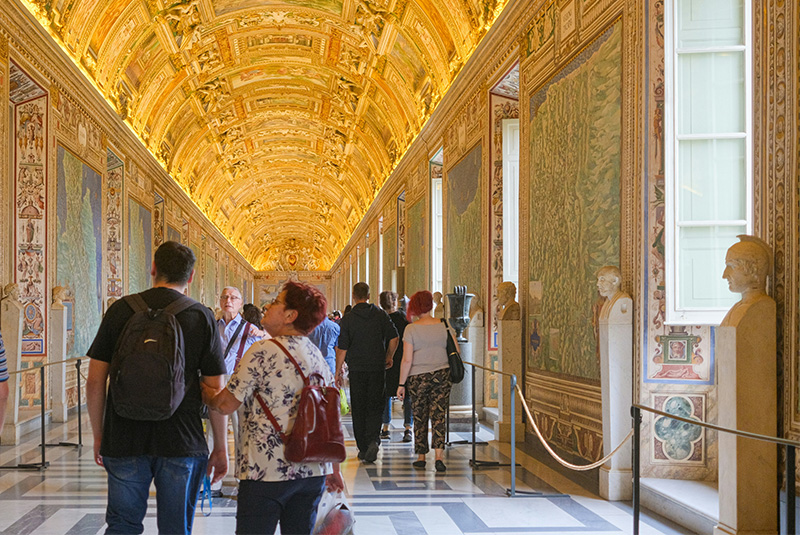
The Gallery of Maps is a highlight of the Vatican Museums, turning a simple corridor into one of the most visually stunning walks in the world.
Three days in Rome is enough to do well, but not enough to do everything. That means structure matters.
Start with the Colosseum, Roman Forum, and Palatine Hill in the morning while your energy is high. After lunch, head into Monti for a slower afternoon of wine bars, side streets, and a more relaxed evening. This day gives you the huge historic payoff right away without burning your whole trip on one district.
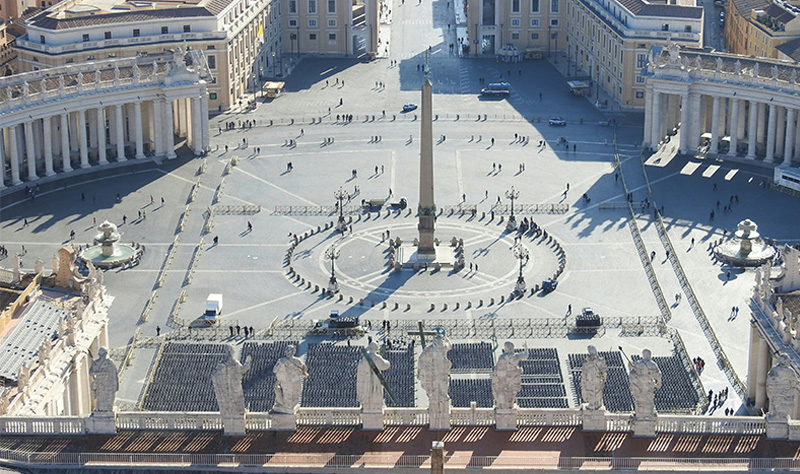
Do the Vatican Museums or St. Peter’s Basilica early. If you only choose one, the dome climb at St. Peter’s often gives more emotional and visual payoff than people expect. Keep lunch and the afternoon nearby in Prati so you are not spending the rest of the day recovering from Vatican-scale crowds.
Make this your Rome-feeling day. Walk the Pantheon, Piazza Navona, and Campo de’ Fiori, then cross toward Trastevere for the evening. This is the day where Rome stops being a museum visit and starts becoming a city you are actually in.
Pro Tip: In a 3-day Rome trip, you do not need to “save” the big attractions. Front-load the hard-ticket items and let the final day breathe.
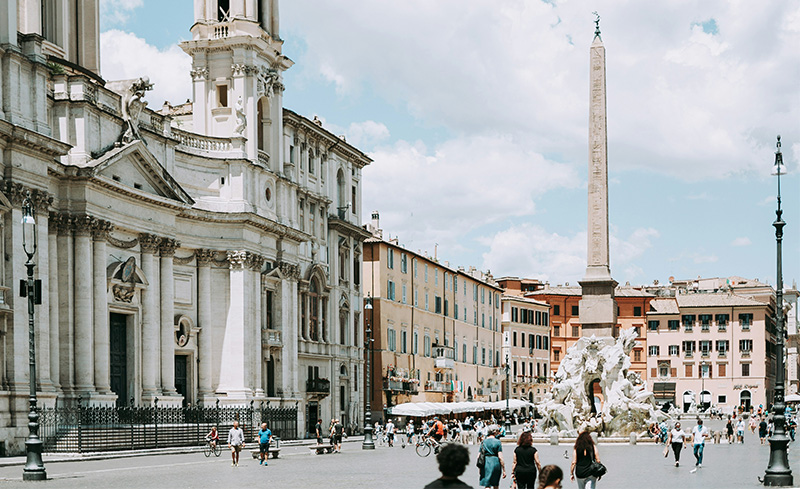
Whether you visit for the Baroque architecture or a slow apertivo, Piazza Navona remains the atmospheric heartbeat of the Centro Storico.
A week in Rome is where the city gets really good. You stop sprinting and start layering major sights with food, neighborhoods, slower mornings, and one or two side trips or deeper cuts.
Keep arrival day simple. Walk your neighborhood, get your bearings, eat something very Roman, and resist the urge to do too much.
Colosseum, Roman Forum, Palatine Hill. Keep the rest of the day in Monti or around Capitoline Hill.
Do either the Vatican Museums or St. Peter’s Basilica and dome in the morning. Keep lunch and the afternoon on the Vatican/Prati side.
Pantheon, Piazza Navona, Campo de’ Fiori, Jewish Ghetto, Trevi at an off-hour. Keep it very walkable and stop trying to “complete” the area.
This is the art-and-reset day. If you have done enough monumental Rome already, make this one more about museums, parks, and a very good lunch.
Use this day to eat more intentionally, explore side streets, linger over aperitivo, and go after a place or two you actually care about.
By day seven, a greener or more open-air Rome experience lands really well. Appian Way, Tivoli, or Ostia Antica are all strong choices depending on your interests.
The biggest advantage of seven days is not “more sights.” It is more margin. Margin is what lets Rome feel great.
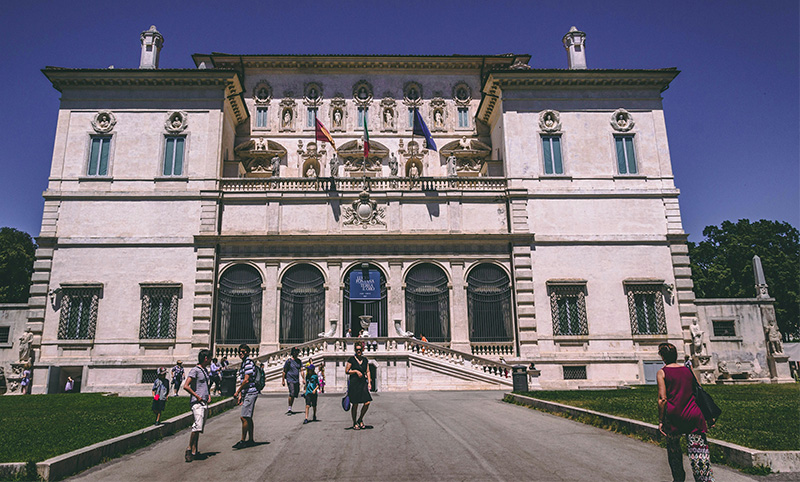
The Galleria Borghese is one of the few major Roman museums with a strict reservation system, making it a peaceful alternative to the often-crowded Vatican galleries.
Rome is not a city where you need to pre-book every second of your life, but a few things really are worth locking down early through official channels.
What you do not need to overbook: random churches, every meal, every piazza, every fountain, and every museum in one trip. Leave some of Rome unplanned on purpose.
Local Guide Tip: If a Rome day already has one timed ticket and one dinner reservation, that is usually enough structure.
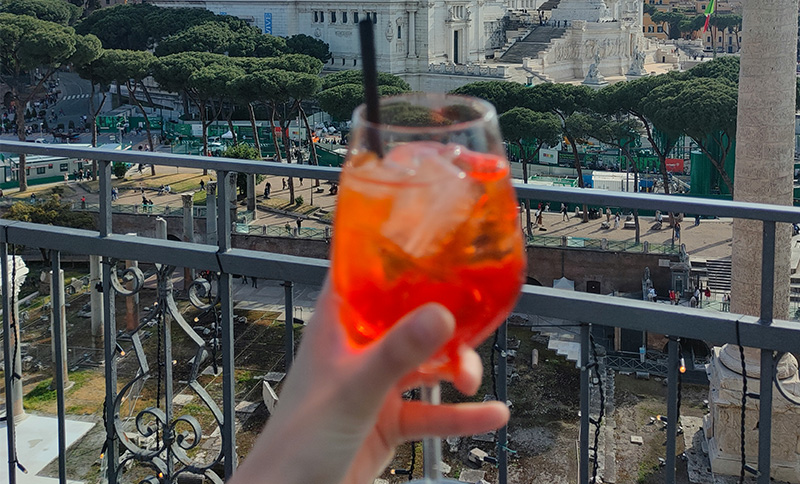
The orange glow of a classic spritz is the universal signal that the Roman workday has ended and the evening’s transition has begun.
Rome is one of the easiest places in Europe to eat badly near a famous landmark and one of the easiest places to eat brilliantly once you understand the rhythm of the city.
| Moment | What to Look For | Best Move |
|---|---|---|
| Breakfast | Coffee bar, pastry counter, standing-room energy | Keep it quick. Espresso or cappuccino plus pastry. |
| Mid-morning reset | Coffee or second coffee | Use this to break up long walking days, not to sit for an hour every time. |
| Quick lunch | Pizza al taglio, trapizzino, bakery sandwich, fried snacks | Save your big sit-down meal for dinner or a longer lunch day. |
| Long lunch | A trattoria in the district you are already exploring | Do this after one major sight, not before one. |
| Aperitivo | Wine bar, vermouth, spritz, light snacks | Treat it as a pause, not a full dinner replacement. |
| Roman dinner | A real Roman trattoria or carefully chosen modern spot | Book one or two places that matter, then leave the rest flexible. |
| Late-night sweet stop | Gelato or pastry if it still sounds good | Do not force dessert just because you are in Italy. |
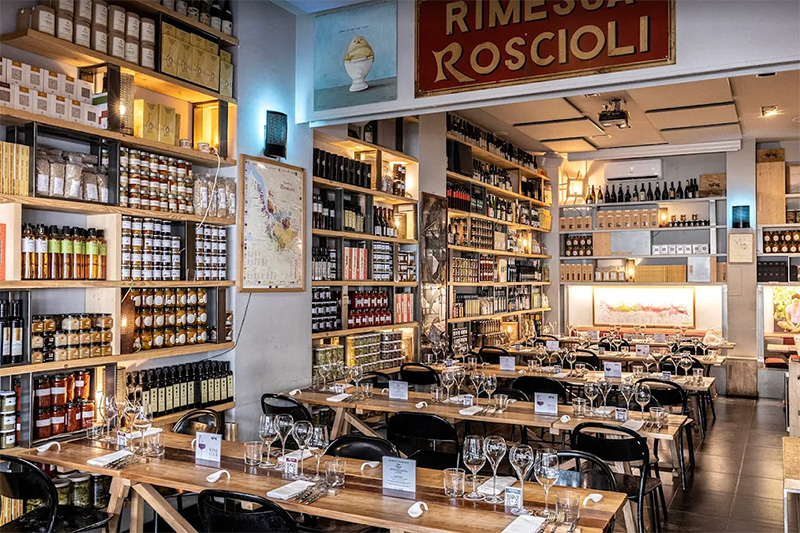
A tasting at Rimessa Roscioli is as much an education as it is a meal, offering a deep dive into Italy’s best independent winemakers and regional ingredients.
This is not meant to be every good restaurant in Rome. It is a tighter short list that covers classic Roman cooking, a few special experiences, and food moments that actually fit into a trip well.
| Place | Area | Why It Is Worth It |
|---|---|---|
| Armando al Pantheon | Pantheon / Centro Storico | A classic Roman institution that still feels rooted in local food traditions, not just tourist traffic. |
| Salumeria Roscioli | Historic Center | A strong one-stop Roman meal for cured meats, cheeses, pasta classics, and wine if you want a polished but still very Rome experience. |
| Santo Palato | San Giovanni | An acclaimed, brilliant modern take on traditional Roman cooking, famous for its carbonara and meat dishes. |
| Casa Manco | Testaccio Market | Repeatedly ranked as some of the absolute best pizza al taglio (pizza by the slice) in the entire city. |
| L’Elementare | Trastevere | One of the easiest and most satisfying pizza-plus-supplì plays if you want something casual that still feels dialed-in. |
| Trattoria Pennestri | Ostiense / Testaccio side | Great pick for travelers who want Roman food near the center but with less tourist drag and a strong wine list. |
| Roscioli Rimessa | Historic Center | A smart tasting-style experience if you want a more educational, wine-forward Roman evening. |
| A classic Trastevere trattoria of your choice | Trastevere | Trastevere is still one of the best areas in Rome to let atmosphere matter as much as the exact reservation. |
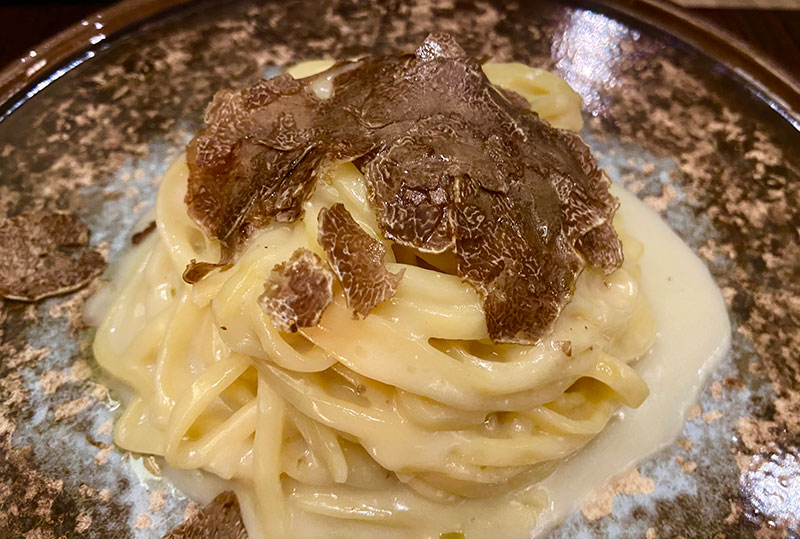
For your Roman food checklist, start by hunting down the Four Classic Roman Pastas: cacio e pepe, carbonara, amatriciana, and gricia. Beyond that, fill your days with supplì (fried rice snacks), carciofi (artichokes) when in season, puntarelle when available, and one really good Roman-style pizza or trapizzino stop.
Pro Tip: You do not need six destination dinners in Rome. You need two or three very good meals and better everyday choices in between.
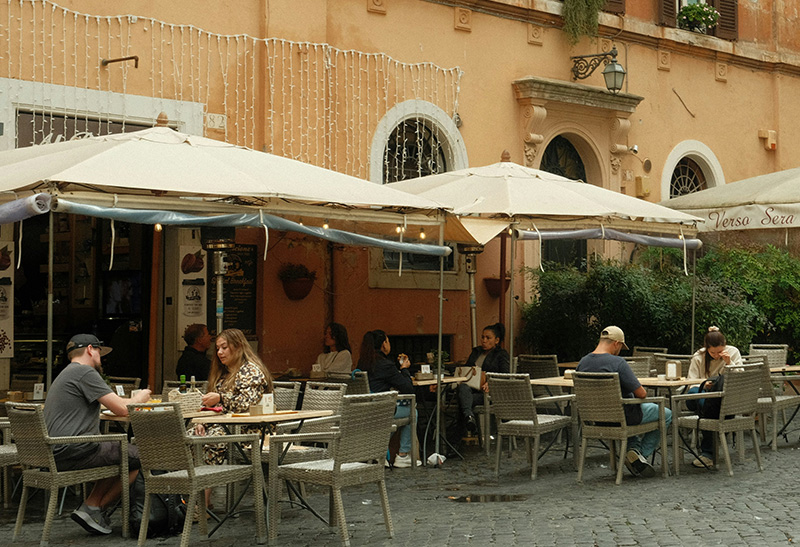
Knowing a few basic dining rules goes a long way in navigating Roman restaurants with confidence.
Italian dining etiquette in Rome is not complicated, but a few basics will make meals smoother and help you feel more confident.
| Topic | The Rule | Why It Matters |
|---|---|---|
| Cappuccino | Most locals treat it as a breakfast drink | You can order one later, but it will read as a tourist move |
| Coperto | A cover charge may appear on the bill | It is normal and not a scam by itself |
| Service | Service can feel more hands-off than in the U.S. | It is usually not bad service, just different pacing |
| Tipping | Not required at U.S. levels | Round up or leave a little extra for excellent service if you want |
| Espresso at the bar | Standing is often cheaper than table service | Good to know for quick coffee stops |
| Dinner timing | Dinner often starts later than many Americans expect | A 7:00 p.m. table can feel early in more local places |
The easiest Rome food mindset is this: do not overcomplicate it, but do pay attention. Pick a few dishes you care about. Know that timing matters. And remember that the places right next to major landmarks are rarely where the best meals happen.
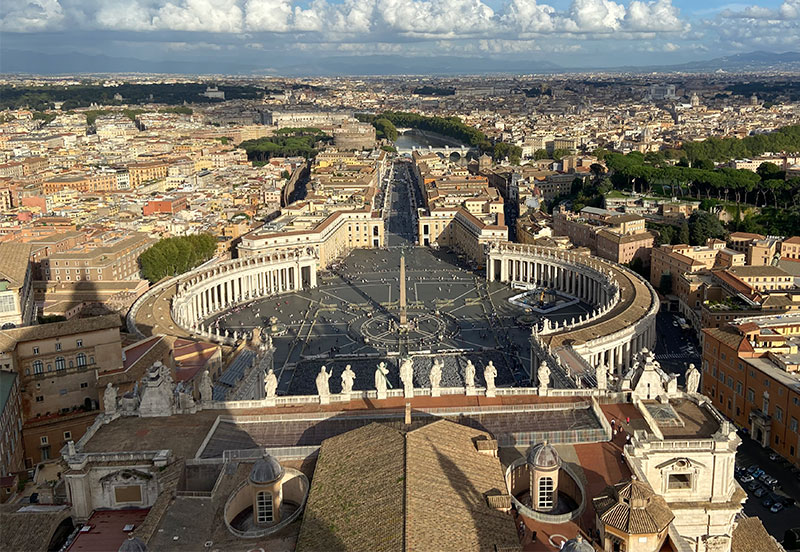
Whether you have a long weekend or a full week, pacing is the key to enjoying Rome.
Rome scales well, but it changes character depending on how much time you have.
| Trip Length | What It Is Best For | How to Approach It |
|---|---|---|
| 3 Days | A strong first-timer highlights trip | Ancient Rome, Vatican, and one long Centro Storico / Trastevere day |
| 5 Days | The sweet spot for most people | Add one more art or neighborhood day and let meals breathe more |
| 7 Days | A much better Rome rhythm | Mix big sights with real neighborhood time, food days, and one greener or slower outing |
If you only have three days, Rome is still worth it. If you have five, Rome starts to feel more human. If you have seven, Rome often becomes a trip people want to repeat rather than simply check off.
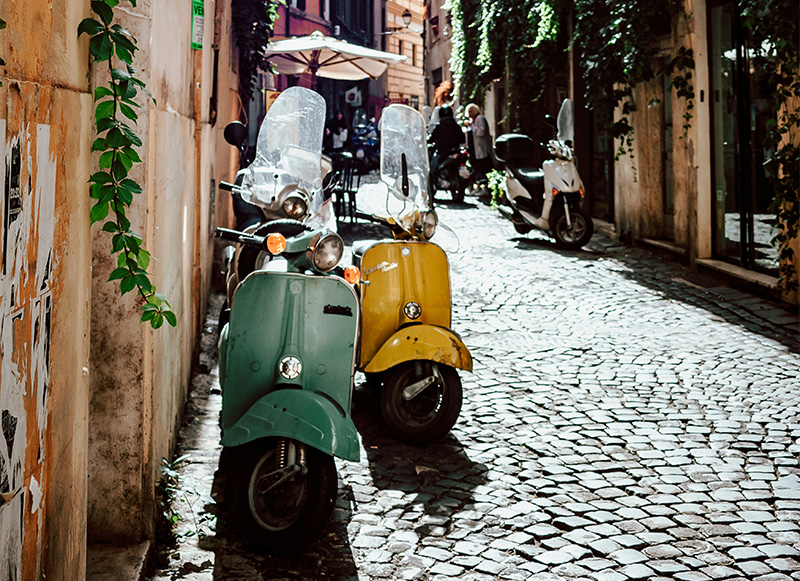
There is no more iconic way to bridge the gap between Rome’s ancient monuments than from the seat of a vintage Vespa.
Once you have done the basic Rome hits, the city gets better. You stop trying to prove you saw it and start choosing the versions of it you actually like best.
The second or third Rome trip is often when people finally understand how much of the city’s magic lives outside the obvious checklist.
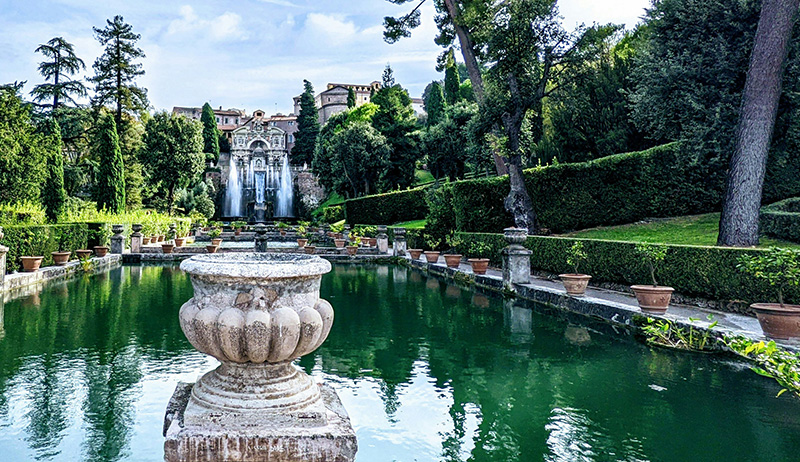
A day trip to Tivoli offers a lush, water-filled escape from Rome’s sun-baked stone, centered around the incredible fountains of Villa d’Este.
Rome has good day trips, but you do not need many. One strong choice is usually enough.
Best for gardens, villas, and a more elegant break from central Rome intensity.
Best for travelers who want ancient-Rome atmosphere without the same Colosseum-level crowd intensity.
Best for a stunning, quiet escape among massive ancient aqueduct ruins without actually leaving the city limits. Perfect for a long walk or bike ride.
Not always thought of as a “day trip,” but functionally one of the best half-day or full-day Rome escapes if you want open space and archaeology together.
Best for food, wine, and a softer hill-town rhythm once you have had enough stone and crowds.
Pro Tip: If you only have four or five days in Rome total, skip the day trips and give that time back to the city.
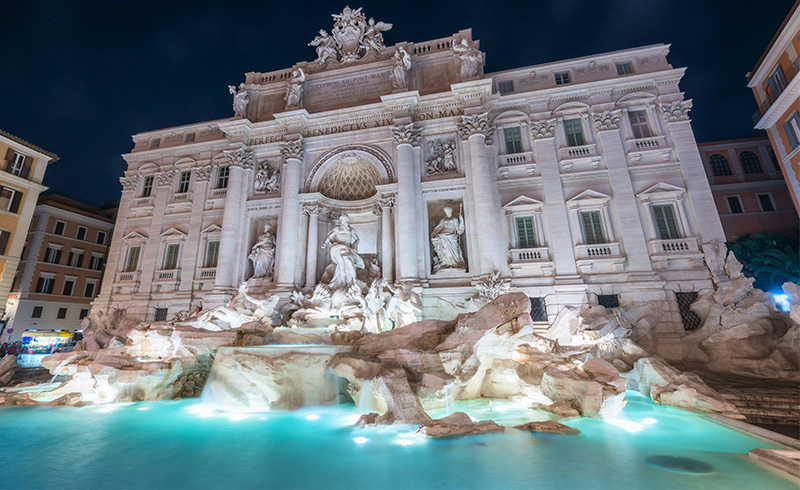
The Trevi Fountain is at its most cinematic after dark, when the crowds thin out and the Baroque marble is bathed in golden light.
Rome is doable year-round, but the experience changes more than people think.
| Season | What It Feels Like | Best For | Watch Out For |
|---|---|---|---|
| Spring | Lively, beautiful, increasingly busy | First trips, gardens, shoulder-season energy | Demand ramps fast |
| Summer | Hot, crowded, more draining | Long evenings and travelers who do not mind heat | Midday fatigue is real |
| Fall | Warm, food-friendly, easier walking weather | Most travelers, especially if you want a better balance of energy and comfort | Still busy in strong shoulder periods |
| Winter | Quieter, moodier, more museum-friendly | Return visits and travelers prioritizing lower crowd pressure | Shorter days and occasional damp weather |
If I were steering most readers without overthinking it, I would point them toward fall first, then spring.
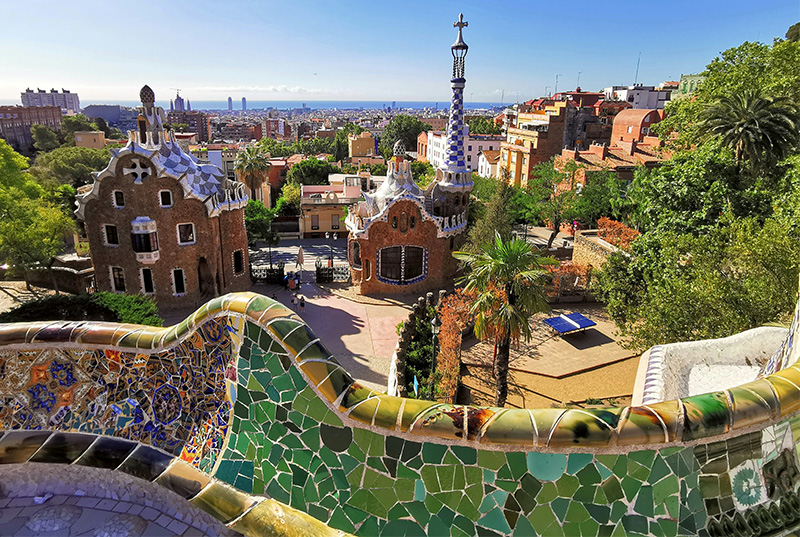
While Barcelona offers the whimsical, modernist masterpieces of Antoni Gaudí, Rome counters with a grittier, ancient soul that spans two millennia of layers.
If you are still deciding where to start a Europe trip, choose based on how you want your days to feel, not just what looks iconic on social media.
| City | The Vibe | Best For |
|---|---|---|
| Rome | Historic, dramatic, chaotic, emotional | Ancient history, bold food, layered walking days, and travelers who can handle a little friction |
| Paris | Refined, structured, café-centered | Museums, long lunches, elegant neighborhoods, and cleaner daily flow |
| Barcelona | Looser, later, more coastal | Beach-and-city energy, modernist architecture, and a less monument-dense rhythm |
Rome is the most emotionally overwhelming of the three. Paris is usually the most polished. Barcelona is often the easiest to keep light. None of those are value judgments. They are just different trip personalities.
Staying aware of your surroundings and keeping valuables in a secure, front-facing bag is the best defense against pickpocketing in Rome’s busiest districts.
Rome is generally very manageable, but it is a major tourist city, so the most common problems are crowd-based, not dramatic.
The best Rome safety strategy is the same one that works in most big cities: do not be oblivious, do not carry your phone in the easiest possible pocket, and do not act like every stranger is automatically part of your evening.
Pro Tip: Confident and boring is still the best urban safety style.
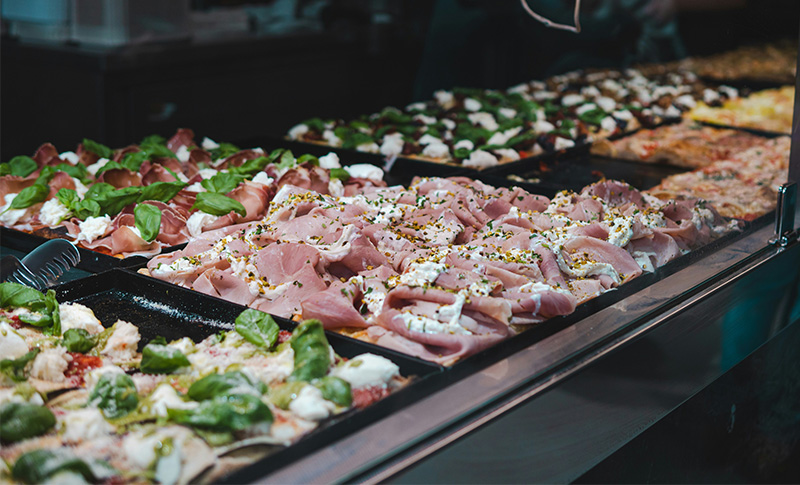
For a high-quality meal that won’t break your budget, look for the sign “Pizzerie al Taglio,” where you can buy world-class Roman pizza by the weight.
Rome can be done at many price points, but spending well matters more than just spending less.
| Budget Level | What It Usually Looks Like |
|---|---|
| Budget | Hostels or basic rooms, bakery lunches, occasional sit-down meals, careful ticket choices |
| Mid-range | Well-located boutique hotel or apartment, daily coffee and lunch stops, several strong dinners, major attraction tickets |
| Luxury | Top central hotel, destination dining, private guides or premium timed entries, more taxi use |
My general Rome budget advice is simple:
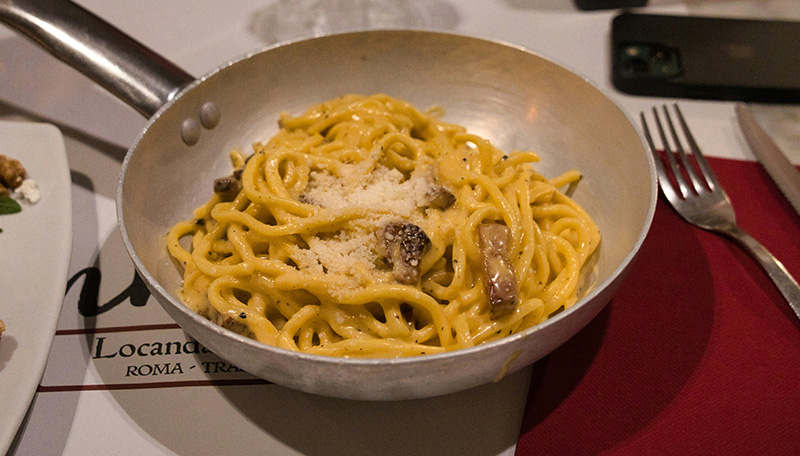
If your travel style is defined by hunting down the perfect bowl of Cacio e Pepe, Rome is a city that will never let you down.
Rome is one of the best first-time Europe cities for travelers who want history, atmosphere, and food to all matter at the same time. But it is not always the easiest city, and that is important to say clearly.
Rome is right for your trip if you want a city that feels layered, dramatic, and alive. You will walk past ancient ruins on the way to dinner. You will end up inside churches you never planned to visit. You will have moments where the city feels overwhelming, then moments ten minutes later where it feels unbeatable.
Rome is especially good for: first-timers to Italy, history lovers, food-focused travelers, couples who like long walking days, and return Europe travelers who want a city with more emotional punch than polish.
Rome may be the wrong pick if you want: perfect efficiency, a calm transit experience, ultra-orderly sightseeing, or a trip where everything runs on clean lines and easy pacing. In that case, Paris may feel smoother and Barcelona may feel lighter.
The simplest version is this: go to Rome if you want the most emotionally vivid city of the three. It is messier than Paris and less relaxed than Barcelona, but for a lot of travelers it is also the one that stays with them the longest.
Pro Tip: Rome is a better standalone city than a rushed add-on. If you only have a week, choose Rome and do it properly rather than forcing it into a blur.
| If this sounds like you… | Rome is a great fit | You may prefer another city |
|---|---|---|
| You want history, ruins, and iconic sights | Ancient Rome, Vatican, layered history everywhere | Barcelona (lighter), Paris (more structured museums) |
| You love food and eating is a priority | Roman pasta, trattorias, casual food culture | Paris (more refined), Barcelona (more variety + tapas) |
| You like walking and exploring neighborhoods | Centro, Trastevere, Monti all connect well on foot | London (more spread out but structured) |
| You want a smooth, efficient trip | Only if you slow down and structure your days well | Paris (cleaner flow), Tokyo (ultra-efficient) |
| You are planning a short 2–3 day Europe stop | Works, but requires tight planning | Amsterdam or Paris for easier short trips |
Rome is much better when you use a few specific tools for transport, taxis, and official booking instead of guessing your way through every line.
Good for walking and repositioning, but always sanity-check the route with your actual energy level.
Useful for current fares, ticket options, and understanding whether a pass really makes sense for your trip.
Better than improvising when you want an official taxi in Rome.
Use official booking channels for the Colosseum, Vatican Museums, Borghese Gallery, Pantheon, and St. Peter’s services whenever possible.
Helpful for menus, transport messages, or anything more nuanced than basic tourist Italian.
Worth comparing before you go, but only buy it if the included sights genuinely match your plan.
Use the broad Rome guide for planning, then jump into the more personal Trastevere stories and your wider Italy planning posts.
[/ux_text] [/col]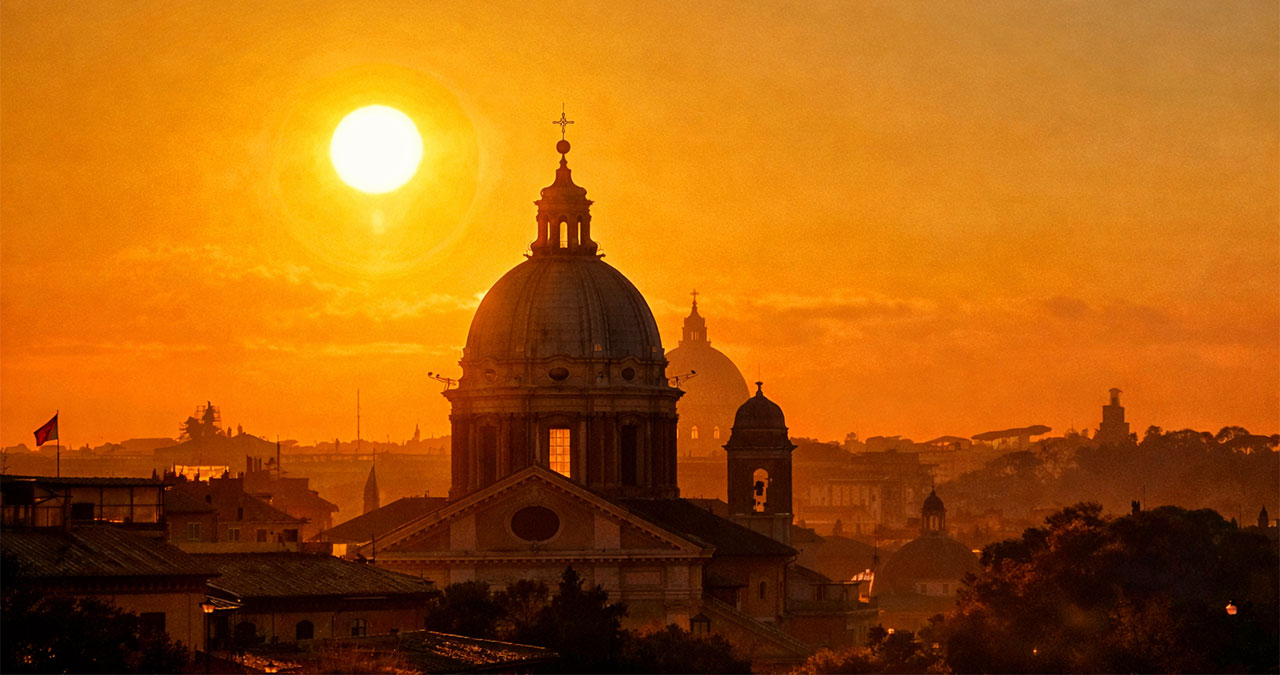
REAL TRIP REPORT
See how a one-week, food-focused stay in Trastevere actually played out on the ground.
Read More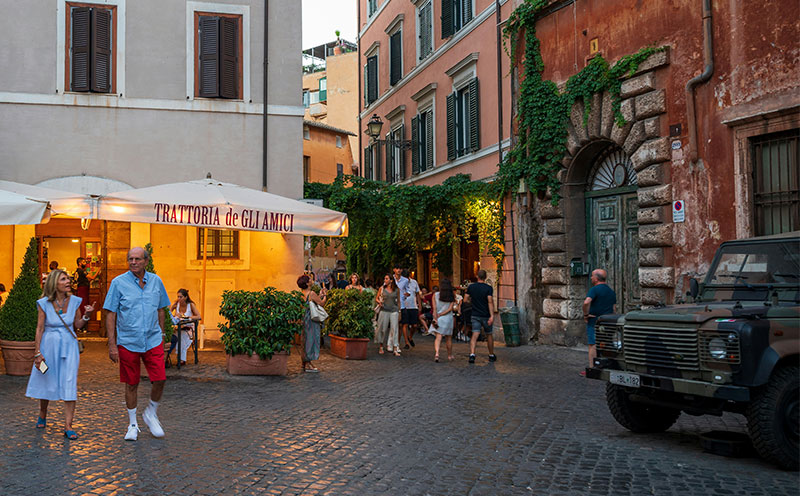
TRASTEVERE NIGHTS
A neighborhood-specific spoke for people watching, street energy, and where to slow down at night.
Read More
START HERE
Use the full Italy hub to connect Rome with broader trip planning, neighborhoods, trains, and budgets.
Read MoreFor most first-timers, 4 to 5 days is the sweet spot. Three days works for a strong highlights trip, but a full week is where Rome starts feeling much better.
Centro Storico is the easiest for pure first-timer convenience. Monti is a great balance pick. Trastevere is better if food and evening atmosphere matter more than ultra-direct monument access.
Yes. They are two of the clearest cases in Rome for booking official timed entry early.
Start with the Four Classic Roman Pastas (cacio e pepe, carbonara, amatriciana, gricia), supplì, and seasonal artichokes when available.
Yes, but not in a lazy way. It is extremely walkable if you structure your days by zone and do not expect to cross the city five times without feeling it.
Maybe. It can be worth it if your exact sightseeing plan matches the included value, but it is not an automatic buy for everyone.