Travel Planning Hub
Start here to plan your trip, compare options, and explore every TLGA planning guide.
Packing & Gear Guide
What to pack, what to skip, and how to build a lighter travel setup that works.

Last updated: March 2026 by Corey Gasman
From the Editor:
If you are staying near Montepulciano or driving the rolling hills of southern Tuscany, you are not just looking at postcard scenery. You are looking at one of the most historically important wine landscapes on the planet.
Wine here is not a luxury product or a tourist experience. It is part of everyday life. Families drink it with dinner, vineyards define the economy, and entire towns have built their identity around specific grape varieties.
This guide breaks down Tuscan wine in simple terms so you can understand the major grapes, the famous regions, and the story behind “Super Tuscans.” By the end, you will know exactly what you are drinking when you order a glass at wineries like Avignonesi or Icario.
Many Tuscan wineries require reservations for tastings and tours. Book at least 2 to 3 weeks ahead for popular estates.
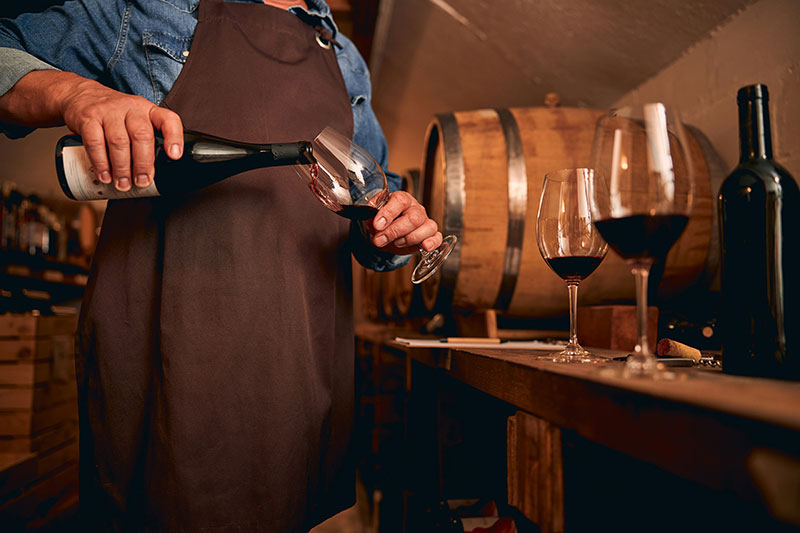
Sommelier pouring a glass of Tuscan red wine during a cellar tasting surrounded by aging barrels.
Tuscany produces some of the most famous wines in Italy, but the structure is actually fairly simple once you know the core idea. The entire region is built around a few foundational rules.
Once you understand those four ideas, Tuscan wine lists suddenly make much more sense.
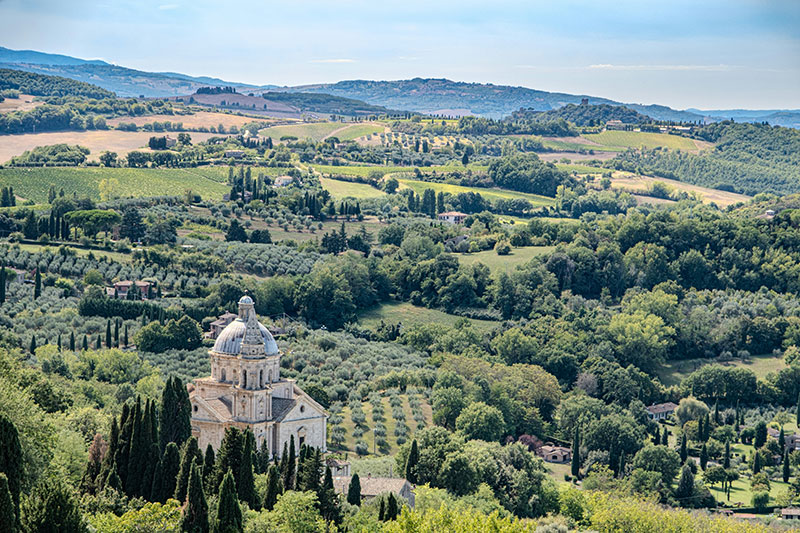
Vineyards near Montepulciano. Wine has been produced on these hills since Etruscan times nearly 3,000 years ago.
Tuscany’s wine culture is ancient, predating the Roman Empire. The Etruscans cultivated vines in these hills as early as the 8th century BC and exported wine across the Mediterranean.
However, the modern identity of Tuscan wine began in 1716. The Grand Duke of Tuscany, Cosimo III de’ Medici, issued a decree defining the official production zones of Chianti and several other regions.
This was effectively the world’s first wine appellation system, created long before France introduced similar regulations. Its purpose was simple: protect authenticity and prevent fraud.
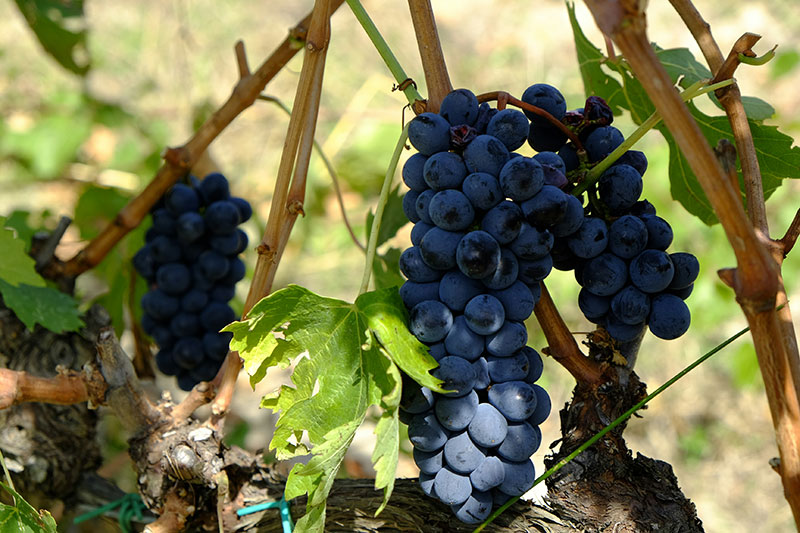
Sangiovese is the most important grape in Tuscany and the backbone of Chianti, Brunello di Montalcino, and Vino Nobile di Montepulciano.
If you remember one word about Tuscan wine, remember Sangiovese.
This grape dominates the region and adapts dramatically depending on soil, elevation, and climate. Its typical profile includes tart cherry, plum, dried herbs, and high acidity.
That natural acidity is exactly why Tuscan wine pairs perfectly with tomato-based pasta, grilled meats, and rich ragù sauces.
Local Guide Tip: Sangiovese goes by many names. It is called Brunello in Montalcino and Prugnolo Gentile in Montepulciano. Do not confuse Vino Nobile di Montepulciano with Montepulciano d’Abruzzo, which is a completely different grape from a different region.
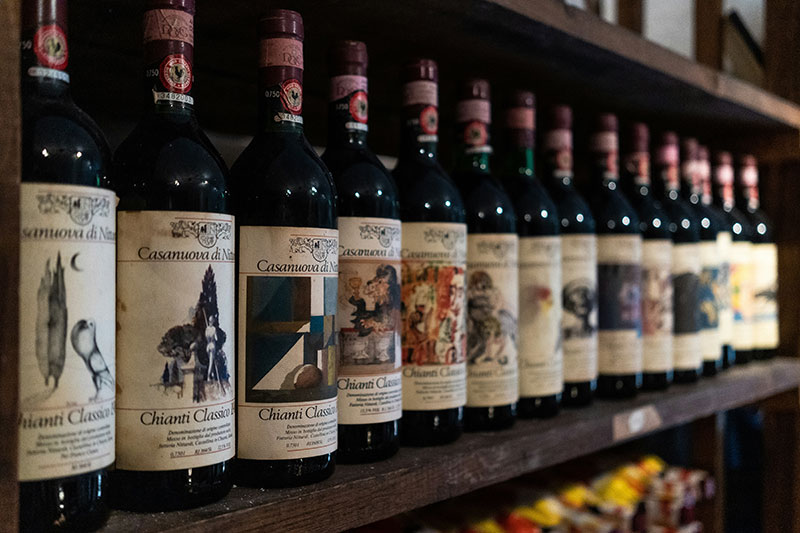
Chianti Classico bottles displaying the iconic Gallo Nero (Black Rooster) seal.
When you are handed a wine list in a Tuscan restaurant, these are the three traditional heavyweights you will see dominating the menu.
| Wine | What It Is |
|---|---|
| Chianti Classico | The most recognizable Italian wine worldwide. Authentic Chianti Classico must come from the historic region between Florence and Siena and contain at least 80% Sangiovese. |
| Brunello di Montalcino | Made from 100% Sangiovese and aged for a minimum of four years. Brunello is powerful, structured, and considered one of Italy’s most prestigious wines. |
| Vino Nobile di Montepulciano | The signature wine of Montepulciano. It offers more elegance and balance than Brunello while still delivering incredible depth and complexity. |
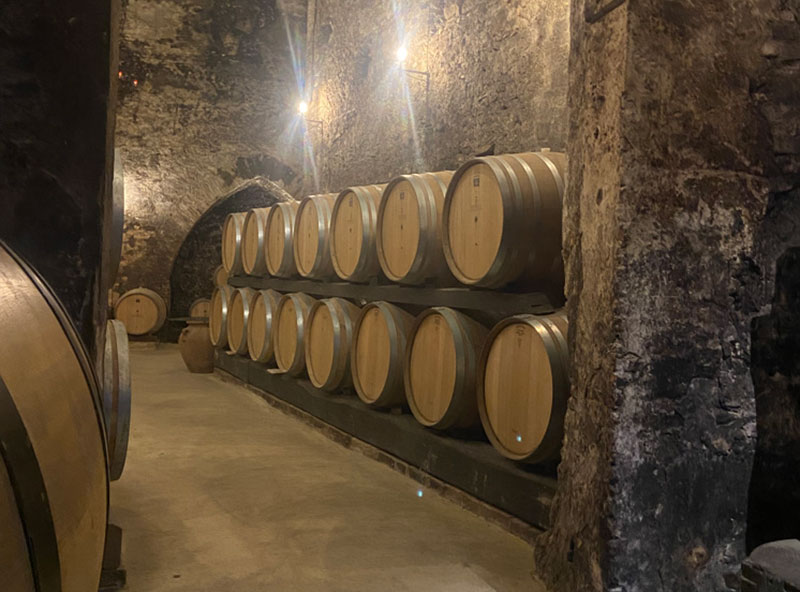
Barrel aging in a Tuscan cellar. Super Tuscan wines often use small French oak barrels.
Super Tuscans emerged in the 1970s when winemakers rebelled against strict Italian wine laws.
At the time, regulations required Chianti to include white grapes, which many producers believed lowered the overall quality. Innovative estates began producing wines using non-native grapes like Cabernet Sauvignon and Merlot, and introduced modern oak aging.
Because they broke official rules, these wines were legally required to be labeled as simple table wine. Ironically, they became some of the most prestigious and expensive wines in the world.
Local Guide Tip: Try Avignonesi’s “Grifi” for a classic modern Tuscan blend combining Sangiovese and Cabernet.
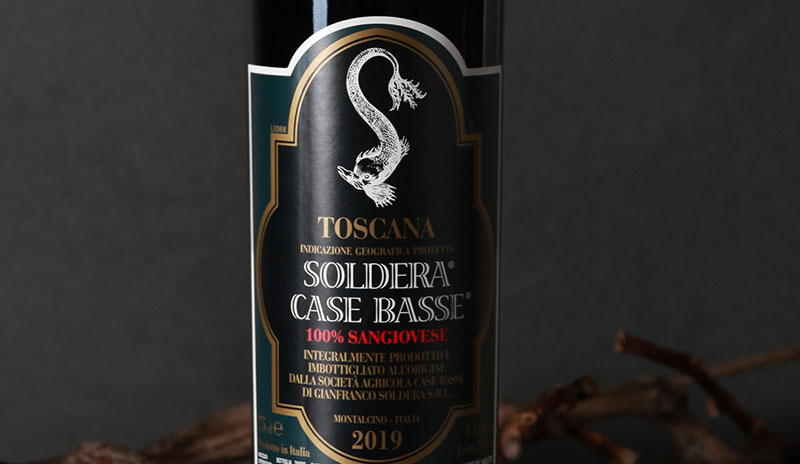
Soldera Case Basse is one of Tuscany’s most sought-after cult wines.
If you want to understand the benchmark bottles of the region, these are the famous names to look for on a menu or in a wine shop.
| Wine | Why It Is Famous |
|---|---|
| Sassicaia | The original Super Tuscan that changed Italian winemaking forever. |
| Soldera Case Basse | A cult classic and one of the most pure expressions of Sangiovese. |
| Brunello di Montalcino | The powerful flagship wine of southern Tuscany. |
| Chianti Classico Riserva | The elevated, aged version of the classic everyday Tuscan red. |
| Carmignano | A historic Sangiovese blend that legally incorporates Cabernet. |
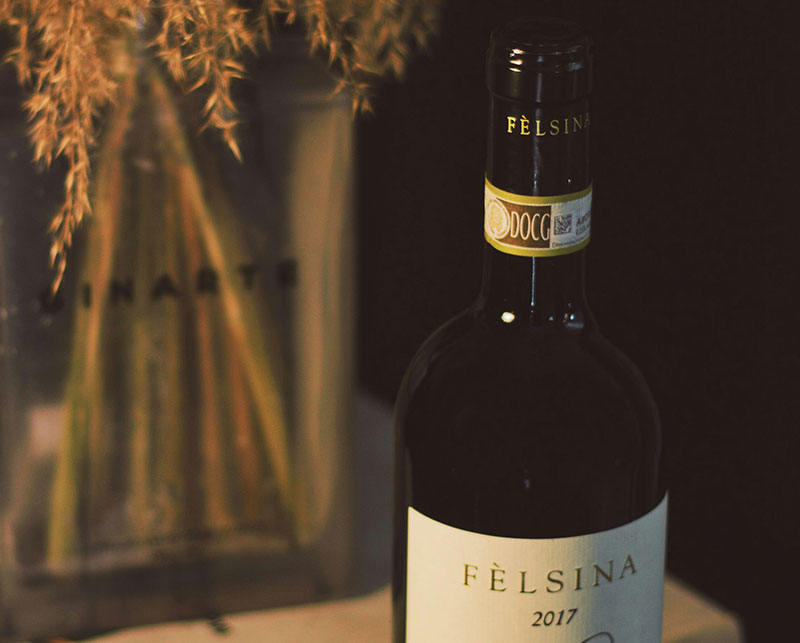
DOCG seals guarantee that the wine meets strict regional regulations and quality controls.
The letters on the neck of an Italian wine bottle tell you exactly what set of rules the winemaker followed.
| Classification | What It Means |
|---|---|
| DOCG | The highest classification with the strictest production and quality rules. |
| DOC | Regulated regional wines with established geographic boundaries. |
| IGT | A more flexible classification allowing winemakers room for experimentation. |
Pro Tip: Many famous Super Tuscans are labeled IGT even though they are some of the most expensive and highly rated wines in Italy.
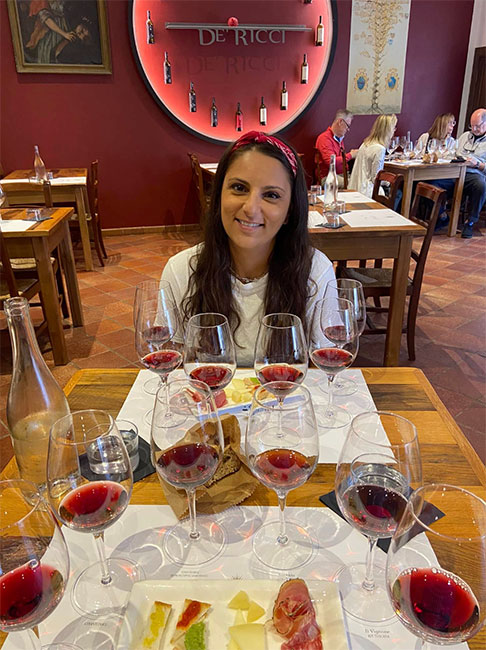
Wine tasting lineup at De’Ricci Cantine in Montepulciano paired with local pecorino and cured meats.
Wine in Tuscany is treated as food, not an isolated luxury product.
Meals are long, wine is poured to complement the food, and the focus is always on the pairing. A bottle of Sangiovese shared with a steak or a wild boar ragù is simply a core part of daily life.
Most wineries offer international shipping. However, costs can exceed €100 per case, so it is best for rare bottles or wine you cannot find at home.
Tipping is not expected if you purchase bottles. A small tip for a long guided tasting is appreciated but entirely optional.
May, June, and October offer the best weather and vineyard scenery. Harvest season in September can be exciting but busy, and winemakers have less free time.