Travel Planning Hub
Start here to plan your trip, compare options, and explore every TLGA planning guide.
Packing & Gear Guide
What to pack, what to skip, and how to build a lighter travel setup that works.


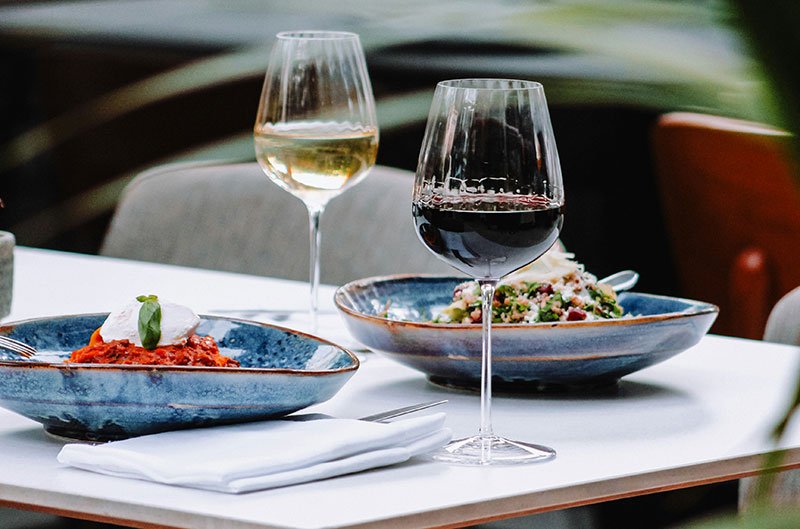
The perfect table: It is common to see both red and white wine on the table if you are ordering different courses, matching each glass to the specific dish.
Last updated: January 2026 by Corey Gasman
From the Editor:
If you are anything like me and basically plan your Italy trips around dinner, wine becomes one of the easiest upgrades you can make. It makes the meal feel more local, more memorable, and honestly more fun, without requiring you to spend big or memorize an intimidating wine list.
The good news is that Italian wine pairing is usually much simpler than it looks. Most locals are not overanalyzing tasting notes at dinner. They are doing three practical things: drinking something local, matching the weight of the wine to the food, and treating wine as part of the meal instead of a separate event.
This guide is built to be your restaurant cheat sheet. Use it when the wine list feels overwhelming, when you are trying to choose between red or white, or when you just want to order something that works with pizza, pasta, steak, seafood, cheese, and classic regional dishes across Italy.
If you only remember one thing, remember this: order local and match the weight of the dish. Rich food wants fuller wine. Lighter food wants fresher, lighter wine. That one rule alone will get you through most meals in Italy.
And just to be honest, I do not treat pairing like a strict science anymore. I still love a great match, but I also think travelers should drink what they actually enjoy. So use this guide as a roadmap, not a rigid set of rules.
⭐ The easiest ordering hack: In Italy, the safest move is usually local wine with local food.
If you feel overwhelmed by the list, ask for a vino locale or say: “Un vino locale che va bene con questo.”
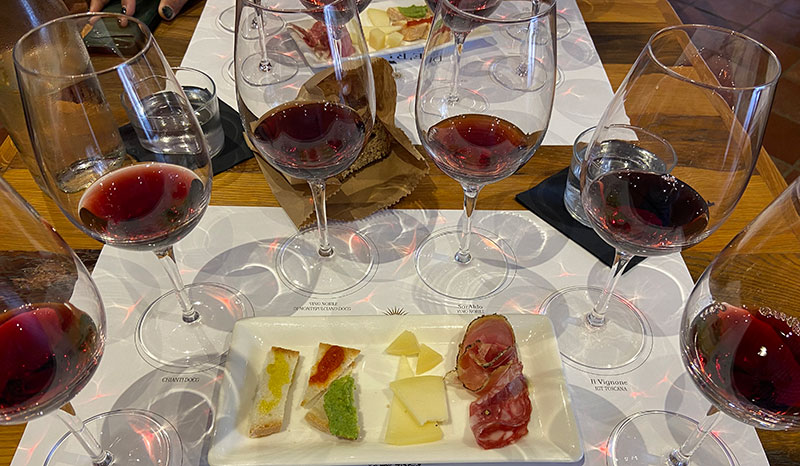
Research in action: Tasting a flight of Tuscan reds paired with local pecorino and cured meats. The best way to understand the wine is to drink it with the food it was made for.
Here is the truth: most Italians are not trying to decode a wine list like an exam. They are matching wine to food, region, and budget. In restaurants across Italy, great pairings usually follow three simple rules.
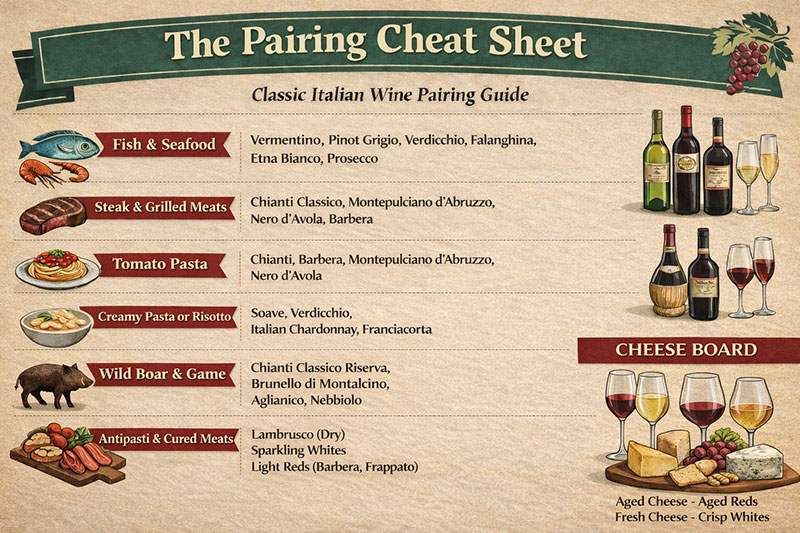
Download the Italian Wine Pairing Cheat Sheet (PDF)
A simple, restaurant-ready guide to ordering wine in Italy.
Use this when you are staring at the menu and do not want to overthink it. These are classic Italian pairing moves that work in most cities and most restaurants.
| Dish style | Best wine picks |
|---|---|
| Fish and seafood | Vermentino, Pinot Grigio, Verdicchio, Falanghina, Etna Bianco, Prosecco |
| Steak and grilled meats | Chianti Classico, Montepulciano d’Abruzzo, Nero d’Avola, Barbera, Aglianico |
| Tomato pasta | Chianti, Barbera, Montepulciano d’Abruzzo, Nero d’Avola |
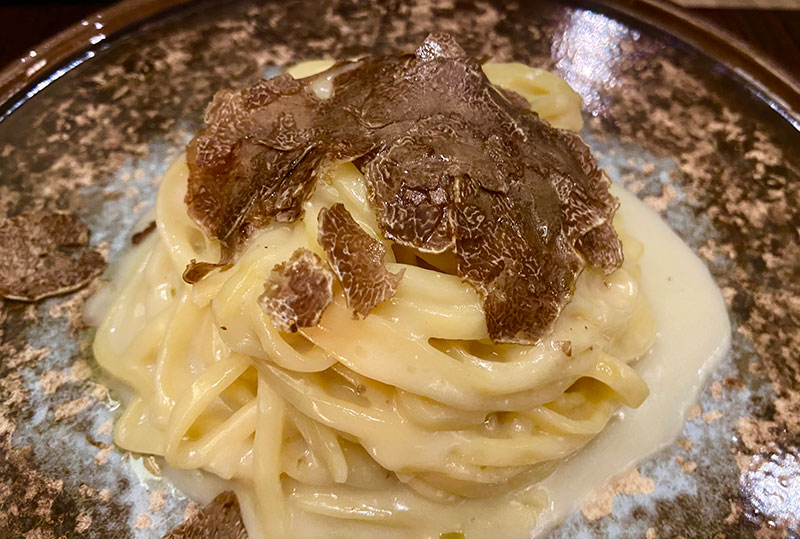
| Creamy pasta or risotto | Soave, Verdicchio, Chardonnay, Franciacorta |
| Wild boar and game | Chianti Classico Riserva, Brunello-style Sangiovese, Aglianico, Nebbiolo |
| Antipasti and cured meats | Dry Lambrusco, sparkling whites, Barbera, Frappato |
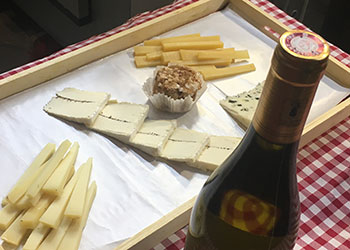
| Cheese boards | Fresh cheese with crisp whites, aged cheese with structured reds, blue cheese with sweeter wine |
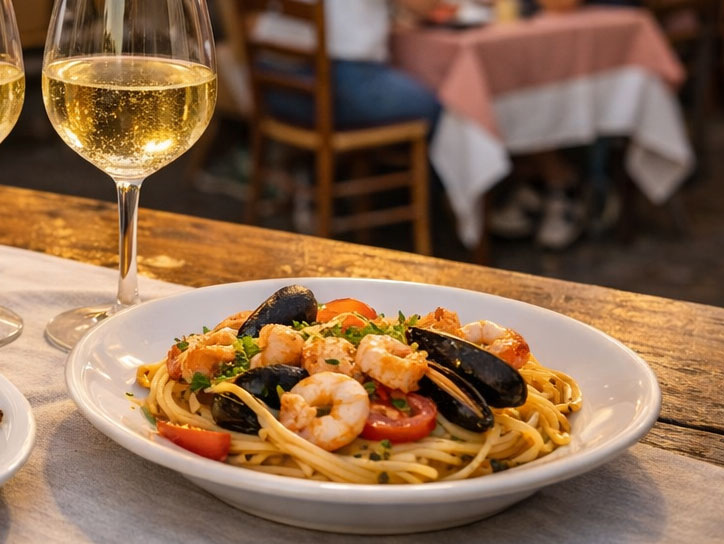
Perfect pairing: A plate of seafood linguine served with a chilled glass of local white wine.
Italy usually goes crisp and refreshing with seafood. Think citrus, minerality, and high acid. This keeps the pairing clean and bright, especially with salt, lemon, and olive oil.
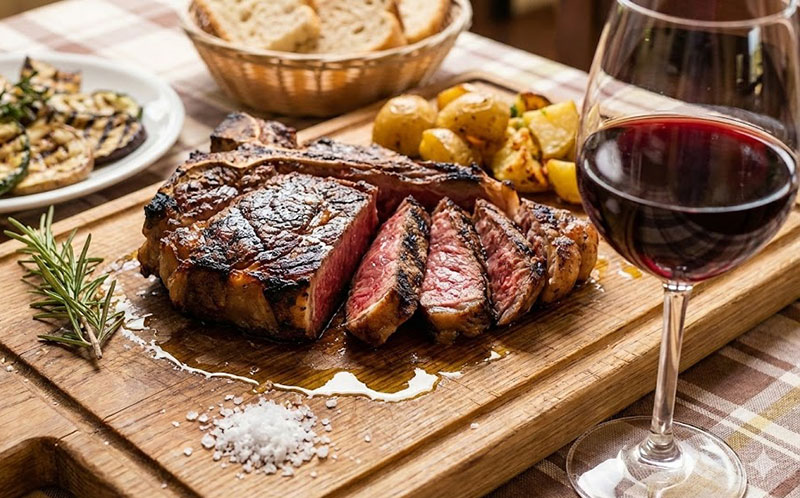
A robust glass of Chianti Classico Riserva or a Brunello-style Sangiovese pairs beautifully with a hearty steak or grilled meat dish, balancing the richness of the meat.
Fat and char love tannin. A structured red tastes smoother with steak, and the wine helps lift the richness of the meat.
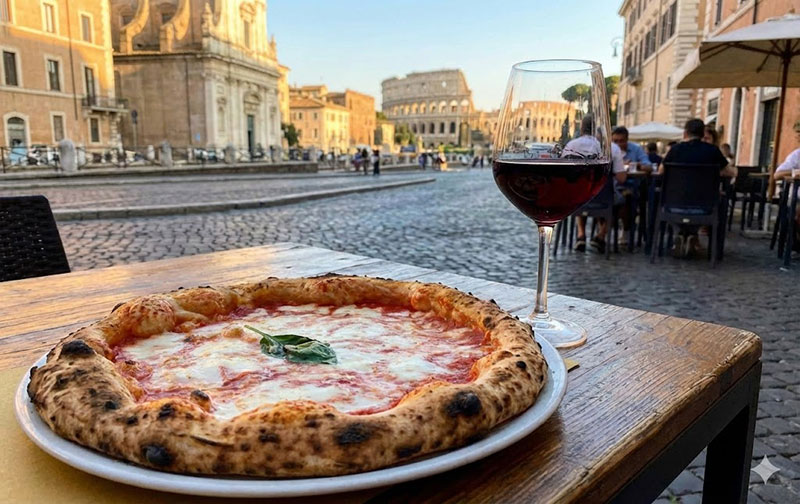
The ultimate Roman dining moment: pairing a classic wood-fired Margherita pizza with a glass of red wine near the Colosseum.
1) Tomato-based sauces: High-acid reds are ideal here. They match the acidity of tomato and keep the wine tasting fresh instead of flat.
2) Creamy pasta: Choose fuller white wines or sparkling wine with more structure.
3) Seafood pasta: Stay with crisp whites or dry bubbles. Whites are the local default in most of Italy.
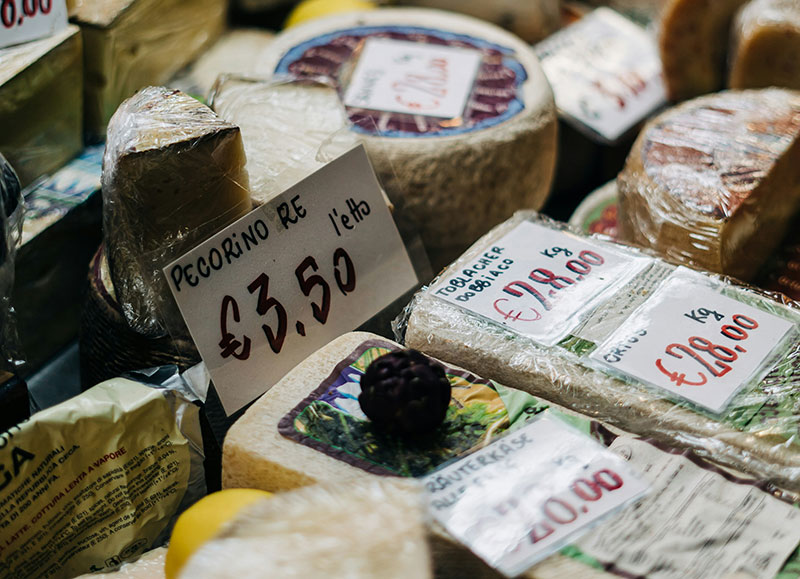
A paradise for cheese lovers: wheels of Pecorino Romano in a Roman shop. Aged, salty cheeses like these pair especially well with structured Sangiovese-based reds.
Most tourists think big red with cheese. Italians are more flexible. The best pairing depends on the cheese style.
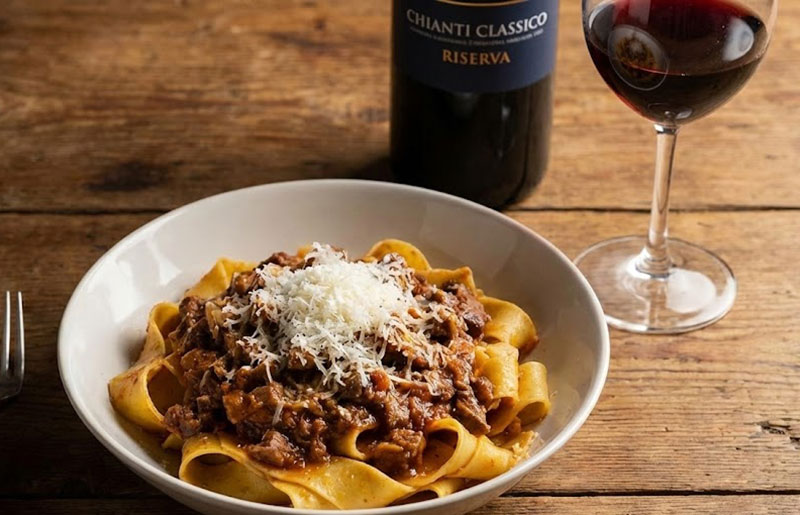
The perfect match for game: Rich, slow-cooked wild boar ragù needs a wine with depth and tannin, like Chianti Classico Riserva.
Game meat is richer, earthier, and often cooked long and slow. You want wines with depth, structure, and a bit of rustic character.
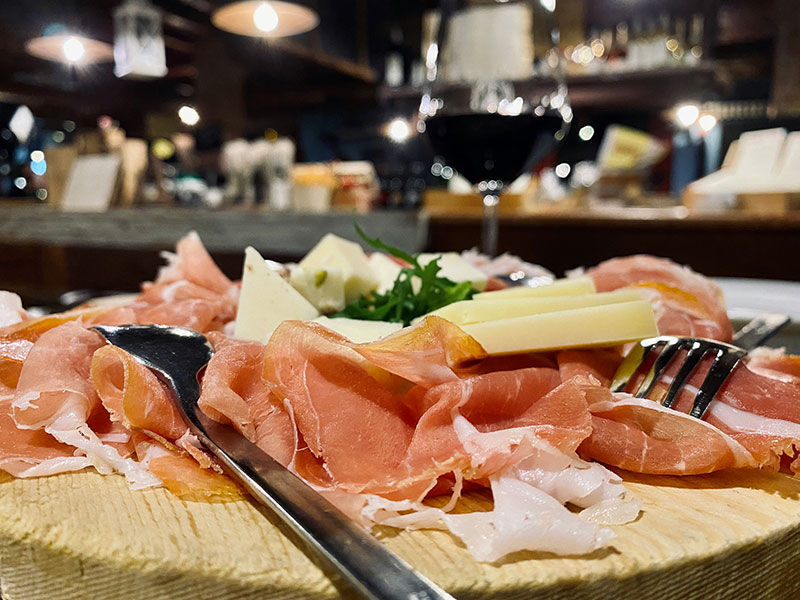
Antipasti works best with wines that refresh the palate: think dry Lambrusco, Prosecco, or a light red that can handle salt and fat.
Antipasti is salty, fatty, and usually mixed across the table. That is exactly why Italians often love bubbles and refreshing reds here.
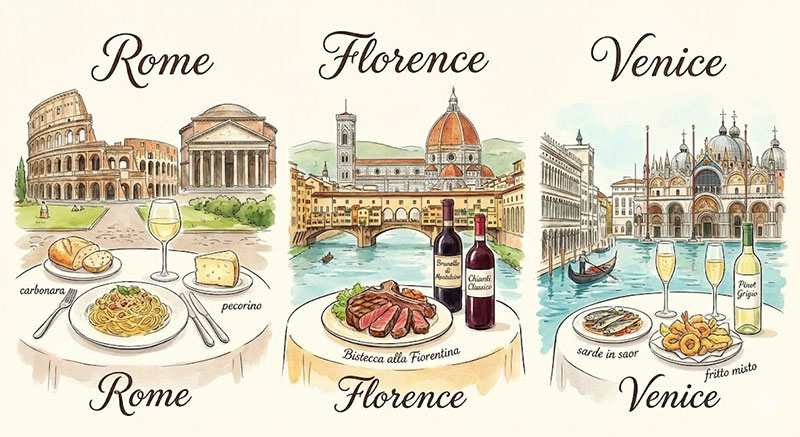
Eat where you are: In Rome, order pasta. In Florence, order steak. In Venice, stay with seafood, then pair with the local wine.
This is one of the easiest ways to order confidently in Italy: match the city’s food culture. Each place has an everyday local wine style that naturally fits the menu.
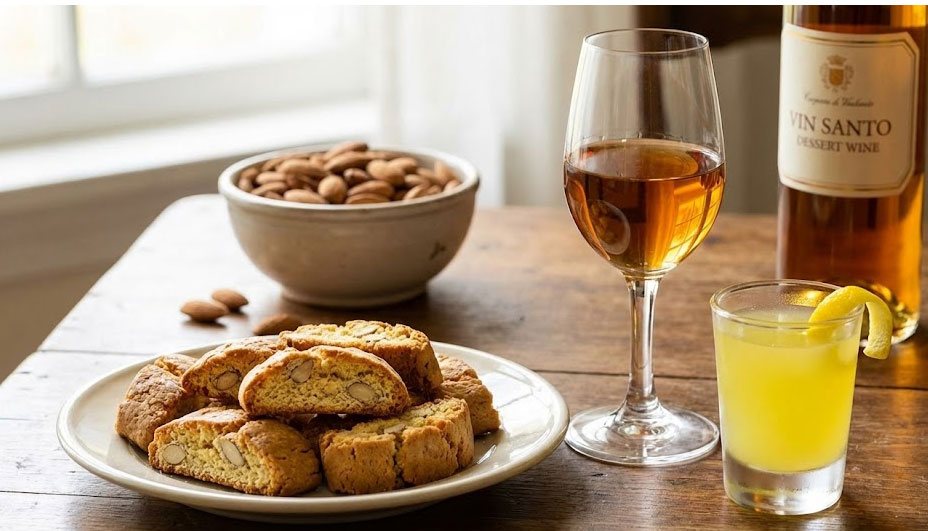
The sweet finish: Dip your cantucci into Vin Santo to soften the almonds, or sip an icy limoncello after the meal.
In Italy, the meal rarely ends with the main course. Dessert has its own wine rules, and there is often a digestivo at the end to help settle the meal.
The golden rule is simple: the wine should be sweeter than the dessert. If you drink dry red with cake, the wine will usually taste bitter.
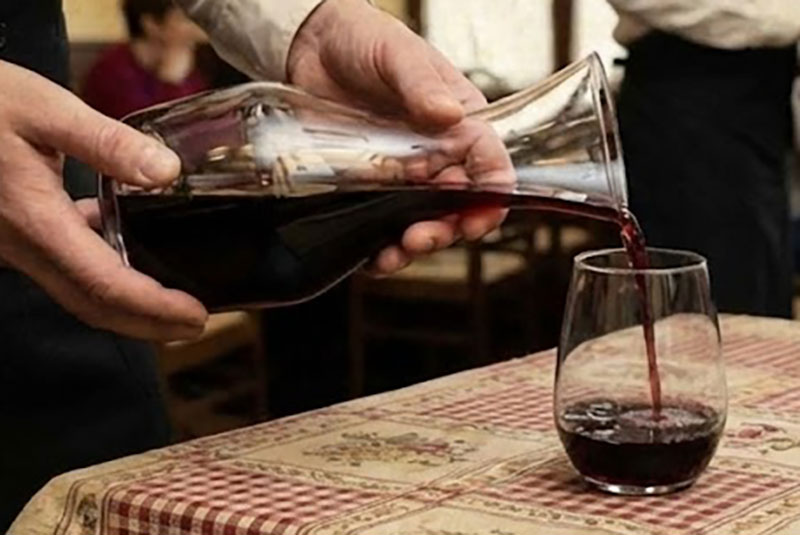
The local standard: House wine, or vino della casa, is often served in a simple carafe and designed to be enjoyed casually with the meal.
You do not need to know producers or vintages to order well in Italy. Keep it simple and restaurant staff will usually guide you in the right direction.
Sometimes you want wine for a balcony, a picnic, or a bottle to bring home. Knowing where to buy can save you a surprising amount of money.
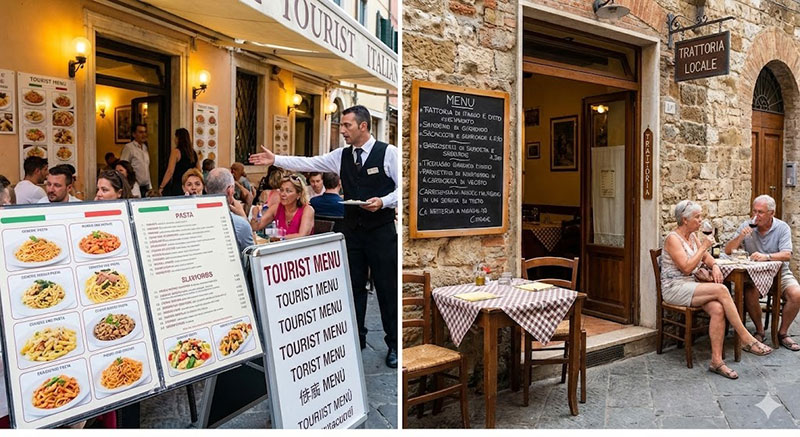
Spot the difference: Skip restaurants with tourist-menu signs and food photos. Simpler local places often offer better food and better wine value.
It is not forbidden, but it is uncommon in most regions. Italians usually default to crisp whites or dry bubbles with seafood. If the dish is heavily tomato-based or especially robust, a very light red can work, but white is the safer local move.
Order something local. In Tuscany, ask for a Sangiovese-based red. On the coast, ask for the local white. You can also order vino della casa, especially at lunch or in casual places.
If you are trying multiple dishes or are not sure what you want, start with a glass. If you are sharing a meal and staying in the same general flavor lane, a bottle or carafe is often the better value.
Much less than many tourists expect. Wine is usually treated as part of the meal. Aperitivo exists, but even then it is usually paired with snacks or small bites.
Match the cheese style. Fresh cheeses pair best with crisp whites or sparkling. Aged hard cheeses pair well with structured reds like Sangiovese or Nebbiolo. Blue cheese can pair surprisingly well with sweeter wines.