Travel Planning Hub
Start here to plan your trip, compare options, and explore every TLGA planning guide.

Packing & Gear Guide
What to pack, what to skip, and how to build a lighter travel setup that works.

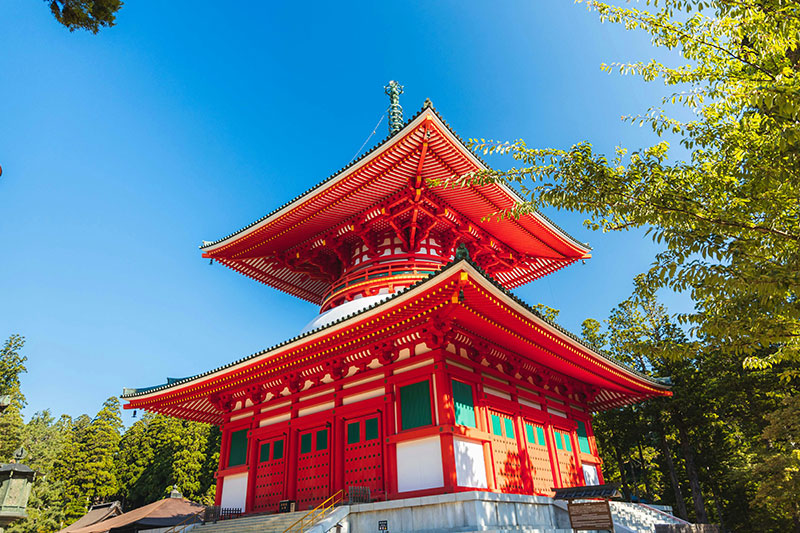
The Heart of the Mandala. Standing 48.5 meters tall, the Kompon Daito (Grand Central Pagoda) is not just a landmark, it marks the center of the lotus flower that Koyasan represents. Inside, it houses a three-dimensional mandala of the Shingon Buddhist cosmos. A striking burst of vermilion against the ancient cedar forests.
Last updated: March 2026 by Corey Gasman
From the Editor:
Japan is one of those places where “hidden gem” is a tricky phrase. Almost everywhere worth seeing has been seen before. But the experience can still feel undiscovered if you slow down, base yourself well, and spend time outside the big headline cities.
If this is your first trip to Japan and you only have a week or two, focusing on Tokyo, Kyoto, and Osaka makes complete sense. But if this is your second trip, or you built in extra time, the real magic starts when you leave the Golden Route behind.
The Golden Route is the Tokyo to Kyoto to Osaka corridor, with day trips like Nara and Hakone. It is famous for a reason. But it is also where most travelers stay, which means it is where Japan feels the most crowded.
Hidden Japan is not about finding secret places. It is about choosing bases that give you a different rhythm: quieter mornings, regional food, and landscapes that are not surrounded by tour groups.
The TLGA rule that makes Japan easier:
Pick one major city and one regional base. Tokyo or Kyoto gives you the highlights. A regional base gives you the trip you remember.
The payoff: you travel fewer days, unpack less, and each place feels deeper.
This is the structure I recommend most often because it balances iconic Japan with quiet Japan.
⭐️ The Golden Rule: In Japan, your trip quality is determined by bases, not by how many places you list. Pick fewer bases, stay longer, and the country opens up.
Coming soon: Japan Trip Planning: Neighborhoods, Rail Pass Logic, and What to Book Early
If you want the biggest shift away from the Golden Route without adding complex flights, Central Japan is the move. The towns are walkable, the scenery is dramatic, and the food feels distinctly regional.
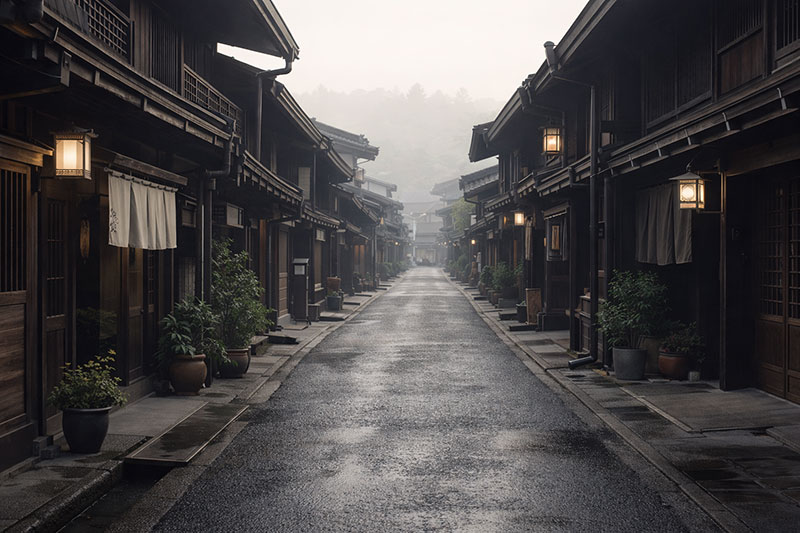
Early morning in Takayama’s Sanmachi Suji district, where Edo-period merchant houses, soft light, and empty streets reveal a quieter side of Japan.
Why it works: Takayama gives you an old-town Japan feel, easy access to the Northern Alps, and simple day trips that do not require complicated logistics.
We stayed at Honjin Hiranoya. Quiet tatami rooms, thoughtful service, and a calm atmosphere that made it easy to slow down after full days exploring.
The Miyagawa Morning Market stood out. It feels more local than staged, and chatting with farmers selling apples and pickles is one of those small moments that makes travel feel personal.
Local Guide Tip: Day Trips Worth Making from Takayama
Shirakawa-go is famous for a reason. Thatched farmhouses, mountain views, and a strong sense of place. A morning visit is best if you want it quieter.
Hida Furukawa is the calmer contrast. White-walled storehouses, carp-filled canals, and a lived-in feel just 15 minutes by train.
Read Next: Japanese Alps Explained: The Ultimate Guide to Central Japan
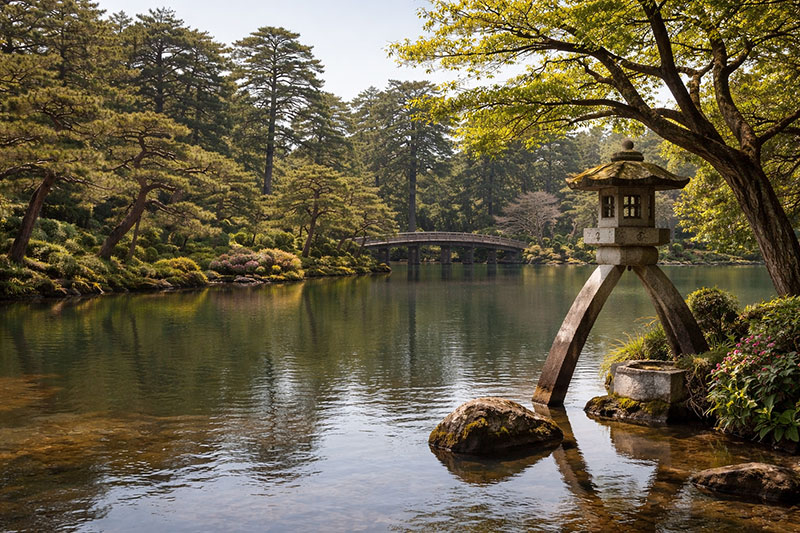
Kenrokuen Garden in Kanazawa, where the famous Kotoji-toro stone lantern and reflective ponds create one of Japan’s most tranquil landscapes.
Why it works: Kanazawa delivers gardens, samurai districts, and regional seafood with a calmer, more manageable feel than Kyoto.
Kenrokuen Garden alone makes Kanazawa worth the trip, especially early in the morning when it feels like you have the place to yourself.
The 21st Century Museum of Contemporary Art balances the city’s traditional districts without overwhelming them.
Why it works: The Kiso Valley is one of the easiest ways to experience Edo-era Japan without theme-park vibes. The post towns feel preserved, but still lived-in.
Magome and Tsumago are the most famous stops. The trail between them takes about two to three hours and passes waterfalls, forests, and quiet rural homes.
Why it works: Kamikochi is a high-reward, low-effort nature day. You get alpine rivers, suspension bridges, and big peaks without needing serious hiking experience.
Arrive early. The valley is dramatically quieter in the morning, and the light is better too.
If the Golden Route is about temples you visit, this section is about temples you live in, even if it is just for one night. A temple stay is one of the most memorable “slow Japan” experiences you can add to a trip.
Why it works: Koyasan is a true shift in atmosphere. Cedar forests, lantern-lit paths, and quiet nights make it one of the strongest contrasts to Tokyo.
Temple lodgings let you experience Buddhist hospitality, vegetarian monk cuisine, and early morning prayer ceremonies. It is not luxury. It is meaningful.
Okunoin Cemetery is the moment. Lantern-lined paths wind through ancient cedar forests toward the mausoleum of Kobo Daishi. Go near dusk if you want the most atmospheric version.
If Kyoto is the cultural highlight, Miyajima is the exhale. It is the kind of place that becomes a trip memory because it forces you to slow down.
Why it works: Miyajima becomes magical once the day-trippers leave. The island shifts from busy to peaceful, and that is when it feels like Japan.
Most people do Miyajima as a day trip. That is the mistake. Walking past the torii at sunrise or at dusk, with far fewer people around, is a completely different experience.
Why it works: Kyushu feels like a different Japan. Volcanic landscapes, onsen towns, and a slower pace make it perfect for travelers who want deep relaxation with real culture.
Kurokawa Onsen is a classic for atmosphere. Think wooden inns, forest air, and evening strolls in yukata. Beppu is the more energetic alternative, famous for its steaming “hells” and hot spring culture.
Why it works: The Sea of Japan side is dramatically less visited. You get coastal scenery, small-town rhythm, and a version of Japan that feels less designed for tourism.
The Tottori Sand Dunes and rugged coastline are the headline, but the real win is the lack of crowds and the sense that you are seeing a different side of the country.
One of the best reasons to leave the Golden Route is food. Regional Japan is where specialties feel tied to place, not mass-produced for tourists.
Japan’s onsen culture runs deep, and the most memorable experiences are often in towns where the bath is the main event. Think mountain air, outdoor pools, and the kind of quiet you cannot buy in a big city.
If you are building a second trip, plan one segment where the goal is simple: eat well, soak, sleep, repeat.
Sake is regional, and the best tastings are often in smaller towns where the water source and climate shape the style. Areas like Niigata and Gifu produce excellent sake thanks to mountain water and cold winters.
A good sake stop is not about getting drunk. It is about slowing down, learning one craft, and walking away with a better sense of place.
Tokyo, Kyoto, and Osaka deserve their reputation. They are extraordinary.
But the deeper you travel into the country’s mountains, coastlines, and smaller towns, the more personal Japan becomes.
A quiet morning market in Takayama, a lantern-lit path through Koyasan, or a hot spring bath in Kyushu often become the moments travelers remember most.
That is Hidden Japan.
The Golden Route is the classic first-trip itinerary that connects Tokyo, Kyoto, and Osaka, usually with day trips like Nara, Hakone, and Hiroshima.
Kanazawa and Takayama are two of the easiest upgrades because they connect well by train and feel meaningfully different from the big cities.
Not for most of this guide. The Japanese Alps and Kanazawa connect well by train and bus. Some coastal and rural areas are easier with a car, but it is not required.
Yes, especially for a second trip. It is one of the strongest atmosphere shifts you can add, and one night is enough to feel it.
Ten days is enough for one major city plus one region. Two weeks is ideal if you want two regions without rushing.