Travel Planning Hub
Start here to plan your trip, compare options, and explore every TLGA planning guide.
Packing & Gear Guide
What to pack, what to skip, and how to build a lighter travel setup that works.

by Corey Gasman
If Tokyo is Japan’s brain, buzzing with electricity and efficiency, Okinawa is its heart. It beats slower, deeper, and with a lot more joy. You do not come here to check off sights. You come here to exhale.
Often called the “Hawaii of Japan,” Okinawa is better understood as something entirely its own. It was an independent kingdom until 1879, and that history still shapes the culture, food, and pace of life. In 2026, it is the perfect counterbalance to the intensity of mainland Japan.
This is one of the world’s five Blue Zones, where people live remarkably long lives. The shinkansen does not run here. Convenience stores sell SPAM musubi instead of egg salad sandwiches. And island time is very real. Here is how to experience the Okinawa most travelers never see.
Quick Navigation
Why Go: The Ryukyu Difference
How to Get There (Haneda vs Narita)
Ogimi Village & Longevity Food
Yachimun Pottery Village
Taketomi Island (The Remote Trip)
Hidden Beaches
What to Eat
Where to Stay & Geography
Rental Car Reality
FAQs (Typhoons & Swimming)
Sidebar: The US Military Influence
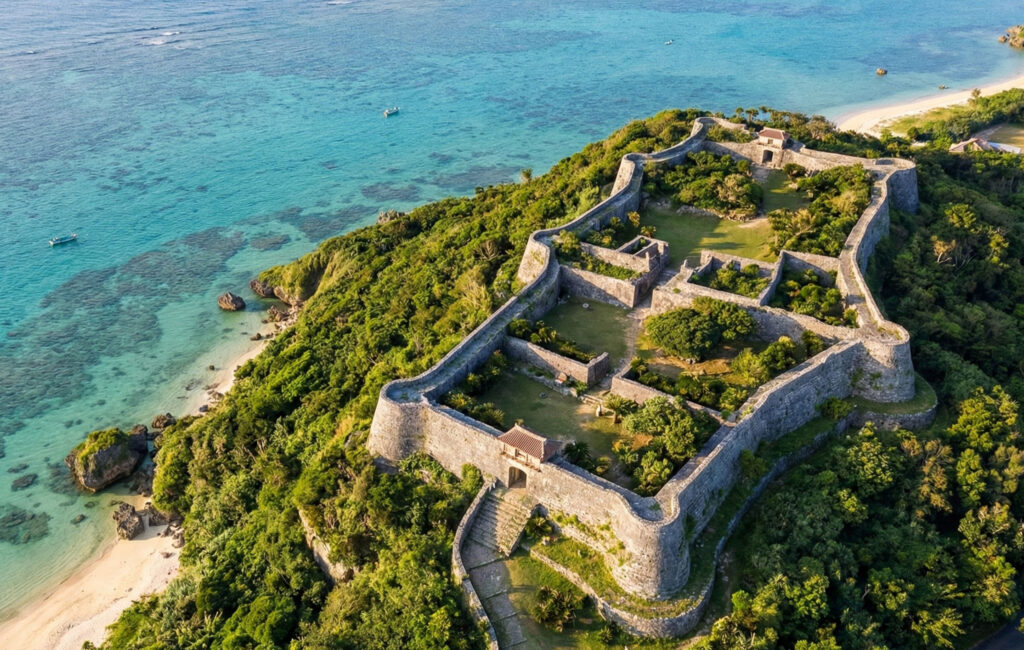
The impressive stone walls of Nakagusuku Castle, a UNESCO World Heritage Site, command stunning views of the Pacific Ocean from their hilltop perch.
Okinawa is not just “warm Japan.” It is a cultural paradox. You can explore ancient gusuku castle ruins in the morning and eat taco rice for lunch. American influence blends with Ryukyu traditions in a way that feels natural, not forced.
The beaches are tropical, but the infrastructure is still Japanese. Streets are clean, food is safe, and logistics are easy. It may be the safest tropical destination you will ever visit.
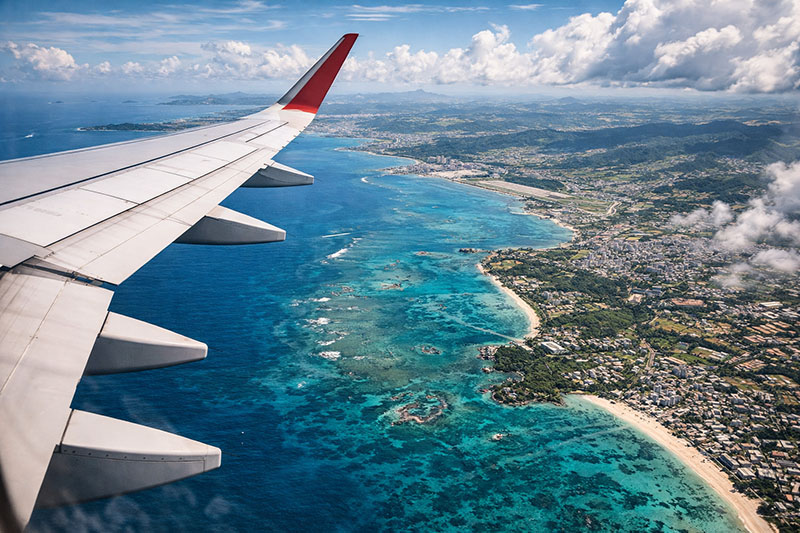
Flights into Naha (OKA) from Tokyo take about 2.5 hours. Most domestic flights depart from Haneda (HND), which is significantly closer to downtown Tokyo than Narita.
In 2026, low-cost carriers like Peach, Jetstar, and Skymark frequently offer round-trip fares under $150 USD when booked early.
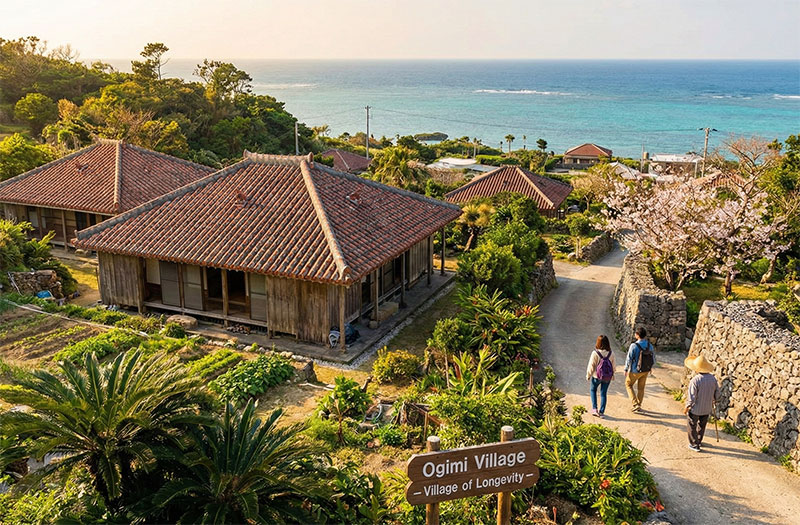
A peaceful morning in Ogimi Village, Okinawa. Known as the “Village of Longevity,” this rural community is famous for its high concentration of centenarians and traditional Blue Zone lifestyle.
To understand Okinawa’s longevity, drive north into the Yanbaru region and visit Ogimi Village. There are no crowds here. Just jungle, quiet roads, and elders who will casually out-walk you.
The highlight is Emi no Mise, a tiny restaurant serving a traditional “Longevity Meal” using locally grown vegetables like goya (bitter melon) and handama (spinach of the gods).
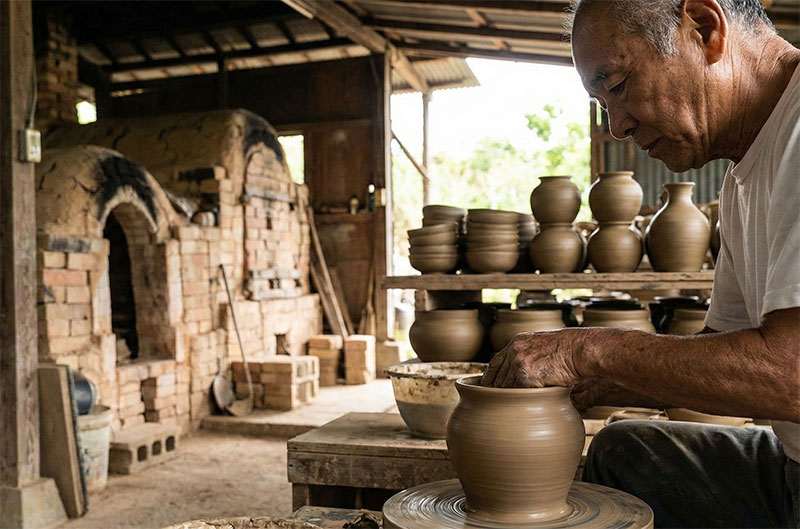
A master potter at work in Yachimun no Sato. This village in Yomitan is the heart of Okinawan ceramic art, where you can watch artisans create pieces using traditional techniques passed down for generations.
In Yomitan Village, Yachimun no Sato is home to 19 working kilns producing Okinawa’s signature pottery. Walk from workshop to workshop and watch artisans throw clay by hand.
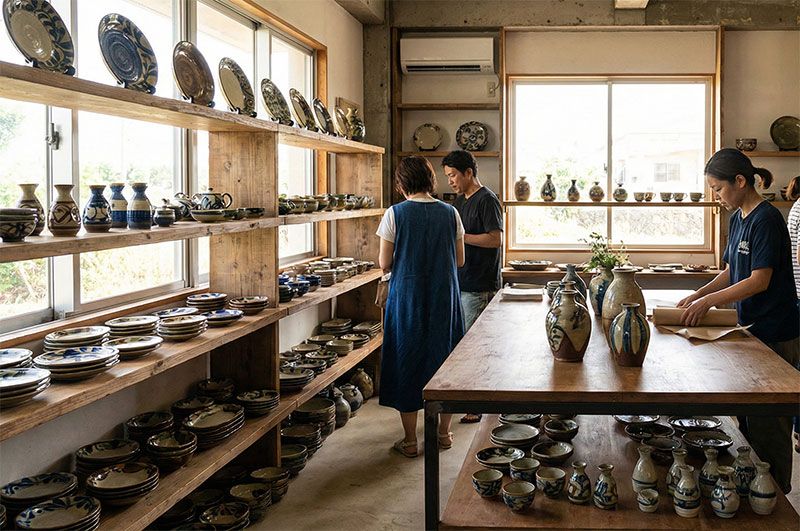
Inside the North Kiln (Kita-Gama) collective shop, you can browse thousands of unique pieces fired in the village’s climbing kilns. It is widely considered the best place to find high-quality souvenirs at fair prices.
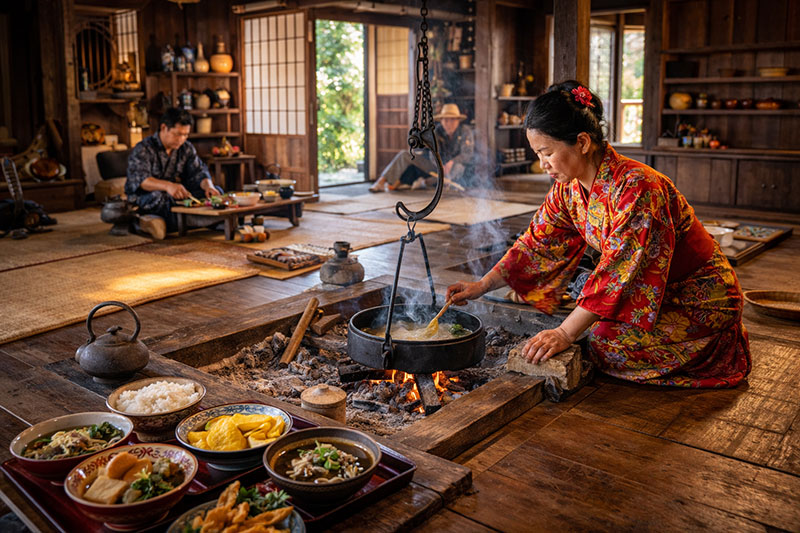
Inside a traditional Ryukyu home on Taketomi Island, an Okinawan woman prepares a family meal over a sunken hearth, offering a rare glimpse into daily island life shaped by food, family, and long-held traditions.
Note on Location: Taketomi is NOT near the main island of Okinawa. It is part of the Yaeyama island chain, located 400km further south. To get here, you must fly to Ishigaki (ISG) Airport.
Just ten minutes by ferry from Ishigaki, Taketomi Island preserves traditional Ryukyu life. No rental cars, no concrete buildings, only white sand roads and red-tiled roofs. It is Japan preserved in amber.
Skip crowded resort beaches. Minna Island offers reef snorkeling steps from shore, while Mission Beach stays quiet thanks to a small entry fee.
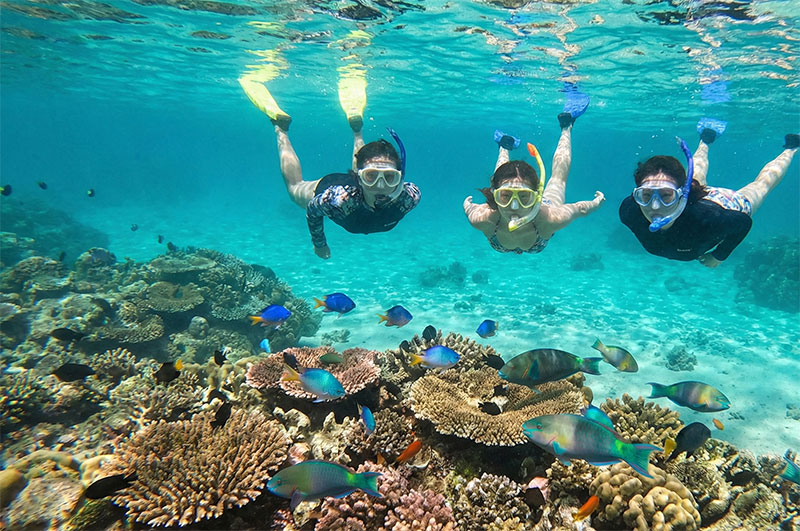
The incredible visibility surrounding Minna Island makes it a premier snorkeling spot. Shallow, vibrant reefs like this are often accessible right from the shore.
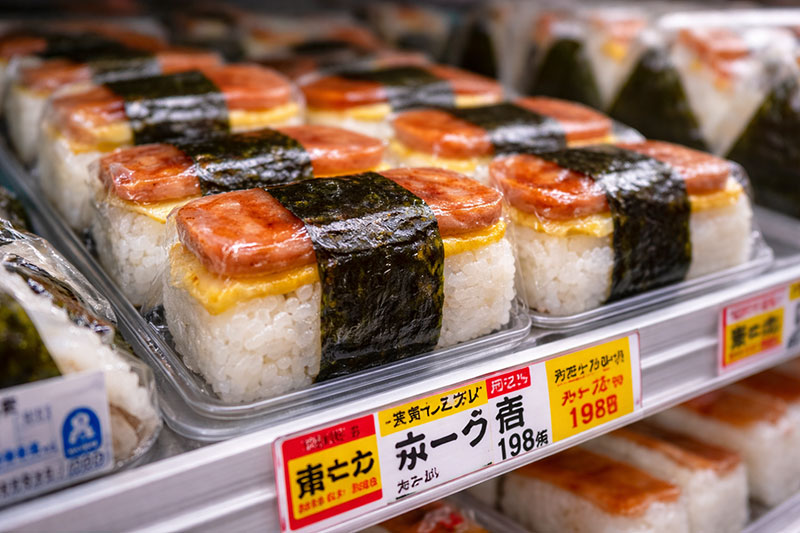
Freshly made SPAM musubi lined up inside a convenience store in Okinawa. A local staple that reflects the island’s unique food culture and post-war American influence.
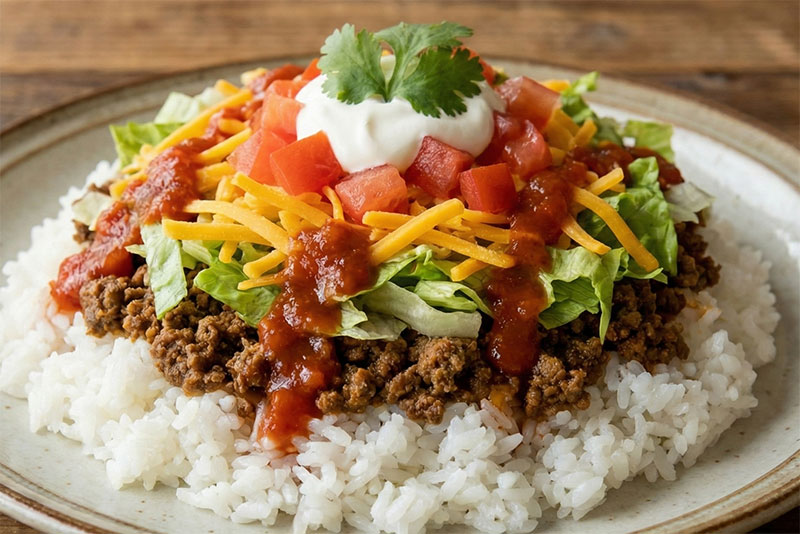
East meets West on a plate. 🌮🍚 Taco Rice is the ultimate Okinawan comfort food, a perfect fusion of American taco flavors and Japanese staple rice.
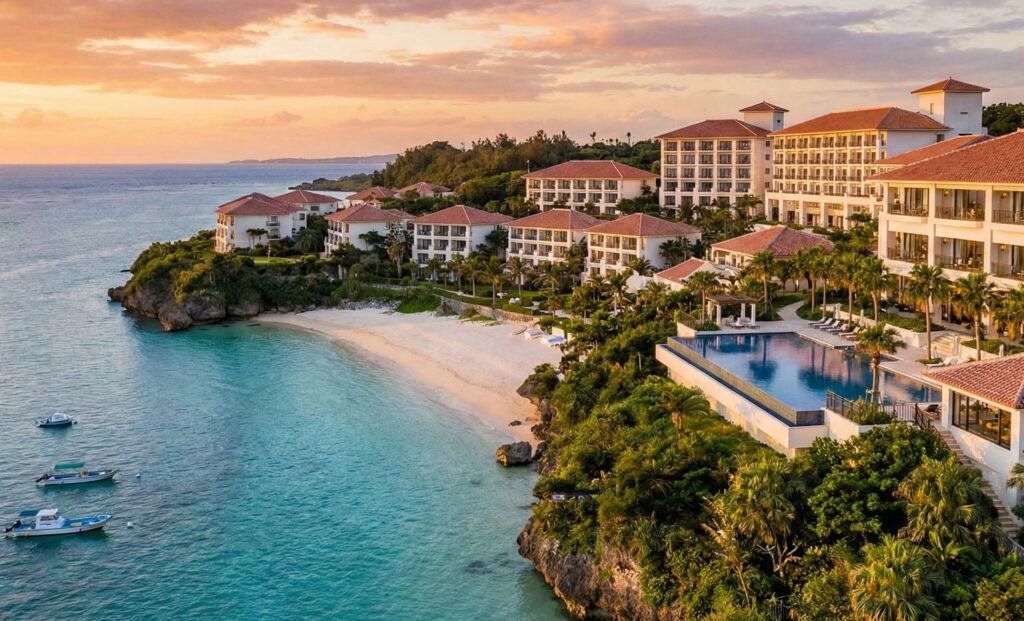
The Halekulani Okinawa defines island luxury. With its famous orchid pool and seamless oceanfront views, it brings five-star Hawaiian hospitality to the shores of Onna Village.
Okinawa is larger than it looks. Choosing the right base is critical to your experience:
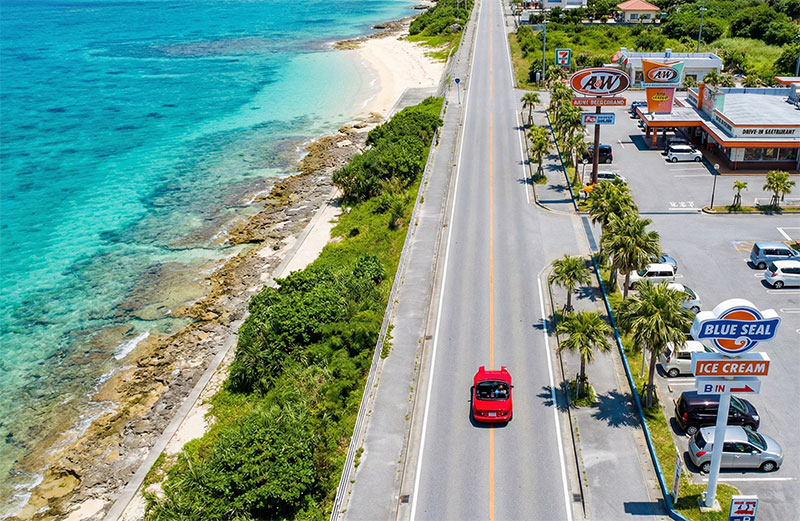
Route 58 is the artery of Okinawa. This scenic coastal highway offers one of Japan’s best road trips, flanked by neon blue water and retro American drive-ins.
Let’s be blunt: if you want to leave Naha and see the “real” Okinawa, the hidden beaches, the pottery villages, and the jungle, a rental car is non-negotiable.
While Naha has a decent monorail (Yui Rail), public transportation to the northern Yanbaru region or isolated coastal spots is infrequent. Relying on buses means seeing one sight a day instead of three.
Left Side Rules: Like mainland Japan and the UK, driving is on the left.
The Pace is Slow: Speed limits are surprisingly low, often 40–60 km/h (25–37 mph). Embrace “island time”; rushing won’t get you there faster.
Navigation: Most rental cars come with English GPS units. Use the “MapCode” or phone number of your destination for 100% accuracy.
Requirement: The IDP
You must have a valid International Driving Permit (IDP) obtained in your home country before you arrive. Rental agencies will not give you a car without one, no exceptions.
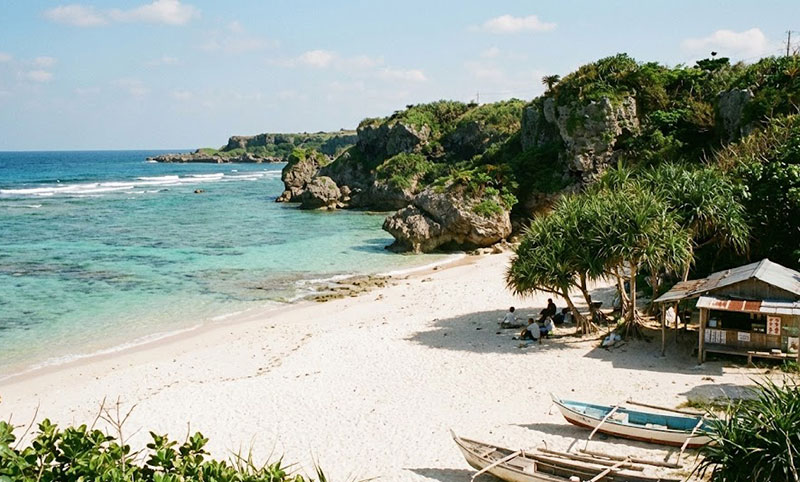
The unmistakable “Okinawa Blue” water found at the island’s hidden beaches. Unlike the mainland, the sand here is white and the water is warm enough for swimming from April through October.
March–April and October–November are ideal.
Warning: Avoid Golden Week (early May). Also, be aware that August and September are peak Typhoon Season. Flights can be cancelled, and you may be confined to your hotel for days if a storm hits.
Yes. However, be aware that many public beaches “close” (lifeguards leave and nets are removed) in late October, even if it is still warm. You can swim at your own risk, but some resorts may restrict access.
Yes. No exceptions. A US or home-country license alone is not enough.
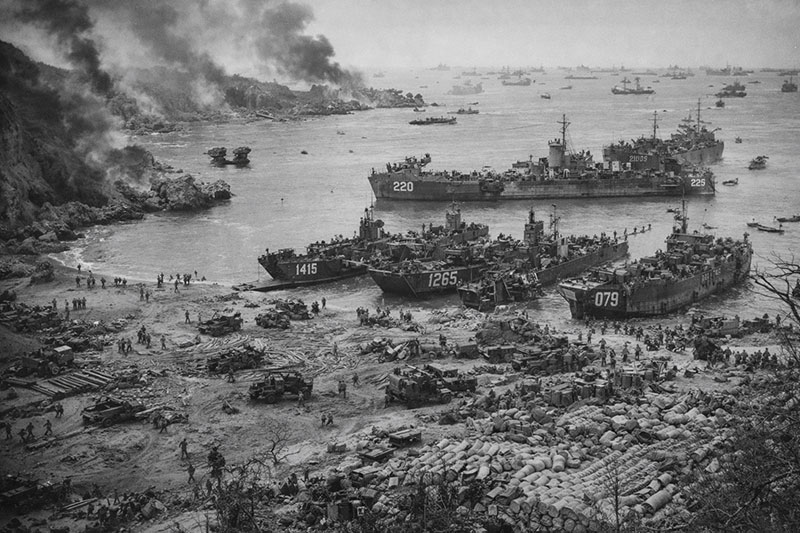
April 1945, Okinawa. An aerial view of Allied landing ships during the Battle of Okinawa. This image marks the 80th anniversary of the campaign that reshaped the island’s history.
You cannot drive through central Okinawa without noticing the fences. For history-minded travelers, it is important to address the reality of the island’s modern story: the large United States military presence.
The Context
In 1945, this island was the site of the Battle of Okinawa, the fiercest land battle of the Pacific War. Following the war, Okinawa remained under U.S. military administration until 1972. For 27 years the island operated separately from mainland Japan and functioned largely as an American-controlled territory.
Paying Respects
For deeper understanding, visit the Peace Memorial Park in Itoman in southern Okinawa. It is a sobering and beautifully designed memorial honoring more than 200,000 lives lost in the battle. The monuments list names from all sides including Okinawan civilians, Japanese soldiers, and American forces.
The Cultural “Chanpuru”
“Chanpuru” is an Okinawan word meaning “mix.” Decades of cultural overlap created a blend you will not see elsewhere in Japan. It explains why steak houses stay open late, why Taco Rice became a local staple, and why American vintage shops line the streets of Chatan.