Travel Planning Hub
Start here to plan your trip, compare options, and explore every TLGA planning guide.
Packing & Gear Guide
What to pack, what to skip, and how to build a lighter travel setup that works.

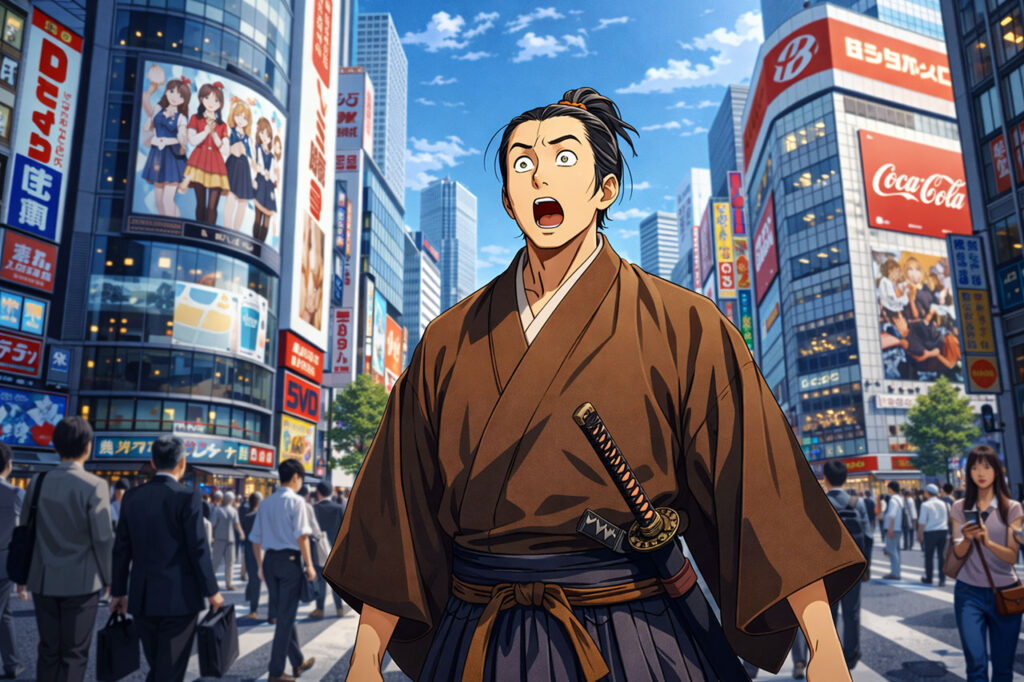
I have awakened.
The year is 2026. The place is Edo, though they call it “Tokyo” now. The Shogun is gone, replaced by a mouse with large ears who lives in a castle in Chiba. The swords have been banned, but the spirit of the warrior remains… it has just mutated.
I have walked the neon streets of Harajuku and the smoky alleys of Shinjuku. I have seen things that would make a daimyo weep and a geisha faint. You, traveler from the West, seek the “Real Japan”? You will not find it in the quiet temples. You will find it in the madness.
These are my observations of the strange new customs of my people.
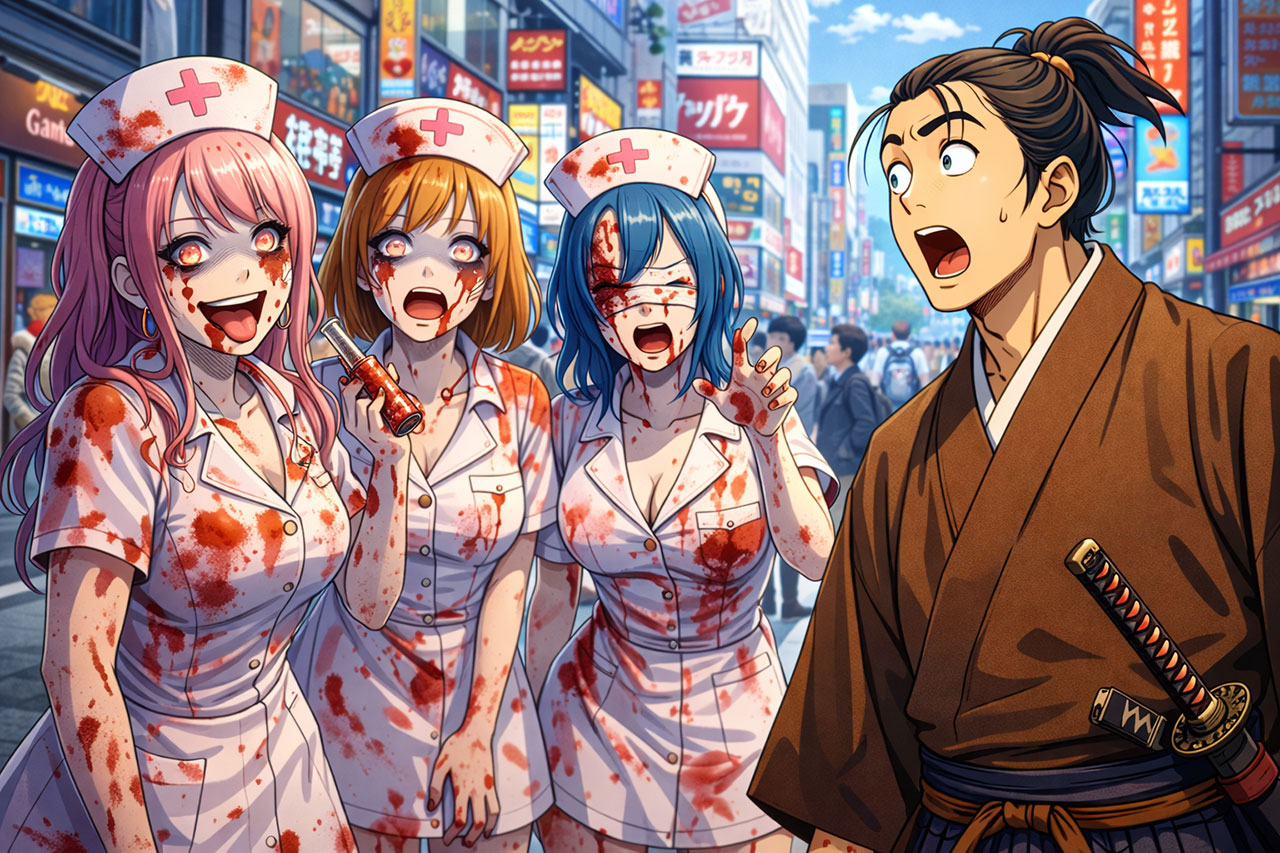
In my time, if you were covered in bandages and blood, it meant you had lost a duel. You were shamed. Today, in the district of Harajuku, young women dress as if they have just survived a battlefield surgery. They wear eyepatches for eyes that function perfectly. They paint fake bruises on their knees. They wear nurse uniforms, but they carry teddy bears instead of medicine.
They call this Yami Kawaii (Sick Cute). They parade their fragility like armor. It is confusing, but I admire their commitment to the aesthetic. They stare at their rectangular mirrors – their smartphones – with the intensity of an archer aiming for the bullseye.
Where to witness this: Takeshita Street, Harajuku. Do not offer them medical assistance; they are fine.
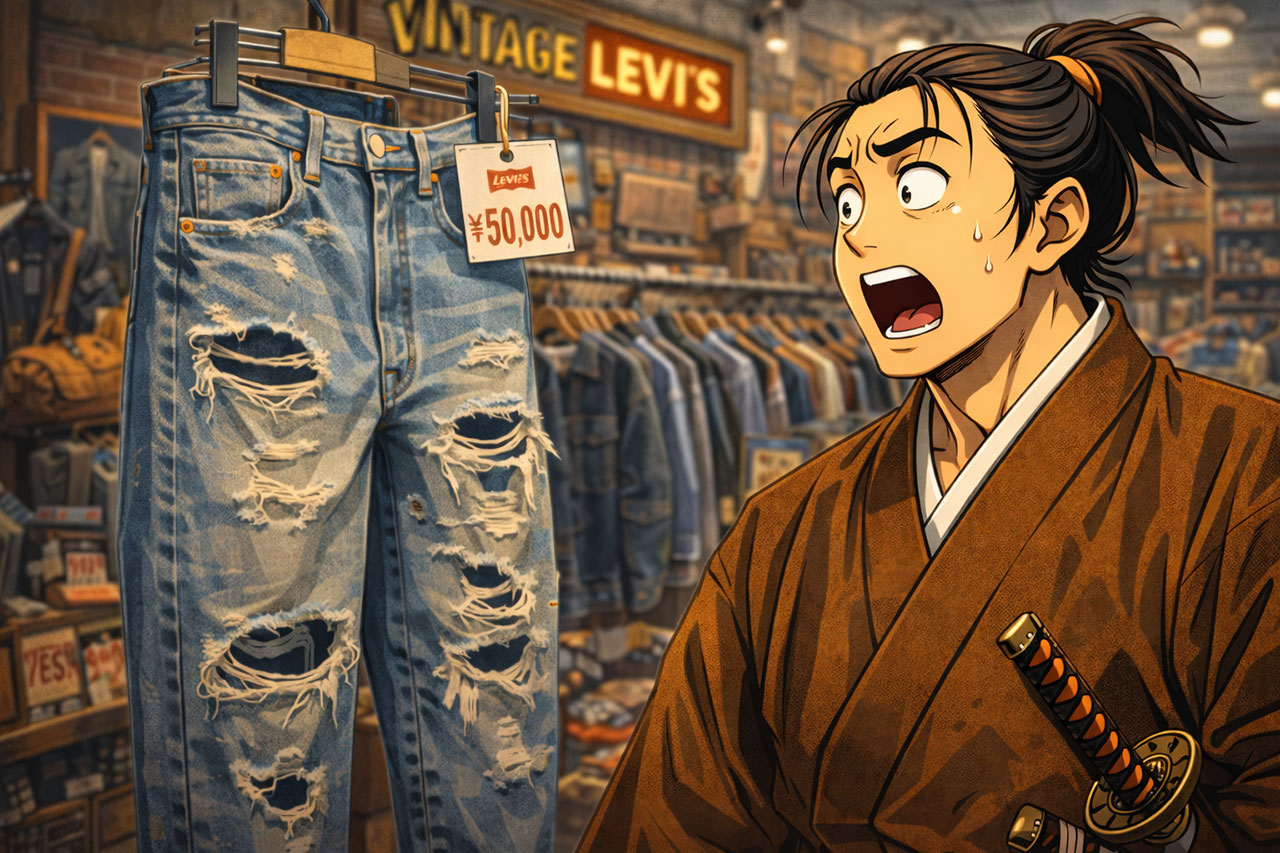
I entered a shop in Koenji that smelled of dust and old victories. The merchant treated a pair of ragged blue trousers with more reverence than a Katana forged by Masamune. He told me these were “Levi’s Big E” from the year 1966. He asked for 50,000 Yen.
It appears that after the Great War, my people became obsessed with the conqueror’s clothing. We took the American workwear, the denim, the leather jackets, the flannel, and we perfected it. We study the stitching of vintage American jeans with a discipline once reserved for tea ceremonies.
“The Americans invented the blue pant, but the Japanese have mastered the blue pant.”
Where to witness this: The vintage shops of Shimokitazawa or Koenji. Look for the “Selvedge” line on the cuff.
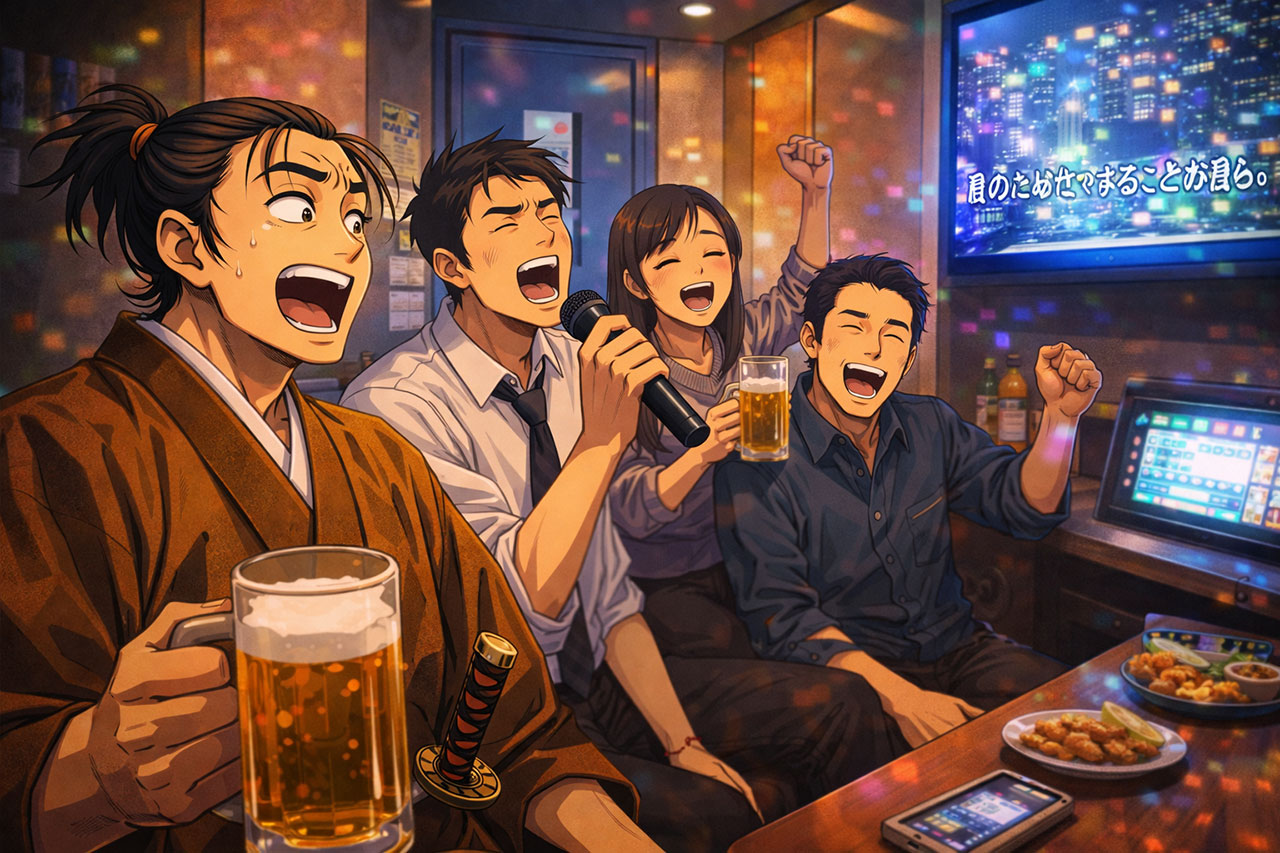
In the West, I am told you sing in taverns, drunk and loud with friends. Here, I witnessed a salaryman enter a small, soundproof box. Alone. He paid money to be locked inside. I thought it was a prison.
But then… the music started.
This is Hitokara (Solo Karaoke). There is no audience. No applause. Just a man, his tie loosened, screaming the lyrics of an anime theme song into the void. It is a duel with oneself. He releases his stress, his honor intact because no one heard his voice crack on the high note. A warrior must sometimes face his demons alone. And sometimes, those demons are a Taylor Swift song.
Where to witness this: Any Karaoke Kan in Shibuya. Ask for a “Hitokara” room.
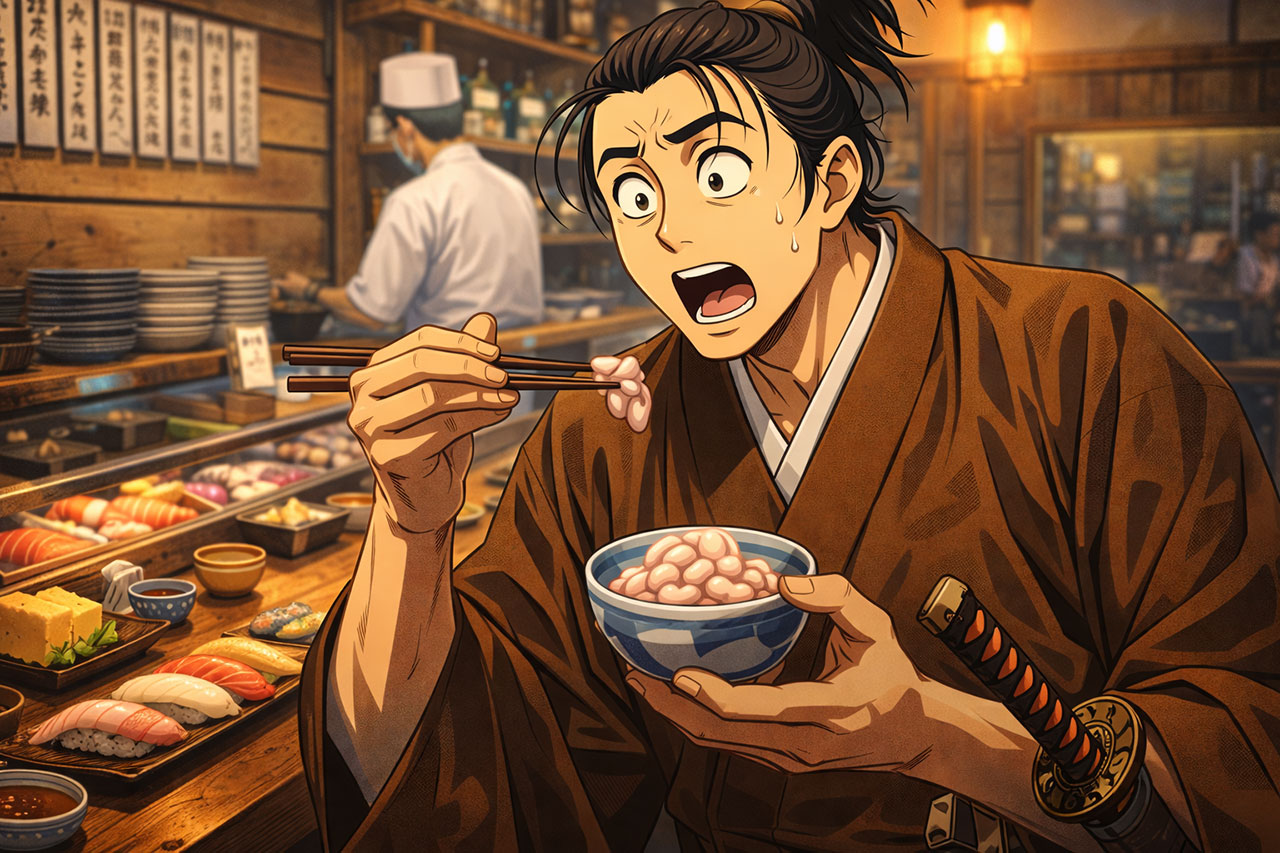
You Westerners eat the cow. We eat the entire cow. And the horse. And the parts of the fish you did not know existed.
My host offered me a delicacy: Shirako. He told me it was “The Creamy Delight of Winter.” I ate it. It was soft, like tofu, but with the taste of the ocean. Then he told me what it was. It is the sperm sac of the codfish.
I reached for my sword, but I remembered I do not have one. Then, they brought Basashi – raw horse meat. It was sliced thin, red as a sunset, served with ginger and soy. It was… delicious. Courage is not just facing death; it is putting Shirako in your mouth and swallowing.
Where to witness this: Memory Lane (Omoide Yokocho) in Shinjuku.
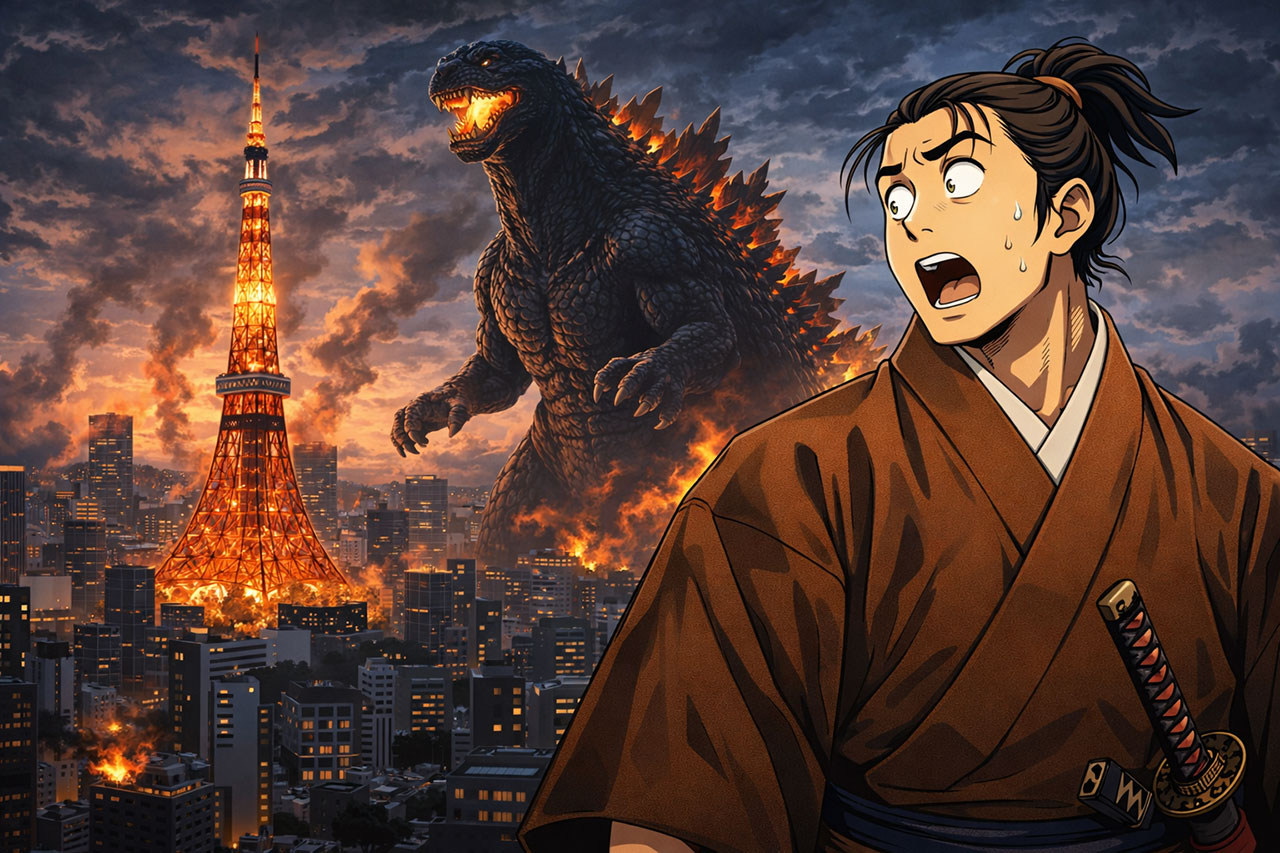
I saw a giant head peering over a hotel in Shinjuku. A lizard the size of a mountain. The people were not running; they were taking photographs.
This is Gojira (Godzilla). He is not just a monster. He is a memory. He was born from the fire of the nuclear age – the horror that fell from the sky in 1945. But instead of fearing him, my people turned him into a mascot. We took our greatest tragedy, put him in a rubber suit, and made him the ambassador of tourism.
It is a profound resilience. We laugh at the monster so it can no longer hurt us. To turn your destroyer into your defender… this is the ultimate strategy of war.
Japan is a land of polite bows and silent trains. But scratch the surface, and you find a people who dress like nurses, worship blue jeans, eat fish sperm, and sing alone in boxes.
We are a repressed people, yes. But the pressure must escape somewhere. And when it does, it is beautiful chaos.