Travel Planning Hub
Start here to plan your trip, compare options, and explore every TLGA planning guide.
Packing & Gear Guide
What to pack, what to skip, and how to build a lighter travel setup that works.
By Corey Gasman
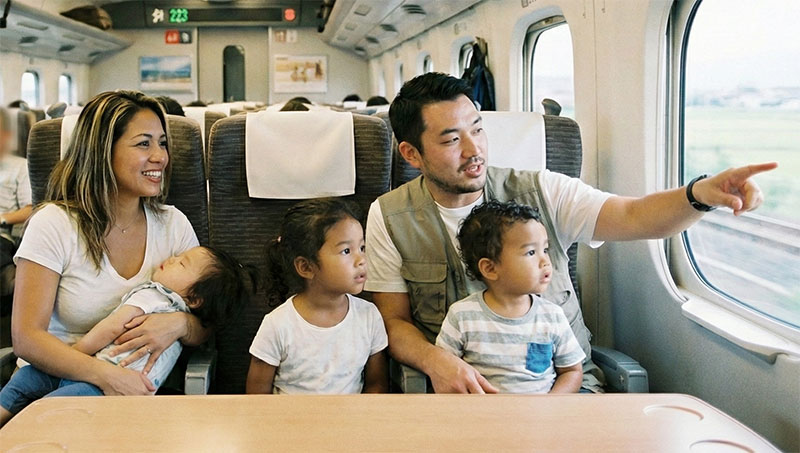
Taking kids to Japan is a specific kind of adventure. On one hand, it is one of the safest countries in the world, the toilets are spotless, and the convenience store food is genuinely healthy. On the other hand, the idea of navigating a stroller through Tokyo Station or keeping a toddler quiet on a silent bullet train is enough to make any parent sweat.
I have done Japan solo, and I have done it with family. The trips are completely different. The so-called Golden Route shifts from temples and shrines to parks, aquariums, and the constant hunt for the nearest elevator.
Here is the honest truth for 2026. Japan is incredibly kid-friendly, but it is not hands-off. You need a strategy for the trains, a plan for the luggage, and the understanding that 7-Eleven is about to become your favorite restaurant.
Planning Note
Build playground time into your itinerary. Japanese neighborhood parks are often weird and wonderful. A simple 30-minute stop can save an entire afternoon.
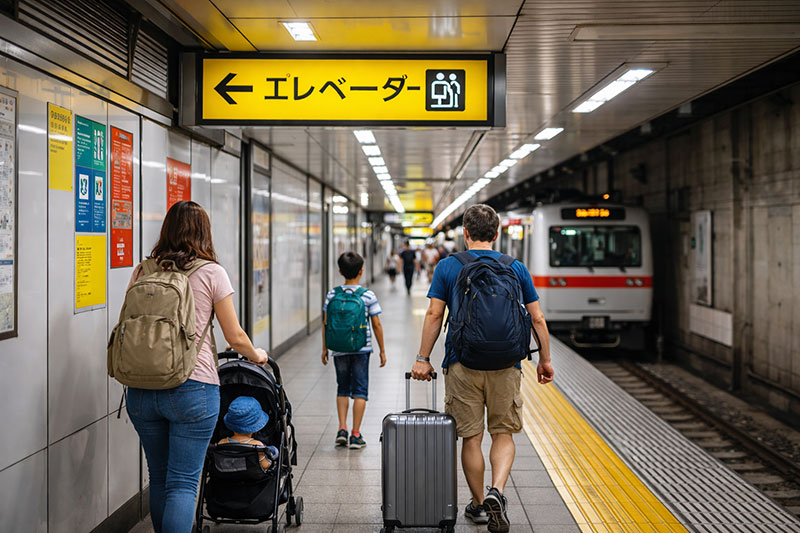
Elevators exist in almost every station, but they are often hidden at the far ends of platforms. Always leave extra time.
Should you bring a stroller? Yes. Even if your kid walks at home, the sheer amount of walking in Japan (often 15,000+ steps per day) will wipe them out.
Do not bring a massive jogging stroller. Japanese streets are narrow, restaurants are tiny, and ticket gates are tight. A lightweight, foldable umbrella stroller that can be collapsed one-handed is essential.
Guide Tip: Avoid Rush Hour
Do not board trains with a stroller between 7:30–9:00 AM or 5:30–7:00 PM in major cities. Trains are packed to unsafe levels. Wait it out in a café or plan your travel around these windows.
The bullet train is magical for kids, but the silence can be stressful for parents. The key is booking the correct seats.
If you have a stroller or large suitcase, reserve Seats with Oversized Baggage Area in the last row of the car. This gives you dedicated space behind your seat. Without it, there is nowhere to store a stroller.
Pro Tip
If your child is loud or upset, move to the deck area between train cars. It is noisy, spacious, and ideal for calming kids without disturbing others.
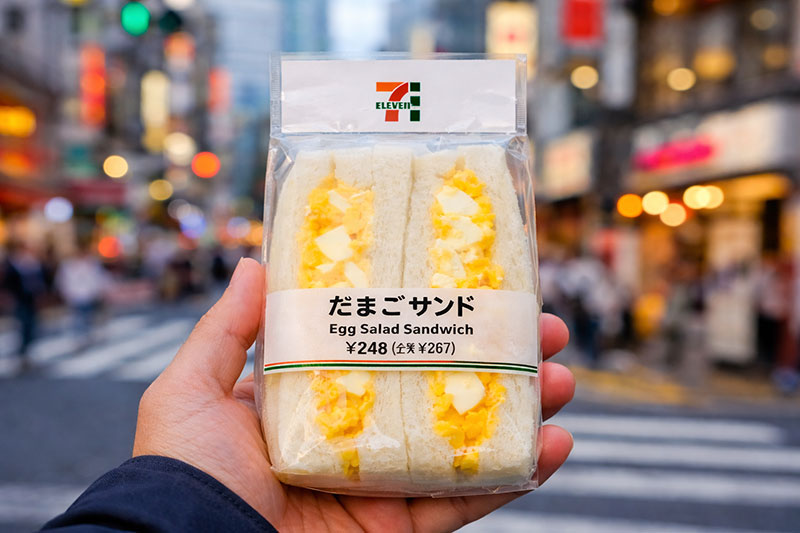
The famous 7-Eleven egg salad sandwich. Soft, safe, and universally toddler-approved.
You do not need to eat fancy kaiseki every night. With kids, you probably should not.
Convenience stores like 7-Eleven, Lawson, and FamilyMart are reliable food hubs.
Family restaurants like Gust, Saizeriya, Royal Host, and Denny’s Japan are designed for noise. They offer kids’ meals, robot servers, and unlimited drink bars.
Local Guide Tip
Most restaurants provide plastic kids’ plates and forks immediately upon seating. You rarely need to ask.
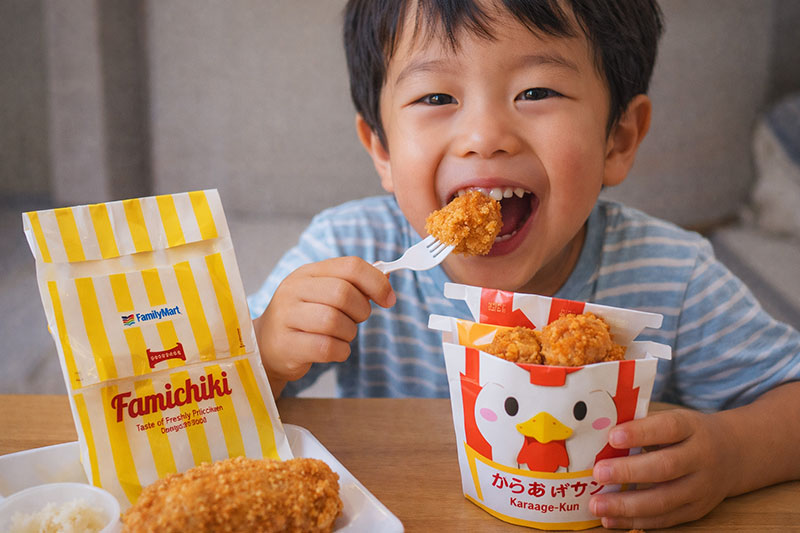
Famichiki and Karaage-kun. Japanese convenience store fried chicken is a kid-approved win, affordable, familiar, and surprisingly good for quick meals in Japan.
Department stores and large stations in Japan often include immaculate baby rooms with nursing areas, bottle warmers, and changing tables.
Japan quietly offers one of the best parenting amenities in the world: dedicated baby rooms. These are calm, clean spaces designed for feeding, changing, and giving kids a break.
Local Guide Tip
Department stores like Mitsukoshi, Takashimaya, and Isetan often have the best baby rooms.
MIMARU hotels are built for families, offering larger rooms, bunk beds, and kitchenettes in major Japanese cities.
Hotel choice matters more when traveling with kids.
Ryokan
Traditional inns with tatami mats can be surprisingly family-friendly. Kids can roll around safely and futon bedding is flexible.
MIMARU Hotels
For most families, this is the easiest option. Rooms are larger, often include bunk beds, and many properties provide kitchenettes.
Pro Tip
Book MIMARU early. Family rooms sell out months in advance during peak travel seasons.
Super Nintendo World inside Universal Studios Japan has become one of the most popular family attractions in the country.
If your itinerary includes a theme park, Japan offers two exceptional options.
Tokyo Disney Resort
Tokyo DisneySea is widely considered one of the best theme parks in the world.
Universal Studios Japan
The biggest draw is Super Nintendo World, which is incredibly popular with kids.
Local Guide Tip
Arrive at park opening. Lines for Nintendo World and Disney attractions can exceed two hours by mid-day.
Yes, though elevators are sometimes hidden. A lightweight stroller makes navigating stations easier.
Many are, especially ramen shops and family restaurants. Tiny bars and formal sushi counters may not allow children.
Extremely safe. Japan consistently ranks among the safest countries in the world.