Travel Planning Hub
Start here to plan your trip, compare options, and explore every TLGA planning guide.
Packing & Gear Guide
What to pack, what to skip, and how to build a lighter travel setup that works.

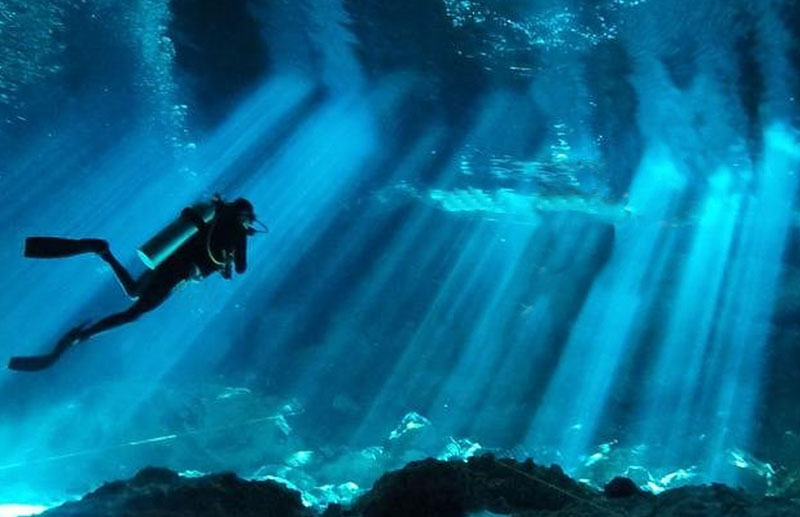
A perfect cenote moment in Dos Ojos: diver gliding through crystal-clear water as sunlight beams cut through the cavern ceiling above.
By Corey Gasman
Last updated: February 2026
Diving in the ocean is about looking outward. Diving in a cenote is about looking inward. Beneath the Riviera Maya lies one of the largest subterranean river systems in the world. For the ancient Maya, these sinkholes were sacred portals to the underworld. Today, they offer some of the most surreal and crystal-clear diving experiences on the planet.
If you have spent any time traveling through Mexico, you know the surface is full of vibrant noise, incredible street food, and kinetic energy. But the moment you step below the jungle floor, everything goes completely silent. You are suspended in freshwater so clear it feels like you are floating in thin air, surrounded by limestone stalactites that took millions of years to form.
If you only dive one cenote during your trip, make it Dos Ojos. Located just north of Tulum, it translates to “Two Eyes” because of the two neighboring sinkholes that connect into a massive underground cavern zone.
This site is perfect for Open Water certified divers. The maximum depth is relatively shallow, and the water clarity is absolutely mind-bending. You will navigate through the Barbie Line or the Bat Cave route, weaving between massive limestone columns while natural light filters through the jungle canopy above.
El Pit is a deep sinkhole that requires Advanced Open Water certification. This is where the magic of the halocline really shows off. A halocline is a visual phenomenon where lighter freshwater sits on top of heavier saltwater. When you dive through the meeting point, the water looks like blurry, swirling syrup.
At around 30 meters deep, you will hit a surreal cloud of hydrogen sulfide created by decaying jungle vegetation. Laser-like beams of sunlight pierce all the way down through the cloud, making it feel like you are flying on another planet.
Cenote Angelita is another site for Advanced divers, and it is famous for its optical illusion. As you descend through the crystal-clear freshwater, you will look down and see what appears to be a flowing river complete with dead trees and branches rising out of the banks.
That “river” is actually a thick layer of hydrogen sulfide gas suspended over the saltwater below. Dropping through the dense cloud into the darker saltwater underneath is an eerie, unforgettable experience that perfectly captures the mystery of the Mayan underworld.
Tajma Ha is famous for its spectacular light effects, especially if you dive it between May and September when the sun is positioned high overhead. The cavern features multiple areas where light pierces the ceiling, creating dramatic spotlights in the dark water.
You will also encounter a strong halocline here, and if you look closely at the limestone walls, you can spot ancient fossilized shells from when the entire Yucatán Peninsula was submerged under the ocean.
Cenote diving requires slightly different preparation than ocean diving, especially when it comes to temperature, buoyancy, and environmental rules.
No. Most recreational cenote dives are cavern dives, meaning you remain within sight of natural daylight and follow permanent guide lines. Open Water certification is sufficient for many sites, though deeper cenotes require Advanced Open Water.
Yes, if you are properly certified and dive with a reputable local guide. Sites like Dos Ojos are ideal for first-time cenote divers because they are shallow, visually open, and well-managed.
A halocline is where freshwater and saltwater meet but do not immediately mix. When you swim through it, the water can appear distorted or blurry, creating one of the most surreal visual effects in diving.
Cenotes can be dived year-round since the water temperature stays consistent. For dramatic light beams in sites like Tajma Ha, late spring through early fall usually offers the best overhead sunlight.