Travel Planning Hub
Start here to plan your trip, compare options, and explore every TLGA planning guide.
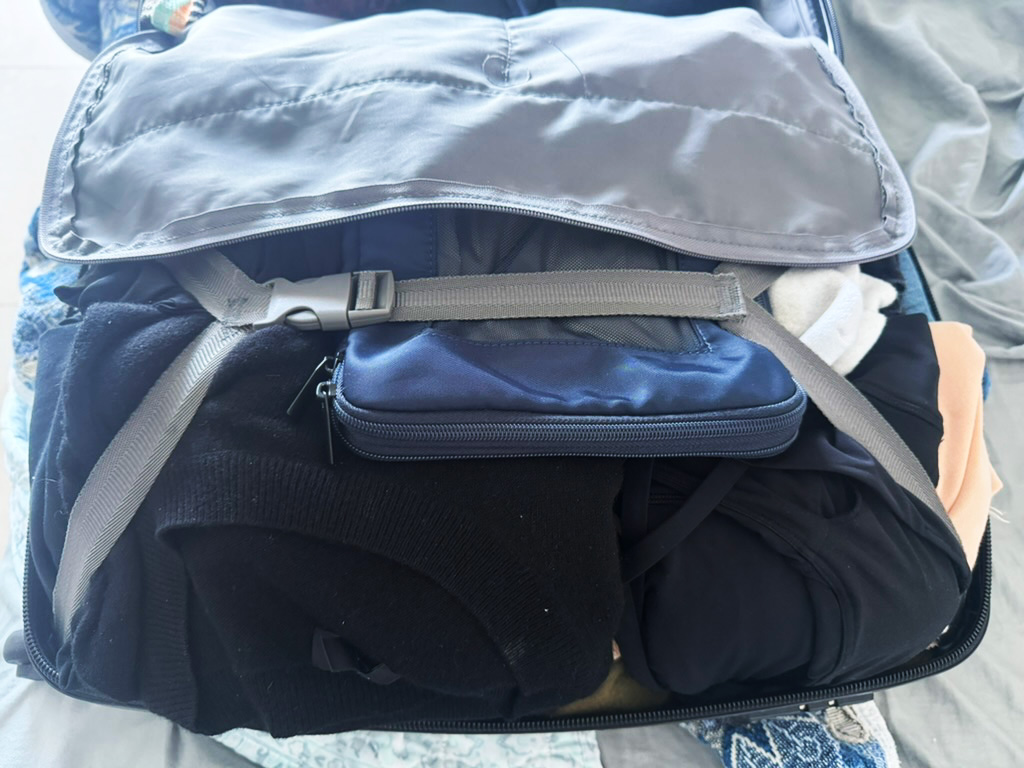
Packing & Gear Guide
What to pack, what to skip, and how to build a lighter travel setup that works.

The ceiling of the Sagrada Família: Looking up into the mind of Antoni Gaudí.
By Corey Gasman
If Italy is the land of engines and engineering, Spain is the land of raw, unfiltered emotion. No country on earth has produced a higher concentration of artistic revolutionaries. We aren’t just talking about pretty landscapes here; Spanish art is visceral. It is the nightmares of Goya, the fragmented reality of Picasso, and the melting clocks of Dalí.
Traveling through Spain feels like walking through a living museum. In Madrid, you have the weight of history and royalty. In Barcelona, the streets themselves are hallucinations made of stone and ceramic. And in the south, the light that inspired a young Picasso still hits the whitewashed walls of Málaga exactly as it did a century ago.
For an art lover, Spain isn’t a vacation; it’s a pilgrimage. But it can be overwhelming. The “Golden Triangle” of art museums in Madrid alone could take you a week. To truly understand these masters, you need to go beyond the galleries. You need to see the jagged coastlines that inspired Dalí and the chaotic city streets that fueled Picasso.
Spanish art has always been about breaking rules. While the rest of Europe was often focused on perfection and proportion, the Spanish masters were diving into the human psyche.
Velázquez painted the royalty but showed their humanity (and sometimes their ugliness). Goya painted the horrors of war when everyone else wanted glorious battle scenes. Picasso dismantled the entire concept of perspective. Gaudí refused to use straight lines because “there are no straight lines in nature.”
This guide connects the dots. We are going to look at the “Big Five”—Goya, Gaudí, Picasso, Dalí, and Miró—and build a route that lets you stand in front of their masterpieces and walk in their footsteps.
This isn’t just about staring at paintings on a wall. It is about understanding the movements—from the dark intensity of the Romantic era to the explosion of Cubism and Surrealism. We will tackle the logistics of moving between Madrid, Barcelona, and the smaller towns where these geniuses lived, ensuring you spend less time in line and more time inspired.
Art Travel at a Glance
| Item | Cost (EUR) | Cost (USD) | Notes |
|---|---|---|---|
| Prado Museum Ticket | €15.00 | ~$16.50 | Madrid. The big one. |
| Sagrada Família Entry | €26.00 | ~$29.00 | Base ticket. Towers cost extra. |
| Dalí Theatre-Museum | €17.00 | ~$19.00 | In Figueres (train from BCN). |
| Painting Workshop (3 hrs) | €45–€70 | $50–$77 | Includes materials & wine. |
| AVE Train (Madrid-BCN) | €40–€100 | $44–$110 | 2.5 hours. Book early for deals. |
| Picasso Museum (BCN) | €14.00 | ~$15.50 | Free on Thursday afternoons. |
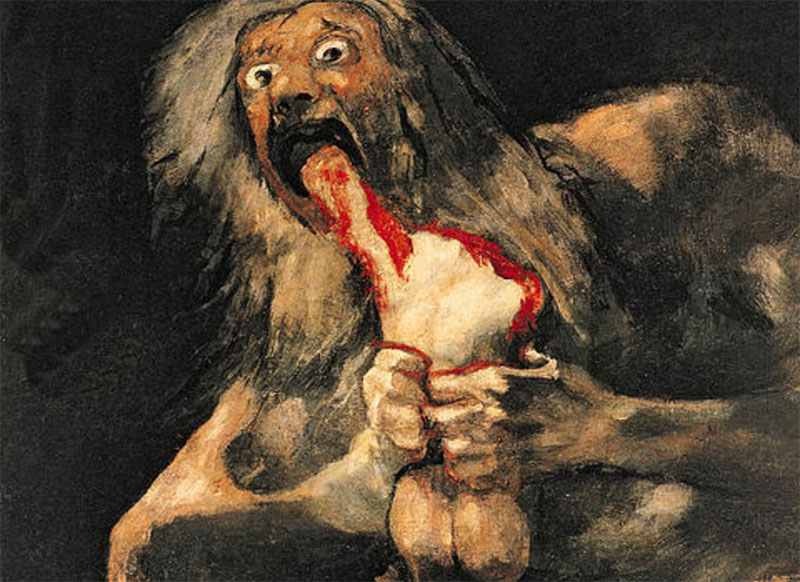
The haunting gaze of Saturn Devouring His Son, one of Goya’s “Black Paintings” in the Prado.
The Movement: Romanticism / Expressionism
To understand the Spanish soul, you start with Goya. He began as a court painter, creating beautiful portraits of royalty, but deafness and the horrors of the Napoleonic wars turned his work inward and dark.
The Museo del Prado in Madrid is Goya’s temple. You can physically walk through the timeline of his life here.
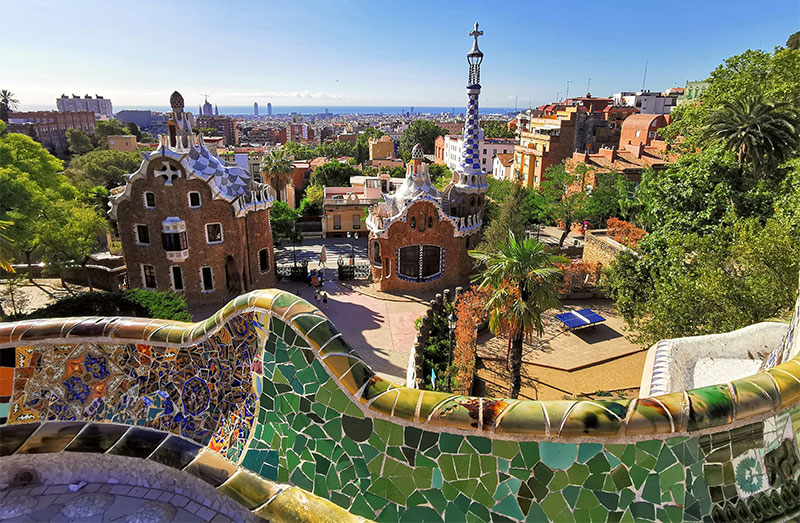
The mosaic lizard at Park Güell, overlooking the city of Barcelona.
The Movement: Catalan Modernisme (Art Nouveau)
Gaudí didn’t just paint on canvas; he painted with the city of Barcelona. He hated straight lines, believing they belonged to men, while curves belonged to God. His work is a mix of nature, religion, and madness.
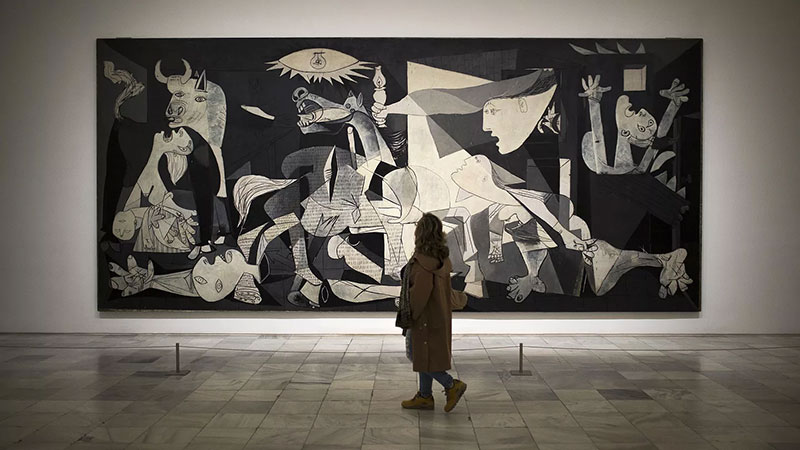
The sheer scale of Guernica at the Reina Sofía is overwhelming.
The Movement: Cubism
Picasso changed art forever. He broke reality into pieces and put it back together. While he spent much of his life in France, his heart remained in Spain.
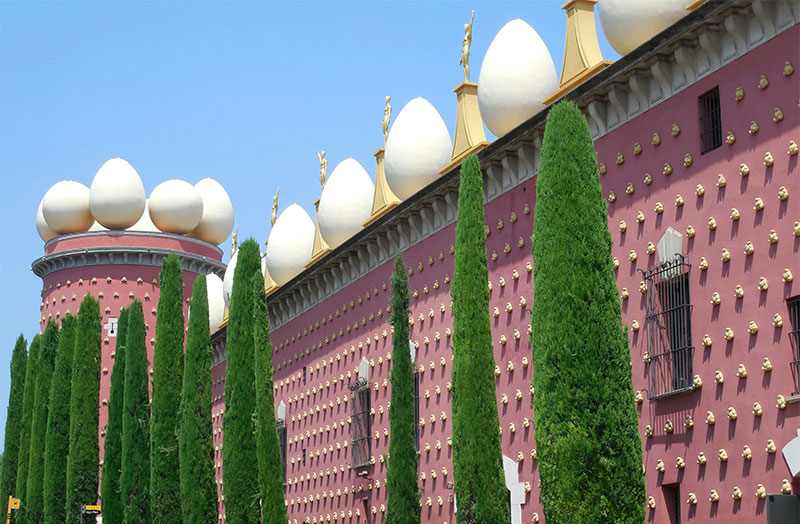
Eggs on the roof and bread on the walls. The Dalí Theatre-Museum is a trip.
The Movement: Surrealism
Dalí was a showman. His mustache was a brand. His art was a dreamscape. To see Dalí, you have to leave the big cities and head to the wild coast of Costa Brava.
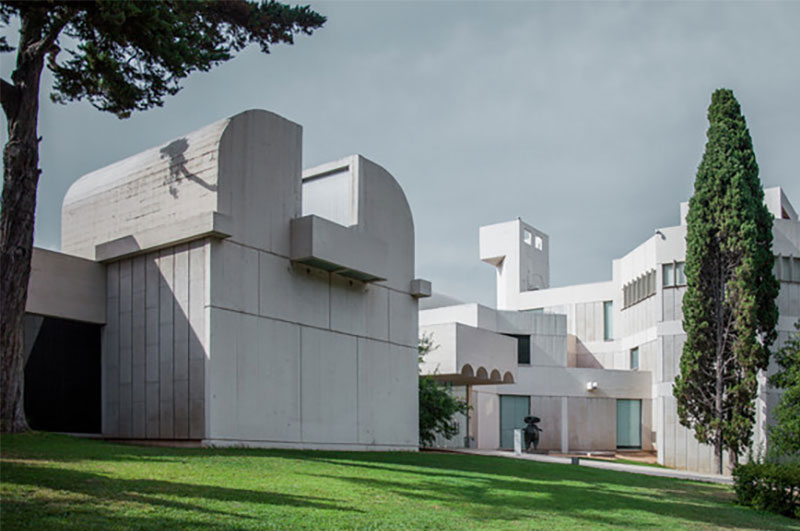
A masterclass in Mediterranean light and color: visiting the Fundació Joan Miró in Barcelona.
The Movement: Surrealism / Abstract
Miró’s work looks deceptively simple—bright primary colors, stars, birds, and lines. But it is deeply symbolic. He wanted to “assassinate painting” as it was known.

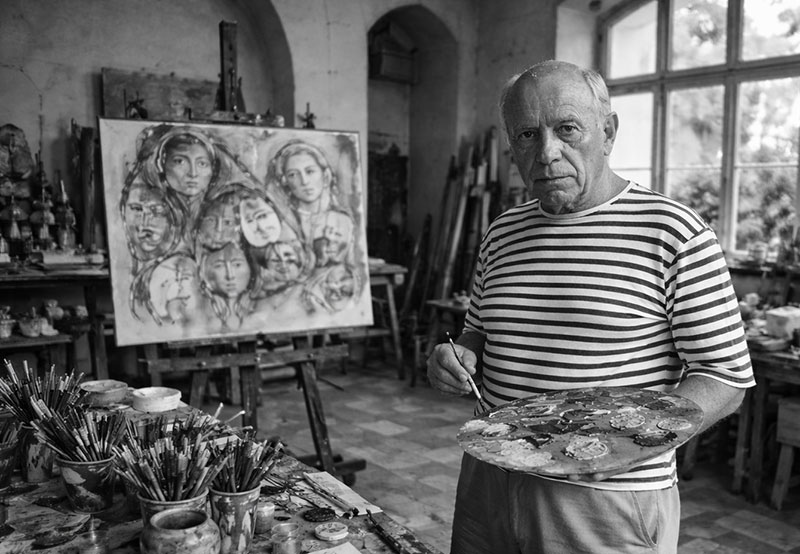
A fun Art & Wine “Sip and Paint” experience in Barcelona, where travelers relax with a glass of wine while creating colorful paintings in a social studio setting.
After staring at masterpieces for days, you might get the itch to create something. Spain has a thriving scene of workshops for travelers.
There are several studios in the artistic El Born district (like “Art & Wine”) where you can drink Cava and paint a neon version of the Barcelona skyline. It is social, low-pressure, and great for couples.
Want to be like Gaudí? You can take a “Trencadís” class. This is the technique Gaudí used, breaking ceramic tiles and reassembling them into patterns. You can make your own coaster or mirror frame to take home. It gives you massive respect for the work at Park Güell.
Check Airbnb Experiences for “Watercolor in Retiro Park.” Local artists will take you to the famous park near the Prado, give you a travel easel, and teach you how to capture the light through the trees. It is a very Zen way to spend a morning.
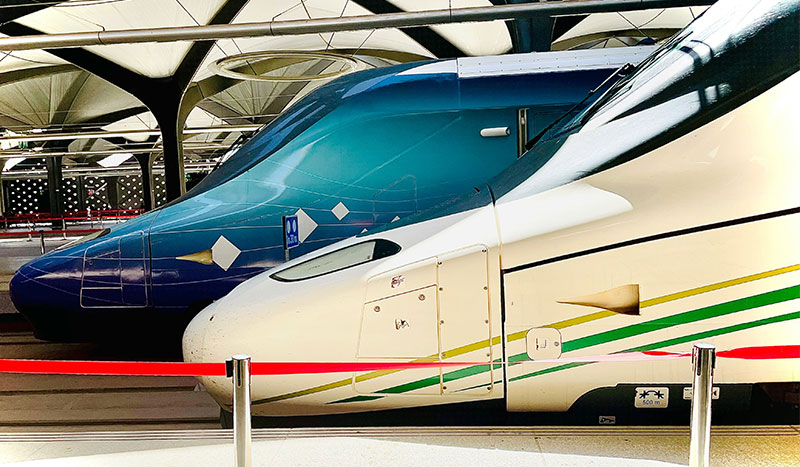
The High-Speed AVE train connects these art hubs in under 3 hours. Talgo 350, nicknamed “El Pato” (The Duck) in Spain because of its unique nose shape designed to handle high-speed air pressure.
This route maximizes your exposure to the masters without burning you out.
Yes. Especially for the Sagrada Família and the Alhambra (if you go south). They sell out weeks in advance. The Prado and Reina Sofia usually have lines, but you can sometimes get day-of tickets if you wait. Just book online to save time.
It varies. Reina Sofia: Photos are now allowed of Guernica (this is a recent change!), but no flash. Prado: Strictly NO photos allowed in the main galleries. Dalí Museum: Photos allowed everywhere.
If you visit all three museums (Prado, Reina Sofia, Thyssen), absolutely. It saves you about 20% and lets you skip the ticket-buying line.
Not with these artists. Dalí is fun and weird. Gaudí is visually stunning architecture. Goya’s black paintings are like horror movies. This isn’t just “fruit bowls and landscapes.” It’s intense stuff.