Travel Planning Hub
Start here to plan your trip, compare options, and explore every TLGA planning guide.
Packing & Gear Guide
What to pack, what to skip, and how to build a lighter travel setup that works.

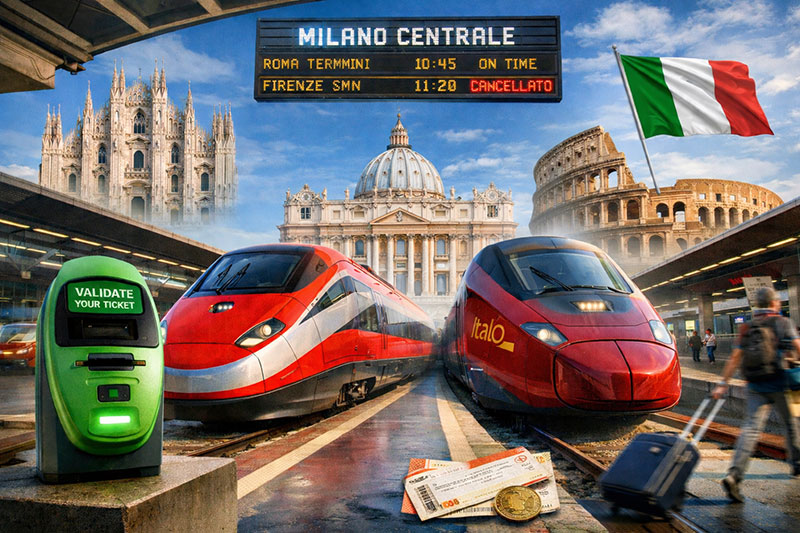
If you are planning a trip to Italy, you have probably heard that “taking the train is easy.” And it is… until you are sprinting through Milano Centrale with 45 seconds to spare, sweating through your shirt because you can’t find your platform, and realizing you never validated your ticket.
I have made every mistake in the book so you don’t have to. I’ve boarded the wrong train, paid the “tourist tax” (fines) for forgetting to stamp my ticket, and hauled luggage up stairs that felt endless.
This guide is the manual I wish I had on day one. It covers everything from the 2026 strike calendar to the difference between Italo and Trenitalia, so you can travel like a pro, not a panicked tourist.
Local Guide Tip: Download the Apps Now
Do not wait until you land. Download the Trenitalia and Italo Treno apps before you leave home. They are essential for checking live delays, buying last-minute tickets, and avoiding paper validation altogether.
Continue Reading: New to international travel or planning a full Italy trip? These guides will help you build the big picture before you dive into train logistics.
Planning note: High-speed trains (Frecce) operate like airplanes: prices go up as seats sell out. Regional trains (Regionale) have fixed prices, so you can buy those tickets 5 minutes before departure without paying extra.
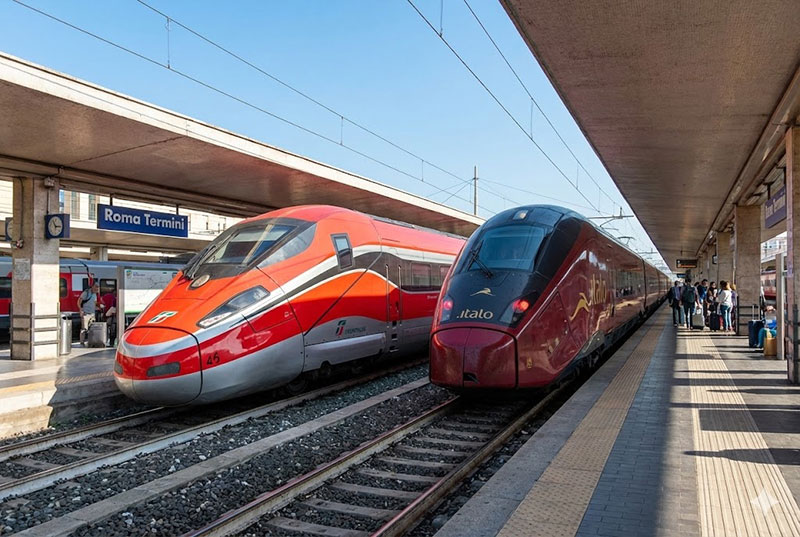
The titans of Italian travel: The red Frecciarossa (Trenitalia) and the dark red Italo train side-by-side at a major station. Both are fast, but the amenities differ.
Italy has two major high-speed rail competitors, and honestly, they are both excellent.
Local Guide Tip: Check Both Prices I always check both apps before booking. Sometimes Italo has a flash sale for €19.90 while Trenitalia is charging €50 for the exact same route and time.
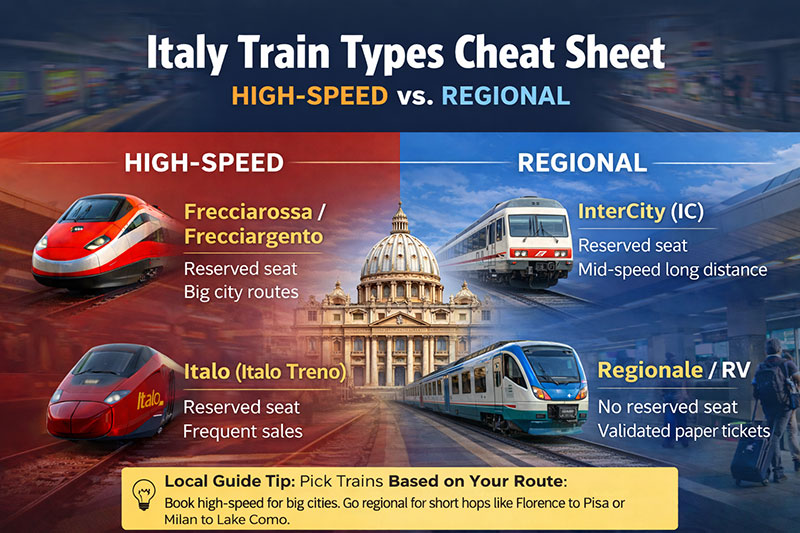
Pin this cheat sheet: Know the difference between high-speed “Frecce” trains (which have assigned seats) and Regional trains (which require ticket validation) to avoid fines.
Not all trains are created equal. Use this chart to quickly decide which train you need and avoid the dreaded validation fine.
| Train Type | Best For… | Reserved Seat? | Must Validate? |
|---|---|---|---|
| High-Speed (Frecce / Italo) |
Major Cities (Rome, Florence, Venice) |
✔ YES Assigned automatically |
NO |
| InterCity (IC) |
Budget Long Distance (Slower, cheaper routes) |
✔ YES Assigned at booking |
NO |
| Regional (Regionale / RV) |
Short Day Trips (like Florence to Pisa or Milan to Lake Como) |
✘ NO Sit anywhere |
⚠ YES (Important!) Stamp paper tickets before boarding |
InterCity trains are slower than high-speed but still require seat reservations and do not need validation.
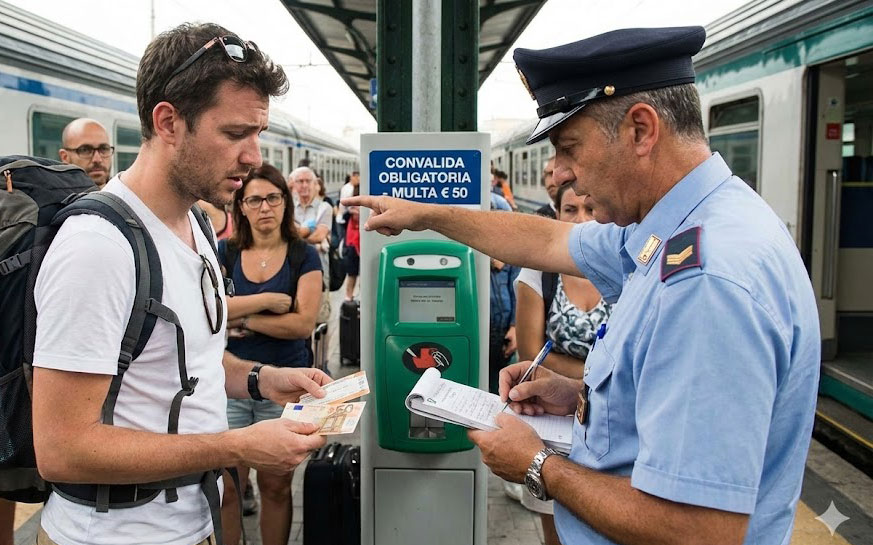
The €50 mistake: A tourist gets fined on the spot for forgetting to validate his regional train ticket in the green machine before boarding.
This is the #1 way tourists get fined.
Local Guide Tip: Levanto to Cinque Terre (Kiosk + Validation Reality Check)
When we stayed in Levanto to visit Cinque Terre, the train station was the perfect home base because it has a convenient parking lot right next to the station. The tricky part was the kiosk flow and then figuring out the green validation machine on the platform.
We were honestly lucky. A kind local Italian traveler saw us struggling and walked us through buying the ticket and validating it correctly so we could hop the train to the Cinque Terre villages without getting fined.
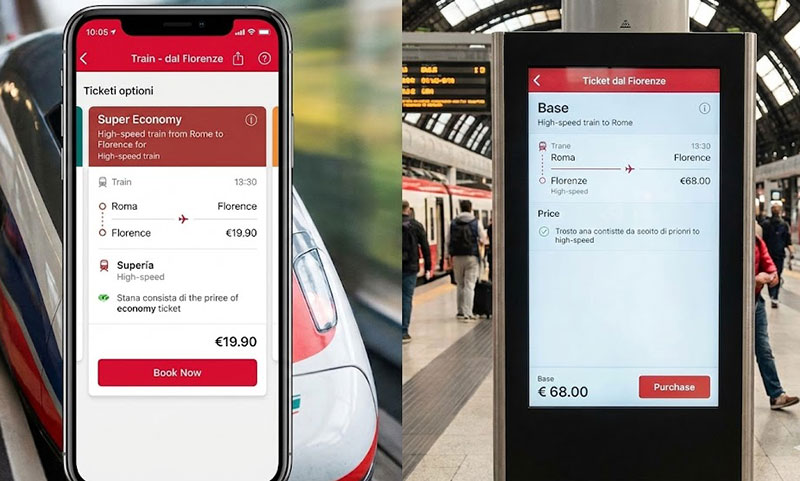
Strategy matters: Booking 2 months in advance gets you “Super Economy” fares (left), while last-minute bookings mean full “Base” price (right).
High-speed tickets go on sale about 3-4 months in advance.
For slow regional trains (e.g., Florence to Pisa or Pisa to Lucca), prices never change. There is zero benefit to booking these months in advance. Just buy them on your phone while you walk to the station.
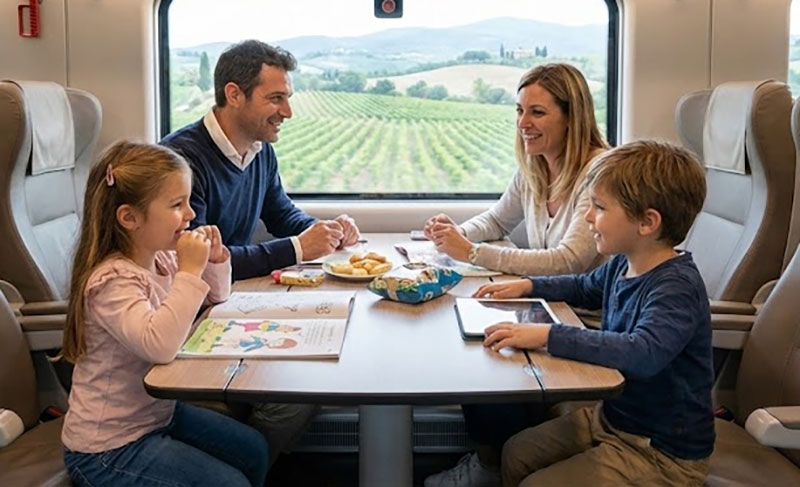
Family travel hack: Booking the 4-seat “salotto” configuration gives you a private table, making it easy to play games, eat snacks, and keep kids entertained on the ride.
If you are traveling as a family, trains can be one of the cheapest parts of your Italy trip, but only if you book correctly.
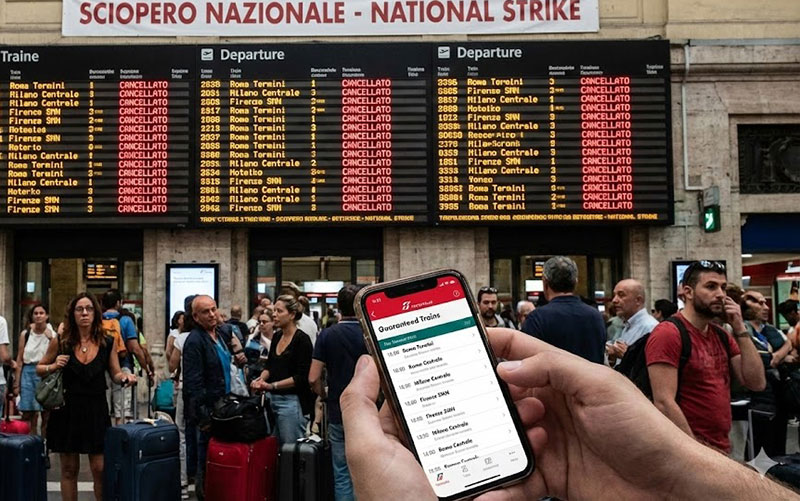
Strike survival mode: An electronic departure board showing “CANCELLATO” (Cancelled). Don’t panic, check the “Guaranteed Trains” list.
Strikes (scioperi) are a part of Italian life. They are usually announced weeks in advance, so they rarely come as a total surprise.
Local Guide Tip: Have a Backup Plan
If a strike hits, everyone will rush to FlixBus or rental cars. If you see a strike confirmed for your travel day, book a backup bus ticket immediately. You can usually cancel it if the trains end up running.
Local Guide Tip: Our Eurail Strike Lesson (Trains Ran, Ticket Office Didn’t)
We once showed up to buy a ticket from Italy to Nice and hit a strike at the station. The ticket staff were not issuing tickets, but the trains were still running. Since we already had a Eurail pass and a hotel booked in Nice, we walked to the platform anyway. Our train arrived, and when tickets were checked, we explained the situation and showed our Eurail pass. They let us ride.
Takeaway: Strikes can affect services (ticket desks, staffing, validation help) even if some trains still run. Check strike info early, and always have your ticket or pass ready in the app before you arrive.
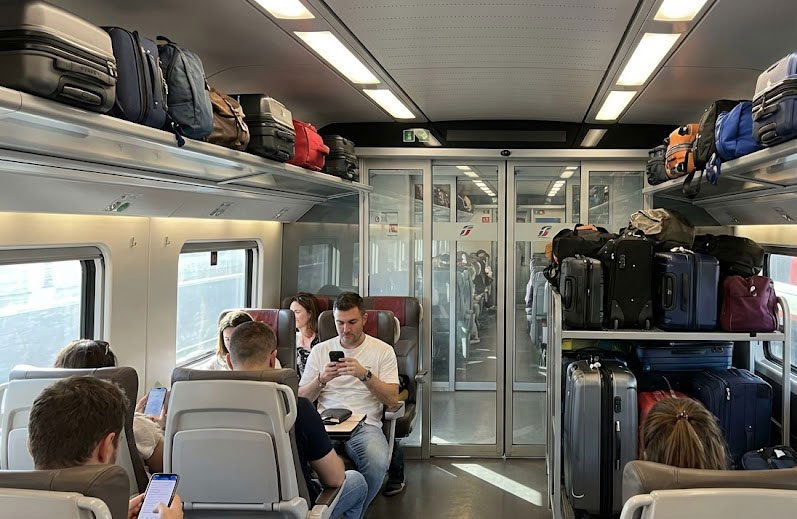
Luggage logistics: Large suitcases go in the racks at the end of the car (left), while carry-ons fit perfectly in the overhead shelf (right).
There are no checked bags on trains. You carry what you bring.
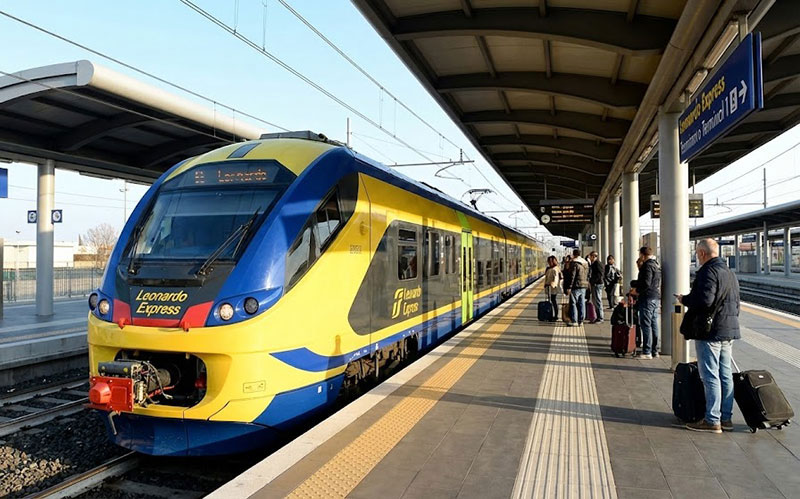
The Leonardo Express: The dedicated airport train connecting Rome Fiumicino to Termini Station. It’s non-stop and immune to traffic.
Do not take a taxi unless you have too much luggage to move. The trains are faster and cheaper.
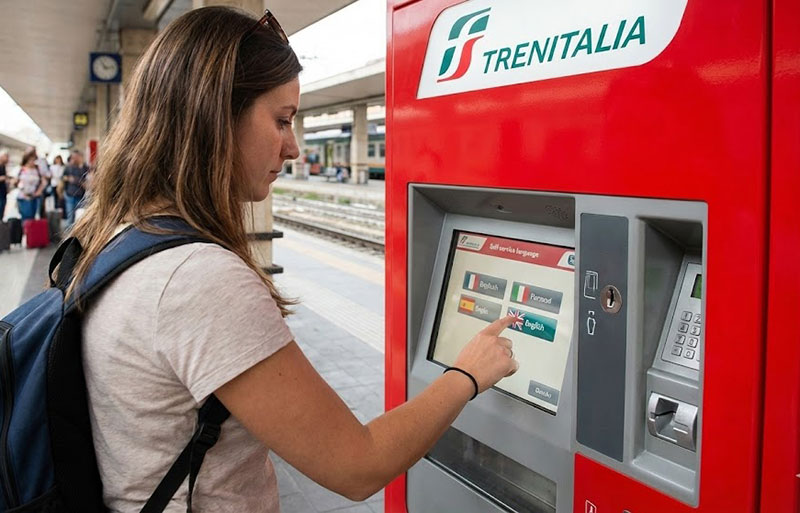
At the kiosk: A step-by-step view of buying a ticket. Look for the British flag icon to switch the language to English first.
If your phone dies or the app crashes, you need to use the big red (Trenitalia) or grey (Italo) machines.
Local Guide Tip: Station Names Matter
Cities have multiple stations. Ensure you pick the right one:
Final Tip: Italy’s train system is incredibly efficient once you understand the rules. If you can master validation, booking timing, and strike awareness, you’ll move around Italy faster than most locals.
Absolutely. It is almost a tradition. I often grab a panini, a bag of chips, and even a bottle of wine (with plastic cups) for the ride. Just be respectful of your neighbors and clean up your trash.
For trips under 2 hours (like Rome to Florence), Standard class is perfectly fine. For longer trips (Rome to Venice), Business Class is worth the extra €10–€20 for the wider leather seats, more legroom, and quieter cabin.
Yes, Frecciarossa and Italo trains have free Wi-Fi. However, it can be spotty in tunnels and rural areas. Do not rely on it for a critical Zoom call.
If you have a “Base” ticket, you can usually change it to the next train for free (within an hour). If you have a “Super Economy” or “Economy” ticket, it is usually non-refundable and non-changeable. You will likely have to buy a new full-price ticket.
Generally yes, but major stations (Rome Termini, Milan Centrale, Naples Centrale) can get sketchy late at night. Stick to the main well-lit areas, avoid empty corners, and keep your bags attached to you.