Travel Planning Hub
Start here to plan your trip, compare options, and explore every TLGA planning guide.
Packing & Gear Guide
What to pack, what to skip, and how to build a lighter travel setup that works.
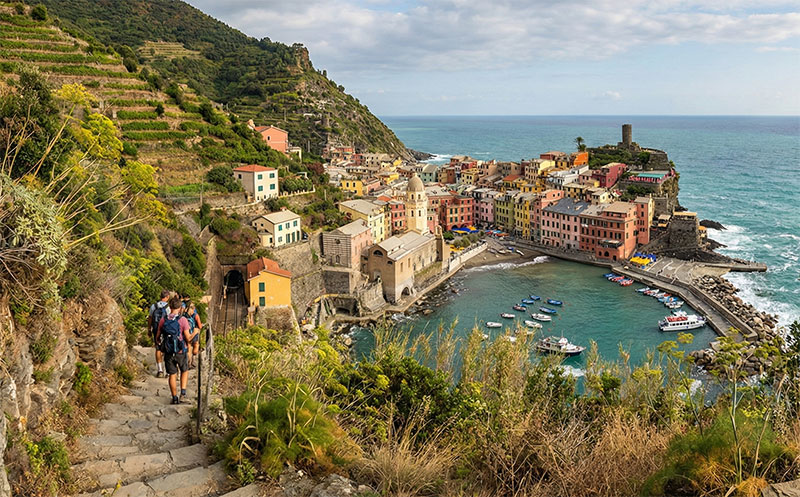
The view that makes the cardio worth it: Looking back at Vernazza from the Blue Trail. The colorful facades seem to grow right out of the cliffside, a sight that hasn’t changed much in centuries.
By Corey Gasman
Last October, my wife and I returned to the Cinque Terre. It is a region that has changed dramatically since I first visited two decades ago, yet the magic of those five pastel villages clinging to the Ligurian cliffs remains undeniable.
We approached it differently this time. Instead of wrestling a car down the precipitous roads into the villages themselves, a mistake I made in my youth, we stayed in Levanto, the town just north of the region. We rented a spot up on the hill, drove down to the Levanto train station, and took the train in for the day to explore.
Here is my guide to the villages, the food, and the reality of the hike, plus a little story about how the “King of Travel” himself once crashed our dinner.
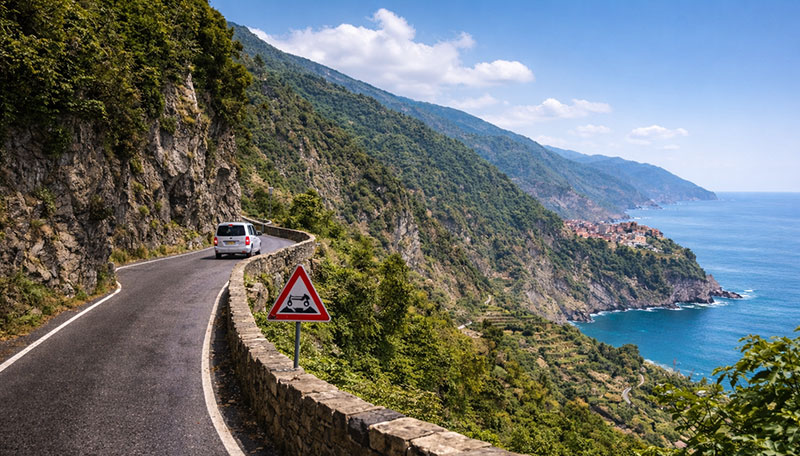
The winding, single-lane roads leading into the Cinque Terre are treacherous. Twenty years ago, we drove them blindly; today, we know better.
Two decades prior to this recent trip, I traveled to the Cinque Terre with my friends Dan and Rob. Back then, we were relying entirely on physical guidebooks, specifically, the blue-and-yellow bible written by Rick Steves. We didn’t have Google Maps; we just drove into the region on a crazy, single-lane winding road that felt more like a donkey path.
A hilarious story that defines our trip to Cinque Terre happened while we were sitting in a small, hole-in-the-wall restaurant for dinner.
My friend Dan was sitting with his back to the door, reading the Rick Steves guide. The book has a photo of the author on the back cover. Suddenly, the door opened.
“You guys will never believe who just walked in,” I said.
“Who?” Rob asked.
“The guy on the back of Dan’s book.”
Dan turned around, and sure enough, Rick Steves was standing there. It was such a small spot that he actually stopped by our table. He saw the book, smiled, and chatted with us for a minute about our travels. It was a surreal moment.
Fast forward to today: I think we can blame Rick for how busy the place has become! The secret is definitely out, and the “Rick Steves Effect” has filled these towns with travelers.
Cinque Terre is an easy add-on if you plan your bases correctly. For the complete 2026 strategy (regions, trains, neighborhoods, and timing), start here: The Ultimate Italy Travel Guide (2026)
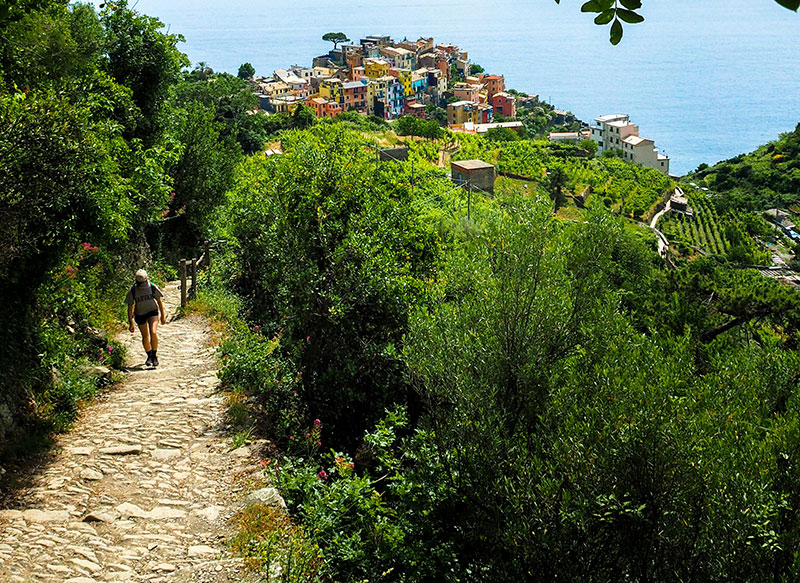
The Blue Trail offers incredible views, but the terrain is rugged. Narrow paths and steep stone steps are the norm here.
Let’s be real about the trail. The famous Sentiero Azzurro (Blue Trail) connects the villages, and while it looks charming in photos, it is a serious hike.
My wife and I did the trek this past October. It is not for someone who isn’t fit. There are hundreds of steep, uneven stone steps and narrow cliffside paths.
The Weather Factor:
We dealt with a bit of rain, which changes the game completely. The stone steps turn slick, and the mud gets slippery. If it’s raining hard, the park authorities often close the trails for safety.
Local Guide Tip: Know Your Limits
I recommend doing the hike 1,000%, the views of the vineyards meeting the sea are unmatched. However, if you have any disability, knee issues, or aren’t confident in your fitness, skip the trail.
Instead, buy the Train Card and hop on and off. You get the same village charm and amazing seafood without the risk of a twisted ankle.
If Cinque Terre is part of a bigger Italy route, dial in your rail strategy first: Italy Train Travel Guide
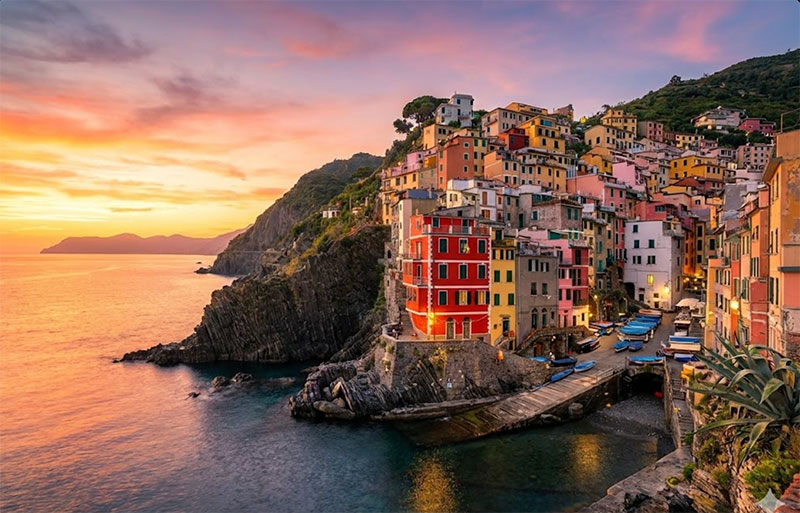
Manarola at sunset is the postcard shot everyone chases. The way the houses tumble down to the sea is architectural poetry.
If you are taking the train, you can hop between these towns in just a few minutes. Here is a breakdown of the five villages (North to South) to help you plan your stops.
The “resort” town. This is the only village with a proper, wide sandy beach. It is split into an old town and a new town by a tunnel. If you want to lay out on a lounge chair with an umbrella and swim, this is your spot. It feels the most spacious of the five.
For many, this is the crown jewel. It has a natural harbor where you can sit on the rocks and watch the boats bob in the water. It’s incredibly photogenic, with a medieval castle tower watching over the colorful piazza. It’s bustling, loud, and beautiful.
The “quiet” one. Corniglia is the only village not on the water; it sits high up on a cliff. To get there from the train station, you have to climb the Lardarina, a brick staircase with hundreds of steps (or take the shuttle). Because it’s harder to reach, it’s often less crowded.
This is the village you see on all the Instagram posts, the one where the houses seem to tumble down the cliff into the sea. It’s famous for its sunset views. There’s no beach, but there are deep-water swimming holes off the rocks.
The southern gateway. It feels steep and compact, with tall tower houses stacked tightly together. The harbor here is a slanted boat ramp where people hang out to watch the sunset.
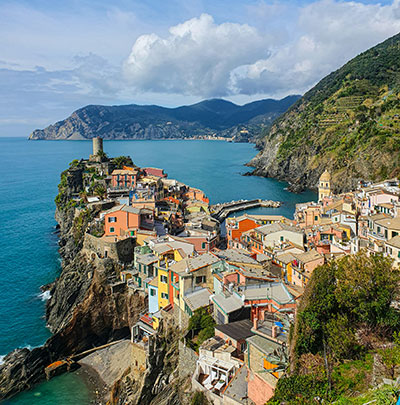
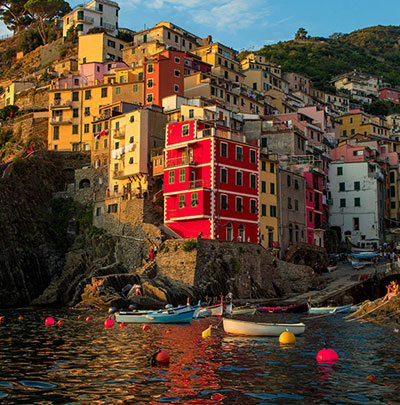
The icons of the Cinque Terre: On the left, Vernazza stretches out into the sea with its famous piazza and castle tower. On the right, Riomaggiore’s tall, colorful tower houses are stacked vertically against the cliffside, creating one of Italy’s most recognizable skylines.
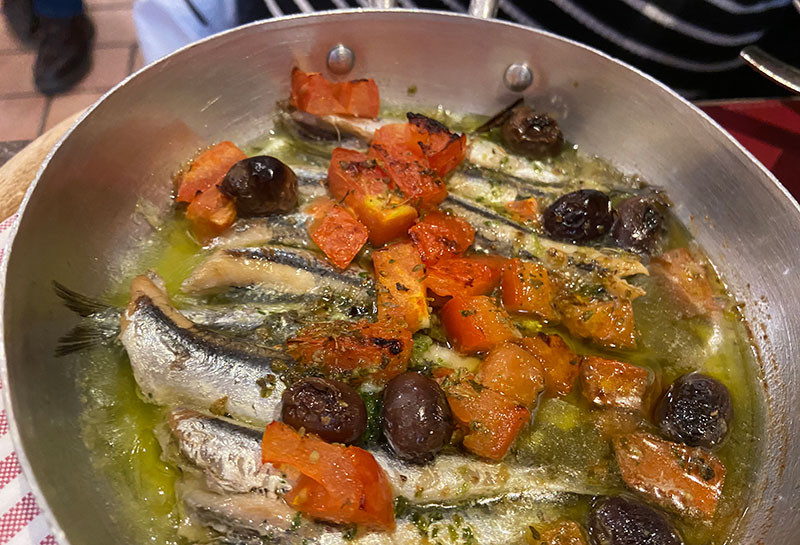
The King of Cinque Terre Seafood: In these villages, the anchovy is more than just food; it’s a protected local treasure, especially in Monterosso. Forget the salty cured version you know, here, they are the main event. This is Acciughe al Tegame: fresh anchovies cooked simply in local olive oil, tomatoes, and taggiasca olives.
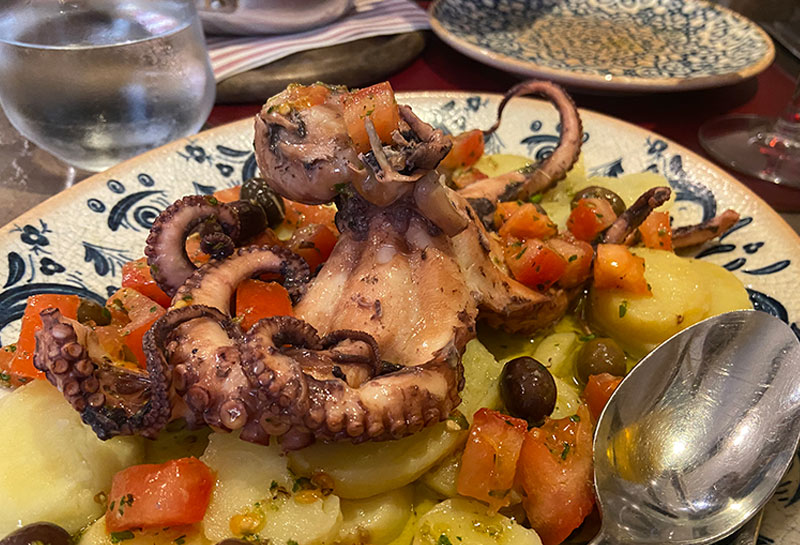
A close-up of a warm seafood salad featuring tender octopus tentacles, boiled potatoes, cherry tomatoes, and olives on a decorative blue and white plate.
You are in Liguria, a region with a very specific culinary identity. The food here is fresh, simple, and defined by the sea and the basil grown on the hills.
If you want the broader food context (regional dishes, ordering, and the rules that actually matter), this is the master guide: Eat Like a Local Italy Guide
Booking Note: The “Rick Steves Effect” means restaurants are busy.
If you want a sit-down dinner with a view, you need to book a reservation. Otherwise, grab a slice of focaccia or a seafood cone and eat by the harbor.
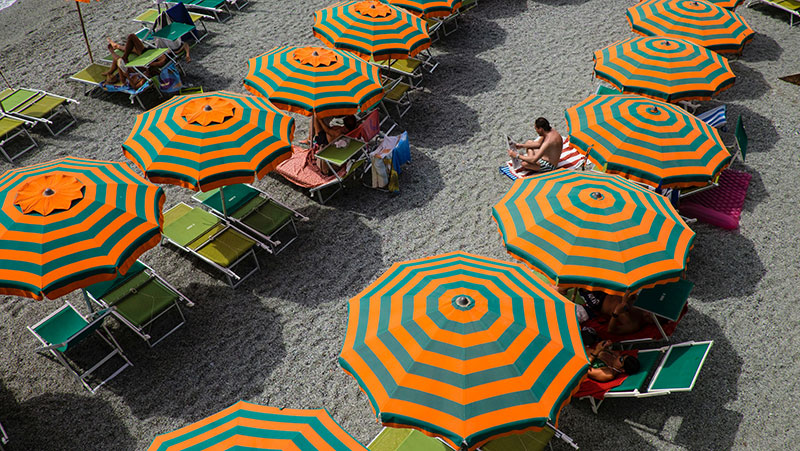
The only true sandy beach in the Cinque Terre can be found here in Monterosso al Mare.
Cinque Terre is iconic, but Italy rewards travelers who go one step beyond the obvious. If you like side quests like this, start here: Italy Hidden Gems & Unique Experiences (2026)
No. In fact, a car is a liability. The towns are pedestrian-only, and parking at the top of the towns is expensive and limited. Park in Levanto or La Spezia and take the train.
Yes. There are two types: The Trekking Card (access to trails + buses) and the Train Card (access to trails + unlimited train travel). If you plan to visit more than two villages, the Train Card pays for itself quickly.
It is moderate to difficult depending on the section. The path between Monterosso and Vernazza is particularly steep with many stairs. If you have mobility issues or low fitness, stick to the train.
Yes, if you start early. If you are hiking, it takes about 5–6 hours of walking time plus breaks. If you are taking the train, you can easily hop off at all five, spend an hour in each, and have lunch/dinner.