Travel Planning Hub
Start here to plan your trip, compare options, and explore every TLGA planning guide.
Packing & Gear Guide
What to pack, what to skip, and how to build a lighter travel setup that works.
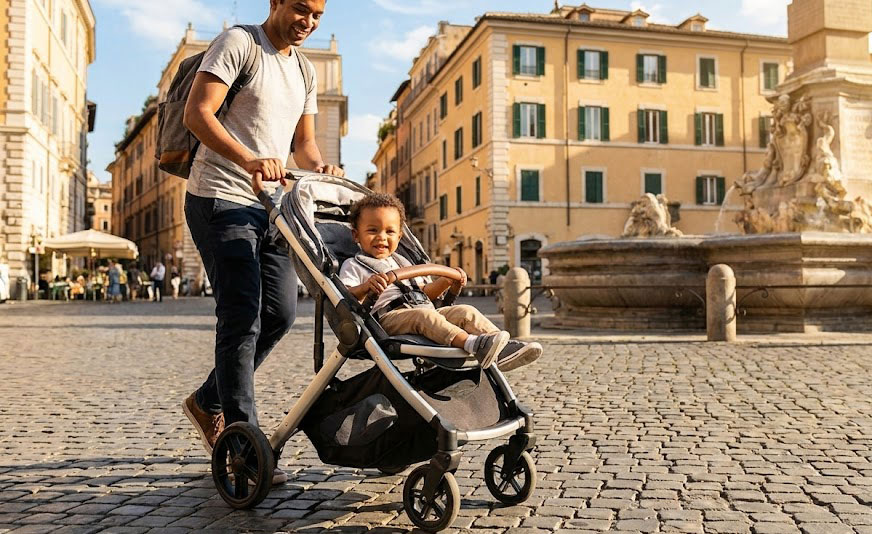
If you have been dreaming of taking your children to Italy but are terrified of the logistics, let me put your mind at ease: Italy is arguably the most kid-welcoming country in Europe. The secret to a successful family trip is not just picking the right museums. It is understanding the stroller reality of ancient streets, knowing how trains work, and realizing that late dinners with kids are often completely normal.
This guide breaks down how to navigate cobblestones, rail travel, family-friendly dining, and where to stay, with practical advice that helps parents avoid the common friction points.
Local Guide Tip: The “Bambini” Effect
In Italy, children are a social lubricant. If your toddler is having a meltdown in a piazza, do not be surprised if a local grandmother comes over to distract them instead of scowling. Embrace the chaos. The locals usually do.
Planning note: Always check the Trenitalia “Bimbi Gratis” terms before booking. Many high-speed routes allow kids under 15 to travel free when accompanied by an adult, but you must choose the specific fare during booking.
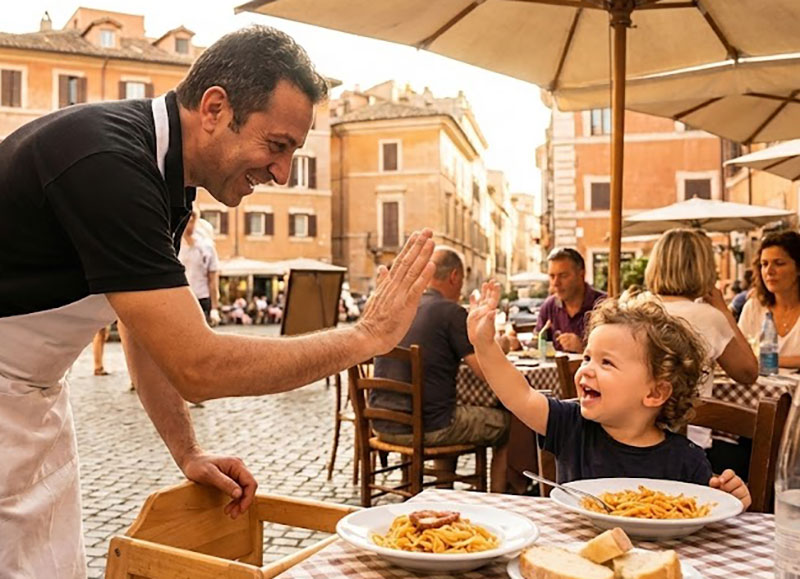
Italian hospitality: waiters often go out of their way to make children feel like VIPs.
In Italy, children are integrated into everyday life. You will see families out late, babies in strollers in lively piazzas, and kids running around while adults linger over dinner.
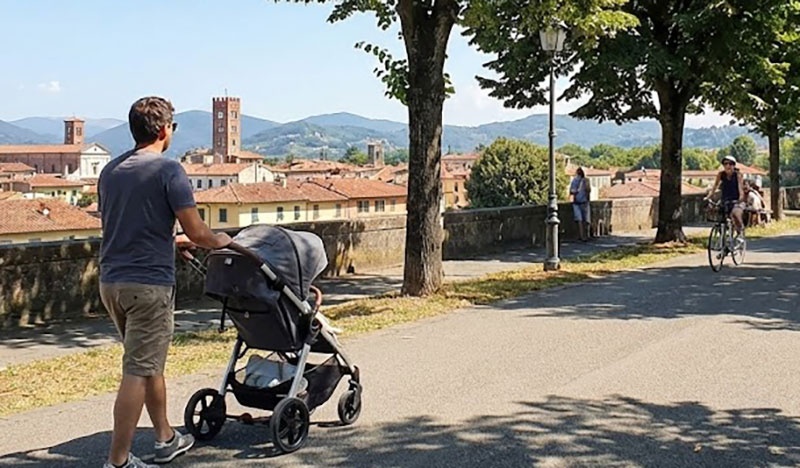
A smoother ride: paved paths like the ones in Lucca make city exploration much easier with a stroller.
You can technically bring a stroller almost anywhere in Italy, but some destinations are much easier than others.
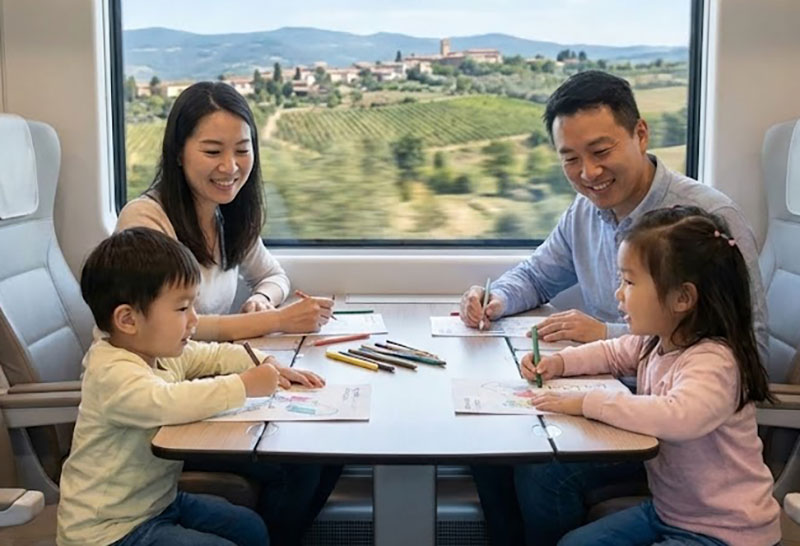
Modern high-speed trains are one of the easiest ways for families to move between Italian cities.
Italy’s rail system is often the easiest way to move a family between cities. You avoid parking stress, highway fatigue, and long transfers into historic centers.
Related: If train travel feels like the biggest stress point, read my full Italy Train Travel Guide for seat maps, luggage tips, and platform advice.
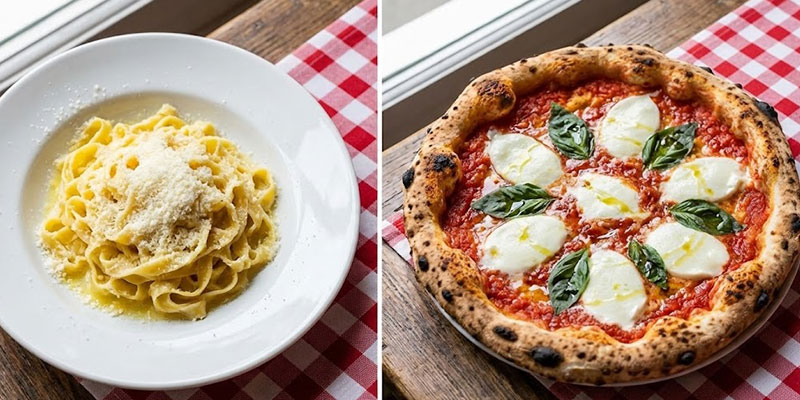
Simple pasta and pizza make dining in Italy much easier for families than many parents expect.
Most traditional Italian restaurants do not have a separate kids menu, but that does not mean dining is difficult. Italian kitchens usually offer simple, flexible options that work well for children.
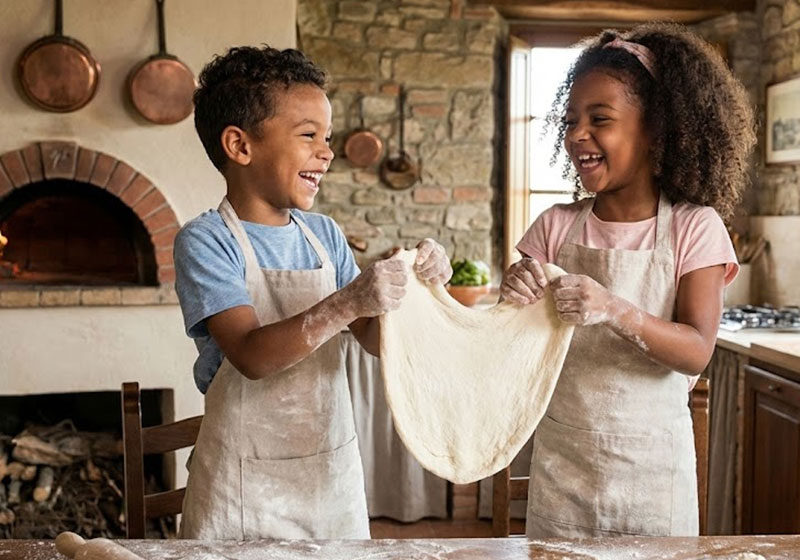
Hands-on food experiences like pizza and gelato classes can be a highlight for families in Italy.
Italy is full of history, but families usually do best when they mix famous sights with experiences kids can actively participate in.
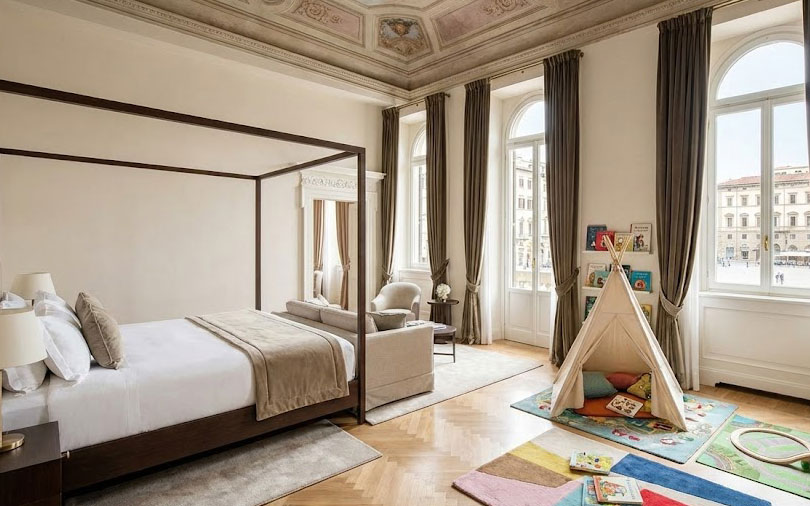
Family-friendly stays in Italy often work best when they combine space, elevator access, and an easy walking location.
For families, the best base is not always the prettiest one. Elevator access, quieter streets, enough room to spread out, and easy walks to food or transit can matter more than postcard charm.
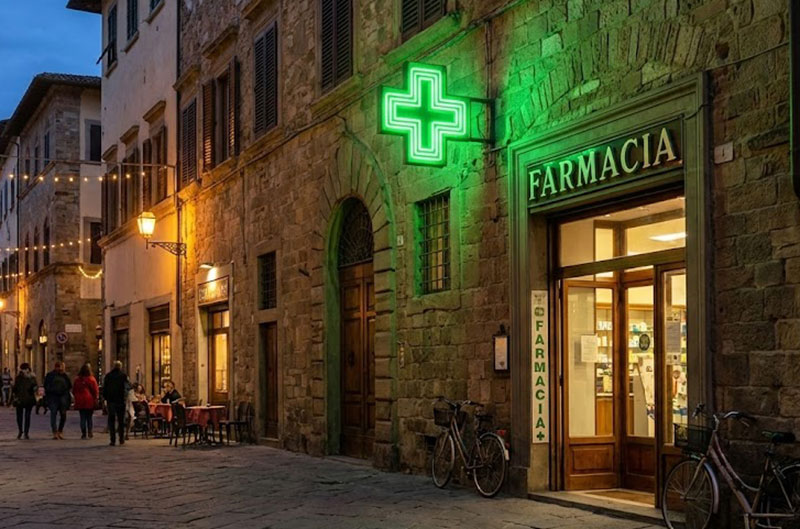
Farmacie and supermarkets make it easy to restock diapers, formula, and everyday baby essentials in Italy.
You do not need to pack an entire suitcase full of baby supplies. Most of what you need can be bought once you arrive.
Car seats are not guaranteed in Italian taxis, especially in city centers. If you are traveling with infants or toddlers, plan ahead.
No. It is mainly tied to certain Trenitalia long-distance and high-speed services. Regional trains usually follow different child pricing rules.
Lucca is one of the easiest picks thanks to its flatter layout, pedestrian-friendly feel, and easier strolling routes.
Usually no. Diapers, wipes, formula, and baby-care basics are widely available in supermarkets and farmacie across Italy.
Yes. Italy is one of the easier countries in Europe for family dining. Even without a formal kids menu, most restaurants can offer simple, kid-friendly meals.
For many families, the best answer is both. A compact stroller works well in flatter cities, while a carrier is much easier in places with stairs, bridges, or steep terrain.
“`