Travel Planning Hub
Start here to plan your trip, compare options, and explore every TLGA planning guide.
Packing & Gear Guide
What to pack, what to skip, and how to build a lighter travel setup that works.
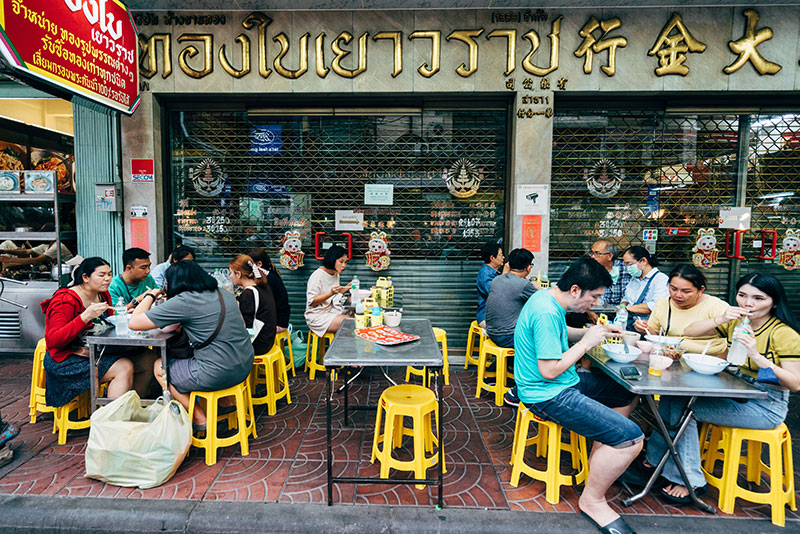
Thailand is one of the few places on earth where a life-changing meal can happen on a plastic stool, five feet from traffic.
By Corey Gasman
Thailand is the rare travel destination where eating well is not tied to spending more money. You can crush a 60-baht stir-fry at lunch, sit down for a polished regional meal at dinner, and still feel like you are gaming the system. Street food is the foundation, local restaurants are the daily rhythm, and upscale Thai dining is an optional upgrade when you want it.
This is a Level 3 food spoke designed to support both the Thailand Travel Guide and the Bangkok Travel Guide. It focuses on the how of eating across Thailand, not a neighborhood-by-neighborhood list. City-specific picks and deep dives live in those guides.
I used to treat street food like a dare. Now I treat it like the most reliable travel strategy on the planet. If a stall has high turnover, a hot wok, and locals ordering without hesitation, you are probably about to eat something better than the fancy restaurant you almost booked.
My rule is simple: use street food and local restaurants as your default, then pick one or two intentional splurges per trip. That balance keeps the trip affordable and keeps your meals exciting.
Thailand Food at a Glance
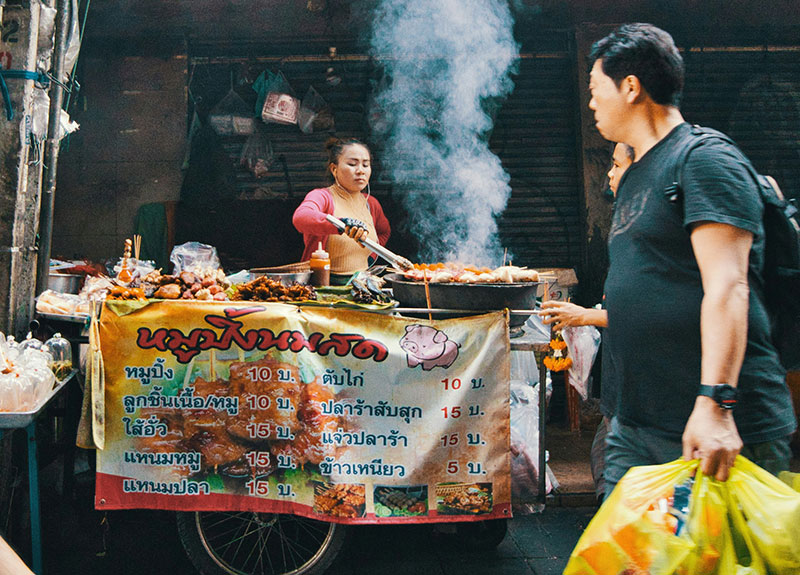
The best street stalls look simple, move fast, and do one or two things incredibly well.
Street food in Thailand is not a novelty. It is daily life. In most cities, you will see the same rhythm repeat: a few items on a sign, a hot wok, an assembly-line flow, and locals ordering like they have done it a thousand times. That repetition is the secret. A stall that only makes a handful of dishes gets frighteningly good at them.
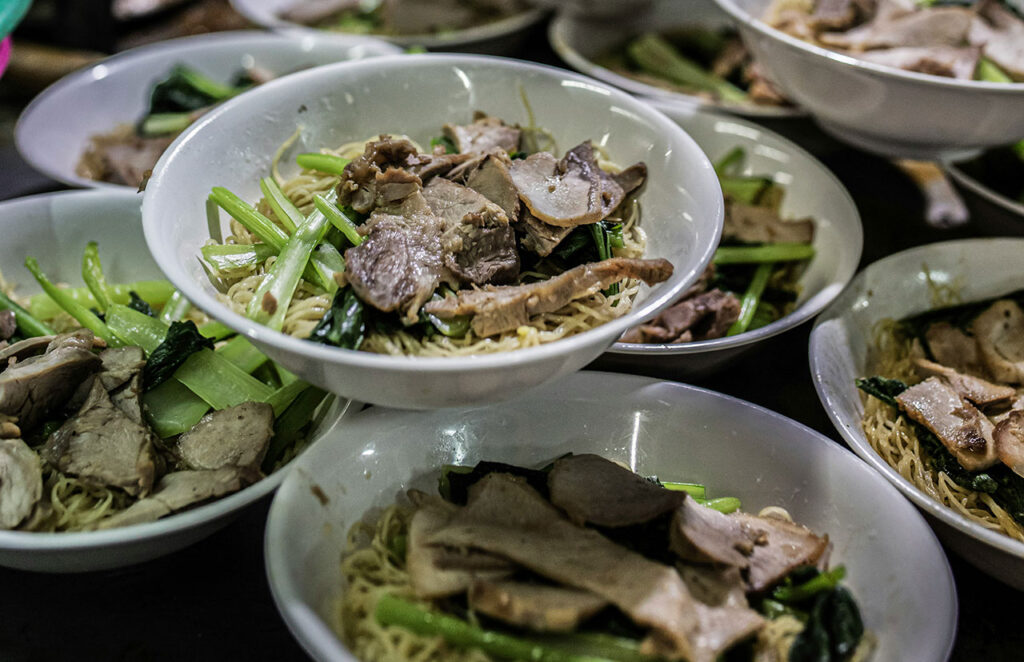
Local restaurants are where Thailand gets comfortable. Same flavors, more time, more menu, more breathing room. Pictured: Ba Mee egg noodles with red pork and greens.
If street food is the foundation, local restaurants are the backbone. Think shophouse noodle joints, family-run curry shops, rice-and-curry counters, and small dining rooms where you can slow down for a minute. These places often serve the same foods you see on the street, just in a setting that is easier when you want air-conditioning, a real chair, or a slightly bigger menu.
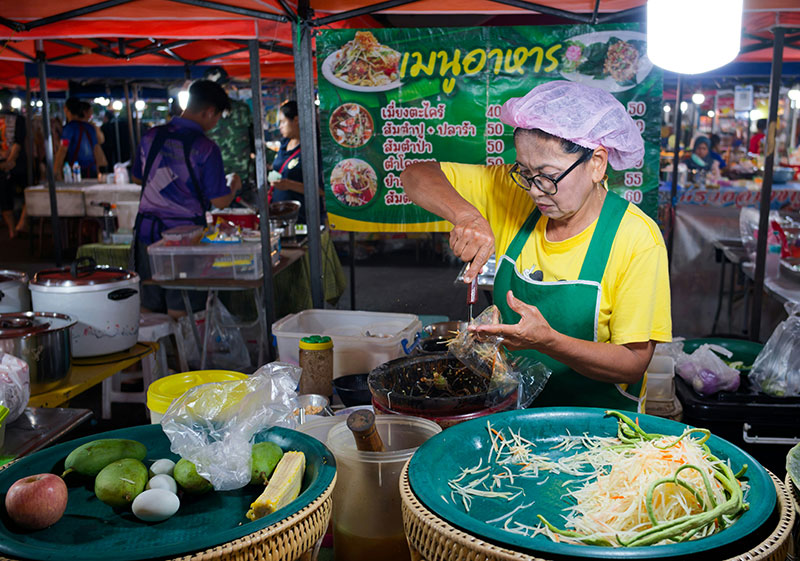
Freshly made Yum Mamuang (spicy green mango salad) being mixed to order, sour, spicy, and incredibly fresh
If you are staring at a menu and feeling overwhelmed, start with a few high-percentage dishes that show up everywhere and rarely miss. This is not a definitive list. It is the “get your footing” list.
| Dish | What It Is | Why It’s a Great Starter | Best Place to Try |
|---|---|---|---|
| Pad Kra Pao | Basil stir-fry (often pork or chicken) with rice | Fast, craveable, made fresh | Street stall or simple restaurant |
| Som Tam | Green papaya salad | Bright, spicy, refreshing in the heat | Street stall (watch spice level) |
| Khao Man Gai | Poached chicken over fragrant rice | Gentle, comforting, easy on the stomach | Dedicated chicken-rice shops |
| Tom Yum | Hot and sour soup (shrimp is common) | Signature Thai flavor profile in one bowl | Local restaurants |
| Mango Sticky Rice | Sweet mango with coconut sticky rice | Classic dessert, easy win | Markets and dessert stalls |
Bib Gourmand and famous legacy spots are where Thailand’s “everyday food” gets polished without losing its soul.
Thailand’s Michelin conversation is different than Europe’s. Many of the most loved places are not formal. They are simply consistent, historic, and very good at one signature dish. Bib Gourmand spots are often the best value in the “famous” tier because they signal quality without demanding fine-dining pricing or ceremony.
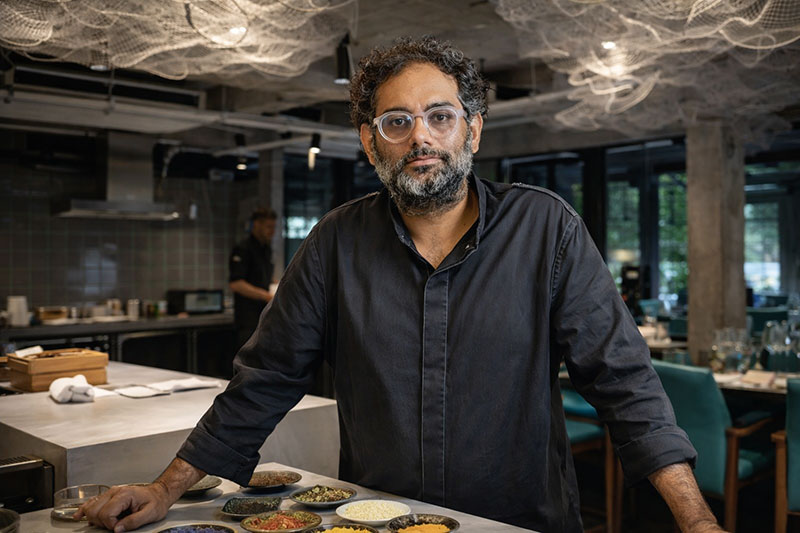
Chef Gaggan Anand inside the open kitchen at his Bangkok restaurant, where the tasting menu unfolds like a performance as much as a meal.
A chef-driven journey rooted in India, shaped by modernist technique, and fully realized in Bangkok.
Gaggan Anand is not traditional Thai food, and it is not trying to be. It is a chef-driven tasting experience shaped by Indian roots, modernist technique, and the influence of Gaggan’s time at El Bulli. The result is playful, provocative, and deliberately unlike anything else in Bangkok.
This is the kind of meal you book when you want to be surprised. Expect bold flavors, unconventional presentations, and a menu that feels closer to performance art than dinner. It is expensive, intentional, and absolutely not an every-night choice.
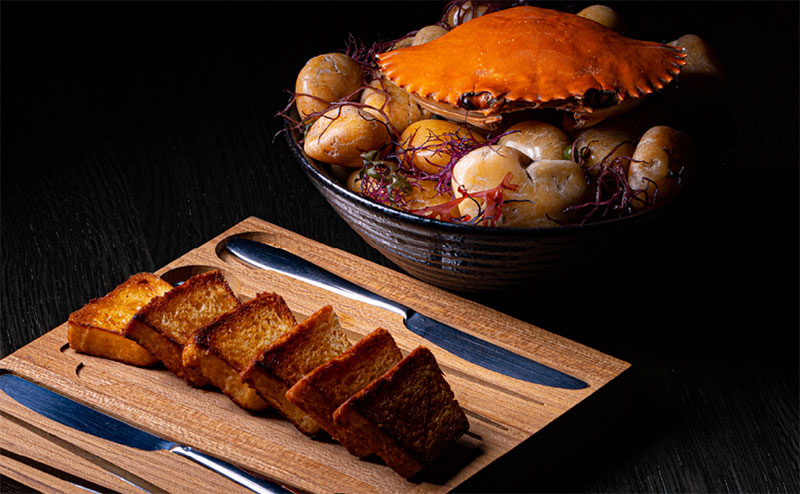
Inside POTONG, a one-Michelin-star restaurant in Bangkok’s Chinatown, where a modern tasting menu explores Thai-Chinese heritage through an intimate, theatrical dining experience.
I love a good splurge meal in Thailand, but only when it is intentional. The best upscale Thai places do not turn Thai food into something unrecognizable. They sharpen it. They highlight regional ingredients. They make you notice techniques you have tasted a hundred times on the street without ever thinking about how it happens.
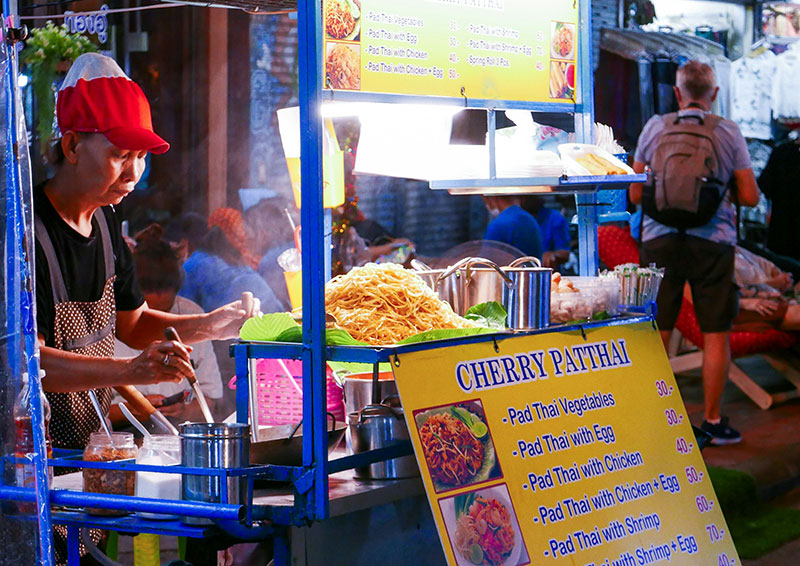
A walking food tour in Bangkok is the fastest way to learn how the city actually eats. A classic Pad Thai cart setup: fresh noodles, high heat, and made-to-order service right on the sidewalk.
If you like walking food tours, Bangkok is one of the best cities on earth for it. A good tour compresses the learning curve. You learn how to order, how to read a menu pattern, what ingredients matter, and why certain neighborhoods taste different. Then you spend the rest of your trip eating with confidence instead of guessing.
| Category | Typical Price | What It Feels Like | Best For |
|---|---|---|---|
| Street Food | $1–$4 | Fast, casual, minimal seating | Budget travel, food lovers, daily meals |
| Local Restaurants | $3–$10 | Sit-down, fans or A/C, bigger menus | Comfort + authenticity |
| Bib Gourmand / Famous | $8–$25 | Busy, efficient, signature dishes | Iconic dishes, value “famous” meals |
| Upscale Thai | $40+ | Intentional, polished, chef-driven | One-time splurges, special nights |
| Item | Typical Cost (THB) | Typical Cost (USD) | Notes |
|---|---|---|---|
| Street meal (stir-fry/noodles) | 50–120 THB | $1.50–$3.50 | Tourist zones trend higher |
| Local restaurant meal | 120–250 THB | $3.50–$7.50 | A/C adds a little cost |
| Night market snack | 30–80 THB | $1.00–$2.50 | Perfect for “try everything” nights |
| Beer (7-Eleven) | 45–80 THB | $1.30–$2.30 | Bars can be 2–4x |
| Food tour (Bangkok) | 1,500–3,500 THB | $45–$105 | Depends on length and inclusions |
| Upscale Thai dinner | 1,500–5,000+ THB | $45–$150+ | Tasting menus vary widely |
Note: These are practical traveler ranges, not promises. Bangkok tourist zones and islands can run higher, and smaller cities can run lower.
These are universal rules that apply everywhere in Thailand, whether you are eating on a Bangkok side street or in a small beach town. If you follow these basic guidelines, you’ll have a much smoother experience.
These are the patterns you start to notice once you have eaten your way through a few trips. The goal isn’t just to find food, but to find “safe delicious” food efficiently.
Bangkok is its own beast. Here are three specific strategies for navigating the capital’s food scene:
How This Fits the Bigger Picture
This guide is a supporting spoke. Start with the Thailand Travel Guide 2026, then go deeper with the Bangkok Travel Guide 2026 for neighborhood-level food and hotel strategy.
In general, yes. Choose busy stalls with high turnover and food cooked hot in front of you. If you want to ease into it, start with wok-fried dishes and grilled items, then branch out.
Yes. The cylinder or “tube” ice you see almost everywhere in Thailand is produced commercially and is safe to consume. You should avoid tap water, but the ice in your coffee or soda is generally fine.
Both. Street food is the best value and the most fun. Local restaurants add comfort and variety. A strong Thailand trip mixes them naturally.
Absolutely. Upscale Thai dining can be world-class, especially in Bangkok. The key is choosing places that elevate Thai flavors rather than watering them down.
Yes, especially early in your trip. A good walking tour teaches you how to order, how to handle spice levels, and how to read the city’s food rhythm. Then you eat better for the rest of the trip.
Start mild and adjust over a few meals. Spice tolerance is not a badge of honor. The goal is enjoying flavors, not sweating through your shirt by noon.
Often, yes. Cash is still common for stalls and small shops. Keep small bills and coins so you can pay fast and keep the line moving.