Travel Planning Hub
Start here to plan your trip, compare options, and explore every TLGA planning guide.
Packing & Gear Guide
What to pack, what to skip, and how to build a lighter travel setup that works.


Last updated: March 2026 by Corey Gasman
From the Editor:
The first time I went down to the Florida Keys was a classic South Florida road trip with friends. We stopped for food along the way, detoured into the Everglades for an alligator tour, and then kept driving until the road started feeling more like a bridge between islands than a highway.
One detail I still remember from that Everglades stop was the guide tossing marshmallows to the alligators, explaining that they could see the bright white color in the water. I’m not saying that is something every tour does today, or even something I’d necessarily expect, but it was one of those strange, unforgettable Florida moments that sticks with you.
Once we reached Key West, we stayed near Duval Street, close enough to walk to bars, restaurants, sunset spots, and the waterfront. Cruise ships were parked right outside, snorkel boats were heading out to the reef, and the whole place had that laid-back, slightly rowdy island energy that makes Key West feel different from the rest of Florida.
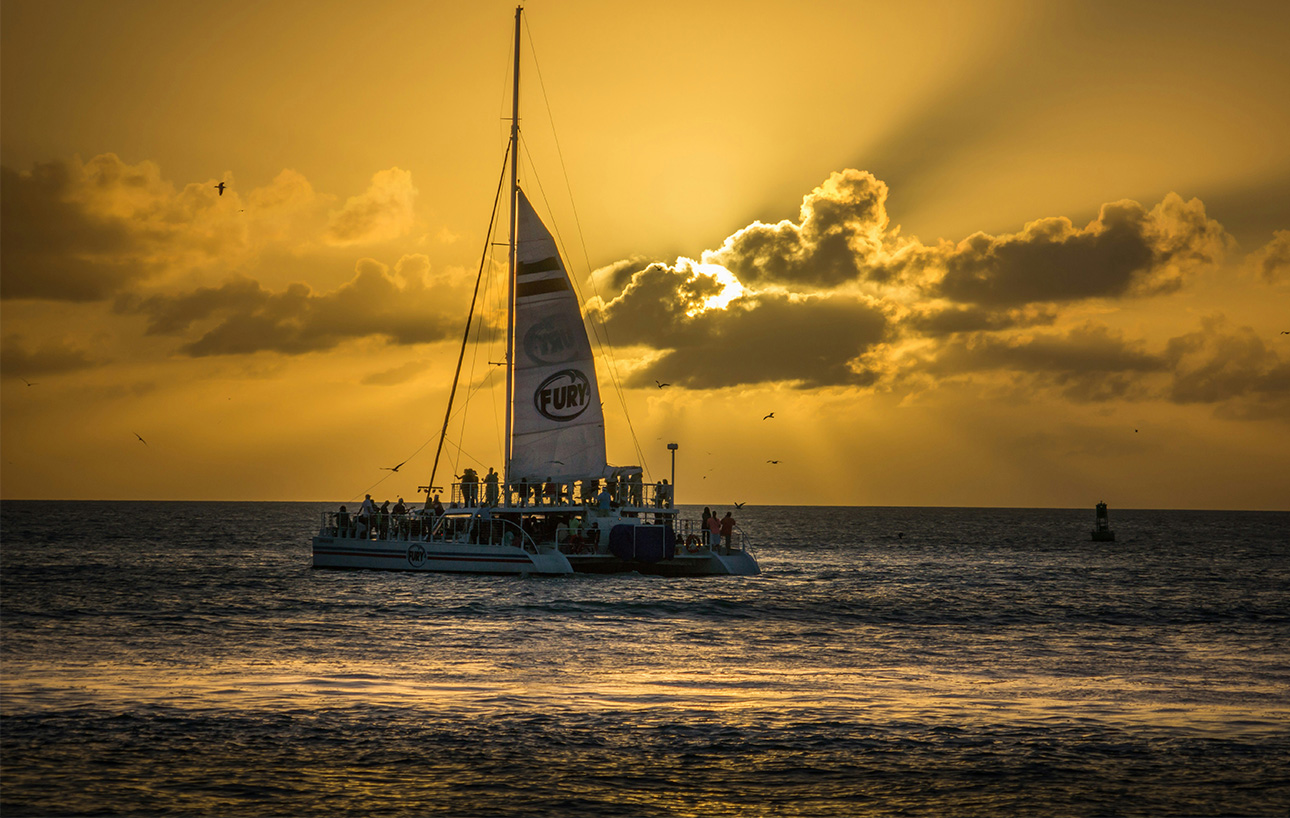
One of the best parts of the trip was a snorkel charter that took us out to a local reef during the day, then turned into more of a sunset boat ride on the way back once everyone was done swimming. That combination of warm winter weather, open water, casual seafood spots, and Duval Street nightlife is what makes the Florida Keys one of the best cold-weather escapes in the U.S.
The trick to the Keys is understanding that Key West is just one piece of the puzzle. The real magic happens when you know exactly which mile markers hold the best roadside seafood shacks and hidden state parks.
Addresses in the Keys can be confusing if you are not prepared. Locals navigate using Mile Markers (MM). The system starts at MM 127 in Florida City just south of Miami and counts all the way down to MM 0 in Key West.
When someone recommends a spot, they will usually say “It is Oceanside at MM 82” or “Bayside at MM 50.” Oceanside means the Atlantic side of the highway. Bayside means the Gulf of Mexico side.
A quick driving lesson from the road:
The Overseas Highway (US-1) is mostly a two-lane road. If there is an accident or construction, traffic simply stops.
The takeaway: Never plan a tight schedule on driving days. If you have a flight out of Miami, drive back to the mainland the night before. Do not risk the morning commute from the islands.
Start here: Miami Travel Guide (Pair your trip with our city guide)
The TLGA Rule: The Florida Keys are coral islands, not sandy islands. If you are looking for miles of sweeping white sand beaches, stay on the mainland. You come to the Keys to be on the water or in the water.
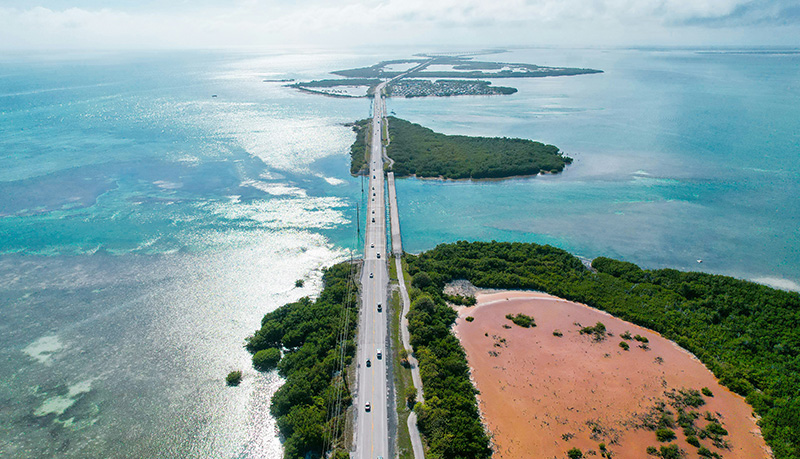
Clear skies and calm water make winter the peak season for a Florida Keys road trip. Crossing the Seven Mile Bridge is a highlight of the drive, offering an incredible panoramic view of the Atlantic Ocean and the Gulf of Mexico meeting on the horizon.
Weather is everything on an island chain. Winter brings the crowds, but it also brings the absolute best conditions for diving, fishing, and outdoor drinking.
December to April offers zero humidity and clear water. This is the busiest time on the highway. Book hotels and fishing charters months in advance.
May to early June. The winter snowbirds have gone home, the water is warm, and you can actually find a parking spot in Key West.
August through October is peak hurricane season. It is very hot and incredibly humid. Travel during this time requires flexible plans and travel insurance.
This is where the mainland fades away. The Upper Keys are all about getting out onto the reef.
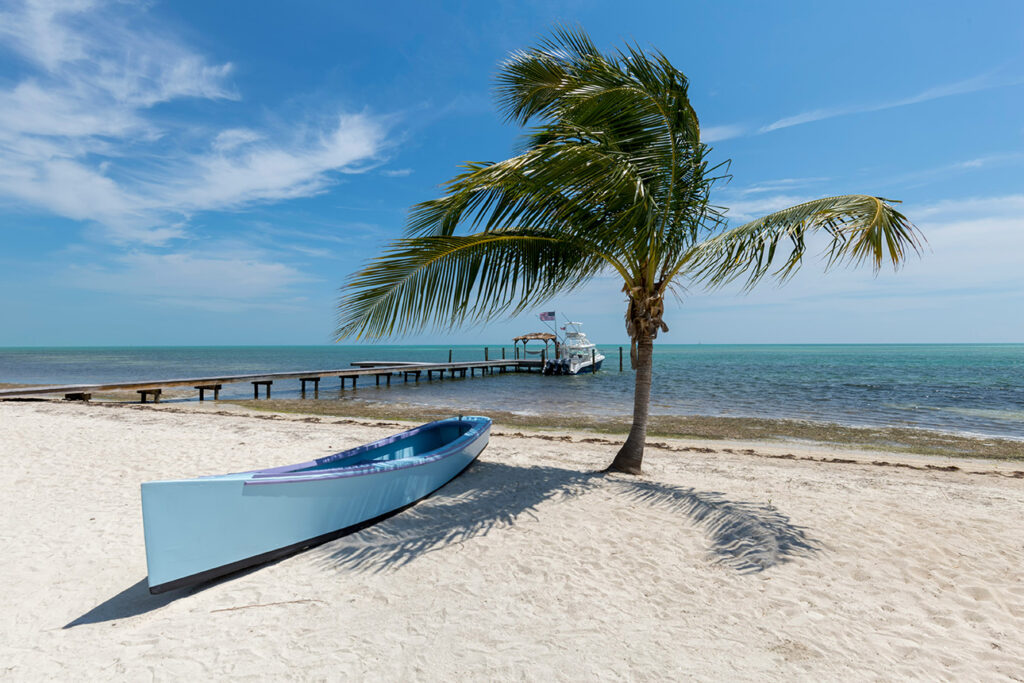
The quiet, sun-drenched shores of Islamorada, where the pace slows down and the landscape is defined by swaying palms and shallow turquoise flats.
Often called the Diving Capital of the World.
The Sportfishing Capital of the World and a great place to stop for lunch on your drive down.
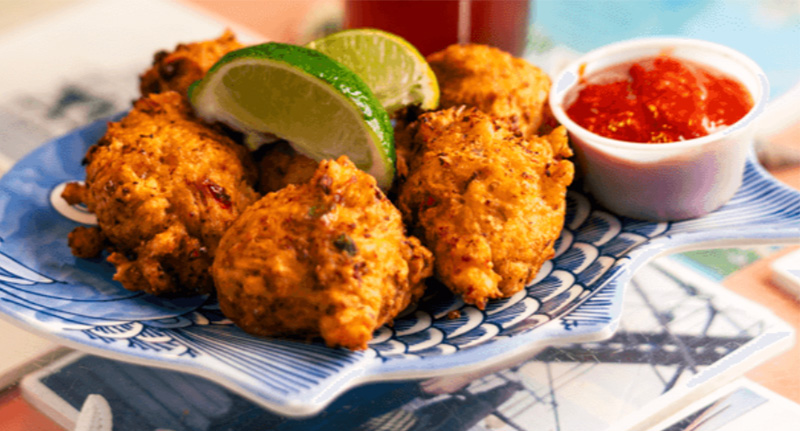
Freshly fried conch fritters (from Mrs. Mac’s Kitchenare) are a staple of any Florida Keys road trip and are best served with a classic remoulade and a squeeze of lime.
Driving the Overseas Highway without stopping for seafood is a rookie mistake. Here are the spots actually worth pulling over for.
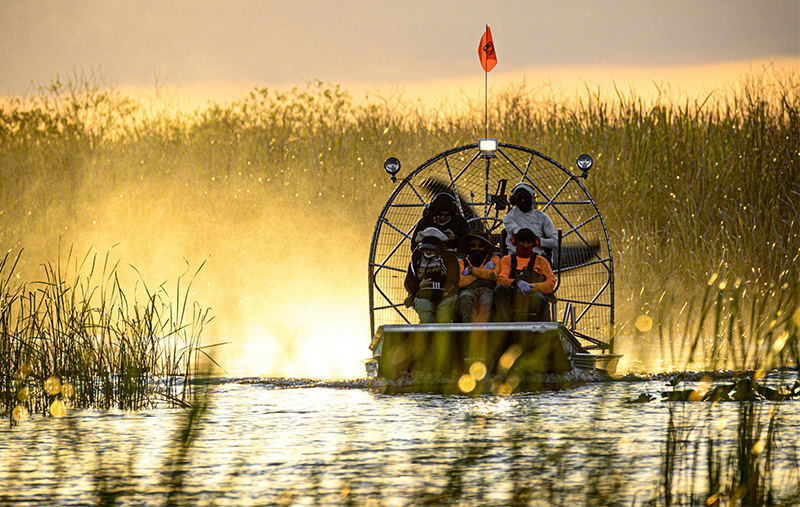
An airboat tour through the Everglades is the best way to experience Florida’s vast river of grass and spot alligators in their natural habitat.
The Keys are about getting off the road and onto the water. We did three experiences that are genuinely worth planning around.
We booked a half-day snorkeling trip and it was the highlight. In peak season the water can be surprisingly clear, and the reefs in the Upper Keys are beginner-friendly if you are comfortable in the ocean.
This is a classic for a reason. Open bar, music, and a slow cruise as the sun drops into the Gulf. It is the easiest “yes” activity in Key West.
If you are starting in Miami, add an Everglades airboat tour before you head down. It is loud, fast, and very Florida. Think of it as your “mainland wild card” before island mode.
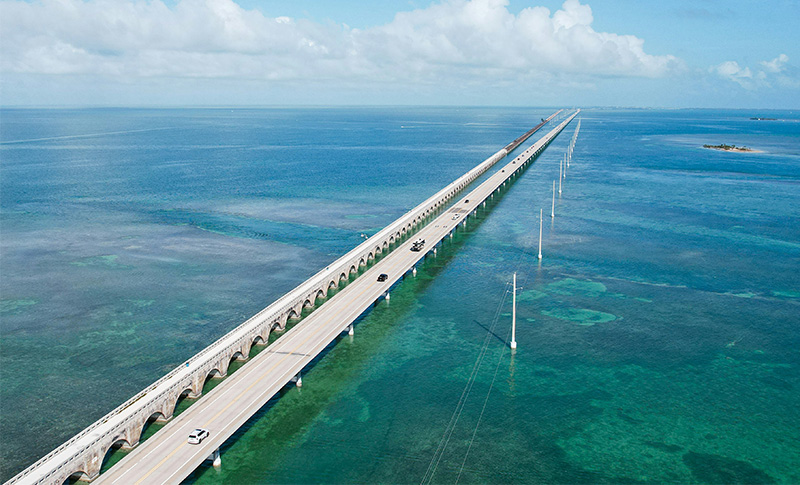
Driving the Seven Mile Bridge is a bucket-list experience. Keep your eyes on the road, but let your passengers enjoy the endless blue.
Marathon (MM 63 – 47) is a working town. It has grocery stores, chain hotels, and hospitals. It is the practical heart of the Keys, but the real star here is the bridge.
This is the iconic stretch of highway connecting the Middle Keys to the Lower Keys. It is exactly as breathtaking as it looks in car commercials.
Located just past the bridge. If you want a traditional sandy beach experience in the Keys, this is where you stop. It frequently ranks as one of the best beaches in Florida.
If you want a road trip that feels relaxed (not rushed), this pacing is the move. You get the highlights without turning the trip into a single long drive.
| Day | Plan |
|---|---|
| Day 1 | Drive from Miami, stop in Islamorada for lunch, sunset dinner and sleep in Marathon. |
| Day 2 | Seven Mile Bridge photos, Bahia Honda beach stop, arrive Key West and walk Duval at night. |
| Day 3 | Bike or scooter day, Hemingway House, pool break, sunset booze cruise. |
| Day 4 | Brunch, Southernmost Point early, drive north with a seafood stop on the way back. |
Key West (MM 0) is a different world. It is eccentric, historic, and incredibly walkable. Once you park your car here, leave it parked.
| Activity | Why it is worth it |
|---|---|
| Mallory Square | The nightly sunset celebration with street performers. Get there early. |
| Ernest Hemingway House | History, literature, and dozens of six-toed cats. |
| Duval Street | The famous bar-hopping lane. Sloppy Joe’s is the required tourist stop. |
| Southernmost Point | The classic photo op buoy. Go before 8:00 AM to beat the massive line. |
Renting a bicycle or scooter is the best way to get around Old Town. The streets are narrow and parking is heavily enforced.

You cannot visit the Keys without arguing over who makes the best Key Lime Pie. The answer changes depending on which mile marker you are standing on.
The food in the Keys is casual. Flip-flops are acceptable at 90 percent of the restaurants.
Explore Florida through Miami neighborhoods, theme park strategy, food guides, art districts, island road trips, and coastal planning.
[/ux_text] [/col]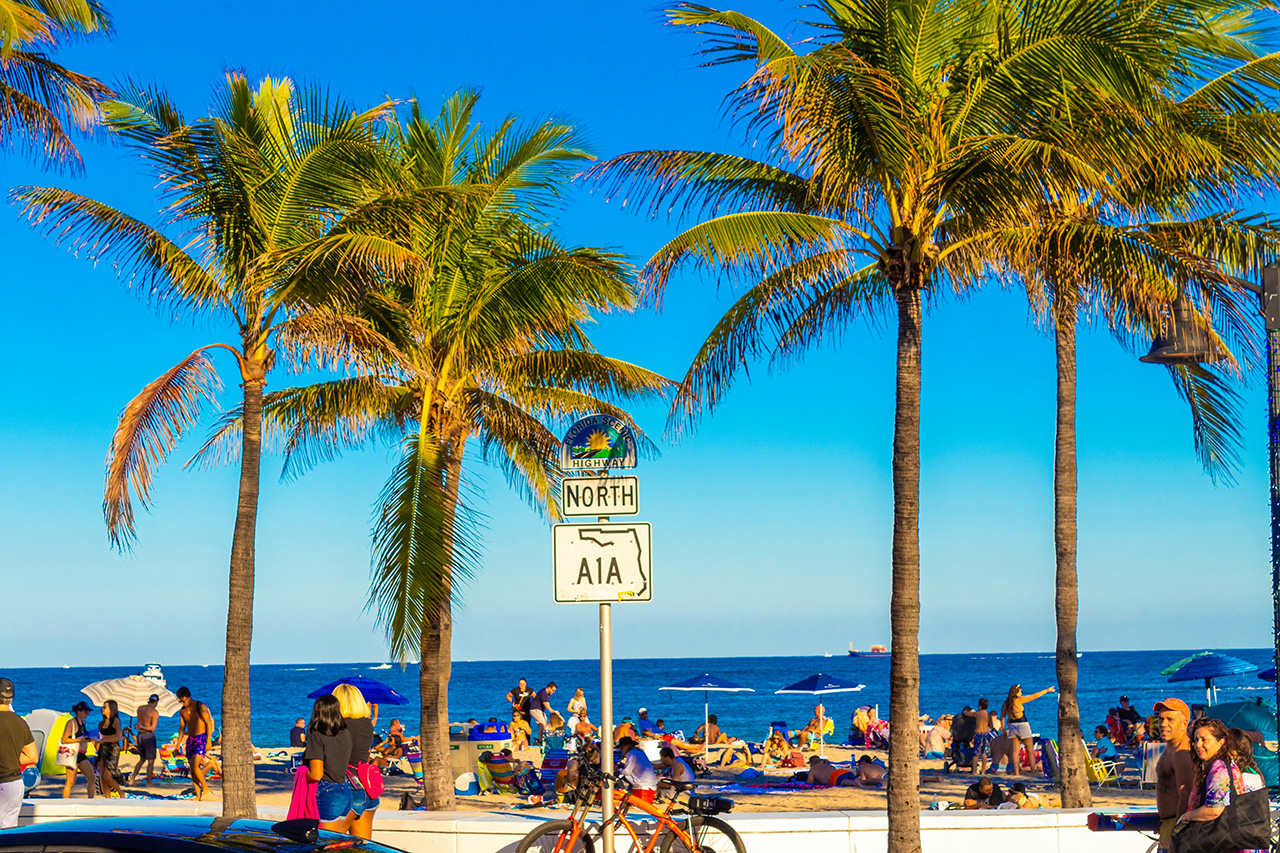
START HERE
Use this main Florida guide to compare regions, shape your route, and decide how each stop fits into your trip.
Read More
MIAMI BASE
Plan your Miami stay around the right neighborhoods, beach time, food stops, day trips, and city energy.
Read More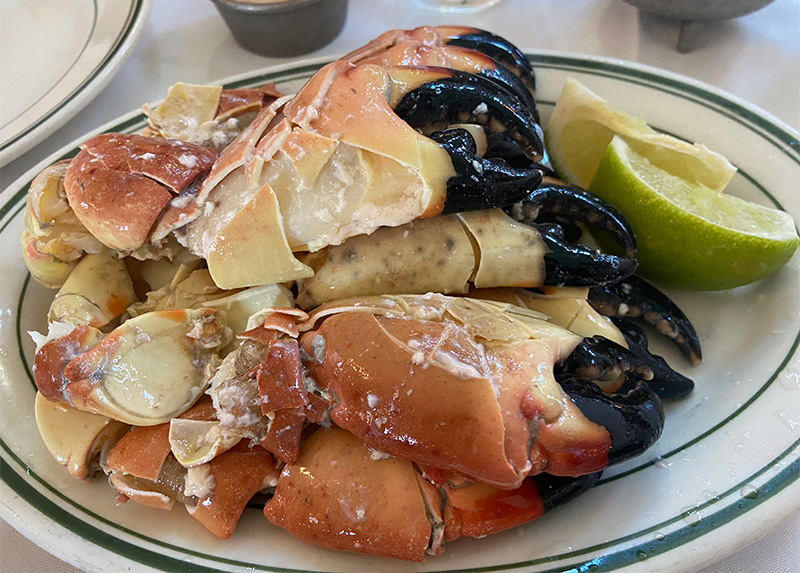
MIAMI FOOD
Use this citywide food guide to plan where to eat across Miami, from neighborhood staples to trip-worthy meals.
Read More
ART DISTRICT
Explore Miami’s mural-filled creative district with galleries, nightlife, Art Basel energy, and practical neighborhood tips.
Read More
PARK STRATEGY
Compare Disney, Universal, Epic Universe, and other Orlando parks before you commit your time, budget, and energy.
Read More
BRICKELL EATS
Find restaurants, bars, coffee stops, and neighborhood dining tips that make Brickell a strong Miami base.
Read MoreTechnically yes, but it is not recommended. It is a four-hour drive each way. That is eight hours in the car for a hurried lunch on Duval Street. Spend at least one night, ideally two or three.
No. The Florida Keys are part of the United States. If you are an American citizen or legally entered the US, you do not need a passport to drive down.
Yes. The Florida Turnpike extension (the fastest way out of Miami heading south) is entirely electronic. Rental car companies will charge you through their toll-by-plate programs, usually with an added daily convenience fee.