Travel Planning Hub
Start here to plan your trip, compare options, and explore every TLGA planning guide.
Packing & Gear Guide
What to pack, what to skip, and how to build a lighter travel setup that works.
By Corey Gasman
Paris is one of the greatest food cities on earth, but most visitors experience it through overpriced brasseries, rushed meals, and restaurants chosen by proximity instead of quality.
The Strategy: When we were in Paris a few years ago, we booked a walking food tour in Le Marais on our first day. It remains one of my favorite tips for any city where you plan to stay more than three or four days.
A food tour is more than just lunch. It is an orientation for your palate. It teaches you the rhythm of the neighborhood and shows you where locals are actually eating, which makes it much easier to return to those places with confidence for the rest of your stay.
Eating like a local in Paris is really about understanding that rhythm. Knowing what to order, when to eat, and how to spot a solid neighborhood bistro will do more for your trip than chasing trendy restaurant lists. This guide walks through how Parisians actually eat day to day, where the best value lives, and how to avoid the classic tourist traps.
Read More: For neighborhood strategy and where to base yourself, start with my main France Travel Guide.
| Food Moment | Local Move | Tourist Trap |
|---|---|---|
| Breakfast | Bakery pastry and coffee at the counter | Sit-down hotel breakfast |
| Lunch | Set lunch menu (formule) | All-day tourist menus |
| Dinner | Simple bistro, reservations optional | Flashy menus with photos |
| Wine | House wine or carafe | Overpriced tourist bottles |
Planning note: Paradoxically, the best meals in Paris are often unplanned.
If you over-schedule your itinerary, you miss the magic: the smell of fresh croissants that stops you mid-walk, or the crowded corner bistro filled with locals that is not on your saved list.
The Strategy: Leave gaps in your day. Build slack into your schedule so you can follow your nose and eat when hunger actually hits, not just when a reservation tells you to.
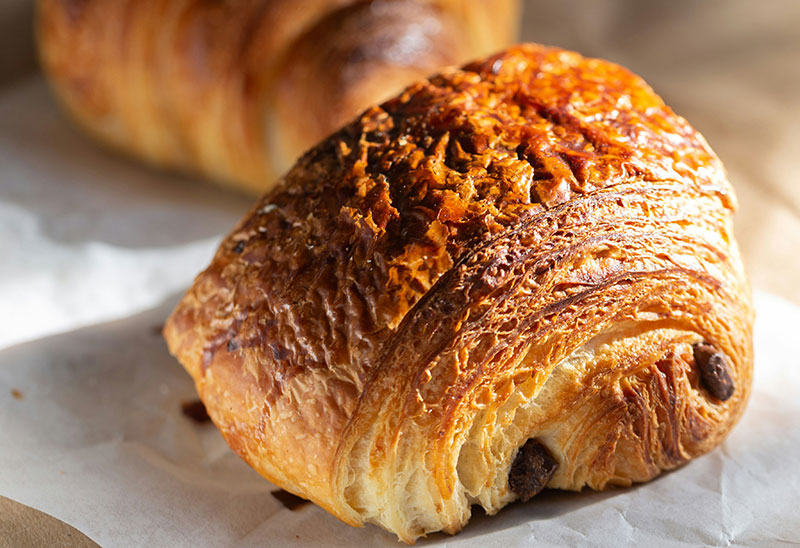
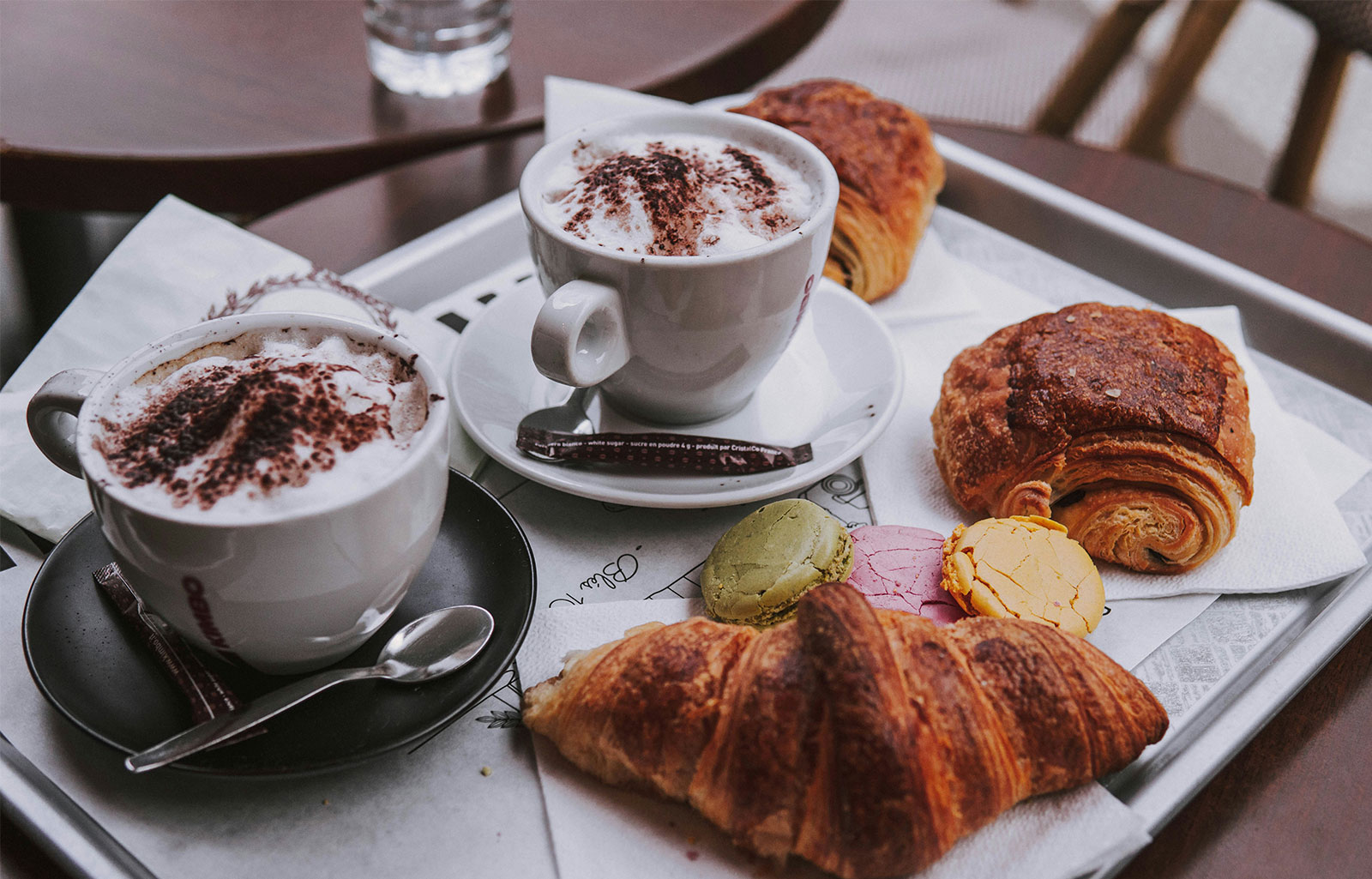
The Local Breakfast: It is almost always sweet, small, and eaten quickly. No eggs, no pancakes.
Paris does not run on American meal schedules. Restaurants open and close with intention, not convenience, and understanding that rhythm immediately helps you eat better.
Breakfast is light and fast, often just a pastry and coffee. Lunch is where the best value lives, especially when a neighborhood bistro offers a set menu. Dinner starts later, moves slower, and feels more social, with 8:00 PM still being a very normal time to sit down.
The Sunday and Monday danger zone: Many of the best restaurants close on Sundays or Mondays. Check hours before you head out so you do not end up eating somewhere mediocre simply because everything good is shut.
Local Guide Tip: Coffee costs more if you sit at a table than if you drink it at the counter. Do as the locals do and take it at the comptoir to save money and keep the ritual quick.
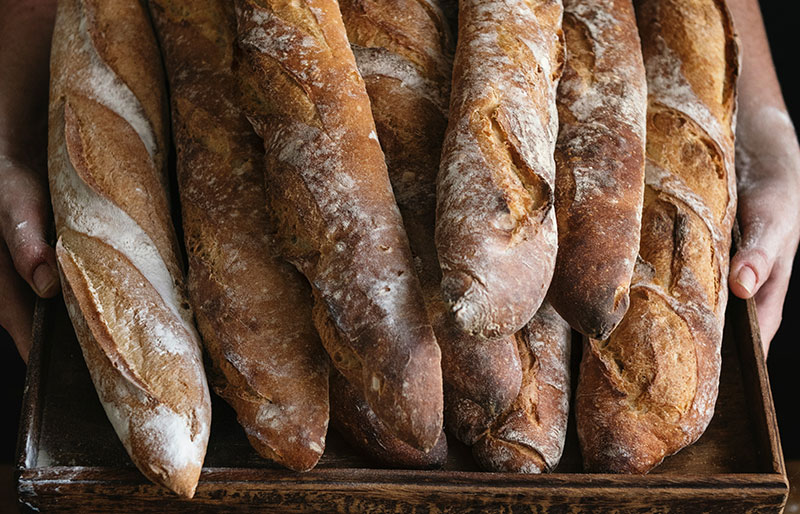
The Daily Ritual: Locals buy bread fresh every single day. If you see a line in the morning, join it.
Bakeries are not just snack stops in Paris. They are infrastructure. A good bakery handles breakfast, a quick lunch, dessert, and the kind of emergency hunger that hits when you are walking all day.
A great bakery means you do not need to overthink every meal. It also gives you one of the easiest paths to eating well without spending much.
What to order:
Local Guide Budget Hack: Many bakeries offer a formule déjeuner for around €8 to €10, which usually includes a sandwich, dessert, and drink. It is one of the cheapest high-quality meals you will find in the city.
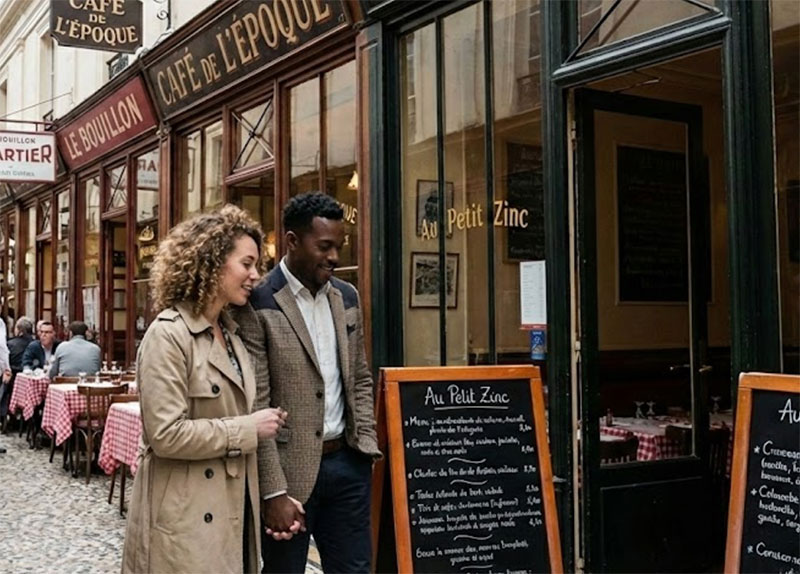
Hidden Gems: Look for lunch spots in covered passages or side streets where the menu is short and the crowd is local.
If you want to eat well in Paris without spending much, lunch is where you win. This is when bistros often offer a formule or menu du jour that gives you the same kitchen and same general level of cooking for far less than dinner.
These menus are usually straightforward, seasonal, and one of the easiest ways to get a real Paris meal without overcommitting your budget.
Local Guide Tip: If you see a handwritten lunch menu, that usually signals more seasonal cooking and better overall value.
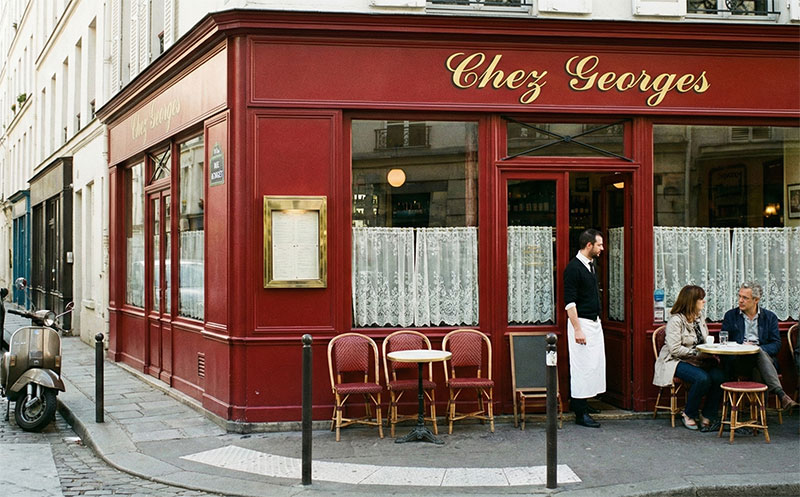
The Real Deal: Seek out bistros tucked away on quiet side streets that look like they have been serving the same neighborhood for decades.
You do not need Google Maps ratings to choose well in Paris. You just need to know what a local spot actually looks like and what signals to trust from the street.
Green flags:
Red flags:
Local Guide Tip: A busy terrace alone is not enough. Look inside. If locals are actually eating complete meals, you are usually in the right place.
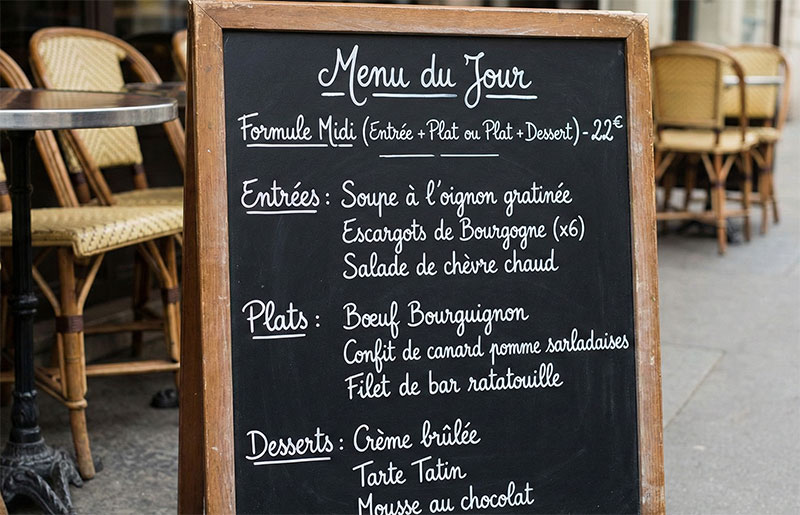
Deciphering the Menu: A classic menu du jour is usually easier to read than it first looks. Focus on the structure and the daily specials.
You do not need to translate every word to order a great meal in Paris. Focus first on the structure of the menu rather than the individual ingredients.
Short, simple descriptions are often a good sign. When menus get too poetic or try too hard to impress, it can be a sign the cooking is doing less of the work.
Pro Tip: If you see “fait maison” or house-made, that is usually a positive signal.
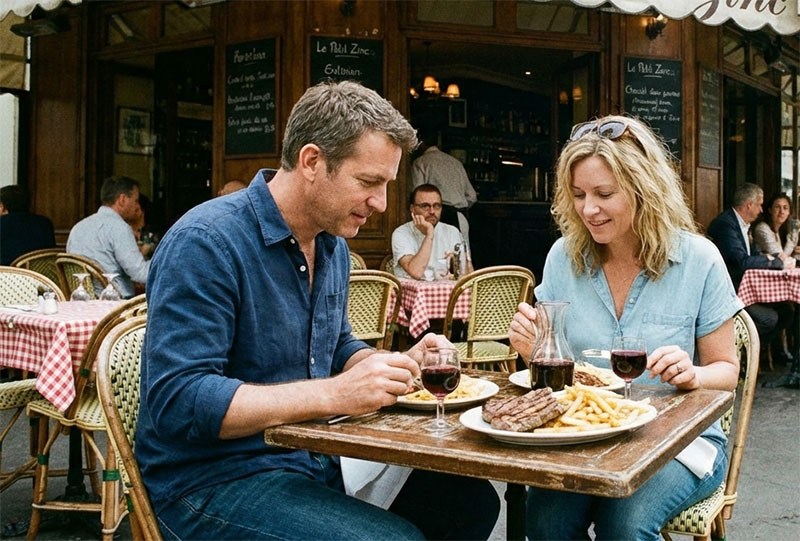
The House Pour: A simple carafe of house red is often the easiest, most authentic, and most affordable move at a neighborhood bistro.
Locals rarely overcomplicate wine. Unless you are at a serious high-end restaurant, the goal is usually simple: order something that works with the food and enjoy it.
If you like white, ask for a Sancerre or Chablis. If you like red, a Beaujolais or Côtes du Rhône is an easy starting point.
Local Guide Tip: If the waiter drinks the house wine, you can too. House wine exists for a reason.
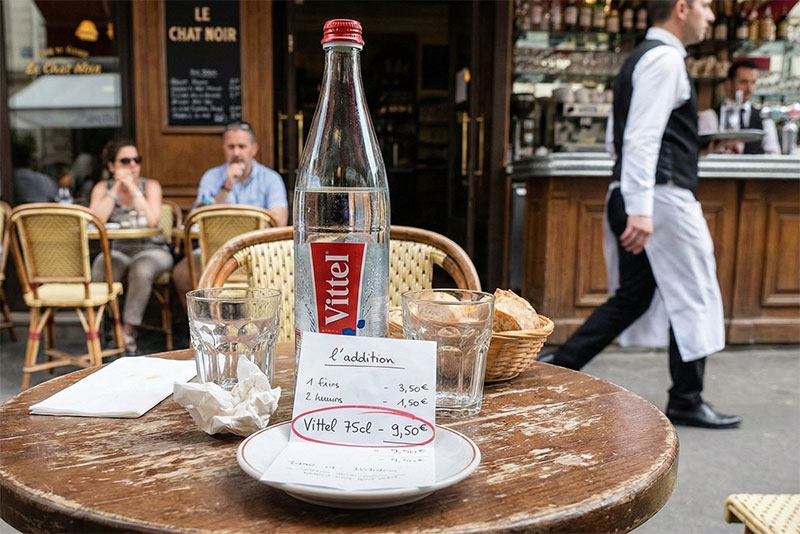
The Common Mistake: Ask for “water” too vaguely and you may end up paying for bottled mineral water instead of getting the free local default.
In the United States, water tends to arrive automatically and free. In Paris, if you just ask for water, there is a good chance the server brings a bottle of mineral water that appears on the bill.
The phrase to know: “Une carafe d’eau, s’il vous plaît.”
That gets you a carafe of free tap water. It is safe, normal, and what a huge number of locals drink with their meal.
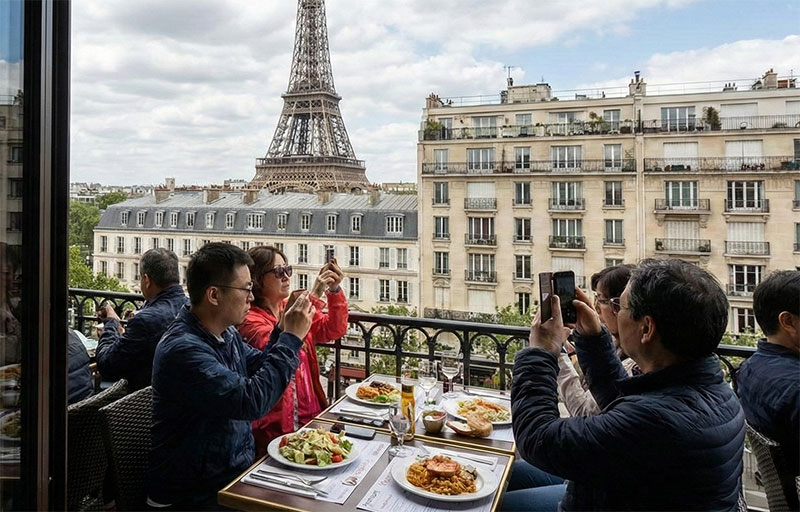
Location Warning: Restaurants with direct views of major monuments often charge premium prices for food that is noticeably less impressive.
Paris is full of restaurants designed to pull in visitors rather than serve memorable food. The good news is that most of them are easy to spot once you know what to look for.
Walk two or three blocks away and the quality often changes fast.
Pro Tip: Some of the best meals in Paris happen between neighborhoods, not directly beside the city’s biggest sights.
Paris Food Tip: Where you stay matters almost as much as where you eat. A good neighborhood puts bakeries, lunch menus, and walkable bistros right outside your door.
Before booking a table, book the right base: Paris Neighborhoods: Where to Stay Based on How You Actually Travel
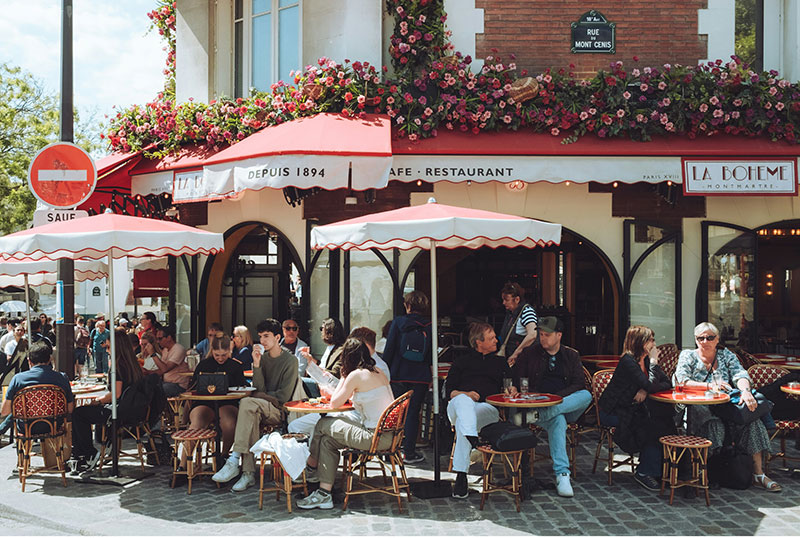
The Reservation Rule: If a terrace looks packed on a Friday or Saturday night, booking ahead probably would have helped. For quieter neighborhood spots, walking in is often still fine.
You only really need reservations for popular bistros, Friday and Saturday dinners, or very small dining rooms where a few tables make a big difference.
For many casual places, especially at lunch or earlier in the evening, showing up a little before the main rush still works well.
Local Guide Tip: If a place opens at 7:00 PM, arriving a few minutes early and asking politely works surprisingly often.
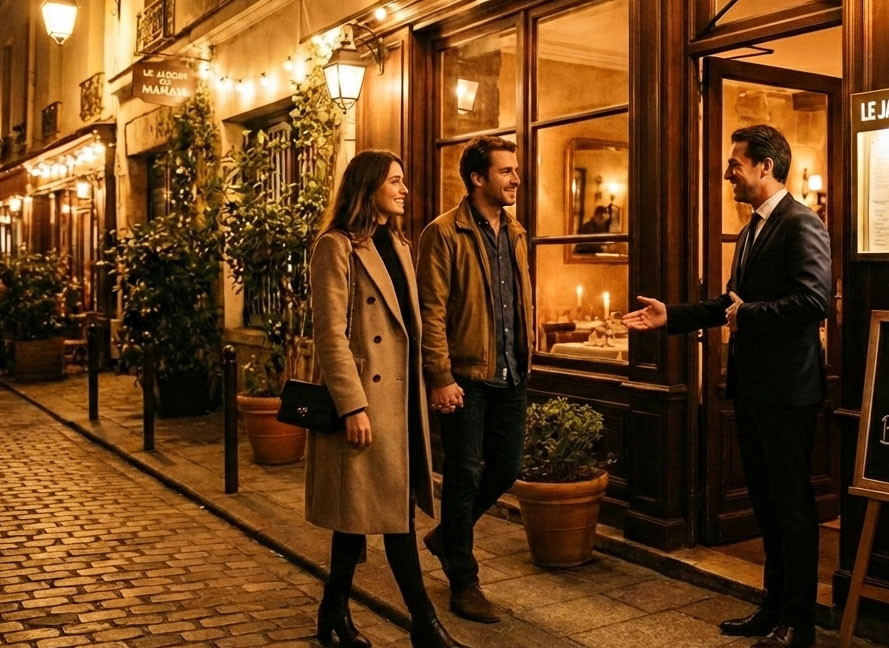
The Golden Rule: The moment you step inside, say “Bonjour.” It is not just a greeting. It sets the tone for the whole interaction.
French dining culture is built on respect and rhythm, not speed. A few small adjustments make a big difference in how your meal feels and how you are received.
Local Guide Tip: Politeness opens doors in Paris faster than perfect French. You do not need to be fluent, but these survival phrases go a long way:
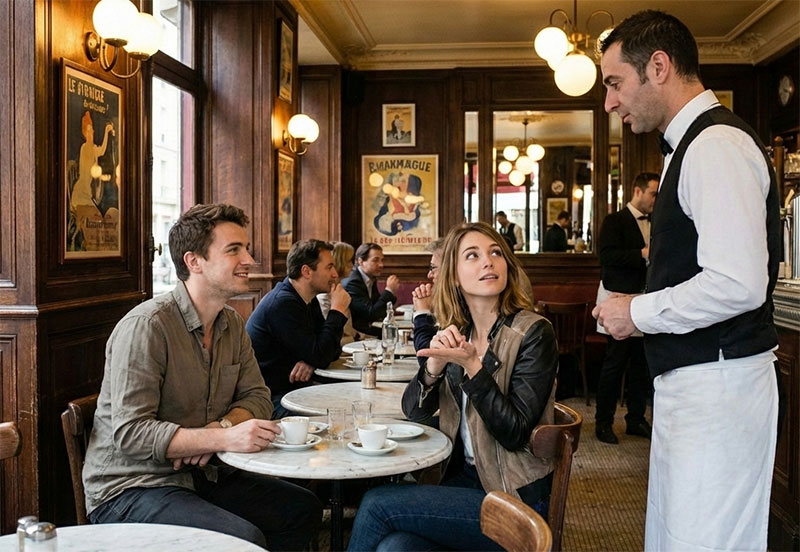
The Local Move: Do not wait endlessly for the bill. Catch the server’s eye and ask for it when you are ready.
In the United States, a server may bring the check before you ask. In France, doing that too early can come across as rude, so the check often does not appear until you request it.
You may wait a very long time if you expect it to arrive on its own.
The move: Catch the server’s eye and make a light scribbling motion with your hand, or simply say “L’addition, s’il vous plaît.”
Local Guide Tip: If you are on a schedule, ask for your coffee and the bill at the same time. It is efficient, normal, and helps keep the end of the meal moving.
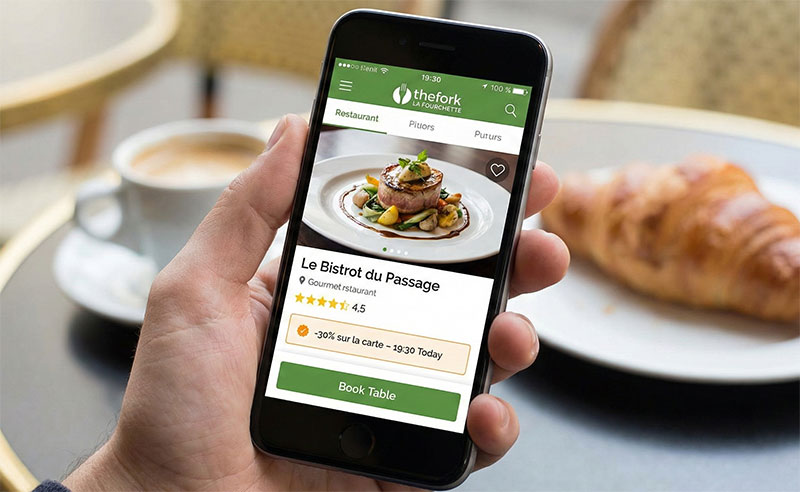
Local Reality: Many of the most in-demand Paris restaurants do not rely on walk-ins during peak hours. Knowing which tools locals actually use helps.
If you want to eat like a local in Paris, the biggest mistake is relying too heavily on platforms where tourists are mostly reviewing places built for other tourists.
Avoid it for discovery. It can turn into a loop where travelers keep recommending places that are already optimized for visitors. It is more useful for spotting red flags in user photos than for finding your next meal.
Still essential, but only if you use it correctly. When checking a restaurant, scroll reviews and filter by French if possible. If locals are complaining about frozen food while tourists are praising the cute atmosphere, trust the locals.
Think of it as the younger, cooler cousin of Michelin. It is especially useful for modern bistros, wine bars, and places with real local energy.
Skip the stars if you are trying to eat well on a sensible budget. The Bib Gourmand category is usually the more useful target for good food at more reasonable prices.
One of the easiest ways to make reservations without speaking French. It is practical, widely used, and sometimes includes meaningful dining discounts.
Local Guide Tip: Watch for discounted time slots and festival promotions on TheFork. Quietly booking through the app can cut the food portion of the bill by a meaningful amount.
Start with the France guide, then dive deeper into where to stay, what to eat, and how to plan your trip.
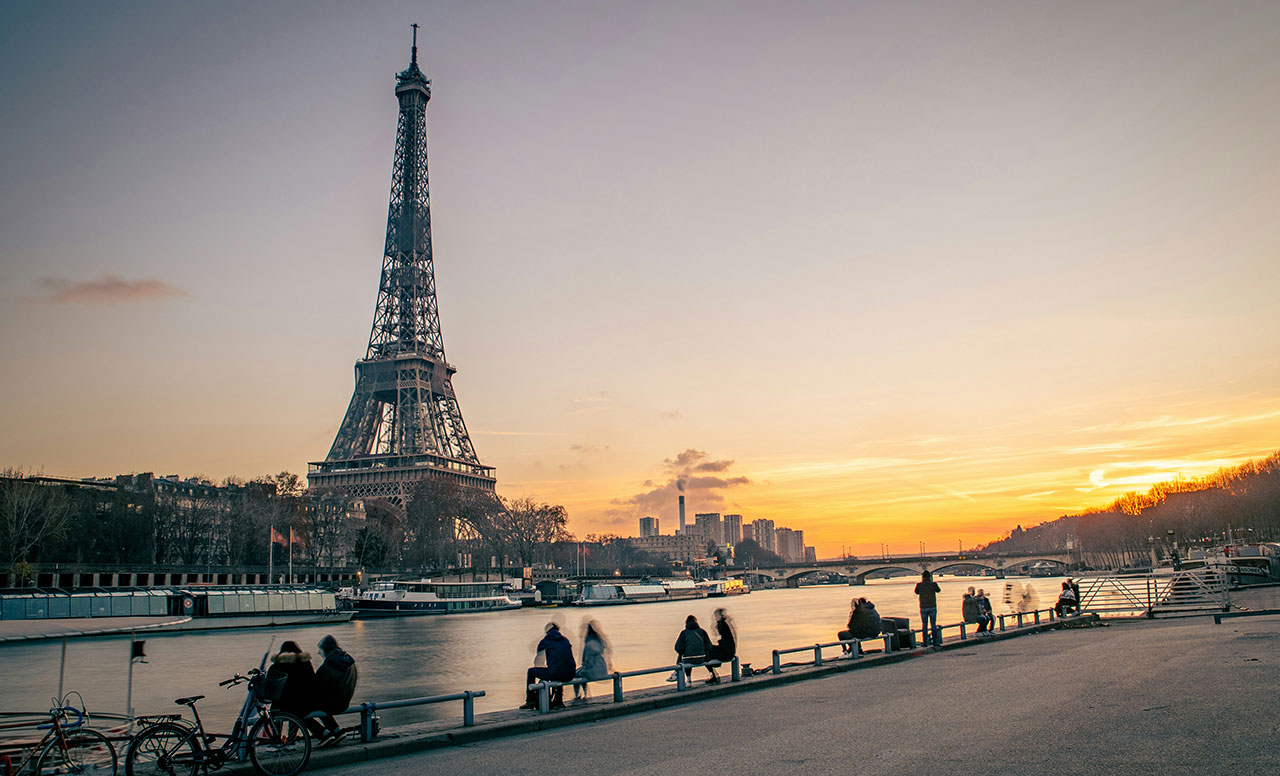
START HERE
Your full overview to compare regions, plan your route, and understand how France fits together.
Read More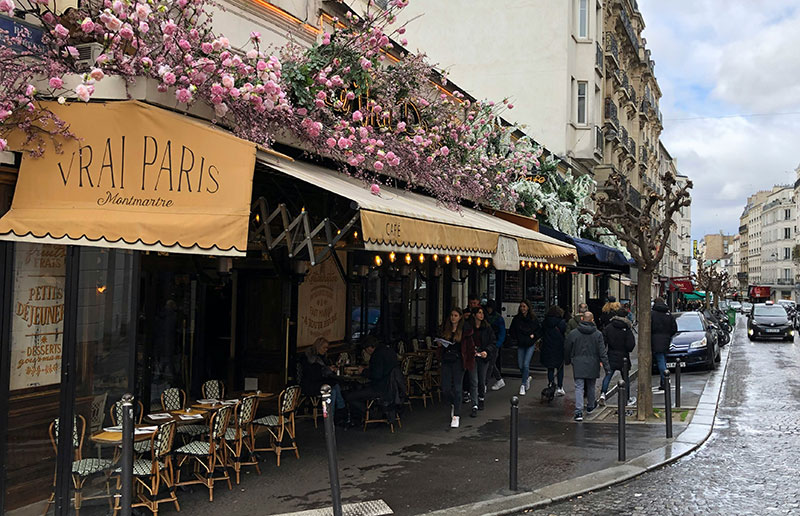
WHERE TO STAY
Pick the right neighborhood based on your travel style, budget, and how you want your days to flow.
Read More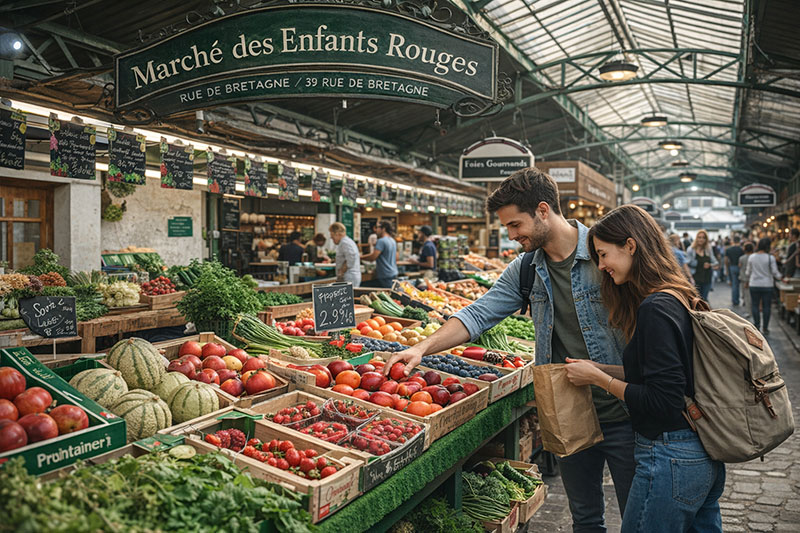
NEIGHBORHOOD EATS
One of the best areas for cafés, bakeries, and casual food hopping in Paris.
Read MoreNo. Lunch often does not require reservations, and many casual places still work well for walk-ins. Reservations matter more for popular dinner spots and smaller dining rooms.
Not at all. Solo dining is completely normal in Paris, especially at lunch, cafés, wine bars, and neighborhood bistros.
Yes. Bakeries, set lunch menus, and simple neighborhood spots are the easiest ways to eat well without spending much. A bakery sandwich or a bistro lunch formule can often be one of the best meals of your day.
No. Service is typically included in restaurant prices. Most locals simply round up the bill or leave a small extra amount if the service was especially good.
No. Many restaurants close between lunch and dinner, usually from about 2:30 PM until 7:00 PM. During that gap, cafés, bakeries, and brasseries are your best options for food.
Dinner in Paris is usually later than in the United States. Restaurants often open around 7:00 PM, but locals commonly sit down closer to 8:00 or 8:30 PM.