Travel Planning Hub
Start here to plan your trip, compare options, and explore every TLGA planning guide.
Packing & Gear Guide
What to pack, what to skip, and how to build a lighter travel setup that works.
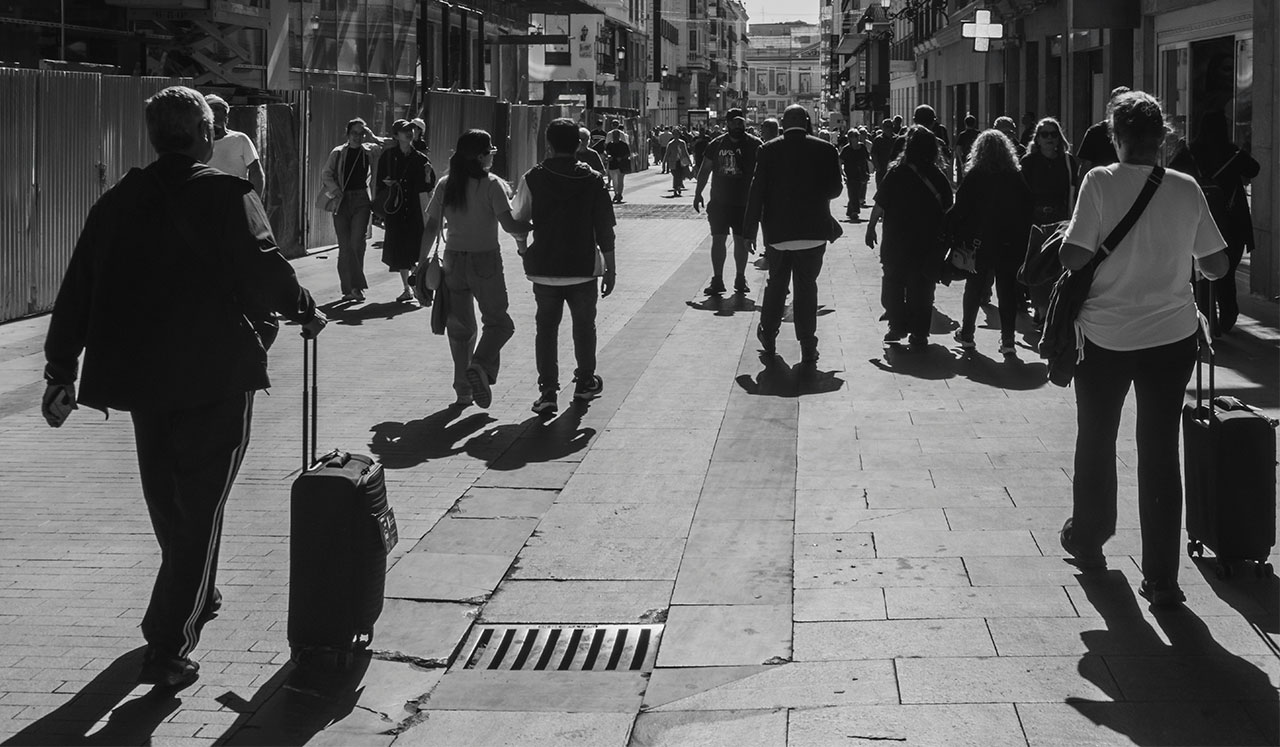

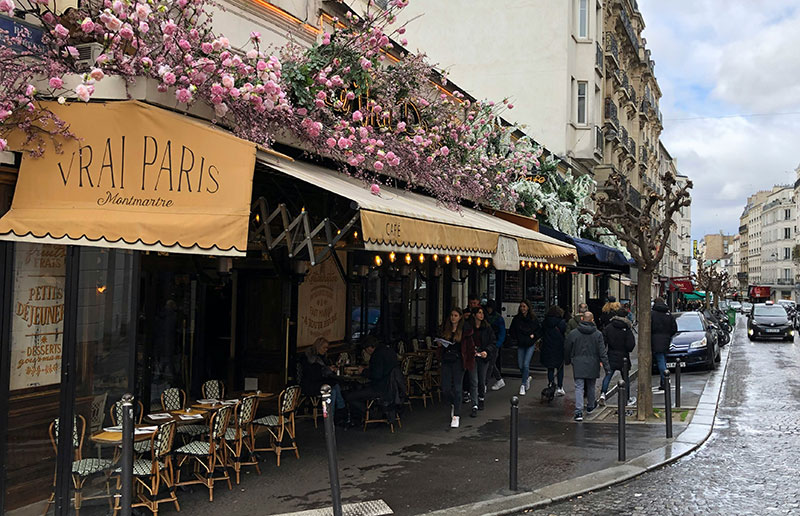
Finding the right neighborhood changes everything about your Paris trip. Choose based on how you prefer to travel, not just proximity to monuments.
By Corey Gasman
From the Editor:
I have stayed in Paris more than once, and I have learned that the difference between a great Paris trip and an exhausting one usually comes down to one thing: location. Not hotel stars. Not room size. Neighborhood.
This guide breaks down the best Paris neighborhoods based on how you actually travel. Not hype. Not influencer lists. Just where things work, where food is good, and where the city feels livable.
Paris looks small on a map. It is not. Where you stay will quietly decide how much you walk, how much you sit in cafes, how often you take the Metro, and how relaxed your days feel.
TLGA Rule: Paris rewards walking. A great neighborhood reduces transit time, increases cafe time, and makes your trip feel slower and more local.
Start here: France Travel Guide
| Neighborhood | Vibe | Transit | Luggage Score |
|---|---|---|---|
| Le Marais | Trendy & Historic | Excellent (Line 1) | Easy |
| Saint-Germain | Classic & Polished | Very Good | Easy |
| Latin Quarter | Lively & Student | Great (RER B) | Medium |
| Montmartre | Village & Views | Isolated | Hard (Hills) |
Paris is divided into 20 numbered districts (Arrondissements) that spiral out from the center like a snail shell. You will see these on every hotel address (e.g., postal code 75001 = 1st District).
Here is how to read the map like a local:
| District | Known As… | Key Landmarks | My Take |
|---|---|---|---|
| 1st (1er) | The Royal Center | Louvre, Tuileries | Prestigious but expensive. Dead at night. |
| 3rd/4th | Le Marais | Notre Dame, Pompidou | My Top Pick. Lively, historic, cool. |
| 5th (5ème) | Latin Quarter | Pantheon, Sorbonne | Young, fun, slightly chaotic. |
| 6th (6ème) | St-Germain | Luxembourg Gardens | Classic Paris. Posh and pricey. |
| 7th (7ème) | Eiffel Tower Area | The Iron Lady | Great views, but very quiet/residential. |
| 8th (8ème) | Champs-Élysées | Arc de Triomphe | Mainly for luxury shopping. Not “cozy.” |
| 11th (11ème) | Bastille/Oberkampf | Canals & nightlife | Where the cool locals actually live. |
| 18th (18ème) | Montmartre | Sacré-Cœur | Romantic village vibe, but isolated. |
Local Guide Tip: Don’t obsess over the district number. The border between the 3rd and 11th is just a street crossing, but the price might drop 20% in the 11th. Focus on the Metro line connection instead.
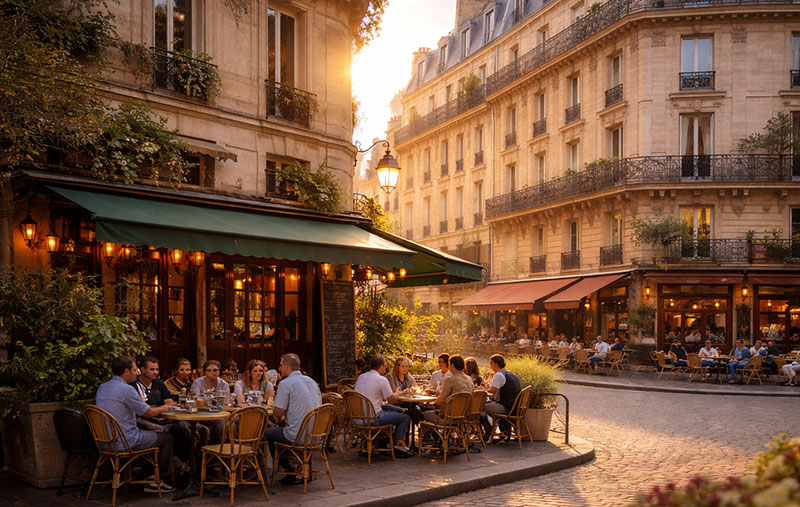
Le Marais balances historic charm with a very livable, local atmosphere perfect for foodies.
On our last trip to Paris, we stayed four nights in Le Marais, and it was easily one of the best decisions of the trip. The neighborhood hits a rare balance: historic, lively, well-connected, and still very livable.
For me and my wife, this area worked perfectly because it offered enough space to breathe, something rare in Paris hotels, without feeling disconnected from the action. You can walk to major sights like the Louvre or Notre Dame, but you are not surrounded by souvenir shops.
The Logistics:
Local Guide Tip: Skip the hotel breakfast one morning and go to Breizh Café for a buckwheat galette, or grab provisions at the Marché des Enfants Rouges. Le Marais is ideal if you want to walk everywhere and eat well without reservations every night.
Related Story: Want to see exactly how we spent our time here? Read my full trip report: Two Weeks in France Trip Report.
Best for: First-time visitors, food-focused travelers, repeat Paris trips.
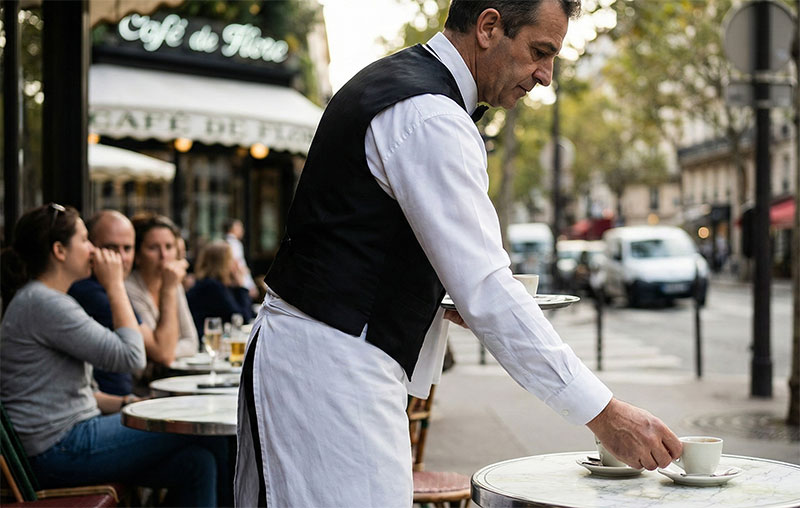
Saint-Germain offers that classic, polished Paris experience, but be prepared for the “Left Bank Premium” on prices.
Saint-Germain is what many people picture when they imagine Paris. Literary cafes, wide sidewalks, and a slower Left Bank rhythm. This area works well if you want a polished, classic feel and don’t mind paying a bit more for it.
It is well connected and close to museums, but it can lean tourist-heavy on certain streets. You are paying for the “brand name” of the neighborhood.
The Logistics:
Local Guide Tip: You will see long lines at Les Deux Magots and Café de Flore. Snap a photo of them, but grab your actual coffee at a smaller side-street brasserie to save €5 and get better service. You are often paying a “Left Bank Premium” here for smaller rooms.
Best for: Short stays, museum-focused trips, classic Paris atmosphere.
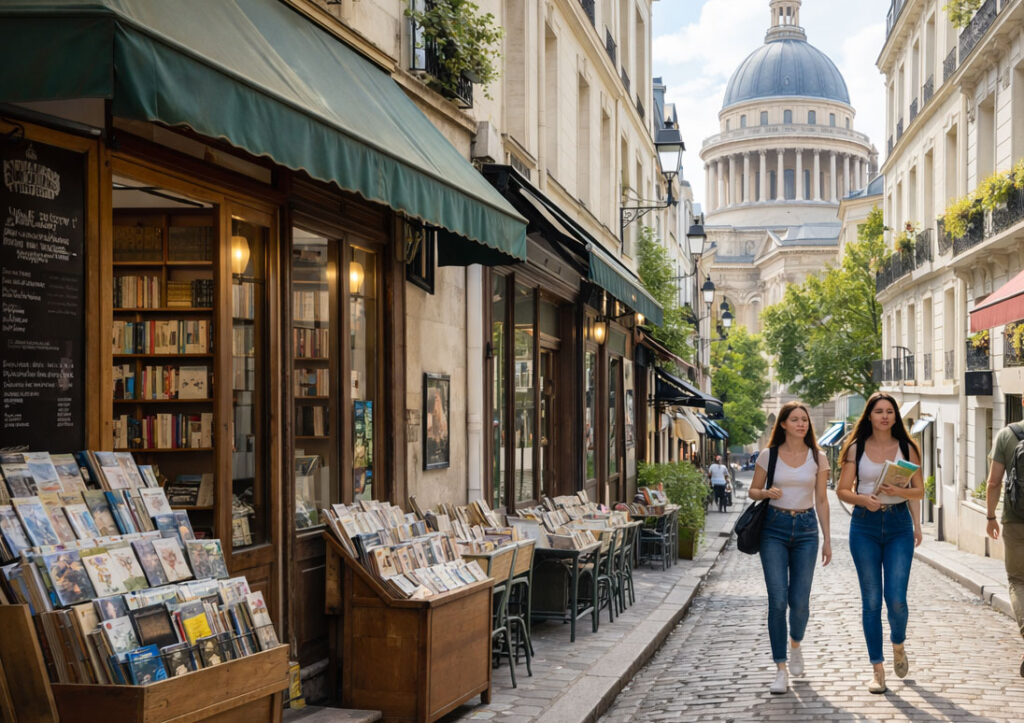
The Latin Quarter is central and energetic, often with better budget options if you stay near the Pantheon.
The Latin Quarter is energetic, compact, and full of student life. It is affordable compared to nearby areas and very well connected.
The trade-off is noise and crowds, especially at night. Some streets feel timeless and medieval. Others feel chaotic. You need to choose your street carefully here.
The Logistics:
Local Guide Tip: Look for a hotel near the Luxembourg Gardens side of the Latin Quarter. It is significantly quieter than the Seine side, and you get one of the world’s best parks nearby for morning walks.
Best for: Budget-conscious travelers who want central access.
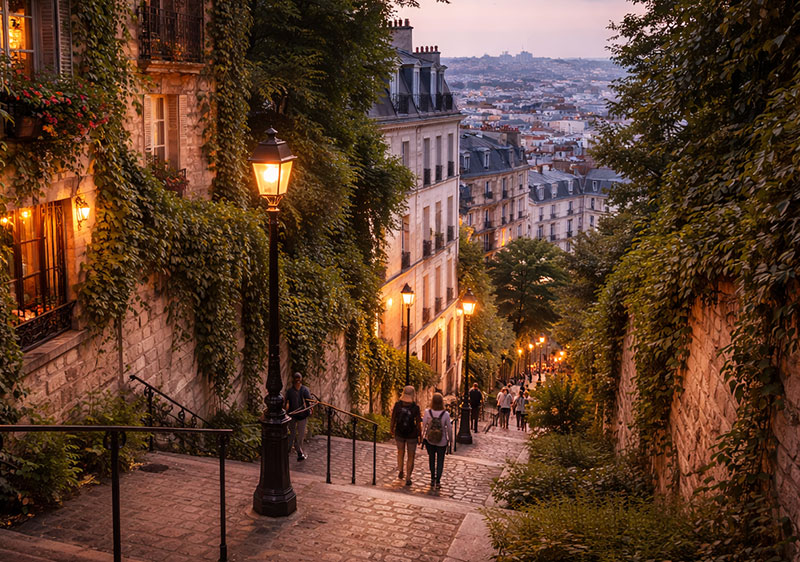
Montmartre is undeniably romantic, but the hills and cobblestones make it a challenge with heavy luggage.
Montmartre is stunning, especially in the early morning. But it sits apart from the rest of Paris on a large hill. If you stay here, you will rely on transit more than walking. That can be fine, but it changes the rhythm of your days.
The Logistics:
Pro Tip: I love Montmartre for photos, but I hate dragging a suitcase there. The cobblestones are unforgiving. If you stay here, book a taxi directly to your door, do not try to walk up the hill from the Metro with bags.
Best for: Romantic stays, photography-focused trips, repeat visitors.
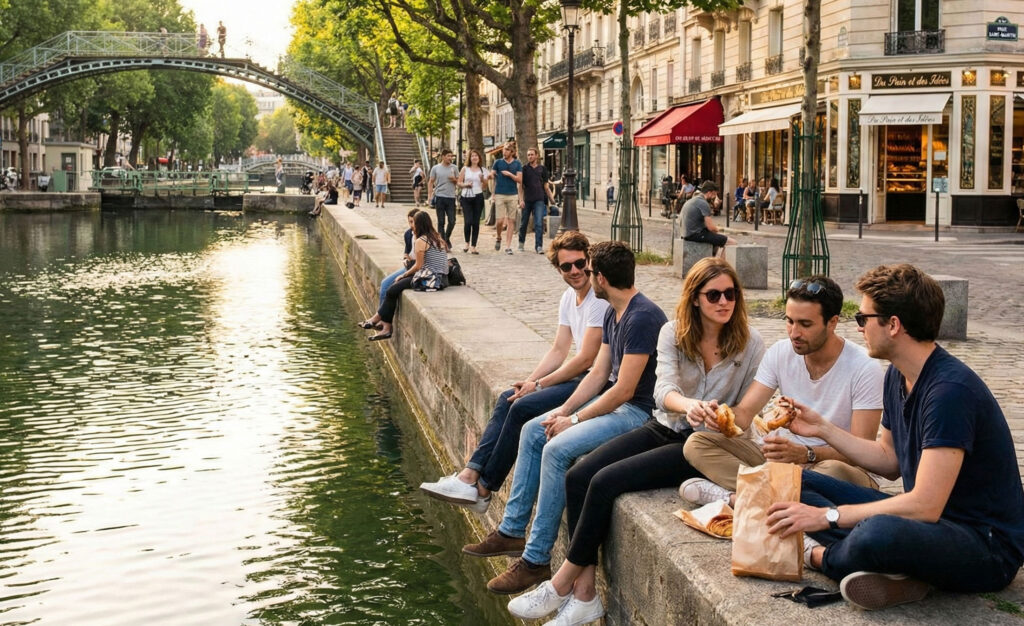
The banks of the Canal Saint-Martin are the city’s living room in the evenings. This is the spot to trade sightseeing for just hanging out like a true Parisian.
This is where Paris feels younger and more residential. Fewer sights, more everyday life. If you like neighborhoods over landmarks, this can be a great base.
The Logistics:
Best for: Long stays, repeat visits, local vibe.
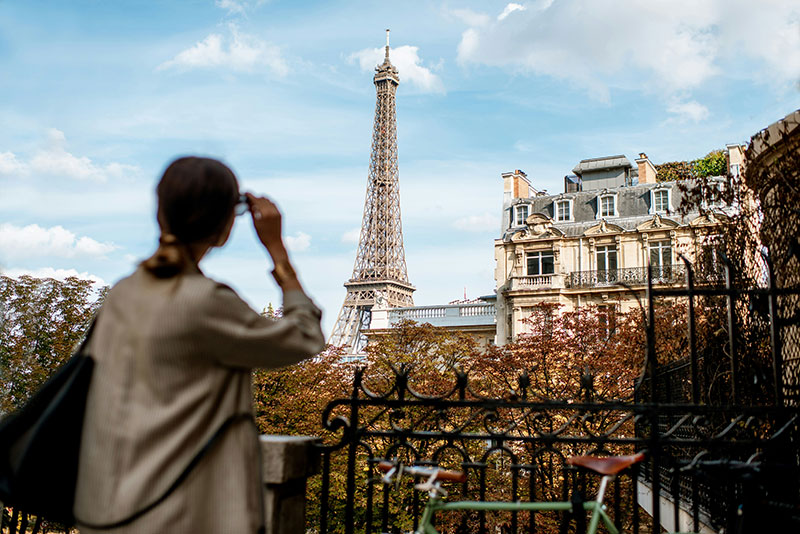
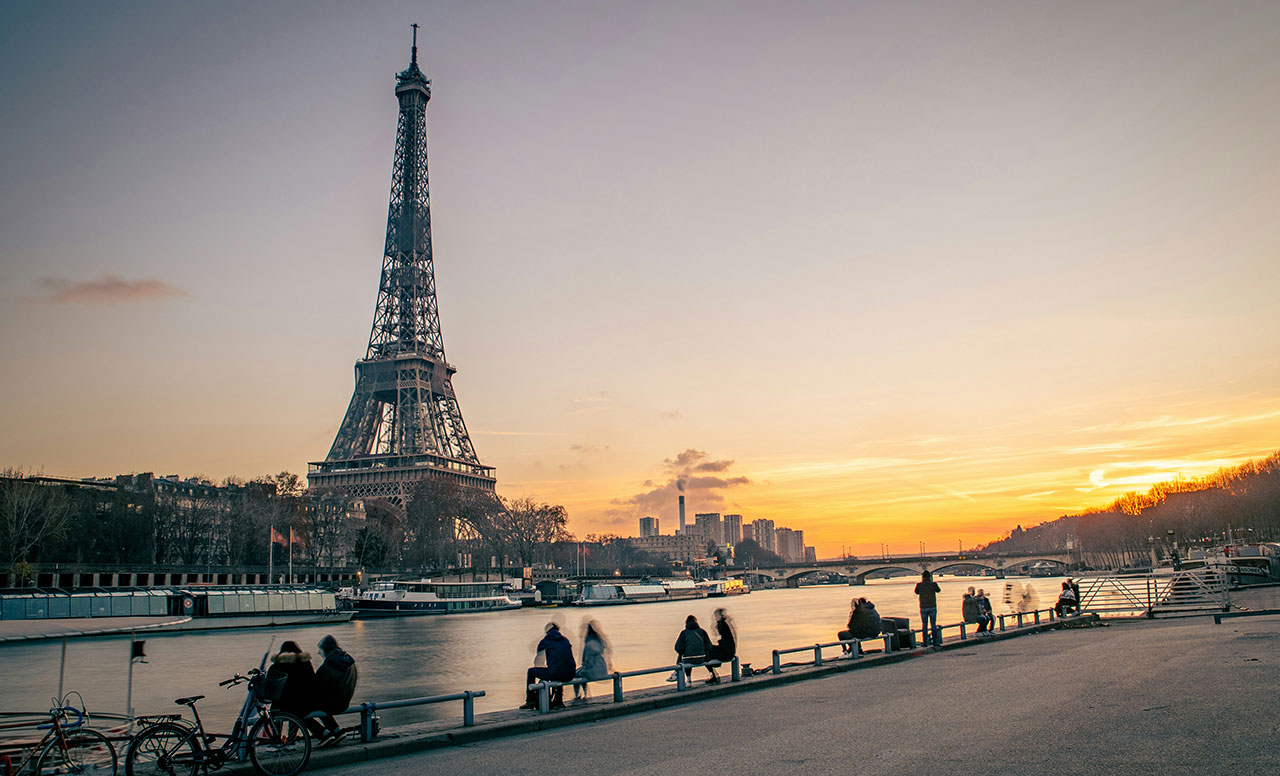
The Eiffel Tower District (7th & 16th): Staying here guarantees iconic views like this, but be warned: these are the quietest neighborhoods in Paris at night.
If your dream of Paris involves waking up, opening the curtains, and seeing the Eiffel Tower right outside your window, this is where you stay. These districts (the 7th and the 16th) represent the cinematic, luxury side of the city.
The vibe here is polished, wealthy, and incredibly quiet. The streets are wide, the buildings are grand Haussmann style, and the security is tight (this is Embassy row).
The Logistics:
Local Guide Tip: This area is beautiful, but it falls asleep at 9:00 PM. If you stay here, you are trading nightlife for views. We usually recommend this for a 2-night “Splurge” at the end of a trip, rather than a base for a whole week.
Best for: Honeymoons, bucket-list anniversaries, and travelers who prioritize quiet nights over busy bars.
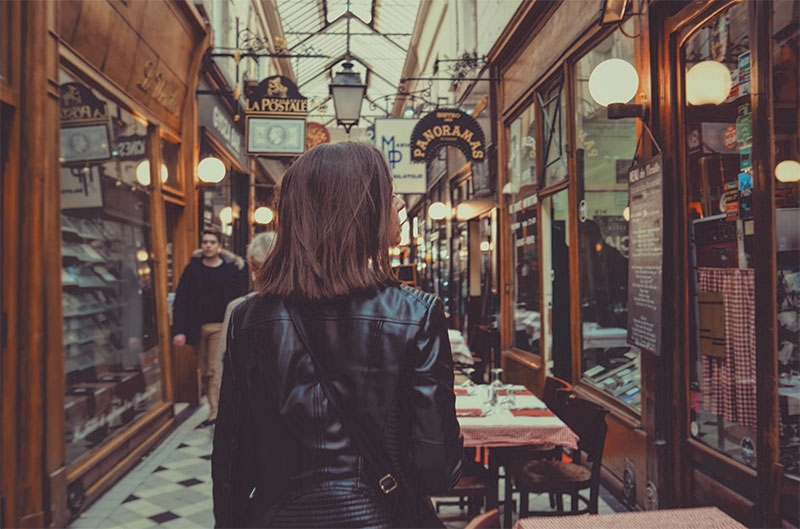
Rainy Day Savior: The 2nd Arrondissement is famous for these covered passages. You can shop, eat, and explore without ever opening an umbrella.
If you want to stay in the absolute center of Paris but find the Louvre area too sterile, look at the 2nd Arrondissement (Grands Boulevards/Sentier). This is the home of the famous Passages Couverts, 19th-century glass-roofed shopping arcades hidden between buildings.
Staying here puts you in a high-energy district known for textiles, tech startups, and incredible history. It is less “pretty” than the Marais, but it feels very authentic.
The Logistics:
Local Guide Tip: The 2nd Arrondissement is often cheaper than the 1st or the Marais, yet it is only a 10-minute walk from them. It is my top “Value Pick” for staying central.
Best for: Vintage shoppers, solo travelers, and anyone who loves a bustling, commercial vibe.
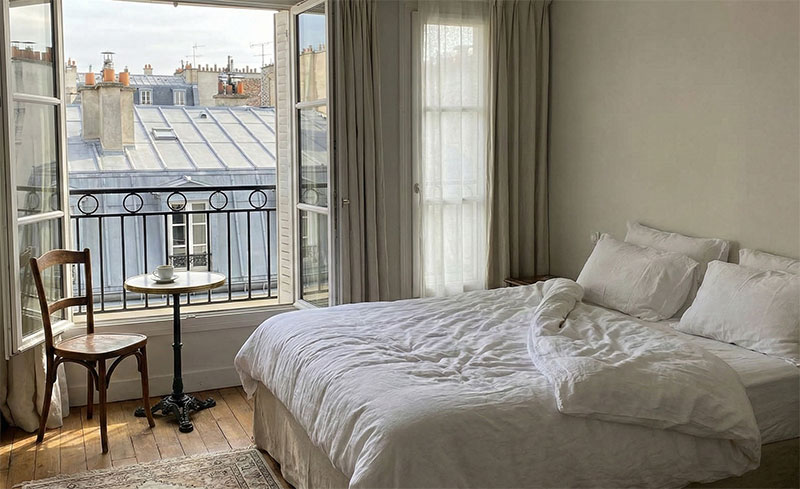
Parisian hotel rooms are famous for being compact. You are paying for the location, not the square footage.
Finding a place in Paris is different than in the US. Space is expensive, elevators are tiny (or missing), and air conditioning is not a guarantee. Here is what you need to know before you book.
In France, stars are awarded based on technical amenities (square footage, reception hours), not just “luxury.”
Pro Tip: “Air Conditioned” is not a standard feature in Paris, especially in 2-star and older 3-star hotels. If you are traveling in July or August, filter strictly for A/C. You will thank me later.
Yes, but with caveats. Paris has cracked down hard on short-term rentals.
If you can’t decide between a hotel and an apartment, look for an Aparthotel (like Citadines or Adagio). You get a kitchenette and more space, but you still have a front desk to hold your luggage, something Airbnbs rarely offer.
Local Guide Tip: Always check the “elevator” situation. A “3rd floor” apartment in Paris is actually the 4th floor in the US (Ground = 0), and carrying bags up a spiral staircase after an overnight flight is a rough start to a vacation.
Pro Tip: A cheaper hotel far from where you spend your days usually costs more in time, energy, and transit. In Paris, you pay for the zip code.
Start with the France guide, then explore how to eat, where to stay, and how to plan your trip across Paris and beyond.
START HERE
Your full overview to compare regions, plan your route, and understand how France fits together.
Read More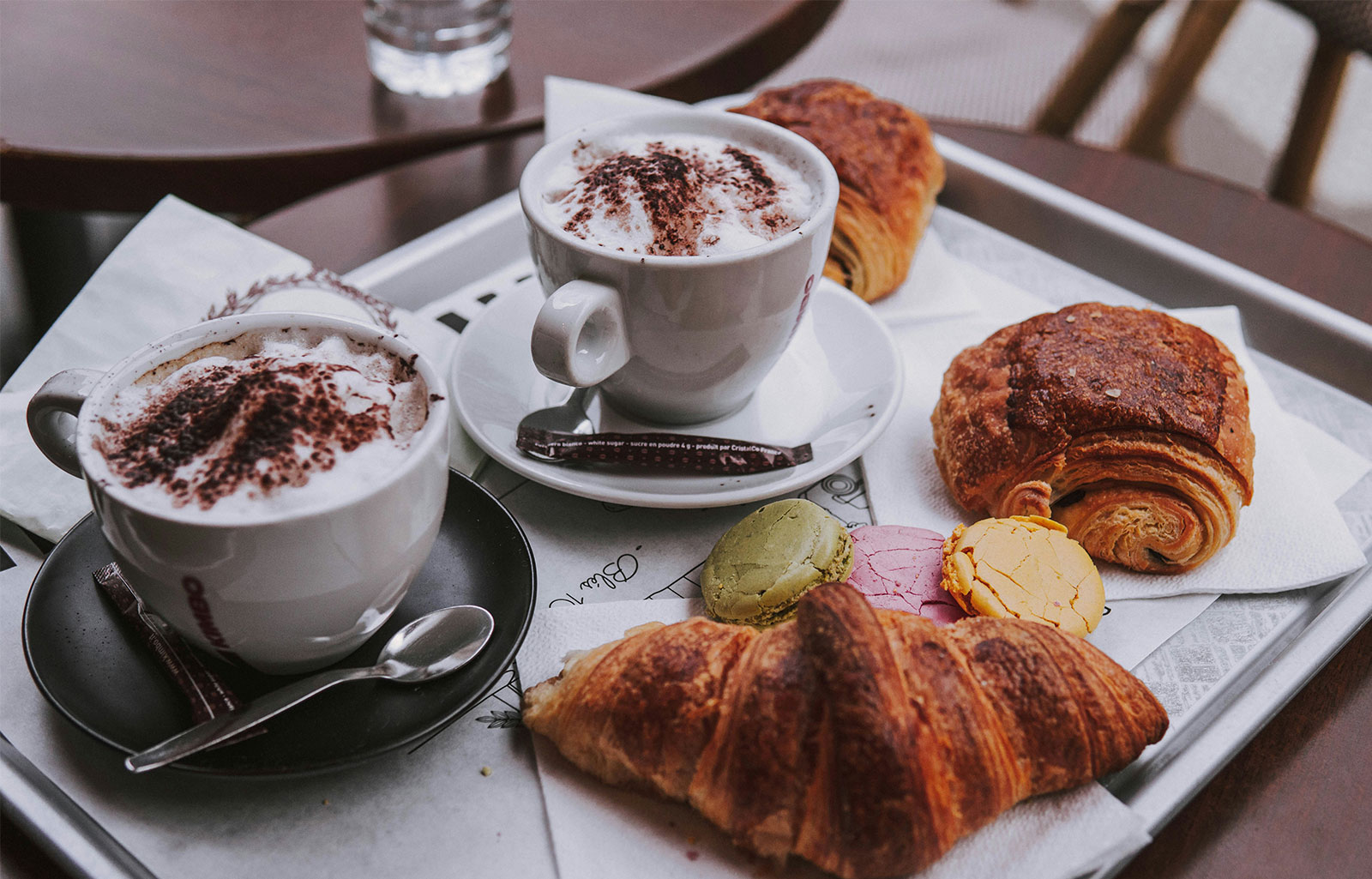
FOOD PLAYBOOK
Understand café culture, meal timing, and how to avoid tourist-trap dining.
Read More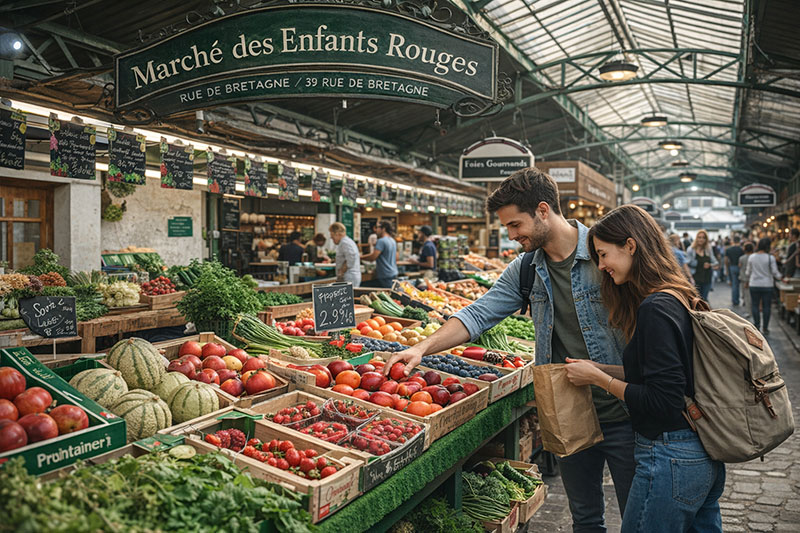
NEIGHBORHOOD EATS
Zoom into one of Paris’s best food neighborhoods for cafés, bakeries, and casual dining.
Read MoreLe Marais offers the best balance of walkability, food, transit (Line 1), and atmosphere.
Cafes. You will visit the Eiffel Tower once. You will eat and walk every day. Stay where the street life is good.
Yes, especially in good neighborhoods. Location matters more than amenities. You won’t be in your room much anyway.
If you are visiting in July or August, yes. While old buildings stay cool, heat waves are common, and sleeping in 85°F (30°C) with street noise is not fun.