Travel Planning Hub
Start here to plan your trip, compare options, and explore every TLGA planning guide.
Packing & Gear Guide
What to pack, what to skip, and how to build a lighter travel setup that works.
Last updated: March 2026 by Corey Gasman
TLGA Travel Truth
Safety is not about traveling scared. It is about building backup plans so small problems do not become major ones.
If you are building a life abroad and not just taking a short trip, your safety plan needs to work long term. Solo female travel is no longer unusual. For many women, it is a lifestyle built around remote work, flexibility, and freedom.
That freedom works better when it is supported by systems. When you are carrying your laptop, your phone, your documents, and your income in one backpack, safety is not only about avoiding one bad street. It is about protecting your health, your gear, your money, and your peace of mind over time.
Choosing the right country can remove a lot of the friction that comes with living abroad. Some places simply make it easier to feel comfortable, stay productive, and settle into a routine without constantly thinking about safety. If you are still deciding where to go, this breakdown of top digital nomad countries gives you a strong starting point.
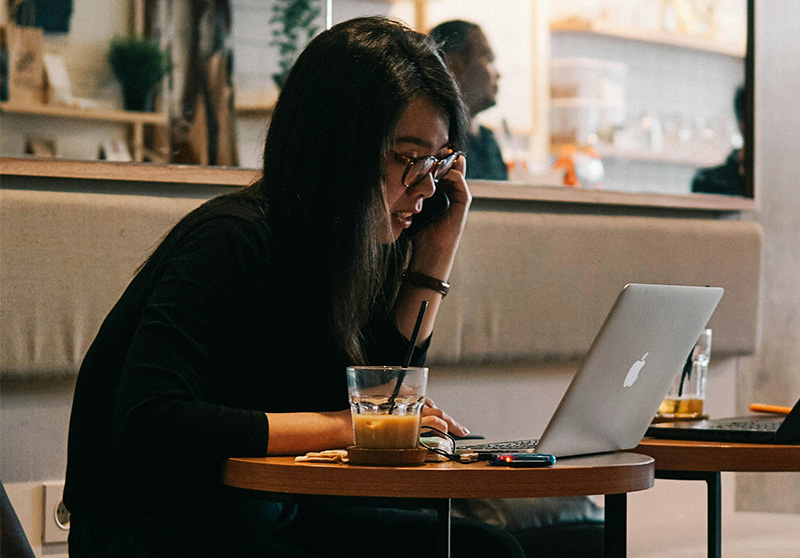
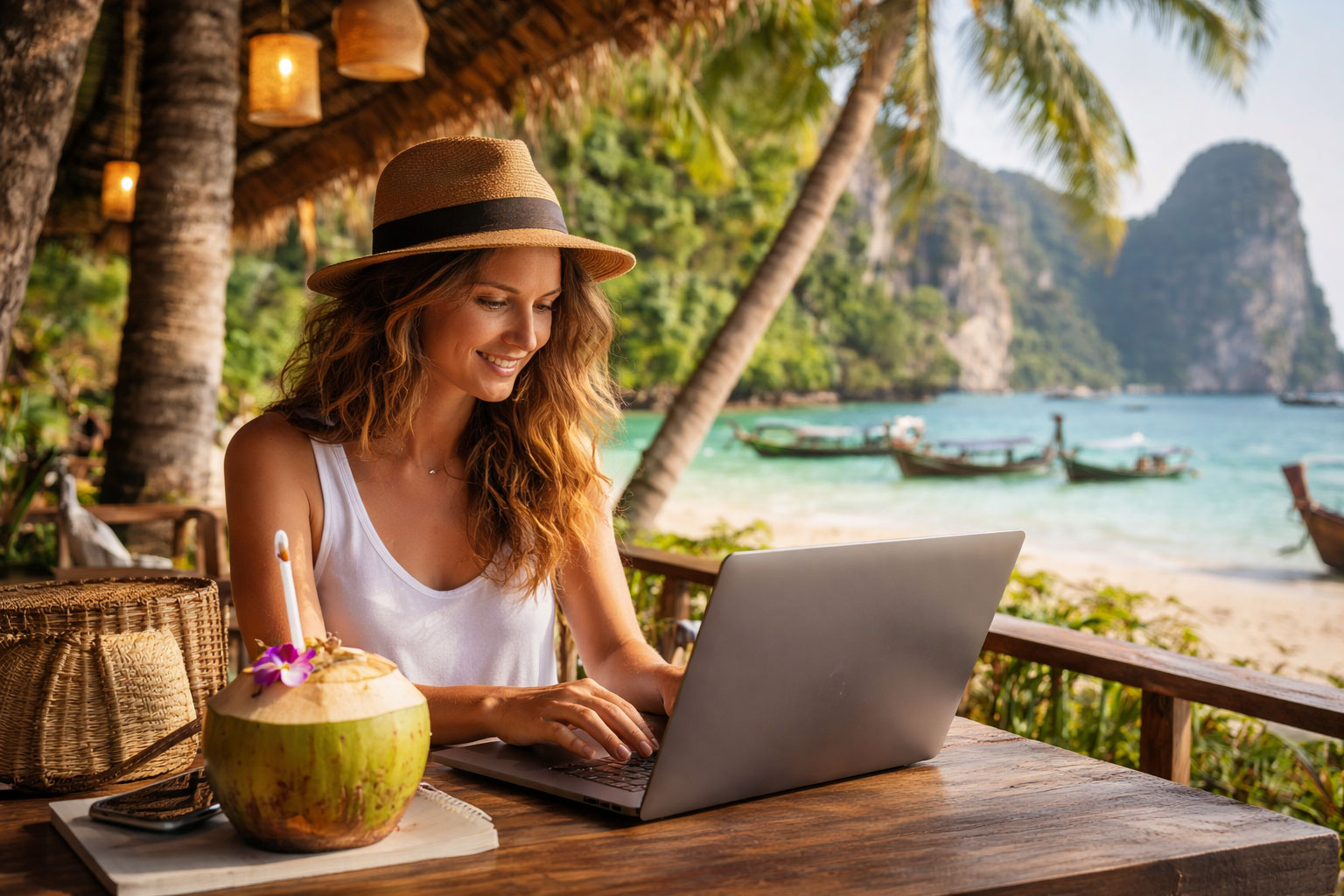
Finding the perfect balance between exploration and productivity while navigating the world as a solo female nomad.
Most travel problems are not dramatic. They are logistical. A missing phone, a stolen wallet, a late-night arrival, or a bad accommodation situation can spiral fast when you are alone and tired. Redundancy is what keeps those moments manageable.
Before you arrive, build a simple safety system that gives you a second move ready.

When your entire business and travel life runs through your devices, protecting your digital security is just as important as physical safety.
For long-term travelers, losing a phone is more than an inconvenience. It can mean losing maps, banking access, two-factor logins, rideshare apps, work files, and contact with people you trust. The goal is not fear. The goal is recovery.
If you want a deeper breakdown, this guide on digital security for travelers walks through the exact setup to protect your accounts and devices abroad.
Digital safety is one of the easiest places to be proactive. A few setup steps before departure can save hours of panic later.

Lisbon is consistently ranked as one of the safest cities for digital nomads, making it an easy place to settle in and feel comfortable long term.
Burnout is a safety issue. When you are overmoving, under-sleeping, and constantly solving new logistics, your decision-making gets worse. A stable base gives you routine, recovery time, and better judgment.
This approach helps you experience more without feeling like you are constantly starting from zero.
The first day in a new destination is when you are often the most disoriented. Jet lag, hunger, language barriers, and unfamiliar streets can make even simple decisions feel harder. Slow down and orient yourself before you dive into nightlife or full sightseeing mode.
You do not need to know the whole city on day one. You only need to understand enough to feel settled and capable.
Choosing where to live and work abroad as a solo female isn’t just about cost or scenery. Safety, ease of getting around, and how comfortable you feel day to day all matter just as much. The countries below consistently rank high for personal safety, have reliable infrastructure, and offer a lifestyle that makes remote work actually enjoyable. Whether you’re planning a short stay or a longer base, these are places where you can focus on your work and your experience without constantly looking over your shoulder.
| Country | Why It’s Safe | Why It Works for Digital Nomads |
|---|---|---|
| Japan | Extremely low crime, respectful culture, safe public transit at all hours | Reliable infrastructure, fast internet, easy solo navigation despite language differences |
| Portugal | Consistently ranked one of the safest countries in Europe with a relaxed, welcoming vibe | Strong expat community, affordable Western Europe option, great work-life balance |
| Denmark | Very low crime, high trust society, strong social systems | Clean, organized, bike-friendly cities with excellent quality of life, but higher cost |
| Singapore | Strict laws, extremely clean, one of the safest urban environments globally | World-class infrastructure, easy English communication, great base for Southeast Asia travel |
| Canada | Stable, low crime in major cities, culturally diverse and inclusive | Easy transition for English speakers, strong coworking culture, good long-term livability |
Your intuition is one of your best safety tools. If a neighborhood, accommodation, social situation, or interaction feels off, you do not need to argue with yourself into staying. Leave. Rebook. Change plans. Step into a safer space.
You do not owe anyone politeness at the expense of your safety. The more prepared you are, the easier it becomes to act on that instinct quickly.
Solo travel becomes more empowering when instinct is backed by preparation. Confidence grows when you know you have options.
| Before You Go | On Arrival | Ongoing Habits |
|---|---|---|
| Share itinerary with one trusted person | Use verified transport from the airport | Keep documents backed up in multiple places |
| Set up eSIM or local data plan | Learn the immediate neighborhood | Back up work and photos automatically |
| Save emergency contacts and embassy info | Locate a pharmacy, grocery store, and ATM | Review account security and recovery options |
| Purchase long-stay insurance | Keep first-day plans simple | Use a stable base to reduce burnout |
Remote work is the easy part. These guides help you actually live well while doing it.
WHERE TO GO
The best places right now based on cost, lifestyle, and long-term livability.
Read More
STAY SECURE
Simple habits to protect your data, accounts, and devices while abroad.
Read More
WHERE TO STAY
Hotels, Airbnbs, or long stays. What actually works for longer trips.
Read MorePractical answers for staying safer, calmer, and more confident.
Yes, in many destinations it is. The key is not chasing perfect safety. It is building smart habits, planning your arrivals well, protecting your phone and documents, and paying attention to your surroundings.
Some of the safest countries for solo female travelers include Japan, Portugal, Denmark, Singapore, and Canada. These destinations consistently rank high for low crime, strong infrastructure, and overall ease of daily life. More importantly, they allow you to settle into a routine without constantly thinking about safety, which is key for long-term travel.
Give yourself a backup plan for everything important. That means copies of your documents, a second way to access money, a charged phone, and one trusted person who knows where you are.
Keep it simple. Use verified transportation, check in before dark if possible, learn your immediate area, and find the nearest pharmacy, grocery store, and easy route back to where you are staying.
Prioritize strong recent reviews, a practical location, and easy access to food, transportation, and main streets. A place that feels slightly boring but convenient is often a better choice than one that looks cooler on social media.
Use mobile data instead of public WiFi for sensitive tasks, lock down your phone with a strong passcode and tracking, and keep backup cards and account recovery details stored separately from your main device.
Leave. You do not need to be polite, explain yourself, or wait until something clearly goes wrong. Trusting your instinct early is one of the strongest safety skills you can build.
Staying longer is usually safer. A stable base helps you learn your neighborhood, build routine, reduce decision fatigue, and avoid the stress that comes from constantly arriving somewhere new.
Yes. Insurance is not just for major emergencies. It also helps with common problems like illness, delays, lost items, and unexpected disruptions that are much harder to handle alone.