Travel Planning Hub
Start here to plan your trip, compare options, and explore every TLGA planning guide.
Packing & Gear Guide
What to pack, what to skip, and how to build a lighter travel setup that works.

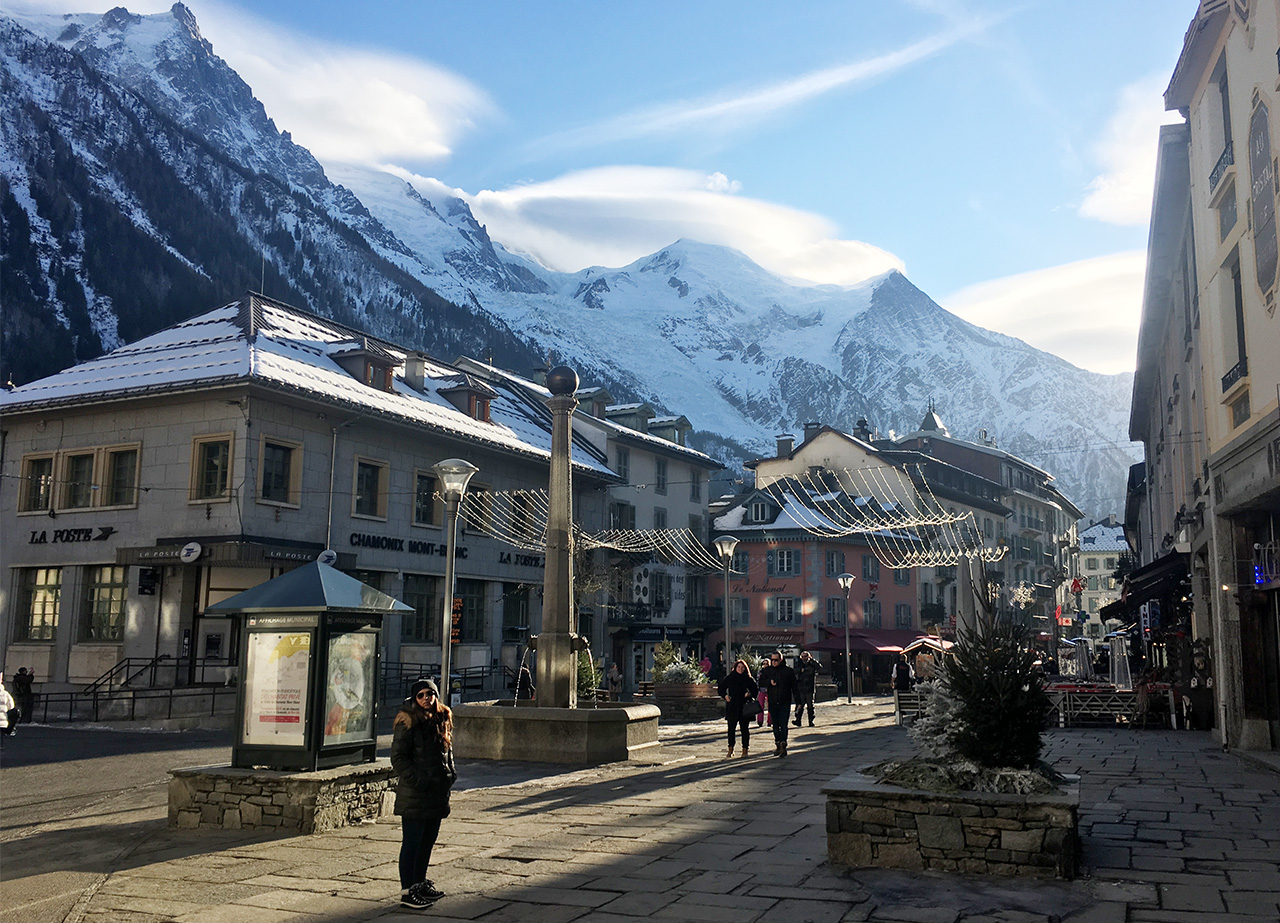
A bright morning walking through the center of Chamonix with the Mont Blanc massif towering above.
Last updated: March 2026 by Corey Gasman
From the Editor:
If you have ever heard “Chamonix” and pictured ice axes, crampons, and people casually risking their lives for fun, you are not alone. That image scares off a huge number of travelers who would otherwise love this place.
Here is my confession. I am an avid skier, and I still think Chamonix is worth it even if you never click into a single binding. You do not need to summit anything to experience one of the most dramatic landscapes in Europe. You just need a cable car ticket and a dinner reservation.
In two trips to Chamonix, most recently in January, I have not clicked into a single binding. And honestly, I did not miss it.
Chamonix is not just for mountaineers, alpinists, and skiers. The town is built around infrastructure that makes the mountains accessible. You can have a Mont Blanc day that feels cinematic and calm, then go back to town for raclette and a glass of wine.
Read the Full Story: I visited Chamonix as part of a larger winter trip. See how we fit it into our route here: Two Weeks in France.
| The Vibe | The Normal Traveler Move | The Extreme Version |
|---|---|---|
| The View | Lifts and panoramic platforms | Roped glacier travel |
| The Pace | Scenic walks and long lunches | Summit schedules and weather windows |
| The Comfort | Hotels, cafés, trains | Huts, packs, early alarms |
Most places make you earn the view. Chamonix lets you access it.
TLGA Rule: Chamonix rewards restraint. Pick one big view, one easy walk, and one great meal per day. Let the mountains do the work.
Start here: France Travel Guide
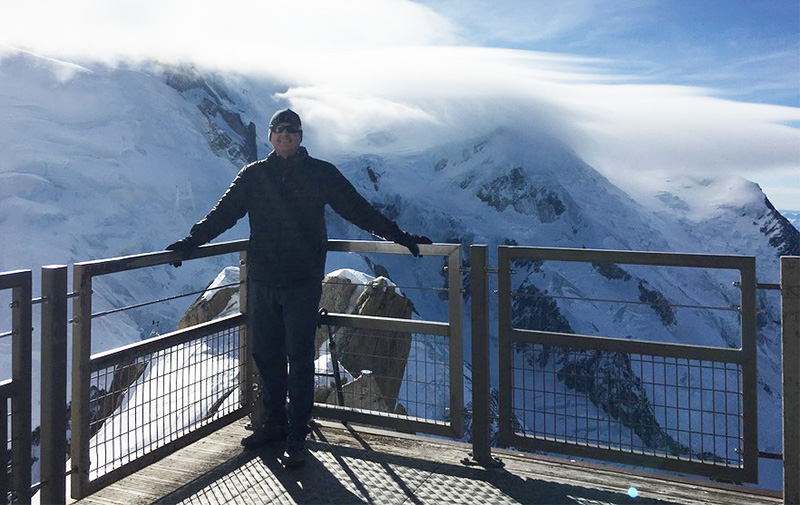
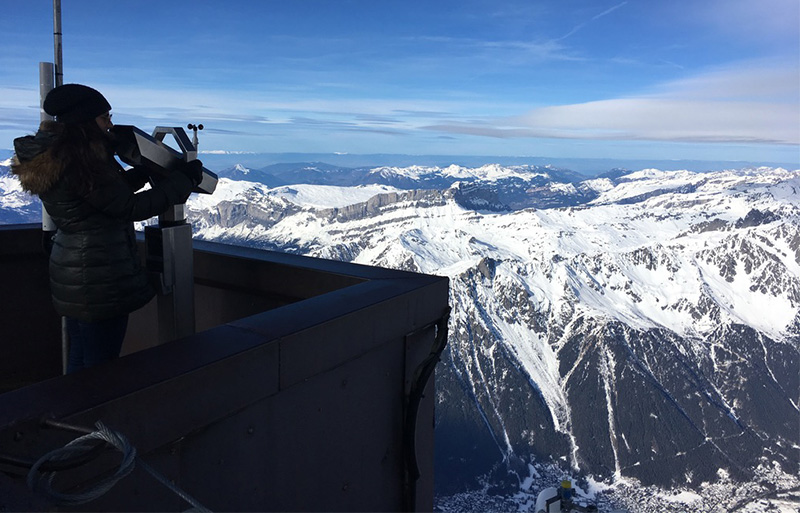
Standing on the viewing platform at Aiguille du Midi with the summit of Mont Blanc directly behind.
If you are trying to decide what is actually worth your time, this is the fast version. Chamonix gets overwhelming fast if you treat it like a checklist. This table helps you pick the right version of the trip instead of trying to do everything.
| Experience | Best For | Typical Cost | Time Needed | Book Ahead? | My Verdict |
|---|---|---|---|---|---|
| Aiguille du Midi | First timers, biggest wow factor | High | 2 to 4 hours | Yes | The headline Chamonix experience. Do this first if the weather is clear. |
| Montenvers + Mer de Glace | Travelers who want scenery plus glacier history | Medium to high | 2 to 4 hours | Recommended | The best second major outing. More reflective and less intense than Aiguille du Midi. |
| Brévent or Flégère | Panoramic views with a calmer vibe | Medium | 2 to 4 hours | Usually no, but check status | The best balance of effort, views, and sanity. |
| Lac des Gaillands | Arrival day, easy walk, low effort scenery | Free | 45 to 90 minutes | No | Perfect soft landing on day one. |
| Paragliding | Travelers who want one unforgettable memory | High | 1.5 to 3 hours | Yes | Not required, but a major upgrade if it fits your budget. |
Local Guide Tip: My ideal first trip is simple. Do Aiguille du Midi, then pick one from Montenvers, Brévent, or Flégère, then fill the rest of the trip with town time, an easy walk, and a very good dinner.
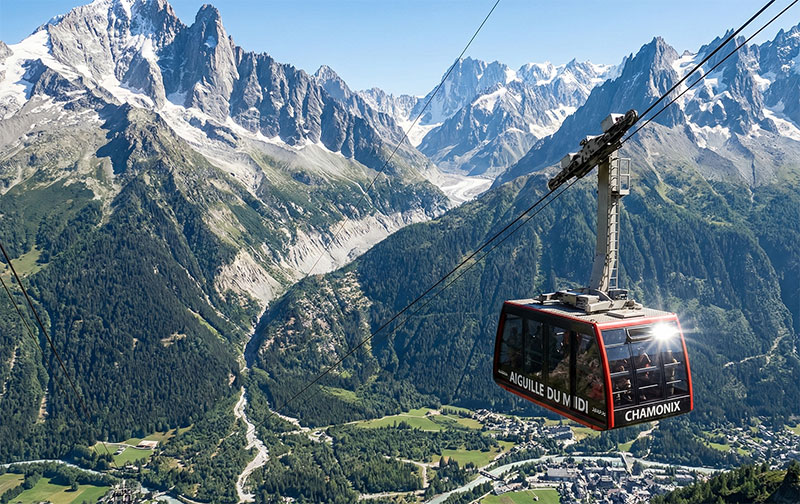
The ultimate shortcut. This red cabin whisks you from the sidewalk to the summit in just 20 minutes.
Chamonix is a rare mountain town where the wow factor is not locked behind athleticism. You can be sipping coffee in town at 9:00 AM and standing in front of a wall of ice and peaks an hour later without breaking a sweat.
Pro Tip: If a Chamonix itinerary sounds exhausting when you read it, it will be worse in real life. Altitude and sensory overload are real. Build in margin.
The goal here is not to prove anything. The goal is to have a Mont Blanc day that feels cinematic, calm, and enjoyable.
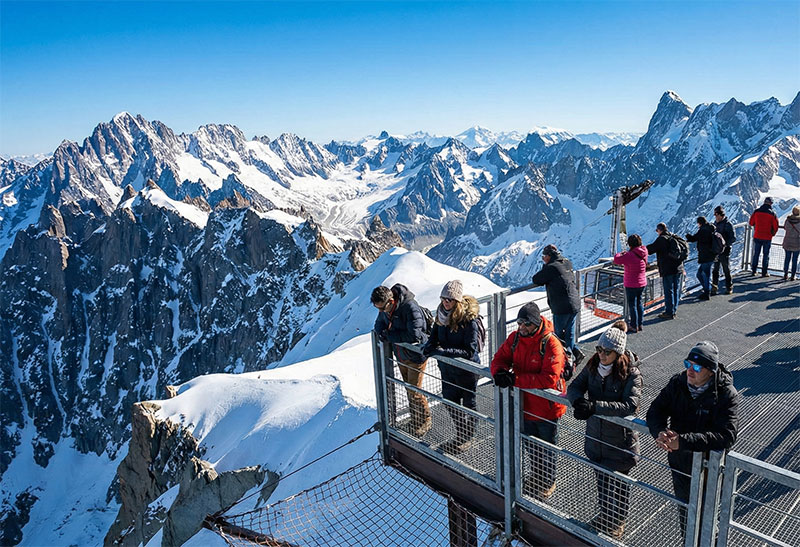
Standing at 12,605 feet on the Aiguille du Midi platform. It is the only place in Chamonix where you can see this view while wearing sneakers.
If you only do one thing in Chamonix, make it one big “I cannot believe this is real” view. These are the classic options that deliver maximum payoff for minimal effort.
This is the iconic high altitude lift experience. You ride up from town and step into a totally different world. If you want the dramatic, high alpine view day, this is it.
This is the mountain history version. You ride a train up to a viewpoint above the glacier and get a sense of why this landscape matters. It is less about adrenaline and more about perspective.
If you want a huge Mont Blanc view without the main attraction intensity, this is often the sweet spot. You get the panorama, you get the air, and you still feel like a person who can go to dinner later.
Local Guide Tip: In Chamonix, the best plan is not as many lifts as possible. It is one lift, one slow walk, one great meal. That is a perfect day.
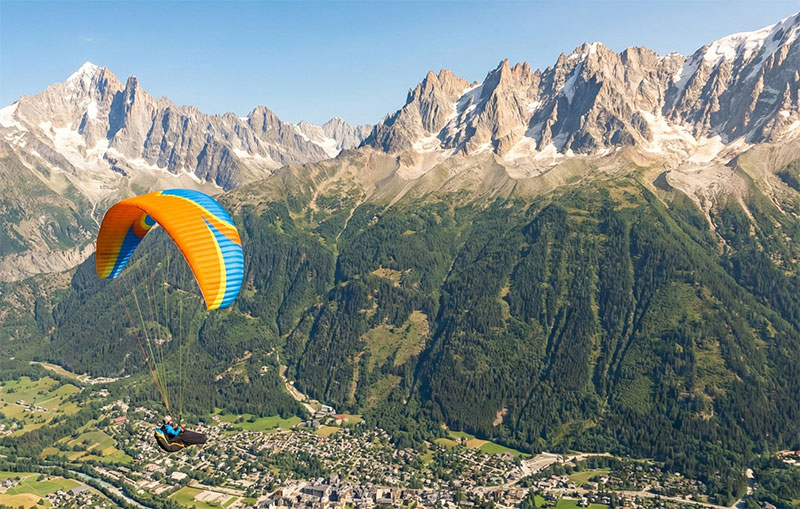
The cheat code for the best views in the valley.
Because Chamonix is a steep valley, getting airborne is the single best way to see the scale of the Alps without climbing them.
Pro Tip: If you are nervous, start with tandem paragliding. Most people are shocked by how gentle it feels once you are in the air.
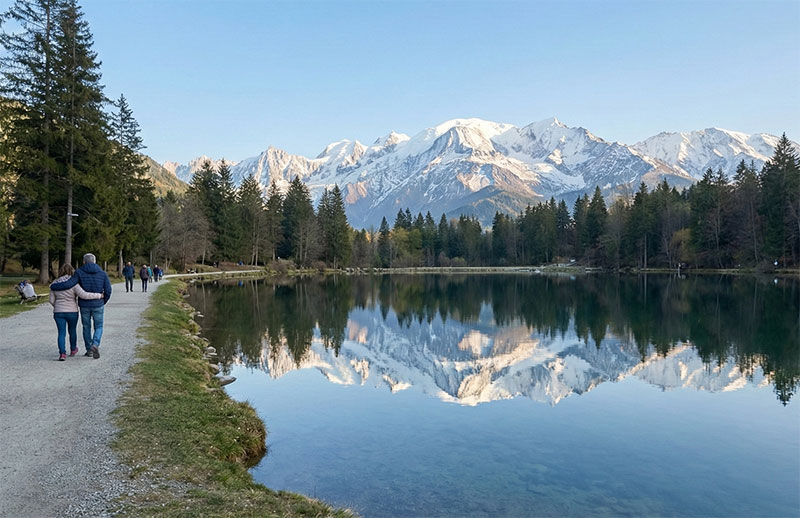
Lac des Gaillands offers a postcard view with a perfectly flat walking path.
Chamonix has an entire menu of walks that feel alpine without requiring hiking credentials. These are the strolls that make you feel outdoorsy while still being able to wear comfortable shoes and call it a win.
If you need the simplest possible mountain fix, walk the flat paths along the river and take in the views from town.
A short, friendly walk to a small lake with a dramatic mountain backdrop. Great if you want a scenic outing that still leaves you fully functional for dinner.
Pro Tip: When you see a walk described as “easy” in the Alps, translate it as “easy for someone who lives near mountains.” Keep it short on day one and adjust from there.
The dramatic peaks of the Mont Blanc massif tower over the alpine town of Chamonix.
This is not a checklist trip. This is a pacing strategy. One big experience per day, one great meal, and enough margin to actually enjoy where you are. Securing a Mont Blanc MultiPass is essential, as it covers all the major lifts and trains you will need.
Afternoon: Arrive from Geneva or by train. Check into your hotel and take a slow walk through town. Follow the river path, grab a coffee, and get your bearings.
Late afternoon: Light activity only. If you feel up for it, walk to Lac des Gaillands for an easy first view of the mountains.
Dinner: Keep it easy on night one. Go to Munchie if you want something modern and relaxed, or La Calèche if you want to start strong with the Alpine comfort food version of Chamonix.
Travel note: Do not plan your biggest day on arrival. Even if you feel fine, travel fatigue and altitude sneak up on you.
Morning: Go straight to Aiguille du Midi. Book the earliest practical slot and make this your headline experience. Fuel up first with a hearty breakfast burrito at Café Bluebird to beat the ski school crowds.
Lunch: Keep it scenic and unhurried. If you want a dramatic high altitude meal, book Le 3842 at the top of Aiguille du Midi. If the weather is not cooperating, head back to town and take your time over a relaxed midday meal.
Afternoon: Keep it light. Walk around town, stop for a drink, or do nothing at all. You already did the main event.
Dinner: This is your nicer dinner night. Go to Le Cap Horn.
Pro Tip: Always schedule your Aiguille du Midi trip for your very first full morning. If bad weather closes the lift, you have two backup days to reschedule.
This is your favorite day because there is less pressure on it. Pick the version that matches your energy level.
Take the historic train up to France’s largest glacier. It is slower, more reflective, and gives context to everything you saw the day before.
If you want a second big view day without the intensity of Aiguille du Midi, take the Brévent cable car on the sunny side of the valley. Scenic, spacious, and an excellent spot to watch paragliders.
If you want a true memory maker, do this. It sounds scarier than it feels, and it delivers a completely different angle on the valley.
Lunch: For a sun drenched terrace and incredible cuts of meat cooked over a wood fire, book Bergerie de Planpraz at 2000 meters.
Final dinner: Go classic with La Maison Carrier or go all the way with Albert 1er if you want a splurge finish.
Departure morning: If you have time, grab one last coffee, take a short walk, and leave Chamonix slowly. It is the kind of place that is better when you do not rush out of it.
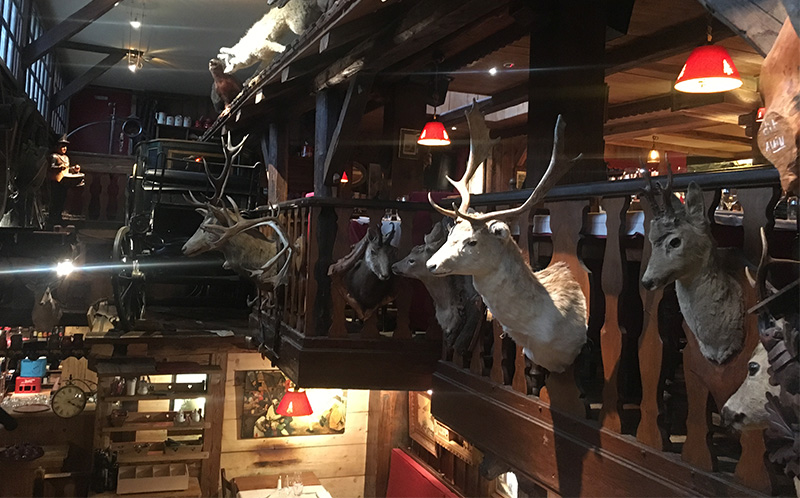
The highly decorated, traditional Savoyard interior of La Calèche provides an atmospheric setting for classic alpine dining.
This is where Chamonix really surprises people. It is an adventure town where you can build an entire trip around one great lunch terrace, one classic Savoyard dinner, and one memorable final night meal.
Chamonix is notoriously expensive, but mountain locals and seasonal workers know exactly where to go to avoid the tourist markup.
| Meal Type | Estimated Cost | Local Recommendation |
|---|---|---|
| DIY Mountain Picnic | €8 to €12 | Local boulangerie baguette & Savoie cheese |
| Casual Burger | €12 to €18 | Poco Loco |
| Traditional Fondue | €20 to €28 | La Crémerie des Aiguilles |
Local Guide Tip: The Rue des Moulins strip where Munchie is located is the heartbeat of Chamonix nightlife. Plan to grab a craft beer at one of the neighboring bars while you wait for your table.
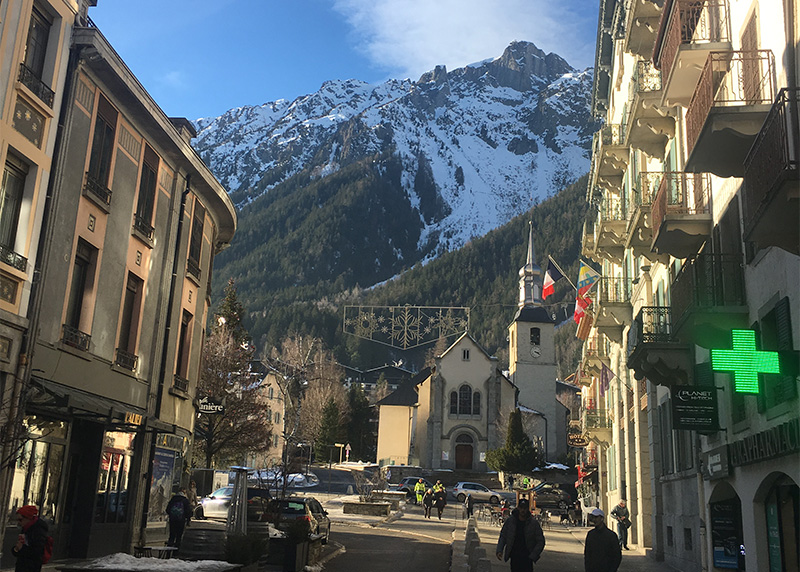
Walking through the center of Chamonix towards the historic Eglise Saint-Michel.
Where you stay matters here because Chamonix works best when you can move easily between the lifts, the pedestrian streets, and dinner. For most readers, the right move is simple: stay in or very close to Chamonix town center and make the whole trip easier.
Pro Tip: Stay in or near Chamonix town center unless you have a very specific reason not to. It makes everything easier, especially if you are not renting a car.
Most people over-plan the wrong parts of this trip. If you only plan a few things ahead in Chamonix, make them the ones that actually move the trip.
| What to Book | Why It Matters | My Advice |
|---|---|---|
| Aiguille du Midi | This is the hardest-ticket, highest-priority experience for most first trips. | Book this first and put it on your first full clear-weather morning. |
| Hotel | The right location makes the whole trip easier. | Stay in or near town center unless you have a specific reason not to. |
| One nice dinner | The best restaurants can shape your evenings more than another activity does. | Reserve one standout dinner, then stay flexible with the rest. |
| Paragliding | Weather and instructor schedules matter. | Only book if this is a true priority, not a maybe. |
Chamonix is not a budget destination, which is exactly why readers appreciate a little cost context before they go. At the moment, official Chamonix pricing shows headline attractions and passes in the “worth it, but not cheap” category.
Local Guide Tip: If you are trying to keep costs under control, do one big-ticket attraction, one lower-cost scenic outing, and one free walk like Gaillands or the river path. That still feels like a real Chamonix trip without turning the valley into an open-wallet endurance event.
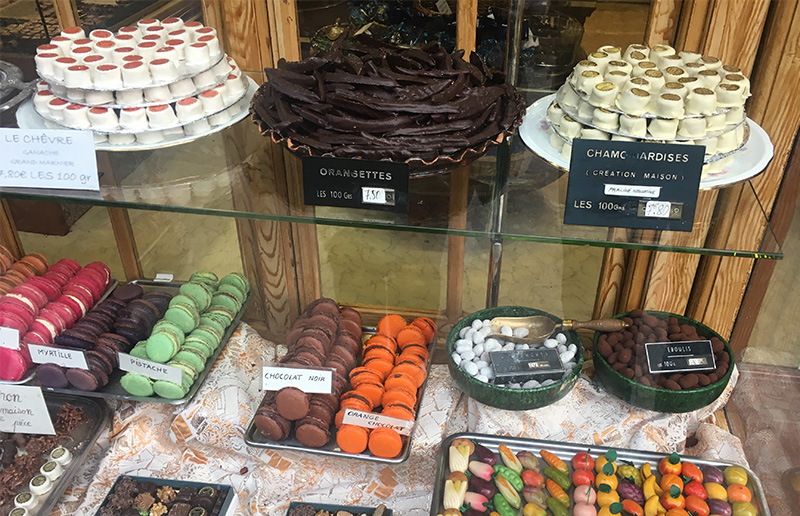
A classic patisserie display window in town filled with local sweets and colorful macarons.
This is the part most people overcomplicate. Chamonix is easy when you keep it simple.
Most travelers arrive via Geneva or by train routes through France. Plan a simple arrival dinner and save the big view for the next morning.
You do not need a car for the normal traveler version of Chamonix. Between trains, buses, and lift access, the main experiences are reachable without driving.
If you remember one rule, make it this: the weather decides your itinerary, not your schedule. Move your biggest lift day to the clearest morning.
Local Guide Tip: Weather runs the schedule here, not your spreadsheet. Pick your big view for the clearest morning and treat everything else as flexible.
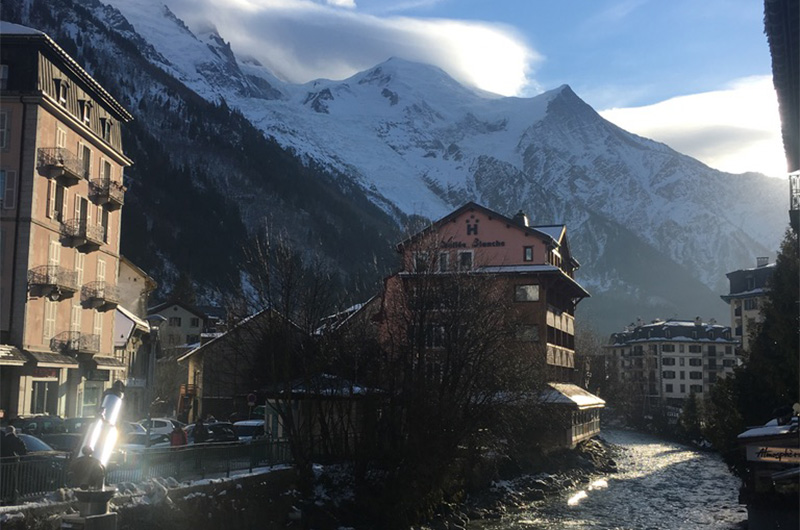
The Arve River running right through the heart of town with incredible views of the peaks above
For the normal traveler version of Chamonix, timing matters more than people think. This is not a place where every lift runs the same way all year.
If you want scenic lifts, easy walks, terrace lunches, and the simplest logistics, summer and early fall are the easiest fit. This is the version of Chamonix that works best for readers who are here for views, town life, and one or two big mountain days.
Winter is still great, and the valley looks incredible, but it shifts the mood. You get more ski traffic, more weather sensitivity, and a trip that feels a little more operational. Still very worth it, just less plug-and-play.
This is the part many guides do not make clear enough. Shoulder season can look appealing on paper, but some lifts and attractions close for maintenance. If you are planning a Chamonix trip mainly around scenic lift access, always check the official opening calendar before you book.
Pro Tip: Chamonix is at its best when your trip lines up with clear weather and open lifts. Aiguille du Midi has scheduled operating windows and the Chamonix valley also has seasonal closures. The current official lift page shows Aiguille du Midi closed from November 2 to December 18, 2026, and other systems can have shorter maintenance closures too. Check official lift status before booking your hotel and again right before your trip.
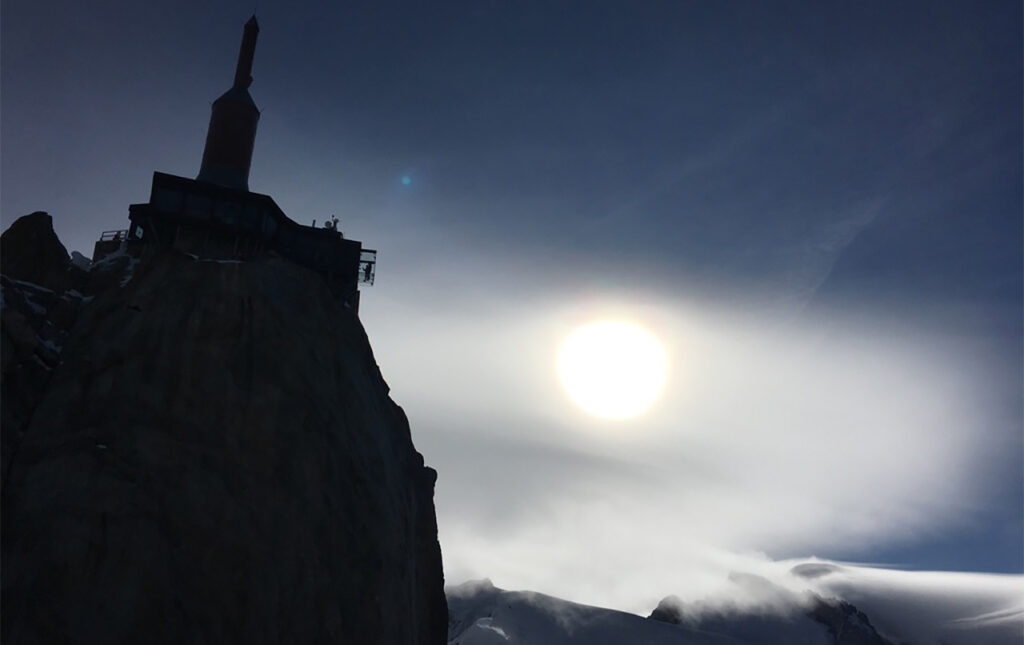
The striking silhouette of the Aiguille du Midi summit station towering over the French Alps.
This guide is for you if:
This guide is not for you if:
The TLGA reality: You do not need to be extreme to have an extreme view. Chamonix is the proof.
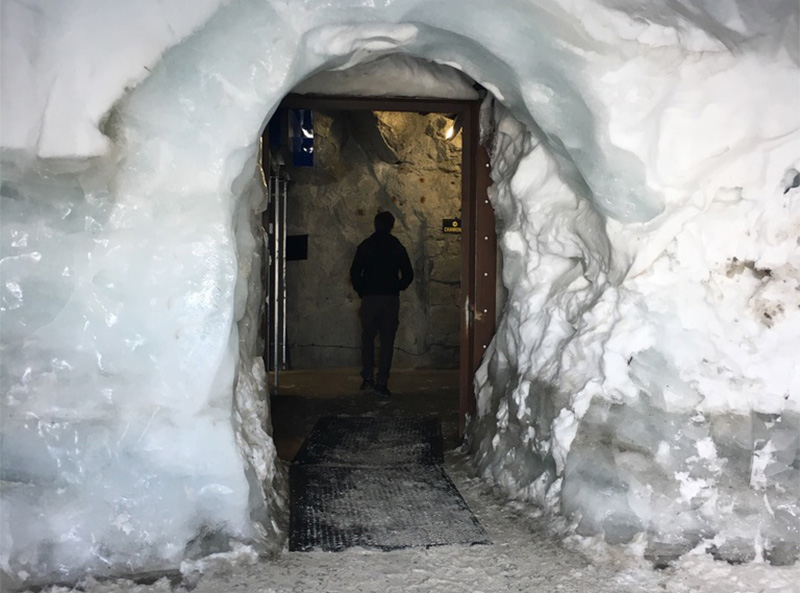
Exploring the man-made ice tunnels carved directly into the Mer de Glace glacier.
While this guide is written for normal travelers, Chamonix is also one of the most serious mountain towns in the world. If you are coming specifically to ski or climb, your priorities and logistics will look very different.
If you are skiing or climbing, Chamonix is one of the best places in Europe to rent or buy serious gear and hire certified guides. This is a working mountain town, not a resort bubble.
Local Guide Tip: From the top station, there is an actual door that opens directly onto the high alpine world. Through it, experienced alpinists step out onto exposed snow and ice to traverse the ridgeline and begin routes that lead deeper into the Mont Blanc massif. For normal travelers, it is thrilling just to watch. One moment you are sipping coffee at altitude. The next, you are a few feet away from people calmly walking out into one of the most extreme environments in Europe.
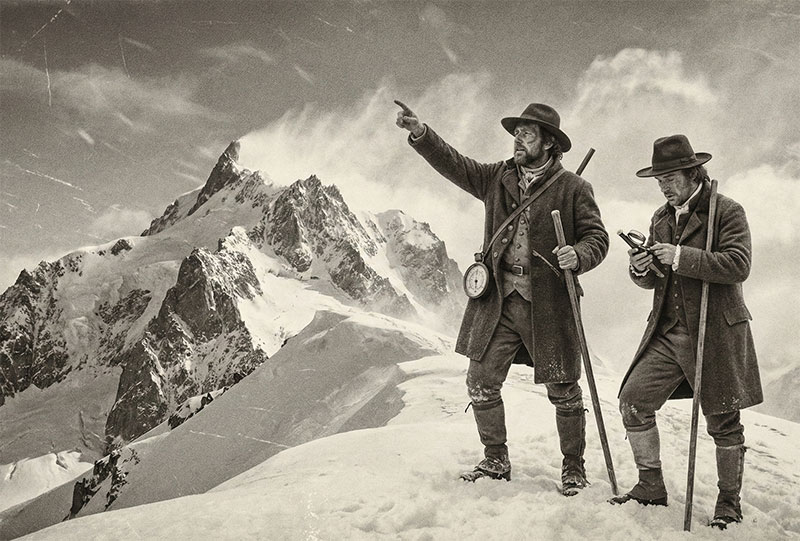
A reimagining of the historic first ascent in 1786. Jacques Balmat and Dr. Michel-Gabriel Paccard reached the summit long before modern gear and gondolas.
Long before Mont Blanc became a symbol of extreme adventure, it was something far more surprising: a scientific mystery.
The first ascent was about curiosity, not glory. The first successful ascent of Mont Blanc happened in 1786, at a time when climbing mountains was considered borderline insane. The men who reached the summit were a local crystal hunter named Jacques Balmat and a doctor named Michel-Gabriel Paccard.
Their goal was simple but radical for the time. They wanted to prove that humans could survive at extreme altitude and make real observations at the highest point in Europe.
How Chamonix became a destination. That ascent changed everything. Mont Blanc became the ultimate challenge for scientists, aristocrats, and curious travelers across Europe. Visiting Chamonix turned into a rite of passage long before modern tourism existed.
Romantic writers, fear, and the birth of alpine tourism. In the early 1800s, the Alps were not seen as relaxing. They were viewed as wild, dangerous, and overwhelming. Writers and artists described Mont Blanc as terrifying and sublime, a place that made humans feel very small.
The takeaway: Long before Mont Blanc was about summits and speed records, it was about wonder. That same feeling is still there today, even if you never climb a single step.
Build out your route, refine your itinerary, and connect Chamonix to the rest of your trip.
START HERE
Compare regions, shape your route, and decide how Chamonix fits into your bigger trip.
Read More
REAL ITINERARY
See exactly how Chamonix fits into a real trip with pacing, logistics, and lessons learned.
Read More
GO BEYOND PARIS
Choose your next stop after Chamonix based on travel style, pace, and experience.
Read More
SLOW TRAVEL
A slower, more personal wine-country escape that pairs perfectly with a Chamonix trip.
Read More
WHERE TO STAY
Pick the right base in Paris based on your travel style, budget, and pace.
Read More
TRIP PLANNING
Build a smarter trip with better timing, routing, and decision-making.
Read MoreYes. You can get world-class views via lifts and short, friendly walks. If you can walk comfortably for 30 to 60 minutes, you can have an amazing Chamonix trip.
If you want the most dramatic, famous viewpoint, Aiguille du Midi is the classic. If you want a calmer feel with great views and more walkable space, Brévent or Flégère can be a better day.
Two nights is the sweet spot. It gives you one big view day and one flexible day for a walk, weather changes, or a slower pace.
No, not for the normal traveler version of this trip. Town is walkable, and the main access points are connected by public transport and lift systems.
Summer and early fall are easiest for casual travel, with longer days and comfortable walking weather. Winter is beautiful too, but it shifts the vibe toward snow sports and cold weather logistics.
If heights bother you, start with a lower, calmer viewpoint day and see how you feel. You can still have a great trip focusing on town views, valley walks, and food without forcing the highest platforms.