
Travel Planning Hub
Start here to plan your trip, compare options, and explore every TLGA planning guide.

Packing & Gear Guide
What to pack, what to skip, and how to build a lighter travel setup that works.



Last updated: October 2026 · By Corey Gasman
From the Editor:
I like using AI for travel planning. It helps me organize ideas, compare possible routes, and get a rough itinerary together before I disappear into a pile of browser tabs.
Then I do my own research.
I look at travel blogs, official websites, maps, restaurant menus, and recent reviews. That is where I figure out whether the suggested trip actually makes sense for us.
When Melissa and I are traveling out of our carry-on backpacks, we have room to be flexible. We still want to make good use of our time. A polished itinerary is only useful if it works once we get there.
People will absolutely still use websites to learn about travel and food in five years, even as AI chat adoption skyrockets. While AI usage for travel planning has jumped significantly, original web content remains a critical anchor for truth, trust, and visual proof.
Rather than websites disappearing entirely, we are heading toward a hybrid model. AI serves as the initial filter or conversational sounding board, while original web content acts as the ultimate verification system.
Use AI to build the outline. Use your own research to fill it in. Leave enough room for the destination to surprise you.
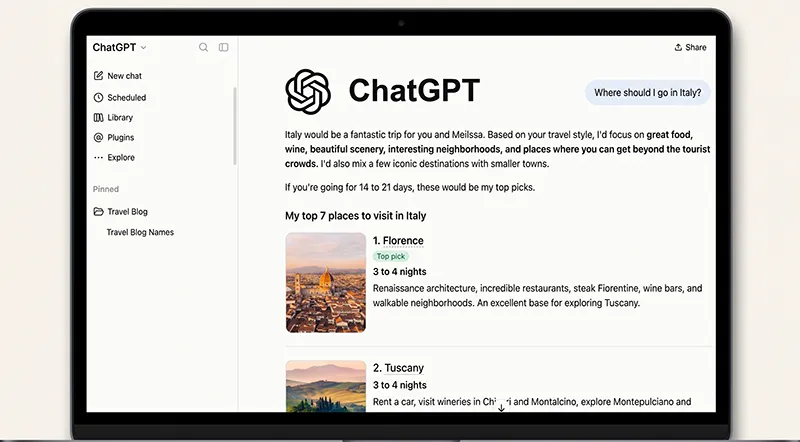
AI is a brilliant brainstorming tool, but when it comes to the final booking, real-world verification still wins.
Getting started can be the hardest part. You have a destination, a rough budget, and a list of things you might want to do. Figuring out how they fit together takes some work.
AI can help turn that jumble into a starting point. It excels at the broad strokes of a trip. It can aggregate ideas, summarize a neighborhood vibe, or help you figure out if a city matches your travel style.
| AI Chatbots (Filters & Narrows) | Original Websites (Verifies & Books) |
|---|---|
| Brainstorming destination ideas | Live inventory and real-time booking |
| Aggregating general reviews | High-quality photography and visual proof |
| Identifying overrated tourist traps | Authoritative safety and legal policies |
The back-and-forth is the useful part. You can ask for a slower version or explain that food and neighborhoods matter more to you than ticking off every museum.
Just remember that a neat schedule does not automatically mean a realistic day. You still need time to eat, get lost, wait for things, and occasionally sit down.

AI tools can generate a polished itinerary in seconds, but confident suggestions often include shuttered venues, outdated hours, or fabricated details that require real-world verification.
When it comes to planning high-stakes trips involving years of savings, consumers are highly hesitant to rely entirely on a chatbot. AI platforms are plagued by inaccuracies and fabricated information, often presenting hallucinations as hard facts.
Travelers still need to click through to official websites to double-check that a restaurant is actually open, a hotel has available rooms, or a venue has not permanently closed.
Unlike standard retail purchases, travel mistakes carry an enormous price tag. There are currently no universal consumer protection laws or guarantees covering financial losses caused by AI booking errors. If a bot confidently suggests booking a non-refundable room on the wrong side of the city, you absorb the cost.

AI tools can streamline hotel and flight comparisons, but confirming final rates, cancelation policies, and seat availability on official booking sites ensures your reservation is solid.
If I were planning a 2027 trip, I would use AI to help compare my options and question the expensive parts of the plan. I would not assume it had found the lowest price just because it said “best deal.”
The savings come from finding workable alternatives and comparing real prices. AI can help organize that process.
Ask AI to suggest a few versions of your trip: different departure days, nearby airports, or a slightly different route. Then check those options in a live flight search.
Google Flights has date and price tools that help you compare fares. Always compare the whole journey. A cheaper departure airport may mean extra parking, a long drive, or a hotel the night before.
Use AI to help decide which routes are worth watching, then set up an actual price alert. A chat response saying “I will watch that fare” is not enough. Make sure the tool has actually created an alert or scheduled task and that you know how it will notify you.
For hotels, give AI a shortlist of real options and ask it to organize the differences. Include the total stay price, room type, location, breakfast, cancellation terms, and any extra charges shown in the booking.
Ask what happens if you remove one stop, stay longer in one place, or travel outside your original dates. Sometimes the most useful saving is the transfer you no longer need or the extra hotel change you can avoid.
Take these AI savings strategies and apply them to my complete framework. Read My 2027 Travel Playbook & Checklist to see exactly how I balance comfort, budget, and trip pacing.

AI tools can streamline hotel comparisons, but confirming final rates, cancellation terms, and exact room views directly on the official booking site ensures there are no surprises upon arrival.
What an AI tool can search or book depends on its connections and features. Finding an option, opening a booking page, and completing a reservation are separate steps.
My rule is simple: before anything gets purchased, I want to see exactly what we are buying.
After booking, check that you received a confirmation from the provider or agency. An itinerary in a chat is not a reservation.

Just like everyone carrying the same guidebook in the early 2000s, relying entirely on AI runs the risk of everyone following the exact same travel path.
There is another downside that has less to do with wrong information and more to do with everyone getting identical advice.
I recently experienced this firsthand in Dublin. Melissa and I were at the very top tasting room of the Guinness Storehouse right around 11:30 in the morning. We ended up sharing a table with another couple from the States and started chatting. When it was time for lunch, I mentioned we were heading to The Brazen Head. The woman laughed and said that was their exact plan, too. When I asked how they figured that out, she admitted they used ChatGPT. I had done the exact same thing, and it gave us identical itineraries.
There is nothing wrong with wanting to visit either place. The question is whether you chose them because they interest you or because the algorithm told you to go.
It reminds me of traveling around the world in 2004. It felt like everyone had a Lonely Planet guide tucked into their backpack. We would turn up at the same hotels, hostels, restaurants, and bars because we were all reading the same recommendations.
We were traveling independently, apparently with the exact same instructions.
Back in 2004, we were all carrying the same guidebook. My worry is that now we will all be carrying the same itinerary on our phones.
Keep the famous sights you actually want to see. Then leave space around them.
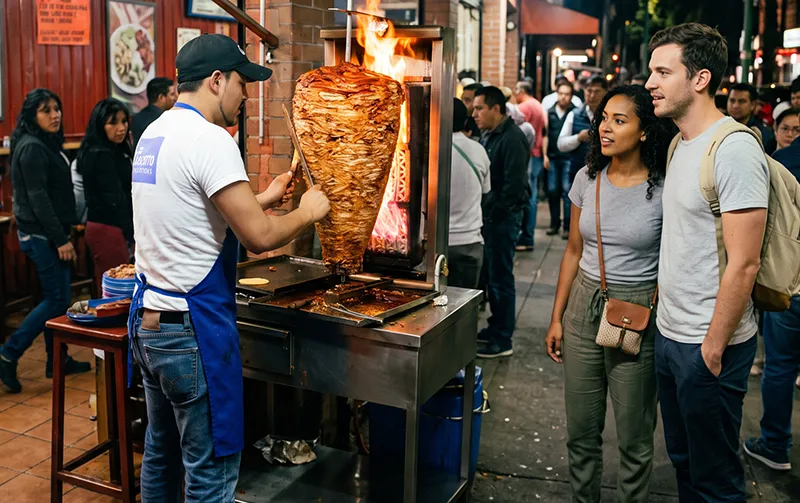
AI is incredibly good at a lot of things. It can generate this lively, smoky scene in Mexico City, analyze the culinary history of the vertical trompo, and craft a mouthwatering description of tacos al pastor down to the finest detail. But here’s the catch: AI has never actually eaten a taco al pastor in Mexico City.
A map can tell you a hotel is close to the station. Someone who has walked the route can tell you about the steep hill, awkward sidewalks, or stairs you will be dealing with.
A restaurant listing can show the menu. Someone who recently ate there can explain the atmosphere, portion sizes, and whether they would go back.
That is why I still read travel blogs and look for people who explain what they actually did. What surprised them? What disappointed them? What would they change? Their preferences may differ from mine, but their experience gives me something concrete to work with.
Local Guide Tip
Ask why someone recommends a place. Knowing that it is quiet, good value, family-run, or known for a particular dish helps you decide whether it fits your trip.
You cannot taste a paragraph. Before committing to a $200 dinner or a boutique hotel, people want to see it.
With more than 12 million views on my 500 Google Maps reviews, I have seen how much attention firsthand images attract. Travelers ultimately make their final decisions based on visual evidence, not just text descriptions. While AI can aggregate text feedback perfectly, it cannot replicate the experience of scanning a vibrant food blog or browsing an official resort gallery.
Help me outline a trip to YOUR DESTINATION in YOUR MONTH AND YEAR for NUMBER OF DAYS. We enjoy YOUR INTERESTS, prefer YOUR TRAVEL PACE, and have an approximate budget of YOUR BUDGET. Keep hotel changes to a minimum. Include a few major sights that fit our interests, explain alternatives, and leave some unscheduled time. Explain why each suggestion suits us. Flag anything that needs verification and link to current official sources when available.
Help me compare options for a 2027 trip from DEPARTURE CITY to DESTINATION. My dates can move by NUMBER OF DAYS. Compare the flight and hotel options I provide using total costs, including listed taxes, baggage, transfers, and cancellation terms. Keep confirmed prices separate from estimates and missing information. Suggest alternatives worth checking, explain the tradeoffs, and do not assume an option is available without a current source. Do not purchase anything.
If the tool cannot access live prices, collect the quotes yourself and paste in the relevant details. You can still use it to organize the comparison.
I will keep using AI for travel planning. It gives me a useful starting point and helps me work through options.
Then I want to read the blogs, check the websites, look at the photos, and talk to people who know the place. Before money changes hands, I want to review the actual booking.
And once we arrive, I want room to change our minds.
We have already done the version of travel where everyone has the same guidebook. I do not need every day of our next trip to come from the same AI answer.
Let AI help you get started. Do the research that matters. Then look up from the itinerary and enjoy where you are.
Use the tools, read the guides, and keep asking questions. Leave room for a recommendation, a wrong turn, or an afternoon you could not have planned.
Start Planning Your Next TripHas AI helped you plan a trip, or sent you somewhere that missed the mark? Tell me about it.
Continue exploring how to travel smarter with these essential destination resources.

START HERE
Build a smarter trip from the start with a practical framework for timing, logistics, and decision-making.
Read More
COMFORT & VALUE
How recent trips to Mazatlán, Singapore, Bali, and Komodo reshaped where I spend, where I save, and how we pace our days.
Read More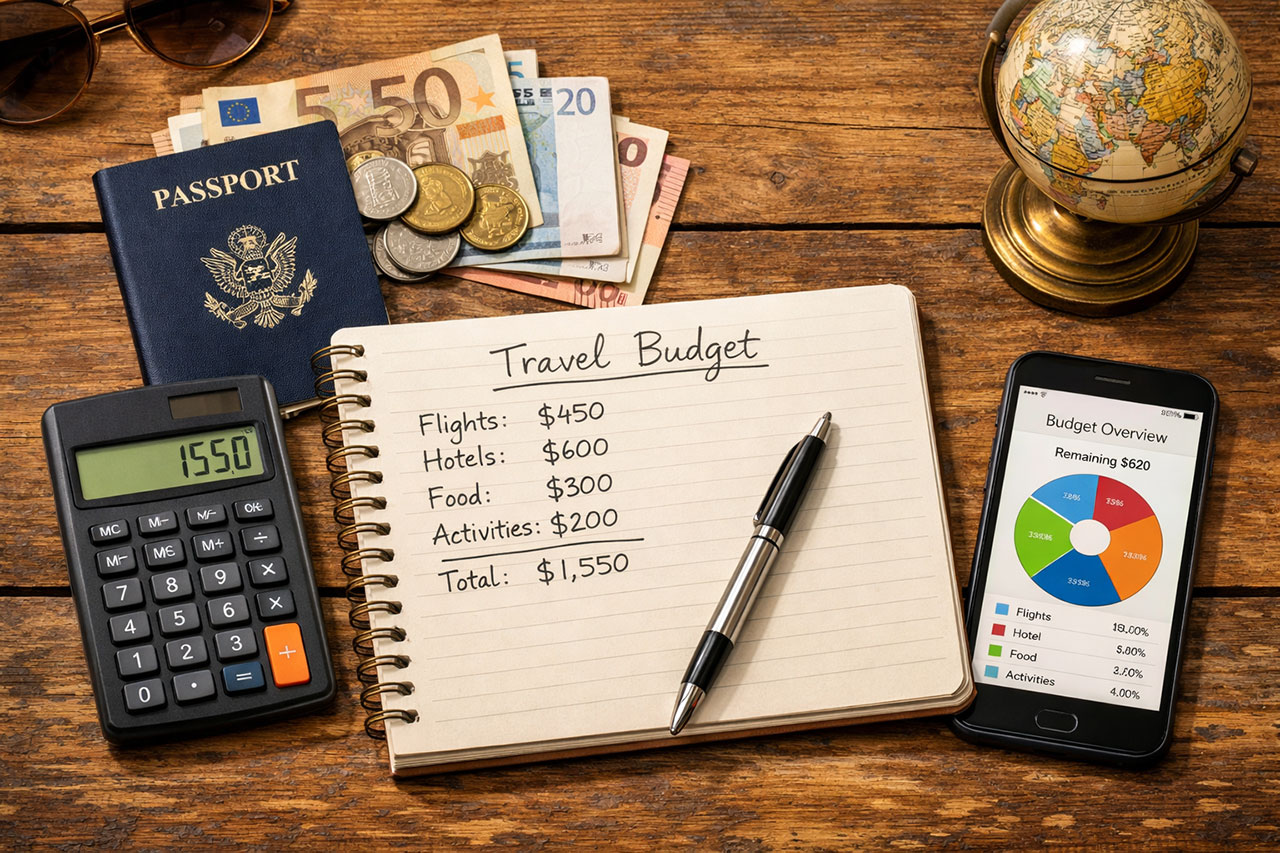
MONEY & COSTS
Plan real costs, avoid budget-killing mistakes, and make smarter money decisions before and during your trip.
Read MoreNo, not directly. While AI is excellent for summarizing hotel reviews or identifying the best flight routes, it cannot securely handle your transaction. You still need to complete your booking directly with the airline or on an official hotel website to guarantee your reservation and protect your purchase.
Extremely specific. If you ask a generic question, you will get a generic itinerary. Tell the AI your budget, preferred pace, dietary restrictions, and exactly what you want to avoid. Providing constraints forces the tool to give you a customized starting point rather than a basic top-ten list.
No. You must always verify the heavy logistical details. AI tools frequently hallucinate transit schedules, ignore geographic distances between stops, and suggest restaurants or museums that are permanently closed. Treat the AI output as a rough draft and confirm opening hours on official local sites.
Use it as a brainstorming assistant and a dynamic filter. It excels at grouping activities by neighborhood, comparing the pros and cons of two different cities, and creating a packing list based on historical weather. Let it organize your ideas before you take over the actual scheduling.
AI chatbots do not have secret access to lower airfares. However, they can help you brainstorm cheaper routing strategies. You can ask an AI to suggest alternative nearby airports, identify regional budget airlines, or compare the cost of train travel versus flying for a specific leg of your trip.
Usually not. AI models are trained on the most popular data available on the internet, which means they naturally gravitate toward highly reviewed, famous tourist stops. To find authentic, under-the-radar experiences, you still need to rely on firsthand accounts from local guides and travel blogs.