Travel Planning Hub
Start here to plan your trip, compare options, and explore every TLGA planning guide.

Packing & Gear Guide
What to pack, what to skip, and how to build a lighter travel setup that works.


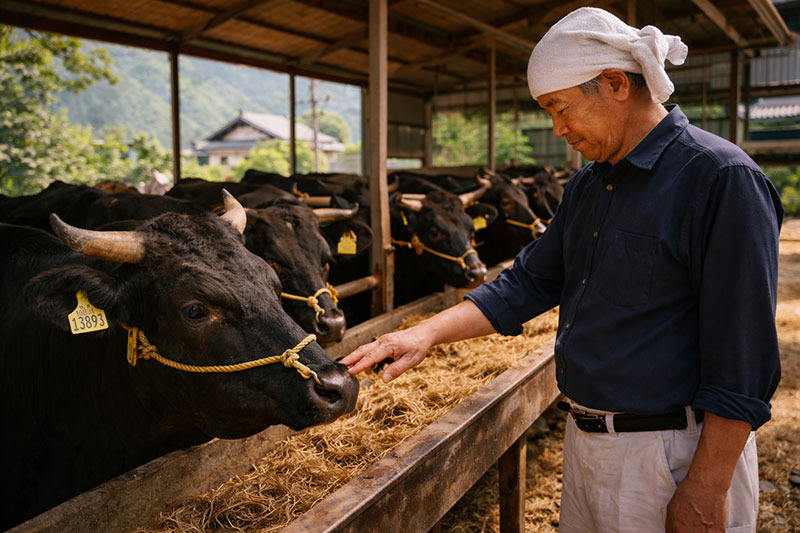
Raised with care: The exceptional quality of A5 Wagyu begins with the dedicated farmers who raise Kuroge Washu cattle in low-stress environments.
By Corey Gasman
Home » Destinations » Japan »There is steak, and then there is A5 Wagyu. To compare them is like comparing a heavy metal concert to a harp recital. One is about power and chew. The other is about restraint, elegance, and a texture that disappears the moment it hits your tongue.
If you are visiting Japan in 2026, eating Wagyu is not just a meal. It is a confrontation with the absolute limit of what food can be. It is richness pushed to the edge of excess.
If this is part of a larger trip, start with our Japan Travel Guide to understand how Wagyu fits into the bigger food and travel experience across the country.
This guide goes beyond the melt-in-your-mouth clichés. We are diving into genetics, the cuts you should actually order, and the science behind why this beef permanently changes your expectations of steak.
Pro Tip: Portion Control Matters
A5 Wagyu is not dinner. It is an ingredient. It is roughly 50 percent fat by volume. Ordering a large steak is a fast track to discomfort. The ideal portion is 3 to 4 ounces. Treat it like foie gras, not ribeye.
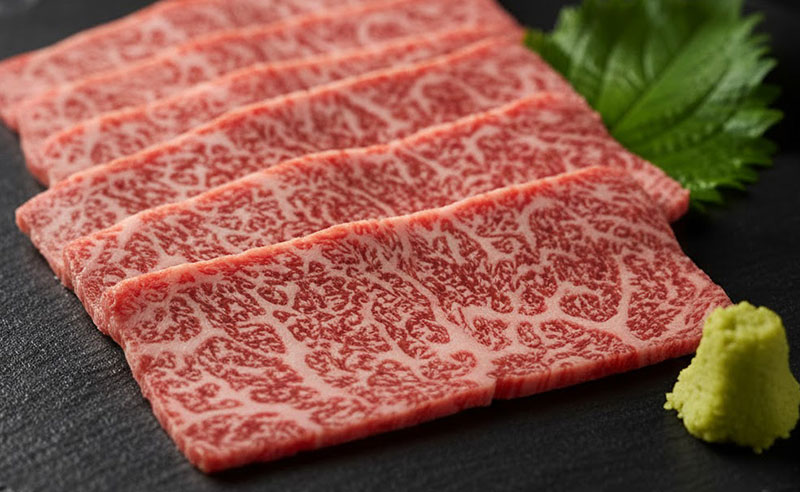
Shimofuri (frosting): The intricate lattice of unsaturated fat that defines the A5 grade.
You have heard that Wagyu melts in your mouth. That is not a metaphor. Fat in most American beef melts at about 104°F, which is higher than your body temperature. That is why you have to chew it.
Japanese Wagyu fat melts at roughly 77°F. The moment a piece enters your mouth, its structure collapses. You are not chewing muscle fibers. You are coating your palate in liquid umami.
This trait comes from Kuroge Washu cattle, which were isolated in Japan’s mountainous terrain for centuries. Over time, they developed a genetic tendency to store fat inside the muscle rather than around it.
Pro Tip: What Shimofuri Should Look Like
True A5 Wagyu should not look like red meat with white lines. It should appear as a pink haze where fat and muscle are nearly indistinguishable.
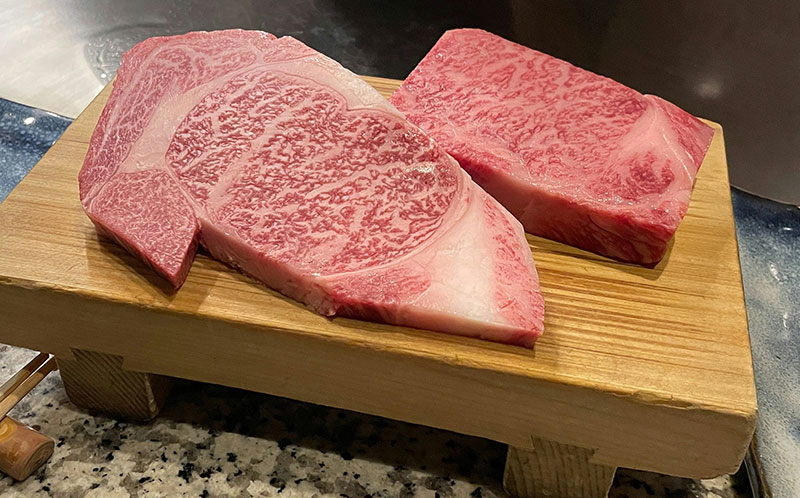
Kobe gets the spotlight, but regions like Matsusaka, Miyazaki, and Hida are often the real favorites among local chefs.
Kobe Beef dominates international menus, but in Japan it is just one name among many. If you want to order like a local, pay attention to these regions.
If you are planning where to try these, many of the best restaurants are in major cities. Start with our Tokyo Travel Guide for neighborhoods and food districts where high-quality Wagyu is easiest to find.
For official grading standards and how A5 is evaluated, you can reference the Japan Meat Grading Association.
Sirloin and ribeye are popular for a reason, but they can overwhelm the palate. For a more balanced experience, look for these cuts.
| Cut | Why It Works | Texture |
|---|---|---|
| Zabuton | Deep marbling with a strong beef flavor. | Creamy with structure. |
| Chateaubriand | Extremely tender with restrained fat. | Velvety and smooth. |
| Misuji | Rare shoulder cut with natural sweetness. | Soft and gelatinous. |
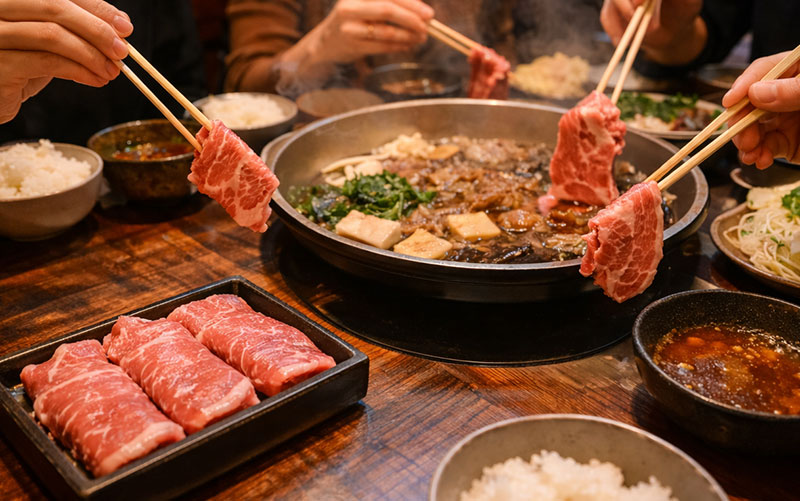
A5 Wagyu is often enjoyed shabu shabu or sukiyaki style, where thin slices cook for seconds and highlight the fat’s natural sweetness.
When Wagyu arrives, time matters. As it cools, the fat begins to solidify and the texture changes.
Step one. Eat the first bite plain. No sauce. No salt. Let body heat do the work.
Step two. Add a small amount of fresh wasabi. Real wasabi cuts richness without heat and resets the palate.
Step three. If available, add a garlic chip for texture. The contrast completes the bite.
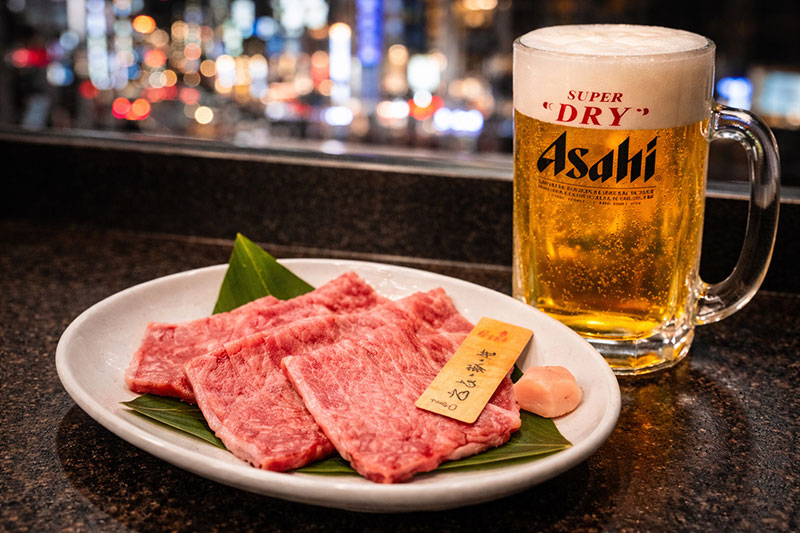
Eating like a local often means pairing Wagyu with crisp beer or high-acid drinks after a long day of exploring.
Heavy, oaky wines overwhelm A5 Wagyu. You need contrast, not competition.
Wine. Burgundy Pinot Noir offers acidity and earthiness that cleanses the palate.
Beer. Dry Japanese lagers reset the mouth between bites.
Spirits. A whisky highball with ice and strong carbonation may be the best pairing of all.
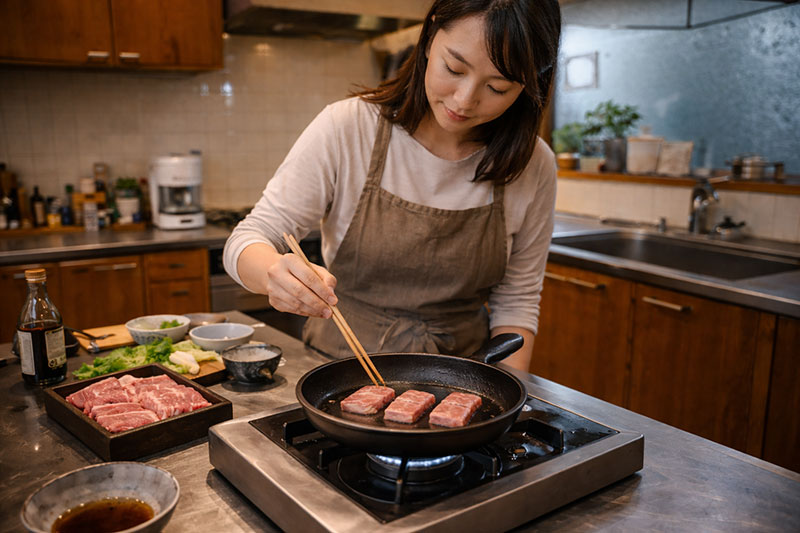
The home chef experience: With the right technique, Wagyu can be cooked simply and successfully at home.
If you buy A5 Wagyu from a department store basement, resist the urge to treat it like a barbecue steak.
If you are traveling longer-term or staying in an apartment, this approach pairs well with strategies in our One-Bag Travel Guide and What to Pack for Every Trip.
Local Guide Tip: Slice Wagyu into small pieces before cooking and sear them one at a time as you eat. This yakiniku approach keeps every bite hot and perfect.
A5 is the highest Japanese beef grade. The letter refers to yield grade, while the number refers to meat quality based on marbling, color, texture, and fat quality. In practical terms, A5 Wagyu means extremely rich, highly marbled beef with a very soft texture.
No. Wagyu is the broader category, while Kobe beef is one specific regional brand of Wagyu from Hyogo Prefecture that must meet strict production standards. All Kobe beef is Wagyu, but not all Wagyu is Kobe beef.
For most people, 3 to 4 ounces is enough for a satisfying experience. A5 Wagyu is so rich that it is better treated as a luxury tasting portion than a full-size steak dinner.
The best first experience is usually a small portion served simply, either as a steak, yakiniku cut, or shabu shabu slice. Eat the first bite plain, then add minimal seasoning like salt, fresh wasabi, or a light dipping sauce.
Explore Japan through food culture, planning guides, major cities, and deeper regional experiences.

START HERE
Use the full Japan hub to connect cities, compare regions, and build a trip that fits your travel style.
Read More
FIRST TIMERS
Get the logistics, etiquette, and pricing basics right.
Read More