




Napa Valley Travel Guide: Best Wineries, Food & 3-Day Itinerary

Home » Destinations » Page 5

Last updated: March 2026 by Corey Gasman

From the Editor:

Napa Valley is one of those destinations that can absolutely live up to the hype if you approach it the right way. It is polished, expensive, beautiful, and full of genuinely memorable food and wine experiences. It is also a place where bad planning leads to traffic, rushed tastings, palate fatigue, and bills that feel a lot less charming by the end of the weekend.

I have visited Napa multiple times with different groups and budgets, and the pattern is always the same: the best trips are not the ones that cram in the most wineries. They are the ones that pace the day, mix serious tastings with easier food moments, and leave enough room to actually enjoy where you are. This guide is for travelers who care as much about the lunch reservation and bakery stop as they do the bottle they are bringing home.

Start Here: The Napa Valley Game Plan

Napa Valley runs on two main north-south roads: Highway 29 and the Silverado Trail. If you zigzag across the valley all day, you will lose huge chunks of your trip to traffic and transitions. The smartest Napa itinerary groups winery visits by area and gives each day one clear lane.

Most travelers also overbook tastings. Two wineries in a day is ideal. Three is the absolute maximum, and only if the pacing is relaxed. Anything beyond that starts to feel like a checklist instead of a trip.

  • Pacing: Plan one morning tasting and one afternoon tasting, with lunch or downtime between them.
  • Quality over quantity: Upgrade one or two experiences instead of booking the cheapest standard flight everywhere.
  • Reservations: Book wineries, top restaurants, and any special experiences well ahead, especially for weekends and harvest season.
Pro Tip: Napa rewards restraint. One standout tasting, one great lunch, and one memorable dinner is a better day than sprinting through five wineries you barely remember by sunset.

Napa Golden Rule: Limit yourself to a maximum of three wineries per day, and always group them by location so you are tasting wine instead of sitting in valley traffic.

City pairing

Flying in? Read the San Francisco Travel Guide before heading north.
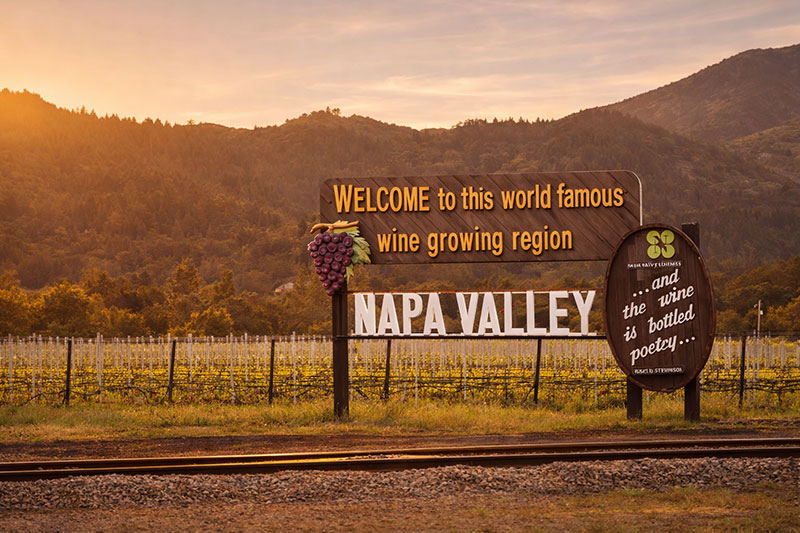
The iconic "Welcome to this world famous wine growing region Napa Valley" wooden sign standing at the edge of a vineyard, captured at sunset with the hills in the background under a warm, golden sky.

The iconic Napa Valley welcome sign glowing at sunset, marking the entrance to one of the world’s most famous wine regions.


Understanding Napa Valley’s Main Regions

Napa Valley is compact compared to many wine destinations, but each part of the valley gives the trip a different feel. Where you stay matters. Where you book tastings matters even more.

Downtown Napa is the easiest base if you want restaurants, bars, and more hotel variety. Yountville feels polished and food-forward. St. Helena is classic wine country. Calistoga is more relaxed and makes sense if you want a slower pace, spa time, and an up-valley base.

Area What It Feels Like Why It Works
Downtown Napa Lively, walkable, easiest at night Best mix of hotels, tasting rooms, restaurants, and casual evening options.
Yountville Upscale, culinary, boutique Best for food lovers who want top restaurants and a polished stay.
Oakville + Rutherford Iconic Cabernet country Great for serious wine drinkers focused on classic Napa reds.
St. Helena Historic, refined, central up-valley Beautiful base for winery-heavy days with strong lunch and dinner options.
Calistoga Relaxed, rustic, spa-friendly Great for couples or travelers who want wine plus hot springs and slower mornings.
Local Guide Tip: First-time visitors usually do best staying in Yountville, St. Helena, or downtown Napa. Those bases make it much easier to build days that feel smooth instead of scattered.
The exterior of Silver Oak Cellars in Napa Valley, featuring the iconic stone water tower and rustic stone winery buildings set against a backdrop of green vineyards and a bright blue sky.

The historic stone water tower at Silver Oak Cellars, a landmark of Napa Valley’s Cabernet Sauvignon heritage.


The Best Napa Valley Wineries to Actually Visit

There are hundreds of winery options in Napa, which is exactly why so many first-time visitors end up booking the wrong ones. The goal is not just to taste wine. It is to choose experiences that feel distinct from one another.

A strong Napa winery day usually mixes one estate with visual drama, one tasting with broad appeal, and one food or picnic stop that gives your palate a reset. That is how the trip keeps its shape.

If you want crowd-pleasers for a first Napa visit, these wineries work well because each one shows a different side of the valley.

Winery The Vibe Why You Should Go
Sterling Vineyards Scenic, elevated, memorable The gondola arrival makes this one of the most visually distinctive winery experiences in Napa.
CHANDON Fresh, social, celebratory A strong opening stop for sparkling wine and a lighter start to the day.
Hess Persson Estates Mountain estate, art-forward, refined You get mountain views, stronger reds, and one of the valley’s best art add-ons.
Frog’s Leap Garden setting, relaxed, thoughtful A beautiful Rutherford property that feels grounded and less performative than many Napa estates.
Schramsberg Historic, cave-driven, classic One of Napa’s signature sparkling experiences and a very smart alternative to an all-Cabernet itinerary.
Silver Oak Modern, polished, high-end A classic stop for travelers who want a polished Napa Cabernet experience.
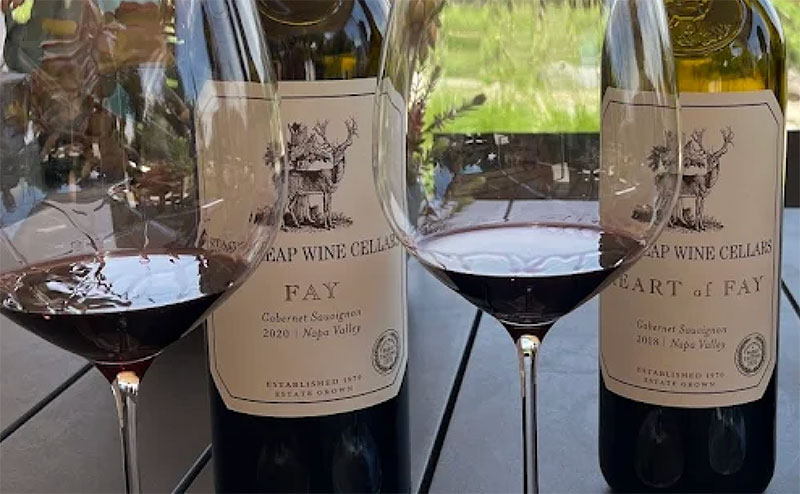
Stag’s Leap Wine Cellars Historic, polished, iconic A strong first-trip stop if you want a recognizable Napa name with real Cabernet history.
A close-up of a wine tasting at Stag’s Leap Wine Cellars, featuring two glasses of deep red Cabernet Sauvignon on a wooden table next to an open bottle of FAY Vineyard estate wine.

A seated tasting at Stag’s Leap Wine Cellars, featuring their legendary FAY Vineyard Cabernet Sauvignon.


7 Napa Wineries for Serious Wine Lovers

If you want to understand why Napa matters, not just see the polished version of it, this is the list that deserves extra weight. These are the wineries I would prioritize for travelers who care about terroir, structure, age-worthiness, and experiences that feel more rooted in the wine than the staging.

This is also where Napa gets much stronger if you balance sparkling, classic Rutherford and Oakville reds, and one or two producers that feel less corporate and more cellar-driven.

Priority bottles and tastings

Winery Why Serious Drinkers Care Best Fit For
Corison Elegant, age-worthy Cabernet that leans more restrained than many Napa peers. Travelers who want nuance over flash.
Schramsberg Historic cave tastings and one of Napa’s benchmark sparkling houses. Anyone building a smarter, more balanced tasting lineup.
Frog’s Leap A more grounded estate feel and wines that often drink with freshness and ease. People who want serious wine in a less stiff setting.
Hess Persson Estates Mount Veeder fruit and a stronger sense of place than many valley-floor stops. Drinkers who like mountain wines and deeper reds.
Silver Oak A Napa icon that still matters if Cabernet is your main reason for coming. Classic Napa luxury red wine drinkers.
Stag’s Leap Wine Cellars A foundational name in Napa Cabernet history and one of the valley’s most recognizable benchmarks. Travelers who want a sense of Napa’s bigger wine story.
Inglenook Historic estate prestige, strong sense of legacy, and a more old-school aura than many newer luxury properties. Wine travelers who like heritage and classic estate atmosphere.

For a first serious Napa trip, I would build one day around Schramsberg plus a Cabernet producer, then another around Rutherford or St. Helena. That creates contrast and gives your palate a much better run than stacking three heavy red tastings back to back.
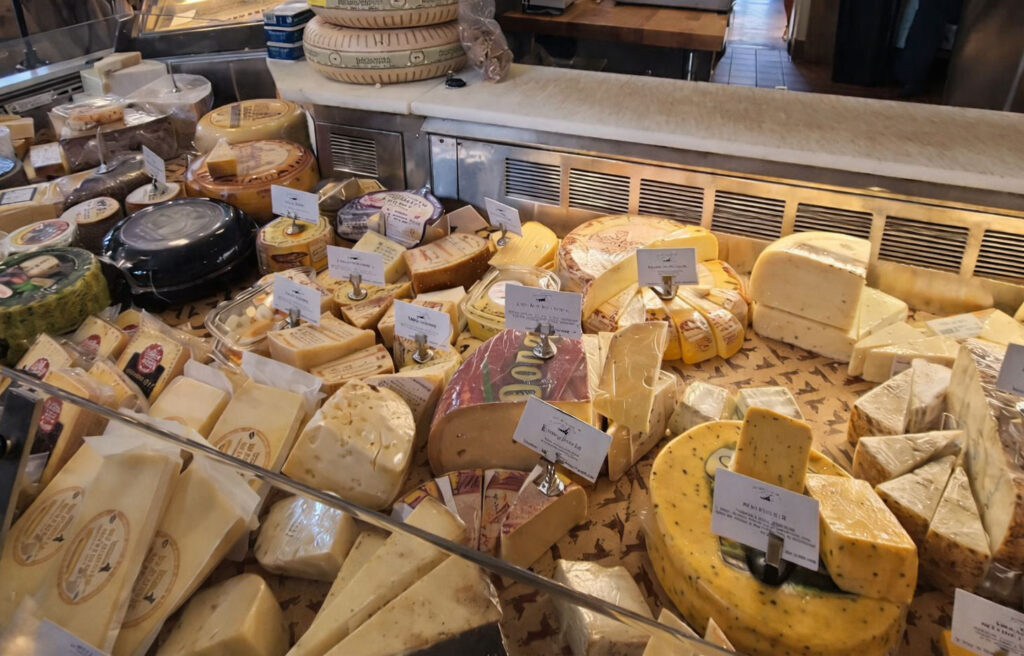
Pro Tip: Do not make every reservation a Cabernet-heavy flight. Start one day with sparkling or whites, save the biggest reds for the afternoon, and leave room for a real lunch in between.
Artisan cheese selection at Oakville Grocery in Napa Valley perfect for building a wine country picnic

The cheese counter at Oakville Grocery in Napa Valley is a perfect stop to build a picnic before heading to the vineyards.


Where to Eat: Yountville and the Napa Food Scene

Napa is not just a winery destination with a few good restaurants attached. For food-forward travelers, the eating can be just as important as the tasting. That is especially true in Yountville, where you can build an entire trip around bakery mornings, long lunches, and one splurge dinner.

The famous names pull the headlines, but the real Napa food move is variety. One big dinner. One picnic lunch. One bakery stop. One market stop. One easier night where nobody needs a tasting menu after a full day of wine.

That balance is what makes Napa feel luxurious instead of exhausting.

The food rhythm that works best

  • One major dinner reservation in Yountville, St. Helena, or downtown Napa.
  • One deli or market lunch with cheese, sandwiches, and something fresh between tastings.
  • One pastry-and-coffee morning that starts the day gently before the first pour.
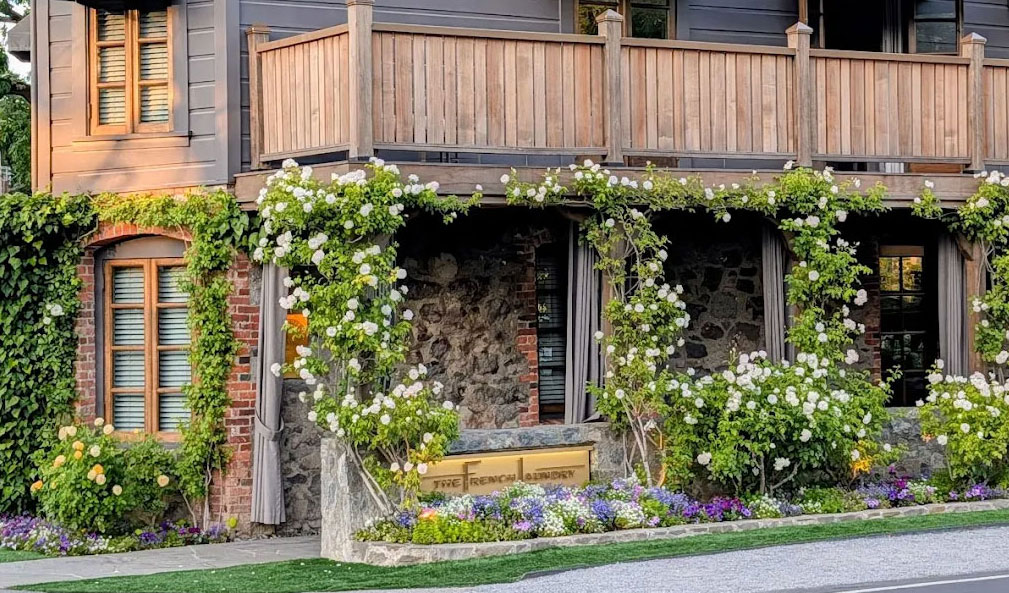
The French Laundry restaurant exterio in Yountville Napa Valley a stone and wood building.

The French Laundry in Yountville is one of Napa Valley’s most famous restaurants, where Thomas Keller’s legendary tasting menu draws food lovers from around the world.


Best Restaurants in Napa Valley

If your blog leans food and drink first, this section matters almost as much as the winery picks. A lot of Napa guides over-focus on The French Laundry and stop there, but the better strategy is to help readers build a realistic dining plan around one dream meal and several smarter supporting stops.

That usually means one headline reservation, one casual but excellent lunch, and one market or picnic option that saves both money and stamina.

Restaurant Location Why It Belongs in the Guide
The French Laundry Yountville The bucket-list reservation if your readers want Napa’s biggest dining trophy.
Bouchon Bistro Yountville A much more attainable way to tap into the Thomas Keller world.
Bouchon Bakery Yountville Perfect for a pastry-and-coffee start before the first tasting of the day.
Press St. Helena One of the best picks for travelers who want a serious Napa steak-and-Cabernet dinner.
The Charter Oak St. Helena Excellent for a stylish but more relaxed dinner with big flavor and strong produce.
Oxbow Public Market Napa An easy casual stop for oysters, snacks, coffee, cheese, picnic supplies, or a low-key lunch.
Oakville Grocery Oakville One of the smartest picnic and sandwich stops in the valley between winery reservations.
Local Guide Tip: Your best Napa meal might not be the most expensive one. A market lunch or vineyard picnic between tastings often becomes the reset that saves the whole day.
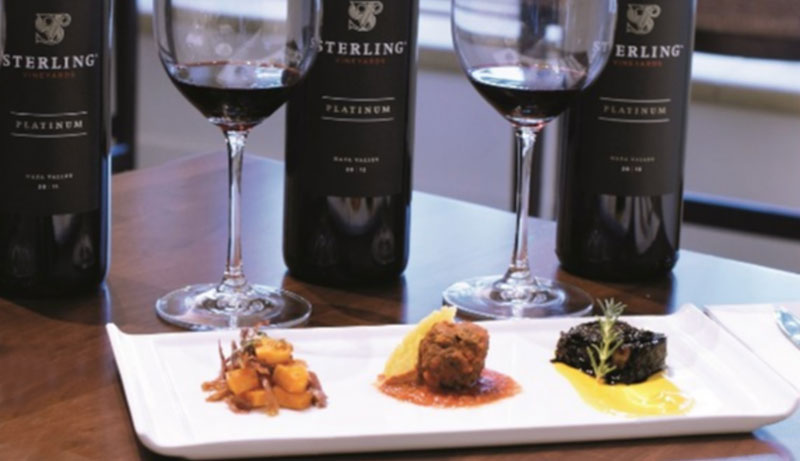
A close-up of a wine pairing experience at Sterling Vineyards, featuring two glasses of red wine on a white rectangular plate alongside small gourmet food pairings

A curated wine and food pairing at Sterling Vineyards, where estate wines are served with small bites designed to highlight specific flavor profiles.


What Napa Valley Is Famous For

Napa Valley is still most famous for Cabernet Sauvignon, and that is usually the main event for wine-focused travelers. The valley’s name is tied to rich, structured reds that often feel powerful and polished, especially in classic areas like Oakville and Rutherford.

But the smartest Napa trip is not Cabernet-only. Adding sparkling wine, Chardonnay, Sauvignon Blanc, or a more restrained producer keeps the trip from flattening into one long parade of expensive reds.

  • Cabernet Sauvignon: Napa’s flagship and the main draw for many serious wine travelers.
  • Sparkling wine: One of the easiest ways to create contrast in your tasting lineup.
  • Chardonnay: Worth booking if your readers like richer white wines with texture.
  • Sauvignon Blanc and lighter whites: Very useful for pacing early-day tastings and warm weather visits.

Older couple biking past green vineyards in Napa Valley under a clear blue sky

Cycling through Napa Valley vineyards is one of the most relaxed ways to experience wine country between tastings, with quiet roads, rolling vines, and beautiful valley views along the way.


Getting to Napa and Getting Around

Most travelers reach Napa from San Francisco, Oakland, or Sacramento. Driving from San Francisco can be quick in ideal conditions, but weekend traffic can shift the whole equation. That matters because timing mistakes on arrival day often ripple into missed reservations or rushed first tastings.

Once you are in the valley, the transportation question gets more important. If more than one person is tasting, a private driver is usually the best move. Rideshares are fine for shorter hops around town, but they are not something I would build an entire winery day around.

The Napa Valley Wine Train is worth thinking of as an experience, not as a transportation solution. It can be a fun luxury add-on, but it does not replace the need for a clear winery plan.

Transport Method Best Used For The Reality
Rental Car Arrival, flexibility, dinner outings Helpful for independence, but only works during tasting hours if one person stays fully sober.
Private Driver Serious winery days Usually the smoothest and safest option if everyone in the group is tasting.
Rideshare Town-to-town hops, dinner, downtown Napa Useful in the easier zones, less reliable if you build your whole day around it.
Wine Train A special meal or half-day experience A fun splurge, but not a practical substitute for a winery itinerary.
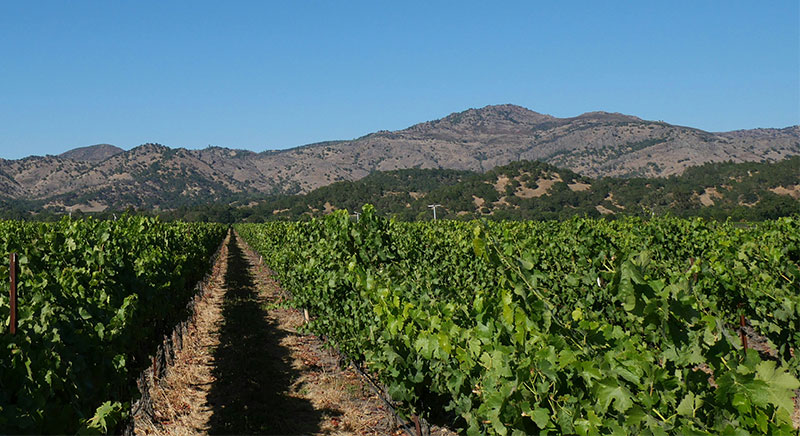
A perspective shot looking down a long, narrow row of a lush green vineyard in Yountville, with the vine leaves vibrant and the dirt path receding toward distant rolling hills under a soft sky.

Walking through the perfectly manicured rows of a Yountville vineyard, where the valley’s unique microclimate produces some of Napa’s most celebrated grapes.


The Perfect 3-Day Napa Valley Itinerary

Three days is the sweet spot for Napa. It gives you enough time for standout winery visits, one or two excellent dinners, and some breathing room so the whole trip does not feel like a blur of reservations.

The best three-day Napa itinerary also alternates intensity. Do not stack your most serious, expensive, or tannic tastings back to back without some lighter moments around them.

Day Theme Morning Afternoon Night
Day 1 Ease into Napa Bouchon Bakery or downtown Napa coffee, then CHANDON or Schramsberg Relaxed lunch, one polished winery stop, early hotel reset Dinner in Yountville or downtown Napa
Day 2 Serious wine day Corison, Frog’s Leap, or another producer-led tasting Cabernet-focused tasting in Rutherford, Oakville, or St. Helena Big dinner at Press, The Charter Oak, or your splurge reservation
Day 3 Views and one final memorable stop Late breakfast or market stop Sterling, Hess, or a final scenic estate before departure Casual final meal or drive back toward San Francisco
Pro Tip: Put your most expensive dinner after your lighter tasting day, not after your heaviest red wine lineup. Your palate and your energy level will thank you.
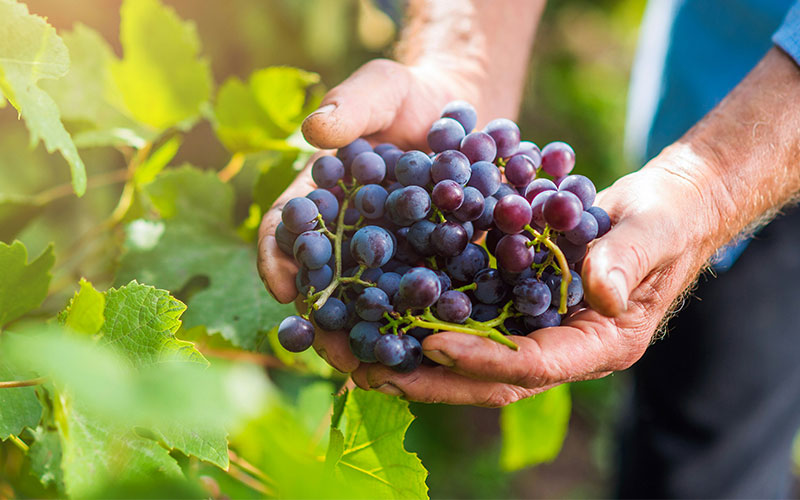
A close-up of a person's hands holding a large, ripe cluster of purple grapes in a vineyard during the autumn harvest season.

Hands holding a fresh cluster of wine grapes during the peak of the Napa Valley harvest season.


Best Time to Visit Napa Valley

Napa works year-round, but the mood shifts by season. Spring is fresh and green. Summer is busy and polished. Fall is the classic harvest window and brings the strongest wine-country energy. Winter is quieter and can be a great choice if your readers care more about easier reservations than vineyard buzz.

If someone wants the classic Napa atmosphere, early fall is the obvious draw. If they want a more relaxed version of the valley, spring and winter can be smarter value plays.

Season Why Go Watch Out For
Spring Green vineyards, pretty scenery, pleasant weather Popular weekends still fill up quickly.
Summer Long days, patio dining, easy outdoor tasting weather Higher demand and a more crowded feel.
Fall harvest Peak wine-country energy and the classic Napa atmosphere Most expensive and most competitive for reservations.
Winter Quieter, moodier, easier to book top spots Less vineyard drama and fewer warm patio moments.
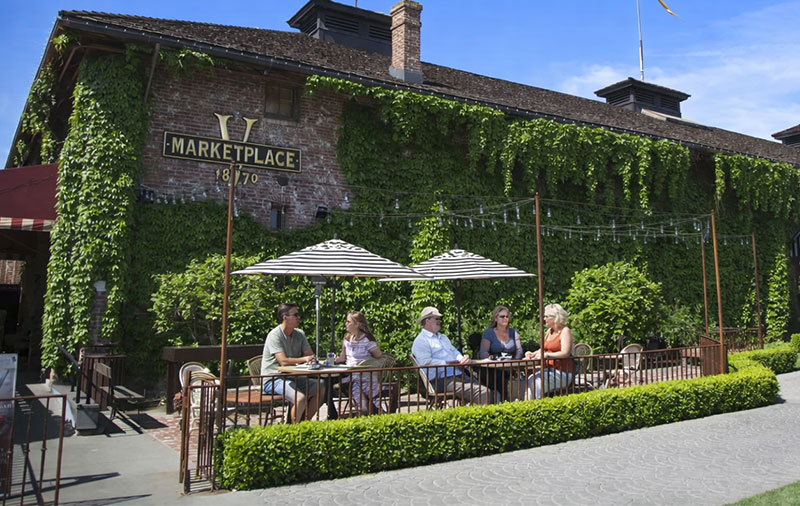
Outdoor patio at V Marketplace in Yountville Napa Valley with ivy covered historic building and people dining

Staying in Yountville places you in the heart of Napa Valley wine country, where spots like V Marketplace offer relaxed patios, great food, and easy access to nearby wineries.


Where to Stay in Napa Valley

Choosing the right base is one of the biggest quality-of-life decisions in Napa. Stay too far from your dinner plans or daily tasting zones, and the trip starts to feel more logistical than luxurious.

For most first-time visitors, Yountville is the strongest overall choice if the budget allows. Downtown Napa is usually the best value and easiest for nightlife. St. Helena is excellent for travelers who want a more wine-country feel. Calistoga works well if spa time and a quieter pace matter as much as restaurant access.

Base Best For Overall Feel
Downtown Napa More hotel choice and easier nights out Lively and practical
Yountville Food lovers and polished first-time trips Boutique and upscale
St. Helena Winery-heavy itineraries and classic Napa atmosphere Refined and scenic
Calistoga Spa trips, couples, and slower pacing Relaxed and rustic
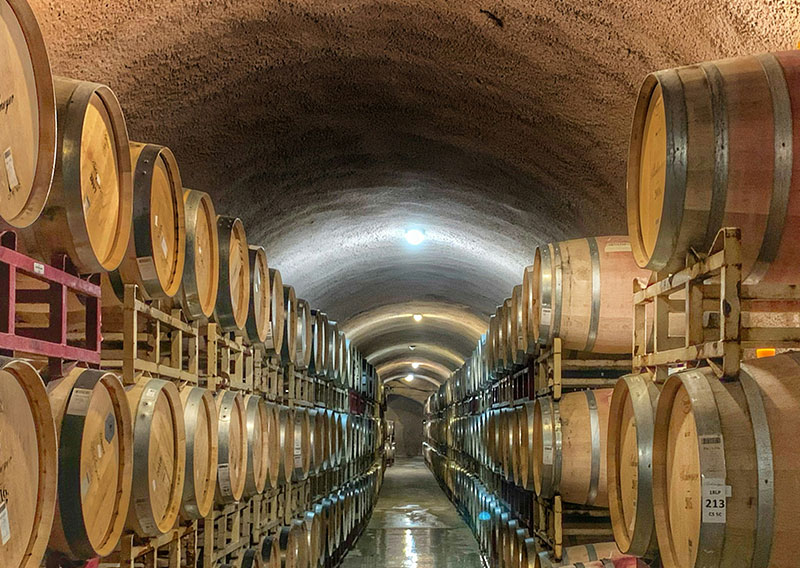
A long, symmetrical view down a dimly lit underground wine cave in Napa Valley, with rows of oak wine barrels stacked on wooden racks lining both sides of a stone-arched corridor.

The cool, quiet barrel room of a Napa Valley wine cave, where estate wines age in French oak to develop the depth and structure the region is known for.


Napa vs. Sonoma: Where Should You Spend Your Time?

Napa and Sonoma sit next to each other, but they do not feel the same. Napa is denser, more polished, and generally easier to build around headline food and wine stops. Sonoma is broader, more spread out, and often feels more rural and relaxed.

If your readers are food-and-drink travelers looking for a first big wine-country trip, Napa is usually the better base. If they want a slightly looser, less polished, more varied-feeling escape, Sonoma may be the better fit.

You can absolutely do both on the same trip, but not on the same day. Crossing between the two is where people often ruin an otherwise smooth itinerary.

Pro Tip: Base yourself in one valley and give the other a dedicated day only if the trip is long enough. Napa and Sonoma are neighbors, but they are not quick little side trips from each other once winery timing and traffic enter the picture.

Napa Valley Travel FAQs

How many days do I need in Napa Valley?

Three days is the sweet spot for most travelers. It gives you time for standout winery visits, a few strong meals, and enough breathing room that the trip still feels fun by the final day.

Yes. Napa is heavily reservation-driven now, especially at the wineries most travelers actually want to visit. The better your target list, the earlier you should book.

Two is ideal. Three is the absolute maximum. More than that and the day usually starts to feel rushed, repetitive, and a little wasteful.

It can be, as long as you think of it as a special dining and sightseeing experience rather than practical transportation. It works best as a splurge moment, not as the backbone of a winery itinerary.

Yountville is the strongest first-time base if you want a polished food-and-wine trip. Downtown Napa is a great option for value and convenience. St. Helena and Calistoga make sense if you want a more up-valley feel.

Fall gives you the classic harvest atmosphere, but it is also the busiest. Spring is one of the prettiest and easiest all-around times to go. Winter can be great for travelers who want easier reservations and a quieter mood.

Yes, but give each valley its own day. Trying to bounce between Napa and Sonoma during the same tasting day is one of the easiest ways to make the trip feel scattered.
Camino de Santiago Guide: Routes, Packing, and Tips

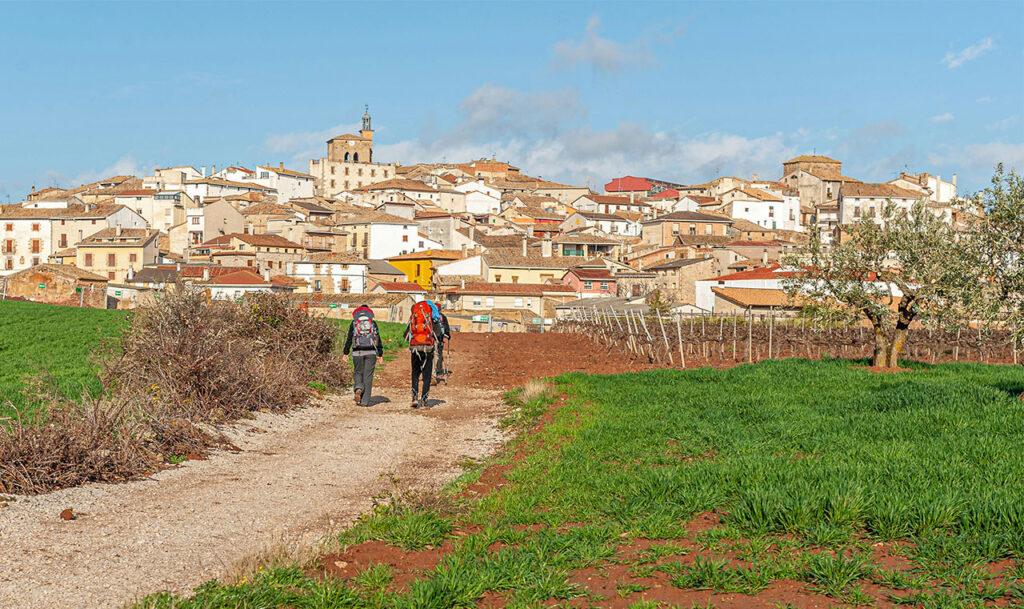
Two pilgrims with large backpacks walking on a dirt trail toward the medieval hilltop town of Cirauqui in northern Spain.

The Camino is not one trail but a network of pilgrimage routes across Spain and Portugal, and the best first trip is usually a partial walk, not the full marathon.


Home » Destinations » Page 5

Last updated: March 2026 by Corey Gasman

From the Editor

The Camino de Santiago is one of those trips that pulls people in for different reasons. Some come for the spiritual history, some for the physical challenge, and plenty just want a slower, more meaningful way to experience Spain. What makes it special is that it strips travel down to the basics. Wake up, walk, eat, rest, repeat.

It can also feel intimidating from a distance. The word pilgrimage sounds big. The idea of walking day after day can make you wonder if the Camino is only for serious hikers, lifelong walkers, or people with weeks to spare. It is not. The Camino can be shaped around your time, your body, your pace, and the version of the trip that actually feels right for you.

You do not need to hike the full route from France to Santiago to have a real Camino experience. In fact, for most first-timers, walking a shorter section is the smartest move. You still get the small towns, pilgrim hostels, trail rituals, shared meals, yellow arrows, quiet mornings, and that satisfying arrival into Santiago, just without needing five or six weeks off.

This guide focuses on the practical side of the Camino, but also the reason people keep talking about it long after they come home. If the spirit moves you, the Camino has a way of meeting you where you are. Some days will test your legs and patience. Other days will feel almost effortless. By the end, the reward is not just reaching Santiago. It is realizing you carried yourself there one step, one town, and one day at a time.

Planning a bigger Spain trip?

The Camino is one of the best slow-travel experiences in Spain, but it is even better when you understand how it fits into a broader Spain itinerary. Browse my full Spain Travel Guide for regional ideas, logistics, food, and more trip planning help. It is a good starting point if you want to connect your walk with extra time in places like Madrid, Galicia, the Basque Country, or Andalusia.

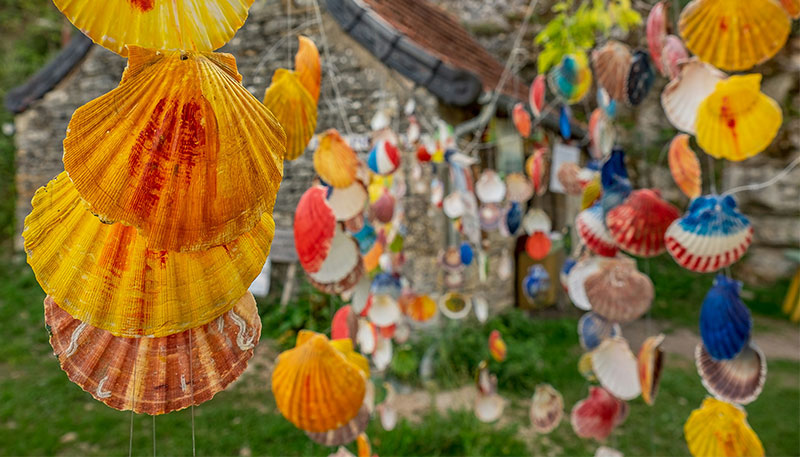
A hanging display of brightly painted scallop shells, the traditional symbol of the Camino de Santiago pilgrimage.

The scallop shell is the universal symbol of the Camino, guiding pilgrims and marking trails, backpacks, and towns along the route.


What Is the Camino de Santiago?

The Camino de Santiago is a historic pilgrimage network leading to the cathedral in Santiago de Compostela in Galicia, Spain. It is not one single trail. Instead, it is a web of routes crossing Spain and Portugal, with some beginning even farther across Europe.

For modern travelers, the Camino works as both a cultural journey and a long-distance walking trip. You can tackle a full route over several weeks, or simply walk a shorter section and still get the classic pilgrim experience.

Who This Camino Guide Is For

This guide is designed for first-time Camino walkers who want a practical overview before planning their trip. It focuses on the most popular routes, how long the Camino takes, what to pack, what the food is like, and how to walk a shorter section like the final 100 km into Santiago de Compostela.

Route note: This guide focuses mainly on the Spanish Camino experience, especially the popular final 100 km from Sarria to Santiago. It is designed for first-time walkers who want a practical, manageable way to experience the Camino without committing to the full route from France.

Start Here: Why the Camino Appeals to So Many Travelers

The appeal is simple. The Camino combines movement, small-town Spain, low-key social connection, and a built-in daily purpose. You do not need to overplan every hour. You just need a route, a place to sleep, and enough energy to keep moving west.

A blue ceramic tile embedded in a stone wall featuring the iconic yellow arrow and scallop shell pointing the way on the Camino de Santiago.

You rarely need a map on the Camino. Iconic yellow arrows and scallop shells mark the route and keep pilgrims on track.


Key Camino Routes for First-Time Walkers

The best Camino route depends on how much time you have, what kind of scenery you want, and whether you care about earning the official pilgrim certificate. For most first-timers, the sweet spot is choosing a route that feels achievable rather than trying to force the biggest possible version of the trip into a limited schedule.

Camino Routes Overview

The Camino de Santiago is not one single trail but a network of historic pilgrimage routes that lead across Spain and Portugal to Santiago de Compostela. Each route has its own personality, scenery, and level of difficulty, from the classic Camino Francés crossing northern Spain to the Atlantic-facing routes starting in Portugal.

For a first Camino, the goal is not to prove anything. The goal is to choose a route that gives you enough time to settle into the rhythm, enough support to feel comfortable, and enough challenge to make the arrival feel earned.

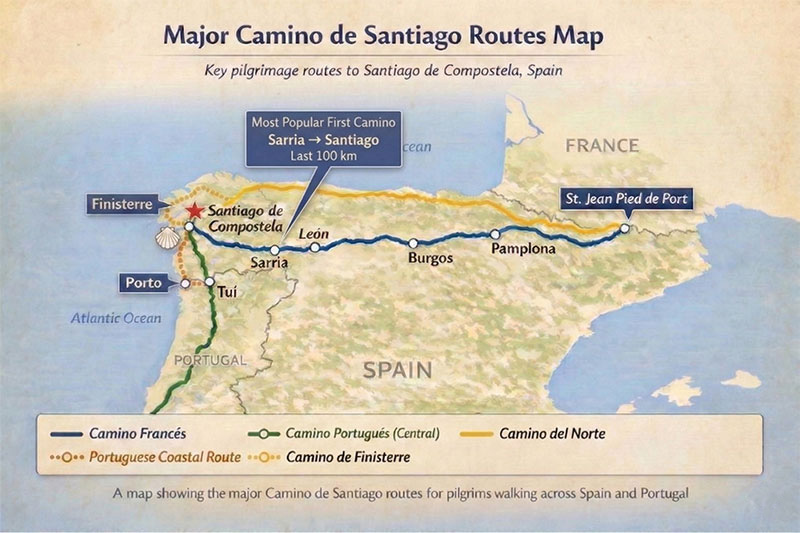
A map of the major Camino de Santiago pilgrimage routes across Spain and Portugal, showing the Camino Francés, Camino Portugués, Camino del Norte, and the extension to Finisterre. The map highlights key starting points like Saint-Jean-Pied-de-Port and Porto, leading to the final destination of Santiago de Compostela.

Overview map of the major Camino de Santiago pilgrimage routes across northern Spain and Portugal, including the Camino Francés, Camino Portugués, Camino del Norte, and the route from Santiago to Finisterre.


Major Camino de Santiago Routes Map

Before diving into the individual routes, it helps to visualize how the Camino network actually works. The Camino de Santiago is not one single trail but a system of historic pilgrimage routes across Spain and Portugal, all leading to the cathedral in Santiago de Compostela.

The map below highlights the most important routes travelers consider when planning their first Camino, including the classic Camino Francés, the Portuguese routes from Porto, the northern Camino del Norte, and the short extension from Santiago to Finisterre.

Route Distance Typical Time Why People Choose It
Camino Francés About 800 km 4 to 6 weeks The classic route with the most history, towns, and pilgrim energy
Camino Portugués Central About 240 km from Porto 10 to 14 days A great shorter option with Portuguese and Galician highlights
Portuguese Coastal Route About 280 km from Porto 12 to 15 days Atlantic views, seafood towns, and a less traditional but scenic feel
Sarria to Santiago About 115 km 5 to 6 days The most popular short walk and enough to qualify for the Compostela

If you want to explore towns, stages, and key stops in more detail, the interactive map below shows many of the main Camino routes and planning points used by modern pilgrims.

Interactive Camino planning map showing major pilgrimage routes, towns, and key stops along the Camino de Santiago.

Two pilgrims with large backpacks walking on a dirt trail toward the medieval hilltop town of Cirauqui in northern Spain.

The daily rhythm of the Camino is marked by long stretches of rural paths that eventually lead to beautiful, historic hilltop towns.


The Last 100 km: Best First Camino for Most Travelers

If you only have a week, the stretch from Sarria to Santiago is usually the smartest first Camino. It gives you enough days to settle into the rhythm, enough infrastructure to keep things simple, and enough distance to qualify for the official Compostela certificate.

This is also the section that makes the Camino feel possible for a lot of people. You do not need to be a professional hiker or take a month off work. You need a realistic plan, comfortable shoes, a light pack, and a willingness to take the days as they come.

Why this section works

  • Manageable time frame: usually 5 to 6 walking days.
  • Easy logistics: train and transfer connections are straightforward.
  • Plenty of services: cafés, hostels, and luggage transfer are common.
  • Real payoff: you still get the emotional arrival into Santiago.

TLGA Rule: For your first Camino, choose the version you can actually enjoy. A shorter section, lighter pack, and comfortable pace will usually make the walk more meaningful than trying to cover too much too fast.

Logistics: How to Get to Sarria

If you are walking the last 100 km, Sarria is your starting line. Getting there requires a little planning, but the transport connections in Spain are generally excellent.

  • Flying into Madrid (MAD): This is usually the easiest international option. From Madrid, you can take a high-speed Renfe train directly to Ourense, then a connecting regional train straight into Sarria.
  • Flying into Santiago de Compostela (SCQ): If you fly into the finish line, you can take a bus from the airport or city center to Lugo, then a quick connecting bus down to Sarria.
  • From Barcelona: You can take a domestic flight to Santiago, or book a longer daytime or overnight train option through Renfe.

If this is your first Camino, build in a little breathing room before your first walking day. Arriving tired, rushed, or jet-lagged makes the first stage harder than it needs to be. A quiet arrival day in Sarria can help you organize your pack, pick up any last-minute supplies, and start the walk with a better headspace.

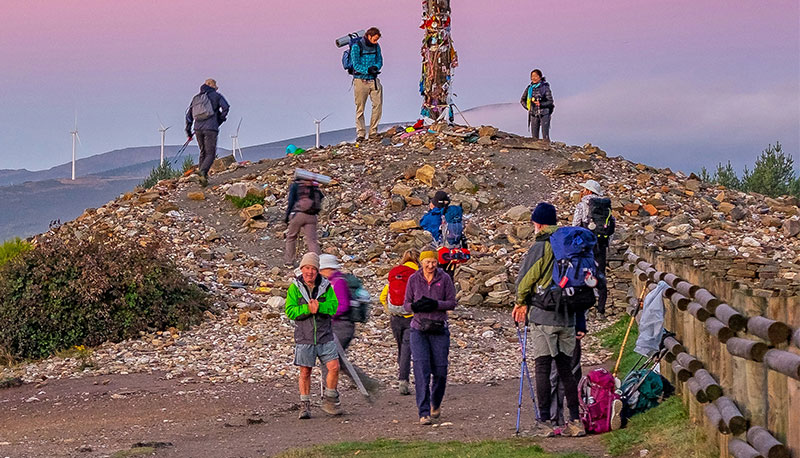
Pilgrims with backpacks resting at the Cruz de Ferro, a large pile of stones and a wooden cross at sunrise on the Camino Francés.

Early mornings on the trail often lead to powerful milestones, like leaving a stone at the Cruz de Ferro on the Camino Francés.


Best Time to Walk the Camino

For most people, the best overall months are April to May and September to October. These windows usually bring milder temperatures and more comfortable walking conditions than peak summer.

The Camino is doable in different seasons, but your experience changes a lot depending on weather, daylight, crowds, and how many services are open. First-time walkers usually have the best experience when the days are comfortable enough to enjoy the walking and social enough to feel the Camino energy.

Season Best For Watch Outs TLGA Take
April to May Cooler weather, green landscapes, strong walking conditions Some rain and cooler mornings Best first-timer window
June to August Long days and fully open services Hot stretches and bigger crowds Doable, but start early
September to October Comfortable temperatures and harvest-season atmosphere Shorter daylight and more weather variability later on Excellent overall balance
Winter Quiet trails and reflective vibe Cold weather and fewer open albergues Better for experienced walkers

How Long Does the Camino Take?

The full Camino Francés takes most people around five weeks, but that is not the standard you need to chase. Plenty of travelers do a section and still have a meaningful experience.

That is one of the best things about the Camino. It gives you room to choose your own version. A five-day walk can still be powerful. A two-week route can feel like a major reset. A full route can become a life marker. The right amount of time is the amount you can walk with enough energy left to enjoy the experience.

Trip Length Best Approach TLGA Recommendation
5 to 6 days Walk Sarria to Santiago Best short Camino option
7 to 10 days Longer section of the Portuguese Way or French Way Great for first-timers who want more trail time
2 weeks Porto to Santiago or a deeper route section Best balance of challenge and reward
4 to 6 weeks Full Camino Francés For travelers with real time and strong walking stamina
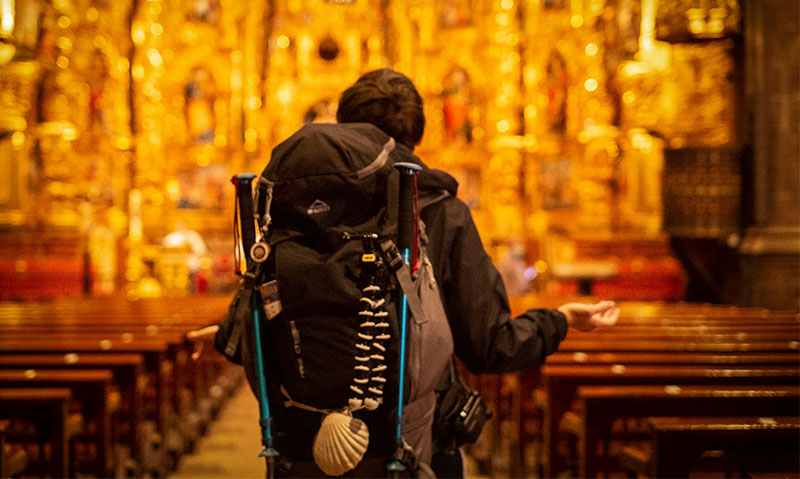
A pilgrim wearing a backpack and carrying trekking poles stands inside a dimly lit historic Spanish church with a golden altarpiece.

The Camino offers a unique mix of physical challenge and deep cultural history, with countless centuries-old churches open to walkers along the way.


The Daily Walking Rhythm

Most Camino days settle into a pretty simple pattern. Wake up early, start walking before the heat, stop for coffee and breakfast, then aim to arrive in your next town by early or mid-afternoon.

For most walkers, 20 to 30 km per day is a realistic target, depending on terrain, weather, and how much you are carrying. On a first Camino, consistency matters more than hero days.

The rhythm is part of the point. After a day or two, your world gets smaller in the best way. You start thinking about the next yellow arrow, the next café, the next town, the next place to rest your feet. That simplicity is what makes the Camino feel different from a normal trip.

My rule: if you are debating between a shorter stage and a long ego stage, take the shorter one. The Camino rewards rhythm, patience, and steady days more than trying to prove something.

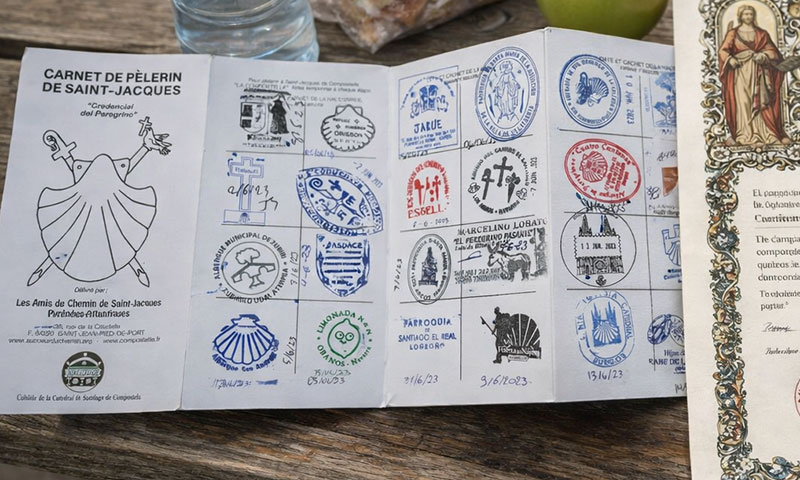
An open Camino de Santiago pilgrim passport filled with ink stamps, sitting on a wooden picnic table next to a lunch sandwich, an apple, and the official Compostela certificate.

Your Credencial (pilgrim passport) fills up with stamps along the route and is required to earn your official Compostela certificate in Santiago.


Pilgrim Passport and the Compostela

The Credencial, or pilgrim passport, is one of the core Camino rituals. You use it to collect stamps along the route from hostels, churches, cafés, and other stops.

To receive the official Compostela certificate in Santiago, walkers need to cover at least the final 100 km, while cyclists must cover 200 km. Once you enter that final 100 km stretch, you should collect two stamps per day in your credencial, not just one. This helps confirm that you completed the route properly.

It is practical, but it also becomes one of your favorite keepsakes. By the time you reach Santiago, the stamps tell the story of your walk better than a normal souvenir ever could.

Item What It Is Why It Matters
Credencial The pilgrim passport Needed for pilgrim hostels and certificate tracking
Daily stamps Proof of progress, 2x day for last 100 km Part logistics, part keepsake
Final 100 km Minimum walking distance for Compostela Why Sarria is so popular
Pilgrim Office Where you claim the certificate in Santiago The final official step
Three pilgrims with large backpacks walking on the trail toward a village.

The smartest Camino pack is the one that stays light, simple, and easy to live out of for days on end.


What to Pack for the Camino

The most repeated Camino advice is also the most useful: pack lighter than you think. A good guideline is keeping your pack around 10 percent of your body weight or less, ideally between 10 to 15 lbs (4.5 to 6.8 kg) fully loaded, excluding water.

Do not think of packing light as deprivation. Think of it as giving yourself a better Camino. Every extra item has to be carried, unpacked, repacked, dried, organized, and lived with. A lighter pack makes the walking easier and gives you more energy for the towns, meals, conversations, and quiet moments that make the Camino worth doing.

Essential Why It Matters TLGA Take
40L backpack Enough space without encouraging overpacking Sweet spot for most walkers
Broken-in trail runners or walking shoes Comfort and blister prevention More useful than heavy boots for many people
Two sets of walking clothes Simple rotation and easier laundry Keep it minimal
Rain shell Weather protection without bulk Essential in northern Spain
Sleep liner Helpful in albergues Small item, big value
Blister kit Your most important problem-solving tool Do not skip this
Traditional Camino de Santiago Menu del Peregrino dinner with caldo gallego soup, roast chicken with potatoes, bread, flan dessert, and red wine on a rustic table in a Spanish albergue

A classic Camino de Santiago pilgrim dinner after a long day of walking, typically featuring soup, roast chicken with potatoes, bread, dessert, and house wine in a cozy albergue restaurant.


Food on the Camino

Camino food is not about big fine-dining moments. It is about reliable, satisfying meals that fit the rhythm of walking. Coffee, toast, tortilla, bocadillos, soup, and a simple pilgrim dinner start to feel pretty great after a long day on the trail.

That is part of the charm. Food becomes fuel, comfort, and community all at once. A simple plate of chicken and potatoes can feel perfect when you have earned it mile by mile.

Typical Camino Breakfast

  • Coffee or café con leche
  • Toast with tomato, butter, or jam
  • Fresh orange juice in bigger towns
  • A pastry if you need the extra fuel

Typical Pilgrim Dinner

  • Soup or salad to start
  • Chicken, fish, pasta, or stew
  • Bread and sometimes wine
  • Simple dessert like flan or fruit
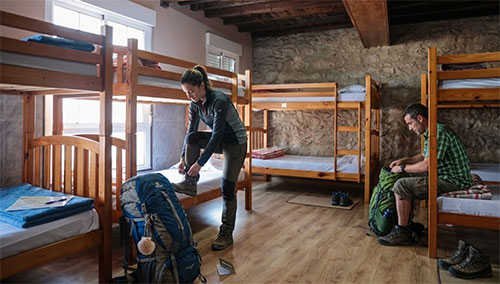
Two pilgrims unpacking their backpacks and taking off their boots in a traditional stone-walled Camino albergue with wooden bunk beds.

Albergues are dedicated pilgrim hostels that offer cheap, communal bunk beds and a great way to meet fellow walkers at the end of the day.


Camino Budget Reality

The Camino is one of the more affordable ways to travel through Spain, but your daily cost depends on how basic or comfortable you want the experience to be. Stay in municipal albergues and keep meals simple, and it stays very reasonable.

You can also make the Camino more comfortable without turning it into a luxury trip. Many first-time walkers mix albergues with the occasional private room, especially after a longer walking day or when they need better sleep.

Category Budget Range TLGA Move
Municipal albergue bed About €10 to €15 Best value, but arrive earlier
Private albergue bed About €15 to €25 Worth it for more comfort on longer trips
Guesthouse or private room About €40 to €100+ Mix in strategically, not every night
Food per day About €15 to €30+ Breakfast light, lunch flexible, dinner simple
Total daily budget About €25 to €50+ Very manageable if you keep expectations realistic
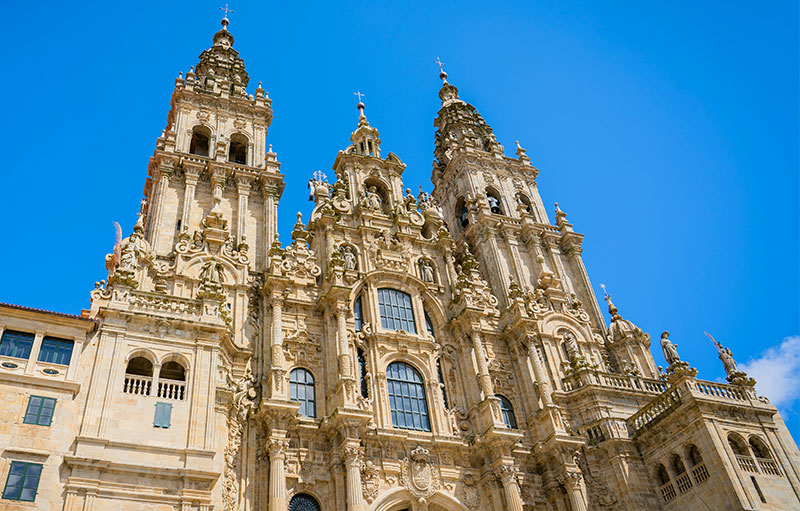
The ornate stone facade of the Cathedral of Santiago de Compostela under a clear blue sky, the final destination of the Camino de Santiago.

Arriving at the Cathedral of Santiago de Compostela is the emotional finish line and the ultimate payoff for pilgrims completing the Camino.


Camino Highlights, Towns, and Stops Worth Looking Forward To

One of the easiest ways to enjoy the Camino more is to think beyond the mileage. The memorable parts are often the towns, not just the trail itself.

Each stop gives the walk texture. Some towns are beautiful. Some are practical. Some are just the place where you finally sit down, take your shoes off, and realize you made it through another day. That is part of the Camino too.

Town or Stop Why It Stands Out Best For
Saint-Jean-Pied-de-Port The classic start for the French Way Big-trip energy and anticipation
Roncesvalles Mountain setting after the Pyrenees crossing First dramatic arrival
Burgos Historic cathedral city with real urban weight Culture and recovery day
León Elegant old city and one of the best bigger stops Food and architecture
Sarria The practical launch point for the last 100 km Short Camino starts
Portomarín One of the most common early stops out of Sarria Classic first stage feel
Santiago de Compostela The final arrival and emotional payoff Cathedral and completion moment

How to Make Your First Camino Easier

The Camino is supposed to challenge you, but it does not need to break you. A few smart choices can make the difference between a rewarding walk and a trip that feels harder than it has to be.

  • Pack lighter than feels natural: extra weight becomes a daily problem.
  • Start steady: the first few days should feel controlled, not heroic.
  • Treat hot spots early: small foot issues are easier to fix before they become blisters.
  • Leave some flexibility: booking everything can remove the freedom that makes the Camino special.
  • Let your Camino be enough: a partial Camino is still a real Camino.

Frequently Asked Questions

Do I need to walk the whole Camino to have the real experience?

No. Most first-timers are better off walking a shorter section. The final stretch from Sarria to Santiago is popular for a reason. It is manageable, scenic, social, and still ends with the classic arrival into Santiago.

For most travelers, Sarria to Santiago is the easiest first choice. If you have more time and want a slightly broader experience, the Camino Portugués from Porto is another great option.

It is more demanding than many people expect, but it is very doable with basic preparation. Walking regularly before the trip, wearing already-tested shoes, and keeping your pack light matter more than being an elite hiker.

No. The Camino welcomes people for many reasons. Albergues are for pilgrims walking the route, whether your motivation is spiritual, cultural, personal, or simply travel-focused.

It can be a smart option, especially if you have an injury concern, want a lighter daypack, or are doing the Camino more for the experience than the gear challenge. There is no prize for making it harder than it needs to be.

It depends on the season and the route. On popular stretches like Sarria to Santiago in spring, summer, and early fall, booking ahead can reduce stress. On quieter sections or shoulder-season walks, many pilgrims still keep things flexible.

For many walkers, lightweight trail runners or well-broken-in walking shoes work better than heavy hiking boots. Comfort, fit, and blister prevention matter more than choosing the most rugged-looking option.

Yes. A one-week Camino can still be deeply rewarding if you choose the right section. Sarria to Santiago is the most practical short route because it gives you several walking days, strong pilgrim infrastructure, and the emotional finish in Santiago.

3-Day Las Vegas Itinerary

Seventy-two hours is the exact right amount of time to do Las Vegas right. Here is how to maximize every single minute.


Home » Destinations » Page 5

Last updated: March 2026 by Corey Gasman

Start Here: If you are bringing the crew, jump to the Guys Weekend. If you are here to eat, go straight to the Foodie Weekend. Looking for a getaway with your partner? Check out the Romantic Weekend.

The 72-Hour Rule

Three days is the Goldilocks zone for Las Vegas. Any shorter and you spend your whole trip in transit. Any longer and your wallet and your energy levels start protesting.

Because Vegas is completely different depending on who you travel with, I broke these weekends down by vibe. Pick a style, lock in a couple reservations, and leave room for spontaneity.

Core TLGA rule for Vegas itineraries: Do not try to do everything. Pick one major dinner, one show or big event, and one daytime mission per day. Leave margin for the unexpected.

Before You Book: The 5 Things That Save a Vegas Weekend

  • Arrive early if you can: Thursday arrivals usually mean easier check-in and better dinner availability.
  • Reserve the “hard stuff” first: one headline dinner, one show, one pool or dayclub plan.
  • Pick a home base: Downtown is compact and chaotic in a good way. Center Strip is the easiest for walking. North Strip (Wynn/Venetian area) is calmer and more polished.
  • Do not rent a car: rideshare is easier than parking, and you can save your energy for the actual weekend.
  • Build in recovery: one slow morning makes the whole trip better.
Weekend Style Best Area to Stay The Big Highlight Pace
Guys Weekend Downtown / Fremont Track day plus better table vibes Fast and loud
Romantic Weekend Center Strip (Cosmo/Aria) Couples spa plus a “dress up” dinner Relaxed and luxurious
Foodie Weekend Venetian / Wynn zone A-list steaks plus off-strip tacos A marathon of calories
Shows & Concerts Center Strip Sphere night Late nights
Girls Weekend Wynn / Encore Dayclub plus a glam dinner Glam and high-energy
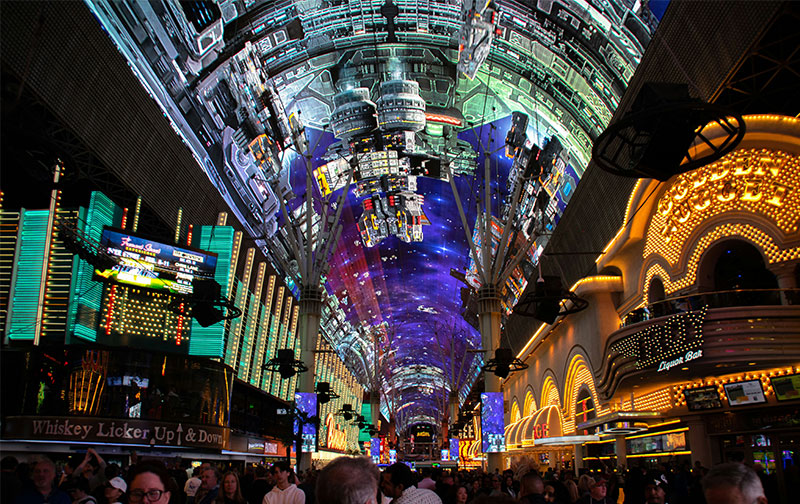
A bustling crowd walks beneath the massive, brightly lit LED canopy of the Fremont Street Experience in downtown Las Vegas at night.

High stakes and neon lights. Fremont Street is the perfect base camp for a high-energy weekend with the crew.


The Guys Weekend

If you are rolling into town with a group, you want an itinerary that balances action with easy wins. Staying Downtown at a place like Circa is a smart move. You are in the middle of the chaos, the walkability is real, and it is built for sports fans.

  • Day 1: Arrival and Old-School Vegas. Check in, grab big slices at Pizza Rock, and hit Fremont Street for tables and people-watching. If you want a classic capstone, swing by Golden Gate for the old Vegas energy.
  • Day 2: Horsepower and a Steakhouse Night. Get off the Strip for a track session at SpeedVegas or Exotics Racing. Then clean up and do one serious dinner. This is the night you spend money on purpose.
  • Day 3: Sports and Recovery. Book a spot at Stadium Swim at Circa. Park yourself in a chair, order food, and let Vegas come to you before your flight home.
Guys trip move: Pick one “big spend” dinner and keep the rest simple. Vegas nickel-and-dimes you everywhere. Your weekend feels better when you control where the money goes.
Couple enjoying cocktails at The Chandelier Bar inside The Cosmopolitan in Las Vegas

A classic Vegas moment: cocktails under the crystal glow of The Chandelier at The Cosmopolitan, one of the most iconic bars on the Las Vegas Strip.


The Romantic Weekend

When we do Vegas as a couple, we skip the chaos and prioritize views, great meals, and actual relaxation. Cosmopolitan and Aria are strong home bases for this because everything is walkable and you can keep your nights classy without trying too hard.

  • Day 1: Cocktails and an Elevated Dinner. Start with cocktails at The Chandelier (Cosmopolitan), then do a reservation dinner like Catch (Aria) or Delilah (Wynn). Afterward, take the slow walk to Bellagio fountains.
  • Day 2: Spa Day and a Show. Book a couples spa block at Wynn or Waldorf Astoria. At night, see something visually iconic like O at Bellagio.
  • Day 3: Slow Breakfast and a Last Stroll. Sleep in, then do Bouchon (Venetian) for a proper brunch. If you have time, walk Bellagio Conservatory before heading out.
Romantic weekend rule: Do not over-schedule your mornings. A calm morning turns Vegas into a vacation instead of an endurance test.
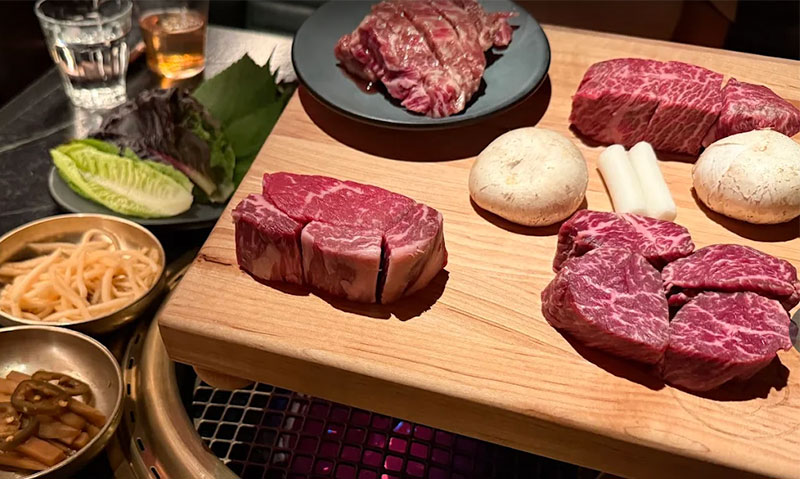
A sophisticated, dimly lit interior of COTE Korean Steakhouse in Las Vegas, featuring round dining tables with built-in grills under dramatic, modern overhead lighting.

Vegas is built for big nights. If you are a foodie, this city will absolutely spoil you. COTE Korean Steakhouse.


The Foodie Weekend

This itinerary requires a healthy budget and flexible pants. You are here to taste what global chefs have built in the desert, then chase it with something messy and perfect off-strip.

  • Day 1: Dry-Aged and Over-the-Top. Book a headline steak night at COTE (Venetian) or Bazaar Meat (Palazzo). This is the “set the tone” dinner.
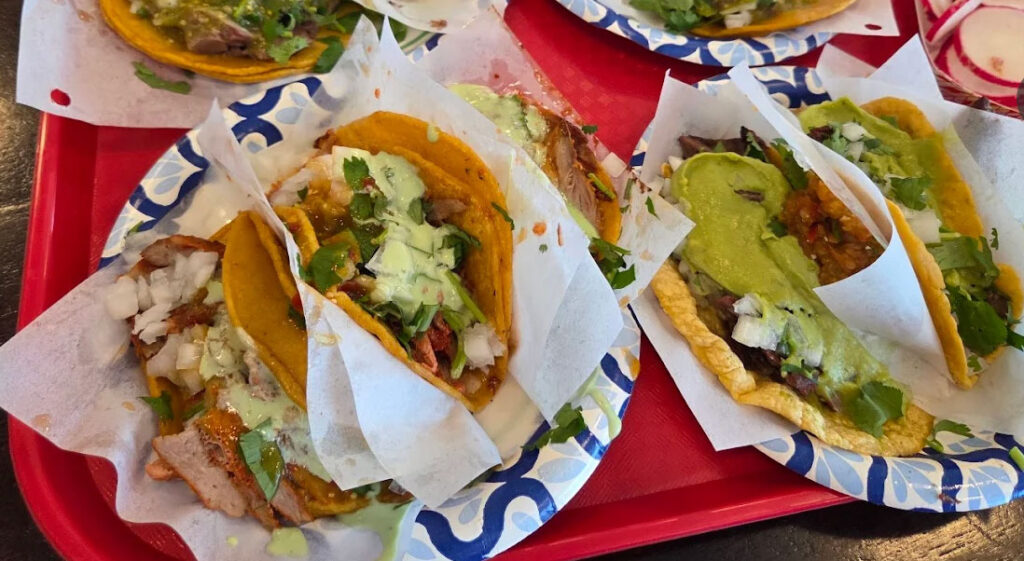
  • Day 2: The High-Low Mix. Start with a no-apologies lunch at Tacos El Gordo (expect a line, it moves). Then go big at night with a tasting menu like é by José Andrés (Cosmopolitan) or Joël Robuchon (MGM Grand).
  • Day 3: Brunch Victory Lap. If you want the classic experience, do the Wynn Buffet. If you want a stylish sit-down, go for Sadelle’s (Bellagio) for bagels, lox, and a strong coffee situation.
Foodie weekend rule: Reserve the “hard” meals first (tasting menus, top steakhouses). Build everything else around those anchors.
A massive, immersive curved LED screen illuminating the interior of The Sphere in Las Vegas during a live show, with a silhouetted audience watching the vibrant visuals from their seats.

The Sphere is a full sensory reset. It is one of the most unique venues on the planet.


The Shows & Concerts Weekend

If you are coming for entertainment, pace your nights. Vegas venues are huge, shows run late, and you do not want to be sprinting across the Strip in dress shoes.

  • Day 1: Big Concert Night. Make your first night your biggest ticket, whether that is a residency (The Colosseum at Caesars, Dolby Live, etc.) or a major DJ night. Eat something fast and solid beforehand so you are not rushed.
  • Day 2: Sphere Night. Make the Sphere the centerpiece. If you are not catching a concert, book The Sphere Experience featuring “Postcard From Earth”.
  • Day 3: Classic Vegas Energy. Close it out with something uniquely Vegas like Absinthe outside Caesars Palace. It is hilarious, adult, and wildly talented.
Show weekend rule: Plan one “early” meal per day. Late shows are easy when your stomach is not calling the shots at 11 pm.
Two young women relaxing on lounge chairs under a striped cabana at a luxury pool terrace in Las Vegas.

A girls trip to Vegas means glam dinners, poolside lounging, and a weekend that looks as good as it feels. Wynn and Encore deliver one of the most polished pool scenes on the Strip.


The Girls Weekend

A girls trip to Vegas is about glam dinners, pool time, and a weekend that looks as good as it feels. Wynn and Encore are ideal home bases because the vibe is polished and the pool scene is top tier.

  • Day 1: Glam Dinner and a Lounge. Do a big group dinner at Beauty & Essex (Cosmopolitan), then keep it fun at a lounge like Vanderpump à Paris (Paris Las Vegas).
  • Day 2: Dayclub Day. Rent a cabana or daybed at Encore Beach Club (Wynn) or Ayu Dayclub (Resorts World). Drink water like it is your job.
  • Day 3: Shopping and a Show. Recover with iced coffees and shopping (Forum Shops, Crystals, Wynn Esplanade). At night, go for something fun and high-energy like Magic Mike Live (SAHARA).
Girls weekend rule: Commit to one pool day, not two. One is iconic. Two can feel like a sunburned, overpriced rerun.

Read More Las Vegas Travel Guides

Where to stay, what to do, where to eat, and classic Vegas.

HUB GUIDE

Las Vegas Travel Guide

The master hub for planning your trip.

Read More

HOTEL GUIDE

Where to Stay

Best hotels by zone, vibe, and budget.

Read More

FOOD GUIDE

Las Vegas Dining Guide

Buffets, steakhouses, Chinatown, and splurges.

Read More

THINGS TO DO

Best Things to Do

Shows, neighborhoods, views, and day trips.

Read More

Itinerary FAQ

Can I combine these itineraries?

Yes. Vegas is dense and easy to remix. You can do a spa morning from the Romantic plan, tacos from the Foodie plan, and Fremont tables at night from the Guys plan in the same day.

Thursday is the cleaner play if you can swing it. You get easier check-in, better reservation availability, and a calmer first night before the weekend surge.

No, but you should reserve the “hard stuff”: one headline dinner, one show, and your pool or dayclub plan. Everything else can stay flexible.

Downtown is compact, high-energy, and great for groups who want easy bar hopping. The Strip is best if you want big resorts, top shows, and maximum convenience for first-timers.

Over-scheduling. Vegas punishes aggressive itineraries. Keep one main mission per day, then let the rest happen naturally.

Things to do in Las Vegas

From the aquatic wonder of “O” at the Bellagio to the high-energy acrobatics of “Mad Apple” at New York-New York, Las Vegas remains the entertainment capital of the world with world-class residencies and breathtaking circus arts.


Home » Destinations » Page 5

Last updated: March 2026 by Corey Gasman

Start Here: Need a place to crash after the show? Head back to our Where to Stay in Las Vegas guide to find your basecamp. If your room is locked in, keep reading.

Building the Perfect Vegas Itinerary

Trading the snowy Minneapolis winters for the neon of the Strip is a tradition that never gets old. Between heavy web development sprints and managing SEO for clients, I am always looking for the next great escape with my wife. But if there is one thing I have learned as a Level 7 Local Guide logging millions of photo views, it is that winging a Vegas trip leads to massive FOMO.

In 2025, over 40 million people visited Las Vegas. Demographically, millennials now make up the largest chunk of the tourist base at roughly 45%, driving a massive shift away from just gambling and toward high-end culinary, entertainment, and sports experiences. Whether you want to catch the Vikings at a massive sportsbook, lock in F1 grandstand seats, or find the ultimate dry-aged steak before a residency show, you need a plan. This 2026 guide has you covered.

A wide exterior view of the Sphere in Las Vegas from Sands Avenue, featuring its massive LED exosphere displaying a glowing blue geometric pattern at dusk.

The 2.3 billion dollar Las Vegas Sphere has completely redefined the city skyline, featuring an exterior exosphere covered in 1.2 million LED pucks.


The Sphere: A Must-Do Experience

Nothing prepares you for the sheer scale of the Sphere. It is not just a concert venue; it is a massive technological leap. Inside, the 16K resolution wrap-around LED screen completely fills your peripheral vision.

TLGA Booking Tip: If you are buying tickets for the cinematic “Postcard from Earth” experience, aim for the 200 or 300 level sections. The 100 level is too close to take in the full screen, and the overhang blocks the top view.
Event Type What to Expect Typical Cost TLGA Take
The Sphere Experience (Film) A 50-minute bespoke film utilizing the immersive haptic seats and wind/scent effects. $80 to $150+ Perfect daytime activity. Arrive early to interact with the AI robots in the atrium.
Musical Residencies Legendary bands using the venue’s visual tech to create mind-bending concerts. $150 to $500+ A bucket-list music event. Unmatched audio clarity thanks to 167,000 speaker drivers.
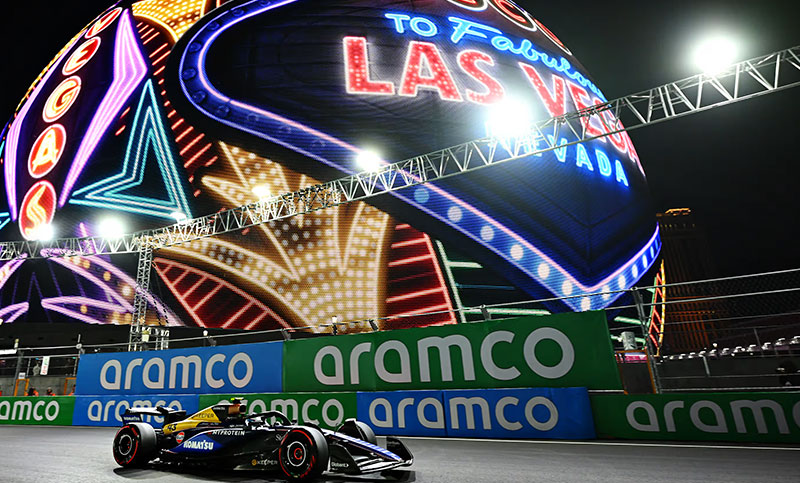
A vibrant night scene of the Formula 1 Las Vegas Grand Prix, showing race cars speeding past the bright neon lights and iconic casino facades of the Las Vegas Strip.

The Formula 1 Las Vegas Grand Prix transforms the heart of the city into a 3.8-mile high-speed circuit, with cars reaching top speeds of 212 mph down Las Vegas Boulevard.


Formula 1 Las Vegas Grand Prix (November 2026)

As a massive Formula 1 fan, I can confidently say the Las Vegas street circuit is visually unparalleled. The 50-lap race brings in roughly 300,000 attendees over the weekend. Navigating the city requires serious logistical planning, but the payoff is incredible.

Local Guide Tip: You do not need a $2,000 grandstand ticket to feel the energy. Look for watch parties at properties like The Cosmopolitan or track-adjacent restaurants that offer food and beverage packages with terrace views.
Viewing Zone The Vibe Best For
Main Grandstand (Harmon) Start/finish line action, pit stops, and pre-race ceremonies. Die-hard racing fans wanting the traditional F1 weekend experience.
Sphere Zone Festival atmosphere, great cornering views, and live music. Groups wanting a mix of racing and entertainment.
Strip Grandstands Pure speed. Watching the cars hit 200+ mph past the Bellagio fountains. The iconic, neon-soaked Vegas photo op.
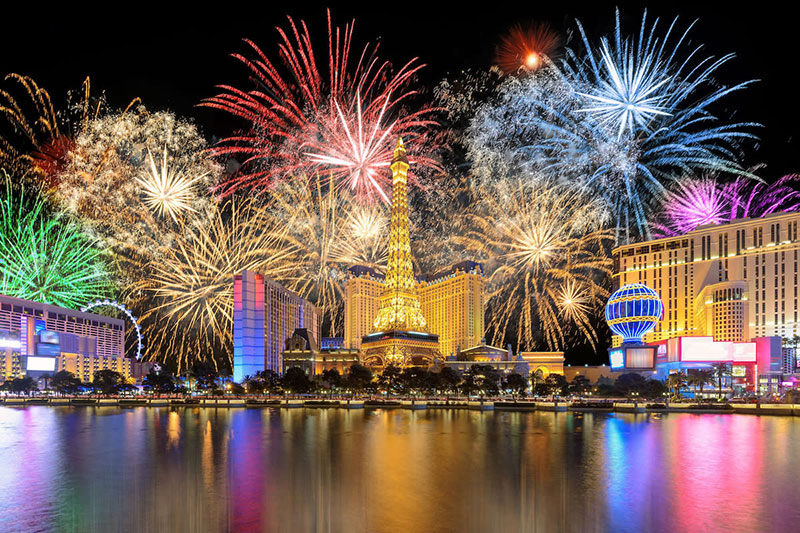
A wide-angle night shot of spectacular New Year’s Eve fireworks exploding in bursts of white and gold over the Las Vegas Strip, reflecting in the water in the foreground.

Ringing in the New Year in Las Vegas is a bucket-list experience, featuring a massive, coordinated fireworks display launched from the rooftops of several iconic resorts along the Strip.


The TLGA 2026 Las Vegas Event Calendar

Timing is everything. Hotel prices fluctuate wildly depending on what is in town. Here is a high-level look at the major events for 2026 to help you plan your dates.

Month / Quarter Events & Festivals Crowd Level
February Super Bowl LIX Watch Parties (Citywide) Maximum
March March Madness First Weekend, NASCAR Pennzoil 400 Very High
May Electric Daisy Carnival (EDC) – Over 500,000 attendees Maximum
July / August Summer Concert Residencies, Pool Season Peak High
September NFL Season Opener, Mexican Independence Day Weekend Very High
November Formula 1 Las Vegas Grand Prix, SEMA Show Maximum
December National Finals Rodeo (NFR), New Year’s Eve High to Max
A wide view of the entrance to Omega Mart at AREA15 in Las Vegas, featuring the "AREA15" neon sign and the surreal, glitchy grocery store storefront under vibrant purple and blue lights.

Omega Mart at AREA15 looks like a normal supermarket until you step through a refrigerator door and discover a surreal, multi-story interactive art world hidden inside.


Top Immersive Experiences Off the Casino Floor

If you need a break from the blackjack tables, Las Vegas has become the global capital for immersive entertainment.

  • Omega Mart (AREA15): Created by Meow Wolf, this mind-bending interactive art exhibit is disguised as a bizarre grocery store. Plan for at least two hours to explore the hidden passageways.
  • Red Rock Canyon E-Bike Tours: Need some fresh air? Head 20 miles off the Strip. Given the deep roots of mountain biking history out here, renting an e-bike to cruise the 13-mile scenic loop is a fantastic way to reset your brain before a night out.
  • High Roller Observation Wheel: Towering 550 feet above the LINQ Promenade, a 30-minute revolution offers the best sweeping views of the valley. Grab a “Happy Half Hour” cabin for an open bar during the ride.
  • Cirque du Soleil (O or Michael Jackson ONE): The undisputed kings of Vegas theater. “O” at the Bellagio features a 1.5-million-gallon pool stage and remains the gold standard for production value.

Read More Las Vegas Travel Guides

Las Vegas Guide, what to do, where to eat, and the best 3-day game plan for a classic Vegas weekend.

HUB GUIDE

Las Vegas Travel Guide

The master hub for planning your trip.

Read More

FOOD GUIDE

Las Vegas Dining Guide

Buffets, steakhouses, Chinatown, and splurges.

Read More

HOTEL GUIDE

Where to Stay

Best hotels by zone, vibe, and budget.

Read More

3-DAY ITINERARY

3-Day Las Vegas Itinerary

72 hours, mapped out by day and neighborhood.

Read More

Las Vegas Events & Experiences FAQ

How far in advance should I book show tickets?

For top-tier events like the Sphere, major headliner residencies, or F1 weekend, book as soon as tickets go on sale. For standard Cirque shows, 4 to 6 weeks is usually sufficient, though weekends sell out faster.

Absolutely. Even without a live band, the technology inside the venue is groundbreaking. It is a visual and sensory experience you literally cannot find anywhere else in the world.

Avoid rideshares immediately after the event. For Allegiant Stadium, walk the Hacienda Bridge from Mandalay Bay. For F1, rely on the Las Vegas Monorail, which operates continuously and bypasses the street closures.

Where to Stay in Las Vegas

In Vegas, hotel location is not a detail. It is the entire game plan.


Home » Destinations » Page 5

Last updated: March 2026 by Corey Gasman

Start Here: Looking for the big picture? Head back to the main Las Vegas Travel Guide. If you are ready to book a room, keep reading to find the right zone and resort.

The Golden Rule of Vegas Hotels

Over my handful of trips to the city, I have done everything from high-energy guys weekends to more relaxed, food-focused trips with my wife. If there is one lesson I can pass on, it is this: what looks like a quick walk on Google Maps is usually a 40-minute hike through three different casino complexes. Your hotel dictates your trip.

If you want to spend your weekend eating celebrity-chef meals, catching shows, and bouncing between iconic properties, stay Center Strip. If you want lower table minimums and a walkable street party, head Downtown. If you are bringing a car to hike Red Rock Canyon, get off the Strip entirely.

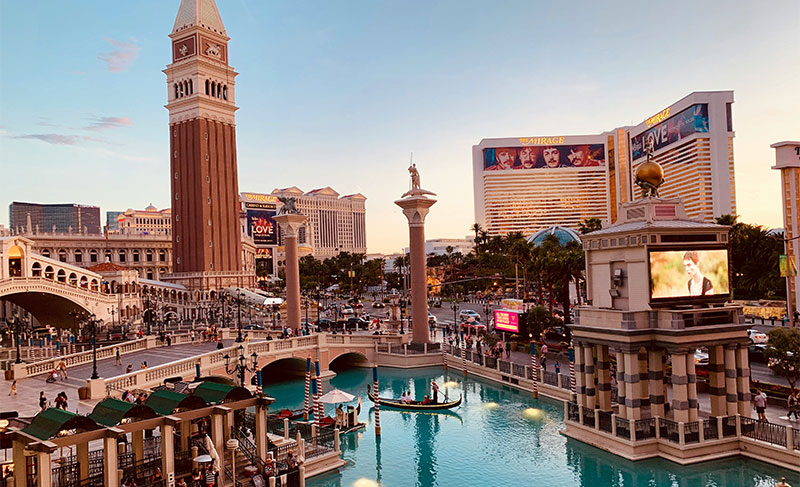
A wide daytime shot of The Venetian Resort in Las Vegas, showing the iconic Rialto Bridge replica, the Campanile tower, and the turquoise outdoor canals with gondolas.

The Venetian is pure Vegas theater: big, glossy, and built for wandering.


Core TLGA rule for Vegas hotels: Never book purely on the lowest base room rate. Once you factor in resort fees, parking, and the Uber rides you will need if you stay on the wrong end of the Strip, paying a little more for a central location is almost always the better value.
Zone Best For The Vibe Top Pick
Center Strip First timers, luxury, food, shows Iconic, expensive, you can walk Cosmopolitan or Venetian/Palazzo
Downtown (Fremont) Lower limits, walkability, sports Loud, neon, street party Circa Resort & Casino
Off-Strip Road trips, relaxing, parking Resort feel, local crowd Red Rock Casino Resort & Spa
South + North Strip Value, events, newer mega-resorts More spread out, more Uber Mandalay Bay or Resorts World
Quick pricing reality check: Strip prices swing wildly based on conventions, big weekends, and major events. Always price-check midweek vs Friday and Saturday before you commit.
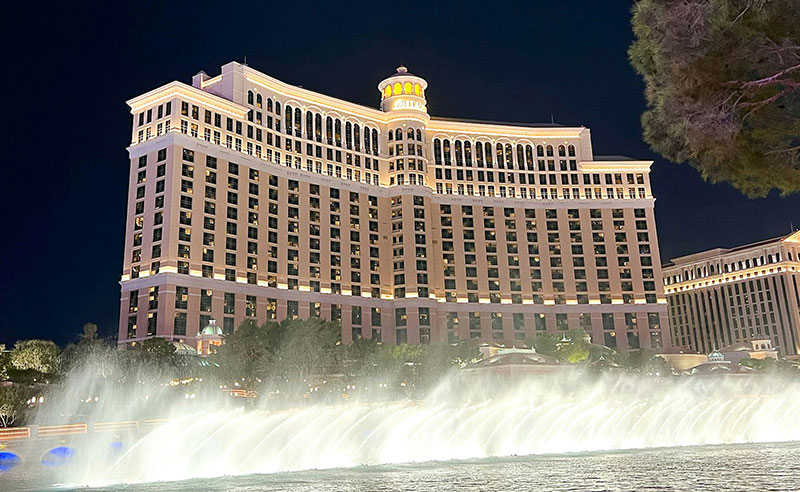
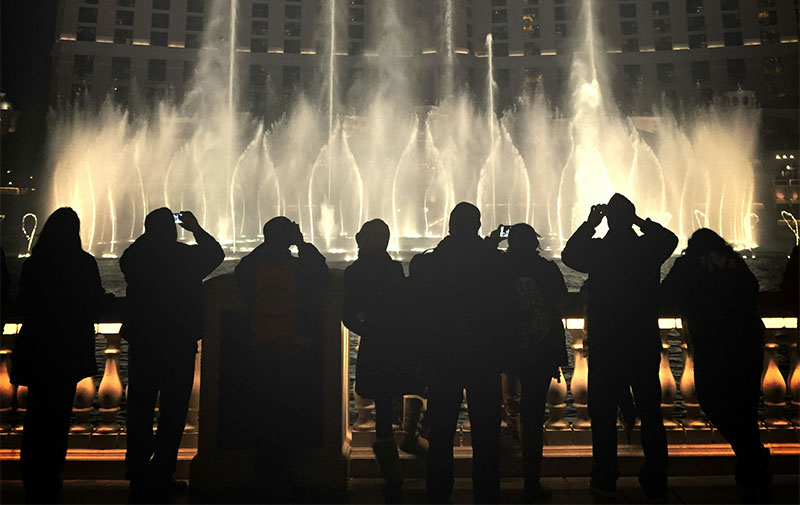
A stunning night view of the Bellagio Fountains in Las Vegas, with high-reaching water jets illuminated against the backdrop of the Bellagio Hotel and the dark desert sky.

Bellagio at night is still the best free show in town.


Center Strip: The Heart of the Action

If you want the classic Las Vegas experience, this is where you stay. You pay more, but you gain the ability to walk to the most iconic sights and the best dining clusters.

Local Guide Tip: Center Strip saves you money in a sneaky way. Fewer rideshares, fewer taxi lines, and fewer moments where you realize you are a mile away inside a casino mall.
Hotel Why TLGA Picks It Typical Cost Resort Fee Best Amenities Casino Notes
The Cosmopolitan Best all-around energy for couples and groups. Balconies are a true Vegas flex, and the location is elite. Midweek: $$$ | Weekends: $$$$ Often ~low $60s + tax Balcony rooms, strong dining lineup, busy pool scene High-energy casino floor, great for the full Vegas vibe
Venetian / Palazzo Big, comfortable all-suite feel. Great if you want space and easy access near the Sphere zone. Midweek: $$$ | Weekends: $$$$ Often ~low $60s + tax All-suite rooms, shopping and dining, strong convention access Huge casino, easy to spend a whole night here
Bellagio The iconic choice. If you want classic Vegas luxury and prime fountain location, this is it. Midweek: $$$ | Weekends: $$$$ Often ~low $60s + tax Fountain views, refined pools, high-end shopping nearby One of the most famous casino floors on the Strip
Aria Modern, polished, great rooms. Best for a slightly quieter luxury stay with easy access to CityCenter. Midweek: $$$ | Weekends: $$$$ Often ~$50 to $65 + tax Excellent rooms, dining, easy indoor connections Upscale casino vibe, solid for table games
Wynn / Encore If you want a true luxury bubble with top-tier pools and service, this is the splurge. Midweek: $$$$ | Weekends: $$$$+ Often ~low $60s + tax Best-in-class pools, luxe rooms, high-end dining Premium casino with a polished, high-roller feel
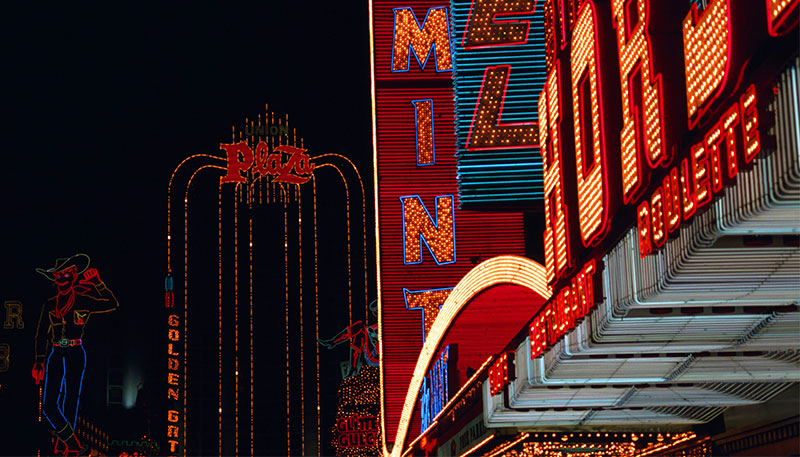
A close-up night view of vintage neon signs in old downtown Las Vegas, featuring glowing red and orange lights from classic casino fronts like the Mint and Horseshoe.

Fremont is old-school Vegas with a modern reboot: loud, neon, and weird in the best way.


Downtown & Fremont Street: The Walkable Party

Downtown has gotten better and better. It is more walkable, table minimums are often lower than the Strip, and you get a street-party atmosphere every night under the Fremont canopy.

Local Guide Tip: Fremont is loud. If you are a light sleeper, ask for a room away from the canopy and bring earplugs for weekends.
Hotel Why TLGA Picks It Typical Cost Resort Fee Best Amenities Casino Notes
Circa Resort & Casino Best Downtown base for sports, groups, and pool days. Adults-only energy keeps it feeling sharp. Midweek: $$ to $$$ | Weekends: $$$ Often mid $50s + tax Stadium Swim, massive sportsbook, modern rooms Newer casino, table mins can run higher than other Fremont spots
Golden Nugget Classic Downtown choice with the famous shark-tank pool slide and a strong central location. Midweek: $$ | Weekends: $$ to $$$ Often low $50s + tax Pool complex, solid dining options, prime Fremont access Big casino floor with true old-school Vegas feel
The D Las Vegas Great value for a high-energy Fremont weekend. Good for groups that want to be in the chaos. Midweek: $ to $$ | Weekends: $$ Often ~$40 to $55 + tax Central Fremont location, upbeat vibe Lively casino, good for casual gambling
Plaza Hotel & Casino Quieter edge-of-Fremont option that keeps you walking distance to everything. Midweek: $ to $$ | Weekends: $$ Often lower-fee territory vs mega-resorts Good value, easy Fremont access Solid low-limit reputation at off-peak hours
Downtown Grand Best if you want Fremont access without sleeping in the loudest zone. Midweek: $ to $$ | Weekends: $$ Often lower-fee territory Quieter location, good value rooms Smaller casino, easy in-and-out gambling
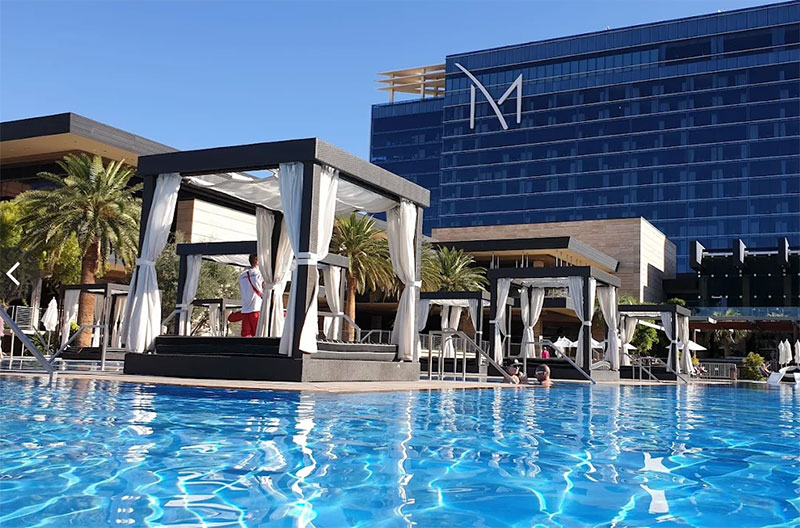
An exterior view of the M Resort Spa Casino in Henderson, featuring the modern blue glass hotel tower and the large outdoor pool deck with lounge chairs and cabanas.

Off-Strip stays are your “easy mode” Vegas: parking, space, and a calmer pace.


Off-Strip: Road Trips and Relaxation

If you have a rental car, want easy parking, or plan to split time between Vegas and the outdoors, Off-Strip stays are the move. You trade walkability for breathing room.

Best use case for Off-Strip: You are hiking Red Rock Canyon, doing a Hoover Dam day trip, golfing, or you just want a calmer hotel where grabbing coffee does not require navigating a casino maze.
Hotel Why TLGA Picks It Typical Cost Resort Fee Best Amenities Casino Notes
Red Rock Casino Resort & Spa (Summerlin) Best basecamp for Red Rock Canyon. Upscale without Strip chaos. Midweek: $$ to $$$ | Weekends: $$$ Often low $50s + tax Big pool, spa, strong dining, easy parking Quality locals casino floor, good table variety
Green Valley Ranch (Henderson) Relaxed resort feel with great value, especially midweek. Midweek: $$ | Weekends: $$ to $$$ Often low $50s + tax Great pool, spa, easy parking Locals-style casino vibe, usually more playable limits
Palms (Near the Strip) Fun, modern, often priced well. Great for a quick Uber into the Strip. Midweek: $$ | Weekends: $$ to $$$ Often ~$40 to $60 + tax Solid rooms, good food options, easy access Good casual gambling, less tourist pressure
Virgin Hotels Las Vegas Non-Strip vibe with strong dining and easier logistics than mega-resorts. Midweek: $$ | Weekends: $$ to $$$ Varies by dates Food-forward property, calmer vibe Smaller casino feel vs Strip giants
M Resort (Henderson area) A true escape stay with a big pool and easy parking. Midweek: $$ | Weekends: $$ to $$$ Varies by dates Pool-focused, spacious rooms, chill atmosphere Locals-friendly casino vibe
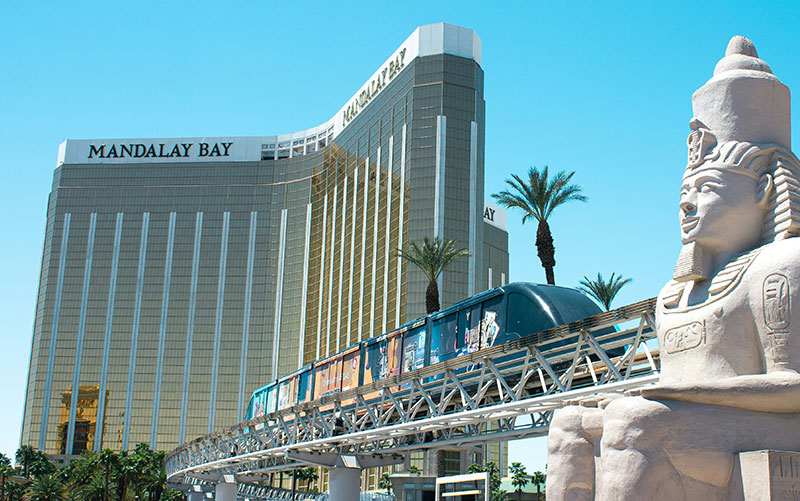
A daytime view of the golden Mandalay Bay hotel towers in Las Vegas, showcasing the resort's iconic architecture against a bright blue sky

Mandalay Bay is perfect when your Vegas trip is built around a show, a fight, or a convention.


South + North Strip: Value, Events, and New Mega-Resorts

This zone is for travelers who do not mind rideshares and want either better value (South Strip) or newer shiny mega-resorts (North Strip). Just remember: it is more spread out than it looks.

Hotel Why TLGA Picks It Typical Cost Resort Fee Best Amenities Casino Notes
Mandalay Bay Best South Strip base for pools and events. Great for concerts, fights, or conventions. Midweek: $$ to $$$ | Weekends: $$$ Often ~$45 to $65 + tax Massive pool complex, big resort energy Large casino with solid variety
MGM Grand A classic mega-resort that often prices better than its size suggests. Midweek: $$ | Weekends: $$ to $$$ Often ~$45 to $65 + tax Huge entertainment lineup, lots of dining One of the largest casino floors on the Strip
Park MGM Calmer, more modern stay with great access to arenas and food. Midweek: $$ | Weekends: $$ to $$$ Often ~$45 to $65 + tax Good value rooms, event-friendly location More approachable casino vibe
Resorts World Newer, modern, self-contained. Great for a fresh-feeling Vegas weekend. Midweek: $$ to $$$ | Weekends: $$$ Often ~$50 to $65 + tax Newer rooms, lots of food options, modern pools Bright, modern casino floor
Fontainebleau Luxury-forward North Strip pick if you want new, shiny, and less crowded. Midweek: $$$ | Weekends: $$$$ Varies by dates High-end pools, new property feel Premium casino vibe
A night view of the Las Vegas Strip during the F1 Grand Prix, featuring the illuminated Eiffel Tower at Paris Las Vegas and the High Roller observation wheel in the background.

F1 turns the Strip into a street circuit, and it changes everything about hotel pricing and movement.


F1 Las Vegas Grand Prix: Track Hotels vs Sanity

If you are traveling in November as a Formula 1 fan, your hotel choice dictates your race weekend. Track-adjacent hotels can be incredible, but pricing and logistics get intense.

TLGA strategy: If you care about the race, go track-adjacent and pay the premium. If you do not care about the race, avoid Center Strip that week and stay Downtown or Off-Strip.
Hotel Why It Works for F1 Typical Cost During F1 Tradeoffs Best For Casino Notes
Bellagio Prime Strip position near major race corridors and iconic Vegas energy. $$$$+ Price spikes and crowded walkways Bucket-list race weekend One of the most famous casino floors
Cosmopolitan Balcony rooms can be a huge win if you land the right view. $$$$+ High demand, book early Couples and groups High-energy casino vibe
Venetian / Palazzo Big rooms and strong access near the north-central Strip zone. $$$$+ Closures can make routes weird Comfort-first race weekend Huge casino and great dining variety
Paris Las Vegas Central location often prices better than true luxury neighbors. $$$ to $$$$ Older rooms vs top luxury Mid-range track access Classic Strip casino energy
Flamingo Location is excellent for the money and keeps you in the action. $$$ More basic rooms, crowds Value-focused race trip Often more playable limits than luxury neighbors
Alt Text: A close-up view of a blackjack table at the Bellagio Resort & Casino, showing the green felt layout, playing cards, and colorful betting chips under warm overhead lighting.

Table minimums swing hard by day and time. Weekdays are your best shot at playable limits.


Is $5 or $10 Blackjack Still a Thing in 2026?

Yes, but with a big asterisk. On the Strip, true $5 blackjack is rare and often comes with worse rules (commonly 6:5 payouts). Downtown and Off-Strip casinos are where you have a better shot at $5 to $10 minimums at off-peak times.

TLGA reality check: If you see $5 blackjack on the Strip, read the felt. Many low-limit Strip games pay 6:5, not 3:2, which is a meaningful hit to your odds.
Bet Level Where It Shows Up When You Are Most Likely to Find It TLGA Advice
$5 live blackjack Mostly off-Strip, occasional budget Strip promos Weekdays, daytime, slow hours Great if rules are fair, but many $5 Strip games are 6:5
$10 live blackjack Downtown and value Strip pockets Weekdays and earlier evenings This is the sweet spot for most budget players in 2026
$15 to $25 live blackjack Common on the Strip, especially center-luxury Evenings and weekends If you are playing here, prioritize 3:2 tables
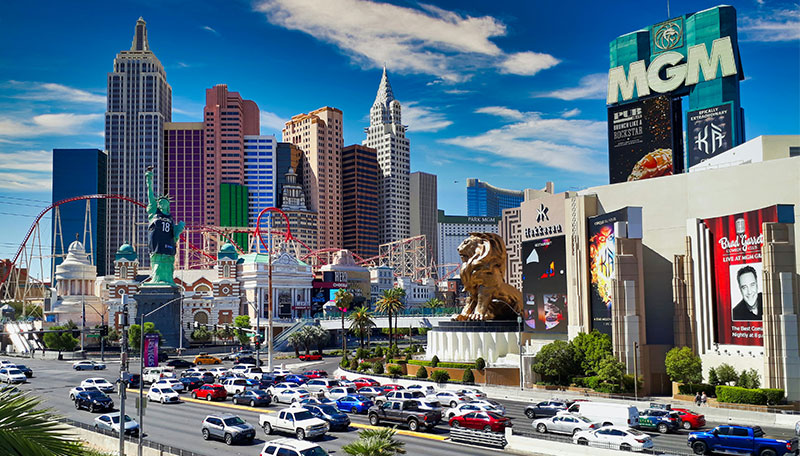
A colorful graphic overlay of iconic Las Vegas Strip landmarks, including the New York-New York skyline and MGM Grand, representing a comprehensive guide to finding travel deals.

Vegas deals are real, but you have to play the calendar.


The Vegas Hotel Deals Playbook

If you want the “I can actually come back to Vegas” version of this city, the move is not finding one magical cheap hotel. The move is learning the system that keeps your costs predictable: timing, weekdays, and flexible zones. Do that, and Vegas becomes a repeatable trip, not a once-a-decade blowout.

TLGA rule: The cheapest Vegas weekend is usually not a cheap hotel. It is a smart schedule. Two nights midweek can cost less than one Saturday at the same property.

How to get a cheaper room without sacrificing your whole trip

Hack Why it works Best for TLGA move
Go Sun to Thu Vegas is priced for weekends. Midweek rates can drop hard. Repeat travelers, couples, food trips Fly in Sunday, leave Tuesday or Wednesday. Same Vegas, way less cost.
Pick the right “value zone” Center Strip is convenient but expensive. Value zones still give you Vegas. Budget trips, first timers watching spend Stay South Strip or Downtown, then do 1 big Center Strip night out.
Compare the “real nightly cost” Resort fees and parking can erase a low room rate. Everyone Room rate + resort fee + tax. Then add parking if you have a car.
Book refundable first Vegas prices fluctuate. You want a safety net. Planners Lock something you can cancel, then re-check prices 2 to 3 times.
Split the trip: 2 hotels You can sample luxury without paying luxury every night. Groups, long weekends Do 1 night Center Strip, then 1 to 2 nights Downtown or Off-Strip.
Travel light on a budget run Ubers add up if you stay too far from your plan. Value trips Pay a little more for a smarter location, then walk more and Uber less.

My repeatable “Vegas more than once” formula

  • Pick one goal: shows, food, pools, sports, or gambling. Vegas gets expensive when you try to do everything.
  • Stay 2 nights max for budget trips: Vegas is intense. Two nights hits the sweet spot.
  • Make one premium night: one great dinner or show, not three.
  • Choose a walkable base: location beats “cheapest rate” almost every time.
Local Guide Tip: If you want cheap rooms and better table minimums, Downtown and Off-Strip tend to deliver more consistently than Center Strip luxury properties.
Booking resources: When you are ready to book, I recommend price-checking two places: your favorite booking site and the hotel’s official site. Start with the zone that fits your trip, then compare your real nightly cost before you commit.
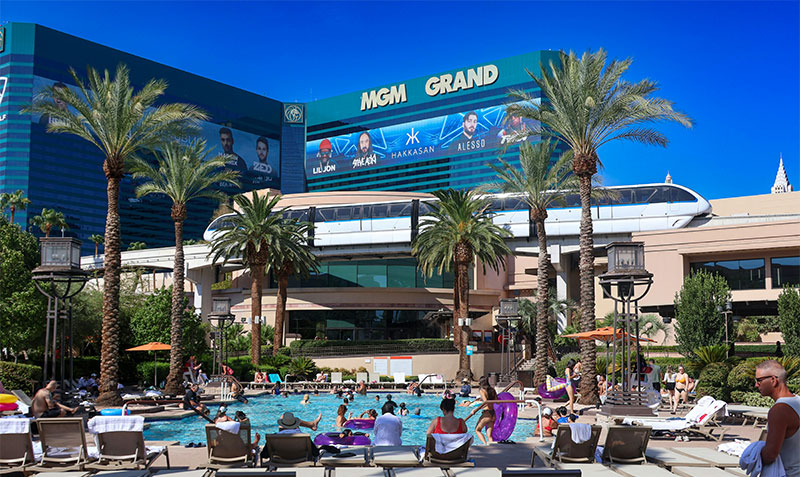
A view of the MGM Grand Las Vegas entrance and signage, representing the standard for resort fees and parking costs at major Strip properties.

Vegas fees are part of the price. Budget the “real nightly cost,” not the headline rate.


The Truth About Resort Fees and Parking

When you budget your hotel, the nightly rate is only the start. Most Vegas hotels add a mandatory resort fee at check-in, plus tax. Parking can also be a real cost at many Strip resorts.

Budgeting rule: Compare hotels using the real nightly cost: room rate + resort fee + tax. Then add parking if you are renting a car.
Fee Type Typical Range Where You Feel It Most How to Reduce It
Resort Fee Often ~$35 to $55+ (some major resorts run higher) Center Strip mega-resorts Look for no-fee properties, loyalty promos, or comp offers
Parking Varies widely by property If you rent a car and stay Center Strip Off-Strip is easier, and some properties bundle parking
Deposit/Hold Often $100 to $150+ per day Higher-end properties Use a credit card and plan for the hold

Read More Las Vegas Travel Guides

Las Vegas Guide, what to do, where to eat, and the best 3-day game plan for a classic Vegas weekend.

HUB GUIDE

Las Vegas Travel Guide

The master hub for planning your trip.

Read More

FOOD GUIDE

Las Vegas Dining Guide

Buffets, steakhouses, Chinatown, and splurges.

Read More

THINGS TO DO

Best Things to Do

Shows, neighborhoods, views, and day trips.

Read More

3-DAY ITINERARY

3-Day Las Vegas Itinerary

72 hours, mapped out by day and neighborhood.

Read More

Where to Stay in Las Vegas FAQ

What is the best hotel zone for a first timer?

Center Strip. You will pay more, but you can walk to the most iconic sights and you will not spend your trip zig-zagging in Ubers.

The Cosmopolitan is the best mix of location, dining, and energy. If you want quieter luxury, Aria or Wynn/Encore are the move.

Downtown is the easiest party logistics. For the best Downtown setup, Circa is the top pick. For classic Fremont chaos, Golden Nugget or The D are strong choices.

A few exist, but most major Strip and Downtown resorts charge them. Always read the fine print before booking and treat the fee as part of your nightly cost.

Sometimes, but it is not the default on the Strip. $5 is more likely off-Strip or during slow hours, and low-limit Strip games can come with worse rules. $10 is the more realistic target in many cases, especially Downtown at off-peak times.

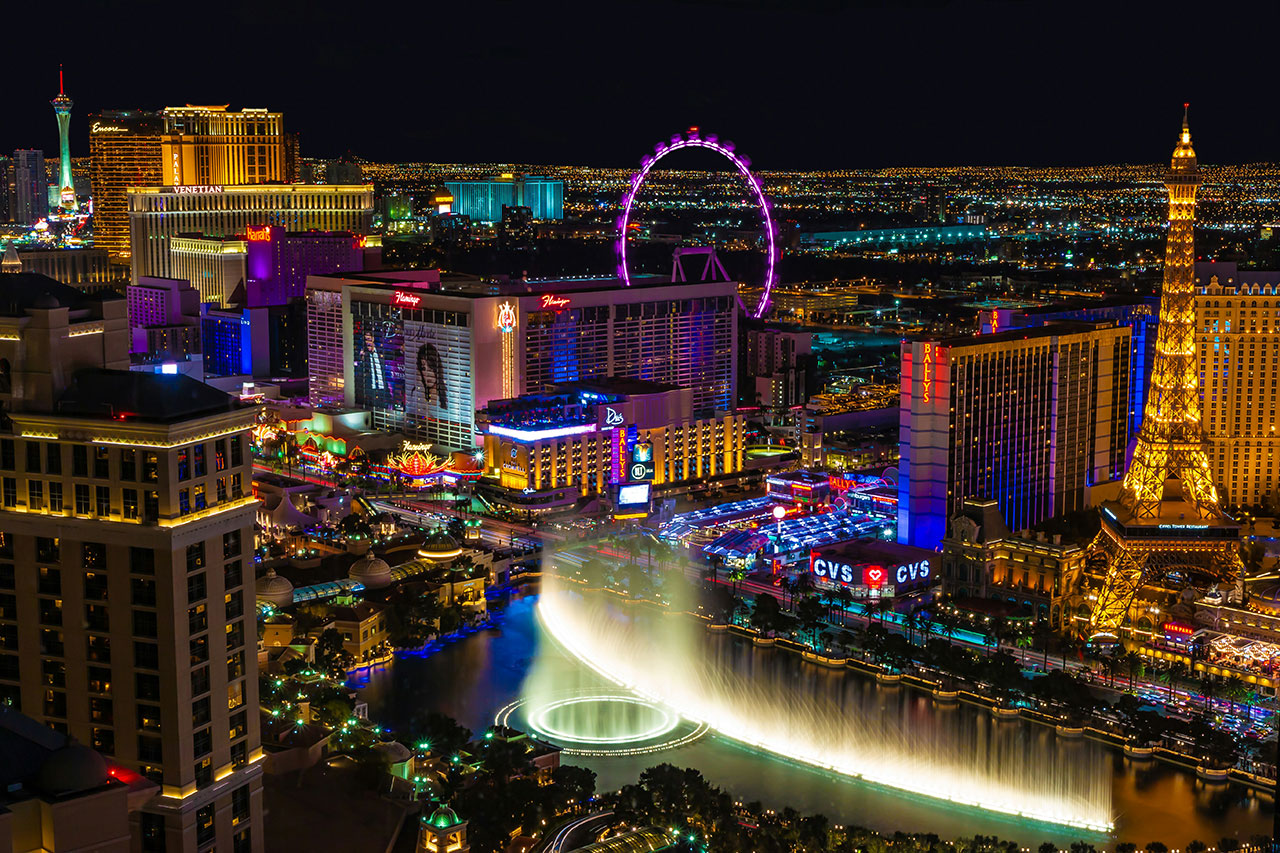
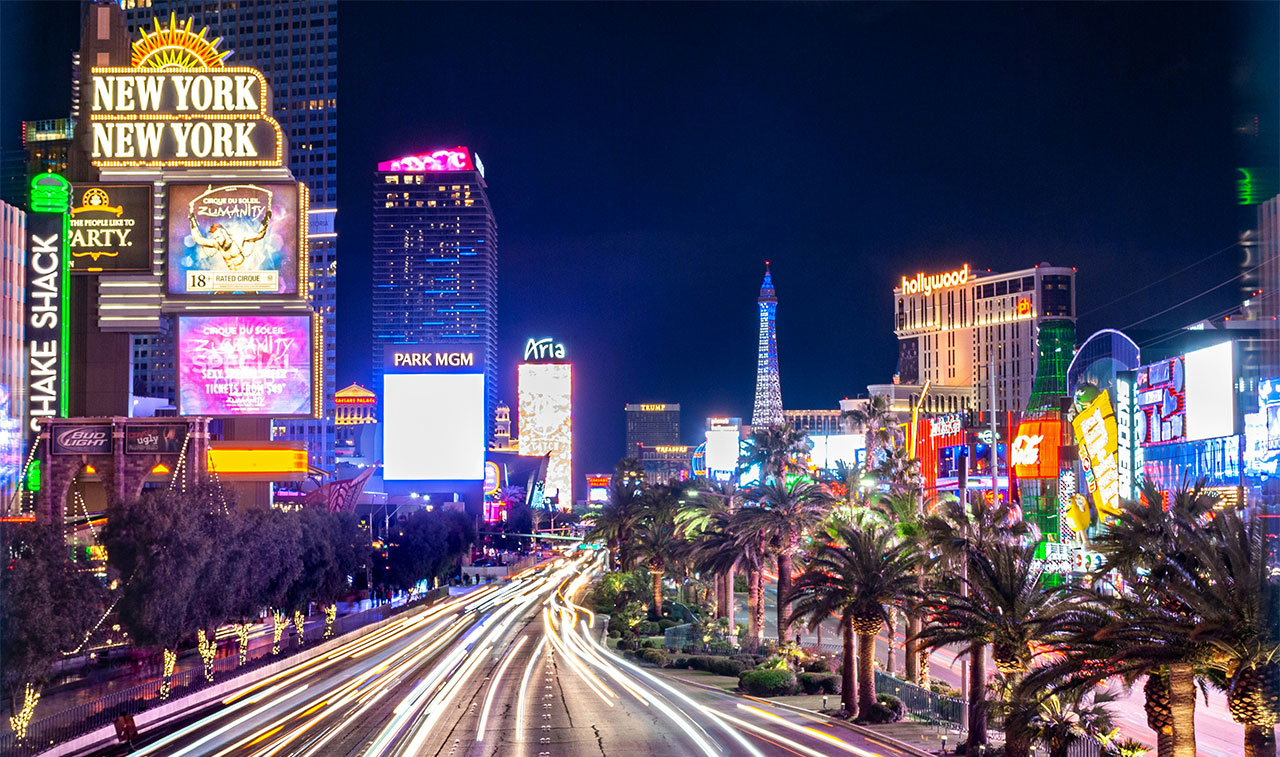
Las Vegas Travel Guide

Vegas works best with a plan: Strip icons, Downtown neon, and one real desert escape.


Home » Destinations » Page 5

Last updated: March 2026 by Corey Gasman

Start Here: Planning a long weekend? Jump to Itineraries. Here for the culinary scene? Go straight to Where to Eat. Chasing the newest mega-attractions? Hit The Sphere.

Start Here: How Las Vegas Works

I have been to Las Vegas a handful of times, both for relaxing trips with my wife and higher-energy weekends with the guys. The biggest mistake people make is treating the entire city like one walkable street. The casinos are massive, and what looks like a five-minute walk on a map can easily take thirty minutes. For a successful long weekend in Las Vegas, you need to mix iconic Strip experiences with Downtown charm and natural wonders.

Core TLGA rule for Vegas: Group your activities geographically. Spend one day fully on the Strip, dedicate another to Downtown and Fremont Street, and save one day for getting off the pavement entirely.
Las Vegas Area Best For Stay Here If… Signature Vibe
The Strip (Center) First timers, fountains, mega-resorts You want to be in the middle of the action Glitz, glamour, and premium dining
Downtown / Fremont Vintage Vegas, cheaper limits, local flavor You want a walkable, party atmosphere Neon signs and street performers
Off-Strip / Locals Quiet resorts, great values, easy parking You have a car or want to avoid crowds Relaxed luxury without the chaos
he iconic "Welcome to Fabulous Las Vegas" neon sign stands against a clear blue sky, surrounded by palm trees and desert landscaping.

The classic Vegas photo op. Go early to beat the lines and the heat.


First-Timer Blueprint

If this is your first time in Las Vegas, lean into the spectacle. Explore the massively themed hotels, catch a major production like Cirque du Soleil, try your luck at the tables, and finish the night at a legendary mega-club like Hakkasan.

But the secret to loving Vegas is taking a break from the sensory overload. Even on a first trip, I highly recommend getting out to see the natural beauty surrounding the city, like Red Rock Canyon or the Valley of Fire.

high-angle view from a balcony at the Cosmopolitan looking over the Las Vegas Strip, featuring the Eiffel Tower at Paris Las Vegas, the High Roller observation wheel, and the surrounding resort architecture under a clear blue sky.

Cosmo balcony views are an elite “worth it” splurge if you plan to be on the Strip all weekend.


Where to Stay in Las Vegas

Your hotel defines your Las Vegas experience. If you stay on the Strip, choose a property that aligns with your budget and desired energy level.

  • Luxury & Center Strip: The Venetian, Bellagio, or Cosmopolitan. Perfect if you want world-class dining just an elevator ride away.
  • Vintage & Budget-Friendly: The Golden Nugget or Circa in Downtown Las Vegas.
  • Relaxed & Off-Strip: Red Rock Casino Resort or Green Valley Ranch. Excellent choices if you are using Vegas as a base camp for outdoor adventures.

Getting Around

  • Walking: Great for casino hopping, but remember that properties are huge. Wear comfortable shoes.
  • Rideshare (Uber/Lyft): The primary way to get off the Strip. Every hotel has a designated, well-marked pickup zone.
  • Monorail: Useful for skipping traffic on the east side of the Strip.
  • Sightseeing hack: Consider a Hop-on Hop-off Big Bus tour for your first day. It is an easy way to get your bearings without nuking your legs.
A wide shot of the Bellagio Hotel and Casino at dusk, with the fountains in the foreground shooting high plumes of water into the air against a deep blue twilight sky.

Bellagio at dusk. The easiest “big Vegas” moment you can do for free.


The Perfect 3-Day Vegas Itinerary

Here is my exact blueprint for a long weekend in Las Vegas. It balances the high-energy famous spots with much-needed breathing room.

Day 1: Strip & Shows

Start your trip right in the heart of the action. Walk the Strip and take in the sheer scale of the architecture. Watch the iconic Bellagio Fountains, then head inside the Venetian to explore the Grand Canal Shoppes. In the evening, book a premium dinner and catch a major production, like a Cirque du Soleil show.

Day 2: Downtown & Dining

Shift gears and head north to explore Old Vegas and the Fremont Street Experience. The vibe here is completely different: cheaper drinks, classic neon, and street performers. Grab lunch at a local favorite, then spend the evening at immersive spots like The Golden Tiki for top-tier cocktails.

Day 3: Adventure & Relaxation

You need a break from the casino floors. Rent a car or take a tour out to Red Rock Canyon to see the desert colors. When you get back, lean into recovery. Do a high-end spa session, or if you still have energy, hit a daytime pool club like Wet Republic.

The exterior of Gordon Ramsay Hell's Kitchen at Caesars Palace, featuring the iconic pitchfork logo and glowing red neon signage against the evening sky

Hell’s Kitchen is touristy on purpose. Book it anyway if you want the full Caesars experience.


Where to Eat: The Vegas Dining Scene

Las Vegas is one of the best food cities in the world right now. From late-night slices to ultra-luxury tasting menus, here are the spots worth building around.

Category Picks The Vibe
Iconic / Fine Dining Hell’s Kitchen (Caesars)
Top of the World (Strat)
COTE Korean Steakhouse (Venetian)
Delilah (Wynn)
Big budgets, big service, and highly photogenic rooms. Book early.
Casual / Best Bites Pizza Rock (Downtown)
Tacos El Gordo (North Strip)
Black Tap Burgers (Venetian)
Perfect for lunch, soaking up drinks, or a fast meal before a show.
Brunch / Lunch Bouchon (Venetian)
Alexxa’s (Paris)
Ideal for a slower start with strong coffee and patio views.
A nighttime view of The Sphere in Las Vegas, illuminated with a high-resolution image of the moon, glowing against the dark sky

The Sphere is the new Vegas landmark. Even the outside is a full-on show.


The Sphere Experience

The Sphere has fundamentally changed the Las Vegas skyline. If you are visiting in 2026, getting inside this building is a must-do. The venue features a wraparound LED screen and spatial audio that makes you feel like you are inside the performance.

You have two main options here: tickets for Postcard From Earth (often daytime), or a major musical residency. For the best view of the dome, seats in the 200 or 300 sections are usually the sweet spot for angle and immersion.

An Formula 1 race car speeding past the "Welcome to Fabulous Las Vegas" sign at night, with motion-blurred neon lights and race branding in the background.

F1 turns the Strip into a racetrack. Incredible if you are a fan, chaotic if you are not.


The Las Vegas Grand Prix (F1)

Every November, the city turns the Las Vegas Strip into a high-speed street circuit for Formula 1. If you are an F1 fan, seeing cars rip past the Bellagio fountains is a bucket-list trip.

If you do not care about racing, check the calendar and avoid Las Vegas during this window. Preparations and road work disrupt traffic and walking routes, and hotel rates jump hard. Plan your fall trip carefully around the schedule.

A wide scenic view of the desert landscape at Lake Mead National Recreation Area near Las Vegas, featuring rugged mountains and the blue waters of the lake under a clear sky.

Vegas is a sneaky-good road trip base. Thirty minutes outside the city and it is all desert.


Vegas as a Road Trip Base

Las Vegas Harry Reid International Airport offers cheap, direct flights from almost everywhere. Because of this, Vegas is secretly one of the best launch pads for a Southwest road trip. Rent a car, hit a grocery store, and you can be out of the city limits fast.

  • Day trips: Hoover Dam, Lake Mead, and Valley of Fire State Park are all easy in a single day.
  • Multi-day excursions: Vegas is a perfect starting point for Zion National Park, Bryce Canyon, or the Grand Canyon (West Rim or South Rim).
A close-up of three street tacos from Tacos El Gordo, topped with carne asada, fresh guacamole, onions, and cilantro on corn tortillas.

Tacos El Gordo is the move. Fast, chaotic, and exactly what you want after midnight.


Las Vegas on a Budget

Vegas is no longer the city of $5 prime rib. It can get expensive fast if you do not pay attention. For a comfortable trip in 2026, plan roughly $250 to $350 per day for food, drinks, and entertainment. Your number will swing based on dining choices and how much you gamble.

Budgeting hack: Offset your expensive dinners at places like COTE with cheaper, world-class meals like Tacos El Gordo or Pizza Rock. Buy alcohol at CVS or Walgreens on the Strip instead of paying hotel bar prices for your pregame.
A nighttime silhouette of a crowd of people watching the Bellagio Fountains, with high plumes of water illuminated against the dark sky and the glowing lights of the Strip in the background.

Vegas is safe where it is busy. Stay in the light, stay on the main paths.


Safety + Tourist Scams

  • The Strip and Fremont Street are heavily monitored, but always stay aware of your surroundings.
  • Costumed characters and “showgirls” on the sidewalk will aggressively ask for tips after photos.
  • Ignore people handing out VIP club passes on the street. It is usually quota-driven promotion.
  • Late night, stick to the main, bright routes. Do not take dark shortcuts behind casinos.

Read More Las Vegas Travel Guides

Where to stay, what to do, where to eat, and the best 3-day game plan for a classic Vegas weekend.

HOTEL GUIDE

Where to Stay

Best hotels by zone, vibe, and budget.

Read More

FOOD GUIDE

Las Vegas Dining Guide

Buffets, steakhouses, Chinatown, and splurges.

Read More

THINGS TO DO

Best Things to Do

Shows, neighborhoods, views, and day trips.

Read More

3-DAY ITINERARY

3-Day Las Vegas Itinerary

72 hours, mapped out by day and neighborhood.

Read More

Las Vegas Travel Guide FAQ

Do I need to rent a car in Las Vegas?

If you are staying entirely on the Strip or Downtown, skip the rental car. Rideshares and walking are much easier, and hotel parking fees add up quickly. Only rent a car if you plan to visit Red Rock Canyon, Valley of Fire, or other parks.

For sought-after spots like Delilah, Hell’s Kitchen, or COTE, aim for 30 to 60 days out. For casual spots like Pizza Rock, you can usually walk in or expect a short wait.

During the day, Vegas is casual. At night, fine dining and nightclubs enforce stricter dress codes. Pack at least one upscale outfit and proper shoes.

Nashville Travel Guide

Nashville rewards pacing. Balance the neon lights of Broadway with the relaxed charm of the surrounding neighborhoods.


Home » Destinations » Page 5

Last updated: March 2026 by Corey Gasman

Start Here: If this is your first Nashville trip, jump to First-Timer Blueprint and Where to Stay. If you are here for the food, go straight to Eat Like a Local.

Start Here: How Nashville Works

Nashville is much more than a single strip of honky-tonks. The easiest way to enjoy the city without burning out is to anchor your days by neighborhood. Pair a music history museum with a relaxed lunch, and save your energy for the lively nights downtown.

Core TLGA rule for Nashville: Pacing is everything. Do not try to spend 12 straight hours on Broadway. Explore the outer neighborhoods during the day and head downtown when the sun goes down.
Nashville Area Best For Stay Here If… Signature Day
Downtown / Broadway First timers, live music, sports You want to walk to the arenas and bars Museum tour + honky-tonk hopping
The Gulch Upscale dining, boutiques, murals You want a polished, modern vibe Brunch + shopping + nice dinner
Midtown / Vanderbilt Local bars, group trips, parks You have a group and do not mind Ubering Centennial Park + patio drinks
East Nashville Dive bars, coffee shops, food scene You want to avoid the tourist crowds Record shopping + craft cocktails
12 South Walkability, shopping, bakeries You want a quiet, picturesque morning Coffee run + boutique browsing

First-Timer Blueprint

If you only do Nashville once, build your weekend around one “big moment” per day. Pick a museum, lock in a fantastic dinner reservation, and let the live music fill in the gaps.

If You Like… Do This Neighborhood Anchor Move
Classic Nashville Live music + rooftop views Broadway Honky-tonk crawl
Food-first Hot chicken + nice reservation The Gulch / Germantown Reservation dinner + cocktail lounge
Music History Country Music Hall of Fame + Ryman Downtown Studio B Tour
Sports + Events Titans or Predators game Downtown Tailgate or pre-game drinks
TLGA pacing tip: Nashville summers are hot and the drinks flow heavy. Schedule a mid-day reset at your rental or hotel pool to ensure your nights stay fun.

Where to Stay in Nashville

Nashville offers everything from luxury high-rises to charming residential rentals. The right choice depends entirely on your group size and itinerary.

Best Areas to Stay

  • Downtown / Broadway: Best for first timers and those wanting to be in the center of the action.
  • Midtown / Vanderbilt: Best for group trips, road trips, and slightly cheaper rates while staying close to the fun.
  • The Gulch: Best for upscale hotel stays, luxury amenities, and walkability to great restaurants.
  • East Nashville: Best for a laid-back, local neighborhood feel.
Local Guide Tip: If your priority is catching a game or spending all night on Broadway, stay downtown. If you want better food options and a quieter morning recovery, look to the surrounding neighborhoods.

TLGA Recommended Home Bases

Downtown: Grand Hyatt Nashville. When I tagged along for my wife’s creative work conference, we stayed here. It has a fantastic pool overlooking Broadway, sits just a few blocks down past the arena, and is located right across the street from the Frist Art Museum.

Group Alternative: If you are planning a guys’ road trip or traveling with a larger group, finding an Airbnb by Vanderbilt University is a smart play. I did exactly this for a trip to see the Minnesota Vikings play the Titans. It sits a little bit outside of the Broadway area, but we just ended up Ubering everywhere with absolute ease.

Getting Around

  • Rideshare (Uber/Lyft): The absolute best option for groups and getting between neighborhoods.
  • Walking: Perfect for navigating within a single neighborhood like Downtown or The Gulch.
  • Golf Carts: Fun for short hops around downtown, but mostly a novelty.
  • Rental Car: Skip it unless you are planning day trips outside the city. Parking downtown is expensive.
Transit rule: Do not try to call an Uber directly on Broadway at 11 PM. Walk two or three blocks off the main strip to a quieter side street or hotel lobby for a much faster pickup.

Neighborhood Guide

Pick a neighborhood, build a half-day plan, and book one great meal. It is that simple.

Downtown + Broadway (neon lights + live music)

Best for: Honky-tonks, arenas, and the classic Nashville tourist experience.
Do: Ryman Auditorium tour + rooftop bar hopping.

Best for: Brunch, shopping, and polished hotel bars.
Do: Biscuit breakfast + mural photos + high-end dinner.

Best for: College football Saturdays, large groups, Centennial Park.
Do: See the Parthenon + grab drinks on Demonbreun Street.

Best for: Vintage shopping, craft beer, and avoiding tourists.
Do: Five Points wander + patio cocktails.

Best for: Relaxed mornings, bakeries, and boutique shopping.
Do: Coffee run + Sevier Park stroll.

Best for: Award-winning restaurants, historic brick streets, Sounds baseball games.
Do: Fancy dinner reservation + minor league baseball.

Nashville Itineraries (2-7 Days)

Most people treat Nashville as a weekend city. Here is how to structure your time.

2 Days in Nashville (The Quick Hit)

  • Day 1: Downtown (Country Music Hall of Fame + Broadway at night)
  • Day 2: The Gulch (brunch + shopping) + East Nashville for dinner

3 Days in Nashville (The Perfect Weekend)

  • Day 1: Downtown arrival + dinner + honky-tonk crawl
  • Day 2: 12 South morning + Midtown afternoon + nice reservation dinner
  • Day 3: Frist Art Museum or Ryman Auditorium + casual hot chicken lunch

5 Days in Nashville

Best for a relaxed pace. Add day trips to Franklin, TN, or explore the Belle Meade historic sites.

7 Days in Nashville

  • Add: Hiking at Percy Warner Park + a deep dive into the local brewery scene.
  • Add: A dedicated sports or concert day.
Internal Link Targets: Future posts will break down “The Perfect Nashville Guys Trip” and “Couples Weekend in Music City.”

Eat Like a Local

I have had some very nice dinners in this city, and I am currently compiling a bunch of reviews for Nashville restaurants that I have written. I will be adding those links to this section very soon. Until then, use this table as your dining decision tree.

Category What to Know Best Neighborhood for It TLGA Move
Hot Chicken The spice levels are not a joke Midtown / Various Order one level lower than you think you can handle
Nice Dinners Top spots book out weeks in advance The Gulch / Germantown Watch for my upcoming review links for the best tables
Meat & Three Classic Southern comfort food lunches Wedgewood-Houston Go early before the best sides sell out
Honky-Tonk Grub Expensive but necessary for pacing Broadway Split a burger between music sets
Reservation reality: Nashville is a major culinary destination now. If a restaurant matters to you, book it the minute reservations open.

Top Things To Do

  • Live Music: Broadway is mandatory, but check out smaller venues like The Bluebird Cafe or Station Inn.
  • Museums: The Country Music Hall of Fame and the Frist Art Museum are fantastic daytime anchors.
  • Sports: Catching the Titans at Nissan Stadium or the Predators at Bridgestone Arena brings incredible local energy.
  • History: The Ryman Auditorium tour is worth every penny.

Best Time to Visit Nashville

  • Spring (Apr-Jun): Excellent weather, but very busy with bachelor/bachelorette parties.
  • Summer (Jul-Aug): Hot and humid. A hotel pool is absolutely essential.
  • Fall (Sep-Nov): The best time to visit. Football season brings great energy to the city.
  • Winter (Dec-Mar): Cheaper flights and smaller crowds, though you will need a jacket for bar hopping.
Local Guide Tip: Fall is the perfect Nashville season. The humidity breaks, the sports bars fill up, and walking between venues is completely comfortable.

Nashville on a Budget

  • Free wins: Walking the John Seigenthaler Pedestrian Bridge, Centennial Park, and listening to music from the street.
  • Food strategy: Balance your nice dinners with cheaper hot chicken or taco spots.
  • Drinks: Broadway drink prices rival New York City. Pregame at your rental or seek out happy hours in Midtown.

Safety + Tourist Scams

  • Broadway is heavily policed and generally safe, but keep an eye on your phone in crowded bars.
  • Watch your step on Broadway late at night; the sidewalks get chaotic.
  • Be cautious of unmarked rideshares. Always verify the license plate.
Simple safety rule: Stick together. The biggest mistake groups make in Nashville is getting separated during a bar crawl.

What to Book Early

  • Restaurants: Your top reservation choices.
  • Bluebird Cafe: Tickets sell out in minutes.
  • Grand Ole Opry: Book well in advance for weekend shows.
  • Hotels and Airbnbs: Book early, especially during football season or major concerts.

Maps + Planning Links

Internal Linking Plan: This hub will soon feature links to my specific Nashville restaurant reviews and a dedicated sports weekend guide.

Nashville Travel Guide FAQ

Is Nashville just for country music fans?

Not at all. While the country music history is rich, Nashville is a booming city with an incredible culinary scene, great sports, and music venues that cater to rock, blues, and pop.

If you are staying in the urban core (Downtown, Midtown, The Gulch), skip the rental car. Rideshares are plentiful and parking is expensive.

Look for short-term rentals in Midtown or near Vanderbilt. You will get more space for your money and remain just a quick Uber ride away from Broadway.

Yes, the vast majority of bars on Broadway do not have a cover charge. However, the bands play for tips, so bring plenty of cash to drop in the tip buckets.

San Francisco Travel Guide

Home » Destinations » Page 5

Last updated: March 2026 by Corey Gasman

From the Editor:

San Francisco is one of the few U.S. cities that can feel world-class and messy in the same hour. The difference between an amazing SF trip and a why-did-we-do-this trip is rarely luck. It comes down to where you stay, how you move through the city, and how quickly you pivot when a plan stops making sense.

I have been to San Francisco a handful of times over the last 20 years. I have done Alcatraz twice, visited over Christmas, eaten fresh Dungeness crab with sourdough, taken BART from SFO, rented a car for escapes, and stayed in everything from polished hotels to a Chinatown spot that was basically a dressed-up old motel. This guide is the playbook that keeps SF fun and keeps the friction low.

Start Here: The San Francisco Game Plan

San Francisco works best as a loop city. Do one neighborhood loop per day, add one major sight at most, then leave room for views, coffee, and pivots. The goal is not to see it all. The goal is to feel the city without wasting energy.

For most travelers, the winning formula is simple: stay in a neighborhood with good day-to-night flow, lock in Alcatraz early if it is on your list, and build each day around one part of the city instead of zigzagging everywhere. The more you simplify San Francisco, the better it gets.

  • First-timers: stay central, book Alcatraz early, and focus on the waterfront plus two or three strong neighborhoods.
  • Food and bars: stay where evenings feel easy so you can walk your night loop instead of constantly calling rideshares.
  • Scenic trips: give yourself time for the bridge, the bay, and one good viewpoint window.
  • Conference trips: keep work logistics tight, then carve out one real San Francisco night for dinner and a long walk.
Pro Tip: San Francisco punishes the checklist day. Pick one main sight, then stack easy wins around it.

SF Golden Rule: Stay one step removed from the loudest tourist corridor, then walk into the energy when you want it.

Before you book anything

Start here: Getting Around Abroad for loop-based travel planning

An aerial view of the large illuminated Christmas tree and ice skating rink at Union Square in San Francisco at dusk

San Francisco rewards travelers who stay flexible, pack layers, and let neighborhoods shape the day instead of forcing a rigid checklist.


First-Timer Essentials: How Many Days in San Francisco, What to Book Early, and the Best Time to Visit

Most first-time San Francisco trips work best with three full days. Two days is enough to hit the highlights if you stay disciplined. Four days gives you room to slow down, spend real time in neighborhoods, and stop treating the city like a list of errands.

The first thing to decide is your base. The second is whether Alcatraz matters to you. After that, the trip gets much easier. San Francisco is a city where strong sequencing saves time, money, and hill-climbing energy.

San Francisco microclimates are real. It can be bright by the bay, windy at a viewpoint, and chilly in the shade all in the same afternoon. Late summer and early fall are often best for clearer views, but winter can still be excellent if you lean into food, neighborhoods, and flexible timing.

Question TLGA Answer Why It Matters
How many days? 3 days is ideal for a first trip Enough time for Alcatraz, neighborhoods, waterfront, and one scenic window without rushing.
What should I book early? Alcatraz, your hotel area, and any must-have dinner Those are the pieces most likely to shape the whole trip.
Best time to visit? Late summer and fall for clearer views, winter for cozy city energy You are choosing between scenic reliability and mood.
Big first-timer mistake? Doing too much across too many neighborhoods in one day San Francisco gets tiring fast when the plan ignores terrain and transit reality.
Local Guide Tip: Bring shoes you actually want to walk hills in. San Francisco looks compact on a map, but the terrain changes the whole day.
View down the brick-paved, winding curves of Lombard Street in San Francisco bordered by houses and gardens at golden hour

Lombard Street is classic San Francisco: dramatic hills, postcard views, and a reminder that the city works best as a series of neighborhood loops.


Neighborhoods: Where to Stay in San Francisco

San Francisco is a neighborhood city. Where you stay affects your mornings, your nights, your walking routes, and how often you end up saying, “let’s just go back to the hotel.” A smart base does more than give you a bed. It makes the whole trip feel smoother.

The best San Francisco stays create an easy day-to-night rhythm. You want coffee close by, a neighborhood worth walking in, and a dinner zone that does not require a complicated reset. The wrong base makes the city feel scattered. The right one makes it feel surprisingly manageable.
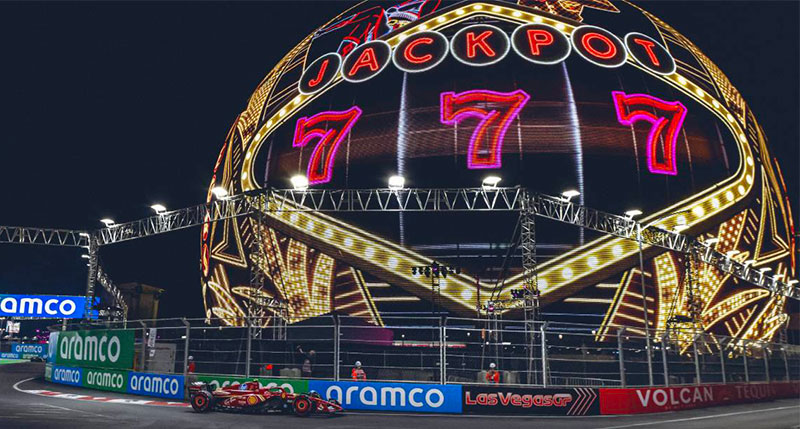
If you are deciding between several areas, think less about the perfect hotel and more about the kind of trip you want once you step outside.

Neighborhood Vibe Best For Avoid If…
Union Square / Downtown Central, busy, practical Short stays, transit access, convenience You want quiet nights and more local neighborhood energy.
SOMA (near Moscone) Modern, efficient, conference-friendly Work trips, short business stays, easy logistics You want charm the second you walk outside.
North Beach Classic SF, lively, food-forward Walkable nights, bars, Italian energy, easy loops You are a very light sleeper on weekends.
Chinatown Dense, energetic, memorable Culture, food, and a totally different city feel You want wide sidewalks and quiet mornings.
Hayes Valley Stylish, boutique, calmer Coffee, dining, shopping, a polished home base You want immediate waterfront access.
Mission Creative, energetic, food-heavy Murals, tacos, bars, neighborhood personality You want a polished hotel district.
Marina / Cow Hollow Scenic, brighter, cleaner-feeling Views, easy strolls, photogenic SF You want transit-first logistics.
Pro Tip: San Francisco is block-by-block in some areas. Read recent hotel reviews for the exact street, not just the neighborhood name.
Coit Tower rising above the trees and residential buildings of Telegraph Hill in San Francisco

Basing yourself near classic landmarks like Coit Tower puts you steps away from North Beach’s unbeatable food and evening energy.


Where to Stay in SF by Traveler Type

If you do not want to spiral into hotel-tab overload, start with your trip type instead of the hotel itself. This section is the fastest way to match your trip style to the right part of the city.

For shorter stays, paying more for a better base is usually worth it. For longer trips, you can save by staying just outside the hottest zones, as long as your nighttime return still feels easy.

Traveler Type Best Base Area Why It Works One Tip
First-timer North Beach or Hayes Valley Easy walking loops, memorable streets, strong SF feel Pay for location. It improves every part of the trip.
Conference trip SOMA or Downtown Shorter work logistics, easier daytime efficiency Build one evening loop so the trip does not become hotel-lobby life.
Food and nightlife North Beach or Mission edge Better nights, better dinner options, fewer rideshares Stay on a quieter side street if sleep matters.
Scenic, calmer vibe Marina / Cow Hollow Views, pleasant walking, less chaos out the door Budget for a few rideshares to reach other neighborhoods.
Budget-focused Outer neighborhoods with transit access Lower room rates, more space, longer stays Make sure your nighttime return route feels comfortable.
Local Guide Tip: Your ideal base makes this easy: coffee, one neighborhood walk, one main sight, then dinner streets without a complicated reset.
A BART train arriving at a dimly lit underground transit station in San Francisco

BART from SFO is one of the cleanest moves if your trip is city-focused and you do not need a car.


Getting Around San Francisco

I have done San Francisco both ways: BART from SFO when the plan was to stay urban, and a rental car when the trip stretched beyond the city. If San Francisco is the main event, going car-free is usually the smarter play. Once parking, hills, and break-in risk enter the picture, the romance of having a car fades fast.

Walking is still the best way to feel the city, but not as one giant all-day haul. Walk neighborhoods, not the entire city. Use BART, rideshare, or the occasional shortcut when the terrain starts eating into the fun.

The smartest move is usually a hybrid: rail or rideshare in from the airport, neighborhood walking during the day, and rideshare for late returns or hill fatigue.

Mode Best For Reality
BART SFO to city, cross-bay connections Efficient if you stay near a station, but not perfect for every neighborhood. Check routes on the official BART website.
Walking Neighborhood loops San Francisco is highly walkable, but the hills are real.
Rideshare Night returns, shortcuts, hill fatigue Worth the cost when you want speed, comfort, or an easier finish.
Car rental Trips beyond the city Only rent if you are leaving San Francisco. Inside the city it adds friction fast.

Transportation planning

Read: Getting Around Abroad for loop-based travel planning

A view of the historic Alcatraz Island prison facility surrounded by the turbulent waters of the San Francisco Bay

Alcatraz is one of the rare major tourist sights in San Francisco that genuinely earns its reputation.


Best Things to Do in San Francisco: What Is Actually Worth Your Time

San Francisco has no shortage of things to do, but not all of them deserve prime time in a short trip. The best approach is to prioritize what feels uniquely San Francisco: history on the bay, waterfront food, neighborhood texture, steep-street drama, and one or two scenic moments that make the whole city click.

You do not need a hundred stops. You need a few high-value ones arranged in the right order. That is what turns San Francisco from a tiring city into a very good one.

1) Alcatraz Island: The Tourist Sight That Earns It

I have done Alcatraz twice and would still send first-timers. The setting is iconic, the history lands, and the audio tour is genuinely well done. Buy tickets only from City Experiences, the official vendor.

2) Ferry Building and Oysters

The Ferry Building is a food stop, a walk, and a mood shift in under two hours. If the weather cooperates, oysters by the water are one of the easiest high-payoff San Francisco moves.

3) Deep Dive Into a Real Neighborhood

Give one real block of time to Chinatown, North Beach, the Mission, or Hayes Valley instead of grazing five neighborhoods badly.

4) A Scenic Window, Not a Scenic Marathon

That might be the bridge, Alamo Square, a waterfront stretch, or the Marin side. San Francisco gets much better when you stop forcing viewpoints in bad weather and go when the window opens.

5) A Classic San Francisco Night

A Giants game, dinner in North Beach, a Mission food-and-bar loop, or a long waterfront walk after dinner. Protect one evening that feels like the city instead of another night of logistics.

6) The Cable Car Move That Saves Time

Riding a cable car is still fun, but waiting forever at the Powell turnaround is not. If you want the classic experience without burning half your day, the California Street line is usually the smarter play.

7) Telegraph Hill and the Filbert Steps

Coit Tower is fine, but the walk up is the real payoff. The Filbert Steps give you one of the quietest and most interesting hidden-side moments in the city.

  • Worth prioritizing: Alcatraz, Ferry Building, one full neighborhood, one scenic window, one great night loop
  • Usually enough as a pass-through: Fisherman’s Wharf and the loudest tourist corridor stretches
  • Best mindset: choose fewer, better moments and let the city breathe
Pro Tip: Book Alcatraz early. It is the sight most likely to sell out and throw off your whole plan if you wait.
Several fresh, whole Dungeness crabs displayed on a bed of ice

Fresh Dungeness crab is one of those classic San Francisco food moves that still feels worth doing when you time it right.


San Francisco Food Guide: What to Eat and How to Order

San Francisco is a serious food city, but the best meals here usually come from restraint. Mix one classic San Francisco meal with one neighborhood food crawl and one strong dinner street. If you try to do everything, you will spend the trip in transit, lines, and over-ordering.

The best food days have rhythm. Start early, build the main sight or walk before lunch, then use the afternoon and evening to eat where the city already wants you to be. That could mean oysters near the water, dim sum in Chinatown, a North Beach dinner, or tacos and bars in the Mission.

The biggest win is usually sequencing, not volume. Two or three smart stops beat a dozen average ones every time.

Move Where It Fits Best Why It Works
Dungeness crab + sourdough Cool-weather lunch or dinner Classic, satisfying, and still one of the most iconic San Francisco food experiences.
Oysters by the water Ferry Building or waterfront day Easy high-payoff meal that fits naturally into a sightseeing loop.
Chinatown crawl Lunch or late afternoon Great for dim sum, bakeries, noodle stops, and quick small wins.
Mission food night Dinner into bars One of the best neighborhoods in the city for building a full evening.
North Beach dinner Classic city night Great day-to-night flow with strong restaurant density.

How to avoid traps and beat the crowds

  • Walk 5 to 10 minutes off the loudest sight corridor before choosing a place.
  • For popular counters and food halls, go earlier than you think.
  • Do not stack two high-wait meals into the same day.
  • If a restaurant sits right beside the number-one sight, you are often paying for the location more than the food.
  • San Francisco reservation culture can get intense, so bar seating right when places open is often the smartest walk-in move.
  • Order 2 to 3 things, then reassess instead of trying to win the menu.
Local Guide Tip: The best San Francisco meals are usually a few smart rounds, not one giant over-order.
A pedestrian walking down a street in San Francisco's Chinatown illuminated by rows of glowing red lanterns at night

Chinatown at night is one of the easiest ways to turn a daytime sightseeing plan into a memorable San Francisco evening loop.


San Francisco Itinerary: 2 to 4 Day Game Plans

Use these as flexible frameworks, not rigid schedules. Swap neighborhoods based on your base, your energy, and the weather window. The goal is to keep San Francisco feeling memorable, not over-programmed.

If you only have two days, keep the magic inside the city. If you have four, you can finally slow down and let San Francisco breathe a little.

2 Perfect Days in SF

Day Anchor Neighborhood Morning Afternoon Night
Day 1: Waterfront + Icons Embarcadero / North Beach Ferry Building loop + coffee Alcatraz or waterfront museums North Beach dinner + one great bar
Day 2: Views + Neighborhoods Chinatown or Mission Bridge or waterfront viewpoint window Chinatown or Mission loop Giants game or one classic SF night out

4 Days in SF: The Sweet Spot

Day Anchor Neighborhood Morning Afternoon Night
Day 1: Arrival Loop Embarcadero Settle in and find coffee Ferry Building and waterfront walk Easy dinner near your hotel
Day 2: The Classics North Beach Alcatraz early ferry North Beach or Embarcadero walk Classic dinner in North Beach
Day 3: Culture + Views Mission or Chinatown Neighborhood deep dive A well-timed scenic stop Food crawl and drinks
Day 4: Slower San Francisco Your favorite zone Coffee and a final walk Museum, park, or waterfront flex time Final celebratory SF dinner
Pro Tip: If you only have 2 days, do not force a day trip. Keep the magic inside the city.
A wooden boardwalk trail winding through a dense grove of towering redwood trees in Muir Woods.

Muir Woods is a premier day trip from San Francisco, providing a quick but powerful immersion into California’s ancient redwood coast.


Beyond SF: Best Day Trip Ideas to Save for Longer Trips

San Francisco is an excellent base for broader Northern California travel, but most of the major add-ons deserve their own pace. If your main trip is San Francisco, keep these as ideas rather than trying to cram them into a short city itinerary.

For TLGA structure, this is where your spokes will work better later. Napa, Yosemite, and Lake Tahoe all deserve dedicated planning pages instead of oversized sidebars inside the city guide.

  • Marin Headlands / Muir Woods: the easiest scenic and nature extension from the city
  • Napa Valley: best when you slow down and do less, not more
  • Lake Tahoe: a bigger mountain-and-lake add-on that deserves multiple nights
  • Yosemite: a bucket-list California extension, not a quick side trip

TLGA spoke strategy

Keep the San Francisco guide city-focused, then spin off Napa, Yosemite, Tahoe, and Marin into dedicated spoke guides later.

A brown sea lion resting on the wooden docks at Pier 39 in San Francisco

In crowded areas like Pier 39, basic city awareness matters more than paranoia, especially when you are distracted by the barking and sunbathing sea lions.


Is San Francisco Safe? Street Smarts for Travelers

San Francisco is a major U.S. city. Most visitors have a great trip with zero issues. The goal is habits, not paranoia. Stay aware, stay flexible, and do not let one rough block define your whole read on the city.

The two biggest realities for visitors are car break-ins and block-by-block street variation. That means staying sharp with valuables, pivoting when a street feels wrong, and using rideshare when the easiest safe choice is also the smartest one.

  • Car break-ins: keep the car empty and boring, with nothing visible
  • Late-night returns: if the vibe feels off, take the rideshare
  • Transit awareness: keep your phone secure in crowded stations and cars
  • Street judgment: some areas shift fast block by block, so pivot instead of debating it
Local Guide Tip: When a street feels wrong, do not stand there debating it. Turn, pivot, and keep moving.
The classic row of colorful Painted Ladies Victorian houses sitting in front of the modern San Francisco downtown skyline at sunset

The Painted Ladies at Alamo Square provide a perfect sunset viewpoint and a great anchor for a Hayes Valley walking loop.


San Francisco Budget Strategy

San Francisco is expensive, but it is controllable if you spend on the right things. The best money usually goes to location, one or two high-value sights, and a couple of memorable meals. The worst money goes to bad sequencing, constant cross-town rides, and eating only in the loudest tourist corridors.

The best budget move is often paying more upfront for a better neighborhood base. That reduces transportation costs, saves time, and makes the trip feel easier. In San Francisco, convenience is not just a luxury add-on. It often decides whether the trip feels smooth or draining.

Spend On Save On Reality Check
Better location Constant rideshares A strong base improves every day of the trip.
Alcatraz or one priority sight Overscheduled paid tours One great sight beats three average ones.
One memorable dinner Tourist-corridor meals San Francisco rewards a few smart food choices, not endless reservations.

Money basics

Read: Travel Finance Guide

San Francisco Travel FAQs

How many days do I need in San Francisco?

Three full days is the sweet spot for a first trip. Two days works if you stay focused. Four days gives you room to slow down and enjoy neighborhoods without turning the trip into a sprint.
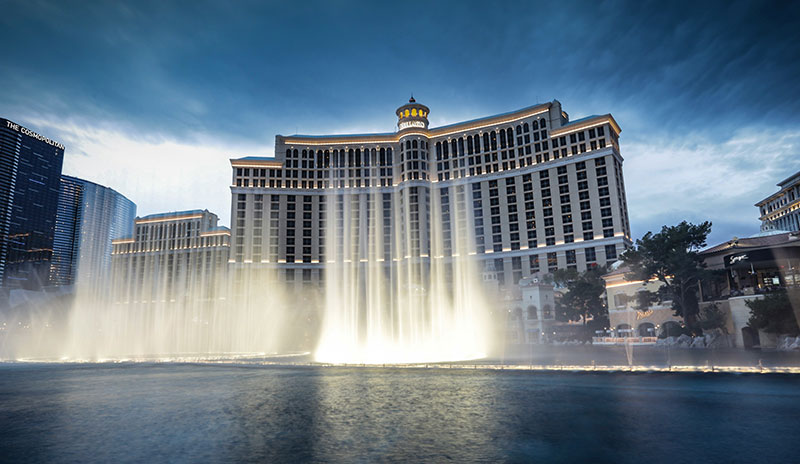
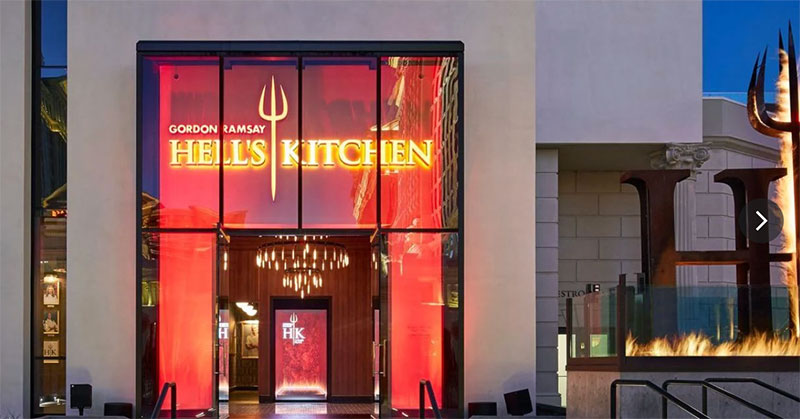
Yes. It is one of the rare major tourist sights that still holds up. If you are traveling with first-timers, it is still an easy yes.

Only if you are leaving the city for places like Marin, Napa, Tahoe, or Yosemite. If San Francisco is the main trip, skip the car and protect your time, money, and stress level.

Fresh Dungeness crab with sourdough is still the classic. Oysters by the water are the other simple San Francisco win.

Build one walking loop per day by neighborhood, then add one major sight at most. Protect your mornings and leave room to pivot when weather or energy changes.

Yes. If you lean into food, neighborhoods, and flexible viewpoints, winter can be a great time to visit. Just pack layers and expect conditions to shift throughout the day.

Things to Do in NYC: Best Attractions & Experiences

“`html

NYC rewards structure. Pick one anchor per day, build around it, and let the city fill in the rest.


Home » Destinations » Page 5

Last updated: March 2026 by Corey Gasman

New here? Pair this guide with:

NYC Travel Guide |
Where to Stay |
Best Restaurants

Start Here: How to Plan NYC Days

New York is not about checking off 25 landmarks. It is about building strong daily anchors. Choose one major experience, one neighborhood walk, and one great meal. That is how NYC feels fun instead of overwhelming.

Core TLGA rule: Never plan more than one major attraction per half day. NYC walking fatigue is real.
Trip Style Anchor Activity Pair With Neighborhood
First Timer Broadway show Pre-show dinner + rooftop drink Midtown
Food Focused Iconic restaurant Downtown walk West Village / LES
Culture Heavy Major museum Central Park reset Uptown
Views + Photos Observation deck or skyline walk Brooklyn dinner Brooklyn
A classic view of the Statue of Liberty standing tall against the Lower Manhattan skyline and the New York Harbor at sunset.

Seeing Lady Liberty and the skyline from the water is one of NYC’s best perspective shifts.


Iconic NYC Experiences

  • Broadway Show: One show per trip. Make it count.
  • Statue of Liberty or Harbor Cruise: The skyline from the water is worth it.
  • Times Square (once): Walk through it, don’t linger.
  • Grand Central Terminal: Look up at the ceiling and then move on.
  • Brooklyn Bridge Walk: Go early morning or golden hour.
Local Guide Tip: Times Square is better as a 15-minute walkthrough than a destination. See it, photograph it, leave it.

Museums Worth Your Time

Museum Best For Pair With Time Needed
MoMA Modern art highlights Midtown lunch 2–3 hours
The Met Classic, massive collection Central Park walk Half day
9/11 Museum History + reflection Waterfront walk 2 hours
Whitney Modern American art High Line 2 hours
Museum rule: Pick one major museum per day. More than that and everything blends together.

Best Skyline Views

  • Observation Deck: Do one. Sunset slots book fast.
  • Brooklyn Promenade: Free and arguably better than decks.
  • Rooftop Bar: Pair views with a cocktail.
  • Harbor Cruise: See Manhattan from the outside.
Best strategy: If budget matters, skip the deck and do Brooklyn + a ferry ride. Nearly the same payoff.

Best Neighborhood Walks

  • West Village loop (Washington Square Park)
  • SoHo + Nolita shopping walk
  • DUMBO + Brooklyn Bridge Park
  • Central Park 72nd Street entry
  • Chinatown + Lower East Side food wander
NYC magic lives between stops. Schedule at least one unstructured wander block per trip.

Parks + Reset Days

  • Central Park: The built-in reset button.
  • High Line: Elevated walk with architecture views.
  • Brooklyn Bridge Park: Skyline and space to breathe.

Sports + Live Events

  • Yankees or Mets game (seasonal)
  • NBA at Madison Square Garden
  • Concerts and major touring shows
  • US Open (late summer)

Seasonal Highlights

  • Spring: Best walking weather.
  • Summer: Energy is high, rooftop season.
  • Fall: Arguably perfect NYC weather.
  • Winter: Holiday lights + fewer tourists after New Year.

Free Things to Do in NYC

  • Brooklyn Bridge walk
  • Staten Island Ferry
  • Central Park wandering
  • Grand Central interior
  • Neighborhood street art exploration
Free strategy: Spend on one premium experience per day and make the rest walking-based.

Things to Do in NYC FAQ

How many days do you need in NYC?

Four to five days is the sweet spot for a first visit. You can see major highlights without burning out.

For most visitors, a Broadway show paired with a skyline moment defines the trip.

Yes. Once you’ve done the icons, neighborhood exploring becomes the main event.

[/section] “`

Where to Stay in NYC: Best Areas & Hotels

In NYC, your hotel neighborhood is your trip personality. Choose the right base and the city feels easy.


Home » Destinations » Page 5

Last updated: March 2026 by Corey Gasman

TLGA shortcut: First trip and you want it simple? Stay in Midtown.
Want charm and nightlife? Stay in West Village / SoHo.
Want skyline views and a cooler pace? Stay in Brooklyn.

Start Here

NYC hotels are expensive and rooms run compact. The win is not square footage. The win is location. Pick a base that matches your daily plan so you do less commuting and more living.

Core rule: Stay close to what you will do at night. You can commute in the morning. You will regret commuting at 11:30 PM.
Area Best For If You Want Avoid If
Midtown First timers, transit, Broadway Easy subway access and simple logistics You hate crowds and bright chaos
West Village / SoHo Charm, restaurants, nightlife The classic NYC vibe and walkable streets You want the cheapest rates
Lower Manhattan / FiDi Early mornings, ferries, memorials Quieter nights and a business-clean feel You want late-night energy outside your door
Brooklyn Views, cool factor, slower pace Neighborhood life plus skyline moments You want to be near Broadway every night
Queens Food value and local energy Less touristy, more “real NYC” You have a tight first-timer itinerary
The modern exterior entrance of the Archer Hotel New York at night, featuring warm industrial-style lighting and "Archer Hotel" signage in Midtown Manhattan.

Your base matters more than your room size. Stay in the right zone and NYC feels smooth.


Midtown

Best for: first timers, Broadway nights, museum access, easiest subway connections.

Why Midtown Works

  • Convenience: you can reach almost anywhere with fewer transfers.
  • Broadway: you can walk to shows and be “home” fast after.
  • Good for structure: perfect if you are building days by neighborhood.
Local Guide Tip: Midtown is best when you treat it as your sleep base, not your whole itinerary. You go out to eat and explore, then you come back to reset.

Nearby Eats

  • Pre-show: keep it simple and early, then eat after the show.
  • Splurge lunch: fine dining lunch is often the best value move in this zone.

Nearby Things to Do

  • Broadway night
  • MoMA afternoon
  • Rooftop drink for skyline views
TLGA link path: This is where your 5-Day NYC Playbook base can live.

West Village / SoHo

Best for: charm, restaurants, bars, walkable NYC streets that feel like a movie set.

Why This Area Wins

  • Vibe: tree-lined blocks, brownstones, small streets, energy at night.
  • Food density: you can build entire days around walking and eating.
  • Nightlife: the best “wander then decide” zone.
Street-level strategy: If you care about dinners and cocktail bars, staying downtown saves you the most pain. Late night subway decisions disappear.

Nearby Eats

  • Classic dinner night: one iconic reservation, then a low-key bar.
  • Great daytime bite: pick a bakery or casual lunch, then shop and walk.

Nearby Things to Do

  • Washington Square Park people watching
  • SoHo shopping loop
  • West Village bar hop

Lower Manhattan / FiDi

Best for: early starts, water views, memorials, ferries, and a quieter “sleep zone” at night.

Why It Works

  • Mornings are easy: you can beat crowds to major sites.
  • Water access: ferries and harbor views are built in.
  • Less chaos at night: a calmer return after busy days.
Local Guide Tip: This is a great base if you want NYC intensity during the day and a quieter landing pad at night.

Nearby Eats

  • Lunch: quick downtown meals work well on memorial days.
  • Evening: you can subway to Chinatown, LES, or the Village fast.

Nearby Things to Do

  • 9/11 Memorial and Museum day
  • Brooklyn Bridge walk
  • Ferry ride as a cheap view hack

Brooklyn

Best for: skyline views, cooler neighborhoods, slower pace, and food-first wandering.

Why Brooklyn Is a Great Base

  • Space and pace: it often feels less compressed than Manhattan.
  • Views: some of the best skyline moments come from Brooklyn.
  • Neighborhood energy: cafes, bars, and restaurants feel more local.
Reality check: If you plan to do Broadway and Midtown museums every day, Brooklyn adds commute time. If your trip is food and neighborhoods, Brooklyn is a win.

Nearby Eats

  • Steak or classic mission: plan one iconic Brooklyn meal.
  • Pizza night: Brooklyn is built for a pizza-first evening.

Nearby Things to Do

  • Sunset skyline walk
  • DUMBO photo loop
  • Rooftop views and a slower dinner

Queens

Best for: global food value, local energy, and a less touristy NYC experience.

Why Queens Is Special

  • Food: some of the best meals per dollar in NYC happen here.
  • Local feel: fewer tourists, more real neighborhood rhythm.
  • Perfect for repeat visits: great when you want something different.
Local Guide Tip: Queens is a perfect add-on day even if you do not stay here. Build a food crawl and treat it like a mini trip inside your trip.

Nearby Eats

  • Food crawl: pick one area and eat two small meals instead of one huge one.
  • Value strategy: this is where you balance out your splurge dinners.

Nearby Things to Do

  • Casual neighborhood walking and coffee stops
  • A relaxed afternoon between heavier Manhattan days

Hotel Types

Type Best For Pros Watch Outs
Boutique hotel Couples, vibe travelers Style, service, great bars Rooms can be very small
Big brand hotel First timers, business trips Consistency, points, easier upgrades Can feel generic
Aparthotel Families, longer stays More space, possible kitchenette Location varies a lot
Budget hotel Value-first travelers Spend money on food and shows Noise, smaller rooms, fewer amenities

Booking Tips

  • Book early: NYC pricing rewards early commitments.
  • Choose your night zone: stay near where you will be after dinner and bars.
  • Read room notes: “compact” in NYC is real. Prioritize location over room size.
  • Noise check: higher floors often matter more than the view.
  • Value hack: pay for the right neighborhood, then eat cheap at lunch and splurge at dinner.
Best NYC comfort upgrade: A hotel with a lobby lounge or rooftop bar is not just a perk. It becomes your nightly reset move.

Where to Stay in NYC FAQ

What is the best area to stay in NYC for first timers?

Midtown is the easiest base for a first trip because it reduces subway transfers and makes Broadway nights simple. If you want more charm and nightlife, the West Village and SoHo area is a great alternative.

Manhattan is best for pure convenience. Brooklyn is great if you want skyline views, cooler neighborhoods, and a slower pace. If Broadway is a major focus, Manhattan usually wins.

It is convenient for Broadway, but it is intense and crowded. You can stay nearby without being in the middle of it. A few blocks away often feels dramatically better.

For a first trip, 4 to 5 days is the sweet spot. You can do major icons without sprinting. If you have 7 days, add Brooklyn and Queens and pace it slower.

Pick your 2 most important dinner reservations first, then choose a base that makes at least one of those nights easy. Staying near your night zones is the most underrated NYC move.