


Eat Like a Local in Tokyo: Hidden Gems & Food Trends

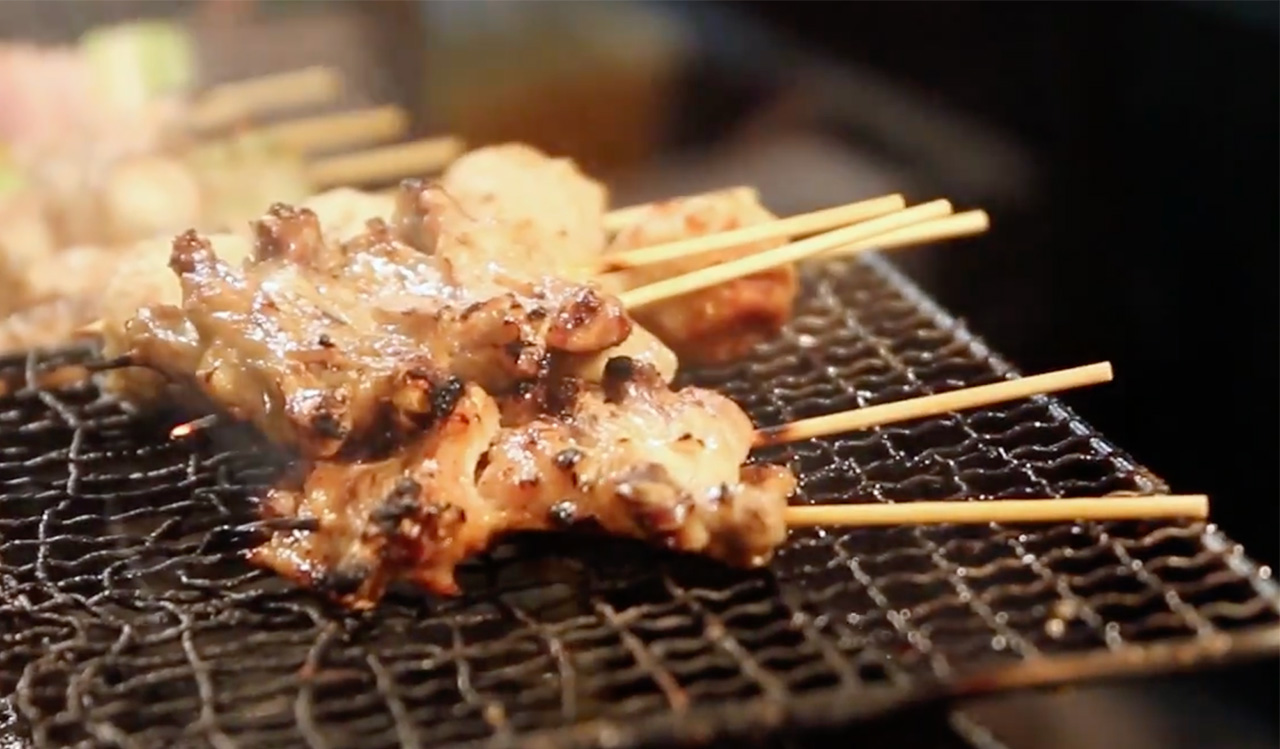
Close up of yakitori meats grilling in Tokyo
Home » Destinations » Page 12

Last updated: April 2026 by Corey Gasman

From the Editor:

Tokyo is one of the best food cities on the planet. Not just because of Michelin stars, but because of how consistently good everything is.

You can start your day with a simple bowl of miso soup and rice, grab a perfect bowl of ramen at lunch, snack your way through a department store food hall in the afternoon, and end the night at a tiny izakaya with skewers and beer.

Tokyo combines obsessive craftsmanship with incredible ingredients and a level of consistency that is hard to find anywhere else. The real difference is not just the top end. It is how good the everyday food is.

You are not just eating here. You are learning how a city eats.

Short on time? Jump to the 1-day Tokyo food plan or see where locals actually eat below.

TLGA Rule: Tokyo meals are simple and focused. One great dish, done well, eaten quickly, then you move on.

Planning more than Tokyo?

Start here: Japan Travel Guide

New to international travel? This guide covers everything you need to know before your first trip: First International Trip Guide

Use the Map: Spots in this guide are saved here so you can explore neighborhoods and plan your meals.
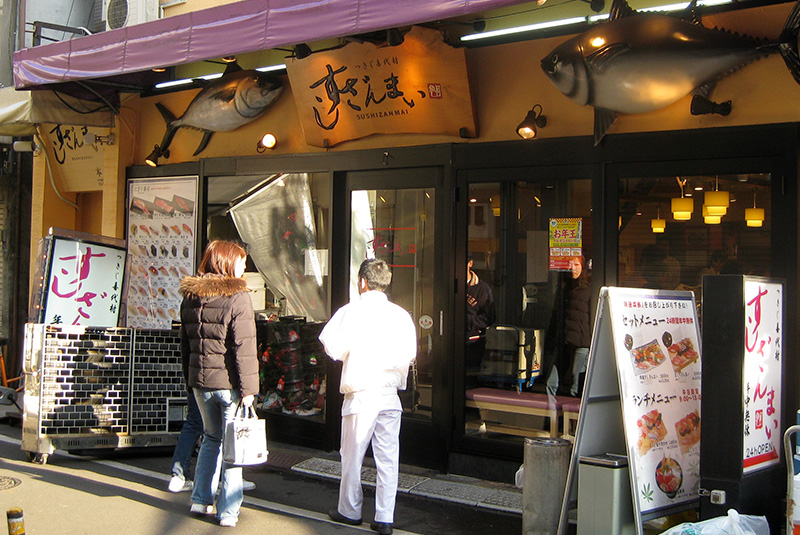
Exterior of a Sushizanmai restaurant in Tokyo featuring two large, realistic tuna sculptures mounted above the entrance and a chef in a white uniform standing outside

The iconic giant tuna sculptures at Sushizanmai are a staple of the Tokyo fish market area, marking one of the city’s most reliable spots for fresh, accessible sushi.


How Locals Actually Eat in Tokyo

To eat like a local in Tokyo, prioritize convenience, seasonality, and balance.

Most locals follow a “triangle eating” pattern, alternating between a bite of rice, a sip of soup, and a piece of a side dish to balance flavors and textures throughout the meal. This rhythm is just as important as the food itself.

Daily Eating Schedule

Meal Where Locals Eat What They Eat
Breakfast At home or quick chains near stations Traditional rice and miso, or bakery toast and coffee.
Lunch Standing noodle shops or gyudon chains Teishoku (set meals), ramen, or convenience store onigiri.
Dinner Home or Izakaya for social nights Hearty home-cooked stews, curry, or shared small plates.

How to Blend In

  • The 80 Percent Rule: Practice Hara Hachi Bu, eating until you are only 80 percent full to maintain health and longevity.
  • Chopstick Etiquette: Do not pass food directly from your chopsticks to someone else’s, as this mimics a funeral rite.
  • Quick Convenience: For a true local experience, use the ticket vending machines found at the entrance of ramen or soba shops to order and pay quickly.

Local Guide Tip: Station Corridors

Major hubs like Shinjuku or Tokyo Station have standing-only soba shops where commuters eat in minutes. They offer incredibly fast, cheap, and authentic meals.
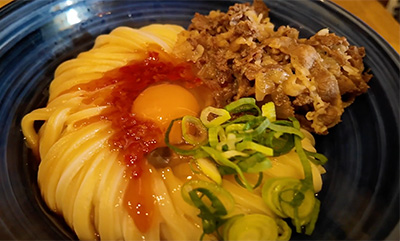
A bowl of kama-tama udon topped with a raw egg yolk, green onions, and tempura bits, representing a comforting first meal in Tokyo.

Whether it’s ramen or a silky bowl of kama-tama udon, starting your trip with a simple noodle dish is the best way to ease into the local rhythm.


Your First Meal in Tokyo: A Simple Playbook

After a long flight, it is tempting to chase the “perfect” restaurant. Don’t.

Your first meal in Tokyo should be easy, comforting, and low-pressure. This is about resetting your body, getting familiar with how things work, and easing into the rhythm of the city.

The Ideal First Meal Strategy

Step What to Do Why It Works
1 Find a ramen shop near your hotel or station No reservations, fast service, and deeply satisfying
2 Use the ticket machine if available Removes language stress and keeps things efficient
3 Order a basic bowl (shoyu or tonkotsu) Classic flavors that are easy to enjoy immediately
4 Add gyoza or a small side if hungry Rounds out the meal without overdoing it

Alternative First Meals

  • Gyudon (beef bowl): Fast, cheap, and comforting
  • Udon: Softer, lighter, and easier if you are tired
  • Depachika meal: Great if you want variety without sitting in a restaurant

Pro Tip: Do Not Overplan Your First Night

Jet lag is real. Keep your first meal flexible, stay near your hotel, and save your bigger dining plans for your second or third night when you can actually enjoy them.

Your first meal in Tokyo does not need to be memorable. It needs to be easy. The memorable meals come quickly after that.
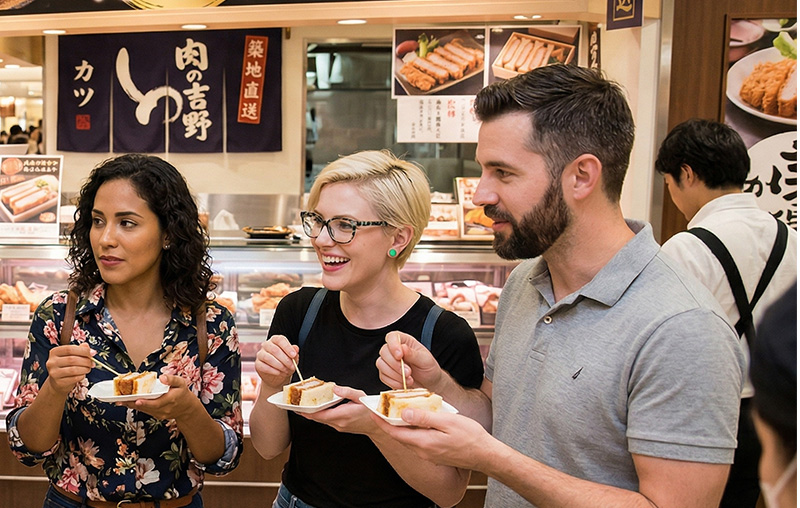
Tokyo rewards curiosity. Sticking only to obvious spots is one of the easiest ways to miss great food.


Mistakes Tourists Make Eating in Tokyo

Tokyo is one of the easiest cities in the world to eat well. But it is also easy to eat in a way that limits your experience.

Most mistakes come from trying to force a “perfect” plan instead of adapting to how the city actually works.

Common Mistakes (and What to Do Instead)

Mistake What Happens What to Do Instead
Only eating in Shibuya and Shinjuku Crowded, more expensive, less local feel Explore neighborhoods like Nakano, Kichijoji, or Koenji
Overplanning every meal Stress and missed spontaneous finds Plan a few key meals, leave the rest flexible
Chasing viral restaurants Long waits for marginal gains Look for busy local spots instead
Skipping chains entirely Missing part of real daily life Try at least one gyudon or casual chain meal
Thinking sushi is everyday food Overpaying or over-prioritizing it Balance sushi with ramen, soba, and izakaya meals
Ignoring lunch Missing some of the best value meals Use lunch for high-quality, lower-cost experiences

Local Guide Tip: Follow the Crowd, Not the Hype

A short line of locals is usually a better signal than a long line of tourists. Tokyo’s best meals are often found by paying attention, not searching harder.

The goal is not to eat perfectly. It is to eat often, stay flexible, and let the city guide you a little.
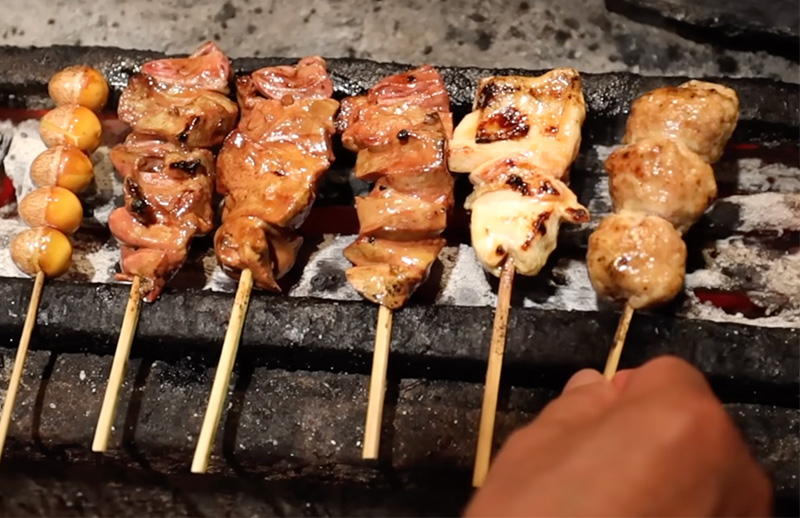
Close up of yakitori meats grilling in Tokyo

A true yakitori shokunin is a master craftsman who spends decades perfecting the “taming of the flames” over traditional binchotan charcoal.


Yakitori in Tokyo: The After-Work Food Culture

This is where Tokyo really opens up. If you think in terms of happy hour, this is the closest equivalent, just with yakitori, beer, and a much deeper food culture around it.

Yakitori is simple: chicken skewers grilled over charcoal. But in Tokyo, it becomes something much more precise and intentional.

What to Expect and Order

  • The Vibe: Counter seating is common and welcoming. Order in rounds, not all at once, and pair your meal with beer or a highball.
  • Negima: Chicken thigh and scallion
  • Tsukune: Chicken meatball with egg yolk
  • Kawa: Crispy chicken skin
Area or Spot Why Go Vibe
Omoide Yokocho (Shinjuku) Tight alley packed with tiny yakitori stalls Old-school, smoky, iconic
Torikizoku Reliable, cheap, consistent across Tokyo Casual, beginner-friendly
Shinjuku Golden Gai Bar-hop and yakitori combo experience Tiny bars, social, chaotic
Kichijoji Harmonica Yokocho Less touristy alley with excellent skewers Local-heavy, authentic

Local Guide Tip: Go Omakase

Let the chef choose your skewers. You will get a better mix and usually better cuts than ordering yourself.
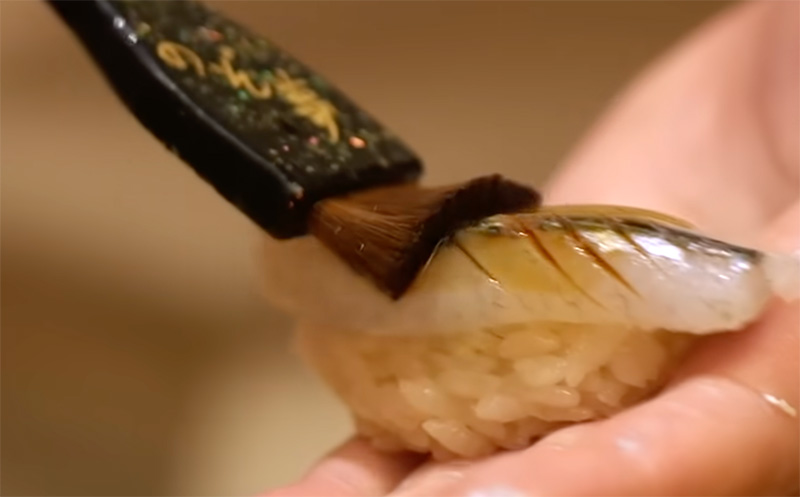
A close-up of a Japanese sushi chef using a traditional brush to lightly apply a thin layer of nikiri soy sauce onto a fresh piece of nigiri sushi.

In Tokyo’s top sushi dens, the chef brushes the perfect amount of soy onto the fish for you; drowning the delicate rice in a side dish of sauce is considered a major faux pas.


Do Japanese People Eat Sushi Every Day?

Surprisingly, no. For most Japanese people, sushi is not an everyday meal.

The average person eats sushi about two to three times a month. It is often reserved for special occasions like birthdays and holidays, or treated as a weekend family outing rather than a daily staple. The typical Japanese diet relies much more heavily on cooked fish, rice, miso soup, and noodle dishes.

For a full breakdown, see: How to Eat Sushi in Japan

What Makes Tokyo Sushi So Good

  • Shari (Rice): The most critical component. It is carefully seasoned with vinegar, sugar, and salt, and served at body temperature to create the perfect texture contrast with the cool fish.
  • Neta (Toppings): Seafood is sourced daily from markets. Chefs use specific cutting techniques to maximize texture and flavor.
  • Umami: The combination of the fish’s natural oils, savory soy sauce, and the slight tang of the rice creates a powerful umami profile.

Best Accessible Sushi Experiences

Style or Spot Vibe Why Go
Uobei (Shibuya) Kaitenzushi (Conveyor) Famous for its high-speed delivery chutes. Feels futuristic and extremely popular.
Sushiro Kaitenzushi (Conveyor) Japan’s largest chain. Reliable quality, seasonal specials, and very budget-friendly.
Uogashi Nihon-Ichi Tachigui (Standing) A great standing chain in Shinjuku and other hubs. English menus and fresh toppings.
Nemuro Hanamaru Standing or Conveyor Wildly popular spot near Tokyo Station. The scallop quality is legendary.

Pro Tip: Standing Sushi Speed

Standing sushi is a classic Tokyo experience. You eat at a counter just like the Edo-period locals did. It is faster and cheaper than seated dining, but often higher quality than standard conveyor belts.
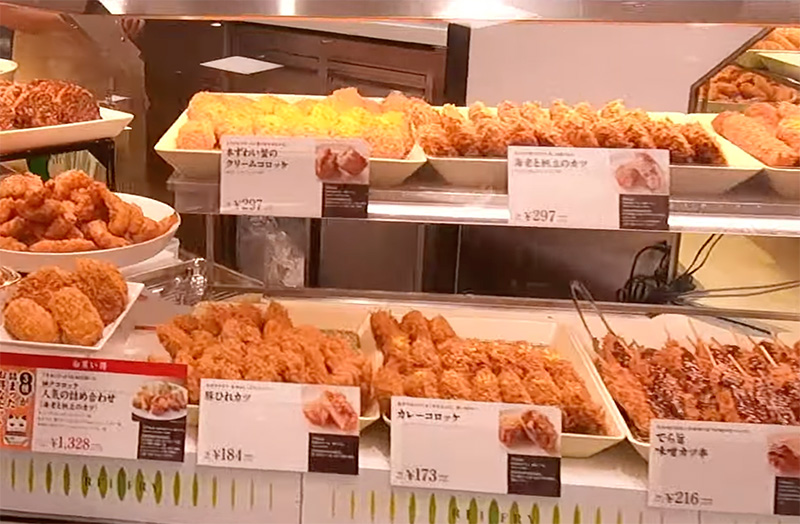
A variety of golden-brown fried foods, including tonkatsu and croquettes, neatly displayed in a glass case at a Tokyo department store basement food hall (depachika).

For travelers on a budget, depachika food halls offer high-quality prepared meals like tonkatsu and tempura that are often discounted in the evening.


Depachika Food Halls: Tokyo’s Best Hidden Food Experience

If you love food, do not skip a depachika.

Short for a ‘department store basement food hall’, a depachika is where Tokyo’s polished retail culture collides with incredible prepared food. Think immaculate bento boxes, hand-shaped rice balls, tonkatsu sandwiches, premium fruit, skewers, sushi, pickles, pastries, and desserts that look like jewelry.

This is not just a place to grab something fast. It is one of the best ways to understand how seriously Tokyo takes everyday food. The quality is high, the presentation is beautiful, and you can sample a huge range of dishes without committing to one restaurant.

What to Buy First

  • Bento boxes: Great for a full meal with balance already built in
  • Katsu sandwiches: One of Tokyo’s best portable comfort foods
  • Seasonal sides: Pickled vegetables, tamagoyaki, simmered dishes, and deli salads
Depachika Area Why Go
Isetan Shinjuku One of the most famous food halls in the city with serious range and polish
Mitsukoshi Ginza Excellent for higher-end prepared foods and gift-worthy sweets
Daimaru Tokyo Station Very convenient if you are in transit and want a quality meal to go
Tokyu Food Show Shibuya Busy, central, and easy to work into a day of exploring

Local Guide Tip: Go in the Evening

Many depachika counters discount prepared foods later in the evening. It is one of the best ways to eat extremely well for less, especially if you want a relaxed dinner back at your hotel.
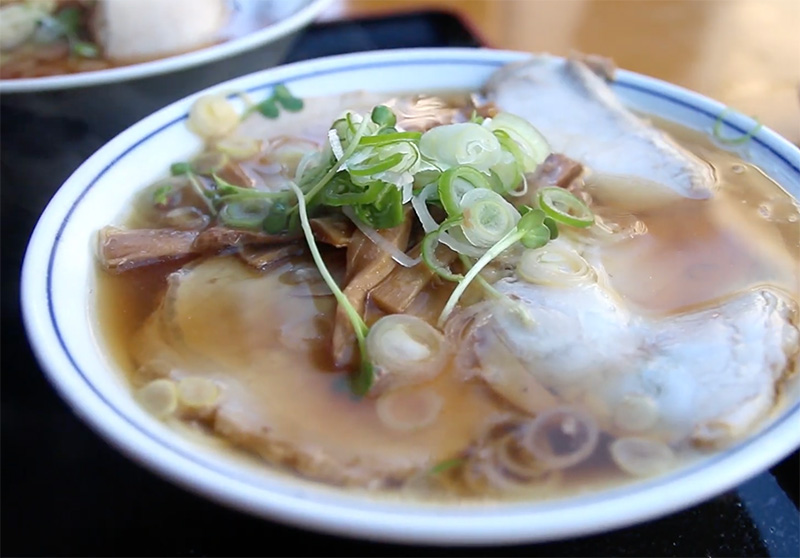
A steaming bowl of Tokyo-style shoyu ramen with chashu pork, bamboo shoots, and green onions, served at a traditional wooden ramen counter.

While it’s a global icon, ramen in Tokyo is the ultimate functional meal, often eaten quickly at a counter during a lunch break or as a satisfying late-night finish after a few drinks.


Ramen in Tokyo: More Than a Cheap Bowl

Ramen is one of the easiest meals to find in Tokyo, but that does not mean it is basic.

This is one of the city’s true obsession foods. Some ramen shops are tiny, fast, and built for a ten-minute lunch. Others are deeply specialized, with chefs refining one broth style for years. Tokyo is where you can try classic styles, modern interpretations, and regional variations from all over Japan without ever leaving the city.

For travelers, ramen is also one of the most satisfying ways to eat well without overplanning. You can have an incredible bowl for the price of a casual lunch back home.

Want to go deeper? See our full guide: Ramen in Japan

The Main Styles to Know

Style What It Is Flavor Profile
Shoyu Soy sauce-based broth Clear, savory, balanced
Shio Salt-based broth Lighter, cleaner, more delicate
Miso Miso-based broth Richer, deeper, slightly sweet and hearty
Tonkotsu Pork bone broth Opaque, rich, creamy, intensely savory
Tsukemen Dipping noodles served separately from broth Concentrated, bold, great texture

Pro Tip: Do Not Judge by Looks Alone

Some of the best ramen shops in Tokyo look tiny, plain, and almost too simple to be special. If locals are lining up, pay attention.
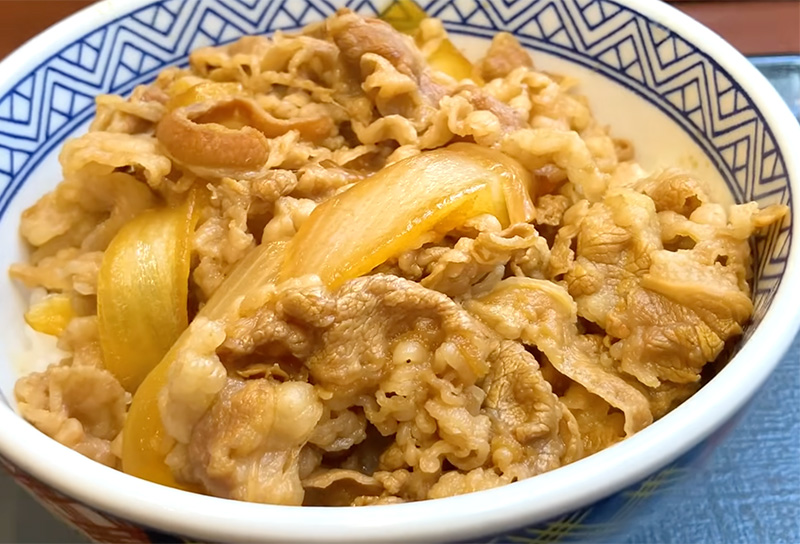
Gyudon is the ultimate budget-friendly staple, offering a filling, high-quality meal for less than the price of a coffee in many Western cities.


Where to Eat in Tokyo on a Budget

To eat well on a budget, move away from the main tourist hubs and embrace how locals prioritize value. Unpretentious, delicious, and affordable eateries are everywhere.

You can comfortably eat multiple great meals in a day for under 10,000 yen total if you balance your quick bites with one nice dinner. This is not budget food in the sad sense. It is fast, focused, and exactly how locals eat during a normal workday.

Meal Where to Find It Typical Price
Gyudon Yoshinoya, Sukiya, Matsuya ¥400 to ¥700
Standing Soba Train stations and commuter corridors ¥400 to ¥700
Curry Rice Chains and neighborhood lunch spots ¥600 to ¥900
Simple Ramen Neighborhood ramen counters ¥800 to ¥1,000
Onigiri + Sides Konbini and depachika ¥300 to ¥900

How to Use This Strategically

  • Breakfast cheap, dinner bigger: Easy way to balance your budget
  • Use stations smartly: Great for fast meals between neighborhoods
  • Keep cash ready: Small shops still move quickly and prefer physical currency

Local Guide Tip: Tokyo Chain Restaurants Are Not a Cop Out

In many cities, chains are the thing to avoid. In Tokyo, some chain meals are absolutely part of how locals actually eat. They are quick, consistent, and often surprisingly satisfying.
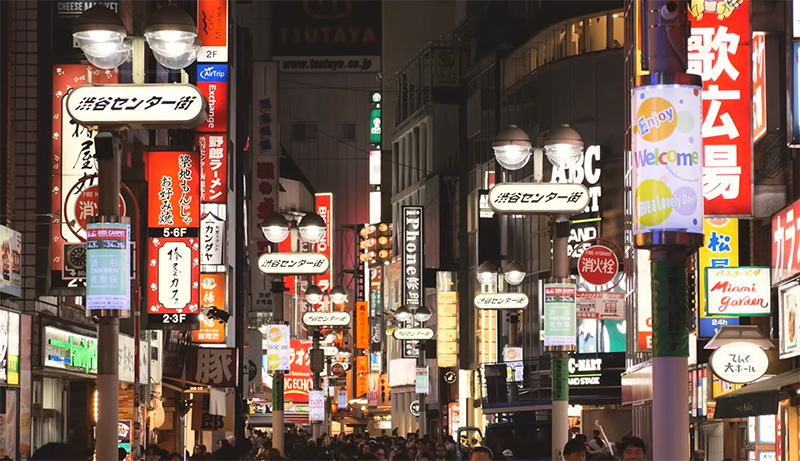
A vibrant, narrow pedestrian street in Shibuya, Tokyo at night, filled with glowing neon restaurant signs, overhead lanterns, and people exploring the local eateries.

Shibuya may be one of Tokyo’s busiest areas, but locals still know how to find incredible food tucked away on side streets and upper floors.


Neighborhoods Where Locals Eat in Tokyo

If you only eat around the biggest tourist hubs, Tokyo can start to feel crowded, expensive, and overly polished. The food is still good, but you miss some of the city’s everyday texture.

To eat more like a local, spend time in neighborhoods where people actually live, work, meet friends, and head out for dinner without making a whole production of it.

Neighborhood Why Go Best For
Nakano More relaxed than Shinjuku with excellent casual dining Ramen, izakaya, local lunch spots
Koenji Creative, youthful, and less polished in a good way Cheap eats, bars, neighborhood flavor
Kichijoji Popular with locals and great for a slower-paced food day Small restaurants, yakitori, shopping breaks
Ebisu More refined but still livable and local-feeling Excellent dinners, izakayas, stylish food spots
Shimokitazawa Casual and trend-forward with lots of independent spots Cafes, creative food, low-pressure meals

Pro Tip: Do Not Spend Every Night in Shinjuku or Shibuya

Those areas can still be fun, but Tokyo gets much more interesting once you start eating in neighborhoods where the city feels less performative and more personal.
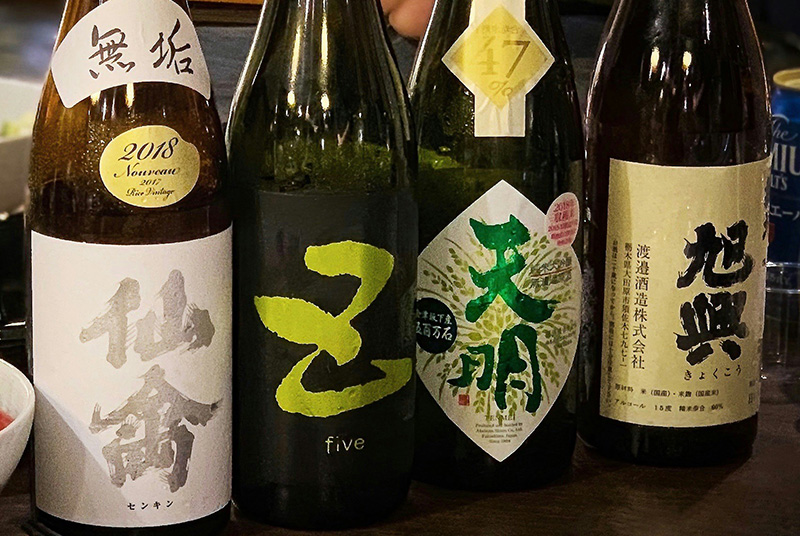
Choosing the right sake is all about balance: crisp Junmai Ginjo pairs perfectly with seafood, while earthier Yamahai styles stand up well to grilled meats.


A Sommelier Guide to Drinking in Tokyo

Japanese bar culture runs on respect and precision. In many places, the bartender is referred to as the Master. Keep things simple, observe the local etiquette, and you will usually be guided toward incredible drinks.

The Sake (Nihonshu) Sommelier Guide

Do not be intimidated by the labels. You generally order sake by the go (one serving, about 180ml) or by the bottle (720ml).

  • White Wine or Floral Profile: Ask for Junmai Ginjo. It is fruity, aromatic, and easy to drink.
  • The Top Shelf: Ask for Junmai Daiginjo. This uses highly polished rice. It is elegant, smooth, and expensive.
  • Rich or Savory Profile: Ask for Junmai or Yamahai. These are earthier and pair beautifully with heavy food.

The Overflow Rule: Sometimes a glass is placed inside a wooden box (masu) and poured until it overflows. This is a sign of generosity. Drink from the glass first, then pour the extra from the box into the glass.

Bar Area The Vibe and What to Order
Bar BenFiddich Shinjuku The owner grows his own herbs. No menu; just tell him flavors you like. World-renowned.
The SG Club Shibuya Two floors of fun. Order the Wagyu Mafia Old Fashioned, fat-washed with beef fat.
Bar High Five Ginza A legend. Master Ueno is famous for his White Lady cocktail and diamond-carved ice cubes.
Premium Sake Pub Gashue Ueno Very friendly to foreigners. Order a sake flight to compare three types easily.

Local Guide Tip: Pouring Etiquette

Never pour your own drink. If you are with friends, pour for them, and hold your cup when they pour for you. If you are alone, the bartender will handle it.
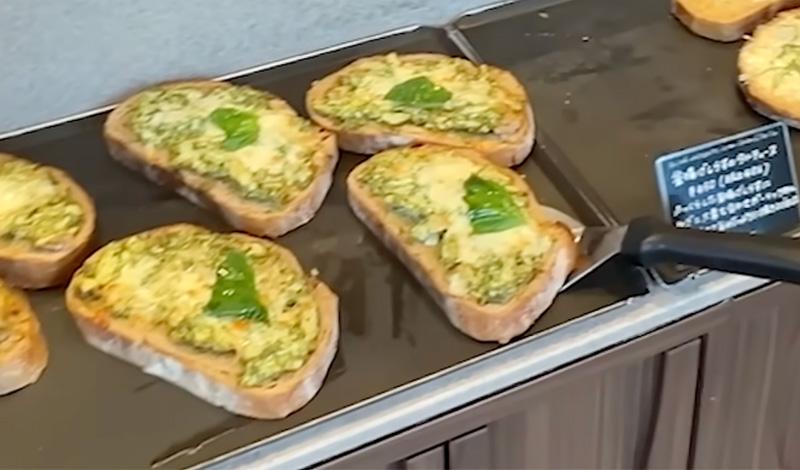
Four slices of thick-cut Japanese milk bread toast topped with melted cheese and fresh green herbs, served as a quick morning meal in a Tokyo bakery.

Tokyo’s bakeries excel at “savory toasts”, thick slices of fluffy shokupan topped with everything from local herbs to melted cheese for a perfect, quick breakfast.


A Perfect One-Day Tokyo Food Itinerary

This is not about hitting “the best” of everything. It is about experiencing how Tokyo flows from one meal to the next.

Keep portions reasonable, stay flexible, and enjoy the variety.

Time Meal What to Do
8:00 AM Breakfast Bakery or simple set meal with rice, miso soup, and grilled fish
11:30 AM Early Lunch Ramen or soba near a station before crowds peak
2:00 PM Snack Depachika visit for small bites, desserts, or takeaway snacks
5:30 PM Pre-Dinner Quick stop for yakitori or a small plate and drink
7:30 PM Dinner Izakaya meal with multiple small dishes and drinks
10:00 PM Late Night Optional ramen or dessert if you are still hungry

How to Make This Work

  • Eat smaller portions: You are eating multiple times, not one big meal
  • Walk between stops: Helps reset and keeps the day enjoyable
  • Stay flexible: Swap meals based on what looks good in the moment
  • Mix price points: Combine budget meals with one nicer experience

Pro Tip: Tokyo is a Multi-Meal City

The best way to experience Tokyo is not one big reservation. It is several smaller, high-quality meals spread throughout the day.

If you follow this rhythm, you will experience more of Tokyo’s food culture in one day than most travelers do in three.
A Michelin-starred chef at Tempura Kondo in Ginza, Tokyo, carefully frying a signature thick-cut sweet potato tempura in a traditional copper vat of golden oil.

At Tempura Kondo in Ginza, Master Fumio Kondo has elevated tempura from a simple snack to a Michelin-starred art form, famous for his innovative approach to seasonal vegetables.


Where to Actually Eat in Tokyo (Local Picks)

These are not the only great places in Tokyo. They are reliable, well-tested picks across different neighborhoods and price points that reflect how people actually eat here.

Some are splurges. Some are casual. Some are the kind of places that help you understand Tokyo fastest. Use this list as a set of strong anchors, not a checklist you have to complete.

Place Tier & Area What to Order + Why Go
L’Effervescence High-End / Omotesando Three-star Michelin blending French technique with Japanese ingredients. A serious splurge.
Florilège High-End / Azabudai Hills Innovative French-inspired dining around a stunning open theater kitchen.
Kanesaka High-End / Ginza Quintessential high-end Ginza sushi counter experience. Intimate and highly attentive.
Tempura Kondo High-End / Ginza Legendary tempura that elevates simple vegetables into incredible dishes.
Gonpachi Mid-Level / Nishi-Azabu Famous for its Kill Bill look. Order yakitori and tempura for a lively first izakaya experience.
Butagumi Mid-Level / Nishi-Azabu Housed in a traditional wooden house, serving some of the best premium tonkatsu in the city.
Udon Shin Mid-Level / Shinjuku Thick, chewy, hand-cut udon noodles made to order. Worth the wait.
Seirinkan Mid-Level / Nakameguro Excellent Neapolitan-style pizza in a quirky setting. Only serves marinara and margherita.
AFURI Budget / Ebisu & Harajuku Famous for light, citrusy yuzu shio ramen. A refreshing break from heavier pork broths.
Harajuku Gyozarou Budget / Harajuku Fast-paced counter spot dedicated to gyoza. Cheap, quick, and always busy.
ICHIRAN Budget / Multiple Classic tonkotsu ramen in a private booth. Order through the machine. One of the easiest first ramen experiences.
Omoide Yokocho Budget / Shinjuku Smoke-filled alleyway packed with tiny stalls. Come for yakitori, beer, and old Tokyo energy.

Pro Tip: Start simple. Confidence builds quickly in Tokyo once you realize you can get a great meal without overthinking every choice.
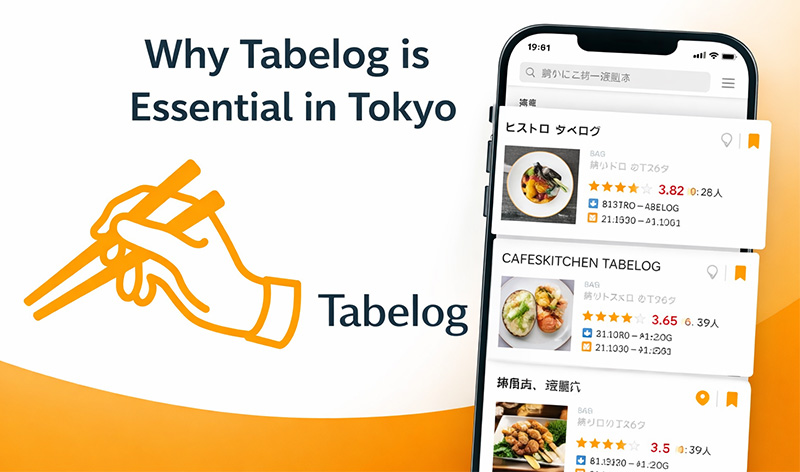
Tabelog restaurant app interface in Japanese with iPhone showing how to browse local Tokyo restaurants and translate menus into English

Tabelog is Japan’s go-to restaurant app. Even if the interface appears in Japanese, you can easily translate listings, menus, and reviews into English using built-in tools or your phone’s translation features.


Why Tabelog Matters in Tokyo

If you want to eat more like a local in Tokyo, Tabelog is one of the most useful tools you can have. This is one of the main platforms locals use, and it works differently from Google Maps or Yelp.

The biggest thing to understand is that Tabelog scores are much stricter. A place in the low 3s can still be very solid, while anything above 3.5 is usually a strong signal. That matters in a city where tourists and locals often rate restaurants very differently.

Tabelog Score What It Usually Means How to Use It
3.0 to 3.4 Good, reliable local restaurant Do not dismiss these. Many everyday neighborhood favorites live here.
3.5+ Excellent and worth paying attention to A strong sign you are looking at a serious food destination.
4.0+ Extremely rare, top-tier restaurant These are often bucket-list places and may require advance planning.

How to Use It Well

  • Cross-check famous spots: If a place has huge Google hype but only a modest Tabelog score, it may be more tourist-driven than local-driven.
  • Look for stronger nearby alternatives: This is especially useful for ramen, tonkatsu, sushi, and izakaya searches.
  • Check practical filters: Cash only, English menu availability, and reservation options can save you a headache.
  • Use it for bookings: Some higher-end places are easier to book there than by trying to call directly.

Local Guide Tip: Do Not Judge Tokyo by Google Alone

In Tokyo, a restaurant with a lower Google rating can still be excellent, and a place packed with tourists can look better online than it does on the ground. Tabelog is one of the best ways to get closer to local opinion.

If search results feel clunky in English, the easiest workaround is often to Google the restaurant name plus “Tabelog” and open the direct listing from there.
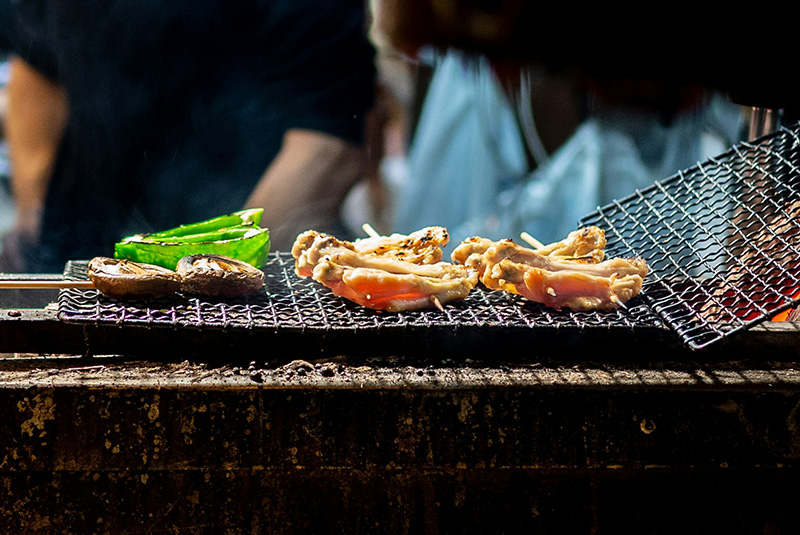
A close-up shot of a chef's hands using metal tongs to grill skewers of yakitori over an open charcoal flame at a traditional Japanese izakaya in Tokyo.

The heart of the izakaya experience: expert chefs grilling skewers over binchotan charcoal, filling the narrow alleys of Tokyo with a distinctive, smoky aroma.


The Spirit of the Tokyo Izakaya

If you want to understand the social fabric of Tokyo, you have to spend an evening in an izakaya. Part pub, part eatery, these are the informal third places where the city’s rigid social structures soften. Whether it is a tiny, six-seat stall in Shinjuku’s Omoide Yokocho (Memory Lane) or a polished, multi-story spot in Ginza, the formula is the same: small plates, cold drinks, and high energy.

Japanese dining etiquette is not complicated, but a few basics will make meals smoother and keep you from slowing down efficient, small spaces.

Topic The Rule Why It Matters
Tipping Do not tip under any circumstance. It is not expected and will only cause confusion. The staff will likely chase you down to return the money.
Ordering Use the ticket machines at casual spots. It removes the language barrier and speeds up service. Hand the small ticket to the chef when you sit.
Otoshi Accept the small appetizer at izakayas. It functions as a mandatory seating charge. It is normal, not a scam, and often delicious.
Noise Level Slurping noodles is fine; loud talking is not. Slurping cools the noodles, but general restaurant volume in Japan is much lower than in the U.S.
Cash vs Card Carry cash for smaller, older spots. While tap-to-pay is everywhere now, old ramen shops and market stalls still rely heavily on yen.

Explore Japan through food culture, planning guides, major cities, and deeper regional experiences.

START HERE

Japan Travel Guide Hub

Use the full Japan hub to connect cities, compare regions, and build a trip that fits your travel style.

Read More
FIRST TIMERS

First-Timer’s Guide to Japan

Get the logistics, etiquette, and pricing basics right before booking trains, hotels, and daily plans.

Read More
SUSHI CULTURE

How to Eat Sushi in Japan

Learn ordering etiquette, sushi types, and how to experience it properly from casual to high-end.

Read More
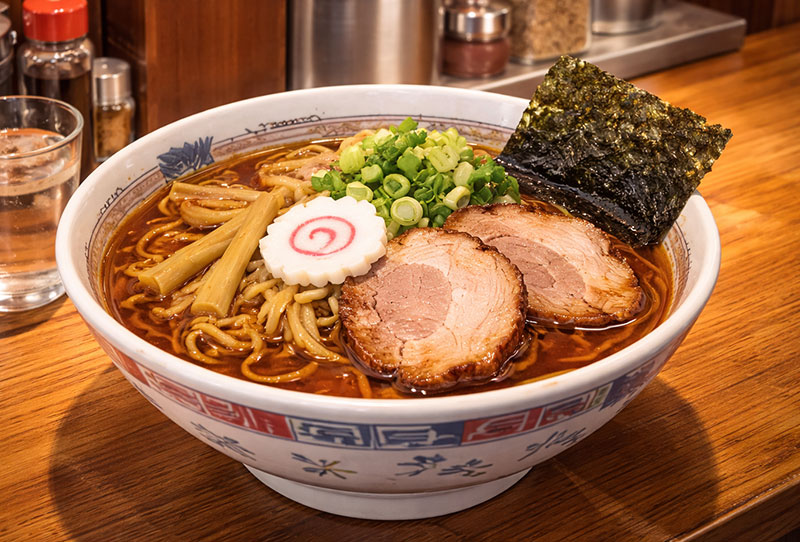
RAMEN GUIDE

Ramen in Japan

Understand regional styles, ordering systems, and where to find standout bowls across Japan.

Read More
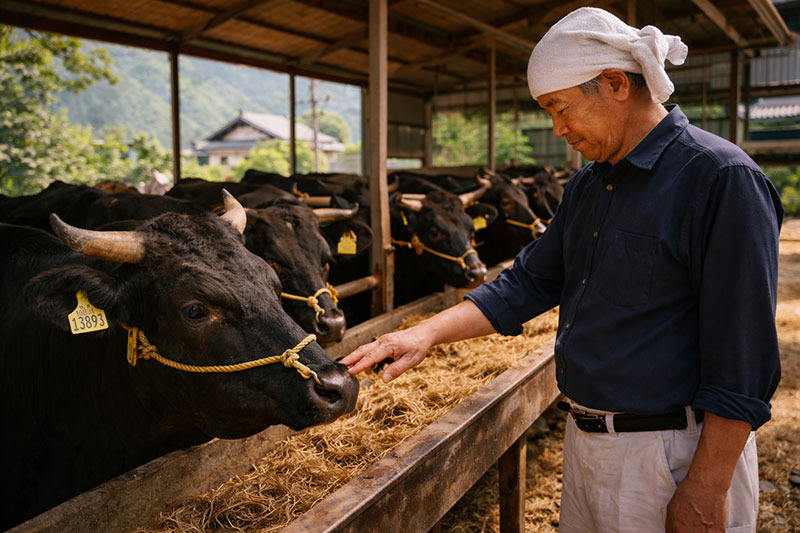
WAGYU GUIDE

A5 Wagyu Explained

Break down cuts, grading, and how to actually enjoy Japan’s most famous luxury beef.

Read More
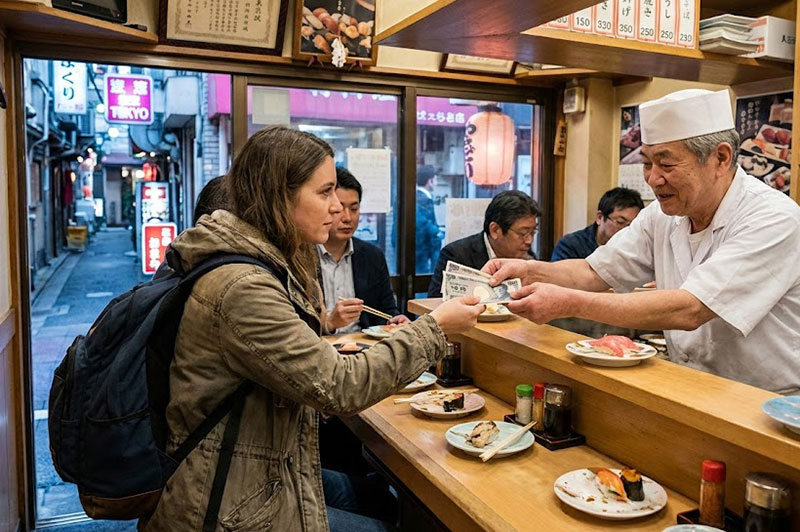
SOLO TRAVEL

Solo Dining in Japan

Navigate eating alone with confidence, from ramen counters to high-end restaurants.

Read More

Eating in Tokyo: FAQs

Do you tip at restaurants in Tokyo?

No. Tipping is not part of the culture in Tokyo or anywhere in Japan. Service is already included, and leaving extra money can actually cause confusion. Staff may even chase you down to return it.

Instead, many casual spots like izakayas include a small seating charge called an otoshi, which usually comes with a small appetizer. High-end restaurants may include a service charge automatically.

For high-end sushi, omakase, or Michelin-level restaurants, reservations are usually required and often need to be made well in advance.

For everyday dining like ramen shops, soba counters, curry spots, and most izakayas, you can usually walk in or expect a short, fast-moving line.

If needed, your hotel concierge can help book harder-to-reach restaurants that require phone reservations.

Yes, eating while walking is generally frowned upon. The expectation is to eat where you buy your food or step aside and finish it before moving on.

This is especially true for convenience store food and street snacks. Exceptions exist at festivals, where eating while browsing is more accepted.

It is possible, but it requires planning. Many traditional dishes use ingredients like fish-based broth (dashi) or soy sauce that contains wheat.

Tokyo does have a growing number of vegan and specialty restaurants, and apps like HappyCow can help you find them. Look for clearly labeled spots rather than assuming dishes are naturally vegetarian or gluten-free.

A few basics go a long way:

  • Do not stick chopsticks upright in rice or pass food between chopsticks
  • Slurping noodles is okay and even expected
  • Use the wet towel (oshibori) for your hands, not your face
  • Try to finish your meal as wasting food is discouraged

Most places are very forgiving, but showing awareness of these basics is appreciated.

Tokyo is increasingly card-friendly, especially at chains and larger restaurants. However, many small local spots, ramen shops with ticket machines, and older establishments are still cash-only.

It is always smart to carry some yen so you do not miss out on great local meals.
Beyond the Golden Route: A Local’s Guide to Japan’s Hidden Regions

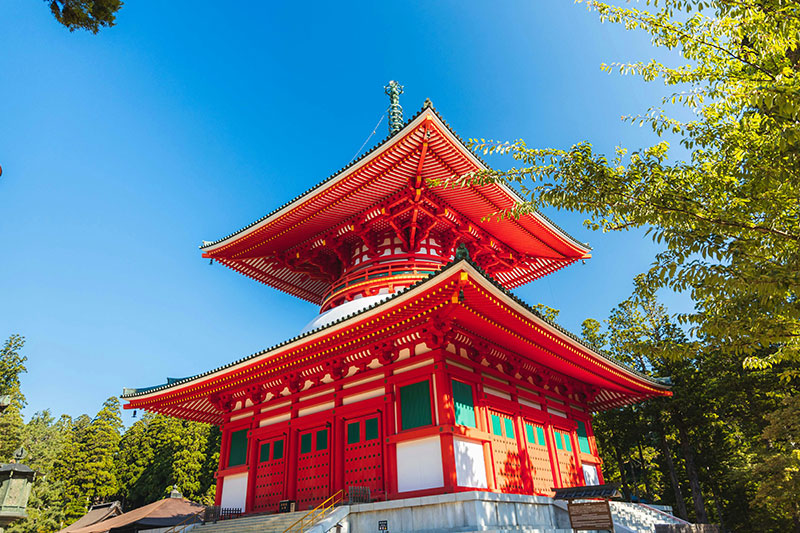
Here are options for the ALT tag and caption for the image of the Kompon Daito in Koyasan. ALT Tag (Accessibility & SEO) Recommended: The vermilion-colored Kompon Daito (Grand Central Pagoda) at the Danjo Garan complex in Koyasan, Japan, showcasing traditional two-story tahoto architecture surrounded by greenery.

The Heart of the Mandala. Standing 48.5 meters tall, the Kompon Daito (Grand Central Pagoda) is not just a landmark, it marks the center of the lotus flower that Koyasan represents. Inside, it houses a three-dimensional mandala of the Shingon Buddhist cosmos. A striking burst of vermilion against the ancient cedar forests.


Home » Destinations » Page 12

Last updated: March 2026 by Corey Gasman

From the Editor:

Japan is one of those places where “hidden gem” is a tricky phrase. Almost everywhere worth seeing has been seen before. But the experience can still feel undiscovered if you slow down, base yourself well, and spend time outside the big headline cities.

If this is your first trip to Japan and you only have a week or two, focusing on Tokyo, Kyoto, and Osaka makes complete sense. But if this is your second trip, or you built in extra time, the real magic starts when you leave the Golden Route behind.

Start Here: The TLGA Playbook for Hidden Japan

The Golden Route is the Tokyo to Kyoto to Osaka corridor, with day trips like Nara and Hakone. It is famous for a reason. But it is also where most travelers stay, which means it is where Japan feels the most crowded.

Hidden Japan is not about finding secret places. It is about choosing bases that give you a different rhythm: quieter mornings, regional food, and landscapes that are not surrounded by tour groups.

The TLGA rule that makes Japan easier:

Pick one major city and one regional base. Tokyo or Kyoto gives you the highlights. A regional base gives you the trip you remember.

The payoff: you travel fewer days, unpack less, and each place feels deeper.

How to Use This Guide

  • 7 to 10 days: Choose one region below and do it well.
  • 12 to 14 days: Combine two regions, but only if they connect logically by train.
  • Two weeks plus: Add a temple stay or an onsen town for one true slow segment.

A Sample 14-Day Hidden Japan Itinerary

This is the structure I recommend most often because it balances iconic Japan with quiet Japan.

  • Days 1 to 4: Tokyo
  • Days 5 to 6: Kanazawa
  • Days 7 to 8: Takayama
  • Day 9: Shirakawa-go day trip
  • Days 10 to 12: Kyoto
  • Days 13 to 14: Miyajima overnight (or Hiroshima plus Miyajima)

⭐️ The Golden Rule: In Japan, your trip quality is determined by bases, not by how many places you list. Pick fewer bases, stay longer, and the country opens up.

Pro Tip: Your best Japan days start early. Aim for one early morning every other day, especially in popular towns and gardens.

The Japanese Alps and Central Japan

If you want the biggest shift away from the Golden Route without adding complex flights, Central Japan is the move. The towns are walkable, the scenery is dramatic, and the food feels distinctly regional.

Local Guide Tip: This region is built for trains. You can connect Kanazawa, Takayama, and the Kiso Valley without renting a car.
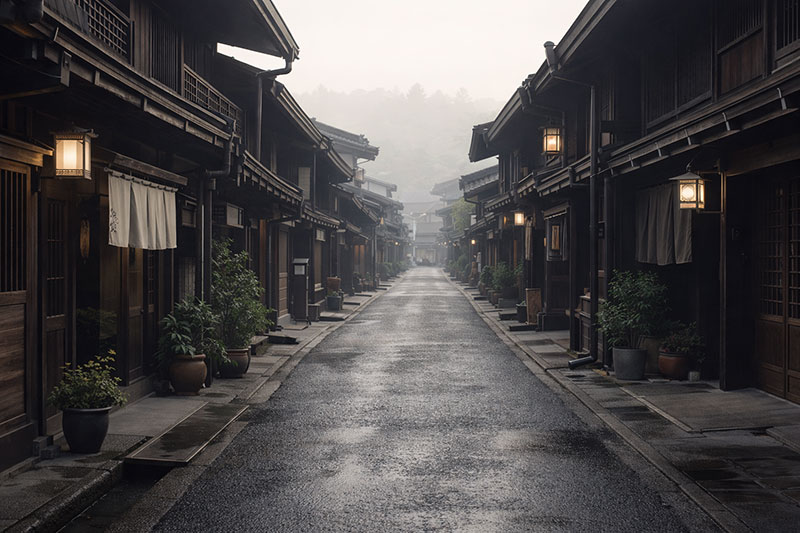
Quiet morning street in the Sanmachi Suji district of Takayama, Japan, lined with preserved Edo-period wooden merchant houses and no tourists

Early morning in Takayama’s Sanmachi Suji district, where Edo-period merchant houses, soft light, and empty streets reveal a quieter side of Japan.


Takayama and the Alps: A Mountain Base That Works

Why it works: Takayama gives you an old-town Japan feel, easy access to the Northern Alps, and simple day trips that do not require complicated logistics.

  • Best for: old town strolls, morning markets, day trips, mountain air
  • Ideal stay: 2 to 3 nights
  • Pair it with: Kanazawa or Kyoto

We stayed at Honjin Hiranoya. Quiet tatami rooms, thoughtful service, and a calm atmosphere that made it easy to slow down after full days exploring.

The Miyagawa Morning Market stood out. It feels more local than staged, and chatting with farmers selling apples and pickles is one of those small moments that makes travel feel personal.

Local Guide Tip: Day Trips Worth Making from Takayama

Shirakawa-go is famous for a reason. Thatched farmhouses, mountain views, and a strong sense of place. A morning visit is best if you want it quieter.

Hida Furukawa is the calmer contrast. White-walled storehouses, carp-filled canals, and a lived-in feel just 15 minutes by train.

Read Next: Japanese Alps Explained: The Ultimate Guide to Central Japan

Pro Tip: Book Shirakawa-go bus tickets in advance during peak seasons.
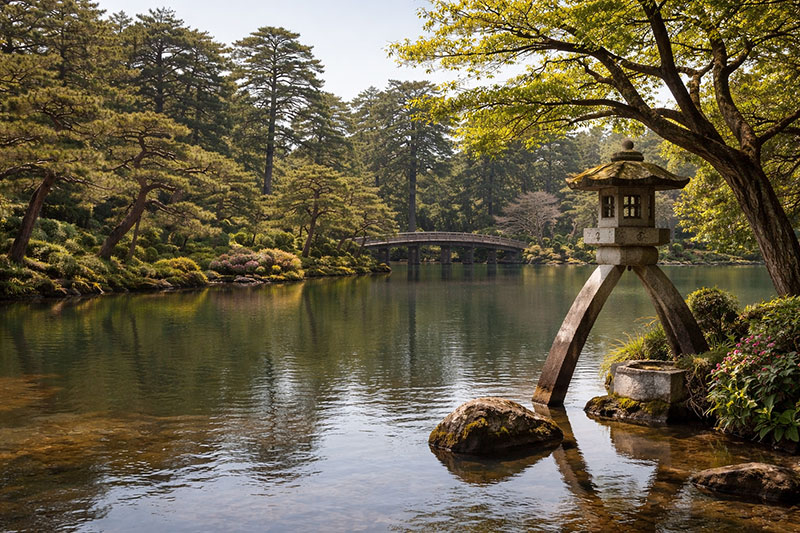
Kenrokuen Garden in Kanazawa with the iconic Kotoji-toro two-legged stone lantern beside a calm pond, manicured pine trees, and a wooden bridge

Kenrokuen Garden in Kanazawa, where the famous Kotoji-toro stone lantern and reflective ponds create one of Japan’s most tranquil landscapes.


Kanazawa: My Favorite City in Japan

Why it works: Kanazawa delivers gardens, samurai districts, and regional seafood with a calmer, more manageable feel than Kyoto.

  • Best for: Kenrokuen, historic districts, art museums, seafood
  • Ideal stay: 2 nights
  • Pair it with: Takayama or Tokyo

Kenrokuen Garden alone makes Kanazawa worth the trip, especially early in the morning when it feels like you have the place to yourself.

The 21st Century Museum of Contemporary Art balances the city’s traditional districts without overwhelming them.

Local Guide Tip: Visit the geisha districts at dusk when the lanterns turn on and the streets feel cinematic.
Pro Tip: Buy a one-day bus pass for simple navigation, especially if you are staying near the station.

Kiso Valley: Walking the Old Nakasendo Road

Why it works: The Kiso Valley is one of the easiest ways to experience Edo-era Japan without theme-park vibes. The post towns feel preserved, but still lived-in.

  • Best for: historic post towns, forest walks, slow travel days
  • Ideal stay: day trip or 1 night
  • Pair it with: Nagoya, Matsumoto, or as a transit stop toward Kyoto

Magome and Tsumago are the most famous stops. The trail between them takes about two to three hours and passes waterfalls, forests, and quiet rural homes.

Local Guide Tip: Start in Magome and walk downhill to Tsumago. It is easier, and the views open up beautifully as you descend.
Pro Tip: Forward your luggage using Japan’s luggage delivery services if you are linking the walk with a move day.

Kamikochi: Japan’s Most Beautiful Alpine Valley

Why it works: Kamikochi is a high-reward, low-effort nature day. You get alpine rivers, suspension bridges, and big peaks without needing serious hiking experience.

  • Best for: easy trails, alpine scenery, photos, fresh air reset
  • Ideal stay: day trip (or 1 night if you want early morning quiet)
  • Pair it with: Takayama or Matsumoto

Arrive early. The valley is dramatically quieter in the morning, and the light is better too.

Local Guide Tip: If you only do one walk, do the river path toward Myojin Pond. It is flat, beautiful, and feels like the “poster version” of Kamikochi.

Spiritual Japan

If the Golden Route is about temples you visit, this section is about temples you live in, even if it is just for one night. A temple stay is one of the most memorable “slow Japan” experiences you can add to a trip.


Koyasan: A Temple Stay That Actually Feels Different

Why it works: Koyasan is a true shift in atmosphere. Cedar forests, lantern-lit paths, and quiet nights make it one of the strongest contrasts to Tokyo.

  • Best for: temple stays, spiritual history, Okunoin cemetery
  • Ideal stay: 1 night (2 if you want a full slow reset)
  • Pair it with: Osaka or Kyoto

Temple lodgings let you experience Buddhist hospitality, vegetarian monk cuisine, and early morning prayer ceremonies. It is not luxury. It is meaningful.

Okunoin Cemetery is the moment. Lantern-lined paths wind through ancient cedar forests toward the mausoleum of Kobo Daishi. Go near dusk if you want the most atmospheric version.

Pro Tip: Bring warm layers. Even in warmer months, nights at Koyasan can be cool due to elevation.

Western Japan and the Slow Island Move

If Kyoto is the cultural highlight, Miyajima is the exhale. It is the kind of place that becomes a trip memory because it forces you to slow down.


Miyajima: Stay After the Ferries Leave

Why it works: Miyajima becomes magical once the day-trippers leave. The island shifts from busy to peaceful, and that is when it feels like Japan.

  • Best for: sunset walks, shrine views, quiet mornings, low-stress nature
  • Ideal stay: 1 night
  • Pair it with: Hiroshima, Kyoto, or Osaka

Most people do Miyajima as a day trip. That is the mistake. Walking past the torii at sunrise or at dusk, with far fewer people around, is a completely different experience.

Local Guide Tip: Stay in a ryokan on the island if you can. Dinner is usually included, and the quiet evening atmosphere is the whole point.

Kyushu: Japan’s Onsen Heartland

Why it works: Kyushu feels like a different Japan. Volcanic landscapes, onsen towns, and a slower pace make it perfect for travelers who want deep relaxation with real culture.

  • Best for: hot springs, volcano landscapes, regional food, slower travel
  • Ideal stay: 3 nights minimum
  • Pair it with: Fukuoka or as a southern add-on to a longer Japan trip

Kurokawa Onsen is a classic for atmosphere. Think wooden inns, forest air, and evening strolls in yukata. Beppu is the more energetic alternative, famous for its steaming “hells” and hot spring culture.

Pro Tip: Many onsens do not allow tattoos. Some places provide cover stickers, but do not assume. Check rules before you book.

The San’in Coast: Japan’s Quiet Seaside

Why it works: The Sea of Japan side is dramatically less visited. You get coastal scenery, small-town rhythm, and a version of Japan that feels less designed for tourism.

  • Best for: coastal drives, quiet towns, off-beat Japan
  • Ideal stay: 2 nights
  • Pair it with: Osaka or Kyoto as a quieter add-on

The Tottori Sand Dunes and rugged coastline are the headline, but the real win is the lack of crowds and the sense that you are seeing a different side of the country.


Unique Food Experiences

One of the best reasons to leave the Golden Route is food. Regional Japan is where specialties feel tied to place, not mass-produced for tourists.

  • Hida beef in Takayama
  • Seafood markets in Kanazawa
  • Oysters around Hiroshima and Miyajima
  • Tonkotsu ramen in Kyushu
Local Guide Tip: Your best meals in Japan are often the simplest. Follow the rule: busy local line, short menu, cash tray on the counter.

Remote Onsens: The Version of Japan You Remember

Japan’s onsen culture runs deep, and the most memorable experiences are often in towns where the bath is the main event. Think mountain air, outdoor pools, and the kind of quiet you cannot buy in a big city.

If you are building a second trip, plan one segment where the goal is simple: eat well, soak, sleep, repeat.

Pro Tip: If you want a private bath, look for ryokans that offer in-room baths or reservable family baths. This is also the easiest solution for travelers with tattoos.

Lesser-Known Sake Regions

Sake is regional, and the best tastings are often in smaller towns where the water source and climate shape the style. Areas like Niigata and Gifu produce excellent sake thanks to mountain water and cold winters.

A good sake stop is not about getting drunk. It is about slowing down, learning one craft, and walking away with a better sense of place.


Final Thoughts: The Japan Most Visitors Never See

Tokyo, Kyoto, and Osaka deserve their reputation. They are extraordinary.

But the deeper you travel into the country’s mountains, coastlines, and smaller towns, the more personal Japan becomes.

A quiet morning market in Takayama, a lantern-lit path through Koyasan, or a hot spring bath in Kyushu often become the moments travelers remember most.

That is Hidden Japan.

FAQs

What is the Golden Route in Japan?

The Golden Route is the classic first-trip itinerary that connects Tokyo, Kyoto, and Osaka, usually with day trips like Nara, Hakone, and Hiroshima.

Kanazawa and Takayama are two of the easiest upgrades because they connect well by train and feel meaningfully different from the big cities.

Not for most of this guide. The Japanese Alps and Kanazawa connect well by train and bus. Some coastal and rural areas are easier with a car, but it is not required.

Yes, especially for a second trip. It is one of the strongest atmosphere shifts you can add, and one night is enough to feel it.

Ten days is enough for one major city plus one region. Two weeks is ideal if you want two regions without rushing.

Eating Your Way Through Osaka: The Street Food Guide

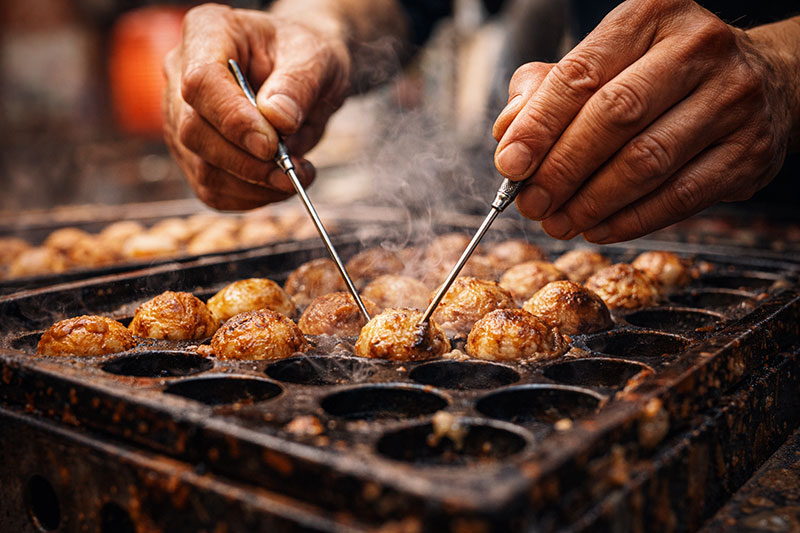
Close-up of a Japanese street food vendor’s hands using metal picks to flip golden-brown takoyaki on a hot cast iron griddle, with steam rising.

Eating Your Way Through Osaka: The Ultimate Street Food Guide

Close-up of a Japanese street food vendor’s hands using metal picks to flip golden-brown takoyaki on a hot cast iron griddle, with steam rising.

A street food vendor flips freshly cooked takoyaki by hand on a cast iron griddle, a classic Osaka street food scene.


Home » Destinations » Page 12

Last updated: March 2026 by Corey Gasman

There is an old Japanese proverb: “Kyoto no kidaore, Osaka no kuidaore.” Roughly translated: “Dress until you drop in Kyoto, eat until you drop in Osaka.”

If Tokyo is the polished, futuristic brain of Japan, Osaka is its rowdy, hungry stomach. The energy here is different. People walk faster, talk louder, and take their food incredibly seriously. In 2026, the street food scene has evolved, but the core rule is still undefeated: if there is a line, get in it.

But here is the honest truth. Dotonbori can be a tourist trap if you do not know where to look. You can easily drop $50 on mediocre crab legs if you are not careful. This guide is my personal map to eating like a local in Japan’s kitchen, from the neon-soaked bridges to the retro backstreets.

Planning note: Come hungry, but come strategic. The best time to hit Dotonbori is late afternoon (around 4:00 PM) before the dinner rush, or late night (after 9:00 PM) when the day-trippers have cleared out.

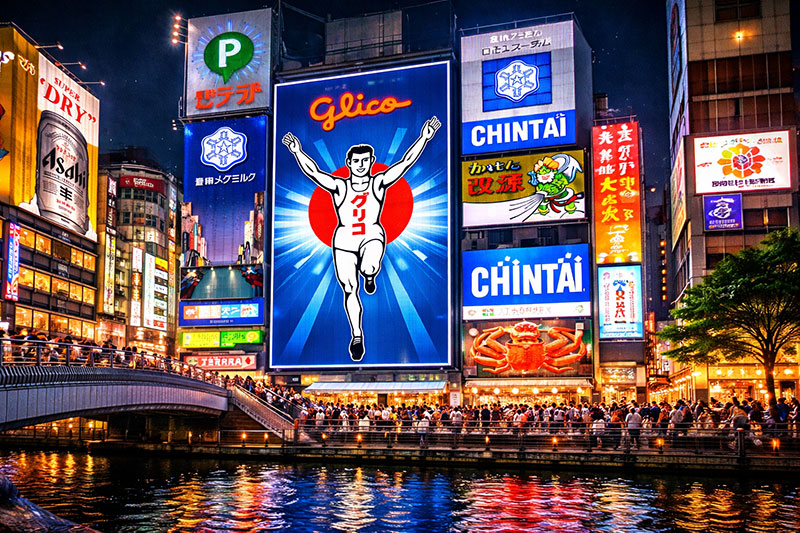
The Glico Man sign overlooking Dotonbori Canal in Osaka at night, with neon lights reflecting on the water and crowds along the riverwalk.

The Glico Man sign is iconic, but the real magic happens in the side streets that run parallel to the canal.


The Classics: Takoyaki & Okonomiyaki (Done Right)

You cannot visit Osaka without eating takoyaki (octopus balls). It is the soul food of the city. In 2026, you will even spot robot-operated stalls, but I still urge you to stick to the humans. Watching a master flip 50 balls with two metal picks at lightning speed is part of the price of admission.

Where to Eat Takoyaki

Skip the monster lines directly under the Don Quijote Ferris wheel. Instead, head to Takoyaki Wanaka near Namba Grand Kagetsu. The outside is crisp, the inside is molten hot (be careful), and the dashi flavor is noticeably better than the tourist heavy hitters.

Local Guide Tip: The “O-Kar” Choice
When ordering takoyaki, you will often be asked about toppings. Standard is sauce and mayo. The pro move is “Ponzu” (citrus soy sauce) or simply “Shio” (salt). Salt-only lets you taste the batter and the octopus without drowning it in heavy sauce. Locals use this to tell a great shop from an average one.

Okonomiyaki: The Savory Pancake

Osaka-style okonomiyaki mixes everything into the batter before grilling. For the best experience, pick a place where they cook it on the iron griddle (teppan) right in front of you.

Mizuno is famous for a reason (their Yamaimo-yaki uses yam flour instead of wheat for a fluffier texture), but the line can hit 90 minutes. If you want to skip the wait, look up. The upper floors of nearby buildings often hide smaller, family-run shops with great teppan skills and a fraction of the crowd.

Pro Tip: Do not cut okonomiyaki like a pizza. Use your small spatula (kote) to score a grid of squares. It is easier to grab with chopsticks.

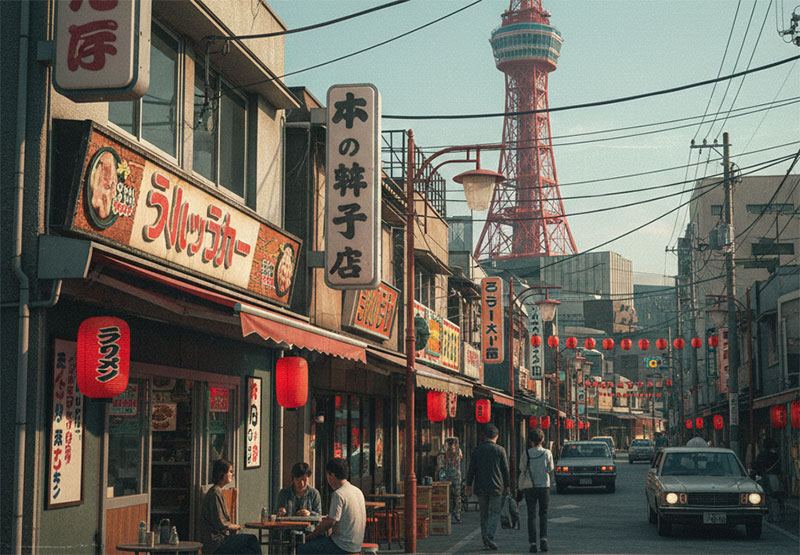
Retro street view of Shinsekai district and Tsutenkaku Tower in Osaka.

Shinsekai feels like a movie set from the 1960s. It is gritty, retro, and smells like frying oil in the best possible way.


Shinsekai: Kushikatsu & Retro Vibes

Shinsekai (New World) is my favorite neighborhood in Osaka. It was “futuristic” in 1912, and now it is a neon-lit time capsule with zero interest in pretending it is polished. This is the home of kushikatsu, skewers of meat, veggies, and cheese, breaded and deep-fried.

Kushikatsu Daruma is the famous chain (look for the angry chef statue), but the smaller stalls in Janjan Yokocho alley often have more character. Order lotus root (renkon), red ginger (beni shoga), and beef, then keep going until you accidentally over-order and have no regrets.

Local Guide Tip: The “No Double Dipping” rule used to be strict back when communal sauce pots were standard. In 2026, many shops use squeeze bottles for hygiene, but the spirit remains the same. Respect the sauce, and do not be that person.

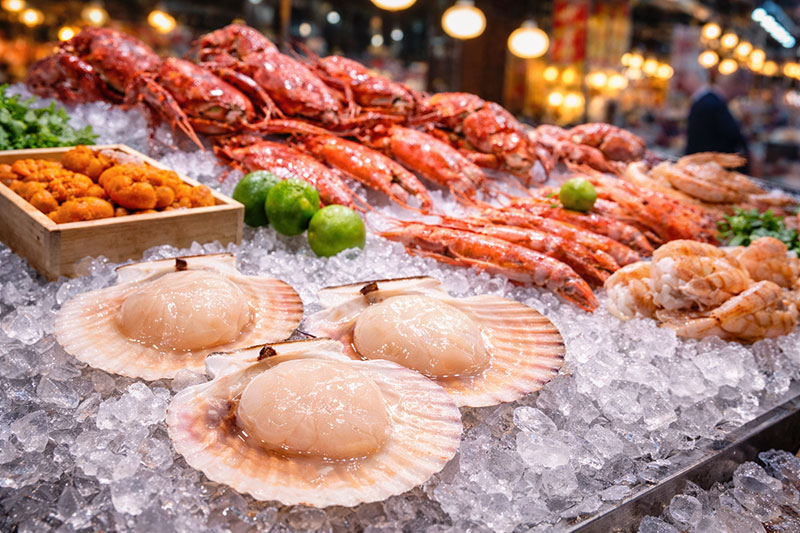
Raw giant scallops resting on their shells on crushed ice at Kuromon Market in Osaka, with fresh seafood displays blurred in the background.

Kuromon Market offers incredible seafood, but price tags can be shocking. Navigate with caution.


Kuromon Market: The “Instagram vs. Reality” Check

Kuromon Market is known as “Osaka’s Kitchen.” Visually, it is stunning. Giant raw scallops on ice, glossy sashimi cuts, grilled unagi, and premium wagyu displays fill the narrow arcade.

But in recent years, prices have climbed hard to target tourists. You might see a single crab leg for ¥3,000 (about $20 USD). It is tasty, but it is absolutely a markup moment.

My advice: Go for the atmosphere and a few snacks, then save your full meal for elsewhere. The grilled scallops and oden (simmered broth dishes) are usually better value than wagyu skewers or king crab.

Pro Tip: Visit early (around 9:00 AM) to beat the crush. By 11:00 AM, it can turn into shoulder-to-shoulder traffic.

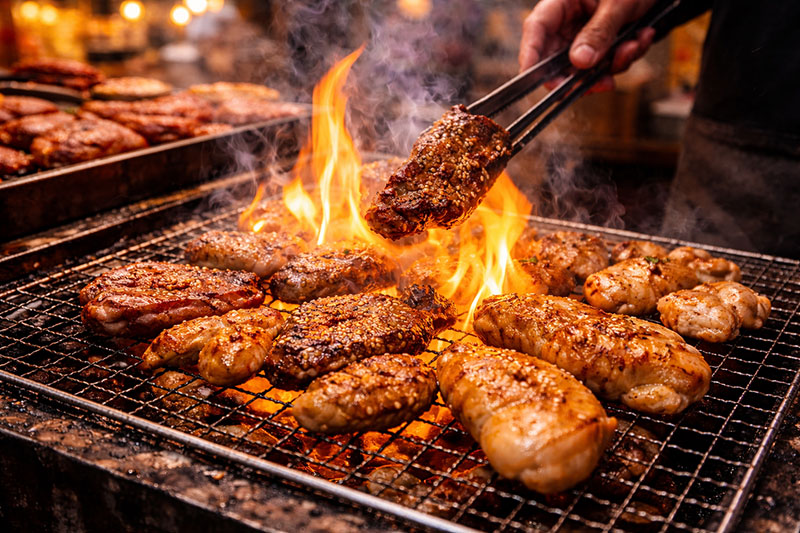
Close-up of grilled yakiniku meats cooking over open flames at a street vendor in Tsuruhashi, Osaka, with smoke and fire rising from the grill.

Stepping off the train at Tsuruhashi, you get hit with sesame oil and grilling meat. It is intoxicating.


Tsuruhashi: The Local’s BBQ Secret

If you want to escape the main tourist loop, hop on the JR Loop Line to Tsuruhashi. This is Osaka’s Koreatown, and it might be the best dinner neighborhood in the city.

The area is a labyrinth of yakiniku (Japanese BBQ) restaurants. The meat quality is excellent and often cheaper than Namba. Look for “Sora” if you are adventurous (known for offal, also called horumon), or follow the simplest rule in Japan: pick the place with a line of locals.

Local Guide Tip: Wear clothes you can wash. Ventilation in Tsuruhashi restaurants is “authentic,” which means you will leave smelling like delicious grilled beef.

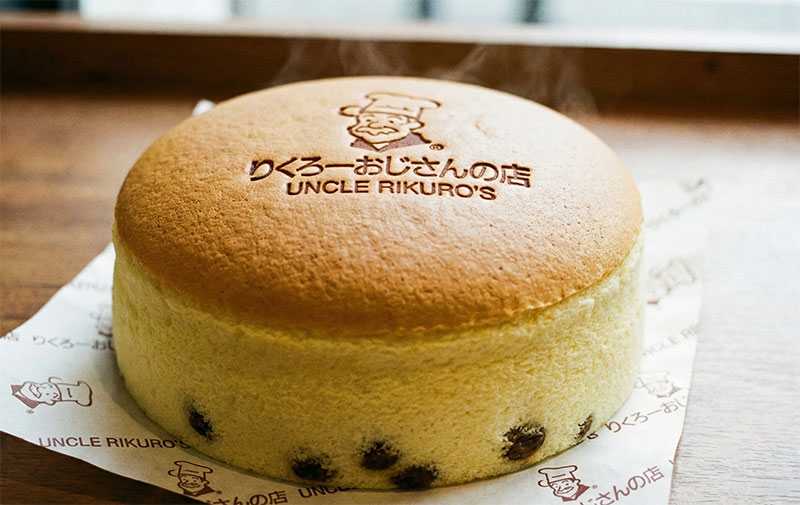
Close-up of a whole Uncle Rikuro's Japanese cheesecake showing the golden-brown top with the branded chef logo, fluffy souffle texture, and raisins visible at the base.

The jiggle is real. Rikuro’s cheesecake eats more like a soufflé than a New York cheesecake.


Essential Sweets: Rikuro’s & Melonpan

Osaka takes dessert seriously. Two must-tries:

  1. Rikuro Ojisan no Mise (Uncle Rikuro’s Cheesecake): You will hear the bell ring when a fresh batch comes out. It is usually under ¥1,000 (about $7 USD) for a whole cake. Fluffy, eggy, and basically gone by the time you make it back to the hotel.
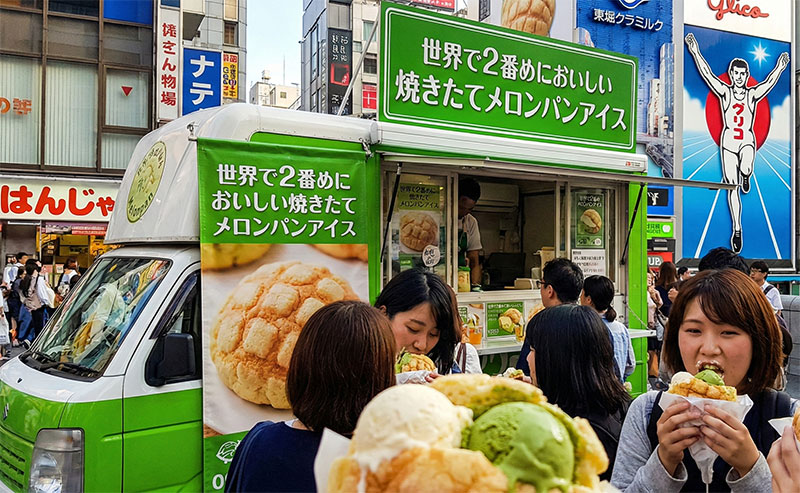
  2. Melonpan with Ice Cream: “The second best melonpan in the world” (a famous food truck often parked in Dotonbori). Warm sweet bread stuffed with cold matcha or vanilla ice cream. Simple, messy, perfect.
People enjoy warm melonpan stuffed with green tea and vanilla ice cream in front of the "World's Second Best Melonpan" food truck, parked in the bustling Dotonbori district of Osaka, with the Glico Man sign visible in the background.

A must-try street food in Osaka! The famous “World’s Second Best Melonpan” food truck in Dotonbori serves up warm, crispy melonpan filled with cold, creamy matcha or vanilla ice cream. It’s a delicious, messy, and perfect treat while exploring the city.


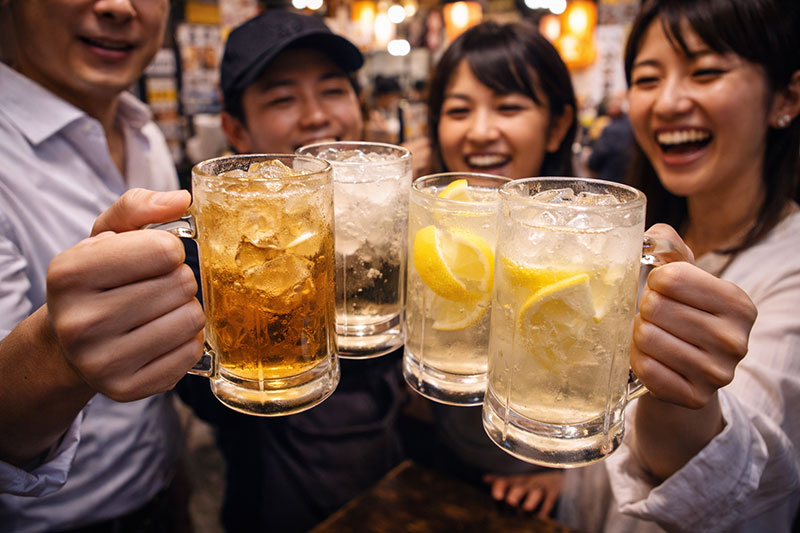
Locals and travelers share highballs and craft lemon sours at a bustling tachinomi, Osaka’s casual standing-bar tradition.


Drinking Culture: The Highball & Tachinomi

Osaka is highball territory (whisky and soda), and it pairs perfectly with greasy, savory street food. In 2026, craft lemon sours are also having a huge moment, especially in the livelier bar pockets around Namba.

To drink like a local, find a tachinomi (standing bar). These are small, casual spots where you stand at the counter, order a couple small dishes, and drink cheap booze. It is about as social as you will find Japan, and Osaka does it best.

Pro Tip: “Sumimasen!” (Excuse me!) is the magic word. In a loud Osaka bar, you often have to say it with confidence to get service. Do not be shy.

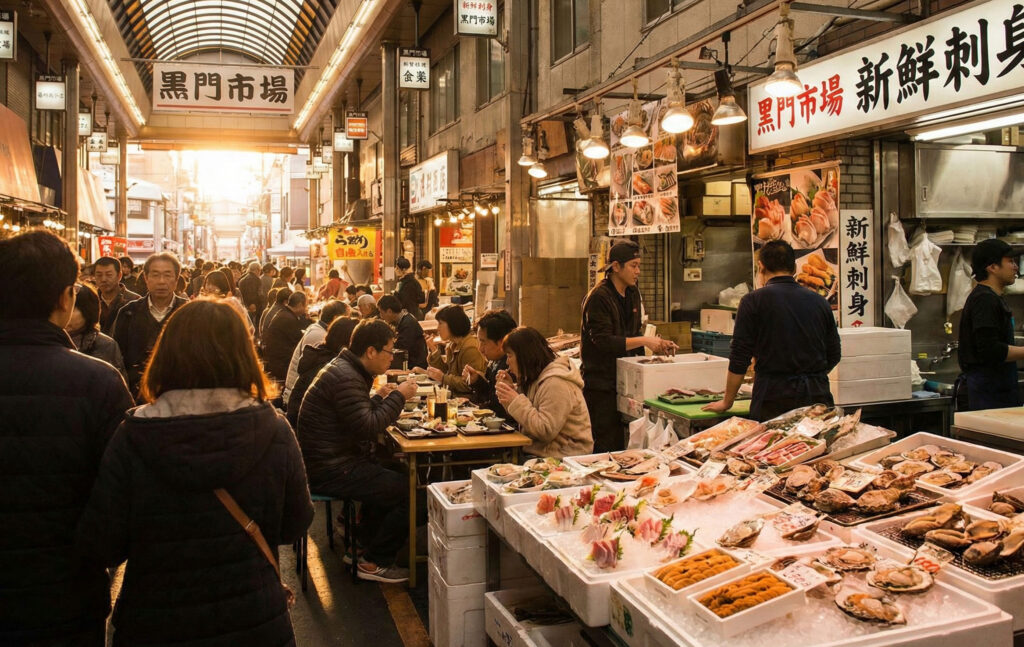
Fresh sashimi bowls and seafood displayed at a stall in Osaka's Kuromon Market, illuminated by warm golden hour sunlight filtering into the covered shopping arcade.

The “Kitchen of Osaka” glowing in the late afternoon light. Fresh sashimi and seafood bowls line the stalls of Kuromon Market, offering the perfect snack while exploring the city at golden hour.


The “Eat Until You Drop” 4-Hour Walking Route

If you only have one night in Osaka, this is the exact path I take friends on. It balances the tourist “must-sees” with the hidden local haunts, all while keeping the walking manageable.

4:00 PM | The Retro Kickoff (Shinsekai)
Start at Tsutenkaku Tower. Grab a light snack of 3-4 skewers of Kushikatsu at a standing stall in Janjan Yokocho. It’s early enough that you won’t have to fight for a spot.

5:30 PM | The Market Wander (Kuromon)
Walk 15 minutes north to Kuromon Market. Most stalls start closing at 6:00 PM, which is the “Golden Hour” for discounts. Look for pre-packed sashimi or grilled scallops that are marked down for quick sale.

6:30 PM | The Hidden Alley (Hozenji Yokocho)
Head toward Namba and duck into Hozenji Yokocho. This stone-paved alley feels like old Kyoto. Visit the moss-covered Buddha at Hozenji Temple, then grab Okonomiyaki at a small shop nearby.

8:00 PM | The Neon Finale (Dotonbori)
Walk two minutes to the Dotonbori Canal. Take your “Glico Man” selfie, then hunt for the Takoyaki Wanaka stall mentioned above. End your night with a Highball at a nearby Tachinomi (standing bar) while watching the crowds.

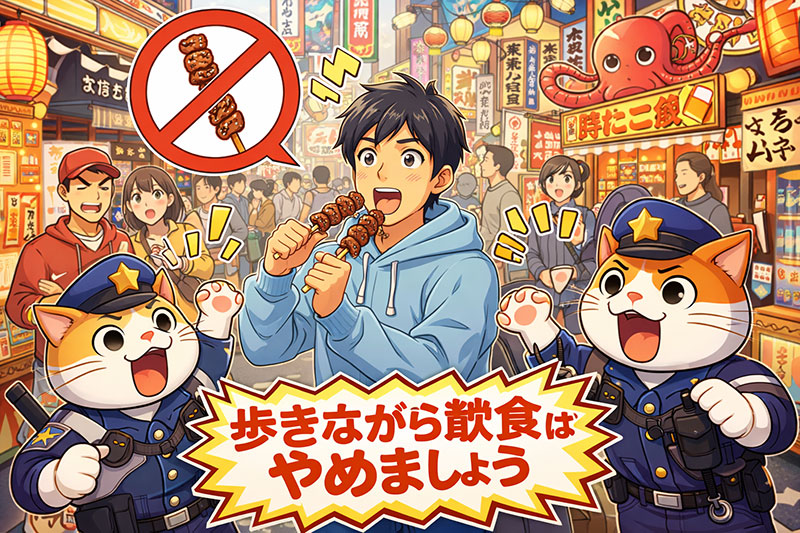
Anime-style illustration of a person eating meat skewers while walking in a crowded Osaka street food area, with humorous characters warning against eating on the go.

A playful anime-style illustration in Osaka humorously reminds visitors not to eat meat skewers while walking through busy street food areas. Translation: “Please don’t eat while walking.”


Street Food Etiquette (Crucial!)

Even in rowdy Osaka, rules apply. The biggest mistake tourists make is walking while eating.

In Japan, “eating on the go” usually means buying food, standing near the stall (or at a designated bench), finishing it, and tossing trash in the stall’s bin. Do not walk down a crowded street with a skewer in your hand. It is considered rude, and it can be genuinely dangerous in tight crowds.

Frequently Asked Questions

Do street stalls accept credit cards in 2026?

Mostly, yes. PayPay and contactless cards are widely accepted now. That said, older stalls and some ticket machines (especially for ramen) can still be cash-only. Carry around ¥5,000 just in case.

Incredibly safe. Japan’s hygiene standards are world-class. You can even find raw chicken (torisashi) at reputable izakayas, though if you have a sensitive stomach, stick to cooked options and you will be very happy here.

You can get very full in Osaka for ¥3,000 to ¥4,000 (about $20 to $25 USD). Takoyaki is often around ¥700. A kushikatsu skewer can be ¥150. A beer is commonly ¥500. It is usually cheaper than Tokyo for the same level of satisfaction.

Best Neighborhoods to Stay in Italy: Rome, Florence & Venice

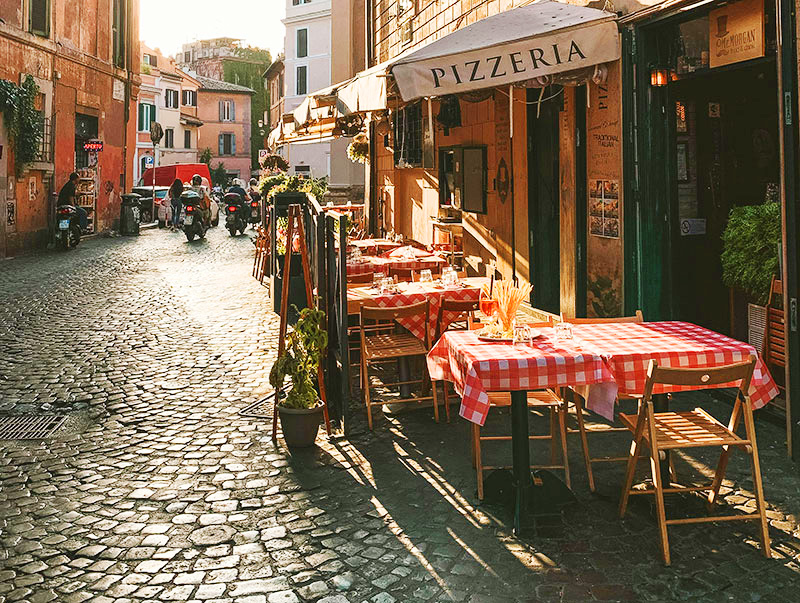
A narrow cobblestone street in Rome's Trastevere neighborhood lined with outdoor patio tables at a pizzeria, decorated with ivy and warm lighting.

The Trastevere vibe: Roman evenings are best spent dining al fresco on narrow cobblestone streets, surrounded by ivy and the smell of wood-fired pizza.


Home » Destinations » Page 12

Last updated: January 2026 by Corey Gasman

From the Editor:

Picking the right hotel in Italy is not just about the thread count. It is about the daily reality of the trip. In Venice, the wrong location means hauling luggage over bridges. In Rome, it can mean sleeping above a wine bar that stays open until 3:00 AM before your early Vatican tour.

I have learned this the hard way. I have stayed in “central” Rome locations that still required long bus rides, and I have booked “romantic” Venetian lofts that turned out to be damp ground-floor problem zones.

This guide breaks down the best neighborhoods to stay in Italy’s big cities, starting with Rome, Florence, and Venice, then covering Milan and Naples. Whether you want atmosphere, walkability, quiet sleep, or easier arrival logistics, here is where to base yourself.

Start Here: Picking the Right Base in Italy

In Italy, neighborhood choice shapes the whole trip. A great location can save you time, reduce transit stress, improve sleep, and make the city feel easier from the moment you check in.

The best question is not “What is most central?” It is “What kind of trip do I want to have each day?” Do you want nightlife outside your door, a quiet sleep, easier taxi access, or a base that feels more local than tourist-heavy?

Local Guide Tip: The “Centro Storico” trap
“Centro Storico” just means “historic center.” In cities like Rome or Naples, that can cover a huge area. Do not book based on “center” alone. Check the exact neighborhood name so you know whether you are getting a quiet side street or a noisy main corridor.

Planning your Italy trip? Before you book hotels, make sure your logistics are sorted. Start with these guides:

⭐ Best booking rule: Choose the neighborhood first, then the hotel. A good room in the wrong area is still the wrong stay.

2026 alert

Rome accommodation will stay under pressure because of Jubilee travel demand. Book earlier than you think, especially near the Vatican and central historic areas.

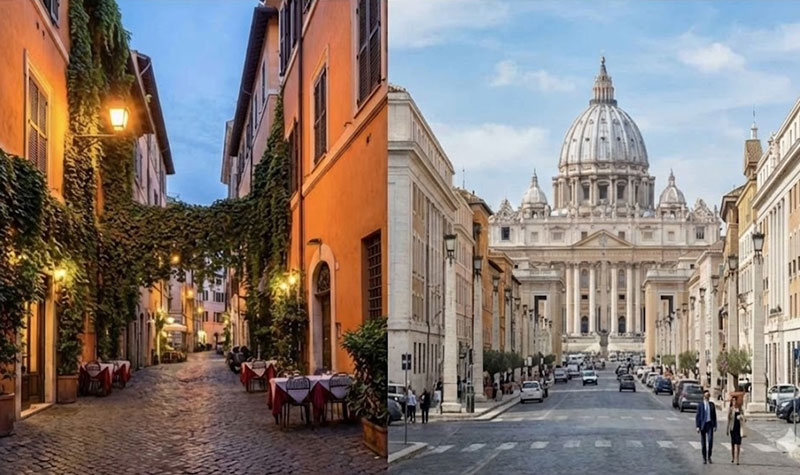
Split image showing the ivy-covered cobblestone streets of Trastevere versus the wide, orderly streets of the Prati district near the Vatican.

The Roman dilemma: the ivy-covered charm of Trastevere is beautiful but noisy, while the more orderly streets of Prati offer a quieter stay near the Vatican.


Where to Stay in Rome: Trastevere vs. Monti vs. Prati

Rome is massive, and where you stay directly affects how easy the city feels. You are going to walk a lot no matter what, so the real question is what kind of atmosphere you want around you when you are not sightseeing.

Local Guide Tip: Why we loved Trastevere for a longer stay
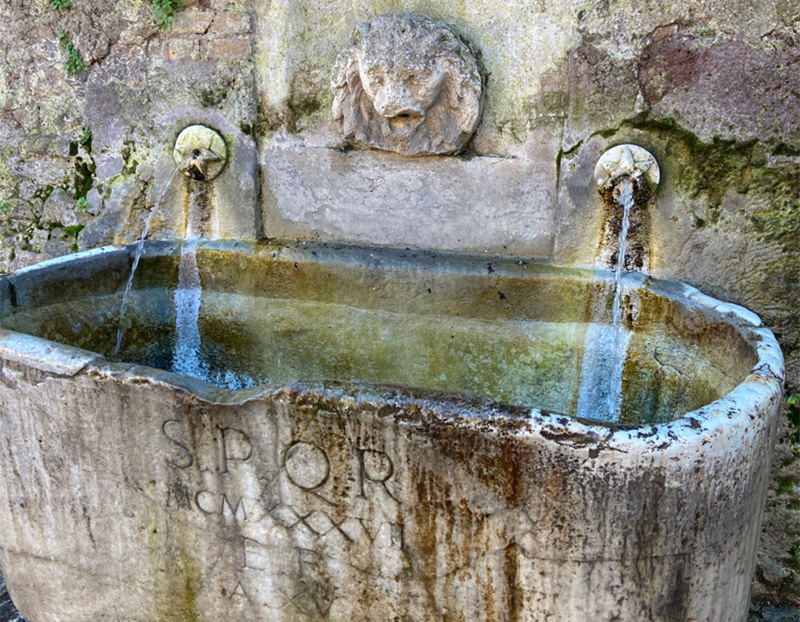
Last October, we spent a full week in Trastevere near one of the old fountains, and it completely changed how we experienced Rome. At night, we could walk 5 to 10 minutes in almost any direction and choose from dozens of strong bars and restaurants. The people-watching alone was worth it. It felt like a neighborhood, not just a tourism zone.

Yes, Trastevere is technically across the river from the main historic core, but if you are comfortable walking, many major sights are still reachable on foot. We loved walking along the Tiber, and when it felt too far, we used transit or grabbed a taxi.

Bottom line: If you want nightlife, atmosphere, and a more local feel and you do not mind walking, Trastevere is an excellent choice for a slower, more immersive stay.

Trastevere (the atmospheric choice)

The postcard version of Rome. Cobblestones, ivy, laundry overhead, and streets that come alive at night.

  • Pros: Incredible dining, strong nightlife, very photogenic.
  • Cons: No Metro station, can be loud late at night.
  • Best for: Food lovers and night owls.

Monti (the cool central pick)

Right behind the Colosseum, Monti mixes central location with wine bars, vintage shops, and a younger local feel.

  • Pros: Very central, walkable, good Metro access via Cavour.
  • Cons: Hilly streets, expensive stays.
  • Best for: Couples and travelers who want to walk everywhere.

Prati (the elegant and quieter choice)

North of the Vatican, Prati is more polished, more residential, and much calmer at night.

  • Pros: Safe, clean, quieter, close to St. Peter’s and Metro Line A.
  • Cons: Less “ancient Rome” feeling, farther from the Colosseum and Forum.
  • Best for: Families and travelers who prioritize sleep.

Local Guide Tip: Avoid Termini late at night
Hotels near Roma Termini are convenient and often cheaper, but the immediate area can feel gritty late at night. If you want station access without the worst of the atmosphere, look toward Esquilino or Castro Pretorio.


ZTL zones: Why your taxi may stop short

In many Italian city centers, traffic is restricted by ZTL zones, or limited-traffic areas. That means your taxi may not be able to drop you at the exact front door of your hotel, especially if you are staying deep inside the historic core.

  • What happens: Drivers may stop at the nearest legal point, and you finish the last stretch on foot with luggage.
  • Why some hotels feel hard to reach: The deeper you go into historic streets, the more likely you are to deal with pedestrian-only lanes, restricted access, cobblestones, and stairs.
  • Simple fix: Message your hotel 48 hours before arrival and ask for the best taxi drop-off point for check-in with luggage.

Italy’s noise reality: Bars, bells, and early deliveries

If you are a light sleeper, your exact street matters almost as much as the neighborhood. In older buildings, sound carries farther than many travelers expect.

  • Late-night bars: Trastevere, Monti, Navigli, and parts of Naples can stay loud well after midnight.
  • Early mornings: Garbage pickup and deliveries can start around 5:00 to 7:00 AM.
  • Church bells: Beautiful in theory, less magical if your window faces a bell tower.
Pro Tip: Look for listings that mention double glazing, quiet rooms, or courtyard-facing. If reviews say “lively street,” assume you will hear it.
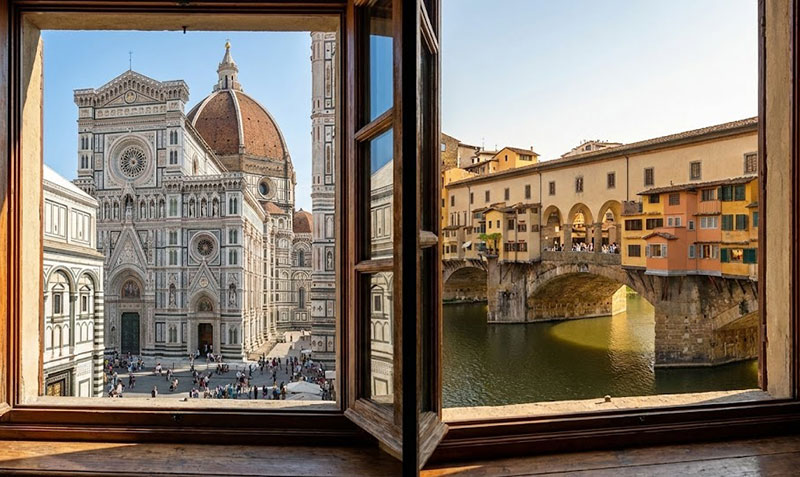
View of the Florence Duomo rising above rooftops contrasted with Ponte Vecchio view.

Florence divided: stay near the Duomo for maximum convenience, or cross the Ponte Vecchio to Oltrarno for artisan workshops and a cooler local feel.


Florence: Duomo Convenience vs. Oltrarno Charm

Florence is compact and walkable, but the city changes fast once you cross the river. The best area depends on whether you want museum convenience or a more local neighborhood feel.

Duomo / Santa Maria Novella (the center)

If you stay here, you are in the middle of everything.

  • Pros: Extremely convenient, easy for short stays, no transit needed for major sights.
  • Cons: Heavier crowds, louder mornings, more tourism pressure outside your door.

Oltrarno (the other side of the Arno)

Cross the Ponte Vecchio toward Santo Spirito and San Frediano for a side of Florence that feels more lived-in and less staged.

  • Pros: Better restaurant scene, more local feel, cooler nightlife, fewer crowds.
  • Cons: Slightly longer walk to the main museums.
Pro Tip: In Florence, noise travels. If you are a light sleeper, request a room facing an internal courtyard rather than the street.

Local Guide Tip: Florence with a car
When we arrived in Florence, we were coming from Levanto after Cinque Terre, which meant we had a rental car. I knew immediately that I did not want to drive into Florence’s historic center. Between narrow streets, one-ways, ZTL zones, and limited overnight parking, it is stressful and expensive.

Instead, we searched specifically for hotels with parking and ended up at Art Hotel Villa Agape on the hills near Piazzale Michelangelo. It was a splurge for us, but it was worth it. The setting felt peaceful, green, and historic, and it gave us a calm break from the crowds.

The biggest perk was the complimentary shuttle, which dropped us near one of Florence’s main gates so we could explore on foot, then brought us back later. As a bonus, Piazzale Michelangelo is nearby and gives you one of the best sunset views in Florence.

Bottom line: If you are ending a road trip in Florence or need parking without sacrificing access, staying just outside the center with a shuttle can be a much better experience.

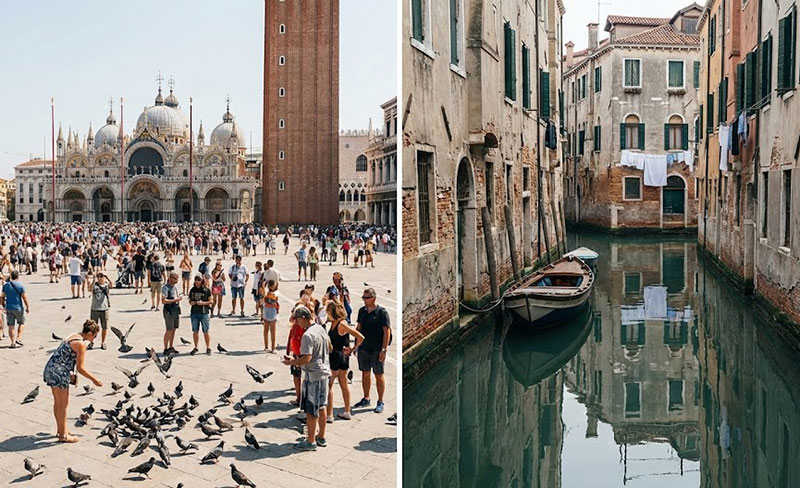
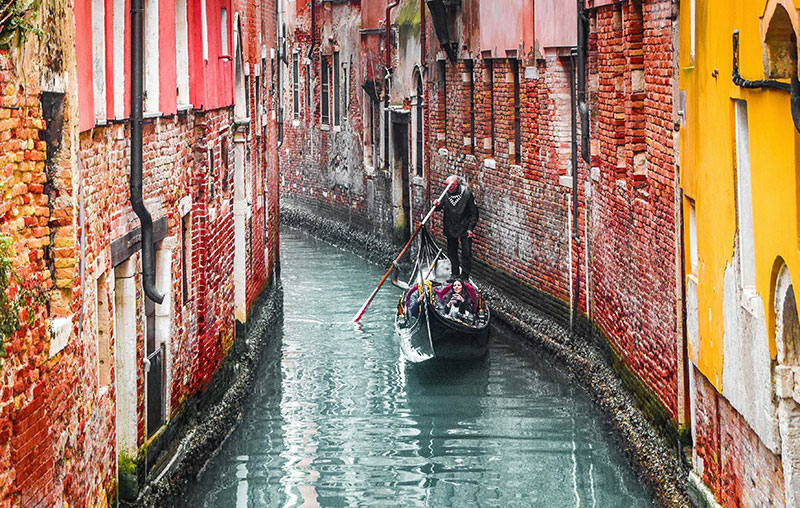
The crowded St. Mark's Square in Venice versus a peaceful, empty canal in the Cannaregio district.

Venice logistics: San Marco is magical but crowded. For a more peaceful stay, look toward the quieter canals of Cannaregio or Dorsoduro.


Venice: San Marco Crowds vs. Cannaregio & Dorsoduro Quiet

Venice has no cars, so location becomes a luggage question fast. The best neighborhood is often the one that makes arrival easiest without sacrificing the experience you want.

San Marco (the iconic splurge)

  • The vibe: Iconic, luxury, expensive.
  • The reality: Heavy crowds and more friction getting in and out. Great for a short splurge, not always ideal for a calmer stay.

Cannaregio (the local-feeling Venice)

In the north of Venice near the station, Cannaregio feels more residential and more practical.

  • Pros: Great bacaro culture, quieter canals, cheaper food, easier arrival.
  • Cons: Farther from St. Mark’s Square.

Dorsoduro (arts and students)

Dorsoduro feels more open, more relaxed, and less overwhelmed by day-trippers.

  • Pros: Artsy feel, wider promenades, fewer crowds.
  • Cons: Can still be pricey.

Local Guide Tip: The water-taxi math
If you stay deep in a neighborhood with no Vaporetto stop nearby, you may end up needing a private water taxi on arrival with luggage. That can cost a lot. Booking near a major Vaporetto stop can save money and hassle immediately.


Ground floors, flooding, and acqua alta

That romantic ground-floor Venetian apartment can become a problem quickly in wetter months. Even when the city is not dramatically flooded, lower-level spaces can feel damp or musty.

  • Venice rule: Be cautious with listings marked piano terra, “easy access,” or “no stairs.”
  • What to look for: Raised entrances, recent renovation details, and reviews that mention dryness or humidity.
  • Simple safeguard: Ask whether the unit has ever had acqua alta intrusion and how the property handles it.

Local Guide Tip: In fall through early spring, prioritize a place near a Vaporetto stop and above ground level. Your legs and your luggage will thank you.

Save this chart: a quick breakdown of the best neighborhoods by city and travel style.


Quick Neighborhood Comparison Chart

Still undecided? Use this cheat sheet to match your travel style with the right neighborhood.

City Neighborhood Best for Vibe
Rome Trastevere Nightlife and food Bohemian, ivy-covered, lively
Rome Monti Couples and trend-focused stays Vintage shops, wine bars, central
Florence Oltrarno More local feel Artisan workshops, cooler café scene
Venice Cannaregio Quiet and value Peaceful canals, more everyday life
Naples Chiaia Luxury and calmer stays Upscale, promenade, polished
Milan Navigli Younger nightlife trips Canal-side aperitivo, buzzing
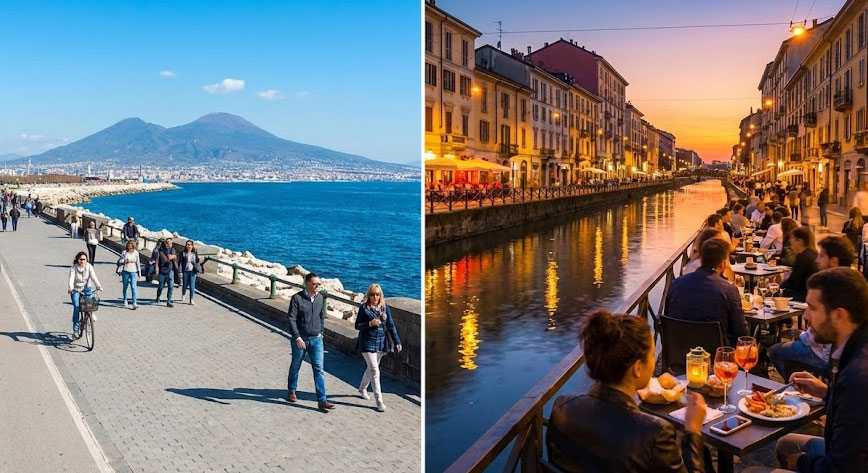
The upscale waterfront promenade of Chiaia in Naples contrasted with the vibrant Navigli canal nightlife in Milan

City contrasts: the upscale waterfront of Chiaia in Naples versus the lively canal nightlife of Navigli in Milan.


Naples: Chiaia Luxury vs. Centro Storico Energy

  • Chiaia: The polished seaside district. Safer-feeling, cleaner, and calmer. Best for travelers who want a more comfortable and lower-friction Naples base.
  • Centro Storico: The beating heart of the city. Loud, intense, chaotic, and full of energy. Best for travelers who want Naples at full volume.

Milan: Brera Style vs. Navigli Nightlife

  • Brera: Stylish, art-focused, polished, and expensive. Great for a more design-forward Milan stay.
  • Navigli: Canal district with strong aperitivo culture and nightlife. Very fun, but not ideal for light sleepers.
A large crowd of pilgrims gathering in St. Peter's Square for the Jubilee Holy Year.

2026 warning: with Rome still feeling Jubilee demand and the Winter Olympics affecting the north, early booking is no longer optional.


Important 2026 Note: Why Booking Early Matters

2026 remains a high-pressure year for parts of Italy, especially Rome and northern cities connected to major event demand.

  • Rome: Jubilee-related travel demand keeps pressure high, especially around Vatican-adjacent neighborhoods and central historic areas.
  • Milan and the north: Winter Olympics activity and related demand can push prices up, especially for strong business hotels and well-located stays.
Booking rule: For Rome and Milan, book earlier than usual. The last-minute deal is much less likely in a high-demand year.

Even when the biggest headline dates pass, elevated travel patterns can linger. Rome especially can stay more competitive than travelers expect.

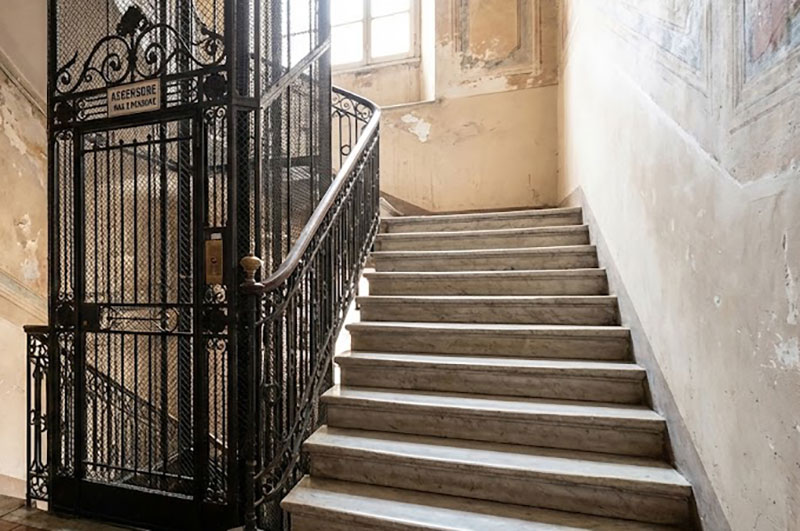
A tiny vintage elevator in an Italian building next to a steep marble staircase.

Reality check: historic buildings often mean tiny elevators, or none at all. Always check the amenities list before booking that fourth-floor apartment.


Hotels vs. Airbnbs: Elevators, AC, and Historic-Building Reality

Staying in a seventeenth-century palazzo sounds romantic until you are carrying a heavy suitcase up four flights of stairs in July.

  • The elevator situation: Many older apartments do not have elevators. If they do, they can be extremely small. Always filter carefully if stairs are a concern.
  • The AC situation: Hotels usually have it. Apartments do not always. In summer, AC is not optional for most travelers. Check, do not assume.
  • Luggage storage: Hotels will usually hold your bags if you arrive early. Apartments often cannot.

2026 reality check: Short-term rental rules and too-good-to-be-true listings

In major Italian cities, short-term rental supply and enforcement have tightened, especially in historic centers. That usually means fewer great-value apartments and more competition for the good ones.

  • If a listing looks unusually cheap: Double-check reviews, exact location, and host history.
  • Look for transparency: Clear house rules, clear check-in details, and a long review trail usually beat a brand-new glossy listing.
  • Have a backup plan: If you need guaranteed AC, elevator access, and luggage storage, a hotel or aparthotel is often the safer choice.

Frequently Asked Questions

What is the best area in Rome for first-timers?

Monti is one of the strongest first-timer choices because it feels central without being as intense as some other areas. The area near the Pantheon is also excellent if your budget allows it.

It is convenient, but not usually the most atmospheric choice. Station areas are often noisier and grittier. Staying 15 to 20 minutes away usually improves the trip unless you have a very early train.

Yes. Italy commonly charges a city tax per person, per night. It is not always included in your prepaid rate, so check the booking details carefully.

Yes, Venice is generally very safe. The bigger issue is navigation. Poor lighting, canal turns, and dead ends can make late arrivals feel more confusing than dangerous.

If you want a calmer base city with excellent food and easy rail connections, Bologna is a smart alternative. It is often better value than Florence and works well as a rail hub.

Final Thought: Timing matters in Italy
When we visited Rome last October, several famous fountains and landmarks were wrapped in scaffolding and partly drained. At first, it felt disappointing, until it became obvious the city was preparing for the influx of Jubilee-related travel. Rome felt easier to walk, quieter in places, and less crowded, but some iconic sights were temporarily hidden.

That is Italy in a nutshell. Every trip comes with tradeoffs. Fewer crowds can mean more restoration work. Peak season can mean everything looks perfect, but you are sharing it with millions of people.

The takeaway: Pick the neighborhood, timing, and pace that match how you actually want to travel. Italy rewards slow travelers who adjust expectations and lean into the version of the trip they are getting.

Traveling to Italy with Kids

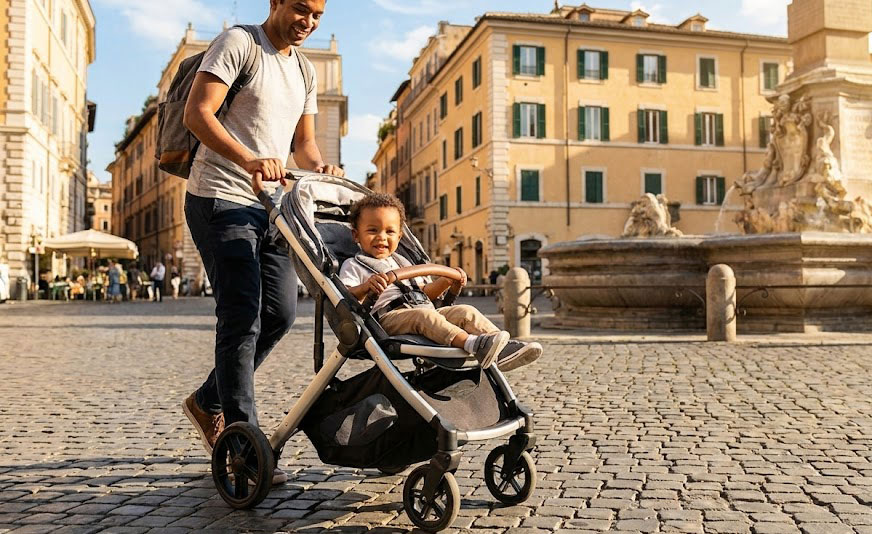
Happy father pushing a toddler in a sturdy travel stroller across cobblestones in front of the Pantheon in Rome.
Home » Destinations » Page 12

If you have been dreaming of taking your children to Italy but are terrified of the logistics, let me put your mind at ease: Italy is arguably the most kid-welcoming country in Europe. The secret to a successful family trip is not just picking the right museums. It is understanding the stroller reality of ancient streets, knowing how trains work, and realizing that late dinners with kids are often completely normal.

This guide breaks down how to navigate cobblestones, rail travel, family-friendly dining, and where to stay, with practical advice that helps parents avoid the common friction points.

Local Guide Tip: The “Bambini” Effect
In Italy, children are a social lubricant. If your toddler is having a meltdown in a piazza, do not be surprised if a local grandmother comes over to distract them instead of scowling. Embrace the chaos. The locals usually do.

Planning note: Always check the Trenitalia “Bimbi Gratis” terms before booking. Many high-speed routes allow kids under 15 to travel free when accompanied by an adult, but you must choose the specific fare during booking.

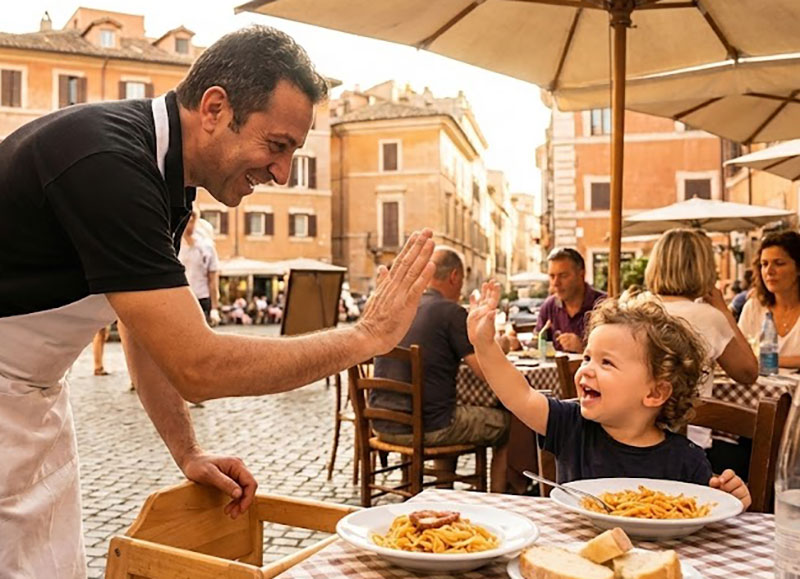
Friendly Italian waiter interacting with a child at a restaurant.

Italian hospitality: waiters often go out of their way to make children feel like VIPs.


Kid-Friendly Culture: How Italians Treat Children

The Italian Mindset: Kids Are Part of Daily Life

In Italy, children are integrated into everyday life. You will see families out late, babies in strollers in lively piazzas, and kids running around while adults linger over dinner.

  • Late dinners are normal: Do not stress about restaurant opening times. Families often eat later than many visitors expect.
  • Direct interaction: Italians will often talk directly to your kids, ask their names, and make them feel included.
  • Priority moments: At smaller attractions and in some everyday situations, families with very young children may get informal courtesy from staff.
Pro Tip: If you want a quieter dinner, go right when the restaurant opens. If you want the full Italian atmosphere, go later and do not worry too much about a little noise from your table.
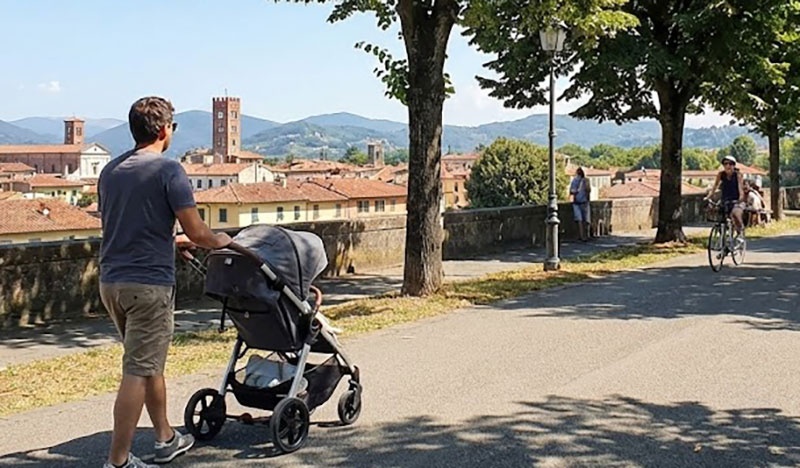
Parent pushing a stroller on the paved city walls of Lucca.

A smoother ride: paved paths like the ones in Lucca make city exploration much easier with a stroller.


Stroller Reality: Which Cities Are Easy and Which Are Not

Cobblestones, Bridges, Hills, and What That Means for Parents

You can technically bring a stroller almost anywhere in Italy, but some destinations are much easier than others.

  • Toughest with a stroller: Venice and Positano are the hardest. Venice means bridge after bridge with stairs. Positano is steep and vertical.
  • Easiest options: Lucca and much of Florence are simpler thanks to flatter routes and more walkable layouts.
  • Rome: Very doable, but the sanpietrini cobblestones are rough. Larger, sturdier wheels make a big difference.
Local Guide Tip: A compact folding stroller is often the sweet spot in Italy. It is easier for trains, tighter restaurant entrances, and those tiny elevators in older buildings.
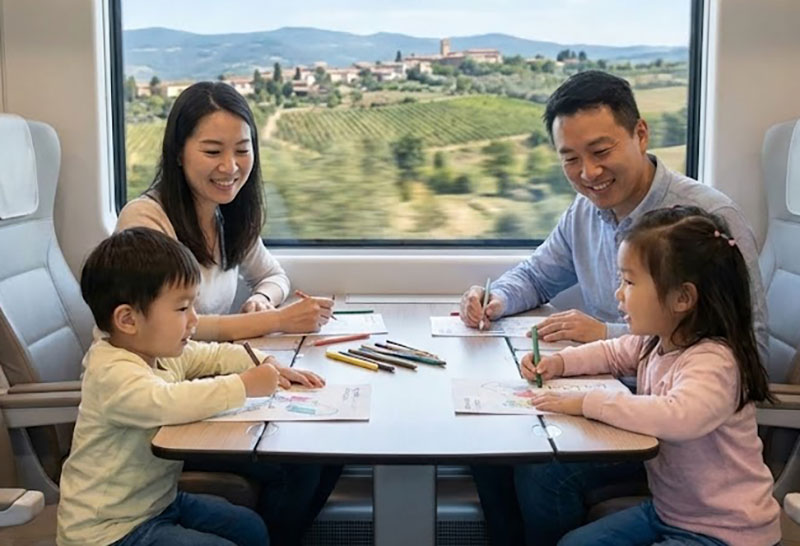
Family enjoying a high-speed train ride in Italy

Modern high-speed trains are one of the easiest ways for families to move between Italian cities.


Train Travel: “Bimbi Gratis,” Seats, and Family Logistics

Why Trains Usually Beat Driving in Italy

Italy’s rail system is often the easiest way to move a family between cities. You avoid parking stress, highway fatigue, and long transfers into historic centers.

  • Bimbi Gratis: Trenitalia offers a fare on select routes where kids under 15 can travel free with an adult. You need to choose that fare when booking.
  • Museum tickets: Many state-run museums offer free or reduced entry for children, but you still often need to reserve their time slot.
  • Seat setup: On high-speed trains, table seats or 4-seat group configurations can make snacks, games, and downtime much easier.

Related: If train travel feels like the biggest stress point, read my full Italy Train Travel Guide for seat maps, luggage tips, and platform advice.

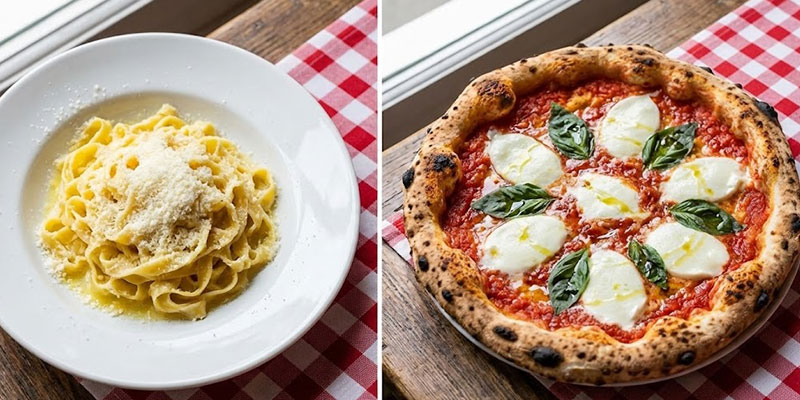
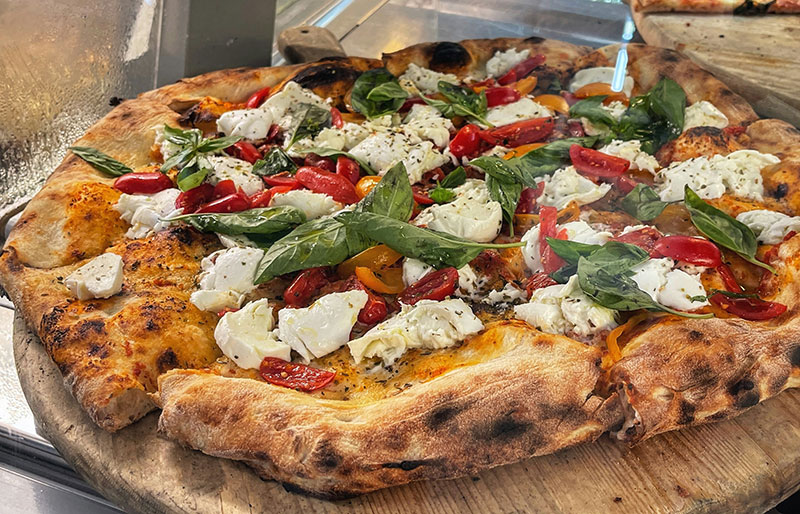
Authentic Italian Margherita pizza and simple butter pasta.

Simple pasta and pizza make dining in Italy much easier for families than many parents expect.


Dining Out: Late Nights, Simple Orders, and Kid-Friendly Meals

The Reality of Eating Out with Kids in Italy

Most traditional Italian restaurants do not have a separate kids menu, but that does not mean dining is difficult. Italian kitchens usually offer simple, flexible options that work well for children.

  • Pasta in bianco: Plain pasta with butter or olive oil and parmesan is a classic fallback.
  • Mezza porzione: Ask for a half portion if your child does not need a full plate.
  • Margherita pizza: One of the easiest safe bets for picky eaters.
Pro Tip: Ask for water “naturale” if your kids prefer still water. If you just ask for water, sparkling may show up instead.
Children participating in a pizza-making workshop in Italy.

Hands-on food experiences like pizza and gelato classes can be a highlight for families in Italy.


Top Activities: Beyond Museums

Hands-On Experiences That Work Well with Kids

Italy is full of history, but families usually do best when they mix famous sights with experiences kids can actively participate in.

  • Pizza-making classes: Especially popular in Rome and Naples.
  • Gelato workshops: Florence is a great place for this kind of family activity.
  • Gladiator school: Rome has family-friendly experiences where kids can burn energy while learning some history.
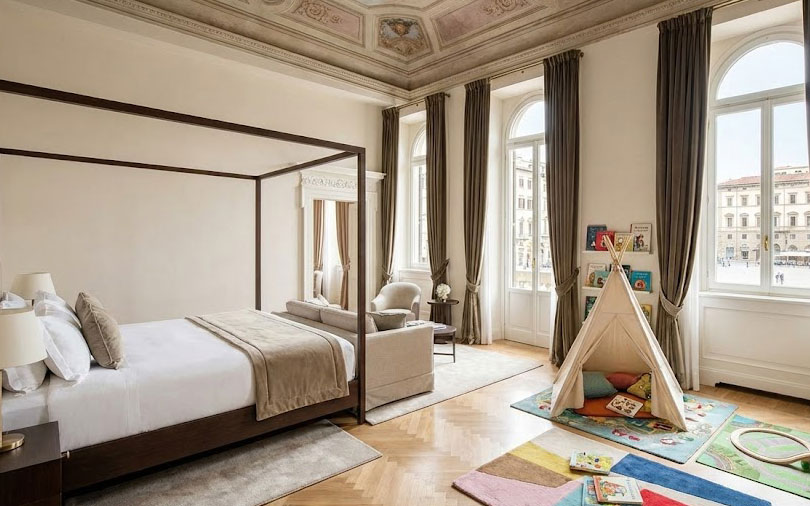
arge family-friendly hotel suite in an Italian city

Family-friendly stays in Italy often work best when they combine space, elevator access, and an easy walking location.


Where to Stay: Family-Friendly Bases

Hotels vs. Apartments and What Matters Most

For families, the best base is not always the prettiest one. Elevator access, quieter streets, enough room to spread out, and easy walks to food or transit can matter more than postcard charm.

  • Rome: Look for practical hotels or apartment-style stays with laundry nearby and easy transit access.
  • Florence: Staying just outside the busiest core can make stroller movement easier.
  • Venice: Focus on fewer bridges between your hotel and the vaporetto stop, not just the room itself.
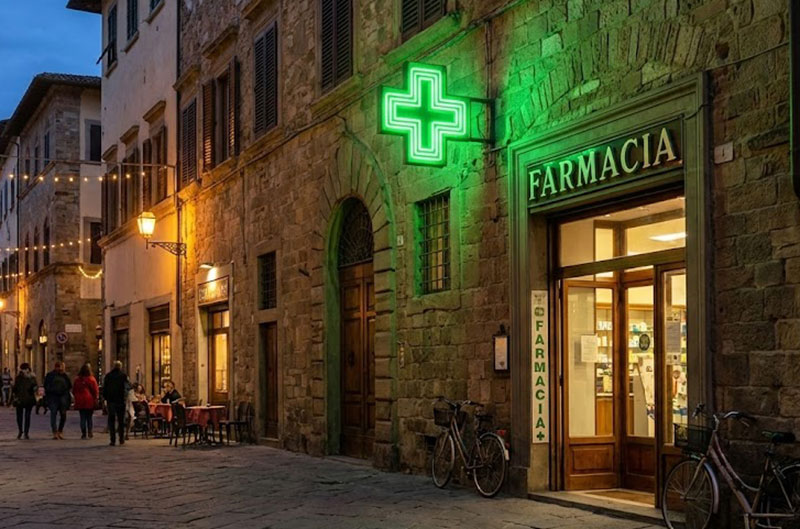
Illuminated green cross sign of an Italian pharmacy.

Farmacie and supermarkets make it easy to restock diapers, formula, and everyday baby essentials in Italy.


Baby Supplies: Diapers, Formula, and Pharmacies

What You Can Buy Locally

You do not need to pack an entire suitcase full of baby supplies. Most of what you need can be bought once you arrive.

  • Farmacia: Best for formula, creams, medicine, and other baby-care basics.
  • Supermarkets: Conad, Coop, and similar chains are good for diapers and wipes.
  • Changing tables: Public changing facilities are still inconsistent, so flexibility helps.

Car Seats, Taxis & Transfers

What to Expect for Road-Based Family Travel

Car seats are not guaranteed in Italian taxis, especially in city centers. If you are traveling with infants or toddlers, plan ahead.

  • Private transfers: Reserve in advance and request a child seat when booking.
  • Rental cars: Reserve child seats early or bring your own lightweight travel model.
  • City travel: In many places, walking and trains reduce the need for taxis altogether.

FAQs

No. It is mainly tied to certain Trenitalia long-distance and high-speed services. Regional trains usually follow different child pricing rules.

Lucca is one of the easiest picks thanks to its flatter layout, pedestrian-friendly feel, and easier strolling routes.

Usually no. Diapers, wipes, formula, and baby-care basics are widely available in supermarkets and farmacie across Italy.

Yes. Italy is one of the easier countries in Europe for family dining. Even without a formal kids menu, most restaurants can offer simple, kid-friendly meals.
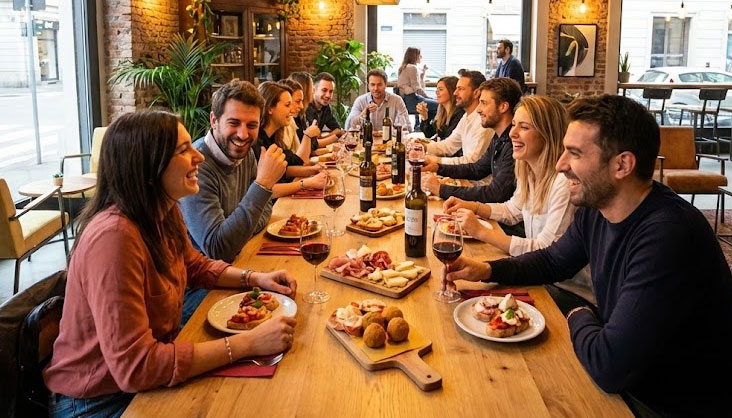
For many families, the best answer is both. A compact stroller works well in flatter cities, while a carrier is much easier in places with stairs, bridges, or steep terrain.

“`

Solo Travel in Italy Guide: Is it Safe? Best Cities & Dining Tips

A mixed-race solo female traveler smiling and holding a glass of red wine at an outdoor cafe table in a sun-drenched Italian street during golden hour.
Home » Destinations » Page 12

Planning a solo trip to Italy often starts with a mix of excitement and a tiny bit of nerves. You might be dreaming about golden hour Aperol Spritzes and wandering Roman streets on your own schedule, but then the practical questions arrive. Is it safe? Will dining alone feel awkward? Where should you base yourself?

The reality is that Italy is one of the most rewarding countries in the world for solo travelers. High-speed rail connects the major cities, the café culture makes lingering alone feel natural, and the piazza lifestyle means you rarely feel isolated for long.

Local Guide Tip: The Social Secret
In Italy, you are rarely truly alone. The culture revolves around piazzas, cafés, and shared public spaces. Sit long enough with a coffee or a glass of wine and the world tends to come to you.

Planning note: Florence and Bologna are two of the easiest cities for first-time solo travelers. Both are compact, extremely walkable, and full of students, expats, and other travelers.

The ultimate solo freedom. Enjoying a quiet espresso in a Roman piazza before the crowds arrive.


Safety Reality: Is Italy Safe for Solo Travelers?

Pickpockets vs Violent Crime

Italy is one of the safest countries in Europe for solo travelers. Violent crime against tourists is extremely rare. The biggest issue travelers encounter is petty theft in crowded areas.

  • Pickpockets: Most common in busy tourist areas like the Colosseum, Termini Station, and crowded buses.
  • Street scams: Ignore anyone offering free bracelets, roses, or street games.
  • Violent crime: Very uncommon for visitors.
Pro Tip: A simple cross-body bag with a zipper makes you a much harder target for pickpockets while keeping your hands free for photos and gelato.
A solo traveler walking under the historic red porticos in Bologna, Italy.

Bologna’s famous porticos make it one of the easiest and safest cities for solo exploration.


Best Cities for Solo Travelers

Florence and Bologna Are the Easiest First Stops

Some Italian destinations are built for couples or families. Solo travelers usually do best in cities with strong social energy and walkable layouts.

  • Florence: Small, beautiful, and extremely walkable. A huge community of international students and travelers keeps the city social.
  • Bologna: A lively university city with amazing food and endless covered walkways that make exploring comfortable.
  • Rome: Incredible for culture and people watching. Trastevere offers a relaxed neighborhood feel that works well for solo travelers.
Related: Planning a full trip? Start with my Italy Travel Guide for routes, logistics, and travel planning tips.
A single table setting at an Italian restaurant with pasta, wine, and a book.

Dining solo in Italy becomes easy once you embrace the slower pace of Italian meals.
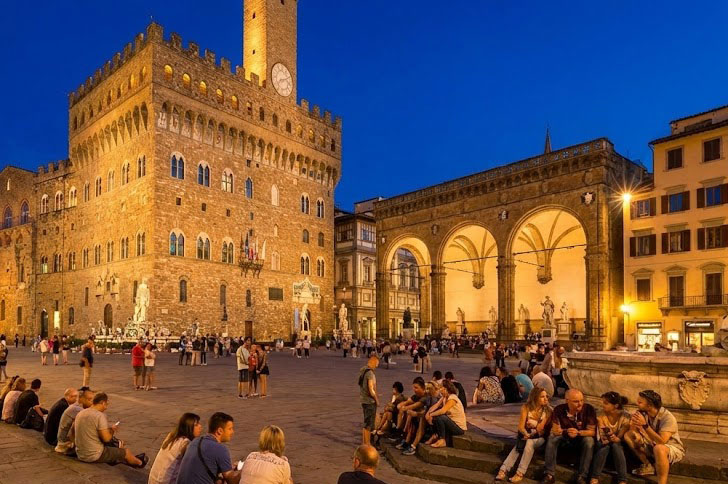

Dining Alone Without Feeling Awkward

How to Enjoy the Table for One

Dining solo is often the biggest mental hurdle for travelers. In Italy, it quickly becomes one of the best parts of the experience.

  • Choose wine bars: Enotecas and casual bistros often have bar seating perfect for solo diners.
  • Bring a book: A classic trick that signals you are comfortable dining alone.
  • Try lunch: Italian lunch culture is relaxed and full of locals eating solo.
Local Guide Tip: Use apps like TheFork to reserve a table for one. It removes the awkward entrance moment and guarantees a seat.
Travelers meeting and sharing food at a social boutique hotel in Italy.

Food tours and cooking classes are the easiest way to meet people while traveling solo.


Meeting People While Traveling Solo

Social Options That Are Not Party Hostels

  • Boutique hostels: Many modern hostels cater to digital nomads and older travelers.
  • Food tours: Small group tours are one of the easiest ways to meet fellow travelers.
  • Cooking classes: Pasta or pizza classes naturally create conversation and shared experiences.
A lively and well-lit piazza in Florence at night.

Italian city centers stay lively late into the evening which helps solo travelers feel comfortable walking around.


Night Safety Tips

  • Stick to active piazzas and well-lit streets.
  • Avoid the immediate surroundings of major train stations late at night.
  • Use official taxis or rideshare apps rather than wandering unfamiliar neighborhoods.
A confident woman traveling solo through a historic neighborhood in Rome

Confidence and awareness go a long way when navigating Italian cities solo.


Solo Female Travel in Italy

Italy is widely considered a safe destination for solo women.

  • Walk confidently and stay aware of your surroundings.
  • A simple ring can discourage unwanted attention.
  • Choose central neighborhoods and well-reviewed accommodations.

Traveling solo in Italy often means discovering moments you would otherwise miss.


Why Italy Is One of the Best Solo Travel Destinations

Italy works beautifully for solo travelers because the country itself provides constant stimulation. The architecture, food, art, and public life keep you engaged at every moment.

You set your own rhythm. That might mean lingering in a museum, enjoying a slow lunch, or wandering neighborhoods without a strict plan. Many travelers discover they become more present and more open to new connections when traveling alone.


FAQs

Yes. Italy is widely considered safe for solo women. Standard travel awareness is recommended, but violent crime rates are very low.

Food tours, cooking classes, and boutique hostels provide natural social environments without the party hostel atmosphere.

Florence is often the easiest starting point because it is compact, walkable, and full of international travelers.

Local Guide Tip: Why Solo Travel Feels Different
Traveling alone changes the rhythm of a trip. You move faster, notice more details, and interact with locals more naturally. Many travelers find it becomes one of their most immersive travel experiences.

Italy Trip Cost Breakdown

A close-up of an Italian cafe table during golden hour with a cup of espresso, a glass of red wine, and a paper receipt with Euro coins and notes.

Italy Trip Cost Breakdown (2026): Budgets for Couples, Solo & Families

A close-up of an Italian cafe table during golden hour with a cup of espresso, a glass of red wine, and a paper receipt with Euro coins and notes.
Home » Italy » Italy Trip Cost Breakdown

Planning a trip to Italy usually starts with excitement and ends with one big question: how much is an Italy trip actually going to cost? Between high-speed rail, boutique hotels, and those irresistible dinners, your 2026 budget can vary wildly depending on your travel style.

This guide breaks down real Italy travel costs for 2026, including daily averages, hidden fees most people miss, and realistic budgets for solo travelers, couples, and families. Think of it as your money reality check before you start booking.

Local Guide Tip: Italy Rewards Planning
Italy is not a cheap destination if you wing it, but it can be very affordable if you plan. Small decisions like booking Frecciarossa trains 90 days out or choosing a base like Bologna over Florence can save you hundreds without sacrificing the experience.

Planning note: Prices vary by city. Rome, Florence, and Venice are the “Big Three” for a reason because they command a premium. Consider a food-focused base like Naples or Bologna to make your Euro go further.

A couple enjoying a private gondola ride along a scenic Venetian canal, passing under a historic stone bridge at sunset.

While iconic, a private gondola ride in Venice is a splurge expense that can quickly shift a daily budget from mid-range to luxury.


The Short Answer: Daily Estimates per Person

These are realistic per-person daily averages in Italy for 2026, excluding international flights. All prices are in USD for easier planning.

Travel Style Daily Budget What This Includes
Backpacker $85 per day Hostels, street food like pizza al taglio, regional trains, and free walking tours
Mid-Range $220 per day 3-star hotels or Airbnbs, sit-down trattoria meals, high-speed rail, and 1 major museum per day
Luxury $550+ per day 5-star boutique stays, private guided tours, private transfers, and fine dining
Pro Tip: Solo travelers usually pay more per person than couples because hotel costs, taxis, and other transit are not shared.

Accommodation Costs: Hostels vs Hotels vs Airbnbs

Where you sleep will usually be your biggest expense. In 2026, demand is still high in the most popular Italian cities, so booking early and looking at refundable rates is often the smartest move.

  • Hostel Dorms: $35 to $70 per night in major hubs like Rome or Venice.
  • Boutique Hotels: $180 to $350 per night for a central, highly rated stay.
  • Family Airbnbs: $250 to $400 per night, often with more space and better overall value.

One of the biggest modern travel hacks in Italy is staying in an Airbnb just outside the most expensive tourist core. On one Rome trip, staying in the Trastevere neighborhood changed the whole math of the trip. We had a nice apartment, walked local streets, shopped at neighborhood grocery stores and markets, had breakfast at home, sometimes even lunch, and then still went out for a great dinner at night. That kind of setup can stretch your budget in a way a hotel rarely does.

Local Guide Tip: Do not automatically pay for the hotel breakfast. Many are overpriced. A local pasticceria breakfast with a cornetto and cappuccino is often better and cheaper, and an apartment stay gives you the option to stock up on fruit, snacks, and wine for low-key meals at home.


A close-up of several toasted bruschetta slices topped with fresh diced tomatoes and green herbs, served on a white plate during an Italian aperitivo

Classic tomato bruschetta is a staple of the Italian aperitivo hour.


Food Budget: Eating Well Without Overspending

The cost of food in Italy is surprisingly consistent if you avoid the tourist menu trap. In 2026, expect these averages:

  • Breakfast (Coffee & Pastry): €3.50 to €5.00
  • Aperitivo (Drink + Snacks): €10 to €18 and sometimes enough to replace a light dinner
  • Trattoria Dinner (2 courses + house wine): €30 to €45 per person
Pro Tip: Avoid eating in any piazza with a view of a major monument. Walk two or three blocks away and the price often drops fast while the food gets better.

Transportation: High-Speed Trains vs Regional Savings

High-speed trains like Trenitalia’s Frecciarossa and Italo are the backbone of Italian travel. They are efficient, comfortable, and often much better than renting a car between major cities.

  • Advance Booking (around 90 days out): $25 to $35 for major city connections
  • Last-Minute Booking: $75 to $110 for the same routes

Local Guide Tip: For short regional trips like Florence to Lucca or Rome to Ostia Antica, use Regionale trains. Prices are fixed, so there is no real reason to book far in advance.


Hidden Fees: City Taxes, Coperto, and Tipping

  • Tassa di Soggiorno (City Tax): Usually €2 to €7 per person, per night, depending on the city and hotel class. It is often paid separately.
  • Coperto: A small cover charge for bread and table service, usually €2 to €4 per person. It is normal and not a scam.
  • Tipping: Not expected the way it is in the U.S., but rounding up or leaving a few extra euros for excellent service is appreciated.

Money-Saving Hacks Locals Know

  • Book trains early: This is one of the easiest ways to save serious money on multi-city trips.
  • Stay just outside the tourist core: A nearby neighborhood often gives you better value, more local character, and better food options.
  • Use apartments strategically: Breakfast at home, grocery runs, and a bottle of wine on the terrace can save a surprising amount over 7 to 10 days.
  • Do not overbook attractions: Italy gets expensive fast if every day includes multiple paid landmarks and tours.
  • Use aperitivo smartly: In cities like Milan, Turin, Bologna, and parts of Rome, aperitivo can function as a light dinner and cut your food budget.

Sample Budget for a 10-Day Trip (Mid-Range Couple)

If you are traveling as a couple in 2026, here is what a realistic 10-day comfortable trip can look like:

  • Accommodation: $2,400 for central 3- or 4-star stays
  • Food & Wine: $1,500 including one splurge meal
  • Transport: $450 for high-speed rail plus occasional taxis
  • Activities: $550 for major sights like the Colosseum, Uffizi, and a half-day tour
  • Total for Two: About $4,900 total, or roughly $2,450 per person

If you swap a few hotel nights for a well-located Airbnb and cook some breakfasts or lunches, that same trip can often come down by several hundred dollars without feeling like a budget trip.


FAQs

Generally, yes. Venice often carries a premium on both hotels and dining because of its limited space and higher logistics costs. Budget a bit more there than you would for Rome or Florence.

Italy is much more card-friendly now, especially in cities. Still, it is smart to carry €20 to €50 in cash for smaller purchases, market stops, city taxes, or old-school spots that are slower to modernize.

Yes, especially for couples, families, or longer stays. A good Airbnb can save money on breakfast, snacks, wine, and even a few simple meals, while also giving you more space and a more local neighborhood experience.

For shorter routes, regional trains are often the cheapest choice. For longer intercity routes, booking high-speed trains early usually offers the best balance of cost, comfort, and time savings.

A mid-range couple should expect to spend around $3,000 to $3,800 total for one week in Italy in 2026, excluding international flights. That usually covers comfortable lodging, train travel, sightseeing, and good meals each day.

The Perfect 10 Days in Italy Itinerary: Rome, Florence & Venice

Rome buildings and domes from above the city

The Perfect 10 Days in Italy Itinerary: Rome, Florence & Venice (2026)

Rome buildings and domes from above the city
Home » Italy » The Perfect 10 Days in Italy Itinerary

By Corey Gasman

The Art of the Italian Sprint: Quality Over Quantity

Planning your first trip to Italy is an exercise in restraint. The urge to see everything, from the tip of the boot to the Alps, is strong. But if you have read my other guides, you know my philosophy: travel is about depth, not just distance.

There is a difference between truly experiencing Italy and merely photographing it. Treating this country like a checklist where you rush from monument to monument just to get the Instagram shot is the fastest way to miss the point of the dolce vita. That is not traveling. That is just verifying you were there.

This itinerary is the perfect compromise. We do move efficiently to hit the Big Three of Rome, Florence, and Venice, but we dedicate three full days to each city. This pace gives you permission to slow down, put away the map, and immerse yourself in the culture. Seeing less allows you to experience much more.

Local Guide Tip: The Reverse Route
While most people start in Rome and head north, starting in Venice and ending in Rome can sometimes be cheaper for flights. That said, we recommend the northbound route from Rome to Venice for a better crescendo of history and atmosphere.

Planning note: For 2026, booking Colosseum and Vatican tickets 60 to 90 days in advance is no longer optional. It is essential. If you miss the window, a guided tour is often your only reliable option.

The Colosseum and Roman Forum from above

The classic start: Watching the sunset over the Roman Forum before your first authentic cacio e pepe dinner.


Day 1-3: Rome (The Ancient Introduction)

Your first three days are about the layers of history. Stick to a one major site per day rule to avoid burnout.

  • Day 1: Arrival and the Heart of Rome walk including the Pantheon, Trevi Fountain, and Piazza Navona.
  • Day 2: The Ancient Core. Book a morning slot for the Colosseum and Roman Forum.
  • Day 3: The Vatican. Spend your morning in the Museums and St. Peter’s Basilica, then cross the river for dinner in Trastevere.

Train Transfer: Rome to Florence (Booking Tips)

In 2026, high-speed rail is the best way to travel. It turns a long drive into a quick and comfortable journey.

  • The Logistics: Book the 8:30 AM Frecciarossa from Roma Termini. You will arrive in Florence Santa Maria Novella by 10:00 AM, giving you a full afternoon in the city.
  • Booking Tip: Use the Trenitalia app and look for Economy or Super Economy fares which open 90 to 120 days out.

Confused by Italian trains? The system is easier than it looks. I’ve written a complete breakdown covering ticket validation, Italo vs Trenitalia, and how to avoid fines at the station.

Read More: The Complete Italy Train Travel Guide

The view from Piazzale Michelangelo of Florence

Florence from above: The view from Piazzale Michelangelo is the perfect reward after a day of art and history.


Day 4-6: Florence & A Taste of Tuscany

Florence is your base for the Renaissance and the rolling hills of the countryside.

  • Day 4: The Renaissance. Visit the Accademia and the Uffizi Gallery, then end the day at the Duomo.
  • Day 5: Tuscany day trip. Visit Siena and San Gimignano for wine tasting and medieval views.
  • Day 6: Artisans and Oltrarno. Cross the Ponte Vecchio to explore workshops and quieter neighborhoods.

The Manhattan of the Middle Ages waking up. The skyline of San Gimignano still feels powerful centuries later.


Venice canal

The best itinerary in Venice is to throw away the map. Some of the best moments come from getting lost.


Day 7: The Venice Transfer & Grand Canal Arrival

Take the 9:20 AM high-speed train from Florence. As you cross the lagoon into Venice Santa Lucia, the car world disappears.

  • The Logistics: Skip the bus and splurge on a private water taxi to your hotel for one of the most memorable arrivals in Europe.

Day 8-9: Getting Lost in Venice

Venice is best experienced away from the crowds around St. Mark’s Square.

  • Day 8: St. Mark’s and Doge’s Palace in the morning, then explore Cannaregio in the afternoon.
  • Day 9: Take a Vaporetto to Burano and Murano for color and craftsmanship.

Alternative Ending: Amalfi Coast Swap

If you are traveling in summer, you may want coastline over canals.
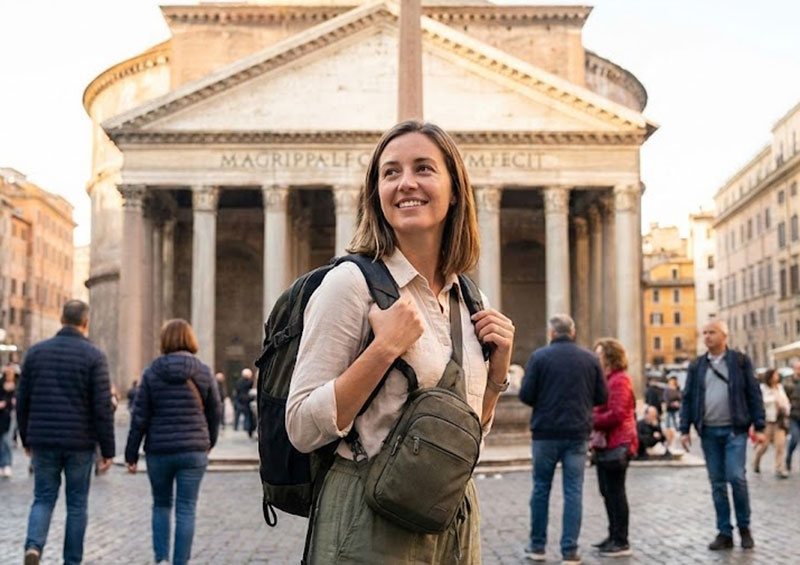
  • The Swap: After Florence, head south to Salerno or Sorrento instead of Venice.
  • The Vibe: Trade museums for boat days, lemon groves, and cliffside villages like Positano and Amalfi.
The "Local Eats" 10: Essential Tastes of Italy As a Local Guide, I believe you haven't truly visited Italy until you've tasted it. Since you are traveling through the "Holy Trinity" of Rome, Florence, and Venice, here are the essential foods and drinks that define this route. Consider this your edible checklist. Local Guide Tip: Coperto & Servizio Don't be alarmed if you see a "Coperto" charge (usually €2–3 per person) on your bill; it is the standard cover charge for sitting down. Tipping is not mandatory like in the US, so rounding up the bill is sufficient. Morning Rituals & Sweet Breaks The Coffee Culture (Cappuccino vs. Espresso): There is a strict rule here: Cappuccino is for breakfast (no milk after 11:00 AM!). Espresso (un caffè) is the all-day energy boost. Drink them standing at the bar for the true local experience (and price). Cornetto al Cioccolato: Often mistaken for a French croissant, the Italian cornetto is slightly denser, sweeter, and made with eggs. A warm cornetto filled with chocolate cream (or pistachio) is the only way to start a Roman morning. Gelato Artigianale: You will likely eat this every day. Look for "Artigianale" (homemade) and avoid the shops with big, fluffy mounds of bright colors (that’s fake!). Real pistachio gelato should be a dull, earthy green, not neon. The Roman Lunch & Dinner Pizza Margherita (Wood-Fired): You are looking for the "DOC" designation. Simple, fresh tomato sauce, mozzarella di bufala, and basil. In Rome, look for the thinner, crispy crust; if you spot a Neapolitan place, expect the soft, pillowy crust. Both are non-negotiable must-haves. Cacio e Pepe: The most famous of the four Roman pastas. It translates literally to "Cheese and Pepper." It sounds simple, but creating a creamy sauce using only Pecorino Romano cheese, pasta water, and toasted black pepper is an art form. The Tuscan Savory Gap Prosciutto di Parma: While in Florence, order a "Tagliere" (meat and cheese board). The Prosciutto di Parma should be sliced paper-thin so it practically melts on your tongue. It’s sweet, salty, and perfect. Parmigiano Reggiano: Forget the shaker cheese you know from home. Real "Parmesan" is aged (12, 24, or 36 months) and served in jagged chunks. It is often served with a drop of balsamic vinegar or honey as an appetizer. Local Guide Tip: The Perfect Tuscan Pairing There is truly nothing better than a beautiful plate of antipasto consisting of salty Prosciutto, Salami, and chunks of Parmigiano Reggiano matched with a glass of Chianti Classico. The fats in the cured meats cut through the tannins of the red wine perfectly. It is the ultimate Tuscan lunch. Thirsty for more Tuscany? The world of Tuscan wine goes far beyond Chianti in a straw basket. From "Super Tuscans" to Brunello, learn what to order so you don't look like a tourist at the wine bar. Read More: The Tuscan Wine Guide & Super Tuscans The Venetian Finish Seafood Pasta (Spaghetti alle Vongole): When you hit the coast or Venice, switch immediately from meat to seafood. Spaghetti with clams (vongole), white wine, garlic, and parsley is the quintessential dish of the lagoon. Aperol Spritz: This iconic orange drink was born in the Veneto region (near Venice). It is the golden hour standard: Prosecco, Aperol, and soda water. Enjoy it at sunset near the Rialto Bridge. Limoncello: The grand finale. This is a digestivo, a high-alcohol lemon liqueur served ice-cold in a chilled shot glass after a heavy dinner to help you digest. It’s "sips," not "shots"!

There is nothing better than a simple Italian lunch done right. Fresh pizza, quality ingredients, and a glass of wine.


The Local Eats 10: Essential Tastes of Italy

As a Local Guide, I believe you have not truly visited Italy until you have tasted it. These are the essentials across Rome, Florence, and Venice.

Local Guide Tip: Coperto & Service A small cover charge is normal in Italy. Tipping is not required, but rounding up is appreciated.

Morning Rituals & Sweet Breaks

Cappuccino vs Espresso: Cappuccino is for mornings. Espresso is the all-day drink.

Cornetto: Slightly sweeter than a croissant and perfect with coffee.

Gelato: Look for natural colors. Avoid overly bright displays.

The Roman Core

Pizza Margherita: Simple and essential.

Cacio e Pepe: One of Rome’s signature pasta dishes.

The Tuscan Gap

Prosciutto di Parma: Paper-thin and rich.

Parmigiano Reggiano: Aged and served in chunks.

Local Guide Tip: Pair cured meats with Chianti Classico for a perfect Tuscan lunch.

Thirsty for more Tuscany?

Explore Super Tuscans, Brunello, and more in this guide.

Read More: Tuscan Wine Guide

The Venetian Finish

Seafood Pasta: Switch to seafood near the coast.

Aperol Spritz: The classic Venetian drink.

Limoncello: A traditional after-dinner digestif.

The classic 10-day route through Rome, Florence, and Venice.


How to Book This Entire Trip Yourself

You do not need a travel agent for this route.

  1. Flights: Book multi-city flights into Rome and out of Venice.
  2. Trains: Use Trenitalia or Italo directly.
  3. Tickets: Only buy from official attraction websites.
Final 2026 Tip: Download Citymapper for navigating major Italian cities more easily.

FAQs: Planning Your 10-Day Loop

Yes, but it requires a structured pace. You will see highlights, not everything.

Expect around €250 to €300 per person per day for a mid-range experience.

Generally no. Point-to-point train tickets are usually cheaper and easier.

It is doable but involves a lot of walking. Consider slowing down or cutting one city.

May or September to October offer the best balance of weather and crowds.

How Italians actually eat (timing, rules)

A traditional Italian meal of lasagna in a ceramic dish paired with two glasses of rosé wine on a table overlooking the water and mountains in Lake Como.

How Italians actually eat (timing, rules)

A traditional Italian meal of lasagna in a ceramic dish paired with two glasses of rosé wine on a table overlooking the water and mountains in Lake Como.
Home » Italy » How Italians Actually Eat

Al fresco dining in Lake Como: A classic lasagna paired with local wine and stunning lakeside views.


In Italy, food isn’t just fuel, it’s a ritual with a strict, unwritten schedule. If you try to order a heavy dinner at 5:00 PM or a cappuccino after a large meal, you’ll likely be met with a confused look. Understanding the local “food clock” is the secret to eating like a local and avoiding the tourist traps.

Local Guide Tip: Respect the Riposo
Many authentic restaurants outside of major tourist hubs close between 3:00 PM and 7:30 PM for riposo (afternoon break). Plan your meals around these windows to ensure you aren’t stuck with a subpar sandwich from a 24/7 convenience shop.

Authentic Venetian moments: Enjoying an affordable 'aperitivo' and snacks at a local bar.

The classic morning ritual: Standing at the bar for a quick caffè e cornetto is how millions of Italians start their day.


The Italian Dining Clock

Use this chart to navigate your daily meals without breaking the unspoken rules of the Italian table.

Meal Typical Time The “Rules”
Colazione (Breakfast) 7:30 AM – 10:00 AM Usually standing at a bar. A cappuccino and a cornetto. No heavy eggs or bacon.
Pranzo (Lunch) 12:30 PM – 2:30 PM The main meal. Sit down for pasta or a panino. This is the last call for milk-based coffee.
Aperitivo 6:30 PM – 8:30 PM Pre-dinner drinks (Spritz/Negroni) with snacks. Meant to “open” the stomach for dinner.
Cena (Dinner) 8:00 PM – 10:30 PM Lighter than lunch but multi-course. In the south, dinner often starts even later.
Pro Tip: Only order an espresso (un caffè) after a meal. Italians believe milk after a heavy meal ruins digestion, so save the lattes for breakfast!

Local Guide Tip: The Italian Breakfast Ritual
One of the best ways to feel like a local is to start your day the Italian way. Pop into a busy bar, order your espresso or cappuccino at the counter, grab a small pastry, and soak in the morning energy as Italians fuel up before work. If the weather is good and your day is not packed, take an outdoor table and slow down. That relaxed early coffee and pastry moment is one of the simplest, most classic parts of daily life in Italy.

FAQs

Dinner in Italy typically starts between 8:00 PM and 9:30 PM. In southern regions, it can start even later.

You can, but it is not typical. Italians usually drink espresso after meals because milk-based drinks are considered a breakfast item.

Aperitivo is a pre-dinner drink, usually served with small snacks. It is meant to stimulate the appetite before dinner, not replace it.

Many restaurants close between lunch and dinner for riposo, a traditional afternoon break. This is common outside major tourist areas.

Italy Travel Guide

A classic sunset view of the Grand Canal in Venice, looking toward the Basilica di Santa Maria della Salute with historic buildings lining the water and gondolas in the distance.
Home » Destinations » Page 12

Last updated: March 2026 by Corey Gasman

From the Editor:

I’ve been fortunate to visit Italy a few times now, and it still delivers that same feeling every time. Few places match this combination of history, food, beauty, and daily life in such a compact and accessible country.

For a kid growing up in Minnesota, it still feels surreal that you can board a flight, cross the Atlantic overnight, and suddenly find yourself standing inside the Colosseum or staring up at Renaissance art you grew up seeing only in books and movies. Italy has that rare ability to feel both world-famous and deeply human at the same time.

This guide is built to help you avoid the classic mistakes: too many stops, the wrong neighborhood, rushed logistics, and itineraries that look good on paper but feel exhausting in real life.

The 2026 EES & ETIAS Requirements:

Europe is updating its borders this year. The new biometric EES system is replacing physical passport stamps. By late 2026, U.S. travelers will also need an ETIAS authorization before boarding a flight.

It is not a full visa. Think of it as a quick, inexpensive electronic pre-screening tied to your passport. Put it on your pre-trip checklist and handle it online once the portal goes live.

Start Here: How to Plan Italy Well

Italy is one of the best first big Europe trips for a reason. It has world-famous landmarks, easy train connections, iconic food, and enough variety that almost every traveler can find their version of a great trip here. The mistake is assuming that means you should try to see all of it at once.

The best Italy trips are not built around maximum coverage. They are built around rhythm. Clean routing. Better neighborhoods. Clear train legs. Enough breathing room to enjoy the walk between lunch and dinner instead of dragging luggage every other morning.

Quick Italy Plan:
7 days → Rome + Florence
10 days → Rome + Florence + Venice
14 days → Add one slower region (Tuscany, the coast, or Sicily)

If you only remember one thing: less movement almost always means a better trip.

TLGA Rule: A 10-day Italy trip does not need Rome, Florence, Venice, Amalfi, and Cinque Terre. Pick fewer places and do them better.

Planning first?

Start here: Travel Planning Playbook

Transportation advice?

Read: Getting Around Abroad

Italian aperitivo board with cured meats, cheeses, fruit, and spreads on a wooden platter

Aperitivo in Italy is rarely complicated. A good board, a drink, and a table outside is enough to turn late afternoon into one of the best parts of the day.


Who This Italy Guide Is For

This guide is built for travelers who want a trip that actually flows instead of one that turns into a transportation project.

  • First-time visitors who want the classic Italy experience without rookie mistakes
  • Food-focused travelers who care about regional dishes, café culture, and daily rhythm
  • Couples and slow travelers who want atmosphere, walkability, and a stronger daily rhythm
  • Return travelers looking to go deeper into regions instead of repeating the same rushed route

Local Guide Tip: Italy is easy to visit, but harder to do well. The difference is not money. It is how you structure your time.

How to Plan Your Italy Trip

7 Days: Keep It to Two Strong Stops

If you only have one week, the move is usually Rome + Florence or Florence + Venice. That gives you contrast without turning the trip into constant transit.

10 Days: The Sweet Spot

Ten days is enough for Rome + Florence + Venice if you keep expectations realistic. You can also do Rome + Florence + one countryside or coast add-on if you want a little more breathing room.

14 Days: The Full Italy Flow

Two weeks is where Italy starts to open up. You can combine classic city stops with one region that slows everything down, like Tuscany, the Amalfi Coast, Sicily, Puglia, or the Dolomites.

Pro Tip: Think in bases, not stops. Every hotel change costs you time, energy, and part of a day.

If you want the full framework, start with the Travel Planning Playbook.

Two Aperol spritz cocktails on a café table during aperitivo in Italy

Few things signal the start of a European evening like the bright orange glow of an Aperol Spritz, the unofficial symbol of Italy’s aperitivo hour.


The best hour in Europe is that stretch between late afternoon and early evening when the pace softens and the day shifts into something slower.

While the ritual is famously Italian, the spritz lifestyle has a way of following you across the continent. In Italy, it is a focused pre-dinner transition. In Paris, you will see them lining the café terraces of the Marais as the workday ends, while in Barcelona, the spritz often competes with vermut for space on a crowded tapas table.

The common thread is timing. Whether you are in a Roman piazza or a Parisian bistro, that golden window between 5:00 p.m. and 7:00 p.m. is when the rhythm of the city shifts from the rush of the day to the ease of the evening.

That same shift in rhythm is part of what makes each country feel different once you are actually there.

Italy vs France vs Spain: Which One Fits You Best?

If you are choosing your first major Europe trip, this is often the real decision. All three are incredible, but they create very different kinds of days.

Category Italy France Spain
Overall Feel Historic, emotional, energetic, a little chaotic Refined, structured, slower rhythm Social, lively, later nights, more relaxed
Food Style Regional, bold, simple ingredients done well Technique-driven, subtle, ingredient-focused Tapas culture, shareable plates, late dining
Travel Pace Easy to over-schedule Rewards slowing down Flexible and social
Best For First Europe trips, iconic landmarks, food and history Lifestyle travel, wine, atmosphere, long lunches Nightlife, energy, social trips, beach-city mix

If this is your first Europe trip, Italy usually delivers the easiest immediate wow factor. France tends to win on rhythm and atmosphere over time. Spain is the most social and flexible. If you want landmarks, beauty, and that classic “this is Europe” feeling all in one trip, Italy is hard to beat.

Local Guide Tip: Italy is the easiest country to fall in love with fast. Just do not confuse that with trying to cram in the whole map.

Common Italy Mistakes

It is easy to get caught up in the excitement of booking and accidentally build a trip that feels like a deployment. Avoid these standard traps:

  • The One-Night Stand: Checking into a hotel for a single night means you spend half your day dealing with luggage and transit.
  • Ignoring the Map: Booking a cheap hotel on the edge of town costs you hours of daily commuting and ruins the ability to easily stop back at the room.
  • The “Must-See” Death March: Forcing yourself into museums you do not care about just because a guidebook told you to.
  • Restaurant Autopilot: Sitting down at the first place you see near a major monument when you are hungry and tired.
  • Overpacking: Dragging massive suitcases over cobblestones, over bridges, and onto narrow trains.

Local Guide Tip: The best trips leave room for the unexpected. If every hour is scheduled, a delayed train or a sudden rainstorm ruins the whole day instead of just changing the plan.

Travelers standing in front of the cathedral doors at Piazza del Duomo in Florence

The line for the Florence Duomo wraps around the building by mid-morning. Book a skip-the-line ticket for the dome climb early in the day to avoid spending your afternoon standing on the pavement.


The Reality Check: What Italy Travel Feels Like in 2026

Italy has not become impossible. It has just become less forgiving of casual planning. Popular routes are crowded, timed-entry attractions sell out, and major cities feel dramatically different depending on what time you arrive and how early you start.

The good news is that most Italy travel problems are solvable. The answer is almost never a secret hack. It is better timing, fewer hotel changes, and knowing which parts of the trip actually need reservations.

Venice is worth more than a rushed day trip

Venice still has the power to feel magical, but it works best early in the morning and late in the evening when the day-trippers thin out. If you can stay overnight, even for one night, the experience gets dramatically better.

Overtourism is real, but design beats frustration

The problem is not that Italy is crowded. It is that many people all move through it the same way. The travelers who do best are the ones who stay longer in fewer places, start early, and use strong neighborhoods as their base instead of bouncing around all day.

Local Guide Tip: The best Italy days often look boring on paper: one neighborhood, one major sight, one long lunch, one sunset walk. That is exactly why they work.

What Italy Actually Feels Like Day to Day

A good trip to Italy is not a list of monuments. It is a specific rhythm. If you fight this rhythm, the country feels chaotic. If you lean into it, everything makes sense.

Morning starts fast. It is a quick, standing espresso and a pastry at the local bar. Midday is for movement and museums, peaking with a proper sit-down lunch around 1:00 p.m. Afternoon is when the country traditionally rests, making it the perfect time to wander quiet streets or retreat to your hotel. Evening begins with the aperitivo transition around 6:00 p.m., setting the stage for a long, social dinner that rarely starts before 8:00 p.m.

olling countryside in Tuscany with cypress trees, rooftops, and wide views under a dramatic sky

This is why you rent a car for Tuscany. The trains are great for connecting major cities, but the only way to explore these hilltop towns and deep valleys on your own schedule is behind the wheel.


Best Time to Visit Italy

Your month matters in Italy. Weather matters, but crowd density often matters more. The exact same square can feel cinematic in October and exhausting in August.

Shoulder season is the best overall balance

May, June, September, and October are the sweet spot for most travelers. You get long days, good walking weather, and fully open seasonal services without the peak-summer intensity.

Peak season works best for coasts, not city marathons

July and August bring heat, crowds, and higher prices. If your priority is coastal time, beach clubs, and late nights, that can be great. If your priority is Rome museums and midday walking, it can be rough.

Low season is underrated for cities

November through March gives you easier museum days, better hotel value, and more breathing room. The tradeoff is shorter daylight and reduced seasonal services in some coastal destinations.

Pro Tip: Do the big cities in shoulder or low season. Save peak heat for the coast or islands if that is the trip you want.

Ponte Vecchio illuminated at night over the Arno River in Florence

The Arno River at night feels like an entirely different city. The aggressive midday heat fades, the crowds thin out, and the Ponte Vecchio lights up exactly the way it has for centuries.


Best Fit by Travel Style

Italy planning gets easier the second you stop asking what you are supposed to see and start asking what kind of trip you actually want.

First trip, classic wow factor

For most first-timers, Rome + Florence is the easiest win. It is train-friendly, visually iconic, and full of the experiences people imagine when they picture Italy.

  • Best bases: Rome + Florence, or Rome + Venice
  • Best for: history, churches, museums, classic first-trip highlights
Visitors inside a Florence museum hall with Michelangelo’s David statue under a skylit dome

Seeing David in person completely ruins you for other sculptures. The sheer scale and anatomical detail Michelangelo pulled from a flawed block of marble makes fighting the Accademia crowds entirely worth it.


Food and local city life

If your best travel days revolve around markets, wine bars, neighborhoods, and meals that are better than the photos suggest, build around lived-in bases with strong daily rhythm.

  • Best bases: Bologna, Florence in Oltrarno, Rome in Monti or Prati
  • Best for: wandering, trattorias, café culture, day trips by train
Small boats in the harbor below colorful hillside buildings in Vernazza, Cinque Terre

Vernazza still looks like a postcard, but the reality is that the Cinque Terre gets crushed by day-trippers. Stay overnight if you want to experience the village when it actually feels like a village.


Coast and swim days

If your dream trip includes water, long dinners, and boat days, the coast is where Italy really starts to slow down. Just remember that coastal logistics move slower too.

  • Best bases: Sorrento, Ischia, Sicily, Puglia
  • Best for: beach clubs, island days, seafood, late dinners
Octopus salad with potatoes, olives, tomatoes, and olive oil on a patterned plate

Coastal Italian seafood relies entirely on restraint. When an octopus is pulled fresh from the Mediterranean and grilled perfectly, it needs nothing more than olive oil, sea salt, and a few tomatoes to be the best thing you eat all week.


Nature and big landscapes

If you want mountains, lakes, or scenic drives, commit to the region properly. Nature-heavy Italy is worth it, but it works best when it is the point of the trip, not a rushed add-on.

  • Best bases: Dolomites, Lake region, parts of Sicily
  • Reality note: trains are great between cities, but a car helps in the mountains and countryside

Local Guide Tip: If you want the Dolomites, commit. Two nights is rarely enough once you factor travel time.

St. Peter’s Square is impressive at any hour, but arriving late in the afternoon means the security lines are shorter and the sunlight hits the basilica facade perfectly.


Regions & Best Bases

Italy is regional in a way that surprises a lot of first-timers. Food changes. Pace changes. Daily life changes. The smartest move is picking bases that reduce friction and fit the kind of trip you want.

Lazio (Rome)

Rome is not a city to rush through. The best moments often happen between the landmarks, on quiet side streets, in smaller churches, and over lunches that reset your feet.

  • Best for: history, Vatican, iconic first-trip experiences, city energy
  • Base strategy: 4 nights minimum for a first trip
  • Good add-ons: Tivoli, Ostia Antica, Orvieto

Tuscany (Florence + countryside)

Florence is one of the easiest train bases in Europe, while the Tuscan countryside is best when you actually slow down and sleep there. Treat them as two different experiences.

  • Best for: Renaissance art, walkability, wine country, scenic drives
  • Base strategy: Florence for city and rail days, countryside stay for slower travel
  • Reality note: only rent a car if you are truly heading into the countryside

Veneto (Venice + Verona)

Venice is one of the most unique cities on earth, but it is also one of the easiest to ruin with bad timing. Sleep there if you can. That is when the city starts feeling real again.

  • Best for: romance, scenery, evening atmosphere, rail connections
  • Base strategy: one night minimum in Venice if possible
  • Reality note: Venice is best early and late, not midday

Campania (Naples + Amalfi access)

This region brings elite food, dramatic views, and high energy. Naples is thrilling and intense. Sorrento is calmer and easier for many first-timers.

  • Best for: pizza, Pompeii, dramatic coast, southern energy
  • Base strategy: Naples for intensity and food, Sorrento for smoother logistics
  • Reality note: amazing region, not always calm

Emilia-Romagna (Bologna)

Bologna is one of the most underrated bases in Italy. It is walkable, lived-in, less performative than the bigger tourist cities, and one of the best food cities in the country.

  • Best for: food, easy day trips, real city rhythm, manageable scale
  • Base strategy: Bologna is an elite rail hub for northern Italy
  • Reality note: fewer tourists, stronger everyday feel

Pro Tip: In 10 days, two bases feels calm. Three can work. Four usually means you are spending the trip in transit.

Evening view over Piazza del Campo in Siena with the Torre del Mangia rising above the square

Siena empties out dramatically once the afternoon tour buses depart. Sitting on the warm brick of the Piazza del Campo as the twilight settles over the medieval towers is when the city finally reveals its quiet, lasting magic.


Neighborhood Overviews

Where you stay shapes the entire trip. In Italy, the wrong neighborhood creates noise, tourist pricing, and wasted walking. The right one puts you inside your daily loop.

Rome neighborhoods

In Rome, the question is rarely central versus not central. It is usually energy versus breathing room.

Neighborhood Vibe Best For
Centro Storico Iconic, busy, packed with sights First-timers who want to walk everywhere
Trastevere Beautiful, lively, nightlife-heavy Food and evening energy
Monti Stylish, central, neighborhood feel Couples and younger city vibe
Prati Calmer, cleaner, more residential Sleep quality and Vatican access

Florence neighborhoods

Florence is compact, which helps. The decision is less about distance and more about atmosphere.

  • Duomo / SMN: most central, easiest for short stays, busiest feel
  • Oltrarno: more local feel, artisan vibe, stronger bar scene
  • Santa Croce: lively and atmospheric, but can be loud depending on the street

Local Guide Tip: In Rome, being near your daily walking loop matters more than being near the metro.

The Leaning Tower of Pisa beside the Pisa Cathedral under a bright blue sky

Pisa is an easy half-day train stop between Rome and Florence. Stash your luggage at the station, walk to the Field of Miracles, and get back on the rail network before the afternoon crowds peak.


Transportation & Trains

Italy is a train country first. The smartest trips use trains between major cities, regional rail for day trips, and a car only when it adds real freedom.

High-speed trains

Think of high-speed rail the way you think about airfare. The earlier you book, the better the price usually is. Wait too long and you lose both savings and flexibility.

  • Best for: Rome, Florence, Venice, Milan, Naples routes
  • Planning rule: book critical legs in advance
  • Mindset: train stations are part of the trip, not a side issue

Regional trains

Regional trains are one of the best parts of traveling Italy well. They unlock smaller towns and easy day trips without the stress of parking or driving into old city centers.

  • Great for: flexible day trips, smaller towns, shorter hops
  • Reality note: validation and app check-in rules still matter on some routes

Driving and ZTL zones

A car is for the countryside, mountain regions, islands, and slow-road destinations. It is not for historic city centers.

  • Rent for Tuscany countryside, Umbria, Dolomites, Sicily, Puglia
  • ZTL: restricted historic zones with camera enforcement
  • Parking is often the real headache, not the driving itself

Pro Tip: If you have a flight, wedding, or timed reservation, take the earlier train. Italy is incredible, but delays happen.

Booking an underground tour of the Colosseum gives you a completely different perspective on how the arena actually operated, and it keeps you away from the heaviest crowds on the main concourse.


Booking Strategy: What You Should Reserve

Old backpacker logic does not work for a lot of Italy anymore if you care about the headline experiences. You do not need to overbook your whole trip, but you should absolutely lock in the things you would be disappointed to miss.

  • Major landmarks: the Colosseum, Vatican Museums, and top Florence museums should be booked ahead
  • High-speed trains: reserve important city-to-city legs in advance
  • Restaurants: if there is one place you really care about, reserve it
  • Special stays: small boutique hotels and countryside properties can sell out fast in strong months

Pro Tip: Book the moments you would regret missing. Leave the rest of the trip open enough to wander.

Looking to lock down your numbers?

Before you book those flights, map out your actual daily costs: Travel Budget Guide

A hillside view of Levanto, Italy at dusk, featuring warm glowing lights from traditional buildings and a church bell tower against the silhouette of dark mountains under a deep blue twilight sky.

The lights of Levanto begin to glow as dusk settles over the Italian Riviera, offering a quieter, local alternative to the nearby villages of the Cinque Terre.


Where to Stay

Where you stay controls your daily stress level. Walkability, realistic noise levels, and simple logistics matter more than a glamorous listing with bad positioning.

Hotels vs apartments

Hotels usually win for shorter city stays. Apartments become more useful once you are staying longer and want space, laundry, or a kitchen.

  • Hotels: easier for short stays, front desk support, luggage storage
  • Apartments: better for 4+ nights, longer stays, or slower travel

Reality checks before you book

  • Historic buildings often mean stairs and smaller rooms
  • “Central” can also mean loud late-night streets
  • AC is not guaranteed everywhere, especially in older properties

Pro Tip: On shorter stays, pay more for location. On longer stays, you can save by sitting just outside the busiest core.

Plate of cacio e pepe pasta topped with grated cheese and black pepper in Rome

Cacio e pepe is proof that technique matters more than a long ingredient list. It is just starchy pasta water, Pecorino Romano, and cracked black pepper emulsified into something brilliant.


Eat Like a Local

Italian food is not just about dishes. It is about timing, rhythm, and understanding how meals fit into the day. If you work with that rhythm, you eat better and your days feel smoother.

The daily rhythm

Breakfast Quick and sweet. Espresso or cappuccino plus a pastry at the bar.
Lunch A real meal in many places, or a strong panino and espresso if you are on the move.
Dinner Later and more social. Often after 8:00 p.m. in larger cities.

Regional hits worth knowing

  • Rome: carbonara, amatriciana, cacio e pepe
  • Florence: bistecca alla fiorentina, ribollita, lampredotto
  • Bologna: tagliatelle al ragù, tortellini in brodo, mortadella
  • Naples: pizza, sfogliatella, fried seafood
  • Sicily: arancini, cannoli, pasta alla norma

How to order like a normal person

  • Coperto: normal cover charge in many restaurants
  • Water: usually bottled, still or sparkling
  • Espresso: often after the meal, not with it
  • Menus: shorter menus are often a good sign

Local Guide Tip: Stand at the bar for coffee. It is usually cheaper, faster, and more local than table service.

Want the full dining playbook?

Read the complete guide to ordering, timing, and finding the best meals: Eat Like a Local in Italy

The Italian breakfast rhythm is fast, sweet, and strictly built around coffee. Stand at the bar, take your espresso in two sips, and grab a warm cornetto to start the day.


Trip Cost & Budgeting

Italy is not a cheap destination, but it is a controllable one. Spend on location, key tickets, and train legs when they matter. Save on the things that do not really improve the experience.

Daily money realities

  • Espresso: usually cheaper at the bar than at a table
  • City taxes: many cities charge a per-person, per-night tax
  • Coperto: normal in many restaurants
  • Tipping: not a 20% culture; rounding up is often enough

Pro Tip: The biggest money leak is last-minute planning: late train bookings, late hotels, and eating next to landmarks because you ran out of energy.

Want the deeper numbers? Read the Italy Trip Cost Breakdown and the broader Travel Budget Guide.

A close-up shot of an ancient stone nasoni fountain in Rome, featuring two metal spouts with streaming water and the "SPQR" engraving on the weathered basin.

Rome runs on these public nasoni fountains. The water is cold, safe to drink, and constantly running, so stop paying for plastic bottles and just carry a refillable one.


Culture & Rules That Make Italy Easier

Italy has daily habits and unwritten rules that are easy to miss if you arrive expecting everything to work like home. You do not need to become local. You just need to understand the basics.

Food and timing rules that matter

  • Cappuccino timing: usually a morning drink
  • Dinner: often later than U.S. travelers expect
  • Peperoni: means peppers, not spicy pepperoni
  • Coperto: normal and not automatically a scam

Church and dress basics

Churches in Italy are not just attractions. Many are still active religious spaces, and dress expectations are usually simple and easy to manage.

  • Cover shoulders and knees for many churches
  • Carry a light layer or scarf in summer
  • Be respectful with photos and noise

Local Guide Tip: Stop buying plastic water bottles all day. Carry a reusable bottle and use public fountains where safe local drinking water is available.

Essential Apps for Italy

These are worth setting up before departure, not after you land.

Trenitalia or Italo

Use the official train apps for tickets, changes, delays, and digital boarding workflows.

WhatsApp

This is the default communication tool for many hosts, drivers, tour contacts, and local businesses.

Google Translate

Download the Italian language pack for offline use. The camera feature is a lifesaver on menus and signs.

Pro Tip: A travel eSIM is the easiest setup for most travelers. Get it installed before the flight so your phone works the minute you land.

Safety & Scams

Italy is generally safe. Most traveler problems are petty theft, distraction scams, or transit-zone carelessness. The fix is not paranoia. It is habits.

Where pickpockets work hardest

  • Transit hubs and airport connections
  • Busy metros and tourist buses
  • Crowded landmarks and famous viewpoints

Common tourist scams

  • Bracelet or “gift” scam: someone hands you something, then demands payment
  • Ticket machine help: “friendly” assistance that becomes a distraction or upsell
  • Tourist-trap menus: prime location, weak food, inflated bill

Local Guide Tip: When approached, a quick “No, grazie” while continuing to walk solves most problems.

For the broader mindset and habits, read the Travel Safety Guide.

Wide view of the Roman Forum and Colosseum from Palatine Hill in Rome

Looking down at the Roman Forum from Palatine Hill gives you the actual scale of the ancient empire. Go late in the afternoon when the light softens and the tour groups finally head to dinner.


Italy Itinerary Ideas

Most Italy planning problems start when people build routes around maximum coverage instead of how travel days actually feel. The secret to a memorable trip is less movement and more time actually being there. Use these as realistic starting points.

7 Days: Rome + Florence

The strongest first-timer route if you want history, food, art, and easy rail logistics without overextending yourself.

10 Days: Rome + Florence + Venice

The classic Italy loop. It works well if you keep expectations realistic and do not try to force too many side trips.

14 Days: Rome + Florence + One Slower Region

Use the extra time to add the coast, Tuscany countryside, Sicily, Puglia, or the Dolomites rather than cramming in more cities.

Local Guide Tip: End in your departure city when possible. It makes your final 24 hours dramatically less stressful.

Explore Italy through practical planning guides, food posts, and iconic cities.

CLASSIC ROUTE

10 Days in Italy Itinerary

Map out a classic first trip through Rome, Florence, and Venice without turning the whole thing into a rush.

Read More

ROME ESSENTIALS

Rome Travel Guide

Where to stay, what to book early, and how to actually experience Rome beyond the checklist.

Read More

GET AROUND

Italy Train Travel Guide

Figure out booking, validation rules, and when rail travel makes more sense than renting a car.

Read More

FIRST TIMERS

21 Essential Italy Tips

Get the key cultural, logistics, and planning basics right before you lock in trains and hotels.
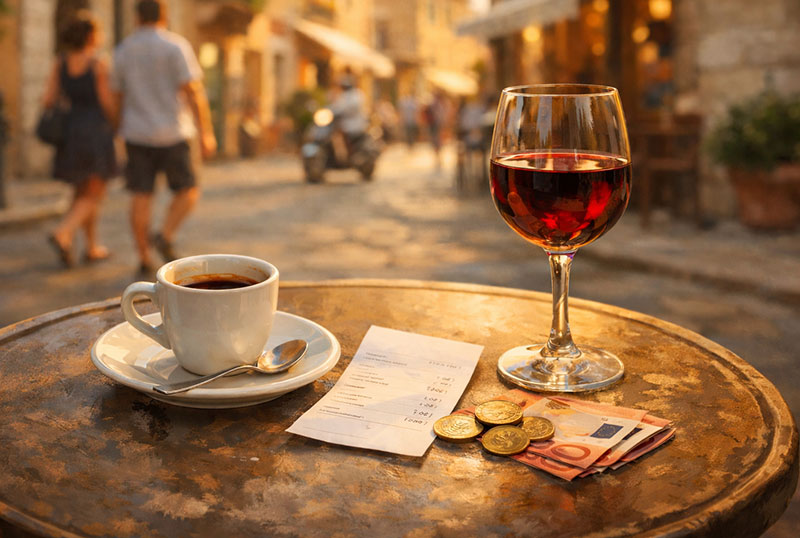
Read More

WHERE TO STAY

Best Neighborhoods to Stay

Compare smart home bases so you can choose convenience, character, or quieter nights.
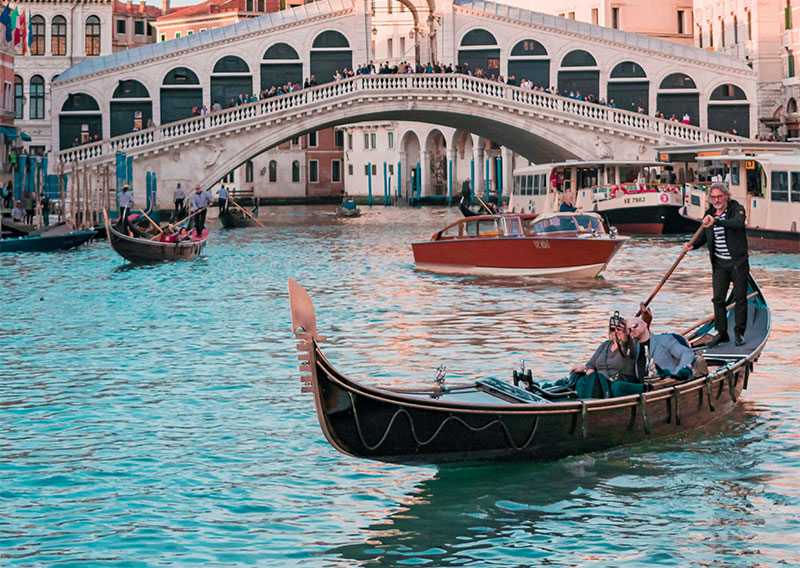
Read More

FOOD CULTURE

Eat Like a Local in Italy

Learn the dishes, timing, and dining habits that help meals feel more local and less like tourist autopilot.
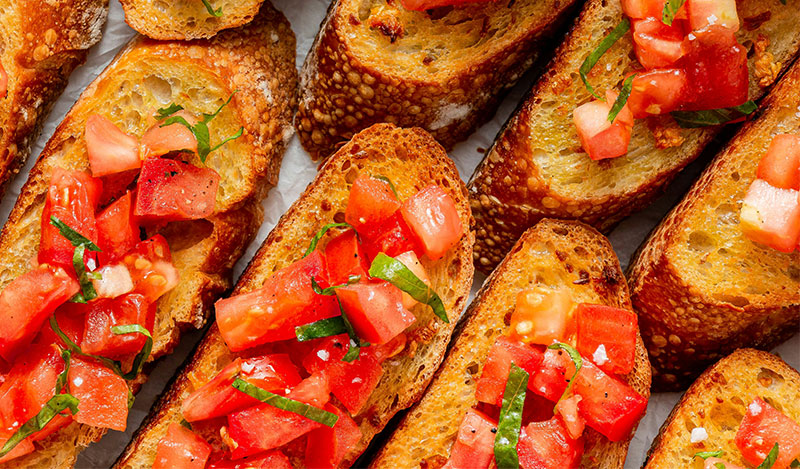
Read More

BUDGET BASICS

Italy Trip Cost Breakdown

See what a trip to Italy can really cost once you factor in transport, meals, hotels, and daily spending.

Read More

TABLE RULES

How Italians Actually Eat

Understand meal timing, ordering rhythm, and the small habits that shape daily eating.

Read More

COASTAL CLASSIC

Cinque Terre Guide

Plan a visit around hiking, village hopping, and the reasons this stretch of coast still feels iconic.

Read More

Frequently Asked Questions

How many days do I need for a first Italy trip?

Seven to ten days is enough for a strong first trip if you keep it to two or three major stops. Two weeks is ideal if you want to add a slower region like the coast, countryside, or mountains.

Usually no for the classic city route. Trains are the best default for Rome, Florence, Venice, Milan, and Naples. Rent a car only when it adds real freedom in places like Tuscany countryside, Sicily, Puglia, or the Dolomites.

For major high-speed routes, yes. Earlier booking usually means better prices and more options. Regional trains are often easier to keep flexible.

Yes in most major tourist areas, hotels, and restaurants. That said, a basic “Buongiorno” and “Grazie” goes a long way and usually improves the interaction immediately.

Trying to do too much. Too many bases, too many timed attractions, and too much transit kills the rhythm that makes Italy feel special in the first place.