
Two Weeks in France: Champagne, Chamonix & Paris (Real Trip Report)

Home » Destinations » Page 11

By Corey Gasman

From the Editor:

This was not a solo backpacking trip. We went to France for a good friend’s birthday, which meant a different style of travel: a group chateau base in Champagne, a quick detour that turned into a full-blown food poisoning disaster in Burgundy, a recovery reset in the French Alps, and then a proper Paris stretch in Le Marais to finish.

If you are planning a two-week France trip and want the honest version, this is it. What worked, what surprised us, what cost more than expected, and the small decisions that made the whole trip smoother.

Route Overview

Route: MSP to Paris to Champagne (4 nights) to Burgundy (2 nights) to Chamonix (3 nights) to Paris (5 nights).

Context:

This is a France side story, not the full planning hub. If you want the fundamentals, start here: France Travel Guide 2026

Quick Navigation

TLGA Rule: For group trips in wine regions, remove the driver stress from the equation. It changes the whole vibe. You taste slower, schedule better, and nobody is quietly doing DUI math after the second stop.

Before you book anything

Start here: France Travel Guide 2026 (logistics planning)
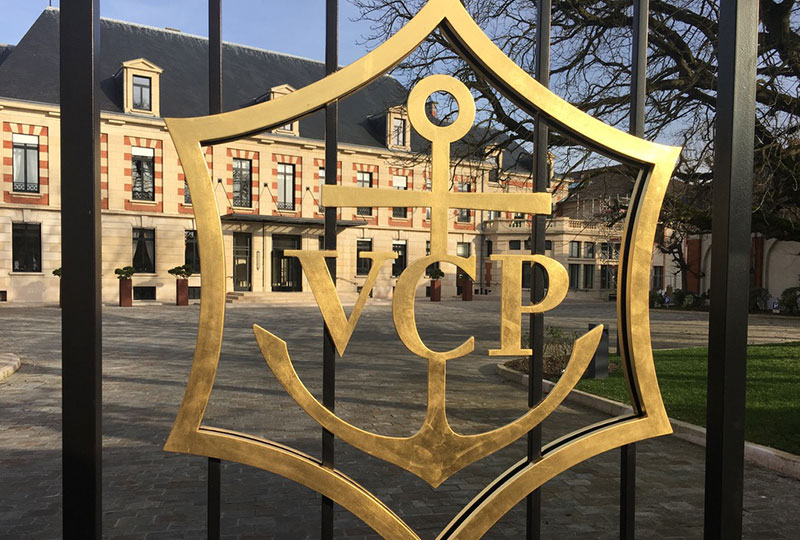
the closed Veuve Clicquot headquarters in Reims, France, during a January visit to the Champagne region.

Veuve Clicquot in January. For someone who loves Champagne, this felt like showing up to the Willy Wonka factory only to find the gates locked. Seasonal closures are common in winter, and while it stings, it is also part of traveling Champagne the quiet, off-season way. (Photo by Corey Gasman)


The Plan: Two Weeks, One Sprinter Van, Zero Stress (Mostly)

We flew direct from Minneapolis to Paris, but instead of staying in the city, we immediately headed east to Champagne. For the group portion, we made one decision that I would repeat every time: we hired a Mercedes Sprinter van with a driver.

If you are planning a group trip in a wine region, steal this idea: rent a van with a driver. It let us hit multiple tastings a day without worrying about France’s strict DUI enforcement, parking, timing, or who was going to be the responsible one.

Pro Tip: Put your most important timed attraction, museum, summit lift, or special meal early in the trip, not the last days. Closures and disruptions happen in France, and buffer time protects your must-dos.
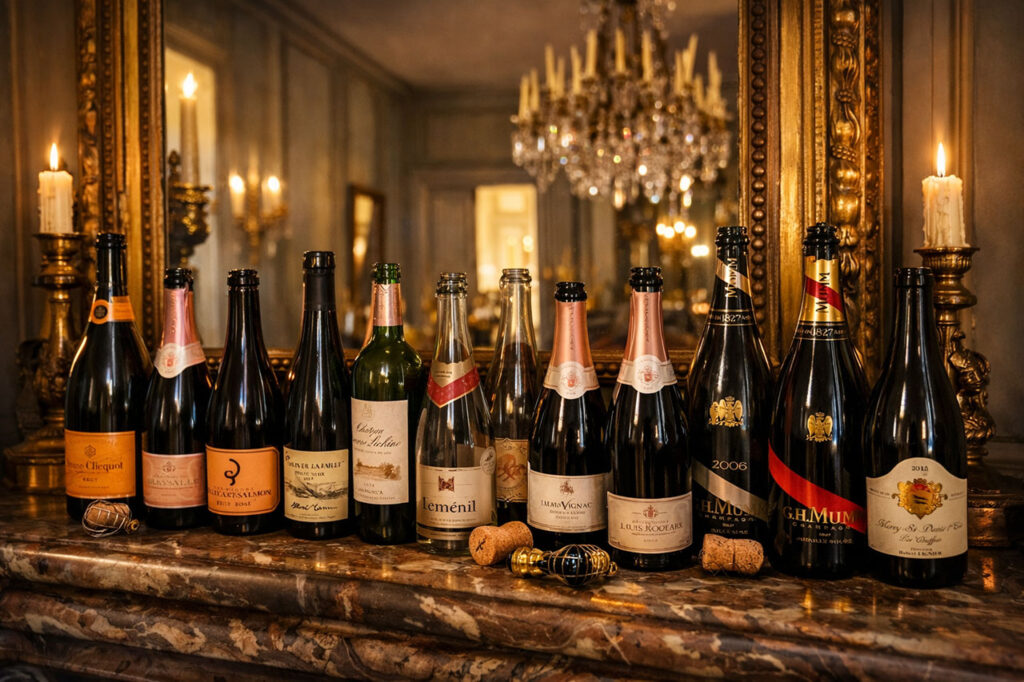
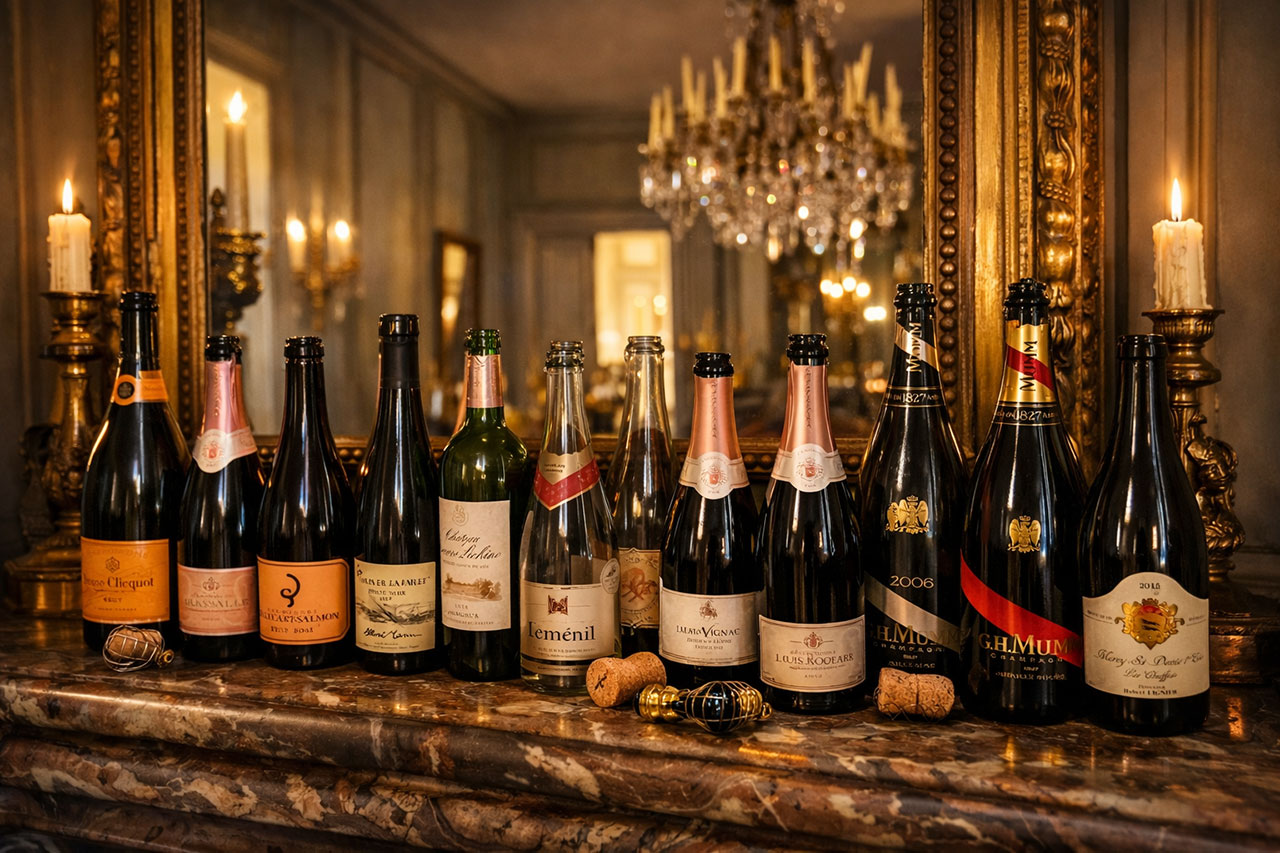
Empty Champagne bottles from house tours and a local wine shop lined up on the fireplace mantel at The Château de Mairy in the Champagne region of France.

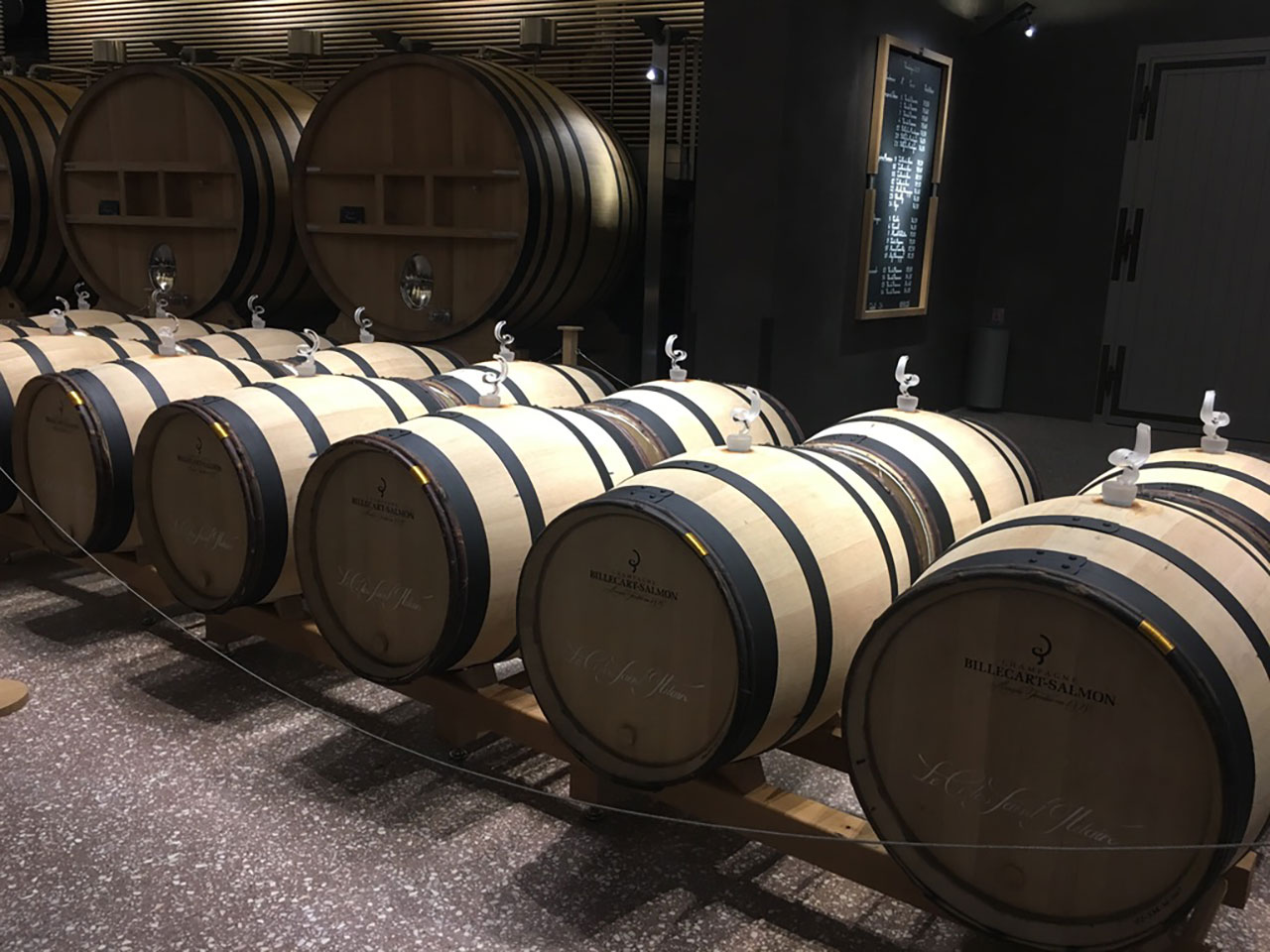
Chateau nights and Champagne days done the right way. Inside the cellars at Billecart-Salmon, seeing the barrels up close helps explain why this family-run house tastes so distinct from the corporate giants.


Part 1: Living the Chateau Life in Champagne

Base: Domaine du Château de Mairy (Mairy-sur-Marne)

We spent four nights living like royalty. The Château de Mairy is exactly what you picture when you think French countryside. It is a 17th-century historical monument set on 10 hectares of woods. Quiet, massive, and a perfect home base for exploring the region.

The Champagne Houses

We missed out on Moët & Chandon and Dom Pérignon because many big houses close in off-season (January). It ended up being a blessing. We leaned into smaller and more interesting visits without the crowds.

  • Billecart-Salmon (The Boutique Gem): The highlight. Premium, family-run, and it feels completely different than the corporate giants. You get the geeky details that actually explain the price. If you want to understand why champagne costs what it costs, start here.
  • Taittinger & Mumm: Classics. Deep history, serious caves, generous tastings, and an easy first Champagne trip win.

Local Guide Tip: We hired a personal chef for one night at the chateau and it was worth it. He made Tournedos Rossini, filet mignon topped with seared foie gras and a rich truffle sauce. Eating that in a castle was a peak life moment.

Want the planning version of this section?

I’m building a deeper guide next: Champagne Road Trip: Houses, Hotels, and Booking Strategy
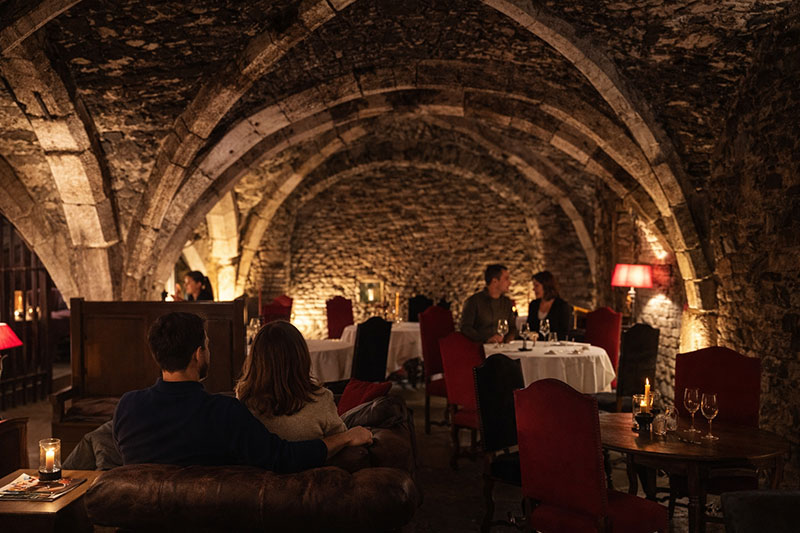
Candlelit vaulted stone wine cellar at Abbaye de Maizières hotel in Beaune, Burgundy, with guests seated at tables beneath medieval arches.

Evening in the vaulted wine cellar at Abbaye de Maizières in Beaune. A former medieval abbey transformed into a boutique hotel, where stone arches, candlelight, and Burgundy wine set the tone.


Part 2: The Burgundy Disaster

After the group portion ended, our friends flew home. Melissa and I rented a car and headed south to Burgundy. We stayed in a converted monastery. Beautiful, historic, and extremely atmospheric.

We went out for a high-end, four-course tasting menu at a 300-year-old farmhouse. The setting was perfect. The food looked amazing.

Then 3:00 AM hit.

I woke up in absolute agony. Full food poisoning nightmare, and to add insult, I threw out my back while leaning over the toilet. I was a wreck.

The worst part is that check-out in France can be very strict. The next morning, I barely crawled into the backseat of our rental car, unable to sit up straight, while Melissa drove the winding roads toward the Alps.

Pro Tip: Pack Imodium and painkillers. You think you will not need them in a first-world country until you are hours from a pharmacy on a Sunday.
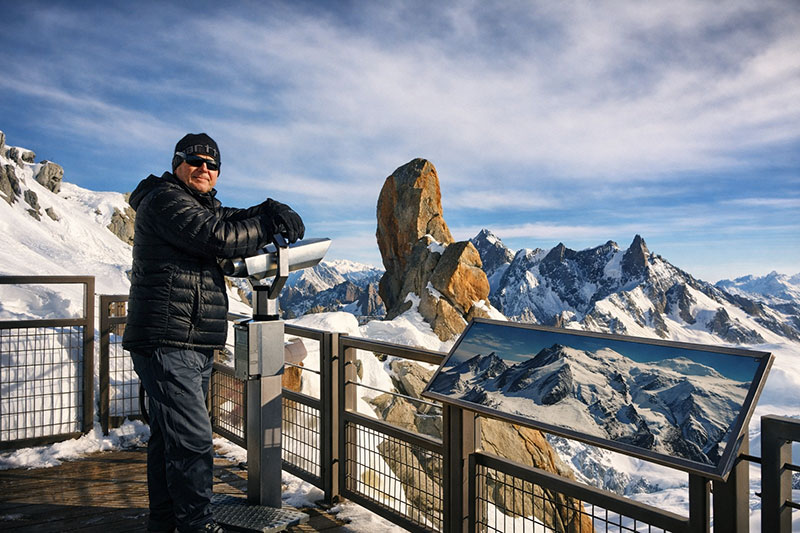
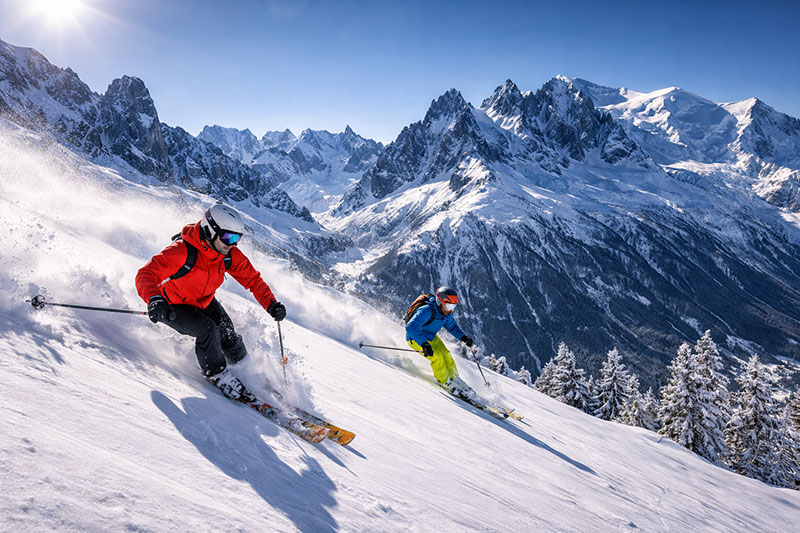
Mont Blanc country: cold, high, and worth every Euro. The Aiguille du Midi cable car whisks you up to 3,842 meters (12,605 ft) in just 20 minutes.


Part 3: Recovery in Chamonix

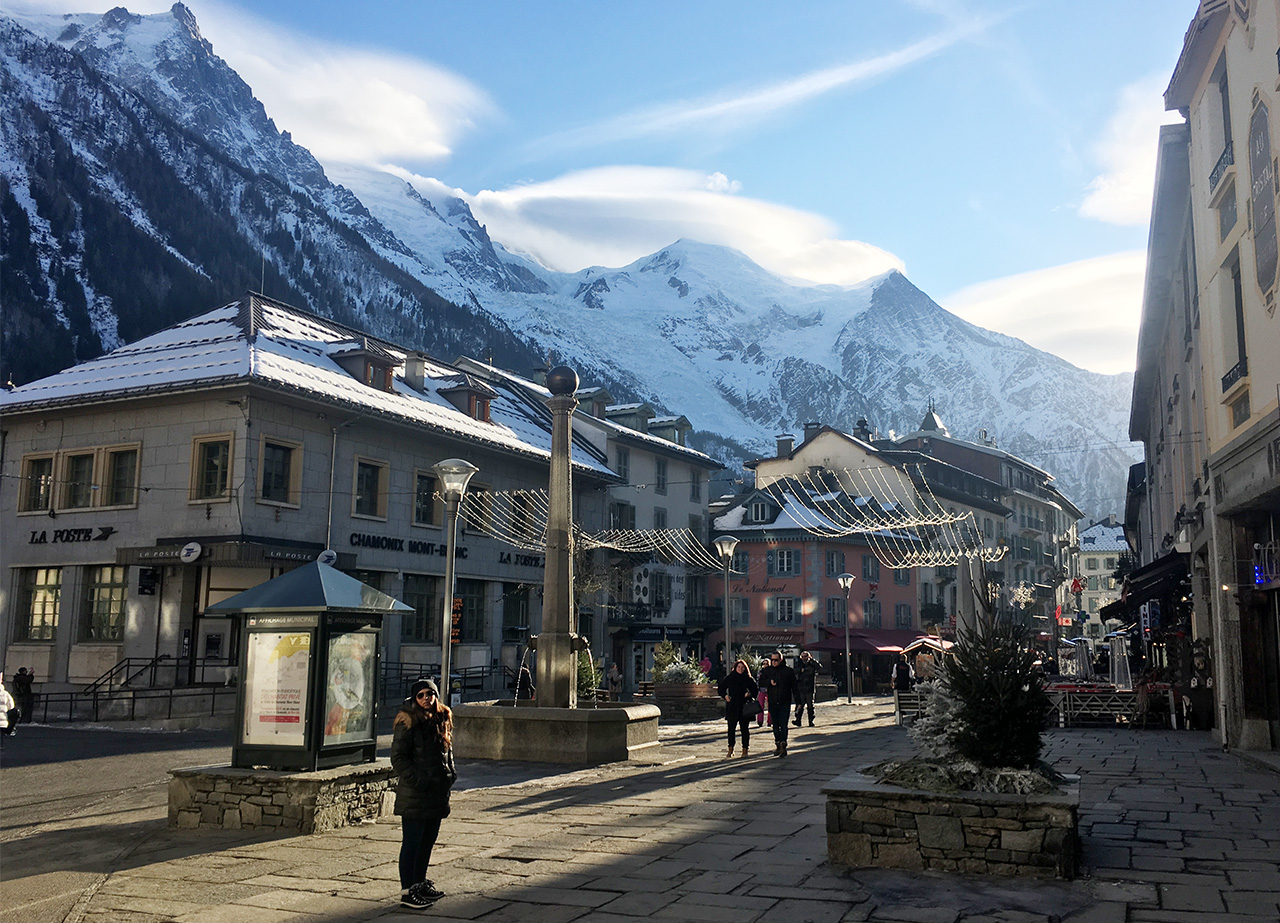
Chamonix is quintessential Europe. It feels distinct from much of France, almost more Swiss in rhythm. The food shifts from heavy sauces to fondue, raclette, and mountain cheeses that make winter make sense.

Once I finally recovered (it took a full 24 hours), we explored the town properly. It is walkable, charming, and the river through the center gives it great energy.

The Must-Do: Aiguille du Midi

We took the gondola up into Mont Blanc country. It is expensive, but you have to do it. The views are unreal. You are looking down on the roof of Europe. If the weather is clear, go early. If it is cloudy, consider shifting to a different day. This is a visibility makes the money feel justified experience.

A Proper Alpine Dinner: Raclette Done Right

One night in Chamonix, a local tipped us off to do what people actually do here in winter: slow down, sit for a long dinner, and order raclette. Not the tourist shortcut version, but the full alpine experience.

Raclette is the famous heated cheese dish of the French Alps, named from the French word “racler”, meaning to scrape. A wheel of cheese is warmed, then scraped directly onto plates over potatoes, cured meats, and pickles. It is simple, heavy, and exactly what your body wants after a cold mountain day.

The Drive Back: Tolls & Tickets

  • The tolls: About €60 one way. The roads are smooth and fast, and you pay for the privilege.
  • The surprise: Two weeks after we got back to Minneapolis, I got a letter in the mail. A €90 speeding ticket routed through the rental agency. No cop, no pull-over. Speed cameras are automated and everywhere.

Local Guide Tip: If you are in Chamonix in winter, seek out a proper raclette dinner at least once. This is not fast food and it is not light, but it is part of alpine culture. Plan it for a night when you are done exploring for the day, settle in, and let the meal take its time. This is recovery food.
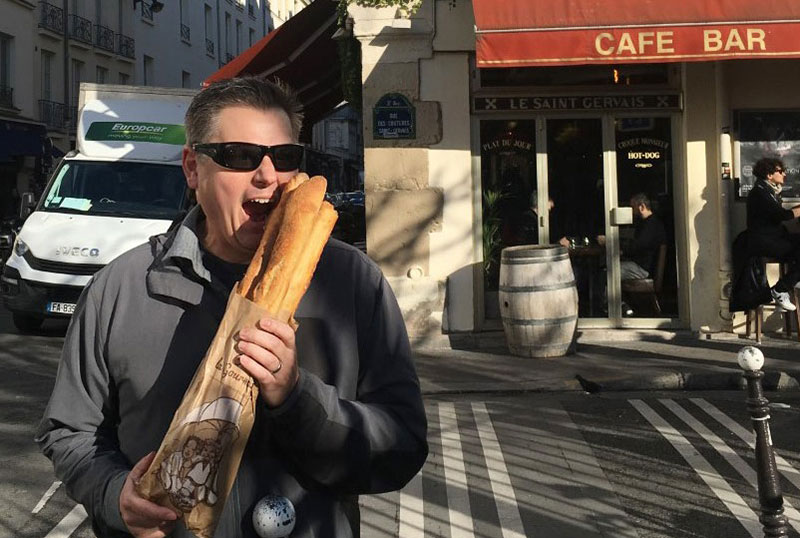
Corey Gasman eating award-winning baguettes from Tout Autour du Pain on a street corner in Le Marais, Paris.

Eating award-winning baguettes from Tout Autour du Pain in Le Marais. Proof that some of the best food moments in Paris happen standing on the sidewalk with bread that absolutely lives up to the hype.


Part 4: Paris (Le Marais Base)

I admit it: I watch a lot of House Hunters International. There is a real estate agent on that show, Adrian Leeds, who is obsessed with Le Marais. She is right.

We based ourselves in Le Marais (3rd/4th Arrondissement) and it was perfect. It feels like a real neighborhood, not a museum. Great food, easy walking, and strong transit access without feeling like you are living inside a tourist funnel.

The Highlights (and Lowlights)

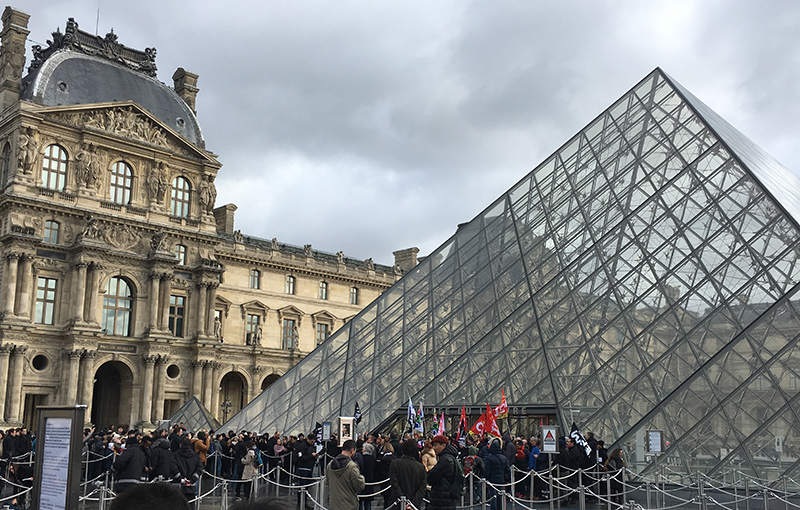
  • The strike (again): I have terrible luck with the Louvre. We had tickets. We showed up. They were on strike. I even pleaded with the guards, but “Non” means “Non.”
  • The pivot: We went to the Musée d’Orsay instead. Honestly, I might like it better. It is inside an old Beaux-Arts railway station and the Impressionist collection is stunning.
  • Eiffel Tower: My wife had never been, so we went to the top. Tourist trap energy, unbeatable views.
  • Dinner with locals: A friend’s brother lives in Paris, so we met up for a traditional dinner. Connecting with locals always unlocks a side of the menu you would not choose otherwise.

Local Guide Tip: Eat Your Way Through Le Marais

If you want a fast, high-quality way to understand French food and the neighborhood you are walking through, book a food tour early in your trip. We did the Secret Food Tours: Paris – Le Marais and it was one of the best decisions we made in Paris.

You learn why French food works the way it does, discover small shops you would never notice on your own, and get a dose of neighborhood history while you are actively eating. I love food tours because they combine culture, history, and logistics into one experience instead of treating them separately.

Food tours cost more than standard walking tours, but I think they are worth it. You get more than a meal’s worth of food, usually sample wine or other drinks, and walk away with context that makes every meal after that better.

Planning your own Paris stay?

Read my guide on Where to Stay in Paris to see why I chose Le Marais.
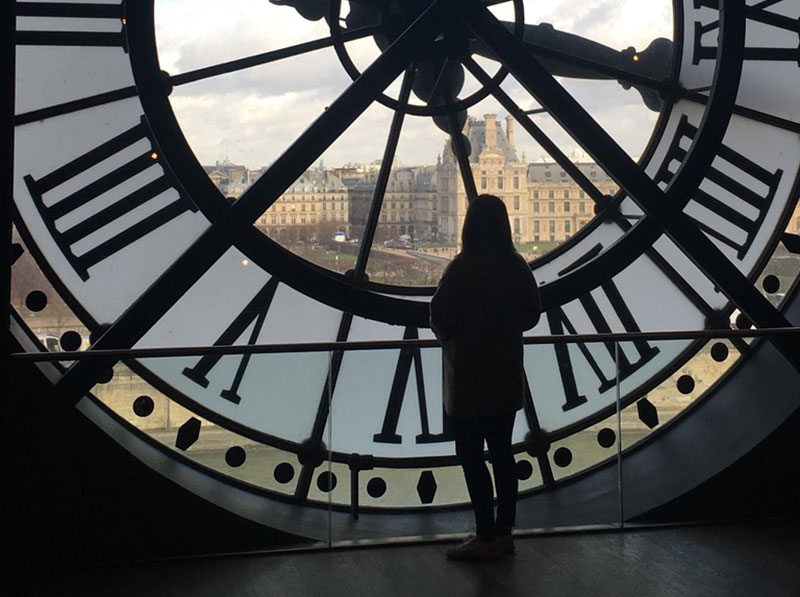
Le Marais, late starts, and a museum strike that humbled me again. When the Louvre is closed due to strikes, the Musée d’Orsay is not just a backup plan. In quiet season, we grabbed tickets online minutes before walking right in to see the Impressionist masters. (Photo by Corey Gasman)


Lessons Learned (So You Travel Smoother Than We Did)

  • A winter trip is underrated: fewer crowds, easier reservations, quieter cities. Just expect some closures and plan around them.
  • Drivers are worth it in wine regions: it is safer, calmer, and the group enjoys the trip more.
  • France enforces speed with cameras: tickets can arrive weeks later through the rental company.
  • Always have a museum backup: strikes happen. Orsay saved our day.
  • Pack basic meds: France is not immune to food poisoning, and Sundays can make pharmacy access annoying.

Pro Tip: End your trip in Paris. It makes the flight home easier, and it eliminates the remote village to international airport stress on departure day.

More France Links

Keep exploring France with planning guides, wine region ideas, and city-specific follow-up reads.

START HERE

France Travel Guide 2026

The broader planning guide if you want routes, logistics, and how different parts of France fit together.

Read More
WINE COUNTRY

Champagne Road Trip Guide

A deeper planning version of the Champagne leg with houses, hotels, and booking strategy.

Read More

ALPINE RESET

Chamonix Travel Guide

Mountain logistics, winter rhythm, and what to prioritize if you base yourself in Chamonix.

Read More

BURGUNDY FOOD

Burgundy Wine and Food Guide

The prettier, more practical version of Burgundy if you want the guide and not the disaster story.

Read More

PARIS STAY

Where to Stay in Paris

See why Le Marais worked so well and how to think about your own Paris home base.

Read More

PARIS CULTURE

Paris Museum Strategy

How to handle strike disruptions, backup museum plans, and where food tours fit into the trip.

Read More

Frequently Asked Questions

Do I need to book Champagne houses in advance?

Yes. If you visit in the off-season, many of the big houses (like Moët & Chandon) close for renovations or post-harvest breaks. Having a backup list of smaller boutique houses is highly recommended.

For regions like Burgundy or driving down to Chamonix, renting a car gives you maximum flexibility. However, be aware of automated speed cameras; you might get a ticket in the mail weeks after returning home.

Strikes are a common part of French culture. Always have a backup plan. The Musée d’Orsay is an excellent pivot, offering a stunning Impressionist collection inside a historic railway station.
France Travel Guide

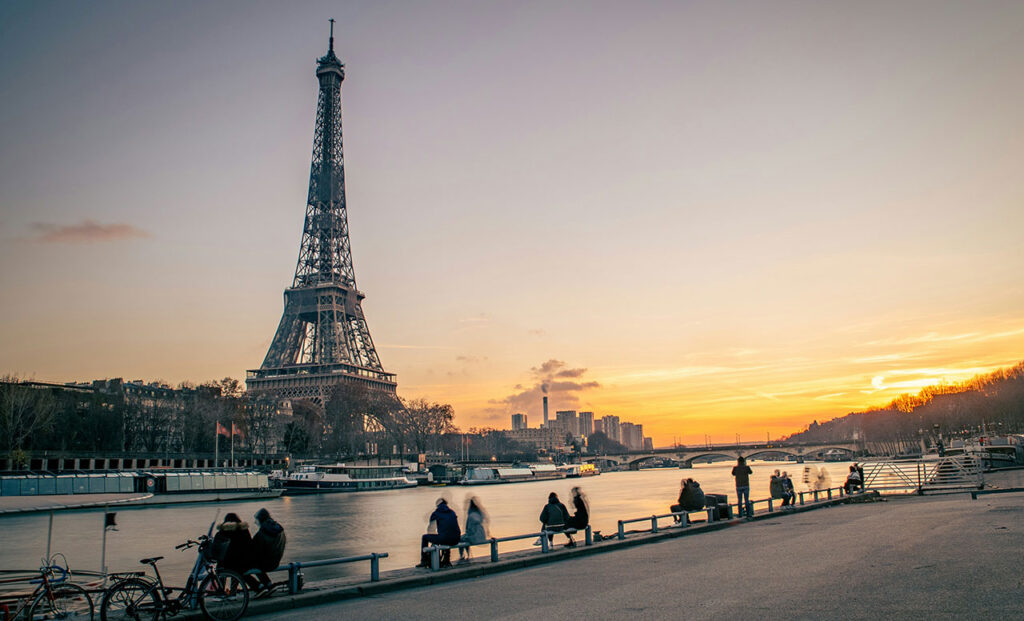
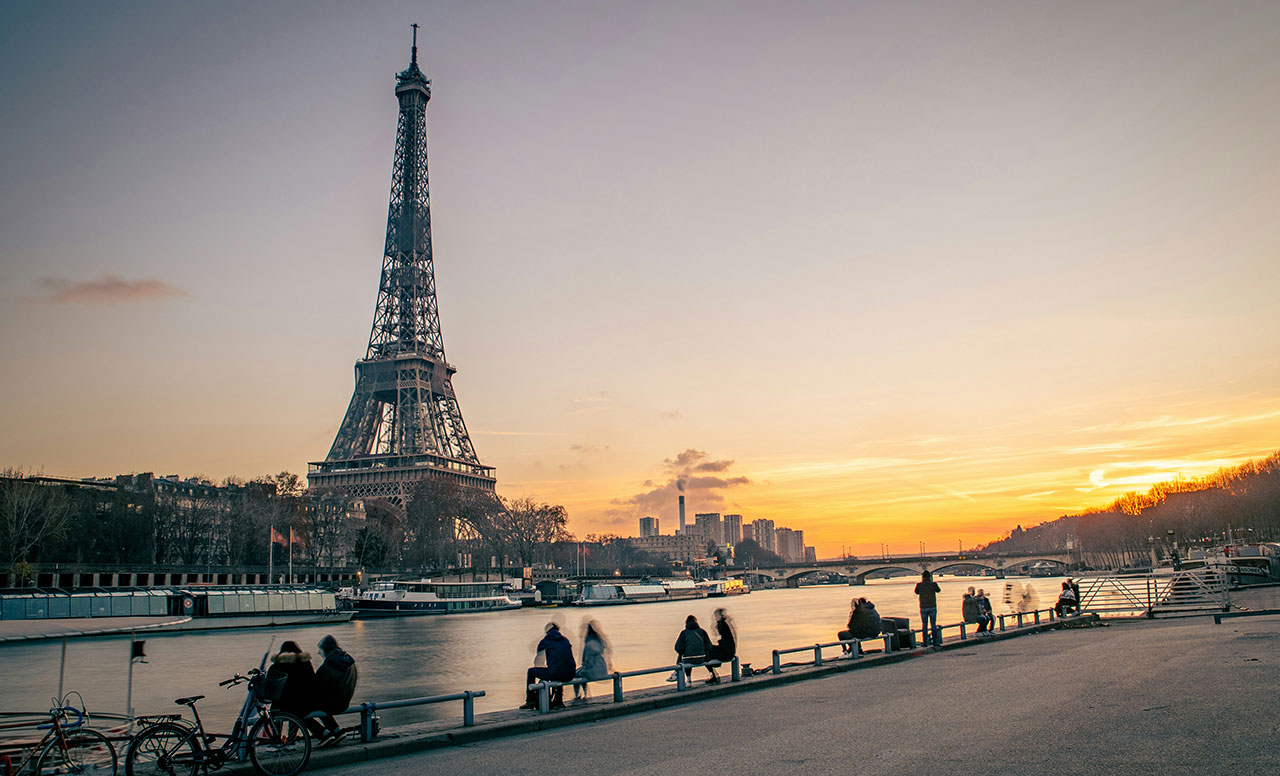
People walking along the Seine riverbank at sunset with the Eiffel Tower in the distance.
Home » Destinations » Page 11

Last updated: March 2026 by Corey Gasman

From the Editor:

France rewards travelers who are willing to slow down. The biggest mistake first-time visitors make is trying to treat the country like a checklist, racing from the Louvre to a cramped train down to the Riviera all in one week. France is not built for speed travel. It is built for rhythm. It requires you to shift your mindset. Sitting at a corner brasserie with a glass of wine for two hours is not wasting time; it is the main event.

Melissa and I recently spent two weeks crossing the country in January, and it completely reinforced this idea. We started with a 40th birthday in the Champagne region, splitting a massive 17th-century château with friends and hiring a local chef. From there, we moved down to the deep winter of the French Alps in Chamonix, before finishing with five nights living out of an apartment in the Le Marais neighborhood of Paris.

We learned that the country completely changes depending on when and where you go. The quiet, authentic local life we found in the winter is vastly different from the crowded summer rush. You realize quickly that one strong regional base is always better than three rushed stops.

This guide is built to help you skip tourist-trap planning, choose the right regions, understand the cultural pace, and build a trip that actually feels like a vacation. I will cover the logistics you need to know, from high-speed trains to booking strategies, so you can spend less time navigating and more time enjoying the country.

The 2026 ETIAS Requirement:

Starting in late 2026, U.S. travelers will need to complete an ETIAS authorization before entering France. It is quick and inexpensive, but required.

This is not a traditional visa, but an electronic pre-screening tied to your passport. Do not skip this in your pre-trip planning once it officially goes live.

TLGA Rule: If this is your first France trip, do not try to see everything in one go. Pick one strong base in Paris and add one regional hub. You will eat better, move less, and remember more.

Only heading to Paris?

Start here: Paris Travel Hub

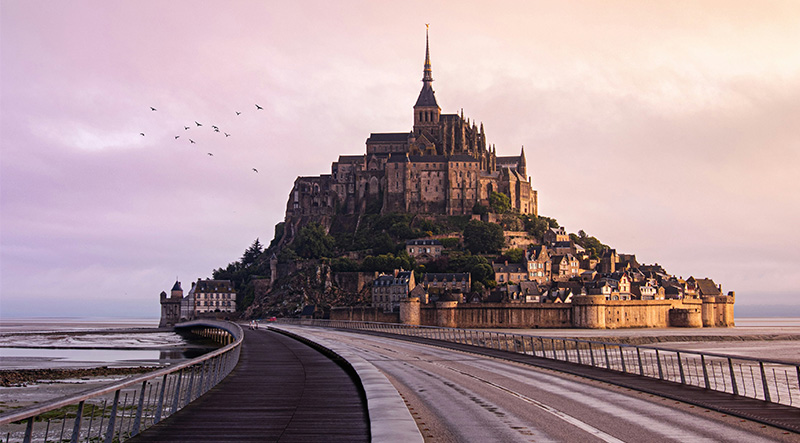
Wide shot of the historic island commune of Le Mont-Saint-Michel in Normandy, France, featuring the medieval abbey rising above the tidal flats under a soft sky.

Le Mont-Saint-Michel rising from the horizon, a medieval masterpiece that remains one of the most iconic sights in northern France.


Start Here: What France Travel Feels Like in 2026

In 2026, reservations are more important than ever in Paris and major destinations. Restaurants fill early, popular attractions require timed tickets, and smaller towns still close for lunch, Sundays, or entire weeks.

The biggest mistake first-time visitors make is trying to treat France like a checklist. The country rewards travelers who slow down and build their days around experience, not efficiency.

Local Guide Tip: If something feels slower than you expect, that is not a problem. That is France working exactly as intended.

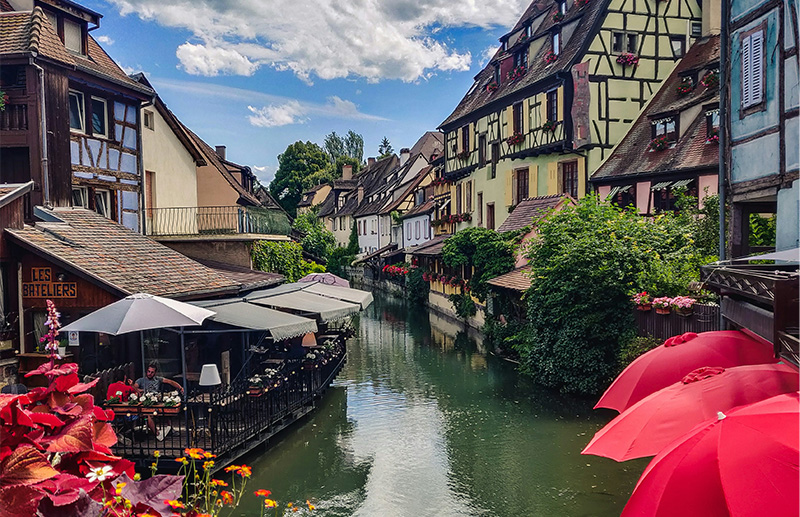
Colmar’s “Little Venice” where the pastel-colored timbered houses and quiet canals create one of the most romantic atmospheres in the Alsace region.


Who This France Guide Is For

This guide is built for travelers who want more than a checklist. It is for people who want the trip to feel smooth, intentional, and actually enjoyable.

  • First-time visitors who want to avoid rookie mistakes
  • Couples and food-focused travelers who care about meals and atmosphere
  • Slow travelers who prefer quality over quantity
  • Longer stays looking for livable neighborhoods instead of transit hubs

Local Guide Tip: If you try to rush France, it pushes back. If you slow down, it opens up.

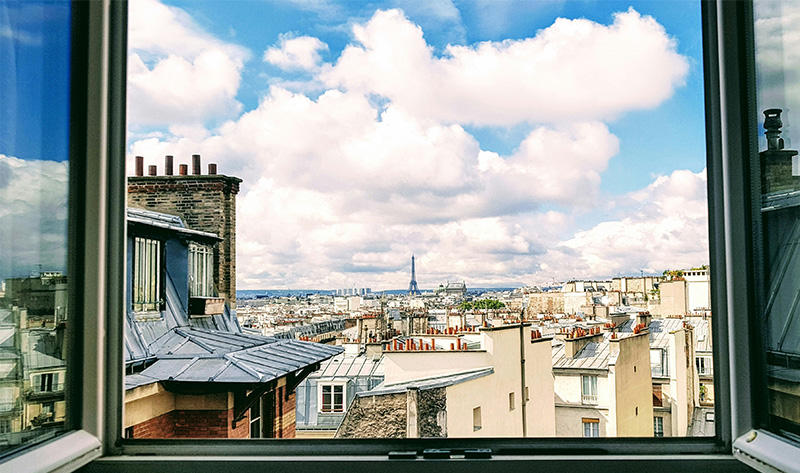
Finding the right neighborhood like this view over the Le Marais rooftops is the key to balancing Parisian charm with a liveable base.


How to Plan Your France Trip

If you are overwhelmed, use this simple framework. France gets better when you limit movement and build around strong bases.

7 Days: Stay in Paris

Do not leave. Pick a great neighborhood, learn the rhythm, and experience the city properly.

10 Days: Paris + One Region

This is the sweet spot. Combine Paris with one region like Champagne, Burgundy, or the Alps.

14 Days: Paris + Two Regions

This is the full experience. On my last trip, we did Champagne, Chamonix, and Paris. It felt complete without being rushed.

Pro Tip: Think in bases, not stops. Fewer hotels equals a better trip.

If you want a full step-by-step breakdown, read the complete trip planning guide.

France vs Italy vs Spain: Which One Should You Choose?

If you are planning your first Europe trip, this is usually the real question. All three are incredible, but they deliver very different experiences.

Category France Italy Spain
Overall Feel Refined, structured, slower rhythm Historic, emotional, more chaotic Social, energetic, relaxed
Food Style Technique-driven, subtle, ingredient-focused Bold, regional, simple but powerful Tapas, shareable plates, late-night culture
Travel Pace Slow and intentional Faster-moving, less orderly Flexible, later starts, later nights
Best For Food, wine, atmosphere, lifestyle travel History, landmarks, dramatic first trips Energy, nightlife, social trips

If this is your first trip to Europe, Italy often delivers the easiest emotional wow. Spain is usually the loosest and most fun. France is the most rewarding over time. It is less about instant impact and more about how the trip feels day to day.

Local Guide Tip: If you value food, atmosphere, and the feeling of a place more than just checking off landmarks, France will probably be your favorite.

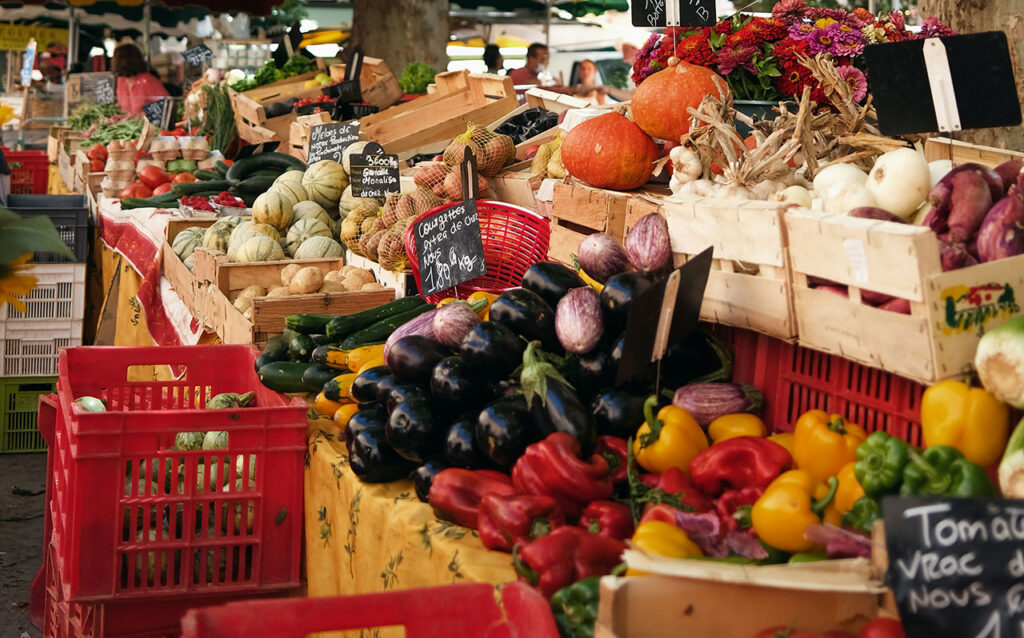
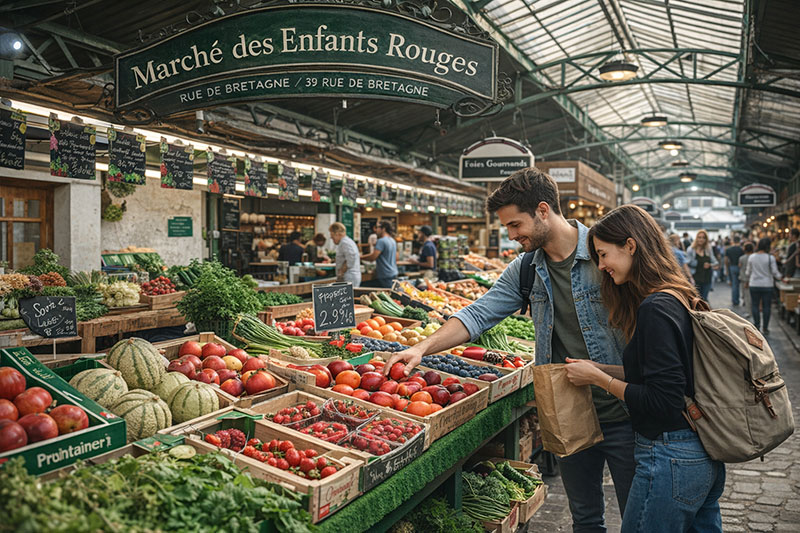
resh produce stall at an outdoor market in France, featuring colorful tomatoes, eggplants, and baskets.

Simple ingredients, serious technique, and food that tastes bigger than the shopping bag. This is the foundation of daily French life.


Finding the Local Rhythm

France operates on a different system than the United States. Service is about privacy and respect rather than speed and enthusiasm. You have to decide early on if you are going to fight that system or lean into it.

Reservations matter. Lunch still matters. Sundays still matter. Smaller towns still close in ways that can surprise first-timers.

If something feels slower than you expect, that usually means you are finally seeing France the way it actually works.

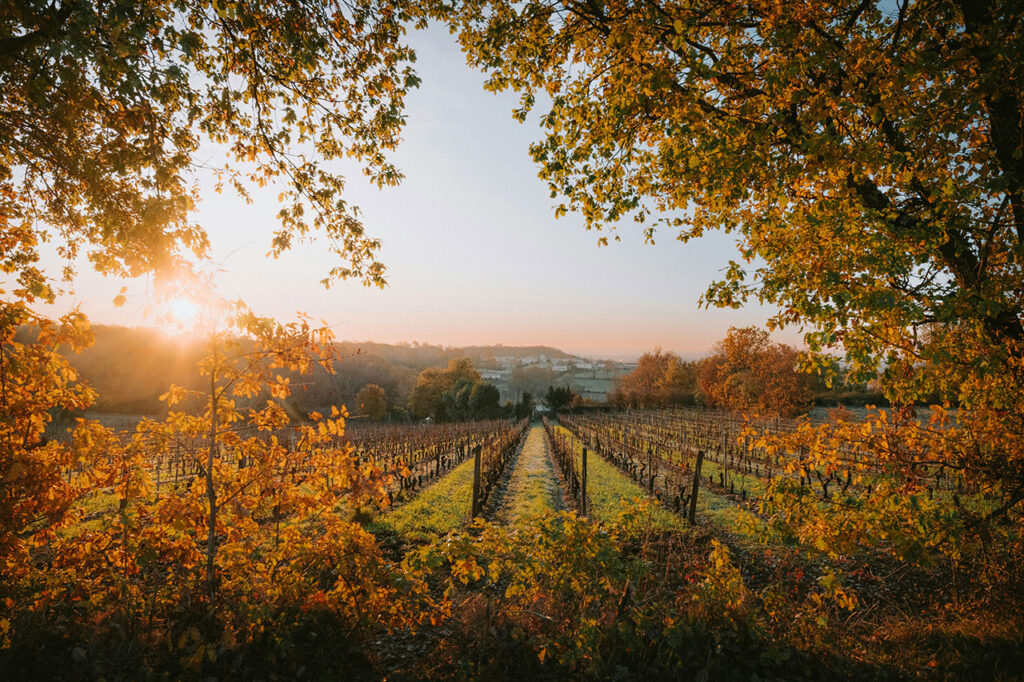
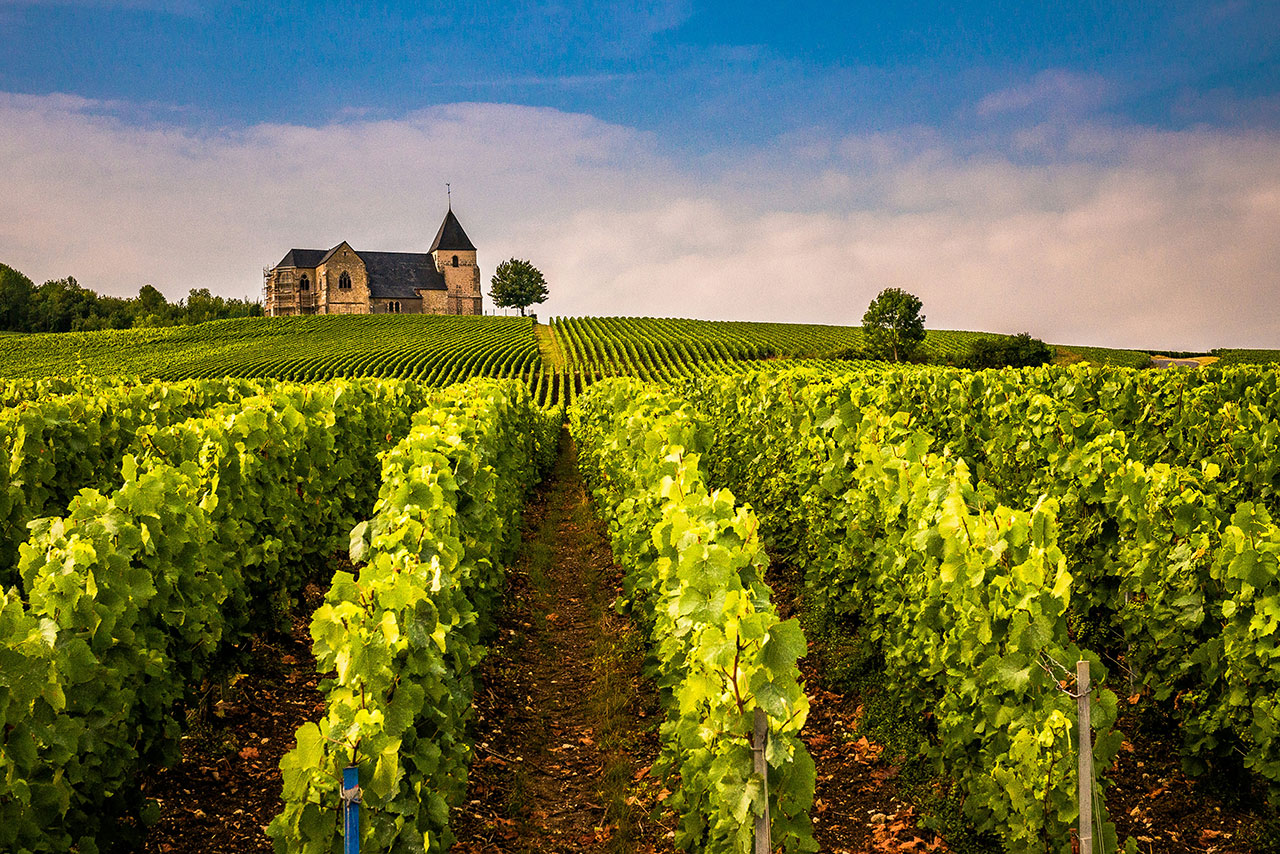
Panoramic view of Burgundy vineyards with golden autumn leaves glowing under a vibrant sunset sky

Embrace the harvest season in Burgundy where the vineyards turn to gold and the cooler air makes for a much more intimate tasting experience.


When to Visit France

France rewards you differently depending on when you show up. You have to decide whether you want the energy of the crowds or the country to yourself.

My recent trip in January was a total surprise. The weather was crisp but manageable. We did not fight for reservations or wait in massive lines, which meant we saw a quieter and more authentic side of local life that completely disappears during the summer rush.

Best overall months

  • May and June: Long daylight, great weather, and lively cities before peak crowds.
  • September and early October: Fewer tourists, excellent food and wine, and a slower rhythm.

Peak and quiet seasons

  • July and August: Busy, hot, and expensive. Paris fills with tourists, and many locals leave.
  • November through March: Lower prices, fewer crowds, and a quieter version of the country. Note that major champagne houses like Moët & Chandon often close their tours completely in January.

Local Guide Tip: If you travel in August, be warned: many authentic shops and family-run restaurants close for their own vacations. You can easily end up surrounded by only the tourist-trap version of the city.

Travelers with luggage waiting on a platform next to a sleek white and red TGV high-speed train inside a historic Paris train station.
The TGV network shrinks the country. You can be in Bordeaux or Lyon before you would even make it through airport security for a domestic U.S. flight.


Getting Around France: Trains vs Cars

France is one of the easiest countries in Europe to navigate. The TGV high-speed rail network connects Paris with most major regions quickly and comfortably. For city-to-city travel, trains are the smartest default.

If you plan to explore regions like Champagne, Burgundy, or the Alps, a rental car becomes a necessity. Driving out of Charles de Gaulle after a long flight can be overwhelming. Take it slow.

More importantly, automated speed cameras are absolutely everywhere on the highways. They do not flash. There is no warning. You will simply receive a ticket in the mail from your rental company weeks after you get home. Drive exactly the speed limit.

Local Guide Tip: If you are traveling with a group in a wine region, do not designate a driver. Hire a Mercedes Sprinter van for the day. We did this in Champagne to hit Billecart-Salmon and Taittinger, and it removed all the stress of navigating rural roads and strict DUI enforcement.

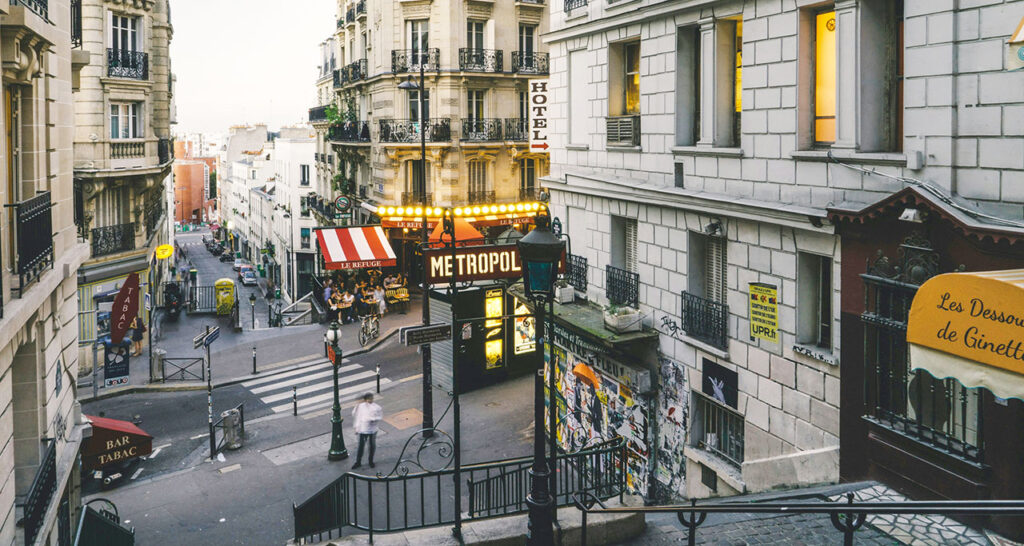
Paris Metro station sign, marking a convenient transit connection in a city neighborhood.

The Metro makes the whole city accessible, but choosing the right neighborhood makes Paris feel livable instead of hectic.


Where to Stay in France

As a digital nomad, I usually look for three things: reliable Wi-Fi, a workspace, and a coffee shop within three minutes of the front door. In France, you have to balance that practicality with charm.

In Paris, I stick to apartments or boutique hotels in neighborhoods like Le Marais so I can live there, not just sleep there. But the countryside is where you should break the rules. On our last trip with friends, we split the cost of a 17th-century château. It was cheaper per person than a standard hotel, and waking up in a literal castle beats a chain hotel any day.

Pro Tip: European hotel rooms are small. If you are bringing luggage or camera gear, check the square footage before you book.

Best Regions in France by Travel Style

Do not pick destinations randomly. Choose based on how you want the trip to feel.

  • First Trip (Paris + Champagne or Loire Valley): This combination offers the easiest logistics. High-speed trains make these regions a perfect, low-stress contrast to the energy of the city.
  • Food and Wine (Burgundy, Lyon, Bordeaux): The undisputed culinary heavyweights. Go here for serious vineyard tours, world-class tasting menus, and the traditional roots of French gastronomy.
  • Mountains and Scenery (Chamonix, Annecy, the French Alps): Built for massive alpine landscapes and outdoor days. You do not need to be an extreme athlete to ride the cable cars into the peaks and enjoy the views.
  • Coastal Energy (Nice and the French Riviera): Choose this for Mediterranean sun, crowded pebble beaches, and a fast-paced, glamorous atmosphere.
  • Slow Village Life (Provence countryside): The ultimate slow travel destination. Rent a car, visit the morning markets, and accept that your biggest daily decision is where to eat lunch.

Local Guide Tip: One great region is always better than three rushed ones.

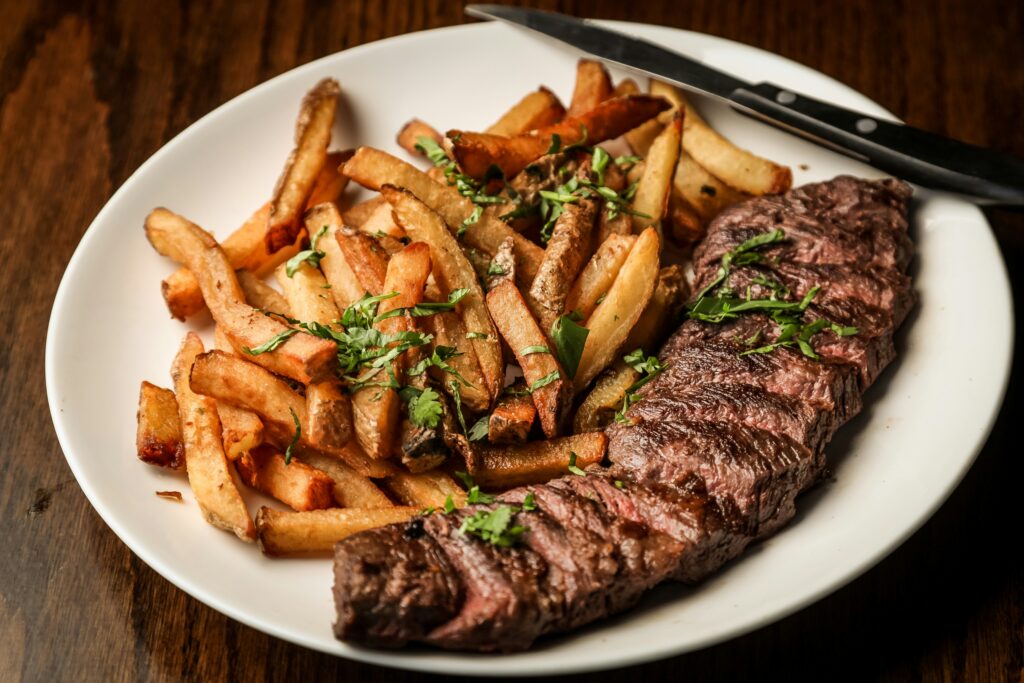
Classic French steak frites served with herb butter and a side of golden french fries.

Bistro lunches and bakeries are where France quietly shines. Steak frites remains one of the most dependable classics in the country.


Food and Wine Basics

You do not need Michelin stars to eat well in France. Some of the best meals come from places that look unremarkable from the outside.

Lunch set menus offer the best value. Look for the words du jour or formule on the chalkboard. Bakeries make breakfast easy and affordable. Dinner is where you slow down. If you want one big destination meal, book it, then keep the rest of the trip simple and local.

When it comes to wine, it is not about labels. It is about place. Ordering by the glass or carafe in a restaurant is completely normal. You do not need to be a sommelier to drink well here. If you like Sauvignon Blanc, order a Sancerre. If you like Chardonnay, order a Chablis.

The Tipping Rule: Service is legally included in the price of your food in France (service compris). You do not need to calculate a 20% tip. If the service is exceptional, you can leave a few coins or round up the bill, but it is entirely acceptable to simply pay the total on the receipt.

France is not just cafés and museums. Beyond Paris, the country is built for big outdoor days, scenic routes, and landscapes that do not feel real.


Adventures Beyond Paris

If your version of travel includes early mornings, sore legs, and a little adrenaline, build your itinerary around these hubs. They pair perfectly with long lunches and slow towns.

Chamonix and the French Alps

You do not need to be an extreme athlete to have a huge Chamonix day. Take the cable car to the top of Mont Blanc via the Aiguille du Midi. It brings you to a staggering altitude with a glass skywalk that extends out over a sheer drop. It is breathtaking and requires zero hiking.

Burgundy Wine Country

Pick a base near Beaune and explore the vineyard roads by bike at an easy pace. You can stop for tastings and village lunches along the way. If you want a bucket-list angle, book a sunrise hot air balloon ride when the light is soft.

Kayaking the Gorges du Verdon

Known as the Grand Canyon of Europe, Verdon delivers massive limestone walls and incredibly blue water. Go early for calmer water and fewer crowds, then finish with a slow Provence-style meal.

Local Guide Tip: Always have a backup plan for outdoor days. Mountain weather shifts fast, and cable cars can close due to high winds.

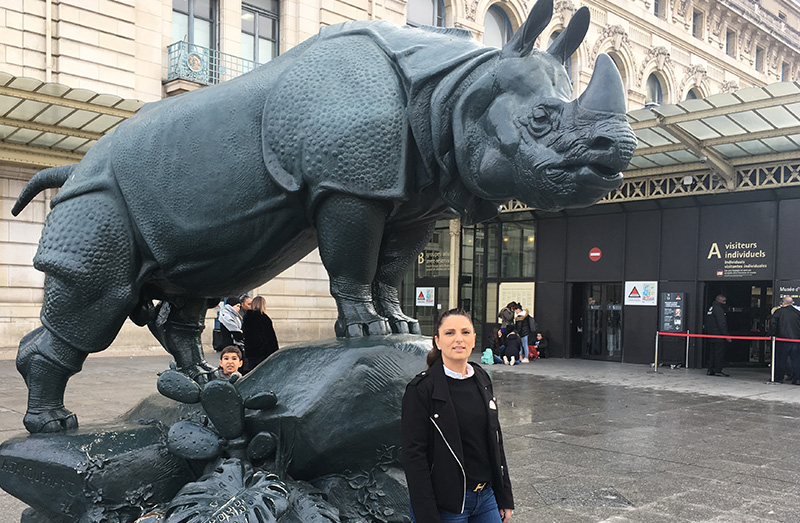
A large bronze rhinoceros sculpture, "Rhinocéros" by Henri Alfred Jacquemart, stands on a stone pedestal in the crowded public square outside the Musée d’Orsay in Paris.

The bronze rhinoceros outside the Musée d’Orsay is a reminder that even world-class art experiences need timed tickets and some planning.


Booking Strategy: What You Should Reserve

My backpacking roots taught me to travel light and never book ahead, but that does not work for France anymore if you care about the big-ticket experiences. I now treat my itinerary like a skeleton: lock in the must-haves, then leave the rest of the day open to wander.

  • Major Museums: The Louvre and Musée d’Orsay need timed tickets well in advance.
  • Dining: Popular Paris bistros fill up. If you have a specific food spot in mind, reserve it.
  • Champagne Houses: You usually need an appointment. Do not assume you can just show up.

Pro Tip: Book the moments you would actually be disappointed to miss. Leave everything else flexible.

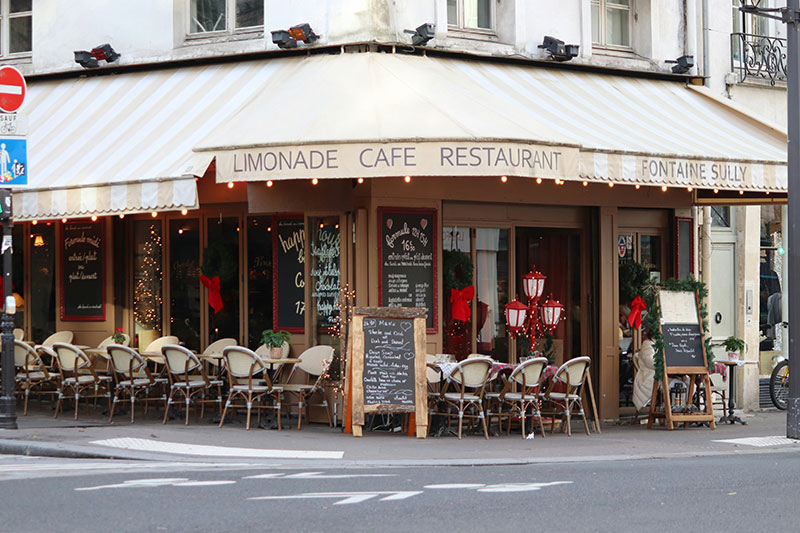
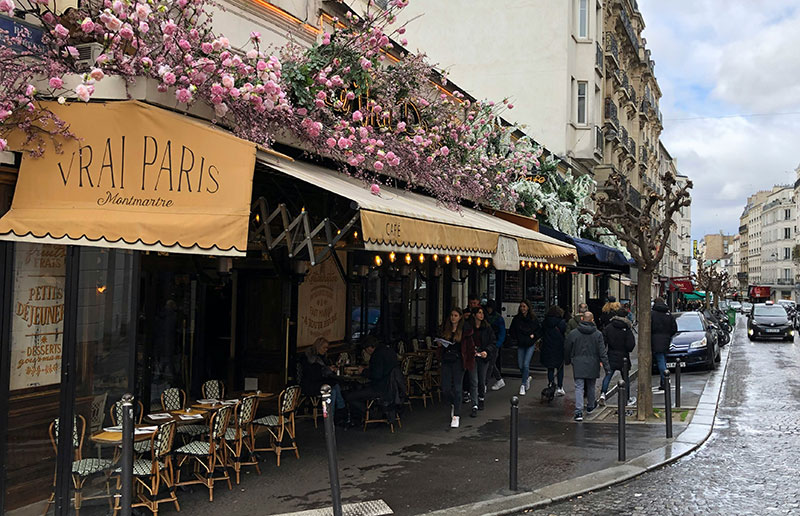
Classic Parisian café terrace scene representing smart travel planning and budgeting in France.

France is predictable if you plan smart. Good logistics give you the freedom to relax into the café culture instead of fighting your itinerary.


Costs and Budgeting

The biggest misconception Americans have is that all of France is expensive. No, Paris is expensive. The rest of France can be surprisingly reasonable if you spend on the right things.

Expense Category Regional France Paris & Riviera
Boutique Hotel (per night) $120 to $180 $250 to $400+
Lunch $15 to $22 $22 to $35
Dinner for Two $60 to $90 $100 to $160+
House Wine $4 to $7 $8 to $14
Transportation Rental car or regional train Metro, train, and walking

Pro Tip: Your biggest budget lever is where you sleep. A better location reduces taxis, reduces fatigue, and makes the whole trip feel smoother.

A close-up of an iPhone screen showing the WhatsApp app icon among other messaging folders, held by a traveler in a French setting.

WhatsApp is the unofficial communication standard in France for everything from confirming dinner reservations to receiving check-in details from your host.


Connectivity and Apps

Navigating France is much easier when you have a reliable data connection. You no longer need to hunt for a physical SIM card at the airport.

eSIMs: Airalo or Holafly

If your phone is unlocked and eSIM compatible, download an eSIM profile before your trip. Airalo is excellent if you need a specific data amount. Holafly is the better choice if you want an unlimited data plan and do not want to monitor your usage while navigating cities.

WhatsApp is Essential

In France, almost all business communication happens on WhatsApp. Your Airbnb host will likely ask to send you check-in instructions there. Boutique tour guides, private drivers, and restaurants handling reservations all use it as their primary messaging tool. Download the app and set up your account while you still have your U.S. phone number active before you leave home.

Strikes and closures are part of French life. Stay flexible and always give your must-see experiences some buffer time.


Strikes and Closures

Strikes and closures are part of French life. Museums, transit, and attractions can shut down unexpectedly.

Book refundable tickets when possible and avoid scheduling your top priority on your last day.

Local Guide Tip: Strikes Are Real. Plan Like They Will Happen.

This is not hypothetical. I have been to Paris twice, and both times the Louvre was closed due to strikes. I still have never been inside because I did not build enough buffer time to rebook when it happened.

The best defense is flexibility. Always build at least one wander day into Paris. If something closes, you still have neighborhoods, markets, cafés, and backup wins instead of a ruined itinerary.

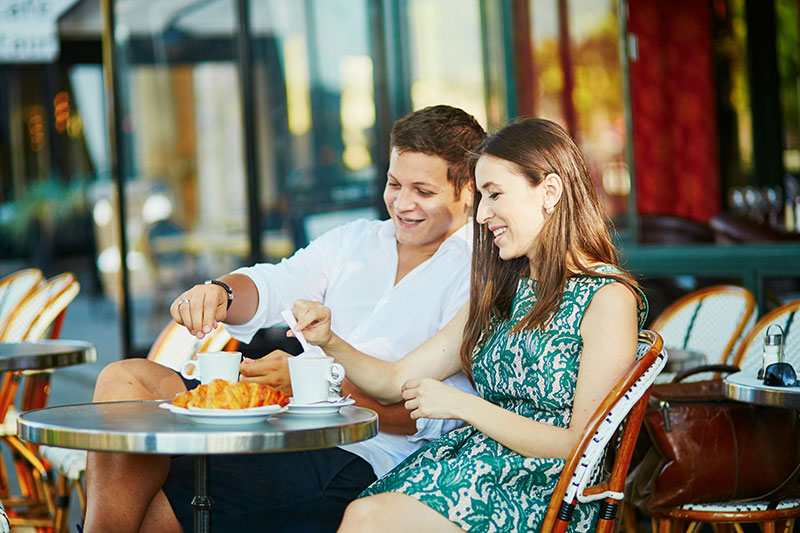
A couple relaxing at an outdoor French cafe table, illustrating the tourist experience in France.

The rude stereotype often disappears when you realize France hosts huge numbers of tourists every year. A little cultural awareness goes a long way.


Culture and Respect

There is a myth that French people are rude. In my experience across 45 countries, they are not rude. They just operate on a different system. In the U.S., service is about speed and enthusiasm. In France, it is about privacy and respect.

When you walk into a shop, you are entering someone’s space. If you do not say Bonjour immediately, it can come off as treating the person like a vending machine. But if you play by their rules, greet them first, keep your voice down, and show some awareness, the warmth usually comes out right away.

Local Guide Tip: Confidence does not impress in France. Awareness does. Read the room, say hello, and slow down.

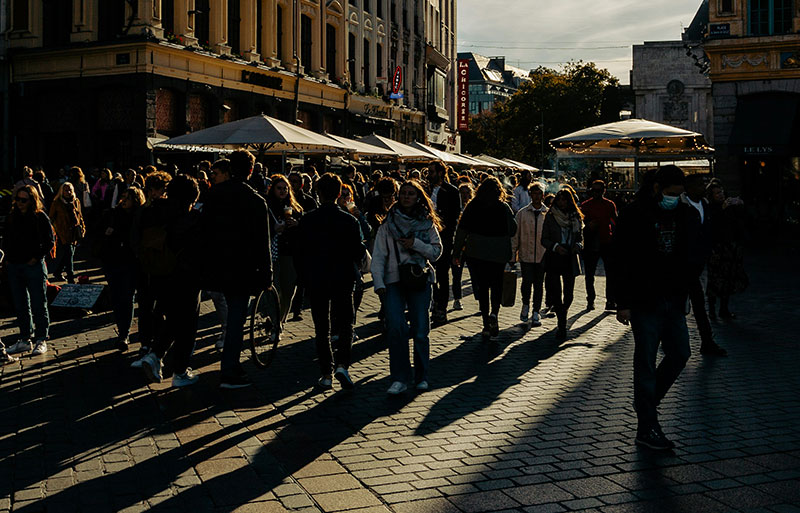
Crowded public area in a French city, illustrating environments where tourists should stay aware

Crowded streets, tourist zones, and Metro doors are the most common places for distraction scams and petty theft.


Safety and Scams

France is safe, but crowded tourist zones always attract opportunists. Most issues are preventable with basic awareness.

The main annoyance in Paris is the distraction scam. If someone approaches you with a clipboard, a gold ring they found, or tries to tie a bracelet on your wrist, do not be polite. Just keep walking. Your Midwestern nice can work against you here.

  • Metro: Watch your pockets near the doors
  • Cafés: Do not leave your phone on the table edge
  • Taxis: Stick to official G7 taxis or Uber

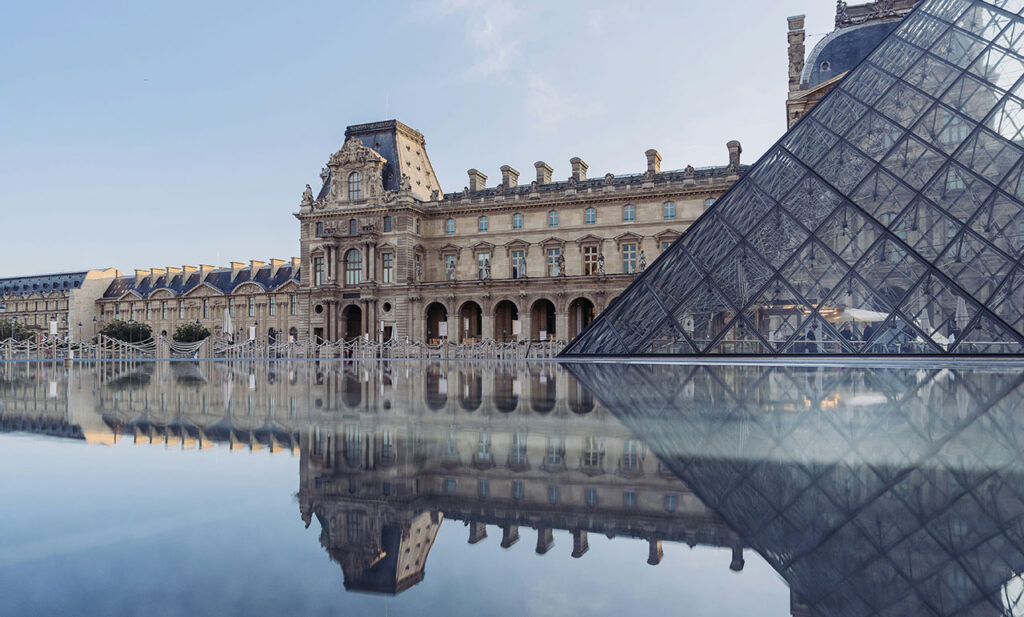
The Louvre is too vast to rush in a single afternoon. Splitting your visit over two days allows you to actually see the art without the exhaustion that comes from trying to do it all at once.


France Itinerary Ideas: Quality Over Quantity

Most travel guides try to cram too much in. They tell you to see three cities in a week. That is not a vacation. That is a commute.

My advice is to slow down. I build trips around bases rather than constant stops. You spend less time packing and unpacking and more time actually being there.

7 Days: The Paris Deep Dive

Do not leave Paris. If you only have a week, resist the urge to bounce around the country. Pick a neighborhood base like Le Marais and actually learn the city.

10 Days: Paris + One Region

Paris + one region is the sweet spot for a first trip. Spend five nights in Paris and four nights somewhere distinct like Champagne, Burgundy, or Chamonix.

14 Days: The Real Trip

Paris + Alps + wine country opens up the map without burning you out. On our recent January trip, we did Champagne, Chamonix, and Paris, and it felt like the right amount of contrast.

Local Guide Tip: If you have 14 days, put Paris at the end. Ending in the city removes the stress of trying to reach a long-haul flight from a remote village on departure day.

Explore France through Paris, regional escapes, food experiences, and real trip planning.

WHERE TO STAY

Paris Neighborhoods Guide

Pick the right neighborhood based on your travel style, budget, and how you want your days to flow.

Read More

REAL ITINERARY

Two Weeks in France

A real-world route through Paris, Champagne, and Chamonix with pacing, logistics, and lessons learned.

Read More

FOOD PLAYBOOK

Eat in Paris Like a Local

Avoid tourist traps and understand how to actually order, eat, and enjoy meals in Paris.

Read More

NEIGHBORHOOD EATS

Le Marais Food Guide

One of the best areas for cafés, bakeries, and casual food hopping in Paris.

Read More

GO BEYOND PARIS

Best Regions in France

Choose where to go based on your travel style, not just what everyone else does.

Read More

QUIET PICKS

France Beyond the Obvious

Lesser-known places that are still worth the trip and easier to enjoy.

Read More

SLOW TRAVEL

Champagne Escape

A more relaxed way to experience France’s wine country without the tour bus feel.

Read More

ALPINE VIEWS

Chamonix Travel Guide: Scenic Lifts, Walks & Great Food

Mont Blanc views, easy hikes, and incredible meals without needing mountaineering skills.

Read More

PLAN YOUR TRIP

How to Plan a Trip to France

Flights, timing, regions, and how to structure a smooth first or return trip to France.

Read More

France Travel FAQ

Do I need to speak French?

No, but basic phrases improve every interaction. Start with a simple Bonjour before you ask any questions and you will be fine.

Yes. Watch for pickpockets in crowded areas and on busy public transit, especially around major tourist zones.

Seven to ten days is a strong first trip. Two weeks is ideal if you want Paris plus one or two regions without rushing.

Rent a car only when it adds freedom, usually outside major cities like Paris or Lyon. Trains are the best default for moving between big hubs.

Travel in May, June, September, or early October. Start your days earlier than you think and spend more time in neighborhoods rather than headline attractions.

Cinque Terre Guide: Hiking, History, and a Rick Steves Encounter

he view that makes the cardio worth it: Looking back at Vernazza's harbor from the steep stone steps of the Blue Trail.

Cinque Terre Guide: Hiking, History, and a Rick Steves Encounter

he view that makes the cardio worth it: Looking back at Vernazza's harbor from the steep stone steps of the Blue Trail.

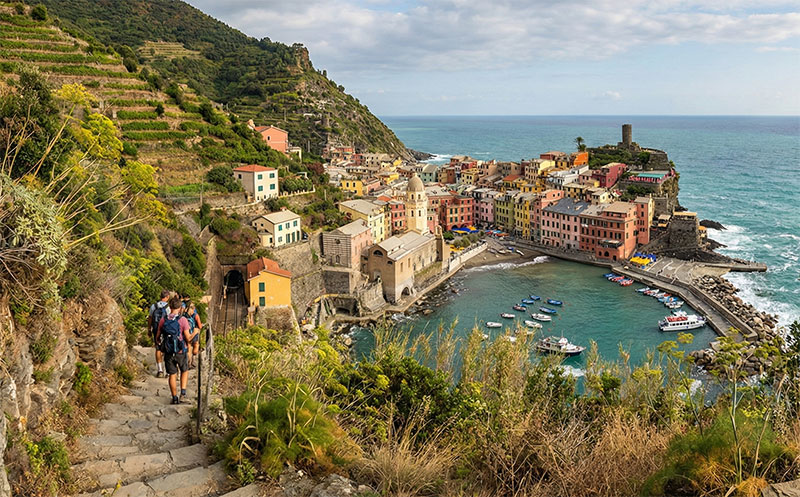
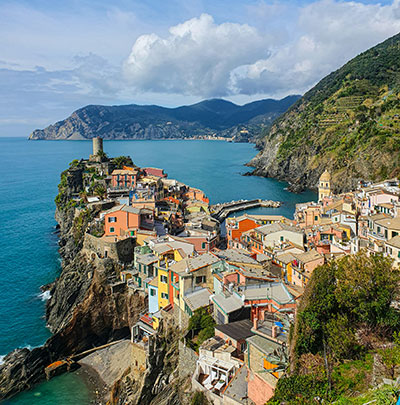
The view that makes the cardio worth it: Looking back at Vernazza from the Blue Trail. The colorful facades seem to grow right out of the cliffside, a sight that hasn’t changed much in centuries.


By Corey Gasman

Cinque Terre Revisited: Hiking, History & A Rick Steves Encounter

Last October, my wife and I returned to the Cinque Terre. It is a region that has changed dramatically since I first visited two decades ago, yet the magic of those five pastel villages clinging to the Ligurian cliffs remains undeniable.

We approached it differently this time. Instead of wrestling a car down the precipitous roads into the villages themselves, a mistake I made in my youth, we stayed in Levanto, the town just north of the region. We rented a spot up on the hill, drove down to the Levanto train station, and took the train in for the day to explore.

Here is my guide to the villages, the food, and the reality of the hike, plus a little story about how the “King of Travel” himself once crashed our dinner.

Local Guide Tip: The Levanto Strategy
If you have a car, do not drive into the Cinque Terre villages. Parking is a nightmare and restrictions are tight. Stay in Levanto (one town north). It’s cheaper, quieter, and connected to the villages by a 5-minute train ride. Drive down the hill, park at the station, and take the train in.
Narrow single-lane cliffside road overlooking a Cinque Terre village and the Ligurian Sea under a clear blue sky

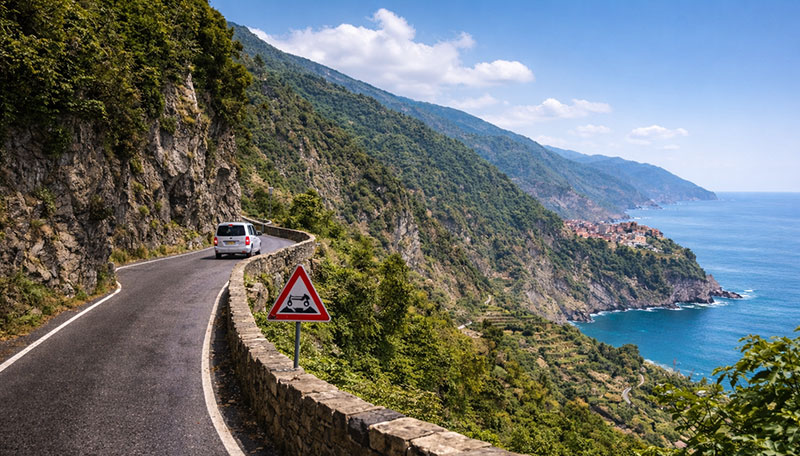
The winding, single-lane roads leading into the Cinque Terre are treacherous. Twenty years ago, we drove them blindly; today, we know better.


The “King of Travel” Encounter

Two decades prior to this recent trip, I traveled to the Cinque Terre with my friends Dan and Rob. Back then, we were  relying entirely on physical guidebooks, specifically, the blue-and-yellow bible written by Rick Steves. We didn’t have Google Maps; we just drove into the region on a crazy, single-lane winding road that felt more like a donkey path.

A hilarious story that defines our trip to Cinque Terre happened while we were sitting in a small, hole-in-the-wall restaurant for dinner.

My friend Dan was sitting with his back to the door, reading the Rick Steves guide. The book has a photo of the author on the back cover. Suddenly, the door opened.

“You guys will never believe who just walked in,” I said.
“Who?” Rob asked.
“The guy on the back of Dan’s book.”

Dan turned around, and sure enough, Rick Steves was standing there. It was such a small spot that he actually stopped by our table. He saw the book, smiled, and chatted with us for a minute about our travels. It was a surreal moment.

Fast forward to today: I think we can blame Rick for how busy the place has become! The secret is definitely out, and the “Rick Steves Effect” has filled these towns with travelers.


Planning your full Italy itinerary?

Cinque Terre is an easy add-on if you plan your bases correctly. For the complete 2026 strategy (regions, trains, neighborhoods, and timing), start here: The Ultimate Italy Travel Guide (2026)

Hiking in Cinque Terre

The Blue Trail offers incredible views, but the terrain is rugged. Narrow paths and steep stone steps are the norm here.

The Hike: It Is “No Joke”

Let’s be real about the trail. The famous Sentiero Azzurro (Blue Trail) connects the villages, and while it looks charming in photos, it is a serious hike.

My wife and I did the trek this past October. It is not for someone who isn’t fit. There are hundreds of steep, uneven stone steps and narrow cliffside paths.

The Weather Factor:
We dealt with a bit of rain, which changes the game completely. The stone steps turn slick, and the mud gets slippery. If it’s raining hard, the park authorities often close the trails for safety.

Local Guide Tip: Know Your Limits
I recommend doing the hike 1,000%, the views of the vineyards meeting the sea are unmatched. However, if you have any disability, knee issues, or aren’t confident in your fitness, skip the trail.

Instead, buy the Train Card and hop on and off. You get the same village charm and amazing seafood without the risk of a twisted ankle.

Train planning, without the stress

If Cinque Terre is part of a bigger Italy route, dial in your rail strategy first: Italy Train Travel Guide


Manarola at sunset is the postcard shot everyone chases. The way the houses tumble down to the sea is architectural poetry.


The Villages: A Quick Guide

If you are taking the train, you can hop between these towns in just a few minutes. Here is a breakdown of the five villages (North to South) to help you plan your stops.

1. Monterosso al Mare

The “resort” town. This is the only village with a proper, wide sandy beach. It is split into an old town and a new town by a tunnel. If you want to lay out on a lounge chair with an umbrella and swim, this is your spot. It feels the most spacious of the five.

2. Vernazza

For many, this is the crown jewel. It has a natural harbor where you can sit on the rocks and watch the boats bob in the water. It’s incredibly photogenic, with a medieval castle tower watching over the colorful piazza. It’s bustling, loud, and beautiful.

3. Corniglia

The “quiet” one. Corniglia is the only village not on the water; it sits high up on a cliff. To get there from the train station, you have to climb the Lardarina, a brick staircase with hundreds of steps (or take the shuttle). Because it’s harder to reach, it’s often less crowded.

4. Manarola

This is the village you see on all the Instagram posts, the one where the houses seem to tumble down the cliff into the sea. It’s famous for its sunset views. There’s no beach, but there are deep-water swimming holes off the rocks.

5. Riomaggiore

The southern gateway. It feels steep and compact, with tall tower houses stacked tightly together. The harbor here is a slanted boat ramp where people hang out to watch the sunset.


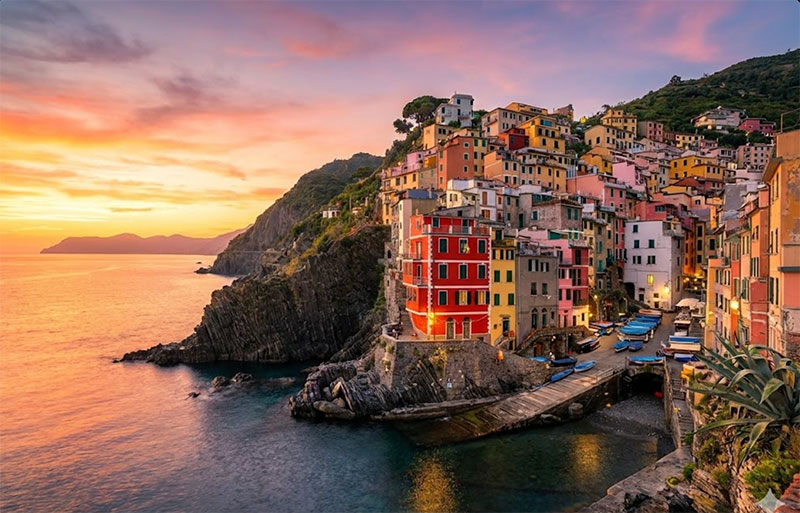
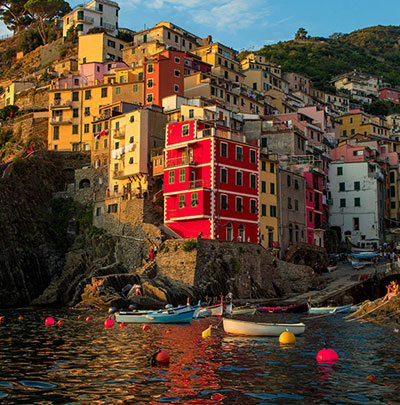
The icons of the Cinque Terre: On the left, Vernazza stretches out into the sea with its famous piazza and castle tower. On the right, Riomaggiore’s tall, colorful tower houses are stacked vertically against the cliffside, creating one of Italy’s most recognizable skylines.

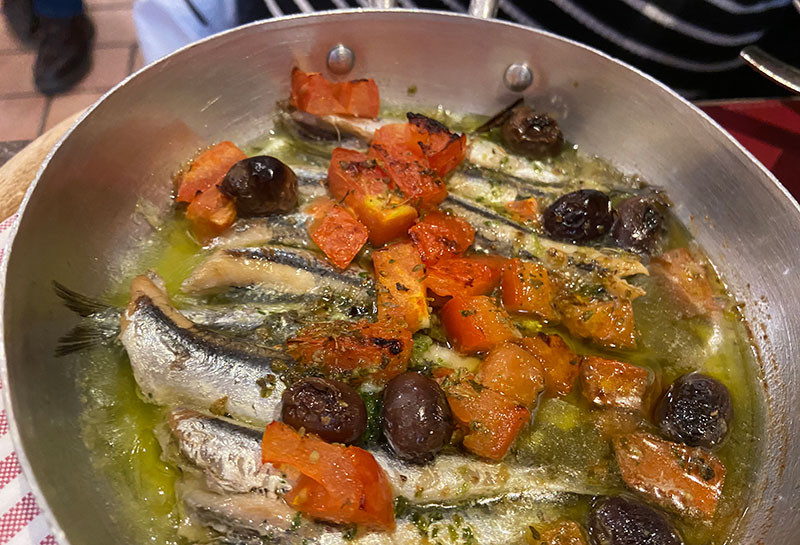
A silver pan filled with fresh anchovies cooked in olive oil with chopped tomatoes and black olives, a traditional dish of the Cinque Terre.

The King of Cinque Terre Seafood: In these villages, the anchovy is more than just food; it’s a protected local treasure, especially in Monterosso. Forget the salty cured version you know, here, they are the main event. This is Acciughe al Tegame: fresh anchovies cooked simply in local olive oil, tomatoes, and taggiasca olives.


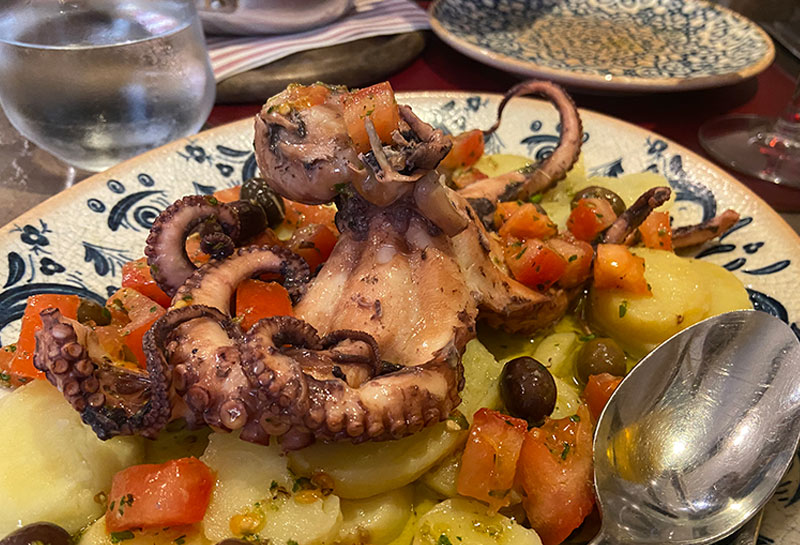
Polpo con Patate: A classic warm octopus and potato salad served in the Cinque Terre.

A close-up of a warm seafood salad featuring tender octopus tentacles, boiled potatoes, cherry tomatoes, and olives on a decorative blue and white plate.


Food & Drink: What to Eat

You are in Liguria, a region with a very specific culinary identity. The food here is fresh, simple, and defined by the sea and the basil grown on the hills.

The Must-Eat List

  • Pesto Genovese: This is the birthplace of pesto. It is bright green, fresh, and garlic-forward. Eat it with trofie (a short, twisted pasta).
  • Seafood Cones: In Riomaggiore and Vernazza, look for shops selling paper cones filled with fried calamari, shrimp, and anchovies.
  • Anchovies (Acciughe): Monterosso is famous for them. Try them marinated in lemon and oil, they are nothing like the salty pizza toppings in the US.
  • Sciacchetrà Wine: A sweet dessert wine made from raisins grown on the terraced hillsides you just hiked past.

Eat like a local, anywhere in Italy

If you want the broader food context (regional dishes, ordering, and the rules that actually matter), this is the master guide: Eat Like a Local Italy Guide

Booking Note: The “Rick Steves Effect” means restaurants are busy.

If you want a sit-down dinner with a view, you need to book a reservation. Otherwise, grab a slice of focaccia or a seafood cone and eat by the harbor.


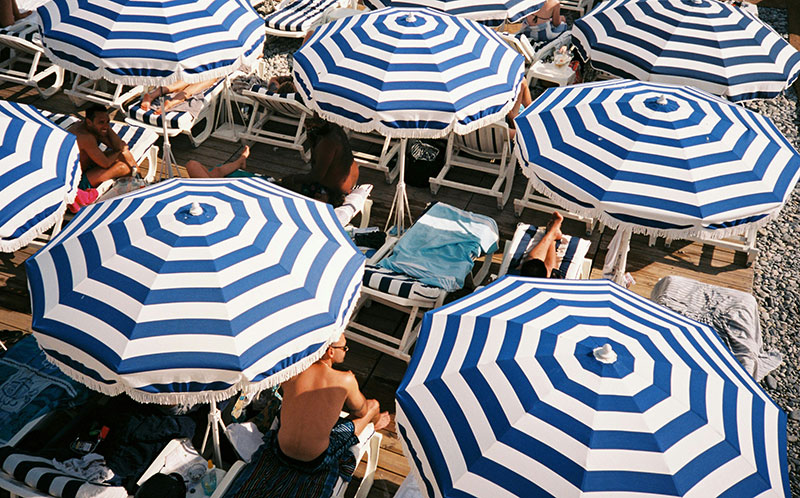
Aerial view of the Fegina beach in Monterosso al Mare, Cinque Terre, filled with colorful sun umbrellas.

The only true sandy beach in the Cinque Terre can be found here in Monterosso al Mare.

Want more “off the main route” Italy?

Cinque Terre is iconic, but Italy rewards travelers who go one step beyond the obvious. If you like side quests like this, start here: Italy Hidden Gems & Unique Experiences (2026)

FAQs

No. In fact, a car is a liability. The towns are pedestrian-only, and parking at the top of the towns is expensive and limited. Park in Levanto or La Spezia and take the train.

Yes. There are two types: The Trekking Card (access to trails + buses) and the Train Card (access to trails + unlimited train travel). If you plan to visit more than two villages, the Train Card pays for itself quickly.

It is moderate to difficult depending on the section. The path between Monterosso and Vernazza is particularly steep with many stairs. If you have mobility issues or low fitness, stick to the train.

Yes, if you start early. If you are hiking, it takes about 5–6 hours of walking time plus breaks. If you are taking the train, you can easily hop off at all five, spend an hour in each, and have lunch/dinner.

Italian Renaissance Art Guide: Where to See Da Vinci & Michelangelo

Leonardo da Vinci's unfinished painting The Adoration of the Magi on display at the Uffizi Gallery in Florence, showing detailed monochromatic underdrawings and a large crowd scene.

Italian Renaissance Art Guide: Where to See Da Vinci & Michelangelo

Leonardo da Vinci's unfinished painting The Adoration of the Magi on display at the Uffizi Gallery in Florence, showing detailed monochromatic underdrawings and a large crowd scene.

A look inside the mind of a genius: Leonardo’s unfinished Adoration of the Magi reveals his raw sketches and restless thought process. Because he never applied the final layer of paint, you can see the ghostly outlines and geometry that usually get hidden forever (Photo by Corey Gasman).


By Corey Gasman

Leonardo: An Art Lover’s Italian Pilgrimage

Back in Minnesota, when I was in the 6th grade, my very first research report was on Leonardo da Vinci. I was a kid who loved to draw, and I was absolutely fascinated that a single person in the 1400s could paint with unreal precision while also filling notebooks with sketches of parachutes, helicopters, and complex scientific anatomy. He didn’t see a boundary between art and science. To him, it was all just observing the world deeply.

That report inspired me for years. So, you can imagine the impact of finally standing in Italy decades later, walking into a museum, and seeing those actual sketches with my own eyes. It is a profound experience that bridges the gap between a childhood hero and the reality of history.

If you are the type of traveler who wants to slow down and understand the soul of Italy, you have to spend time with its art. It is not about checking famous paintings off a list. It is about witnessing the moment humanity decided to look at itself differently.

Here is my personal guide to understanding the Italian Renaissance and the museums where you can feel that shift for yourself.

Local Guide Tip: Book Early
The days of walking up to a ticket counter are over. For the Uffizi, Vatican Museums, and especially The Last Supper, you must book tickets weeks (sometimes months) in advance online. If you wait until you arrive in Italy, they will be sold out.
A low-angle view of Michelangelo's David statue in the Accademia Gallery, towering over a crowd of tourists.

Walking through Florence feels like walking through an open-air museum where the 15th century never really ended. Photos don’t do it justice. You have to stand at his feet in the Accademia Gallery to truly grasp the sheer scale of Michelangelo’s giant.


A (Very Short) Recap of the Renaissance

Why does this art matter so much? Before the Renaissance (roughly the 14th to 17th centuries), medieval art was largely flat and symbolic. It was meant to inspire religious fear or awe, not to look like real life.

The Renaissance changed everything by shifting the focus to Humanism. Suddenly, artists were interested in the human experience, emotion, and the natural world. They used math to create linear perspective, giving paintings real depth. They dissected bodies to understand muscle structure.

This wasn’t just about making prettier pictures. It was a radical shift in human consciousness. It was the moment we stopped just looking up at heaven and started looking around at the world, and ourselves, with curiosity. When you look at a da Vinci or a Michelangelo, you are looking at the birth of the modern mind.


Planning your first Italy trip?

Art hits harder when the logistics are right. If you are building a first-time itinerary that actually flows, start here: The Ultimate Italy Travel Guide (2026)

Perspective view of the Piazzale degli Uffizi courtyard in Florence, lined with Renaissance colonnades and tourists.

The iconic Piazzale degli Uffizi, the architectural gateway to the Uffizi Gallery’s masterpieces.

Florence: The Cradle of It All (The Uffizi Gallery)

You cannot talk about Renaissance art without starting in Florence. This is where it began, fueled by the banking money of the Medici family who hired artists the way tech billionaires hire software engineers today.

The Uffizi Gallery is overwhelming, but it is essential.

Local Guide Tip: Context is Everything (Don’t Walk Alone)
When visiting a massive gallery like the Uffizi, do not just wander aimlessly. Rent the audio guide or, better yet, book a human expert.

Think of it like seeing a Jackson Pollock painting. Without context, it just looks like splattered paint that a kindergartner could do. But when you learn that he was breaking glass ceilings and reinventing the very definition of art, it becomes genius. The Renaissance is the same. These aren’t just pretty religious pictures; this was a golden era of world-changing invention. You need a guide to help you see the “glass ceilings” these artists were breaking.

Tourists gathering to view Sandro Botticelli's The Birth of Venus at the Uffizi Gallery in Florence.

Yes, there will be a crowd, but witnessing the sheer scale and grace of Botticelli’s Venus in person is absolutely worth it.

The Highlights

  • Leonardo da Vinci’s Early Works: For me, this was the main event. Look for the Annunciation. It is an early work, but look at the botanical details in the grass and the atmospheric perspective in the background mountains. You already see the scientist at work inside the artist.
  • The unfinished Adoration of the Magi: This might be my favorite piece in the museum because it’s incomplete. You can see Leonardo’s under-drawings and his thought process. It connects directly back to those notebook sketches I loved as a kid. It is a glimpse into his restless mind.
  • Botticelli’s The Birth of Venus: Yes, it is famous, and yes, there will be a crowd around it. But you have to see it. It is the definition of Renaissance grace and beauty, standing in stark contrast to the heavier, scientific approach of Leonardo.
A view inside the Botticelli room at the Uffizi Gallery, featuring the large Primavera painting on the wall.

Inside the Botticelli Hall: Standing before the enigmatic Primavera, one of the most debated paintings in art history.

Booking Note: Do not even think of showing up in Florence without tickets in 2026. You need separate tickets for the two main museums.

Book Uffizi (Paintings)
Book Accademia (The David)


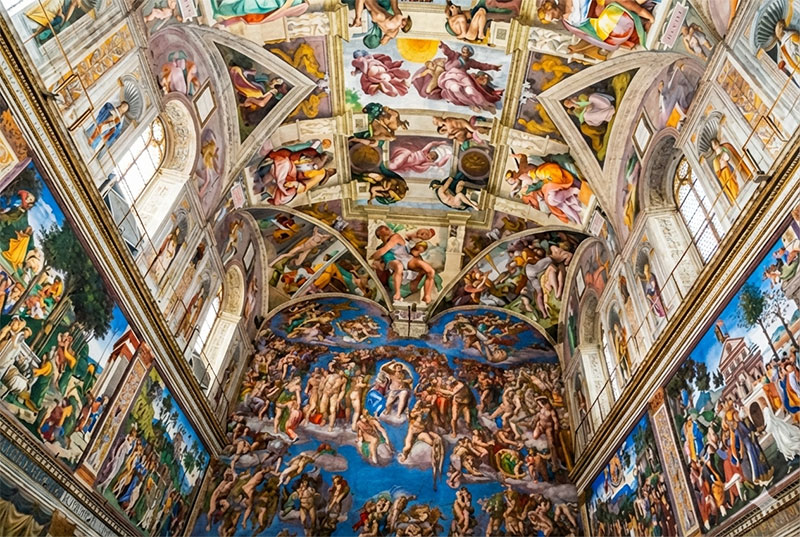
View of Michelangelo's famous fresco ceiling in the Sistine Chapel, Vatican Museums.

The sheer scale of the Vatican Museums is mind-boggling. It is miles of galleries leading to the ultimate prize: the Sistine Chapel. Ignore the guards yelling “No Photo!” and just look up, Michelangelo’s ceiling is even more powerful than you expect.


Rome: The Power and the Glory (The Vatican Museums)

If Florence is where the Renaissance was born, Rome is where it grew up and got powerful. The Popes saw what was happening in Florence and used their immense wealth to bring the best artists to Rome to glorify the church.

The Vatican Museums are vast and intense. You will be shuffled along in a massive herd of people, but the rewards are worth the struggle.

The Highlights

  • The Raphael Rooms (Stanze di Raffaello): Before you reach the Sistine Chapel, you walk through the papal apartments painted by Raphael. Stop in the “Room of the Segnatura” to see The School of Athens. It is a perfect summary of the Renaissance: the greatest philosophers of antiquity gathered together, painted with perfect perspective and balance. Raphael even painted himself and Michelangelo into the crowd.
  • The Sistine Chapel: Nothing prepares you for this. It is noisy and crowded, and guards are constantly yelling “No Photo!” But look up. Michelangelo considered himself a sculptor, not a painter, and he hated doing this job. Yet, he created the most complex and powerful fresco cycle in history. The sheer physical effort visible in the bodies is astounding.

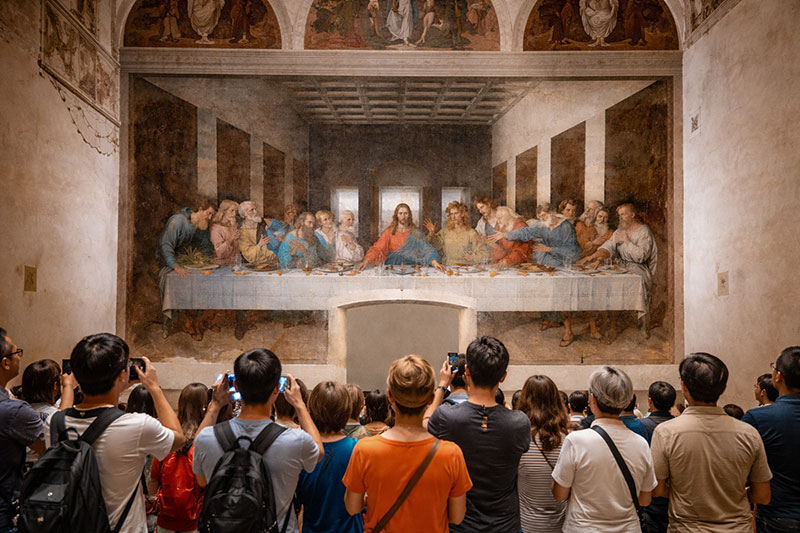
A large group of tourists viewing Leonardo da Vinci's The Last Supper mural in Milan.

It’s faded, it’s fragile, and tickets are impossible to get, but standing before The Last Supper is still a moving testament to Leonardo’s genius.


Milan: The Mind of Leonardo (Ambrosiana & The Last Supper)

While not on the “Big Three” route, if you are truly fascinated by Leonardo the inventor and thinker, you have to get to Milan. This is where he spent his most productive years working for the Duke of Milan.

Where to See the Sketches & Inventions

You can see Leonardo’s original drawings primarily in Florence at the Uffizi Gallery (Gabinetto Disegni e Stampe) and in Milan at the Biblioteca Ambrosiana holding his manuscripts.

For interactive museums showcasing models of his inventions and designs, visit:

The Highlights

  • Biblioteca Ambrosiana: This is my favorite hidden gem for art lovers. It houses the Codex Atlanticus, the largest collection of Leonardo’s personal notebooks. This is it. These are the actual pages covered in his mirror writing, sketches of war machines, geometric experiments, and botanical studies. Seeing these pages feels incredibly intimate, like looking over his shoulder as he worked.
  • The Last Supper (Santa Maria delle Grazie): I will be honest, this wasn’t my top priority initially. It is faded and damaged because Leonardo experimented with a new paint technique that failed almost immediately. But seeing its fragility in person is moving. It is a testament to an incredible, restless genius who was always pushing boundaries, even when it didn’t quite work out.

Booking Note: Tickets for The Last Supper are released quarterly and sell out in minutes.

Official Last Supper Tickets

Looking for more hidden treasures?

If you love discovering places like the Ambrosiana library that most tourists miss, check out my guide to unique experiences across Italy that go beyond the standard itinerary. Read More: Italy’s Hidden Gems & Unique Experiences

Five Paintings Worth Planning Around

If you only build museum time around a few true masterpieces, make it these. Each one is permanently housed in Italy and absolutely worth seeing in person.

  • The Last Supper by Leonardo da Vinci
    Santa Maria delle Grazie, Milan – The most difficult ticket in Italy. Book months ahead.
  • The Birth of Venus by Sandro Botticelli
    Uffizi Gallery, Florence – The defining image of the Renaissance.
  • The School of Athens by Raphael
    Vatican Museums, Rome – Plato, Aristotle, and Michelangelo sharing one painted room.
  • The Calling of Saint Matthew by Caravaggio
    San Luigi dei Francesi, Rome – Free to visit. Dramatic lighting that changed Western painting forever.
  • Assumption of the Virgin by Titian
    Basilica di Santa Maria Gloriosa dei Frari, Venice – Monumental scale and glowing color.
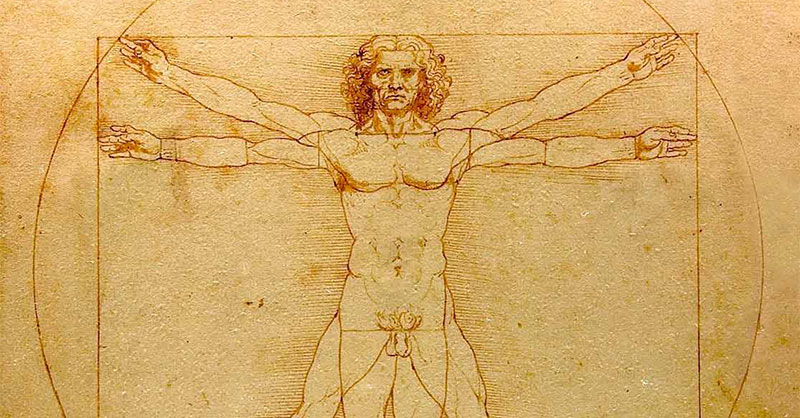
Leonardo da Vinci's famous Vitruvian Man sketch showing human proportions, located at the Gallerie dell'Accademia in Venice.

Leonardo’s iconic Vitruvian Man technically lives in Venice at the Gallerie dell’Accademia, but you likely won’t see it. Because the ancient paper is extremely sensitive to light, the drawing is kept in a dark, climate-controlled vault and is only displayed for a few weeks once every several years.


FAQs

For major museums like the Uffizi, Accademia, and Vatican Museums, booking online in advance is the only way to avoid 3+ hour lines. Look for “Skip the Line” tickets on the official museum websites 2–3 months before your trip.

For pure art museums (like the Uffizi or Borghese Gallery), there is no dress code. However, for churches (St. Peter’s Basilica, the Pantheon) and museums attached to holy sites (Vatican Museums/Sistine Chapel), you must cover your shoulders and knees.

Generally, yes. Photography (without flash) is allowed in the Uffizi, Accademia, and most of the Vatican Museums. However, photography is strictly forbidden inside the Sistine Chapel and usually prohibited at The Last Supper.

The original statue of David is in the Galleria dell’Accademia in Florence. The statue standing outside in the Piazza della Signoria is a replica.

21 Essential Italy Travel Tips for First-Timers

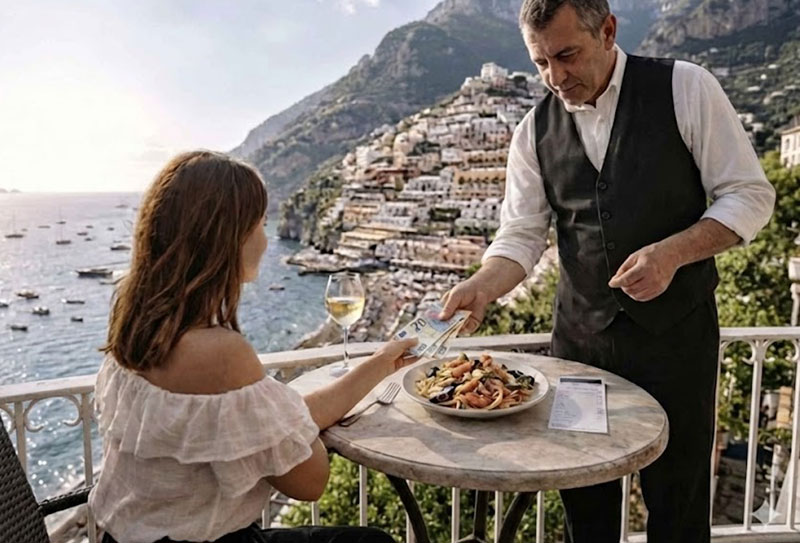
A woman paying a waiter in cash with Euro bills at a restaurant with a view of Positano, with a seafood pasta dish, white wine, and a bill with coins on the table

21 Essential Italy Travel Tips for First-Timers

A woman paying a waiter in cash with Euro bills at a restaurant with a view of Positano, with a seafood pasta dish, white wine, and a bill with coins on the table

By Corey Gasman

Deep Breath. Your Italian Dream Trip is Closer Than You Think.

If this is your first time planning a trip to Italy, let me guess: you are vibrating with excitement about the pasta, but also secretly terrified of the logistics. Will you get pickpocketed on the Metro? Do you really need to pay to use the bathroom? And what is the deal with that “coperto” charge on your bill?

I have been there. My first trip was a comedy of errors involving a validated train ticket (or lack thereof), a very angry bus driver, and a suitcase that lost a wheel on Venetian cobblestones.

This guide is the cheat sheet I wish I had back then. It is the “2026 Edition,” meaning I’ve updated it with the latest entry rules (EES is finally here) and the modern realities of travel in Italy today.

Local Guide Tip: Don’t Try to See Everything
The biggest mistake first-timers make is treating Italy like a checklist. You cannot “do” Rome, Florence, Venice, and the Amalfi Coast in 7 days without hating yourself by day 4. Pick two bases, unpack your bag, and actually enjoy the dolce vita instead of just photographing it.
Local Guide Tip: Check Your Passport Expiration
For Italy (Schengen), your passport should be valid for at least 3 months beyond your planned departure date and must have been issued within the last 10 years. Do not cut it close. Airlines can deny boarding if your passport does not meet the rules.

First international trip?

If Italy is your first time traveling abroad, I highly recommend starting here. This guide walks you through passports, flights, money, phones, safety, and all the basics so you feel confident before you even book your flight. Read More: Getting Started With International Travel

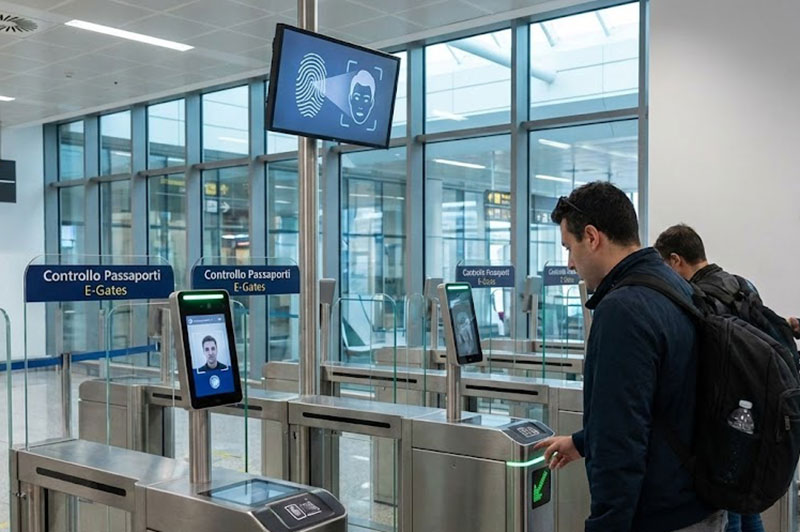
ravelers using automated biometric passport control gates at an Italian airport.

The new reality at Fiumicino Airport: Expect automated gates and biometric scans instead of the old-school passport stamp.


The New 2026 Entry Rules: ETIAS & EES Explained

If you are used to just breezing through customs with a US or UK passport, listen up. The “open border” days are getting a digital upgrade.

  • EES (Entry/Exit System): This is arguably the biggest change. Instead of a stamp, your entry is recorded digitally with a face scan and fingerprints. Expect delays. Especially at major hubs like Rome Fiumicino (FCO) and Milan Malpensa (MXP), lines can be long as the system processes everyone.
  • ETIAS (The “Visa Waiver”): Scheduled for late 2026 implementation, this is a pre-travel authorization (similar to the US ESTA). You will need to apply online and pay a small fee (~€7) before you fly.

Local Guide Tip: Check Your Passport Expiration

For Italy (Schengen), your passport should be valid for at least 3 months beyond your planned departure date and must have been issued within the last 10 years. Do not cut it close. Airlines can deny boarding if your passport does not meet the rules.


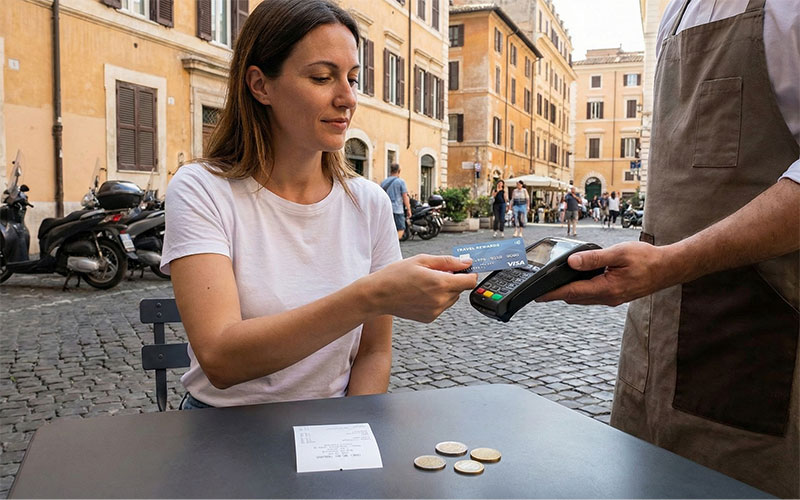
Close-up of a woman using a contactless credit card to pay at an outdoor Roman restaurant table, with a paper receipt weighted down by Euro coins to illustrate tipping etiquette.

While tap-to-pay is the standard for the bill, it is still customary to leave a few Euro coins on the table as a gesture of appreciation for the service.


Money Matters: Cash vs. Card & Tipping Etiquette

Cash vs. Card

Italy is firmly in the digital age. You can use Apple Pay or Google Pay for almost everything, from museum tickets to a €1.50 espresso. However, cash is not dead. You still need euros for:

  • Small town shops that “have a broken card machine.”
  • City taxes (tassa di soggiorno) at smaller B&Bs.
  • Public restrooms (more on that below).

The Tipping Myth

Americans, please stop tipping 20%. In Italy, servers are paid a living wage.

  • Coperto: You will see a €2–€3 charge per person on the bill. This is the “cover charge” for bread/tableware. It is mandatory and standard.
  • Servizio: If you see “Servizio Incluso” (Service Included), do not tip extra.
  • The Rule: If service was great, round up the bill. If dinner was €47, leave €50. That’s it.
Pro Tip: Never use a currency exchange booth (Cambio). They offer terrible rates. Use a bank ATM (Bancomat) to withdraw euros directly from your checking account.

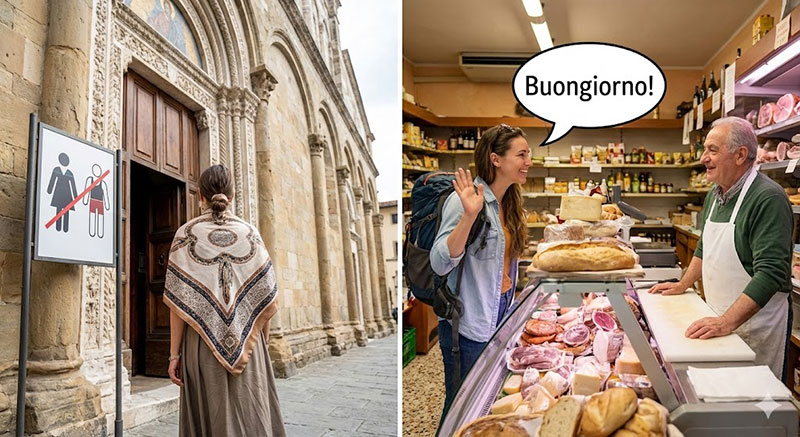
Split image showing appropriate church dress code on the left and a friendly "Buongiorno" greeting on the right.

Cultural cues: Cover shoulders and knees for churches, and always greet shopkeepers with a polite “Buongiorno” or “Buonasera”.


Cultural Do’s and Don’ts: Dress Codes & Greeting Locals

The Church Dress Code

This is non-negotiable. If you want to enter St. Peter’s Basilica, the Pantheon, or the Duomo in Florence, your shoulders and knees must be covered.

  • The Fix: In summer, I always carry a light scarf in my bag. I throw it over my shoulders right before walking in.

Coffee Culture

  • Banco vs. Tavolo: Coffee at the bar (al banco) costs ~€1.50. Coffee sitting at a table (al tavolo) can cost €4.00+. You are paying rent for the seat.
  • No Cappuccino After 11 AM: Italians consider milk heavy and a breakfast-only food. Ordering a cappuccino with pasta will get you a side-eye from the waiter (though they will still serve it).
Local Guide Tip: When entering a small shop, always say “Buongiorno” (Good day) or “Buonasera” (Good evening). “Ciao” is too informal for strangers; it’s like saying “Hey” to a grandma you don’t know.

Master the Menu

Coffee rules are just the beginning. From finding the best gelatin to navigating restaurant menus without falling for tourist traps, learn how to eat well in Italy. Read More: Eat Like a Local in Italy


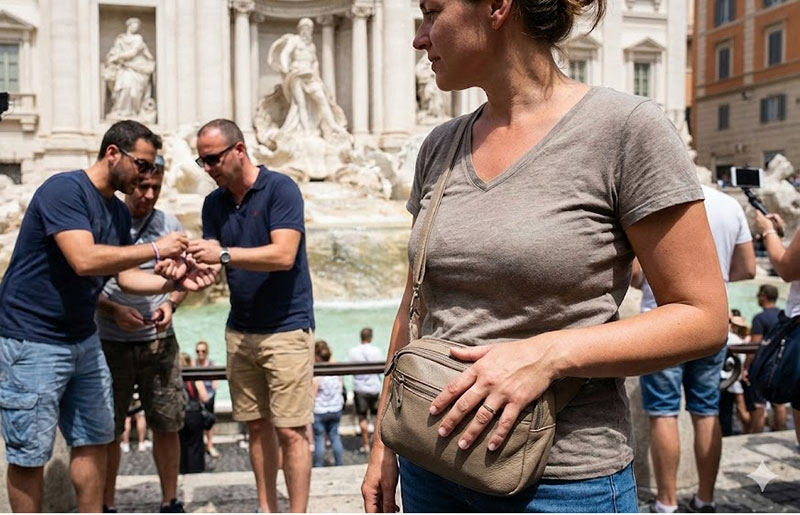
A tourist with a bag worn securely in front at a crowded site, with a bracelet scam happening in the background

Stay alert in crowds: The Trevi Fountain is beautiful, but it’s also a workspace for pickpockets. Keep your bag in front of you.


Safety in Italy: Pickpockets, Train Station Scams & Tourist Traps

Italy is physically very safe, but petty theft in major tourist hubs is very real. Most issues happen in crowded areas where tourists are distracted.

The “Bracelet” Scam

In Milan (Duomo Square) and Rome, friendly guys will approach you trying to give you a “free” friendship bracelet.

  • The move: They tie it tightly to your wrist before you can say no, then demand money and get aggressive if you refuse.
  • The fix: Keep walking, hands in pockets, and avoid eye contact. A firm “No” is all you need.
Local Guide Tip: The “Helpful” Stranger
If someone offers to help you at a train station ticket machine or with your luggage, say no. They are usually looking for a tip, distraction, or watching where you keep your wallet.

Pickpocket Hotspots

Be extra alert on the Rome Metro (especially Line A), the Circumvesuviana train to Sorrento, busy train platforms, and around the Trevi Fountain.

Local Guide Tip: Trains Are Easy, Stations Are Not
Italian trains are fast, reliable, and easy to use. Train stations themselves? A different story.

  • Expect chaos: Stations can feel loud and disorganized, but they usually run on time.
  • Platforms post late: Platform numbers often appear 5–10 minutes before departure. Do not panic if it is blank.
  • Ignore “helpers”: Anyone offering help at ticket machines or platforms is usually fishing for a tip or distraction.
  • Zip everything: Boarding is when pickpockets are most active. Keep bags closed and wallets secure.

Confused by Italian Trains?

From validating tickets to avoiding the “fine” traps at the station, I’ve broken down everything you need to know about navigating the rail system stress-free. Read More: The Complete Italy Train Travel Guide

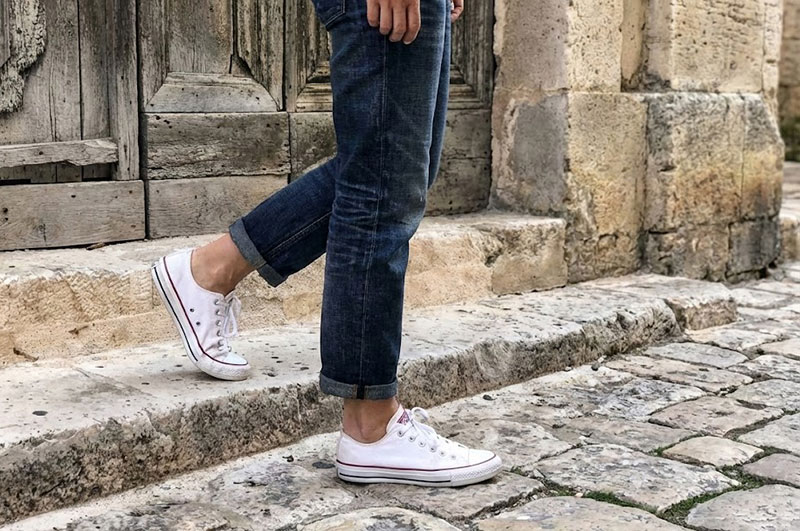
Cobblestone reality check: Leave the stilettos at home. Stylish sneakers or block heels are the only way to survive these streets.


Packing for Italy: Seasonal Essentials & Why You Need Walking Shoes

The Shoe Rule

I average 15,000–20,000 steps a day in Italy. The streets are ancient, uneven, and unforgiving.

  • Bring: Broken-in white sneakers (everyone wears them now, even with dresses) or sturdy leather sandals.
  • Leave: Stilettos and flip-flops (unless you are at the beach).

The Mosquito Situation

People forget this, but Italian mosquitoes (zanzare) are vicious in the summer, especially in Florence and Venice. Pack a small bug spray or buy “Autan” at a local pharmacy.


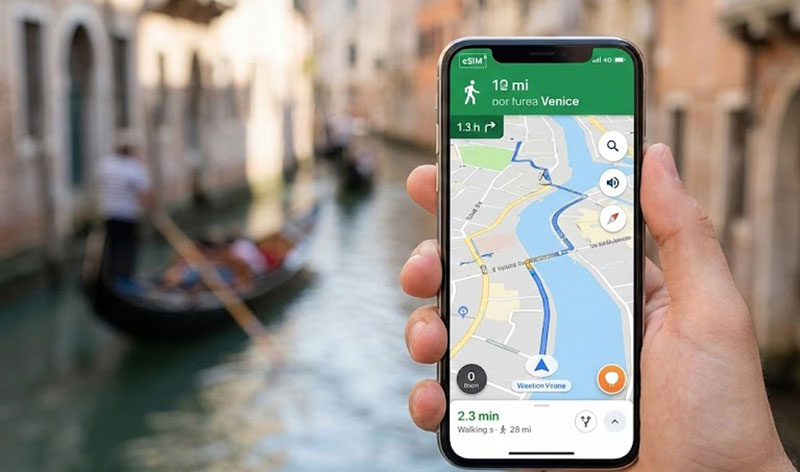
martphone displaying walking maps in Venice with an eSIM connection active.

Stay connected: Download an eSIM before you fly so you have maps and translation ready the moment you land.


Connectivity: SIM Cards, eSIMs & Free Wi-Fi

Do not pay your home carrier $10/day for international roaming. It is a rip-off.

  • The Best Option (eSIM): Apps like Airalo or Holafly let you download an Italian data plan instantly. I usually pay ~$15 for 10GB of data. It works immediately upon landing.
  • The Cheaper Option (Physical SIM): If you have an unlocked phone, go to a TIM or Vodafone store in Italy. You can get a “Tourist Plan” for ~€20 that gives you huge amounts of data.
  • WhatsApp: Everyone in Italy uses WhatsApp. Hotels, tour guides, and drivers will prefer to text you there.
Local Guide Tip: WhatsApp Is the Default Abroad
Outside the U.S., WhatsApp is the go-to app for communication. Hotels, tour operators, drivers, restaurants, and even Airbnb hosts almost always use it. I have booked tours, coordinated check-ins, and messaged property managers entirely through WhatsApp once I arrived.Download it before you leave, add your contacts, and use it as your primary travel communication tool. It works anywhere you have Wi-Fi, so you do not need cellular data to send messages or make calls.

Security note: When using public Wi-Fi at cafés, hotels, or tourist areas, always turn on a VPN. Public networks are an easy target for scammers looking to steal personal or login information. Many VPN services offer free trials or short-term plans for around $10–$15, which is a small price for added security while traveling.

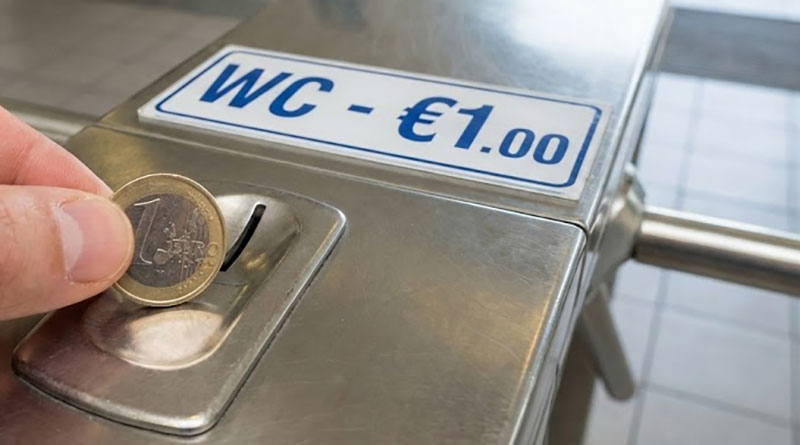
Hand inserting a one euro coin into a turnstile for a public restroom entry.

The golden rule of Italian restrooms: Always keep a 1 Euro coin in your pocket.


Public Restrooms: The “Coin” Rule and Where to Find Them

Public restrooms exist, but they are rarely free.

  • The Cost: Most train stations and public toilets charge €1.00 (sometimes €0.50) for entry. The machines often only take coins.
  • The Hack: If you can’t find a public toilet, go into a bar (coffee shop). Buy the cheapest thing on the menu (usually an espresso for €1.20) and use their customer toilet. It’s often cleaner than the public ones anyway.
  • Train Toilets: Use the bathroom on the high-speed train (Frecciarossa) before you get off at the station. It is free and usually decent.
Local Guide Tip: The “Missing” Toilet Seat
Do not panic if you walk into a restroom and there is no toilet seat. It is surprisingly common in older Italian establishments. It’s not broken; it’s just… not there. You have to hover. Consider it leg day.

FAQs

Yes. The tap water in Italy is safe and good quality. In Rome, you will see small public fountains called nasoni flowing constantly on street corners. Bring a reusable bottle and fill up for free.

Going to Rome? Learn how to spot these fountains (and drink from them without getting wet) in my full guide: Hydrating in Rome: How to Find and Use the Historic Nasoni.

Yes, especially in major cities and tourist areas. Most hotel staff, tour guides, and restaurant servers speak at least basic English. In smaller towns, English may be limited, but people are generally patient and helpful.

Learning a few phrases like Buongiorno (good morning), Per favore (please), and Grazie (thank you) goes a long way and is always appreciated.

Italy can be as affordable or as expensive as you make it. Major cities like Rome, Florence, and Venice cost more than smaller towns, but everyday expenses are reasonable.

You can still get a great espresso for €1.20, a pizza slice for under €5, and excellent regional wine for less than you would pay back home. Accommodation and transportation will likely be your biggest costs.

Mostly, yes. Credit cards and tap-to-pay are widely accepted in cities, restaurants, hotels, and shops. That said, you should always carry some cash for small cafés, markets, taxis, public restrooms, and city taxes at smaller accommodations.

Do not rely entirely on cards, especially outside major tourist areas.

If you have a paper ticket for a regional train (Regionale), YES. You must stamp it in the green or yellow machines before boarding, or you risk a €50+ fine. If you have a digital ticket or a reserved seat on a high-speed train (Frecciarossa), you do not need to validate.

Only in major cities like Rome and Milan, and it is usually limited to Uber Black, which is expensive. In most places, Uber does not exist.

Download the FreeNow or It Taxi app to call standard licensed taxis.

Late. Restaurants usually open around 7:30 PM, but locals rarely arrive before 8:30 PM or 9:00 PM. If you eat earlier, expect quieter dining rooms and mostly tourists.

Technically, yes. Non-EU visitors are required to carry an International Driving Permit along with their regular driver’s license when renting or driving a car in Italy.

Rental agencies do not always check, but if you are pulled over by police, you can be fined if you do not have one.

Adventure in Japan: 8 Must-Do Outdoor Experiences

Hikers ascending Mount Fuji at sunrise with trekking poles, rocky volcanic trail in the foreground and Mount Fuji rising above the clouds.

Adventure in Japan: 8 Must-Do Outdoor Experiences

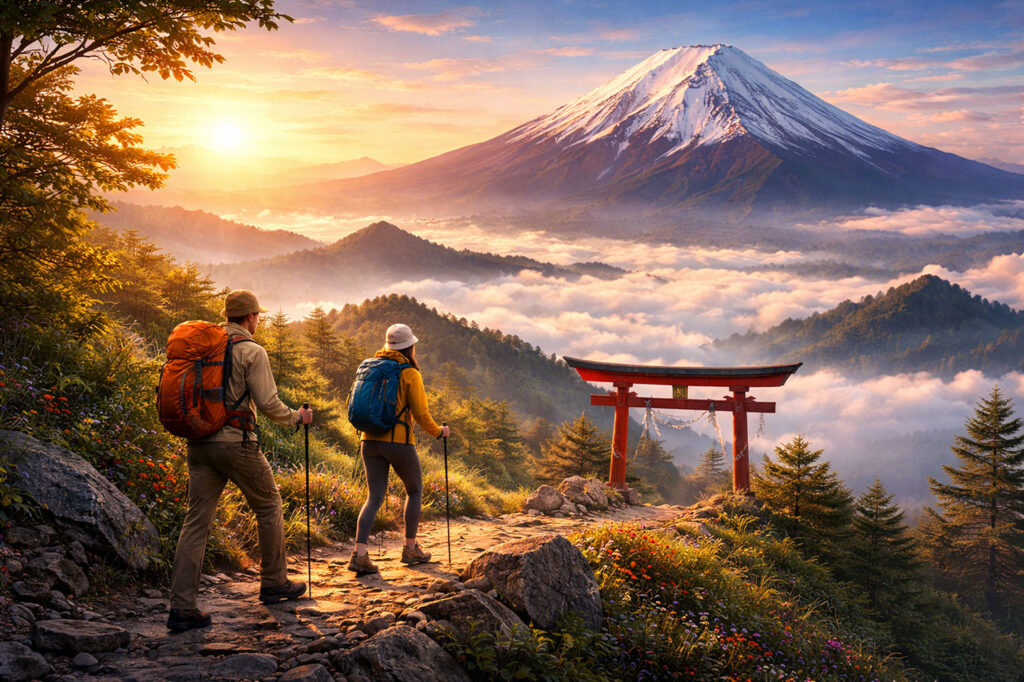
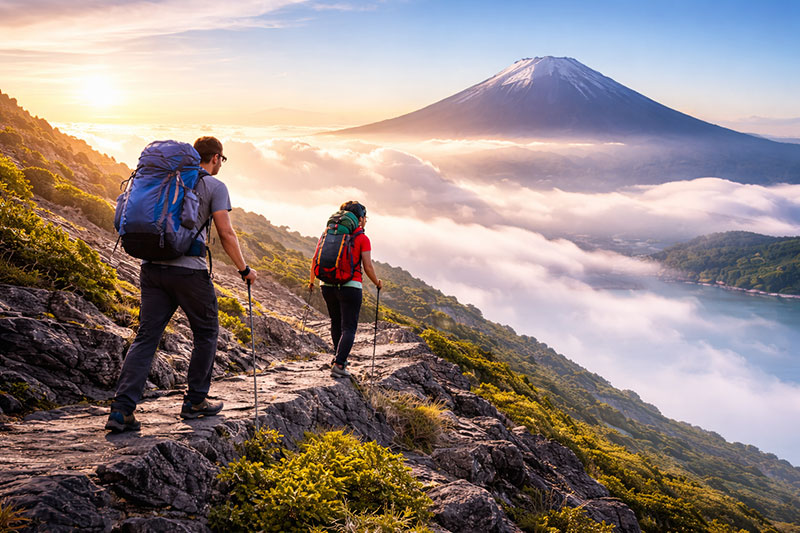
Illustration of two hikers with backpacks on a trail looking out at a red Torii gate and Mount Fuji at sunrise, representing the excitement of choosing a new travel adventure.

By Corey Gasman

Adventure in Japan is wildly underrated. Beyond the temples and train stations, this country is built for big outdoor days, bucket-list routes, and “how is this even real?” moments.

If your version of travel includes early mornings, sore legs, and a little adrenaline, build your itinerary around these. They are the best mix of iconic and achievable.

Pro Tip: Japan is at its best when you plan “hard days” and “recovery days” in pairs. Hike, bike, surf, or ski, then follow it with an onsen night, a slow food day, or a scenic train ride.

Planning Note

Build your route around seasons. Fuji and the Alps are summer plays. Hokkaido is a winter mission. Okinawa is your shoulder season reset when mainland humidity or crowds spike.

From the Local Guide:
Japan makes big adventure days surprisingly doable. The trains work. The signage is clear. Convenience stores fuel you better than they have any right to. If you plan your timing and travel days, you can stack unforgettable outdoor experiences without burning yourself out.
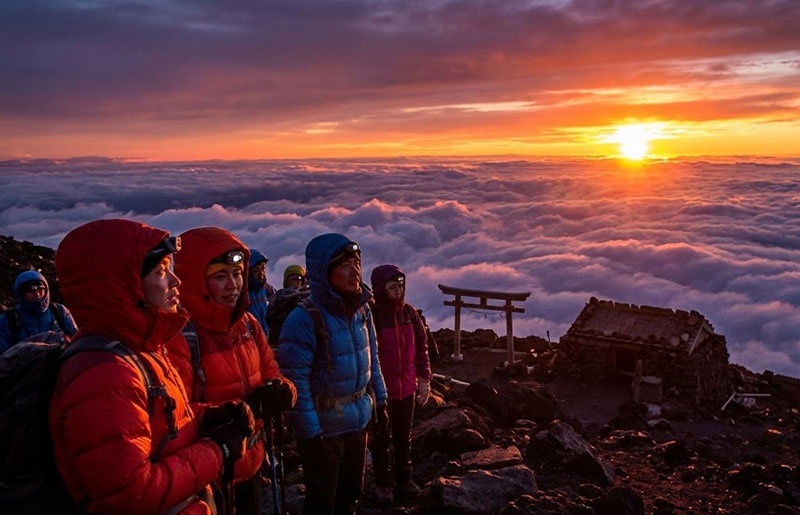
Hikers in warm gear standing at the summit of Mount Fuji, watching the golden sunrise (Goraiko) break over a sea of clouds, with a small stone shrine and torii gate in the background.

Climbing Mount Fuji is more about pacing and altitude than technical hiking. The classic move is a night climb to catch sunrise at the summit.


Climb Mount Fuji (Seasonal)

Fuji is the iconic “I did it” day. It is not technical, but it is real work. Your biggest enemies are altitude, cold, and going too fast early. Time it right and sunrise at the top feels like a once-in-a-lifetime moment.

Why do it

Because Fuji is symbolic, shared, and oddly emotional. Watching the sun lift over the clouds from the summit is unforgettable.

How to do it

Climb in official season (mid-summer). Start from the 5th Station. Go slow. Consider a hut stop if you want a safer pace.
Check real-time volcanic conditions on the Japan Meteorological Agency site before heading out.

Costs & tips

¥2,000 climbing fee. Huts often ¥8,000–12,000. Bring layers, gloves, headlamp, and cash. Midweek is easier.

Pro Tip: The descent wrecks knees. If you have bad knees, bring a simple brace and trekking poles. The poles matter more on the way down than the way up.
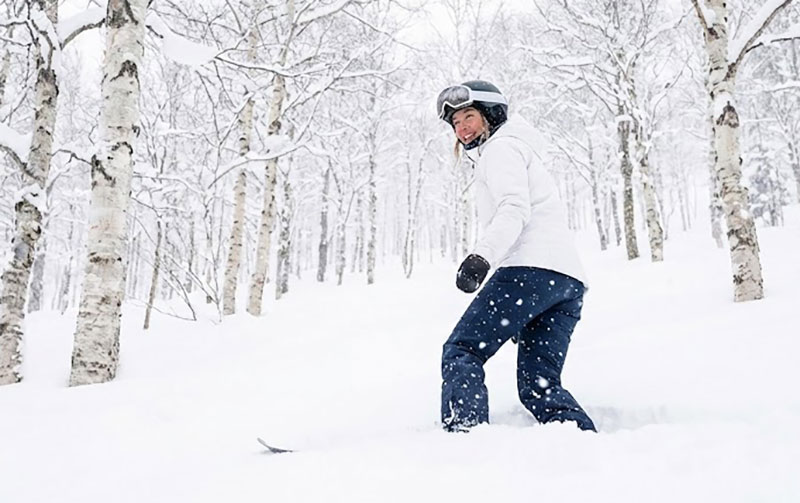
A female skier smiling while skiing through deep powder snow in a white birch forest in Niseko, Hokkaido.

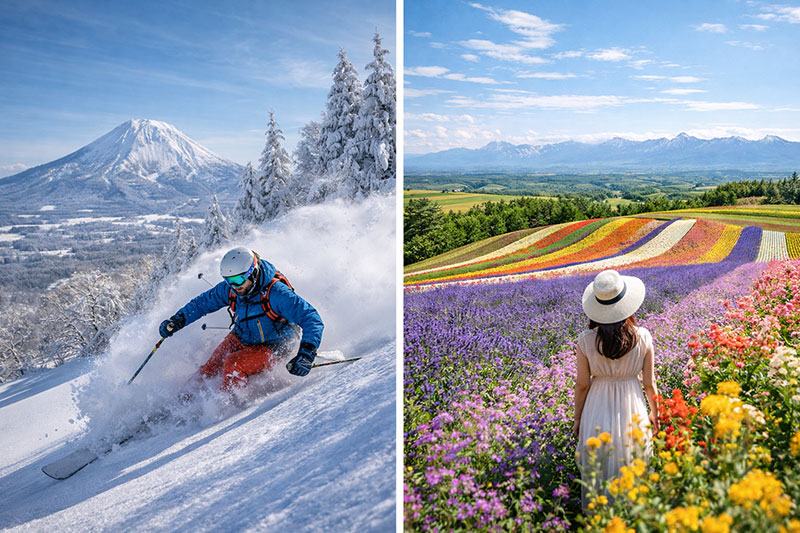
Hokkaido powder is famous for a reason. Dry snowfall, soft landings, and tree runs that feel like a dream.


Ski Hokkaido Powder (Niseko and Beyond)

Hokkaido is Japan’s winter ace card. Niseko is the easiest base with international infrastructure, while Furano feels more local and relaxed. If you want backcountry, do it with a guide. Conditions can change fast.

Why do it

Reliable powder, great resort systems, and a perfect Japan twist on a classic ski trip. Onsen recovery makes it elite.

How to do it

Fly into Sapporo (New Chitose). Bus transfers work, but a car helps if you want multiple areas. Book lessons early in peak season.

Costs & tips

Lift tickets often ¥8,000–10,000/day. Rentals ¥6,000–8,000/day. Guides can be ¥30,000+ per group. January and February are prime.

Local Guide Tip: Night skiing is common and surprisingly good. If weather is messy during the day, an evening lap can save the whole day.
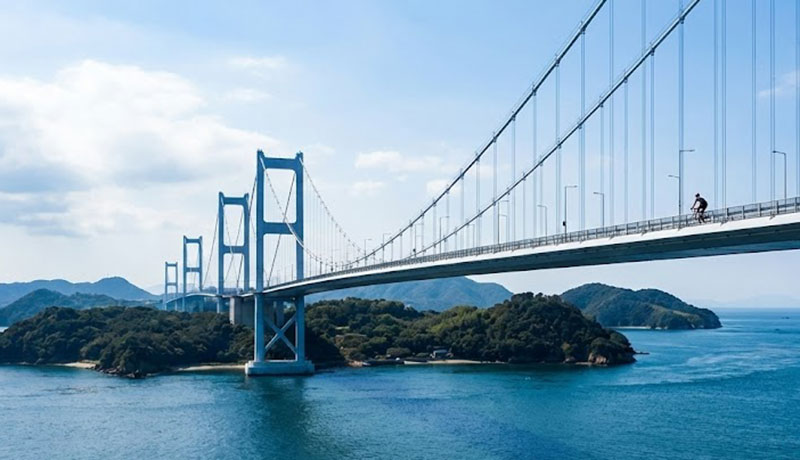
A cyclist riding across the massive Kurushima Kaikyo suspension bridge on the Shimanami Kaido route, with the deep blue Seto Inland Sea and green islands stretching out below.

The Shimanami Kaido links islands with massive bridges and ocean views. It is iconic, but still approachable.


Shimanami Kaido Cycling

This is one of the best “epic but doable” routes in Japan. You get bridges, sea air, tiny port towns, and constant snack stops. It is scenic adventure without the stress of mountain suffering.

Why do it

Maximum reward per mile. Ocean views, island culture, and a route designed for riders of all levels.

How to do it

Rent a bike at either end. Consider an e-bike for a zero-suffering day. Split into two days if you want long lunches and slow exploring.

Costs & tips

Bike rentals often ¥3,000–7,000/day. Budget ¥8,000–15,000 for an overnight if you split days. Bring a light rain layer.

Pro Tip: Treat this like a tasting tour, not a race. Stop for citrus snacks, coffee, and sea views. The route is the point.
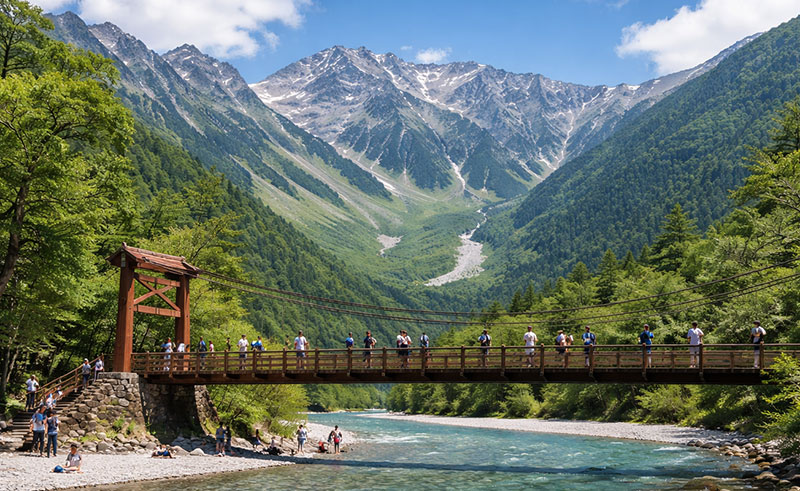
A scenic landscape of the wooden Kappa-bashi suspension bridge crossing the turquoise Azusa River in Kamikochi, filled with hikers, with the dramatic snow-patched peaks of the Hotaka Mountain Range rising in the background under a blue sky.

Kamikochi is the gateway to the Japanese Alps. Clear rivers, wooden trails, and peaks that feel like Japan’s Switzerland.


Hike the Japanese Alps

If you love big mountain scenery, the Japanese Alps deliver hard. Kamikochi is the easiest entry point, and summer hut hiking is surprisingly accessible. You get dramatic landscapes with fewer crowds than many European routes.

Why do it

Alpine views, clean trails, and hut systems that make multi-day hikes realistic for normal travelers.

How to do it

Go summer to early fall. Start with day hikes from Kamikochi. Step up to a hut route when you want a true mountain mission.

Costs & tips

Kamikochi entry is low cost. Hut nights often ¥10,000–14,000 with meals. Book weekends early. Weather changes fast.

Local Guide Tip: Start early. Morning light is better, crowds are lighter, and afternoon weather is less predictable in the mountains.
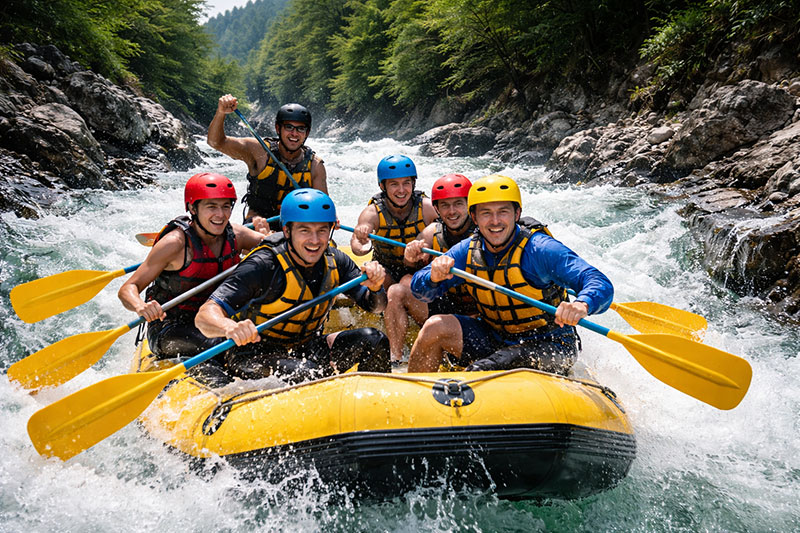
A dynamic action shot of a smiling group of travelers paddling a yellow raft through splashing white-water rapids on the Tone River in Minakami, Japan, surrounded by a lush green forest gorge.

Whitewater rafting and canyoning in Japan can feel like jungle adventure, and it is often a doable day trip from major cities.


Rafting and Canyoning (Nagano and Gunma)

Japan’s rivers are the surprise hit for adrenaline travelers. You can go from city to canyon in a single morning. Guided trips make it accessible, and the gear is usually included.

Why do it

Big fun with minimal planning. It is the fastest way to add adrenaline to a Japan itinerary.

How to do it

Book a guided half-day or full-day tour. Summer is best. No experience required, just comfort with water and following instructions.

Costs & tips

Expect ¥8,000–15,000 per person. Bring a towel and a change of clothes. Pair it with an onsen stop afterward.

Pro Tip: If you are traveling with kids or nervous swimmers, choose rafting over canyoning. It is usually less intimidating and easier to scale by difficulty.
person in a red kayak paddling over crystal-clear turquoise water, with visible coral reefs below and lush green mangrove trees in the background in Okinawa, Japan.

Okinawa is the easiest way to make your Japan trip feel completely different. Mangroves, coral reefs, and sunset beach nights.


Okinawa Kayaking and Snorkeling

Okinawa is the mood shift. Tropical water, slower days, and outdoor experiences that feel more like island life than mainland Japan. Kayak the mangroves, snorkel the reef, then eat something beachside while the sky turns orange.

Why do it

Because it breaks the Tokyo-Kyoto loop and gives you a completely different version of Japan.

How to do it

Join a guided tour for mangroves or reef snorkeling. Spring and fall are ideal for comfort. Summer is beautiful but humid.

Costs & tips

Half-day tours often ¥6,000–12,000. Bring reef-safe sunscreen and a rash guard if you burn easily. Rent a car for freedom.

Local Guide Tip: If you only have time for one Okinawa adventure day, do mangroves in the morning and reef snorkeling in the afternoon. It is the perfect two-act day.
A male surfer riding a wave during a golden sunset on the Pacific coast of Japan, with the sun dipping below the horizon and a coastline of trees and buildings visible in the distance.

Japan has a real surf culture. Tokyo-area beaches make it doable even on short trips, while southern coasts stay warmer.


Surf the Pacific Coast

Japan’s surf culture is low-key but legit. The vibe is respectful, early mornings are normal, and the beach towns are a fun contrast to city life. If you want to learn, lessons and rentals are widely available.

Why do it

It adds surf town energy to a Japan trip and gives you a whole new local culture to experience.

How to do it

For quick trips, head to Chiba or Shonan. For warmer water and longer stays, look south. Beginners should take a lesson first.

Costs & tips

Lessons often ¥6,000–10,000. Board rentals ¥3,000–5,000. Learn basic lineup etiquette. It matters everywhere, especially in Japan.

Pro Tip: If you want the easiest surf day, stay near the beach the night before. Dawn sessions are calmer, less crowded, and typically have better conditions.
A breathtaking view of the massive Nakadake Crater at Mount Aso in Kyushu, Japan, featuring a steaming turquoise volcanic lake surrounded by rugged, rocky cliffs and distant mountains under a blue sky.

Kyushu is where Japan gets volcanic. Steam, crater views, and onsen towns built into the landscape.


Kyushu Volcanoes and Onsen Recovery

Kyushu is active landscape travel. Volcano views, steaming valleys, and hikes that feel like the planet is still under construction. The recovery is just as good as the effort because Kyushu’s onsen culture is elite.

Why do it

Volcanic scenery feels different from the rest of Japan, and it pairs perfectly with hot spring nights.

How to do it

A rental car makes it dramatically easier. Check volcanic alerts and plan mornings for the best visibility.

Costs & tips

Access costs are usually low. Onsen stays vary widely, often ¥8,000–20,000+. Bring a light layer. Volcano zones get windy.

Local Guide Tip: Kyushu is perfect for a “two-speed” itinerary. Hike in the morning, onsen in the afternoon, and a quiet dinner somewhere that smells faintly like sulfur and heaven.

FAQs

Shimanami Kaido is the easiest win. It is scenic, low stress, and fits neatly into most routes. If you want a single iconic challenge, Fuji is the classic move in season.

For Fuji huts and peak ski season, yes. For rafting tours and most bike rentals, booking a few days ahead is usually enough unless it is a holiday weekend.

Plan hard days and recovery days in pairs. Adventure days stack fast. Your best recovery tools in Japan are onsen nights, shorter travel days, and not cramming every morning.

Shimanami Kaido, Okinawa snorkeling, and many rafting tours are beginner-friendly. Surfing is easiest with a lesson. Backcountry skiing is not beginner territory without a guide.

Comfortable walking shoes, a light rain layer, and a small daypack cover most bases. For water activities, bring quick-dry clothing and a towel. For mountains, add layers and snacks.

Explore Japan through food culture, planning guides, major cities, and deeper regional experiences.

START HERE

Japan Travel Guide

Use the full Japan hub to connect cities, compare regions, and build a trip that fits your travel style.

Read More

FIRST TIMERS

Guide to Japan

Get the logistics, etiquette, and pricing basics right.

Read More

GET AROUND

Japan Rail Pass Guide

When the pass actually makes sense in 2026.

Read More

KYOTO

Travel Guide

Temples, districts, and must-see experiences.

Read More

TOKYO

City Guide

Neighborhoods, food, and how to plan your time.

Read More

CULTURE

Geisha in Kyoto

History, tradition, and modern reality.

Read More

Quirky Tokyo Guide: A Samurai’s View of the Madness

Anime-style illustration of a traditional Japanese samurai standing shocked in modern downtown Tokyo, surrounded by skyscrapers and neon signs

THE RONIN’S REPORT

A Samurai’s Guide to the Beautiful Madness of Modern Tokyo

I have awakened.

The year is 2026. The place is Edo, though they call it “Tokyo” now. The Shogun is gone, replaced by a mouse with large ears who lives in a castle in Chiba. The swords have been banned, but the spirit of the warrior remains… it has just mutated.

I have walked the neon streets of Harajuku and the smoky alleys of Shinjuku. I have seen things that would make a daimyo weep and a geisha faint. You, traveler from the West, seek the “Real Japan”? You will not find it in the quiet temples. You will find it in the madness.

These are my observations of the strange new customs of my people.

Anime-style illustration of a traditional samurai looking shocked and intrigued by costumed fake nurses on a busy street in Tokyo

The Clan of the Sickly

In my time, if you were covered in bandages and blood, it meant you had lost a duel. You were shamed. Today, in the district of Harajuku, young women dress as if they have just survived a battlefield surgery. They wear eyepatches for eyes that function perfectly. They paint fake bruises on their knees. They wear nurse uniforms, but they carry teddy bears instead of medicine.

They call this Yami Kawaii (Sick Cute). They parade their fragility like armor. It is confusing, but I admire their commitment to the aesthetic. They stare at their rectangular mirrors – their smartphones – with the intensity of an archer aiming for the bullseye.

Where to witness this: Takeshita Street, Harajuku. Do not offer them medical assistance; they are fine.

Anime-style samurai looking shocked at a ¥50,000 price tag on distressed vintage Levi’s jeans inside a Tokyo thrift store

The Cult of the Blue Cotton

I entered a shop in Koenji that smelled of dust and old victories. The merchant treated a pair of ragged blue trousers with more reverence than a Katana forged by Masamune. He told me these were “Levi’s Big E” from the year 1966. He asked for 50,000 Yen.

It appears that after the Great War, my people became obsessed with the conqueror’s clothing. We took the American workwear, the denim, the leather jackets, the flannel, and we perfected it. We study the stitching of vintage American jeans with a discipline once reserved for tea ceremonies.

“The Americans invented the blue pant, but the Japanese have mastered the blue pant.”

Where to witness this: The vintage shops of Shimokitazawa or Koenji. Look for the “Selvedge” line on the cuff.

Anime-style samurai singing karaoke with locals in a small private room at night in Tokyo, with microphone and lyrics on a screen

The Solo Battle

In the West, I am told you sing in taverns, drunk and loud with friends. Here, I witnessed a salaryman enter a small, soundproof box. Alone. He paid money to be locked inside. I thought it was a prison.

But then… the music started.

This is Hitokara (Solo Karaoke). There is no audience. No applause. Just a man, his tie loosened, screaming the lyrics of an anime theme song into the void. It is a duel with oneself. He releases his stress, his honor intact because no one heard his voice crack on the high note. A warrior must sometimes face his demons alone. And sometimes, those demons are a Taylor Swift song.

Where to witness this: Any Karaoke Kan in Shibuya. Ask for a “Hitokara” room.

Anime-style samurai at a traditional Tokyo sushi counter, surprised while eating shirako (cod sperm sac) with chopsticks

The Feast of the Unspeakable

You Westerners eat the cow. We eat the entire cow. And the horse. And the parts of the fish you did not know existed.

My host offered me a delicacy: Shirako. He told me it was “The Creamy Delight of Winter.” I ate it. It was soft, like tofu, but with the taste of the ocean. Then he told me what it was. It is the sperm sac of the codfish.

I reached for my sword, but I remembered I do not have one. Then, they brought Basashi – raw horse meat. It was sliced thin, red as a sunset, served with ginger and soy. It was… delicious. Courage is not just facing death; it is putting Shirako in your mouth and swallowing.

Where to witness this: Memory Lane (Omoide Yokocho) in Shinjuku.

Anime-style illustration of a shocked samurai looking over his shoulder at modern Tokyo as Godzilla towers behind Tokyo Tower

The Monster That Saved Us

I saw a giant head peering over a hotel in Shinjuku. A lizard the size of a mountain. The people were not running; they were taking photographs.

This is Gojira (Godzilla). He is not just a monster. He is a memory. He was born from the fire of the nuclear age – the horror that fell from the sky in 1945. But instead of fearing him, my people turned him into a mascot. We took our greatest tragedy, put him in a rubber suit, and made him the ambassador of tourism.

It is a profound resilience. We laugh at the monster so it can no longer hurt us. To turn your destroyer into your defender… this is the ultimate strategy of war.

The Final Scroll

Japan is a land of polite bows and silent trains. But scratch the surface, and you find a people who dress like nurses, worship blue jeans, eat fish sperm, and sing alone in boxes.

We are a repressed people, yes. But the pressure must escape somewhere. And when it does, it is beautiful chaos.

Read Next: Tokyo After Dark

5 Best Places to Try Wagyu in Tokyo

A master chef in a white uniform carefully presenting a small plate of Wagyu beef tartare topped with gold leaf on a smooth wooden counter in a dimly lit, high-end restaurant.

5 Best Places to Try Wagyu in Tokyo

A master chef in a white uniform carefully presenting a small plate of Wagyu beef tartare topped with gold leaf on a smooth wooden counter in a dimly lit, high-end restaurant.

The pinnacle of Meat Kappo: A master chef at Nikuya Tanaka Ginza prepares an exquisite course of raw Wagyu tartare.


By Corey Gasman

Finding Wagyu in Tokyo is easy. Finding the life-changing stuff without needing a personal introduction from a celebrity chef is harder. In 2025, the scene spans ultra-exclusive counters, casual standing bars, and tech-forward yakiniku restaurants.

Whether you have an unlimited budget or just want one perfect slice of A5 beef, these are the five Wagyu experiences worth prioritizing.

Chef trimming a highly marbled A5 Wagyu beef cut on a wooden board in a Tokyo restaurant

LA chef carefully trims a premium cut of A5 Wagyu, revealing the intense marbling that defines Japan’s most prized beef.


1. Money No Object: Nikuya Tanaka Ginza

The Vibe: Meat kappo at its highest level. Counter-style fine dining focused entirely on elite Wagyu genetics such as Kobe and Matsusaka.

Why Go: This is a tightly curated multi-course experience where every dish features top-grade Wagyu in a different form, from raw preparations to soups and grilled cuts.

Cost: ¥40,000+ per person.

Reservation: Required and difficult. Book months ahead through services like Tableall or Omakase.

Pro Tip: The Ultimate Splurge

If you are planning only one high-end dinner in Tokyo, this is the place to do it. It is less about quantity and more about precision, pacing, and perfection.

Wagyu beef grilling over charcoal at Sumibi Yakiniku Nakahara with plates of sliced beef and side dishes in Tokyo

Wagyu beef cooks over a traditional charcoal grill at Sumibi Yakiniku Nakahara, surrounded by plates of sliced beef and classic yakiniku sides.


2. The Social Media Favorite: Sumibi Yakiniku Nakahara

The Vibe: A legendary yakiniku restaurant in Ichigaya that consistently appears on foodie shortlists. It is best known for its pre-order-only beef tongue and impeccably sourced cuts.

Why Go: The chef is a respected figure in Japan’s meat world. The Wagyu katsu sando is frequently cited as one of Tokyo’s best bites.

Cost: ¥25,000+ per person. (4.5 stars on Google and 4.6 on Tripadvisor)

Pro Tip: Request counter seating when reserving. Watching the preparation adds a layer of appreciation to the experience.

Travelers walking into the entrance of Ginza Ukai-Tei restaurant in Tokyo during the evening.

Layover: Travelers walking into the entrance of Ginza Ukai-Tei restaurant in Tokyo during the evening


3. The Teppanyaki Classic: Ginza Ukai-Tei

The Vibe: Ornate and theatrical, with decor that blends Japanese tradition and European influence.

Why Go: This is the most approachable way to experience chef-led Wagyu cooking. It is welcoming to first-time visitors, and the dessert course is served in a separate drawing room.

Cost: Lunch from ¥10,000. Dinner from ¥20,000.

Tourists enjoying shabu shabu and sukiyaki together at Momo Paradise restaurant in Tokyo

A fun, hands-on meal at Momo Paradise, cooking shabu shabu and sukiyaki tableside in a lively Tokyo setting.


4. Tourist Friendly: Momo Paradise

The Vibe: A lively all-you-can-eat shabu shabu and sukiyaki chain with locations in Shinjuku and Shibuya.

Why Go: It is the most accessible way to try Wagyu without stress. Menus are in English, staff are accustomed to visitors, and quality remains high for a chain restaurant.

Cost: Approximately ¥8,000 to ¥10,000 for the Wagyu course.

5. Best Value: Jiromaru

The Vibe: A standing-only yakiniku bar where Wagyu is ordered by the slice.

Why Go: Jiromaru is ideal for solo travelers, couples, or anyone curious about Wagyu but not ready for a full tasting menu. You can order just one or two slices, experiment with different cuts, and control your spend without sacrificing quality.

Cost: ¥2,000 to ¥4,000 depending on appetite.

Local Guide Tip: The Best Way to Try Kobe Beef for the First Time

If it is your first time eating Kobe beef, shabu shabu is the best way to experience it. The beef is sliced paper thin and dipped into a boiling hot pot for just a few seconds. That brief cook is enough to render the fat and let the meat melt the moment you eat it.

Shabu shabu also gives you something a steak does not. The beef flavors the broth as you cook it, along with vegetables and tofu, so every bite feels lighter, cleaner, and more balanced. Thicker steak cuts are excellent, but thinly sliced, quickly cooked Kobe beef is where the texture and flavor truly shine.

Want to Know What A5 Actually Means?

Understanding Wagyu makes the experience even better. Dive deeper into the grading system, genetics, and cuts that matter.

Read the A5 Wagyu Guide

Okinawa Travel Guide: Why You Should Visit the “Hawaii of Japan”

Aerial view of Okinawa Island from an airplane window during landing, showing turquoise ocean, coral reefs, coastline, and urban areas below.

Okinawa Travel Guide 2026: Why You Should Visit the “Hawaii of Japan”

Aerial view of Okinawa Island from an airplane window during landing, showing turquoise ocean, coral reefs, coastline, and urban areas below.

by Corey Gasman

If Tokyo is Japan’s brain, buzzing with electricity and efficiency, Okinawa is its heart. It beats slower, deeper, and with a lot more joy. You do not come here to check off sights. You come here to exhale.

Often called the “Hawaii of Japan,” Okinawa is better understood as something entirely its own. It was an independent kingdom until 1879, and that history still shapes the culture, food, and pace of life. In 2026, it is the perfect counterbalance to the intensity of mainland Japan.

This is one of the world’s five Blue Zones, where people live remarkably long lives. The shinkansen does not run here. Convenience stores sell SPAM musubi instead of egg salad sandwiches. And island time is very real. Here is how to experience the Okinawa most travelers never see.

Local Guide Tip: If you are already flying all the way to Japan, consider doing what many Japanese travelers do. Pair the intensity of Tokyo, Kyoto, or Osaka with a short island reset. Domestic flights from Tokyo to Okinawa are fast, affordable, and often cheaper than a weekend flight back home in the U.S. Think of Okinawa as Japan’s version of adding Hawaii or the Bahamas onto a mainland trip. Three or four nights here, especially mid-trip, is the perfect way to slow the pace, reset your nervous system, and experience a completely different side of the country without leaving Japan.
Planning Note: Public transportation is limited outside Naha. To experience northern Okinawa, village life, and hidden beaches, renting a car is non-negotiable in 2026.
Aerial view of Nakagusuku Castle Ruins in Okinawa, showing ancient curved stone walls on a hilltop overlooking the deep blue ocean.

The impressive stone walls of Nakagusuku Castle, a UNESCO World Heritage Site, command stunning views of the Pacific Ocean from their hilltop perch.


Why Go: The Ryukyu Difference

Okinawa is not just “warm Japan.” It is a cultural paradox. You can explore ancient gusuku castle ruins in the morning and eat taco rice for lunch. American influence blends with Ryukyu traditions in a way that feels natural, not forced.

The beaches are tropical, but the infrastructure is still Japanese. Streets are clean, food is safe, and logistics are easy. It may be the safest tropical destination you will ever visit.

How to Get There

Flights into Naha (OKA) from Tokyo take about 2.5 hours. Most domestic flights depart from Haneda (HND), which is significantly closer to downtown Tokyo than Narita.

In 2026, low-cost carriers like Peach, Jetstar, and Skymark frequently offer round-trip fares under $150 USD when booked early.

Logistics Note: If you plan to visit the remote islands (like Taketomi or Ishigaki), you cannot take a ferry from Naha. You must book a flight to Ishigaki (ISG), either from Naha or direct from Tokyo.
Scenic view of Ogimi Village in Okinawa, Japan, featuring traditional wooden houses with red-tiled roofs, lush gardens, and a wooden sign reading "Ogimi Village - Village of Longevity" with the blue ocean in the background.

A peaceful morning in Ogimi Village, Okinawa. Known as the “Village of Longevity,” this rural community is famous for its high concentration of centenarians and traditional Blue Zone lifestyle.


Ogimi Village: The Secret to Living to 100

To understand Okinawa’s longevity, drive north into the Yanbaru region and visit Ogimi Village. There are no crowds here. Just jungle, quiet roads, and elders who will casually out-walk you.

The highlight is Emi no Mise, a tiny restaurant serving a traditional “Longevity Meal” using locally grown vegetables like goya (bitter melon) and handama (spinach of the gods).

Local Guide Tip: Reservations are required. Walk-ins are routinely turned away. Also, bring cash (Yen), many rural spots do not take credit cards.
An artisan potter throwing clay on a wheel inside a traditional workshop at Yachimun no Sato, Okinawa, surrounded by shelves of drying ceramic pots.

A master potter at work in Yachimun no Sato. This village in Yomitan is the heart of Okinawan ceramic art, where you can watch artisans create pieces using traditional techniques passed down for generations.


Yachimun no Sato: Okinawa’s Pottery Heart

In Yomitan Village, Yachimun no Sato is home to 19 working kilns producing Okinawa’s signature pottery. Walk from workshop to workshop and watch artisans throw clay by hand.

Pro Tip: Visit the North Kiln collective shop for the best variety and prices. Bring bubble wrap if you plan to buy large pieces!
Interior view of the North Kiln collective shop in Yachimun no Sato, featuring wooden shelves stacked with handmade Okinawan ceramic plates, bowls, and cups in earthy tones.

Inside the North Kiln (Kita-Gama) collective shop, you can browse thousands of unique pieces fired in the village’s climbing kilns. It is widely considered the best place to find high-quality souvenirs at fair prices.


Traditional Ryukyu home interior on Taketomi Island with an Okinawan woman cooking a meal over a sunken hearth, wooden beams, tatami mats, and family members in the background.

Inside a traditional Ryukyu home on Taketomi Island, an Okinawan woman prepares a family meal over a sunken hearth, offering a rare glimpse into daily island life shaped by food, family, and long-held traditions.


Taketomi Island: Japan Frozen in Time

Note on Location: Taketomi is NOT near the main island of Okinawa. It is part of the Yaeyama island chain, located 400km further south. To get here, you must fly to Ishigaki (ISG) Airport.

Just ten minutes by ferry from Ishigaki, Taketomi Island preserves traditional Ryukyu life. No rental cars, no concrete buildings, only white sand roads and red-tiled roofs. It is Japan preserved in amber.

Local Guide Tip: The last ferry back to Ishigaki leaves around 5:30 PM. Missing it means finding emergency lodging on a tiny island with few rooms.

Minna Island & Mission Beach

Skip crowded resort beaches. Minna Island offers reef snorkeling steps from shore, while Mission Beach stays quiet thanks to a small entry fee.

Underwater view of three snorkelers exploring a vibrant coral reef teeming with colorful fish in the clear turquoise waters off Minna Island, Okinawa.

The incredible visibility surrounding Minna Island makes it a premier snorkeling spot. Shallow, vibrant reefs like this are often accessible right from the shore.


What to Eat (It Is Not Sushi)

Close-up of SPAM musubi wrapped in nori and stacked in a convenience store display case in Okinawa, Japan.

Freshly made SPAM musubi lined up inside a convenience store in Okinawa. A local staple that reflects the island’s unique food culture and post-war American influence.


  • Okinawa Soba: Wheat noodles with pork broth and ribs.
  • Goya Champuru: Bitter melon stir-fry with tofu and egg.
  • Umibudo: Sea grapes that pop like caviar.
  • Taco Rice: A local comfort food classic.
  • SPAM musubi: Grilled SPAM glazed with soy sauce and sugar, layered over rice and wrapped with nori. A salty-sweet island snack rooted in post-war history.
Local Guide Tip: Visit A&W Okinawa. It is a cultural institution with island-only menu items like the “Melty Rich” burger and fresh Root Beer.
A close-up view of a bowl of Okinawa Taco Rice featuring seasoned ground beef, shredded cheese, fresh lettuce, and tomatoes served over white steamed rice.

East meets West on a plate. 🌮🍚 Taco Rice is the ultimate Okinawan comfort food, a perfect fusion of American taco flavors and Japanese staple rice.


Scenic view of the Halekulani Okinawa luxury resort, featuring its signature orchid-mosaic swimming pool overlooking the turquoise East China Sea and white sand beach.

The Halekulani Okinawa defines island luxury. With its famous orchid pool and seamless oceanfront views, it brings five-star Hawaiian hospitality to the shores of Onna Village.

Where to Stay: Geography Matters

Okinawa is larger than it looks. Choosing the right base is critical to your experience:

  • Onna Village (North-Central): The Resort Zone. Best for pure relaxation, private beaches, and luxury.Stay at: Halekulani Okinawa (The flawless splurge).
  • Chatan / American Village (Central): The Convenient Hub. Best for sunset dining, shopping, and easy access to both north and south.Stay at: Vessel Hotel Campana or Chatan Condo Hotels.
  • Naha (South): The City. Best for history, nightlife, and short trips without a car.Stay at: Hyatt Regency Naha.
  • Remote Islands:Stay at: HOSHINOYA Taketomi Island (Private villa serenity).
erial view of a car driving north on Route 58 in Okinawa, with the turquoise East China Sea on the left and retro American-style buildings on the right.

Route 58 is the artery of Okinawa. This scenic coastal highway offers one of Japan’s best road trips, flanked by neon blue water and retro American drive-ins.


Logistics: The Rental Car Reality

Let’s be blunt: if you want to leave Naha and see the “real” Okinawa, the hidden beaches, the pottery villages, and the jungle, a rental car is non-negotiable.

While Naha has a decent monorail (Yui Rail), public transportation to the northern Yanbaru region or isolated coastal spots is infrequent. Relying on buses means seeing one sight a day instead of three.

⚠️ Crucial Warning: The Airport Shuttle Trap
Rental car agencies are NOT located at Naha Airport. You must take a free shuttle bus to their lots, which can take 20-30 minutes (plus wait time).The Hack: Instead of renting from the airport, take the Yui Rail (Monorail) into downtown Naha (Omoromachi Station area) and pick up your car there. You will skip the chaotic airport shuttle queues entirely.

What It’s Like to Drive in Okinawa

Left Side Rules: Like mainland Japan and the UK, driving is on the left.

The Pace is Slow: Speed limits are surprisingly low, often 40–60 km/h (25–37 mph). Embrace “island time”; rushing won’t get you there faster.

Navigation: Most rental cars come with English GPS units. Use the “MapCode” or phone number of your destination for 100% accuracy.

Requirement: The IDP
You must have a valid International Driving Permit (IDP) obtained in your home country before you arrive. Rental agencies will not give you a car without one, no exceptions.

A pristine white sand beach in Okinawa featuring crystal clear turquoise water, lush greenery, and unique limestone rock formations along the coastline.

The unmistakable “Okinawa Blue” water found at the island’s hidden beaches. Unlike the mainland, the sand here is white and the water is warm enough for swimming from April through October.

FAQs

March–April and October–November are ideal.

Warning: Avoid Golden Week (early May). Also, be aware that August and September are peak Typhoon Season. Flights can be cancelled, and you may be confined to your hotel for days if a storm hits.

Yes. However, be aware that many public beaches “close” (lifeguards leave and nets are removed) in late October, even if it is still warm. You can swim at your own risk, but some resorts may restrict access.

Yes. No exceptions. A US or home-country license alone is not enough.

Aerial view of U.S. landing ships and troops unloading supplies on an Okinawa beach during the Battle of Okinawa in April 1945, with naval vessels offshore and smoke rising inland.

April 1945, Okinawa. An aerial view of Allied landing ships during the Battle of Okinawa. This image marks the 80th anniversary of the campaign that reshaped the island’s history.


A Complex History: The Battle & the Bases

You cannot drive through central Okinawa without noticing the fences. For history-minded travelers, it is important to address the reality of the island’s modern story: the large United States military presence.

The Context
In 1945, this island was the site of the Battle of Okinawa, the fiercest land battle of the Pacific War. Following the war, Okinawa remained under U.S. military administration until 1972. For 27 years the island operated separately from mainland Japan and functioned largely as an American-controlled territory.

Paying Respects
For deeper understanding, visit the Peace Memorial Park in Itoman in southern Okinawa. It is a sobering and beautifully designed memorial honoring more than 200,000 lives lost in the battle. The monuments list names from all sides including Okinawan civilians, Japanese soldiers, and American forces.

The Cultural “Chanpuru”
“Chanpuru” is an Okinawan word meaning “mix.” Decades of cultural overlap created a blend you will not see elsewhere in Japan. It explains why steak houses stay open late, why Taco Rice became a local staple, and why American vintage shops line the streets of Chatan.

Japan Travel Guide

A traditional Japanese pagoda and cherry blossoms with a futuristic Tokyo skyline and a bullet train at sunset.
Home » Destinations » Page 11

Last updated: April 2026 by Corey Gasman

From the Editor:

I first experienced Japan on a one-week layover after Thailand. Flying from Minneapolis, my most direct route to Bangkok ran through Tokyo, so I decided to stay put and explore the city slowly. I stayed in one neighborhood near Tokyo Tower and treated each day the same way: lunch nearby, a museum or park in the afternoon, then dinner back in the same area.

The language barrier was real. Outside of my hotel concierge, I barely spoke English all week. But Japan quietly solves for this. Ramen shops use ticket machines with photos. Conveyor-belt sushi lets you see exactly what you’re ordering. Subways are clearly mapped. Museums often offer English guides. Even when communication feels hard, the system works. Japan rewards curiosity more than confidence.

How to use this guide: This is your big-picture Japan planning guide.
For how to structure your days, where to stay, and how to move through the city, go to the Tokyo Travel Guide. For how to actually eat in Tokyo, see Eat Like a Local in Tokyo.

Start Here: What Japan Travel Feels Like in 2026

Japan in 2026 is a country finding its balance. After the tourism surge of previous years, the systems have adapted. The crowds are still there in Kyoto and Shinjuku, but smart travel has shifted toward regional discovery, premium solo experiences, and deeper cultural immersion.

Tradition + Tech in One Day:

The magic of Japan is that you can start your morning in silence at a 1,000-year-old Zen garden and end it inside the digital infinite of teamLab Borderless at Azabudai Hills. In 2026, this contrast is sharper than ever, with cashless payments now appearing even at some ancient shrines and AI translation counters in select rural stations.

The takeaway: Embrace the contrast, but respect the rules of each space.

The Biggest First-Timer Mistakes

  • Over-planning the Rail Pass: In 2026, the JR Pass is rarely worth it for standard Golden Route trips. Buying point-to-point tickets is often cheaper and allows you to ride the faster Nozomi trains.
  • Underestimating reservation fatigue: Popular spots like Shibuya Sky, Ghibli Park, and Universal Studios Japan require booking one to two months in advance. You cannot wing these.
  • Walking too much: Bring very comfortable walking shoes.

TLGA Rule: Read this guide once from front to back, then stop. Bookmark it and return as questions come up while planning. Japan trips fall apart when you over-research individual details instead of building a flexible framework first.

How to Use This Guide

This is your master hub. It covers high-level strategy. For specific details, click the “Rabbit Hole” links throughout the text.

Best regions in Japan Tokyo and Kyoto

Tradition and tomorrow, side by side. From the electric rush of Tokyo to the quiet calm of Kyoto, this is Japan at its peak.


Choose Your Japan: Best Regions

Japan is long and narrow. The weather in the north (Hokkaido) is sub-arctic, while the south (Okinawa) is subtropical. Most first-timers stick to the middle, but 2026 is the year to branch out.

Tokyo skyline at night time in Japan

Tokyo

Best for: Food, energy, shopping, and endless neighborhoods.

It’s the world’s biggest city but functions like a collection of villages. From the anime electric town of Akihabara to the quiet hipster backstreets of Shimokitazawa.

A woman in a light green kimono performing a traditional Japanese tea ceremony on tatami mats, using a bamboo whisk to mix matcha, with a serene autumn garden visible through the open shoji doors.

Kyoto

Best for: Temples, craft, tea, and history.

The “Old Japan” you imagine. It is crowded, so the secret is waking up at 6:00 AM. By 10:00 AM, the magic fades under the tour bus crowds.

A lively, authentic scene inside a busy Osaka restaurant with diners seated at wooden tables enjoying local food.

Osaka

Best for: Street food, nightlife, and friendly locals.

Tokyo’s rebellious, louder cousin. The rule here is kuidaore (“eat until you drop”). It’s also the best base for day trips to Nara and Himeji.

Snowcapped Mount Fuji

Hakone & Fuji

The Classic Escape: 90 minutes from Tokyo. Come here for Onsen (hot springs), ryokan stays, and hoping the shy Mt. Fuji peeks out from the clouds.

split-screen comparison of Hokkaido, Japan: on the left, a skier carving through deep powder snow with Mount Yotei in the background; on the right, a woman in a white hat standing in a vibrant, multi-colored flower field in Furano during summer.

Hokkaido

The Wild North: Famous for world-class powder snow in winter (Niseko) and endless flower fields and cool temperatures in summer.

Okinawa

The Tropical South: Japan’s Hawaii. Turquoise water, white sand, and a distinct “Ryukyu” culture that feels completely different from the mainland.

The iconic yellow pumpkin sculpture with black polka dots by Yayoi Kusama sitting at the end of a pier on Naoshima Island, overlooking the calm blue waters of the Seto Inland Sea.

The symbol of the Art Islands: Yayoi Kusama’s Yellow Pumpkin on Naoshima is the welcoming beacon for the Setouchi Triennale, which returns for its next major exhibition in 2026.


Beyond the Golden Route: Hidden Prefectures (2026 Focus)

If you want to escape the crowds, go where the Rail Pass doesn’t easily take you.

  • Setouchi (The Art Islands): 2026 is a Setouchi Triennale year (Spring, Summer, and Autumn sessions). Ferries connect tiny islands filled with world-class contemporary art installations.
  • Kyushu: With the evolving itineraries for the Seven Stars luxury train and the vibrant food scene in Fukuoka, this island is trending hard for repeat visitors.

Pro Tip: Book Setouchi ferry passes and accommodation on the islands 6 months out – during the Triennale, they vanish.

Adventure in Japan: The 8 Must-Do Experiences

If your version of travel includes early mornings, sore legs, and a little adrenaline, build your itinerary around these. They are the best mix of iconic and achievable.

Hikers in warm gear standing at the summit of Mount Fuji, watching the golden sunrise (Goraiko) break over a sea of clouds, with a small stone shrine and torii gate in the background.

1. Climb Mount Fuji (Seasonal)

Best for: First-timers who want one epic “I did it” day.

Reality check: The hard part is altitude and pacing, not technical skill. The classic move is a night climb to catch sunrise (Goraiko) at the summit.

A female skier smiling while skiing through deep powder snow in a white birch forest in Niseko, Hokkaido.

2. Ski Hokkaido Powder (Niseko)

Best for: Powder chasers and winter travelers.

Hokkaido is the snow capital. Niseko has the international vibe, while areas like Furano feel more local. If you want backcountry, go with a guide.

A cyclist riding across the massive Kurushima Kaikyo suspension bridge on the Shimanami Kaido route, with the deep blue Seto Inland Sea and green islands stretching out below.

3. Shimanami Kaido Cycling

Best for: Scenic adventure with low stress.

This legendary route links islands with massive bridges and ocean views. Rent a bike, go at your own pace, and stop for citrus snacks and tiny port towns.

A scenic landscape of the wooden Kappa-bashi suspension bridge crossing the turquoise Azusa River in Kamikochi, filled with hikers, with the dramatic snow-patched peaks of the Hotaka Mountain Range rising in the background under a blue sky.

4. Hike the Japanese Alps

Best for: Mountain lovers avoiding European crowds.

Kamikochi is the gateway: clear rivers, wooden trails, and peaks that feel like “Japan’s Switzerland.” Multi-day hut hikes are possible in summer.

A dynamic action shot of a smiling group of travelers paddling a yellow raft through splashing white-water rapids on the Tone River in Minakami, Japan, surrounded by a lush green forest gorge.

5. Rafting & Canyoning

Best for: A day-trip adrenaline hit from Tokyo.

Japan has serious river adventures in Nagano and Gunma: whitewater rafting, waterfall canyoning, and gorge hikes that feel like a jungle.

person in a red kayak paddling over crystal-clear turquoise water, with visible coral reefs below and lush green mangrove trees in the background in Okinawa, Japan.

6. Okinawa Kayaking & Snorkel

Best for: “Japan’s Hawaii” energy.

Kayak mangroves, snorkel coral reefs, and finish with a sunset beach dinner. Okinawa is the easiest way to make your trip feel completely different.

A male surfer riding a wave during a golden sunset on the Pacific coast of Japan, with the sun dipping below the horizon and a coastline of trees and buildings visible in the distance.

7. Surf the Pacific Coast

Best for: Adding a surf town to your itinerary.

Japan has a real surf culture (Chiba/Shonan). Tokyo-area beaches make it doable even for short trips, while southern Miyazaki is warmer.

A breathtaking view of the massive Nakadake Crater at Mount Aso in Kyushu, Japan, featuring a steaming turquoise volcanic lake surrounded by rugged, rocky cliffs and distant mountains under a blue sky.

8. Kyushu Volcanoes

Best for: Active landscapes that feel alive.

Kyushu is where you mix volcanic views, steaming valleys, and onsen culture. It’s adventure travel that pairs perfectly with recovery nights.

Local Guide Tip: The 2026 Adventure Strategy is to plan your “hard day” and your “recovery day” in pairs. Pair a mountain hike with a Ryokan onsen night.

Smiling Japanese ryokan staff, including a woman in a pink floral kimono and an older man in traditional navy blue workwear, bowing warmly to welcome two backpackers at the wooden entrance of a traditional inn.

The Spirit of Omotenashi: Hospitality in Japan isn’t just a service; it’s a deep-rooted culture. It’s represented here by the deep, respectful bow and the genuine desire to make guests feel like family.


Japan’s Culture & People: What Travelers Notice First

Japan’s culture is not loud or expressive on the surface. It is built on shared rules, quiet consideration, and an unspoken agreement to not inconvenience others. Once you understand that, everything makes more sense.

One of the most misunderstood parts of Japanese culture is the world of geiko and maiko in Kyoto. If you want to understand what you’re actually seeing and how to approach it respectfully, read the Geisha Culture in Kyoto guide.

Politeness Is the System

What feels like extreme politeness is actually structure. Bowing, quiet voices, orderly lines, and exact timing are not personal gestures. They are how society runs smoothly in one of the most densely populated countries on Earth.

Privacy Over Personality

Japanese people are friendly, but reserved. Strangers rarely start conversations, yet help is freely given when asked. Don’t mistake quiet for cold. It’s respect for personal space.

Rules Are Shared, Not Enforced

You will notice very few public trash cans, minimal signage, and little visible enforcement. The expectation is that everyone knows the rules and follows them. When tourists struggle, it’s usually because they didn’t realize a rule existed.

Why Visitors Feel Safe Here

Japan consistently ranks as one of the safest countries in the world. Lost wallets are returned, phones are handed in, and crime is rare in everyday travel zones. The safety comes from social trust, not heavy policing.

Local Guide Tip: You don’t need to “act Japanese.” You just need to be observant. Watch what others do and follow the room. That alone earns respect.

New to Japan?

These cultural basics matter more than memorizing phrases:

smiling Japanese chef in a black uniform grilling meat over an open flame at a cozy izakaya counter in Tokyo, with customers sitting in the foreground and wooden menu prices on the wall.

Yakitori was one of my favorite solo dinners in Tokyo. Busy, counter-only bars, open flames, cold beer, and simple skewers make it easy to blend in. When the room is full and focused on the grill, eating alone never feels awkward.


Japan’s National Food, Dishes & Drinks

Japanese food is not about excess. It’s about balance, seasonality, and repetition done perfectly. You’ll see the same dishes across the country, but they change subtly by region, timing, and technique.

The Foundation

  • Rice: The anchor of most meals, from convenience stores to fine dining.
  • Dashi: The savory backbone made from kombu and bonito. It’s everywhere, even when you don’t see it.
  • Seasonality: Menus change constantly. What’s best in spring won’t be the same in fall.

Iconic Dishes

  • Ramen: Regional styles vary wildly. No two cities do it the same.
  • Sushi & Sashimi: From conveyor belts to high-end omakase counters.
  • Tempura: Light, crisp, and meant to highlight ingredients, not batter.
  • Udon & Soba: Everyday comfort food, eaten hot or cold depending on the season.
  • Yakiniku: Grilled meats, often designed for solo diners.

Drinks, Explained

  • Green Tea: Served automatically. Free refills are common.
  • Sake (Nihonshu): Not a single drink, but a massive category with regional styles.
  • Highballs: Whiskey and soda. Light, food-friendly, and everywhere.
  • Beer: Clean, crisp lagers dominate. Asahi, Kirin, and Sapporo are staples.

Local Guide Tip: Don’t Skip Japanese Whisky

Japanese whisky easily stands shoulder-to-shoulder with a well-aged American bourbon, Scotch, or Irish whiskey. If you enjoy bourbon at home, you’ll love how balanced and smooth Japanese whisky tends to be. My go-to is Hibiki Harmony, which is widely available and an excellent introduction to the style.

Why Food Is So Affordable

Japan’s food culture values consistency over spectacle. Restaurants specialize narrowly, overhead is low, and quality control is ruthless. That’s why a $9 bowl of noodles can outperform expensive meals elsewhere.

Pro Tip: If a place does only one thing and has a line of locals, that’s the place to eat.

An illustrated infographic titled "Food Culture in Japan" breaking down the foundations of Japanese meals (rice, dashi, seasonality), iconic dishes like ramen and sushi, and popular drinks including green tea, sake, and highballs.

📄 Download the food culture infographic (PDF)

Japan Itineraries That Actually Work

Don’t try to see the whole country in one trip. You will spend your whole vacation on a train.

7 Days: The “Golden Route” Rush

Fast-paced but covers the icons.

  • Day 1-3: Tokyo (Shibuya, Shinjuku, Asakusa)
  • Day 4-6: Kyoto (Fushimi Inari, Arashiyama) + 1 evening in Osaka
  • Day 7: Train back to Tokyo/Airport

10 Days: The “Best of” Mix

Adds nature and relaxation.
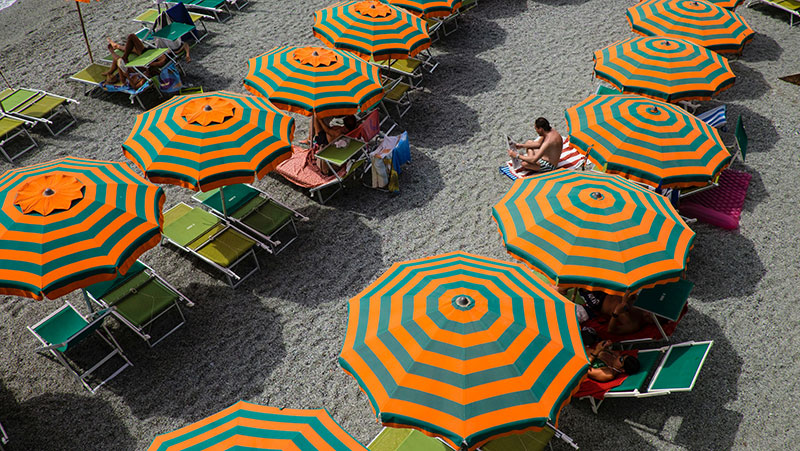
  • Day 1-4: Tokyo
  • Day 5: Hakone (Ryokan stay + Onsen)
  • Day 6-9: Kyoto & Osaka (Day trip to Nara)
  • Day 10: Fly out of Osaka (KIX) or train to Tokyo.

One Base vs. Multiple Cities

The 2026 Strategy: Moving hotels in Japan is tiring because stations are huge. Minimize hotel hops. Use Osaka as a base to see Kyoto, Nara, and Kobe (all 30-40 mins away) instead of switching hotels for each city.

The ultimate Japan travel view: Seeing Mt. Fuji from the Shinkansen window is a bucket-list moment on the journey between Tokyo and Kyoto.


Transportation: Trains, Passes & Reality Checks

Is the Japan Rail Pass Still Worth It in 2026?

Short answer: Usually No.

Since the massive price hike, a 7-day pass costs ¥50,000. A round trip Tokyo-Kyoto ticket is only ~¥28,000. Unless you are making long-haul trips (e.g., Tokyo to Hiroshima to Kanazawa to Tokyo) in 7 days, buy individual tickets.

IC Cards: Go Mobile (The 2026 Standard)

While physical card shortages have eased, the “Mobile Suica” is now the gold standard.

  • iPhone/Android Users: Add a Digital Suica or PASMO to your mobile wallet before you leave home. It allows you to tap-to-pay at gates and reload instantly via credit card.
  • Physical Cards: If you prefer plastic, “Welcome Suica” (tourist version) is available at Haneda and Narita airports, but valid for only 28 days.

eSIMs vs Pocket Wi-Fi

In 2026, most travelers skip pocket Wi-Fi and use an eSIM (like Ubigi or Airalo). Coverage is excellent, and it keeps your physical SIM slot open for emergencies.

The “Luggage 160” Rule & Forwarding

Stop dragging huge suitcases onto crowded trains. For about ¥2,500, services like Yamato Transport (Black Cat) will ship your bag from Tokyo to Kyoto.

Why forwarding is non-negotiable in 2026:
The Shinkansen “Baggage 160” rule requires a specific seat reservation for any bag with total dimensions over 160cm (approx. check-in size). If you board without this specific reservation, you face a ¥1,000 fine and may be forced to move trains. Forwarding your bags solves this completely.

A solo female traveler eating ramen and gyoza at a wooden counter in a Japanese restaurant, with a receipt and Japanese Yen notes on a payment tray, illustrating the affordability of dining out in Japan.

The $10 Feast: Japan’s best value is its food. A full meal like this, steaming ramen, gyoza, and a drink, often comes to under ¥1,500 ($10 USD). Note: While cards are common, many authentic ramen shops still rely on cash or ticket machines.


Money & Costs in 2026

Japan is surprisingly affordable for food, but expensive for transport and accommodation. The Yen is fluctuating, but generally weaker against the USD, making 2026 a great value year.
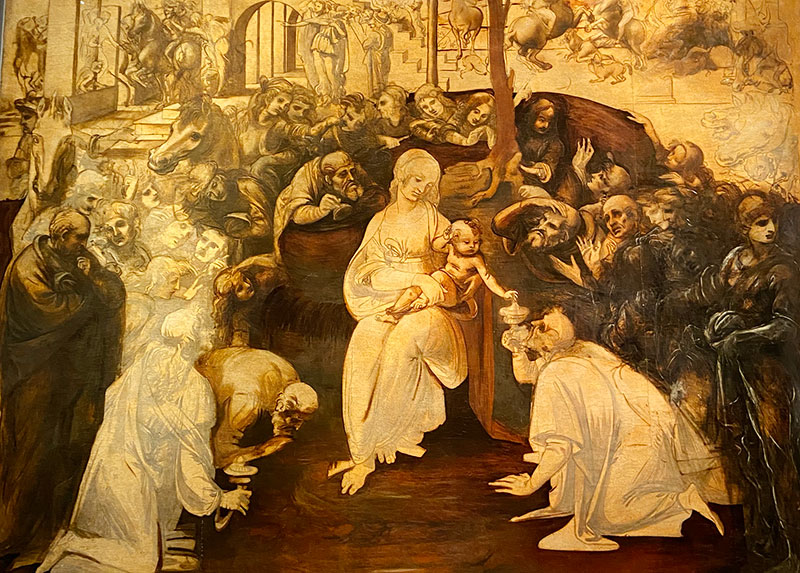
Realistic Daily Budgets (Per Person)

  • Backpacker ($50 – $85 USD): Hostels/Capsules, Konbini meals, minimal trains.
  • Mid-Range ($150 – $250 USD): Business hotels, nice lunches, Izakaya dinners, occasional taxi, theme park tickets.
  • Luxury ($400 – $800+ USD): 5-star hotels or Ryokans, Omakase dining, Green Car (First Class) rail.

Cash vs. Card

Japan is no longer “cash only,” but it is “cash preferred.”

  • Card: Accepted at hotels, department stores, major transit, and most modern restaurants.
  • Cash: Often required for ticket machines (ramen shops), temple/shrine fees (entries/charms), and older street stalls.

Tax-Free Shopping: 2026 Changes

Japan is overhauling its tax-free system to stop resale fraud.

The New Reality (Late 2026): The government is moving toward a “Pay Upfront, Refund Later” model. Instead of getting 10% off at the register, you will likely pay the full price and claim your refund at a digital kiosk at the airport upon departure.
*Note: Implementation is currently targeted for November 2026, but check the latest rules if traveling late in the year.

2026 Price Watch: Food staples have risen in price in recent years, and you may notice small increases at ultra-budget chains. The good news is that classics like Gyudon (beef bowls) still tend to be excellent value and are often under ¥600-¥800 depending on the location.
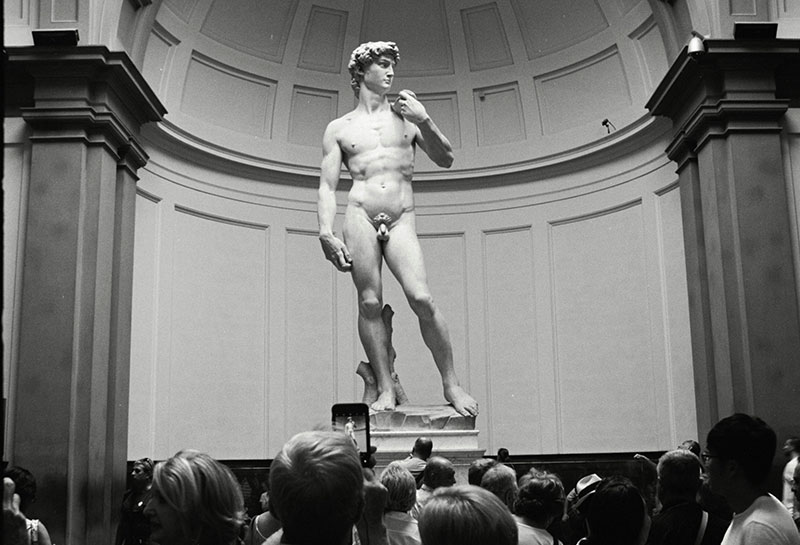
2026 Note: Japan’s international departure tax (currently about $7 USD) is built into airfare. Any future increase would be included automatically.

A couple wearing traditional yukata robes sitting on tatami mats in a Japanese ryokan, drinking tea at a low wooden table with a view of a serene garden and stream through the open sliding doors.

The Ryokan Retreat: A stay in a traditional inn (ryokan) is about slowing down. From wearing yukata robes to sipping tea overlooking a garden, it’s an immersion into old-world Japanese hospitality (omotenashi).


Where to Stay: Best Neighborhood Bases

In 2026, strategic location beats luxury. Japan’s cities are huge; staying near a major loop line (like the Yamanote in Tokyo) saves hours of travel time.

Tokyo

First-Timers: Shibuya or Shinjuku (West side) for connection.
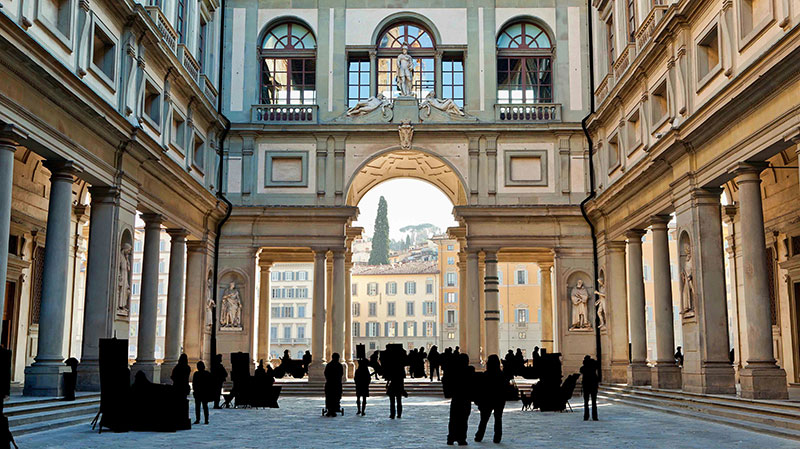
Quieter/Indie: Ueno or Asakusa for older vibes, or Shimokitazawa for retro culture.

Kyoto

Strategy: Stay near Kyoto Station for transit access, or Downtown (Kawaramachi) for food and nightlife. Avoid the far northern temples if you want early starts.

Ryokan vs. Hotel

Ryokan: Traditional inn with tatami mats and kaiseki dinner. Book for 1-2 nights in Hakone or Miyajima for the experience.

Business Hotel: Small, clean, highly functional (e.g., APA, Dormy Inn). Perfect for most nights.

A smiling solo male traveler sitting at a traditional wooden sushi counter in Japan, holding a piece of sushi with chopsticks, with a chef preparing food in the background.

The Best Seat in the House: Solo dining (Ohitorisama) is celebrated in Tokyo. Grab a spot at the counter for a front-row seat to the chef’s craftsmanship. It’s dinner and a show, with zero awkwardness.


Food: Dining Logistics

You can eat better in a Japanese train station than in most 5-star restaurants elsewhere.

Solo Dining is Normal

The trend of Ohitorisama (party of one) is exploding. In 2026, you will see more “Solo Yakiniku” (grilled meat) booths and “Hitori-nabe” (solo hot pot) counters. Dining alone isn’t sad here; it’s seen as a premium, meditative experience.

How to Order

  • Ticket Machines: Insert cash, press button, hand ticket to chef.
  • Otoshi (Table Charge): A mandatory appetizer at bars/izakayas (¥300-¥500). It’s not a scam; it’s the seating fee.
  • No Tipping: Never. It causes confusion. Good service is the standard, not an extra.
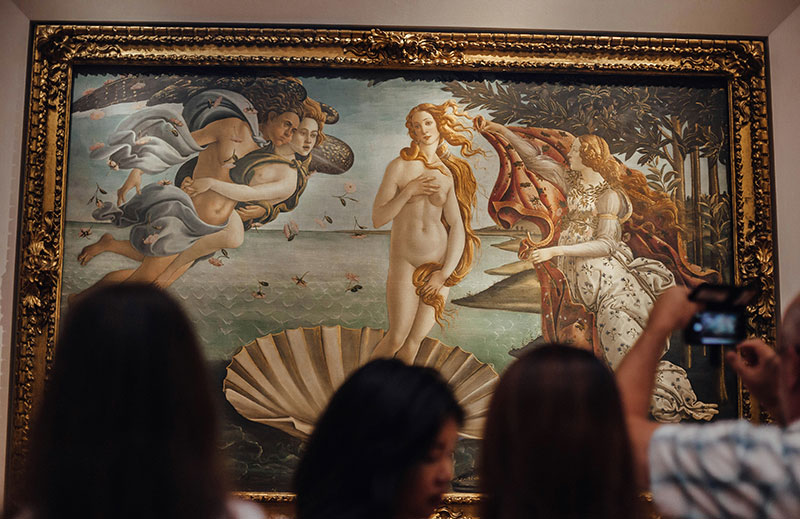
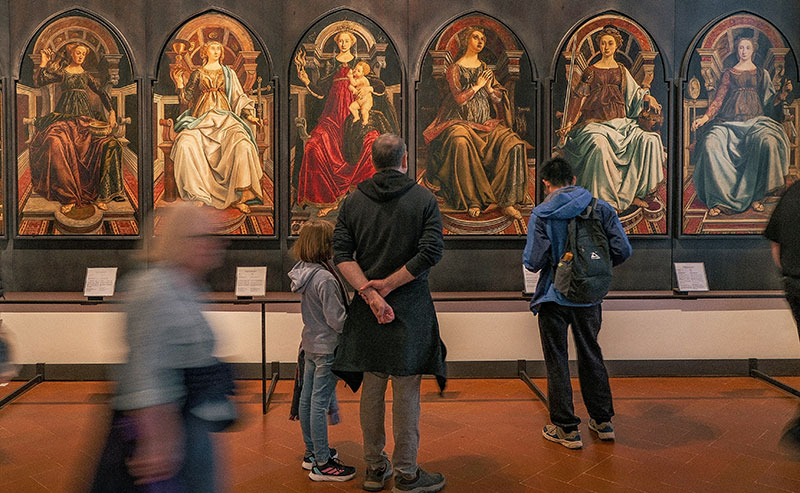
A smiling couple relaxing in a steaming outdoor rock onsen (hot spring) in Japan at dusk, surrounded by nature and the soft glow of traditional wooden lanterns at a ryokan.
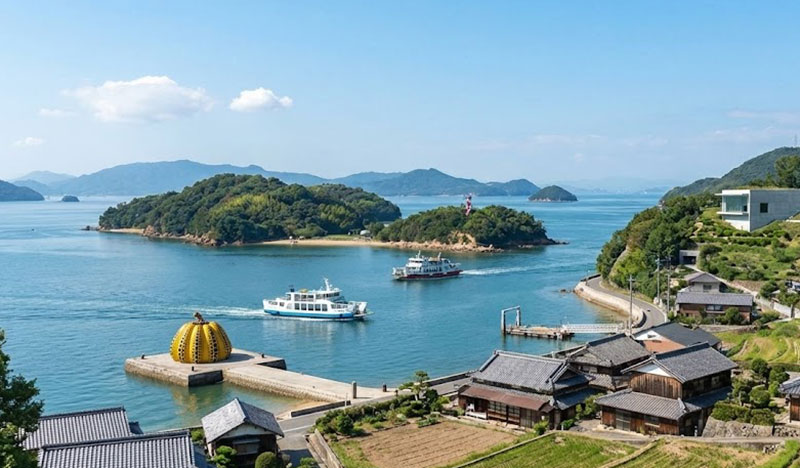
The Onsen Ritual: For locals, visiting an onsen isn’t just about bathing, it’s a spiritual reset. Sinking into a rotenburo (outdoor bath) while surrounded by nature is the ultimate way to connect with Japan’s volcanic roots. Tip: If you want to bathe together, look for ryokans that offer Kashikiri (private rental) baths.
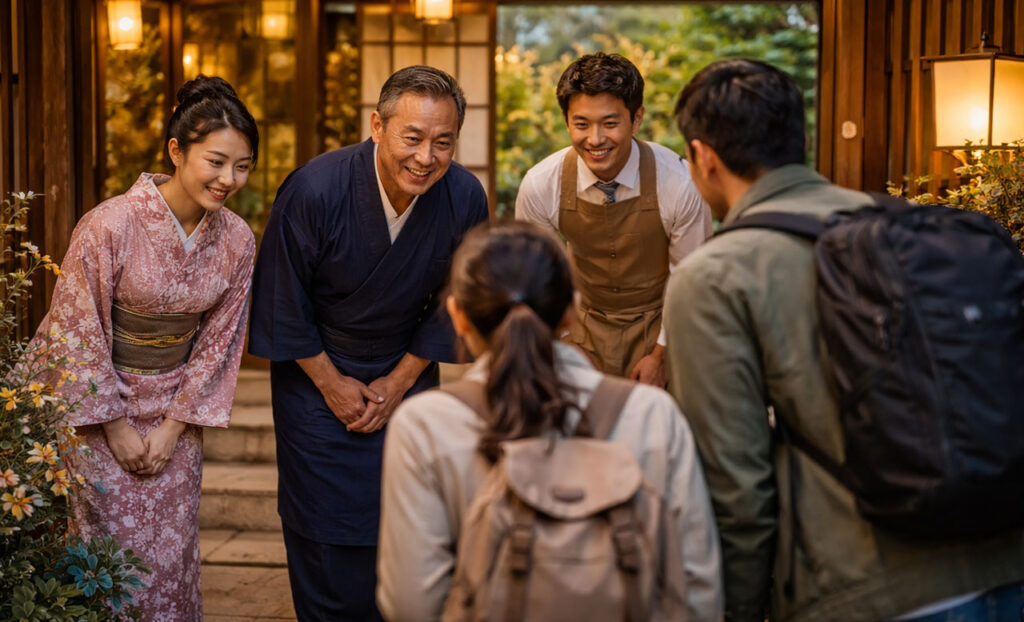

Etiquette: The Rules That Matter

Japan functions on shared respect. You don’t need to be perfect, but you need to try.

  • On Trains: Trains are expected to be quiet. No phone calls. Keep conversations low.
  • Walking: Don’t eat while walking (Tabearuki). Stop, eat, trash it, then move.
  • Trash: There are no public bins. Carry a small plastic bag and take your trash back to your hotel.
  • Onsen (Hot Springs): You must be fully naked. Wash your body before entering the water.
    Tattoo Note: While improving, many public onsens still ban tattoos. Look for “Tattoo Friendly” facilities or book a private bath (Kashikiri).

Onsen is amazing, but it has rules: Onsen Etiquette: A Respectful Guide

A vibrant spring scene in a Japanese park filled with crowds of people walking and enjoying picnics on blue mats under a canopy of blooming pink cherry blossom trees, with traditional paper lanterns hanging above and a five-story pagoda visible in the sunny distance.

The Hanami Party: When the sakura (cherry blossoms) bloom, Japan turns into one big outdoor party. Join the locals on their blue tarps for hanami, the centuries-old tradition of eating, drinking, and appreciating the fleeting beauty of spring.


Japan by Season: Timing Your Trip

Spring

Cherry Blossoms (Sakura): Late March – Early April. Crowds are massive. Book hotels 6 months out.

Summer

Festivals & Heat: July/August is hot and humid. Best for fireworks (Hanabi) and climbing Mt. Fuji.

Fall

Foliage (Koyo): Nov – Early Dec. Arguably the best time to visit. Cool air, stunning red maples in Kyoto.

Winter

Snow & Onsen: Jan – Feb. Perfect for skiing in Hokkaido or seeing the “Snow Monkeys” in Nagano.

A vibrant, sunny landscape of Ghibli Park in Japan, featuring visitors walking through flower-lined paths with the massive Howl's Moving Castle on the right, a giant Robot Soldier in the distance, and a small Totoro shrine visible in the foreground.

The Ghibli Booking Strategy: Walking through the Witch’s Valley feels like magic, but getting in requires serious planning. Tickets are area-specific and strictly reservation-only. There are no sales at the gate. To see Howl’s Castle or the Totoro shrine, you must book your slot roughly two months in advance the moment tickets go on sale.


Booking Strategy: What You Can’t Wing

Japan used to be spontaneous. In 2026, it rewards planning. These are the experiences that require locking things in early.

  • Ghibli Park / Museum: Book exactly 2 months out. Strict first-come or lottery system.
  • Shibuya Sky (Sunset): Book 4 weeks out for prime sunset slots.
  • Universal Studios Japan: Express Passes (essential for Nintendo World) sell out weeks in advance.
  • Shinkansen (Holidays): Reserve seats for Golden Week (early May) and New Year’s.
  • Nintendo World (Donkey Kong Country): New expansion driving massive demand throughout 2026.

What’s New for 2026 Travelers

Japan changes fast. These are the 2026 headlines worth watching while you plan.

Edo-Tokyo Museum Reopening

Why it matters: Many older guides still list this museum as closed. If it reopens during your travel window, it’s one of the best under-the-radar cultural wins in Tokyo.

Status: Expected late 2025 or sometime in 2026. Check official dates once your flights are booked.

Pokémon Nature Park (Tokyo Area)

Why it matters: If the concept launches as planned, this will be very different from USJ. Think outdoors, walking trails, and discovery rather than rides.

Status: Announced for 2026 timing. Treat this as a watch-list item until ticket rules and opening dates are confirmed.

A street tout in a flashy vest trying to lure two tourists into a bar with a sign promising unreasonably cheap drinks in a neon-lit Tokyo entertainment district.

The “Cheap Drink” Trap: In nightlife areas like Roppongi and Kabukicho, touts may promise cheap drinks, then tack on surprise charges. The safest move is simple: never follow them.


Safety & Scams (The Real Stuff)

Japan is incredibly safe, but it isn’t a utopia. Watch out for these few things:

  • Nightlife Touts: Never follow a guy in a vest promising “cheap drinks” in Kabukicho or Roppongi. It is a guaranteed scam with hidden fees.
  • Earthquakes: Small tremors are normal. If your phone buzzes with an “Earthquake Early Warning,” don’t panic. Follow the locals. Buildings are built for this.
  • Lost & Found: If you lose something, go to the nearest “Koban” (police box). It is extremely likely someone turned it in.

Start planning your trip, then dive into food, culture, and standout experiences across Japan.

FIRST TIMERS

First-Timer’s Guide to Japan

Get the logistics, etiquette, and pricing basics right before booking your trip.

Read More

GET AROUND

Japan Rail Pass Guide

Understand pricing, routes, and when the rail pass actually makes sense.

Read More

TOKYO FOOD

Eat Like a Local in Tokyo

Find hidden gems and navigate Tokyo’s food scene beyond tourist spots.

Read More

STREET FOOD

Osaka Street Food Guide

Eat your way through Japan’s food capital with must-try dishes.

Read More

KYOTO

Kyoto Travel Guide

Temples, districts, and how to experience traditional Japan the right way.

Read More

DESTINATION

Okinawa Travel Guide

Explore Japan’s tropical side with beaches, island culture, and slower travel.

Read More

Frequently Asked Questions

Is Japan expensive in 2026?

Accommodation and long-distance transport have become pricier in popular corridors, but the Yen has often been weaker against the USD/EUR in recent years, which can improve value for many visitors. Food and many entry fees are still relatively affordable by Western standards. A high-quality lunch can still be found for around $8-$15 USD depending on the neighborhood.

Tickets commonly go on sale on a set day each month for a future window (often around 2-3 months out), and they can sell out quickly. Check the official ticketing page for the exact release date and time for your travel month and be ready the moment sales open.

Yes, but “stroller reality” is tough in rush hour. Pro Tip: Children under 6 often ride free on JR trains when they share a seat with an adult (for example, sitting on your lap) or use non-reserved seating, but policies can vary by service type, so check the specific operator rules if you plan to reserve seats for everyone.

No. Google Translate and Google Lens (for reading menus) solve a huge percentage of language barriers. Locals are often extremely helpful even if they don’t speak English.

A Samurai Walks Into Modern Tokyo…

Tokyo has a way of blurring reality once the sun goes down. These two side stories come from nights that started normally and ended with conversations I still can’t fully explain, including one involving a samurai who seemed very unclear on what century he was in.

THE RONIN’S REPORT

A Samurai’s Guide to the Beautiful Madness of Modern Tokyo

TOKYO AFTER DARK

The Shadows of Edo Are Gone. They Have Been Replaced by Light